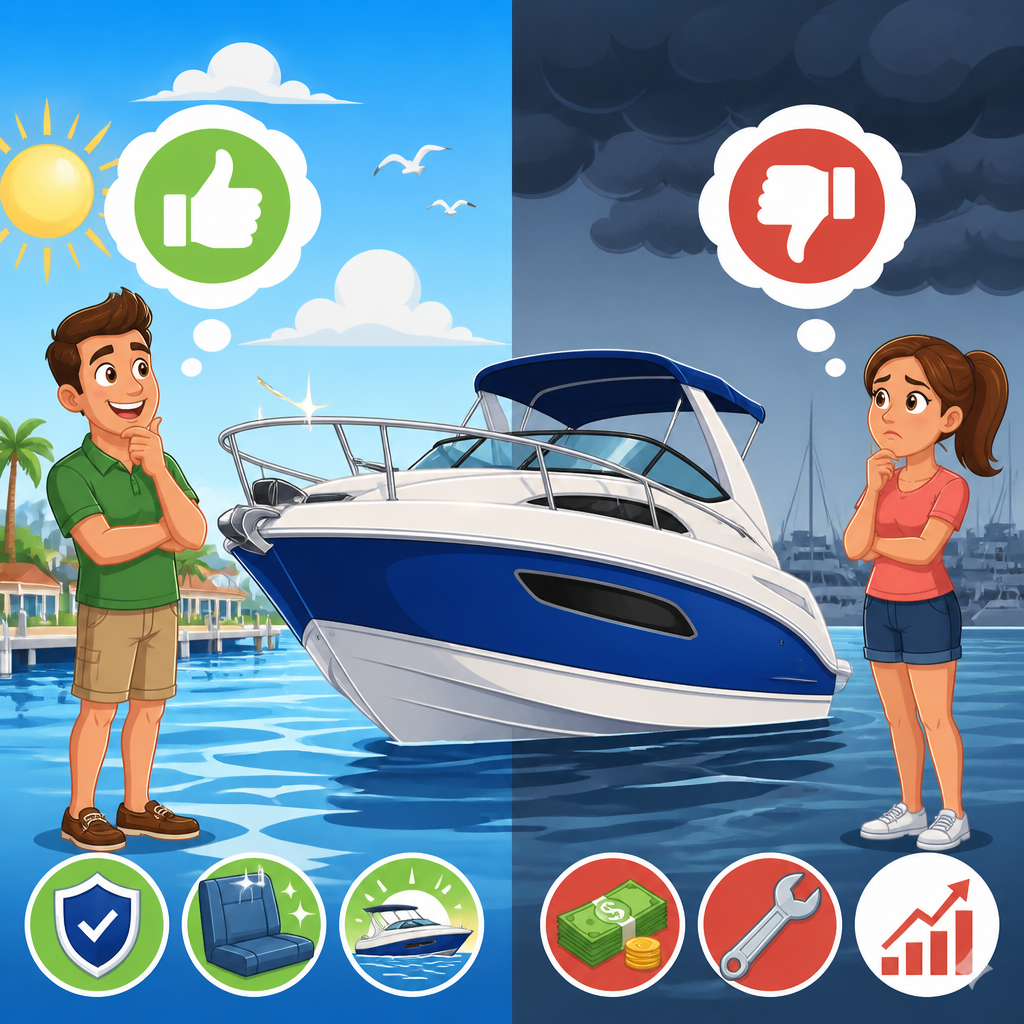
Choosing among the most reliable boat brands is one of the highest-stakes decisions in the buying and selling process because brand quality affects safety, maintenance costs, resale value, and how often your boat is actually usable during the season. In practical terms, reliability means more than whether an engine starts on the first turn of the key. It includes hull construction, electrical integrity, plumbing durability, hardware corrosion resistance, dealer support, warranty handling, and the availability of replacement parts five or ten years later. After working through purchase inspections, survey reports, and owner feedback across fishing boats, pontoons, center consoles, cruisers, and tow boats, one pattern is clear: the best boat brands combine conservative engineering with consistent manufacturing discipline.
Experts usually evaluate boat reliability through a mix of hard and soft signals. Hard signals include warranty claim rates, National Marine Manufacturers Association certification, American Boat and Yacht Council compliance, hull design history, and the quality of rigging, fuel systems, wiring harnesses, and lamination schedules. Soft signals include owner loyalty, dealer reputation, resale strength, and how well a builder stands behind older models. A flashy layout or aggressive pricing can attract first-time buyers, but it rarely predicts long-term satisfaction. Reliable boats are often easier to service, hold value better, and create fewer surprises during marine surveys, which matters whether you are buying your first runabout or trading up to an offshore platform.
This hub article covers the best boat brands and models to buy across the main recreational categories, with a focus on reliability according to marine surveyors, brokers, technicians, and experienced owners. It is designed to answer the questions shoppers actually ask: Which boat brands have the best build quality? Which brands hold value? Are premium brands worth the higher upfront cost? What should you inspect before closing a deal? Because this is a sub-pillar within buying and selling boats, it also connects the bigger decision points: matching a brand to your use case, comparing new versus used inventory, understanding depreciation, and narrowing to the right model line instead of chasing badge prestige alone.
The short answer is that there is no single best boat brand for every buyer. Boston Whaler, Grady-White, Cobalt, Pursuit, Yamaha, Sea Ray, Bennington, Malibu, Lund, and Hewescraft have all earned strong reputations, but they serve different needs and budgets. A reliable bay boat is built differently from a wake boat, and a dependable pontoon is judged by different standards than a trailerable offshore center console. The smartest way to use expert rankings is to start with category leaders, then verify the specific model, production year, power package, and dealer network in your area. That approach consistently leads to better purchases than relying on marketing claims or social media enthusiasm.
How experts judge the most reliable boat brands
When experts compare reliable boat brands, they start below the gelcoat. Hull construction matters because poor lamination, inconsistent fiberglass layup, or weak stringer systems can create chronic problems that are expensive to diagnose and repair. On fiberglass boats, surveyors look for solid transoms, well-bonded bulkheads, clean resin work, and decks that feel rigid underfoot. On aluminum boats, they inspect weld consistency, hull thickness, rib structure, and how fittings are isolated to limit galvanic corrosion. Reliability also depends on systems integration. Many boat headaches are not hull failures at all; they come from bad wiring practices, undersized pumps, inaccessible rigging, cheap hose clamps, or poorly routed fuel lines. The best builders tend to be boring in the best way: clean bilges, labeled wiring, logical service access, and hardware sourced from recognized marine suppliers.
Support after the sale separates dependable brands from merely popular ones. A builder with strong dealer training, responsive parts distribution, and documented service bulletins gives owners and technicians a path to fix issues quickly. Resale history is another expert clue. Brands that routinely command stronger prices on the used market usually earned that position over many model years by limiting defects and keeping customer confidence high. Finally, experts consider fit for purpose. A family that mainly cruises inland lakes does not need the same hull design, freeboard, and weather protection as an owner running offshore in changing seas. The right brand is the one that performs reliably in the conditions it was engineered to handle.
Top reliable center console and offshore fishing boat brands
For center consoles and offshore-capable fishing boats, Boston Whaler, Grady-White, Pursuit, Regulator, Contender, and Everglades consistently appear on expert shortlists. Boston Whaler built its reputation on unsinkable foam-filled construction and broad dealer reach, making it one of the safest recommendations for buyers who want dependable ownership and strong resale. Grady-White is widely praised for robust fit and finish, thoughtful fishability, and the SeaV2 hull, which has a long track record of handling rough water predictably. Pursuit stands out for premium joinery, refined systems installation, and dual-purpose layouts that appeal to both anglers and families. Regulator and Contender are often favored by serious offshore owners who prioritize seakeeping, structural confidence, and fish-focused layouts over flashy interior amenities.
Model selection matters as much as the badge. A Boston Whaler 190 Montauk serves a very different buyer than a 280 Outrage, yet both benefit from the brand’s disciplined build standards. Grady-White’s Freedom dual console series may suit families better than a pure center console while retaining the brand’s quality reputation. In brokerage work, these brands also show another sign of reliability: older examples that still survey well when maintained properly. Buyers should still verify fuel tank condition, transom moisture, electronics age, and engine service records. Even the most reliable offshore boat can become a bad purchase if it has deferred maintenance or an engine package with neglected cooling, corrosion, or lower-unit issues.
Best reliable bowrider, deck boat, and sterndrive brands
In bowriders and premium runabouts, Cobalt is the benchmark many technicians and brokers mention first for reliability, construction quality, and owner satisfaction. The company is known for meticulous fit and finish, strong hardware selection, clean rigging, and hulls that feel overbuilt relative to much of the market. Chaparral has also built a solid reputation, especially in family sport boats that balance value with dependable construction. Sea Ray remains one of the most recognized names in the segment, and while product quality can vary by era and model line, many Sea Ray bowriders and cruisers have proven durable, well-supported, and easy to resell because the dealer and parts ecosystems are so broad.
Sterndrive buyers should pay special attention to maintenance access and corrosion exposure. In saltwater, neglected manifolds, risers, bellows, gimbal bearings, and transom assemblies can turn a seemingly attractive boat into a major repair project. That does not make sterndrives unreliable by default; it means reliability depends heavily on service history. Cobalt and Chaparral often rate well because they pair quality construction with layouts that make mechanical systems easier to inspect and service. If you shop older deck boats or bowriders, prioritize evidence of dry storage, freshwater use, and documented winterization. A carefully kept ten-year-old premium runabout can be more reliable than a poorly maintained three-year-old value brand.
Most reliable pontoon and tritoon boat brands
Pontoons are now among the most popular family boats in North America, and the most reliable pontoon brands are Bennington, Harris, Barletta, Premier, and Manitou. Bennington has become a frequent expert recommendation because of consistent assembly quality, strong furniture construction, durable fencing, and well-developed dealer support. Harris has long been respected for ride quality and a polished finish, while Barletta has gained attention for owner-focused design details and good factory support. Manitou stands out for tritoon performance and hull innovation, especially for buyers who want higher speed and sharper handling without moving to a fiberglass runabout.
Reliability in a pontoon is less about flashy upholstery patterns and more about structural and rigging details. Experts inspect crossmember spacing, underdeck skinning, lifting strake design on tritoons, steering system robustness, fuel tank installation, and whether electrical wiring is protected from chafe and moisture. Furniture bases and hinges are another common wear point on lower-end boats. A premium pontoon usually costs more upfront because the builder used heavier gauge materials, better stitching, stronger gates, and more corrosion-resistant components. Those choices become obvious after several seasons of trailering, docking, sun exposure, and family use.
Reliable freshwater fishing boat brands for bass, walleye, and utility use
For freshwater anglers, Lund, Ranger, Alumacraft, Skeeter, Crestliner, and Bass Cat are the brands experts mention most often. Lund has exceptional credibility in multispecies aluminum fishing boats, especially for walleye and northern fisheries where rough-water ride, layout efficiency, and long-term durability matter. Ranger remains a leader in premium bass boats and fiberglass fish-and-ski platforms, with a reputation built over decades for solid construction and resale value. Skeeter and Bass Cat are favorites among serious bass anglers because they combine performance with proven tournament layouts and dependable hull designs. Alumacraft and Crestliner offer practical aluminum options that often deliver lower ownership costs and simpler upkeep than comparable fiberglass boats.
Here, reliability is closely tied to how the boat will be used. A tournament bass boat may be reliable in the hands of an owner who keeps batteries conditioned, trailer bearings serviced, and jack plate hardware inspected, but the same rig can frustrate a casual buyer who wants minimal setup and simpler storage. By contrast, a Lund aluminum deep-V often appeals to buyers who value versatility, easier towing, and durable construction over top-end speed. If you fish rocky rivers, shallow backwaters, or cold northern lakes, matching the hull material and layout to that environment is more important than chasing the most expensive badge.
Best reliable wake, surf, and tow boat brands
In wake and surf boats, Malibu, MasterCraft, Nautique, and Supra are the most established reliability leaders, with each brand occupying a slightly different place in the premium spectrum. Nautique is often praised for engineering discipline, advanced systems integration, and exceptionally strong wakes and surf waves. MasterCraft pairs premium materials with broad brand recognition and a large resale audience. Malibu remains one of the most influential names because of surf-system innovation, extensive dealer reach, and a product range that serves both core enthusiasts and family buyers. Supra has strengthened its reputation through upscale interiors, strong power options, and increasingly refined surf technology.
Wake boats are system-heavy, so expert buyers look beyond upholstery and ballast capacity. Reliability depends on the engines, touchscreens, ballast pumps, actuators, software stability, and the quality of the trailer as much as the hull itself. A surf boat with intermittent electronic faults is not reliable, even if the engine is sound. That is why dealer support matters so much in this segment. A good local service department can make the difference between minor downtime and a ruined season. Buyers comparing used wake boats should test every control, verify software updates, inspect ballast plumbing, and confirm that the trailer brakes and tires are in proper condition.
What experts look for before naming a boat brand dependable
Experts rarely judge reliability from brochures alone. They compare construction, support, and long-term ownership patterns.
| Factor | What experts check | Why it matters |
|---|---|---|
| Hull structure | Lamination, welds, stringers, transom integrity | Prevents major structural repairs and safety issues |
| Systems quality | Wiring, fuel lines, pumps, hose routing, labeling | Reduces common failures and simplifies service |
| Hardware | Stainless grade, hinges, latches, corrosion resistance | Improves durability in wet and salt environments |
| Dealer network | Parts access, trained technicians, warranty handling | Shortens downtime and protects ownership experience |
| Resale value | Used pricing, demand, survey results | Signals long-term market trust in the brand |
This checklist explains why experts sometimes prefer a mid-priced boat from a disciplined builder over a cheaper model loaded with features. Reliability is usually the result of many unglamorous choices made correctly at the factory and supported properly afterward. It also explains why model-year research matters. Even excellent brands can have weaker years tied to supply-chain changes, rushed redesigns, or problematic component suppliers. Always evaluate the brand, the model, the year, and the dealer together.
How to choose the best boat brand and model for your needs
The best boat brands and models to buy depend on use case first, budget second, and brand reputation third. Start by defining where you boat, how many people you carry, how you store the vessel, and whether you prioritize fishing, watersports, day cruising, overnighting, or all-purpose family use. A buyer on an inland lake who wants occasional tubing and sunset cruises may get better reliability from a Bennington tritoon with an outboard than from an older sterndrive runabout with uncertain maintenance. An offshore angler who runs twenty miles out should lean toward a brand with a stronger rough-water pedigree, such as Grady-White, Regulator, or Pursuit, even if it means buying slightly smaller to stay within budget.
Then compare model lines, not just brands. Entry-level series within a respected brand may use simpler materials or fewer premium touches than flagship models, though they can still be good values. Review owner forums carefully, but weigh them against surveyor opinions and dealer service feedback because online comments often overrepresent either extreme satisfaction or frustration. Request maintenance records, inspect trailers closely, and never skip a marine survey on larger used boats. If the boat has an outboard, pull engine data, review service intervals, and confirm compression and corrosion condition. Reliability is not purchased through a logo alone; it is earned through proper selection and verified condition.
The most reliable boat brands according to experts are the ones that repeatedly deliver sound construction, dependable systems, strong dealer support, and predictable resale across many years of ownership. In practical shopping terms, that puts names like Boston Whaler, Grady-White, Pursuit, Cobalt, Sea Ray, Bennington, Lund, Ranger, Malibu, MasterCraft, and Nautique near the top of many buyers’ lists, with the right choice depending on whether you fish offshore, cruise with family, chase wakes, or spend weekends on northern lakes. What these brands share is not marketing polish alone but a history of making boats that hold up under real use and remain serviceable long after the showroom shine fades.
The biggest takeaway for buyers and sellers is that brand reputation should guide your shortlist, not replace model-specific due diligence. A well-kept boat from a second-tier badge can outperform a neglected premium model, while a respected builder with a weak local dealer may create more ownership friction than a slightly less prestigious brand with excellent support nearby. Use expert brand rankings to narrow the market, then verify hull condition, systems quality, powertrain history, and dealer capability before you commit. That process lowers risk, improves resale odds, and leads to a boat you can actually enjoy instead of constantly repairing.
If you are researching the best boat brands and models to buy, build your shortlist by category, compare specific model years, and schedule inspections early. Start with the brands in this guide, then move deeper into the center console, pontoon, fishing boat, bowrider, and tow boat options that fit your budget and boating style. A reliable boat is almost always the better buy.
Frequently Asked Questions
What do experts actually mean when they call a boat brand “reliable”?
When marine surveyors, technicians, brokers, and experienced captains talk about reliability, they are looking at far more than whether a boat starts and runs on a calm Saturday morning. A truly reliable boat brand tends to deliver consistent build quality across the entire vessel, including the hull, stringer system, wiring, plumbing, fuel systems, deck hardware, and finish work. Experts pay close attention to how the boat is put together behind the scenes, because that is where long-term ownership costs are usually decided. Clean electrical rigging, properly supported hoses, sealed connections, quality pumps, corrosion-resistant hardware, and solid lamination practices all matter more over time than flashy upholstery or a long feature list.
Reliability also includes how well a boat holds up after repeated use in real conditions. That means pounding through chop, sitting in sun and salt, being trailered, washed, stored, and launched over multiple seasons. A dependable brand usually has a track record of fewer chronic issues, easier serviceability, and better parts support. Experts also factor in the manufacturer’s dealer network and warranty responsiveness, because even a well-built boat will eventually need service. In short, reliability is a combination of sound engineering, durable materials, quality control, and strong post-sale support. The best brands earn their reputation because owners can use the boat more and repair it less.
Which factors make some boat brands more reliable than others?
The biggest difference usually comes down to manufacturing discipline and component quality. Brands with strong reliability reputations tend to use better materials in places buyers may not immediately see, such as marine-grade wiring, tinned copper conductors, quality bilge pumps, reinforced fiberglass structures, stainless hardware that resists corrosion, and properly bedded fittings that reduce water intrusion. They also tend to follow more consistent production standards, which lowers the chance of assembly errors. Even small details, such as labeled wiring, neatly routed hoses, and accessible service points, can say a great deal about whether the builder prioritizes long-term dependability.
Another major factor is design maturity. Brands that have refined a successful hull and layout over several model years often prove more reliable than those constantly chasing trends with untested systems or overly complex features. Simpler, proven designs are often easier to maintain and less likely to develop recurring issues. Experts also look at how the builder integrates third-party systems, including engines, electronics, and plumbing components. A boat can be equipped with excellent parts but still become troublesome if those systems are installed poorly. Finally, dealer quality matters more than many buyers realize. A reliable brand supported by a knowledgeable, responsive dealer can be a far better ownership experience than a decent brand sold through a weak service network.
Are premium boat brands always more reliable, or can mid-range brands be just as dependable?
Higher price does not automatically guarantee higher reliability, although premium brands often invest more in materials, engineering, sound insulation, fit and finish, and quality control. In many cases, premium builders do offer better long-term durability, especially in areas such as hardware, wiring, structural reinforcement, and corrosion resistance. However, there are many mid-range boat brands that have earned strong reputations for dependability by focusing on practical design, consistent construction, and proven systems instead of luxury extras. For many buyers, that can be the smarter reliability play.
Experts often note that value-oriented brands sometimes outperform expensive competitors simply because they avoid unnecessary complexity. More features can mean more failure points, especially when those features involve advanced electronics, complicated plumbing layouts, or power-operated accessories. A well-built mid-range center console, pontoon, or bowrider with a conservative design and a strong dealer network may deliver years of low-stress ownership. The key is to judge a brand on its track record, not just its marketing position. Looking at owner satisfaction, service records, surveyor feedback, and resale strength will usually tell you more about reliability than price alone. In many cases, the most dependable boat is not the fanciest one, but the one designed and assembled to work consistently season after season.
How can buyers evaluate the reliability of a boat brand before making a purchase?
Start by researching beyond brochures and manufacturer claims. Read owner forums, study long-term reviews, and talk to marine technicians, surveyors, and local service departments that work on these boats regularly. They often know which brands have repeat issues with wiring, water intrusion, hardware corrosion, gelcoat cracking, or weak customer support. Pay attention to patterns rather than one-off complaints. Every brand will have some negative reviews, but consistent reports of the same problem across multiple years and models should be taken seriously.
It is also important to inspect the boat with a reliability mindset. Look inside access panels, bilge compartments, and console areas. Check whether wires are organized and secured, whether hose clamps are stainless and properly installed, whether fittings are well sealed, and whether components appear easy to service. Ask the dealer specific questions about warranty claims, parts availability, and turnaround times for common repairs. If you are buying used, a professional marine survey is one of the best investments you can make, because it can reveal hidden issues with structure, moisture, electrical systems, and maintenance history. Finally, compare resale values. Brands that hold value well often do so because the market trusts their durability. Strong resale is not the only sign of reliability, but it is often a useful real-world indicator that knowledgeable buyers continue to have confidence in the brand.
Why does boat brand reliability matter so much for resale value and overall ownership cost?
Reliable boat brands typically cost less to own over time because they reduce the frequency and severity of repairs, minimize downtime during peak boating months, and make maintenance more predictable. That matters because ownership costs are not just about the purchase price. They also include storage, insurance, fuel, scheduled service, unscheduled repairs, lost use, and the stress of dealing with recurring problems. A less reliable boat can become expensive very quickly if it spends too much time in the shop or develops structural, electrical, or plumbing issues that are difficult to diagnose and fix. Even smaller failures can add up when they affect pumps, gauges, batteries, lights, trim systems, or steering components.
Reliability also has a direct impact on resale because buyers pay more for brands they trust. When a boat brand is known for solid construction, consistent quality, and strong support, used buyers are generally more confident purchasing it, which can lead to stronger demand and better pricing. Brokers and lenders often understand those reputation differences as well. By contrast, brands with uneven quality histories or poor support can be harder to sell, even if the boat looks attractive on the surface. In practical terms, buying from one of the most reliable boat brands can protect both your time on the water and your financial position when it is time to move up, sell, or trade in. That is why experts treat reliability not as a bonus feature, but as one of the most important factors in the entire boat-buying decision.