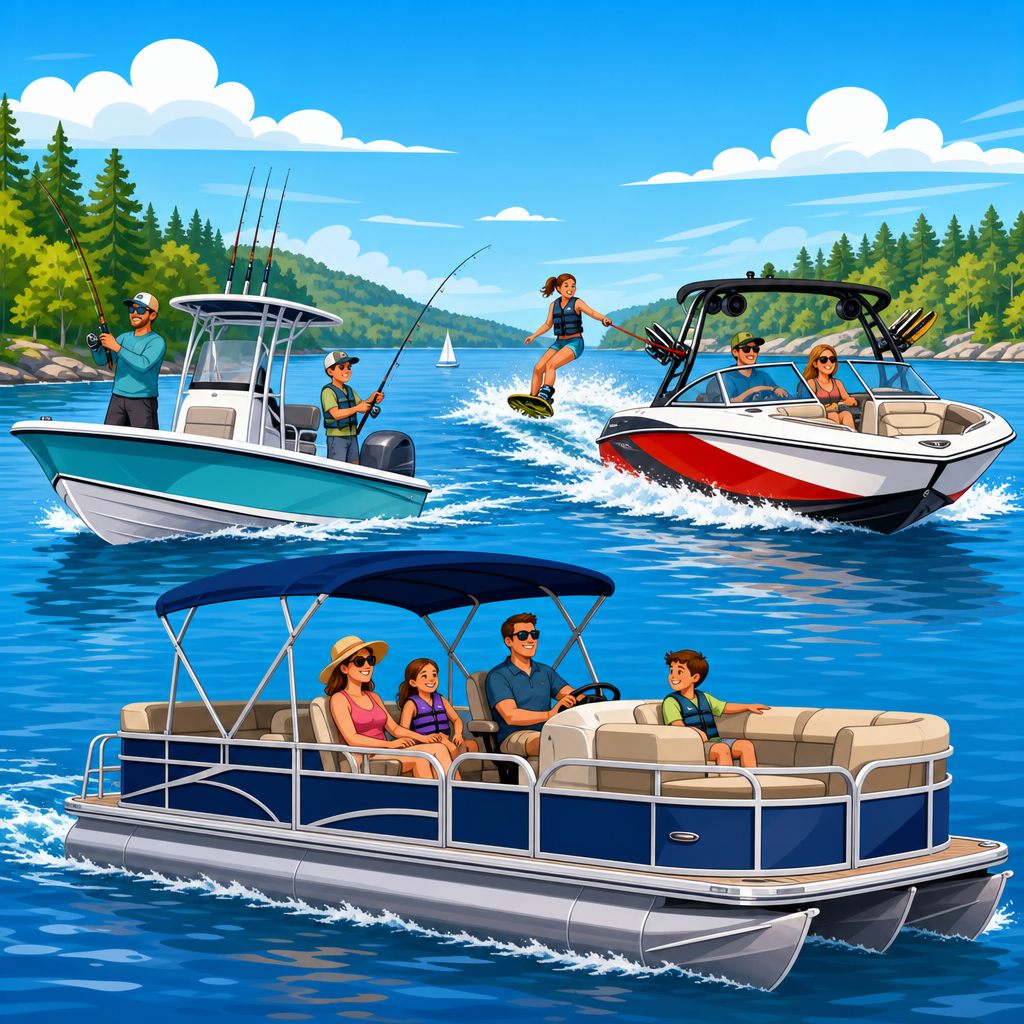
Choosing the best boat models for fishing, watersports, and cruising starts with matching the hull, layout, propulsion, and brand support to the way you actually spend time on the water. Buyers often focus on styling or top speed first, but after years of evaluating new and used boats, I have learned that the right choice usually comes down to intended use, storage, passenger load, local water conditions, and long-term ownership costs. In the broader buying and selling boats process, this article serves as a practical hub for the best boat brands and models to buy, helping you compare the most common categories before you narrow your search.
A boat model is the specific design offered by a manufacturer, while a boat brand is the company building and supporting that design. That distinction matters because a strong model can still be a poor purchase if dealer coverage is weak, resale demand is limited, or build quality is inconsistent. On the other hand, established brands such as Boston Whaler, Grady-White, Sea Ray, MasterCraft, Malibu, Yamaha, Beneteau, Jeanneau, and Lund tend to hold value because they combine recognizable names with proven layouts and broad owner communities. When people search for the best boat brands and models to buy, they usually want a direct answer: buy the boat that fits your primary use at least 70 percent of the time, then confirm that the brand has reliable dealer service, strong resale history, and a hull design suited to your local waters.
This matters financially as much as recreationally. A mismatched boat is expensive to correct. I have seen first-time buyers purchase a wake boat for occasional tubing only to discover high fuel burn, limited rough-water comfort, and cramped fishing utility. I have also seen anglers buy a deep-vee offshore center console, then struggle with shallow ramps, storage height, and family seating needs. The best boats are not the ones with the longest option list. They are the ones that perform their main job exceptionally well while keeping maintenance, insurance, towing, and depreciation within reason. The sections below break down the leading boat categories, the standout models within each, and the buying criteria that separate a smart purchase from a costly compromise.
Best fishing boat models and brands for serious anglers
The best fishing boat models depend on where and how you fish. Freshwater bass anglers usually want fast planing performance, a low casting deck, trolling motor integration, and advanced electronics mounting space. That is why brands such as Ranger, Skeeter, Nitro, and Bass Cat remain leaders in the bass boat category. A Ranger Z520R, for example, is widely respected for its tournament-ready layout, stable deck, and refined fit and finish. Skeeter’s FXR line is another benchmark, combining speed, Yamaha outboard pairing, and practical storage. If your fishing involves walleye, muskie, or northern lakes with changing chop, aluminum and fiberglass multispecies boats from Lund, Alumacraft, and Crestliner often make more sense. Lund’s Pro-V series has been a dependable choice for years because the IPS hull handles rough inland water well while still offering fishability at rest.
Saltwater anglers need a different formula: freeboard, self-bailing decks, corrosion-resistant hardware, fishbox capacity, and a hull that stays composed in ugly conditions. Boston Whaler, Grady-White, Regulator, Contender, and Everglades consistently rank among the best boat brands to buy in this segment. The Boston Whaler 280 Outrage is a strong all-around example because it balances offshore capability with family comfort and a dealer network that helps resale. Grady-White’s Fisherman series is similarly well regarded for sea-keeping and practical cockpit design. If offshore range and speed matter most, stepped-hull center consoles from Contender or Yellowfin appeal to experienced owners, but they demand larger budgets and usually a more seasoned hand at the helm.
Jon boats and small utility fishing boats deserve mention because they solve a huge number of real ownership problems. Models from Tracker, Lowe, and G3 are easy to tow, affordable to maintain, and ideal for ponds, rivers, and modest lakes. They rarely generate the excitement of a premium fiberglass rig, but for many buyers they produce more usable fishing days. In my experience, the best fishing boat is often the one you can launch alone, store easily, and power with a modest outboard without dreading every service invoice.
Best boat models for watersports, wakeboarding, and family towing
For watersports, the best boat models are purpose-built towboats or versatile runabouts, depending on the activities you prioritize. If wakeboarding, wakesurfing, and ballast-controlled wave shaping are central, inboard towboats from MasterCraft, Malibu, Nautique, and Centurion dominate because they create consistent wakes and surf waves that sterndrive and outboard boats cannot reliably match. Malibu’s Wakesetter series remains a reference point thanks to Surf Gate, ballast integration, and strong owner demand in the resale market. MasterCraft’s X-series and XT models are equally compelling for buyers who want premium fit, advanced helm systems, and flexible seating. Nautique’s Super Air Nautique line is often considered the top end of the category, especially for buyers who value precise wave control and tournament pedigree.
That said, dedicated wake boats are specialized machines. Their deep interiors, heavy ballast, and inboard drivetrains are excellent for surfing but less ideal for rough water cruising, fishing, or beaching in shallow areas. For families that split time among tubing, casual skiing, sandbar stops, and day cruising, bowriders and deck boats from Yamaha, Sea Ray, Chaparral, Cobalt, and Hurricane can be smarter purchases. Yamaha jet boats are popular because they offer shallow draft, no exposed propeller, and easy swim-platform access for families with children. Sea Ray’s SPX and SLX lines remain strong choices for buyers seeking polished layouts and broad dealer support. Cobalt, while usually more expensive, is known for premium ride quality, upholstery, and hardware.
A key distinction in watersports buying is propulsion. Inboards are best for surfing and wake shaping. Sterndrives offer strong all-around recreation value but require careful maintenance of the drive unit, bellows, and gimbal components. Jet boats deliver safety around the swim platform and quick acceleration, though they can behave differently at no-wake speeds and may be noisier. Outboard-powered crossover boats are gaining traction because modern four-stroke outboards from Yamaha, Mercury, and Suzuki are fuel efficient, easier to service, and create more interior room by moving the engine outside the hull.
Best cruising boats for day trips, weekends, and coastal comfort
The best boat models for cruising vary from simple day boats to cabin-equipped cruisers and trawlers. For day cruising, bowriders, dual consoles, and larger center consoles with substantial seating often satisfy most buyers. Sea Ray, Regal, Formula, Jeanneau, and Beneteau all build strong options. Regal’s LS series offers refined day-boat ergonomics, while Formula’s bowriders deliver a more premium ride with strong offshore capability. Dual console boats from Grady-White and Pursuit deserve attention because they blend weather protection, family seating, and light fishing utility better than many pure sport boats.
For overnighting, express cruisers and outboard-powered weekender models remain practical choices. Jeanneau’s NC Weekender line and Beneteau’s Antares series show how modern European layouts maximize cabin space, natural light, and convertible seating. In the American market, Cruisers Yachts and Sea Ray have long histories in this segment. The right cruising boat should provide straightforward dock handling, a functional galley, an enclosed head, and sleeping accommodations that adults will actually use rather than tolerate. I always tell buyers to sit in the cabin with the door closed, stand in the head compartment, and test every berth length before assuming a published specification will translate to comfort.
Buyers planning coastal cruising or longer-range trips should look harder at fuel capacity, bridge clearance, generator or inverter setup, battery bank design, and climate control. Trawlers and pilothouse boats from brands such as Ranger Tugs and Nordic Tug are often better suited to economical longer cruising than sportier express models. They are slower, but they trade speed for efficiency, range, and liveaboard practicality. If your dream is a weekend raft-up, an express cruiser may be ideal. If your goal is covering distance with less fuel burn and more cabin comfort, a compact trawler usually wins.
How the top boat categories compare before you buy
Most shoppers benefit from comparing categories before comparing individual models. The table below highlights how the leading options align with common ownership goals.
| Boat category | Best for | Leading brands/models | Main tradeoff |
|---|---|---|---|
| Bass boat | Tournament freshwater fishing, speed, casting decks | Ranger Z520R, Skeeter FXR, Bass Cat Caracal | Limited family seating and rough-water comfort |
| Center console | Saltwater fishing, versatility, easy deck access | Boston Whaler Outrage, Grady-White Fisherman, Regulator 26XO | Less overnight comfort than cabin boats |
| Wake boat | Wakesurfing, wakeboarding, premium tow performance | Malibu Wakesetter, MasterCraft XT, Nautique G-Series | Higher purchase price and specialized use |
| Bowrider/deck boat | Family recreation, tubing, day cruising | Sea Ray SPX, Cobalt R-Series, Hurricane SunDeck | Less specialized for fishing or surfing |
| Express cruiser/weekender | Overnights, coastal trips, dockside comfort | Jeanneau NC, Beneteau Antares, Sea Ray Sundancer | Higher maintenance, storage, and docking costs |
These distinctions matter because category fit determines owner satisfaction more than brand loyalty alone. A premium boat in the wrong category is still the wrong boat. Start with your top three use cases, your typical passenger count, and the water you run most often. Then test only the categories that match those realities.
How to judge build quality, resale value, and dealer support
The best boat brands and models to buy are rarely selected on brochure specs alone. Build quality shows up in lamination consistency, hardware backing, wiring discipline, hatch fit, drainage, upholstery stitching, and service access. When I inspect boats, I open bilge compartments, look behind access panels, and check whether hoses are labeled and supported. Premium brands usually separate themselves in invisible areas: cleaner rigging, stronger hinges, more robust latches, and better bonding of structural components. The American Boat and Yacht Council standards provide useful reference points for safe systems installation, and National Marine Manufacturers Association certification can add confidence, though neither replaces a careful in-person inspection.
Resale value follows brand reputation, dealer coverage, engine hours, maintenance records, and category demand. Boston Whaler, Grady-White, Cobalt, MasterCraft, Malibu, and Sea Ray often retain value well because buyers know the names and brokers can price them confidently against comparable sales. Engine brand matters too. Yamaha and Mercury outboards are especially easy to resell because parts access and technician familiarity are widespread in many markets. A less common power package is not necessarily bad, but it can reduce buyer confidence later.
Dealer support is one of the most underappreciated parts of buying a boat. A strong local dealer can shorten warranty delays, simplify winterization, and help with software updates, recalls, and rigging adjustments. A weak dealer can turn a great brand into a frustrating ownership experience. Before buying, call the service department, ask about seasonal turnaround times, and find out whether they prioritize boats purchased from their showroom. That one conversation often reveals more than an online review page.
Choosing the right model for your budget and next step
The smartest way to choose among the best boat models for fishing, watersports, and cruising is to work backward from use, not emotion. Decide whether your primary identity on the water is angler, tow-sports family, day cruiser, or overnight cruiser. Set a full ownership budget that includes trailer, electronics, insurance, storage, fuel, maintenance, and sales tax. Then shop the strongest brands in the category that fits your real behavior. If you fish hard, focus on Ranger, Skeeter, Lund, Boston Whaler, or Grady-White depending on your water. If your weekends revolve around wake performance, start with Malibu, MasterCraft, or Nautique. If you want broad family versatility, look closely at Sea Ray, Yamaha, Cobalt, Chaparral, and Regal. If overnight comfort matters most, compare Jeanneau, Beneteau, Sea Ray, Cruisers Yachts, and Ranger Tugs.
The main benefit of taking a category-first approach is clarity. It narrows the market, protects your budget, and improves resale potential because you buy what the next owner will also recognize as purpose-built. Use this hub as your starting point for deeper comparisons of specific brands, model years, new versus used pricing, inspections, financing, and selling strategy. The best boat to buy is the one that fits your water, your crew, and your ownership discipline. Make a shortlist, schedule sea trials, and inspect each candidate with the same rigor you would bring to any major investment.
Frequently Asked Questions
What type of boat is best if I want to fish, tow watersports, and still cruise comfortably with family or friends?
If you want one boat that can handle fishing, watersports, and casual cruising reasonably well, the best choice is usually a versatile crossover design rather than a highly specialized model. Dual console boats, larger center consoles with family-friendly seating, deck boats, and some bowriders with fishing packages are often the strongest all-around options. These layouts give you open deck space, enough seating for passengers, decent storage, and the ability to switch between activities without feeling like the boat is working against you.
The key is to be honest about your primary use. If fishing comes first, a center console or dual console with rod storage, livewell capacity, washdown systems, and a hull that handles choppy water well will make more sense than a pure watersports boat. If tubing and wake activities are your top priority, a bowrider or dedicated tow boat may be a better fit, but you may give up some fishability and rough-water capability. If relaxed cruising with family is the main goal, comfort features such as wraparound seating, shade, a head compartment, easy boarding, and smoother ride quality may matter more than tournament-style fishing features.
In practical terms, many buyers find that a well-equipped dual console is one of the most balanced solutions because it can fish in the morning, tow the kids in the afternoon, and cruise to dinner in the evening. That said, there is no perfect do-everything boat. Every model reflects trade-offs in deck layout, ride quality, fuel use, storage, and onboard amenities. The best boat is the one that aligns with how you actually use it most weekends, not the one that seems best in a brochure or at a boat show.
How important is hull design when choosing the best boat model for fishing, watersports, and cruising?
Hull design is one of the most important factors in the buying decision because it directly affects ride comfort, performance, stability, fuel efficiency, draft, and how the boat behaves in your local water conditions. Many buyers focus first on horsepower, upholstery, electronics, or appearance, but the hull determines whether the boat feels safe, comfortable, and capable once you leave the dock. A beautiful layout cannot make up for a hull that does not suit the water you run in most often.
For example, a deeper-V hull generally provides a softer ride in rougher offshore or open-bay conditions, which is a major advantage for serious anglers and cruisers dealing with chop. The trade-off is that deeper-V designs may require more power, use more fuel, and feel a bit less stable at rest than flatter-bottom alternatives. On the other hand, flatter or modified-V hulls can be excellent for inland lakes, sandbar use, and watersports because they are often more stable at rest, easier to trailer, and more efficient at moderate speeds. Pontoon and tritoon models can also be outstanding for family cruising and towing in calmer water, though they are a very different experience from a traditional fiberglass hull.
The right hull also depends on where the boat will be stored and launched. Shallow draft may matter if you use tidal creeks, river systems, or skinny-water fishing areas. Wider beams may improve onboard space and stability but can affect storage options and towing logistics. If you regularly run larger lakes, coastal bays, or open water, sea-keeping ability becomes much more important than if you spend most of your time in protected coves. In short, the hull should match your local environment first and your wish list second. That is usually what separates a boat that looks right from one that truly performs right over the long term.
Should I buy a specialized boat for one activity or a versatile model that can do a little of everything?
This depends on how strongly your boating life centers around one activity. If you are a dedicated angler who spends most outings chasing fish in varying conditions, a specialized fishing boat will usually make you happier than a compromise model. The same is true for serious wakeboarding, wakesurfing, or slalom use, where dedicated tow boats provide hull tuning, ballast systems, tow geometry, and wake control features that general-purpose boats simply cannot match. Likewise, if your main goal is relaxed entertaining and long days on the water, a comfort-focused cruising platform may be the better answer.
However, many buyers overestimate how much specialization they really need. If your real-world schedule includes a mix of casual fishing, towing a tube, sunset cruising, sandbar stops, and family outings, a versatile model is often the smarter and more economical choice. It may not be the absolute best in any one category, but it can be very good across several. That matters because ownership costs do not disappear just because the boat is highly specialized. Storage, insurance, maintenance, fuel, winterization, trailer needs, and repair costs all add up, and buying the wrong type of boat often leads to an expensive upgrade later.
A good way to decide is to think through your last ten ideal boating days. How many were mostly fishing? How many involved towing? How many were social cruises with passengers who cared more about seating and shade than casting space? Your answers usually reveal whether you need a purpose-built machine or a flexible all-around platform. In the broader buying and selling boats process, this kind of honest use-case analysis is often more valuable than comparing top speeds or brand prestige alone.
What ownership costs should I consider beyond the purchase price when comparing boat models?
Long-term ownership costs are where many first-time and even repeat buyers get surprised, and they should play a major role in choosing the best boat model. The purchase price is only the starting point. You also need to account for insurance, fuel consumption, routine engine service, outdrive or lower-unit maintenance, electronics updates, detailing, cleaning supplies, trailer maintenance, storage or marina fees, winterization, registration, taxes, and unexpected repairs. A model that seems affordable upfront can become far more expensive over several seasons if it is overpowered, complex, hard to store, or supported by a weak dealer network.
Propulsion type matters a lot here. Outboards are often favored for simpler maintenance access, easier repower potential, and strong resale appeal, especially in fishing and multipurpose segments. Sterndrives can offer attractive package pricing and performance, but they may bring different maintenance demands and can be less convenient in some saltwater environments if not cared for properly. Inboards and tow-specific drivetrains are excellent for certain watersports applications but should be evaluated in terms of service availability and your regional market. The more complex the systems on board, the more important reliable local service becomes.
Storage and transport can also change the math dramatically. A boat that fits in your garage or on your property may save thousands over time compared with rack storage or slip fees. Beam, height, trailer weight, and tow vehicle requirements should not be afterthoughts. Brand support is another major factor. Strong dealer service, readily available parts, and consistent resale demand can make ownership easier and protect value when it is time to sell. In many cases, the smartest boat purchase is not the biggest or fastest model you can afford, but the one you can comfortably maintain, store, insure, and enjoy without financial strain.
How do I know whether a new or used boat model is the better choice for my needs?
Choosing between a new and used boat depends on your budget, risk tolerance, intended use, and how comfortable you are evaluating condition and history. A new boat offers the advantage of warranty coverage, current technology, predictable maintenance at the beginning of ownership, and the ability to select the exact layout and options you want. If you plan to keep the boat for many years and want a straightforward ownership start, new can make a lot of sense. You also avoid inheriting hidden problems caused by poor storage, neglected service, or hard use.
A used boat, on the other hand, can represent excellent value if you buy carefully. Depreciation has often already taken its biggest early hit, and in some cases you can step into a better brand, larger size, or more capable layout than you could afford new. That can be especially appealing when shopping for multipurpose fishing, watersports, and cruising boats, since higher-end used models may offer stronger construction, better hardware, and more refined layouts than entry-level new alternatives. The catch is that condition matters more than age alone. Service records, hours, corrosion, moisture intrusion, upholstery wear, trailer condition, electronics function, and evidence of proper care all deserve close inspection.
If you are considering used, a professional marine survey and engine inspection are well worth the cost, especially on larger boats or premium brands. You should also research whether the model has strong parts availability and a good reputation for structural quality and resale. A great used boat is not simply one with a low price; it is one that has been properly maintained, fits your intended use, and will not bury you in deferred repairs after closing. Whether new or used, the right boat model is the one that matches your water, your passengers, your storage realities, and your long-term ownership plan.