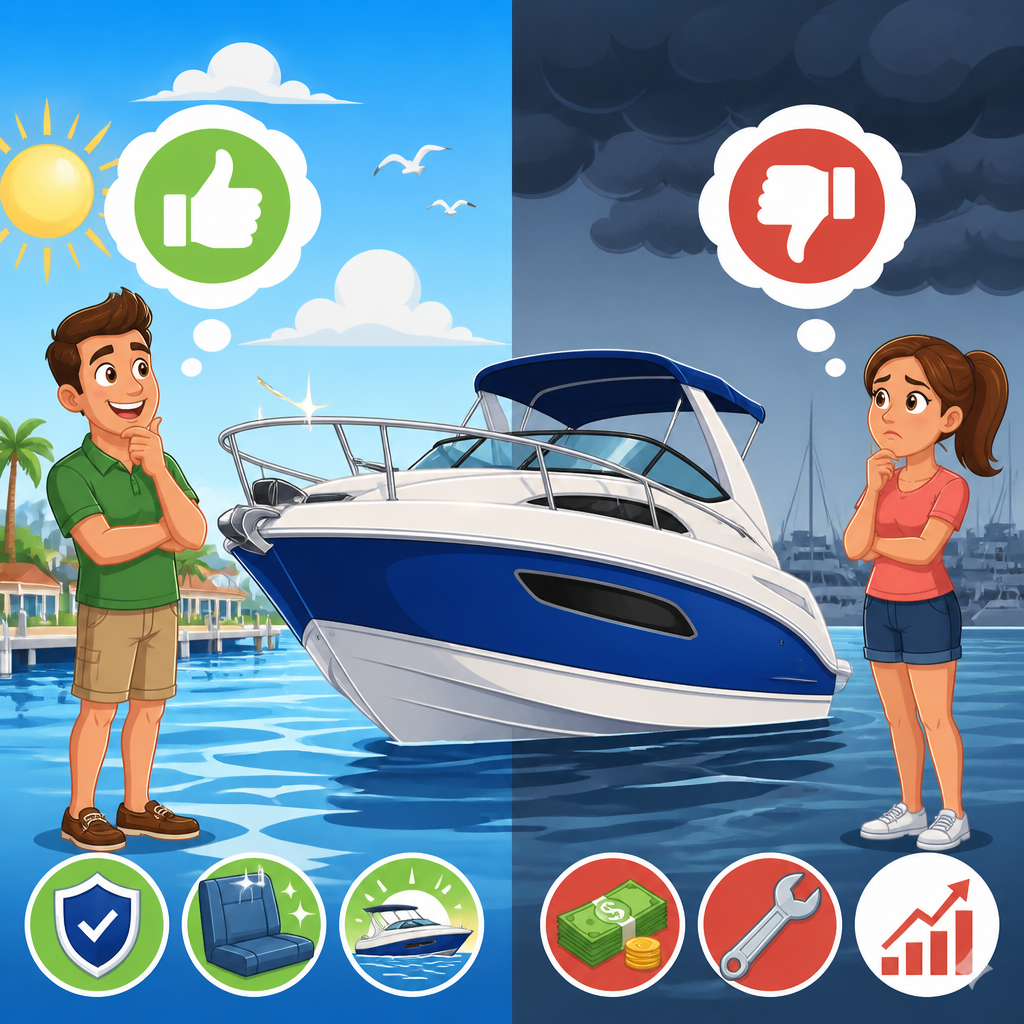
Buying a new boat sounds simple until you compare sticker price, depreciation, financing, warranties, maintenance, and resale value against the realities of the used market. In the marine industry, “new” means a boat sold by a dealer or builder that has not previously been titled to a retail owner, while “used” covers everything from nearly new brokerage listings to older vessels with several seasons of wear. The decision matters because a boat is not a casual purchase: it combines the economics of a vehicle, the upkeep demands of a second home, and the safety standards of specialized equipment operated on water. I have worked with buyers evaluating center consoles, pontoons, towboats, and cruising sailboats, and the same pattern appears every season: people focus first on monthly payment and horsepower, then discover that storage, insurance, survey findings, and intended use matter just as much.
For buyers researching new vs. used boats, the core question is not whether one choice is universally better. It is which option best matches budget, risk tolerance, usage frequency, and ownership timeline. A new boat typically offers factory warranty coverage, current electronics, cleaner rigging, and fewer immediate repairs. A used boat often delivers more boat for the money, slower depreciation after the first owner, and access to discontinued models with proven performance records. Both paths can be smart. Both can also become expensive if you skip due diligence. This hub article explains the pros and cons of buying a new boat while comparing it directly with used alternatives, so you can narrow your options before speaking with dealers, brokers, lenders, insurers, or marine surveyors.
Why many buyers choose a new boat first
The strongest argument for buying a new boat is predictability. New boats come with known ownership history, current manufacturer specifications, and warranty support that can reduce early risk. On a new outboard-powered fishing boat, for example, the hull warranty may run several years while the engine warranty can often be extended through brand-backed protection plans from builders such as Yamaha, Mercury, or Suzuki. That matters because marine repair costs are rarely minor. A failed multifunction display, corroded steering system, or trailer brake problem can quickly erase what looked like savings on a cheaper alternative.
New boats also reflect current design standards. Builders now integrate better fuel management, improved seating ergonomics, digital switching, NMEA 2000 networking, lithium-ready electrical systems, and more efficient outboards than many boats built a decade ago. If you want joystick docking, shallow-water anchoring, integrated trolling motors, or touchscreen helm control, buying new can be the easiest way to get those features without retrofitting. Families entering boating for the first time often benefit from this simplicity. Instead of inheriting old wiring splices, sun-damaged vinyl, and unknown winterization habits, they start with a cleaner baseline and learn the boat from day one.
Another practical advantage is financing. Lenders generally like newer collateral, and buyers may secure longer terms or more favorable rates on a new boat than on an older one, depending on credit profile and model year. Dealers also bundle registration support, trailer setup, delivery orientation, and manufacturer incentives in ways private-party sellers cannot. When the boat is intended for regular weekend use and minimal downtime, that package has value beyond the invoice price.
The real disadvantages of buying a new boat
The largest drawback is cost, and not just the sticker. New boats usually carry destination charges, dealer prep, electronics packages, documentation fees, taxes, and add-ons such as covers, safety gear, and upgraded trailers. Buyers comparing a showroom price with an online used listing often underestimate the difference between base MSRP and true out-the-door cost. On top of that, depreciation is front-loaded. Like cars, many boats lose value fastest in the first years, though exact rates depend on brand strength, engine hours, market demand, and maintenance records.
Availability can be another issue. Buyers assume ordering new means getting exactly what they want quickly, but production schedules, engine allocation, and custom options can create long lead times. I have seen buyers miss an entire boating season waiting for a build slot or delayed rigging components. A used boat already in local inventory can be inspected, surveyed, sea-trialed, and purchased far faster.
There is also a misconception that new means trouble-free. In practice, early ownership often includes “punch list” work: loose latches, software updates, trailer light issues, livewell pump adjustments, or cosmetic defects discovered after delivery. Most are correctable under warranty, but they still take time and coordination with a service department during peak season. If your nearest authorized dealer is far from your marina or storage yard, warranty convenience can be less impressive than it appears on paper.
How used boats create value when chosen carefully
Used boats attract buyers for one clear reason: value. The same budget that buys a modest new runabout may buy a larger, better-equipped used center console, express cruiser, or wake boat with upgraded electronics and a premium trailer. Because the first owner absorbed initial depreciation, the second owner may enjoy lower value loss if the boat is maintained well and sold within a sensible time frame. This is especially true for popular segments with steady demand, such as pontoons in freshwater markets or saltwater fishing boats from brands with strong resale reputations.
A used boat also gives you a real operating history to evaluate. Instead of relying only on brochures and sea-trial impressions, you can review engine-hour data, service invoices, haul-out records, compression results, and prior survey notes. Certain hulls develop loyal followings because they are known for dry rides, efficient cruise speeds, or durable layups. When a model has been in service for years, owner forums, parts suppliers, and independent mechanics usually know its common issues. That knowledge reduces uncertainty.
For experienced buyers, used inventory can also open categories that are no longer built in the same way. Some older boats have heavier construction, deeper storage, larger cockpits, or simpler systems than current versions designed around different price points. Simpler can be a benefit. A mechanically straightforward used skiff with a healthy four-stroke outboard may be easier and cheaper to own than a heavily optioned new boat loaded with systems you do not need.
The hidden risks in the used market
The downside of buying used is condition risk. Boats age harder than many land-based assets because they face ultraviolet exposure, vibration, moisture, corrosion, and inconsistent storage. Problems may hide beneath clean upholstery and fresh wax. Soft decks, wet coring, neglected bellows, aged fuel lines, osmotic blistering, corroded trailers, or poorly executed aftermarket wiring are expensive surprises. Unlike buying new, you inherit every previous maintenance decision, good or bad.
This is why a marine survey is essential for most used purchases, especially above entry-level price points. Accredited surveyors follow recognized inspection practices and evaluate hull structure, systems, safety gear, and visible defects, while engine specialists can perform compression tests, ECU printouts, and fluid analysis. A sea trial should confirm cold start behavior, wide-open-throttle range, trim function, steering response, and electronics operation. If a seller resists a survey or sea trial, walk away.
Insurance and financing can also become more restrictive as model year increases. Some insurers limit coverage on older boats or require surveys before binding policies. Lenders may cap loan terms, require larger down payments, or decline older collateral entirely. Parts availability matters too. A discontinued sterndrive component or obsolete chartplotter can turn a bargain into a long repair search. Used boats save money only when the underlying platform remains supportable.
Key factors to compare before deciding
When clients ask me whether to buy new or used, I reduce the decision to intended use, ownership horizon, maintenance capacity, and total annual cost. A family planning frequent local day trips with limited repair tolerance may benefit from a new pontoon or bowrider with warranty backing. An angler who understands engines and trailer maintenance may get better value from a three- to five-year-old center console that has already taken its biggest depreciation hit. Weekend frequency matters because downtime feels more expensive when every usable Saturday counts.
| Factor | Buying New | Buying Used |
|---|---|---|
| Purchase price | Highest upfront cost, plus dealer fees and taxes | Lower entry cost, often more features for the money |
| Depreciation | Usually steepest in early years | Often slower if previous owner absorbed initial drop |
| Warranty | Factory coverage and possible extended plans | Limited or none, unless transferable coverage remains |
| Condition certainty | No prior retail owner history | Depends on maintenance, storage, and inspection results |
| Technology | Latest electronics and systems integration | May need upgrades, but proven equipment can be adequate |
| Financing | Often easier terms and manufacturer incentives | Terms may shorten with age and lender policy |
| Time to buy | May involve order delays or production lead times | Often available immediately after survey and paperwork |
Storage and environment should weigh heavily in the choice. Boats kept in saltwater year-round age differently from trailer-kept freshwater boats. Covered dry-stack storage reduces cosmetic wear but adds annual cost. If your marina requires bottom paint, factor that into a new purchase immediately. If you tow often, trailer condition becomes critical; replacing axles, brakes, tires, and hubs can cost far more than first-time buyers expect.
Think carefully about upgrades as well. Buyers are frequently drawn to used boats because they already include GPS, VHF radio, trolling motor, Power-Pole anchors, wake tower speakers, or custom canvas. Those additions have value, but only if installed correctly and suitable for your use. I inspect wiring quality and backing hardware closely because poor aftermarket work creates long-term reliability issues.
Best practices for shopping smart in either market
Start with mission, not emotion. Define where you will boat, how many people you will carry, whether you need overnight capability, and what vehicle will tow the boat safely. Then build a full ownership budget that includes taxes, registration, storage, fuel, insurance, maintenance, winterization, cleaning, and emergency repairs. Many buyers can afford the purchase but underestimate annual operating cost. That is the mistake that turns excitement into regret.
For new boats, compare dealer reputation as carefully as the brand. Delivery quality, service turnaround, warranty advocacy, and parts support vary widely. Ask what is included in commissioning, whether a water test is part of handover, and how warranty claims are scheduled during summer. For used boats, insist on title clarity, hull identification number verification, maintenance records, and a professional survey. Check engine hours, but do not treat low hours as automatically better; a neglected low-hour engine can be worse than a regularly serviced one with moderate use.
This hub topic connects naturally to deeper decisions. Buyers comparing propulsion should read dedicated guidance on outboard vs. sterndrive ownership cost. Those evaluating value retention should review resale timing, regional demand, and brand-specific depreciation trends. A separate checklist for sea trials, surveys, and closing paperwork is also useful before any transaction. The goal is to make this page your starting point: understand the tradeoffs here, then move into specialized research based on boat type, budget, and intended water.
Conclusion: choosing the right boat, not just the newest one
The pros and cons of buying a new boat become clearer when you look beyond showroom appeal. New boats offer warranty protection, current technology, easier financing, and a clean ownership slate, but they also bring higher purchase prices and faster early depreciation. Used boats can deliver stronger value, more equipment, and slower value loss, yet they demand disciplined inspection and greater tolerance for maintenance risk. Neither path is automatically smarter; the right answer depends on how you will use the boat, how long you plan to keep it, and how comfortable you are managing repairs, upgrades, and resale.
If you want convenience, current features, and less uncertainty, buying new may be worth the premium. If you want maximum boat for the budget and are willing to invest in due diligence, a used boat may be the better financial move. Begin with your use case, total cost, and nonnegotiable features, then compare real listings and dealer quotes side by side. Once those numbers are on paper, your best option usually becomes obvious. Use this guide as your hub, narrow your shortlist, and take the next step with a surveyor, dealer, or broker who knows your market.
Frequently Asked Questions
Is buying a new boat worth the higher upfront cost?
Buying a new boat can be worth the higher purchase price, but it depends on what you value most: predictability, customization, warranty protection, and the latest features, or lower initial cost and slower depreciation. A new boat gives you the benefit of being the first retail owner, which usually means no hidden maintenance history, no unknown damage, and no previous wear from another operator. You also have the opportunity to choose the engine package, electronics, layout, upholstery, and factory options that fit your boating style instead of compromising with what is available on the used market.
The downside is that new boats almost always come with the steepest depreciation curve. Much like a new vehicle, a boat can lose value early in its ownership life, especially in the first few years. That means the premium you pay for new condition, factory freshness, and dealer support may not be fully recoverable if you decide to sell sooner than expected. Beyond the sticker price, buyers should also account for sales tax, registration, insurance, storage, fuel, safety gear, and ongoing service costs, all of which can make the total cost of ownership significantly higher than the purchase contract alone suggests.
For many buyers, the decision becomes less about whether a new boat is objectively “worth it” and more about how they plan to use it. If you want a long ownership horizon, intend to maintain the boat carefully, and value peace of mind over finding the lowest entry price, new can make excellent sense. If your goal is maximizing value, minimizing depreciation, or entering boating with less financial exposure, a quality used boat may offer a better balance.
What are the biggest advantages of buying a new boat instead of a used one?
The biggest advantages of buying a new boat are warranty coverage, known history, modern technology, and the ability to tailor the boat to your preferences. With a new purchase, you typically receive a manufacturer’s hull warranty, component warranties, and engine coverage, which can reduce the financial risk of early mechanical or structural issues. That support can be especially valuable for first-time buyers who want a clearer ownership experience and a dealership relationship for service, training, and setup.
Another major benefit is certainty. A new boat has not previously been titled to a retail owner, so there is no question about prior neglect, improper storage, grounding incidents, deferred maintenance, or amateur modifications. Used boats can represent excellent value, but they also require more diligence during inspection and survey because condition varies widely from one vessel to another. With new inventory, buyers generally know exactly what they are getting and can expect systems, finishes, and electronics to be current rather than outdated or near replacement age.
New boats also tend to offer the latest design improvements, including more fuel-efficient engines, updated helm technology, cleaner rigging, improved comfort features, and enhanced safety equipment. In some segments of the market, these upgrades meaningfully improve the ownership experience. The tradeoff, of course, is price. Buyers pay for those advantages through a higher purchase cost and typically faster early depreciation. So while the benefits of buying new are real and often significant, they must be weighed against the premium attached to them.
What are the main disadvantages of buying a new boat?
The main disadvantages of buying a new boat are depreciation, higher upfront expense, and the possibility that financing a larger purchase will increase your long-term cost even further. New boats usually carry the highest asking prices in the market, and because they have never been previously titled to a retail owner, dealers and builders price them accordingly. That means buyers are often taking on larger loans, larger down payments, and potentially larger insurance and tax obligations from day one.
Depreciation is often the most important drawback. A boat may lose value quickly once it becomes a titled, previously owned vessel, even if it remains in excellent condition. This matters especially for owners who may want to trade up, change boating styles, or exit boating after only a few seasons. In those cases, the initial premium paid for “new” condition may not translate into stronger resale performance relative to a carefully selected used boat.
There are also practical ownership realities that surprise many first-time buyers. Even a brand-new boat still requires maintenance, winterization in seasonal climates, cleaning, proper storage, scheduled engine service, and repairs not covered by warranty due to wear, misuse, or excluded items. Some owners assume “new” means “expense-free,” but that is rarely true. In addition, warranty work can take time during busy service seasons, and marine parts availability can affect turnaround. So while buying new reduces certain risks, it does not eliminate the responsibilities and costs that come with boat ownership.
How do financing, warranty coverage, and maintenance compare when buying a new boat?
Financing, warranty protection, and maintenance often form the core practical case for buying new. Lenders are sometimes more comfortable financing new boats because the collateral is easier to value, the condition is presumed to be better, and the loan structure may be more straightforward than with older vessels. Depending on the market and the buyer’s credit profile, this can mean more favorable terms, lower rates, or longer amortization periods than may be available for older used boats. That said, better financing terms do not automatically mean lower overall cost, because financing a higher principal balance can still result in significantly more money spent over time.
Warranty coverage is one of the strongest arguments in favor of new. A new boat may include separate warranties for the hull, deck, structure, engine, electronics, and accessories, though the exact coverage varies by builder and component manufacturer. Buyers should read the warranty language carefully, because coverage periods, transferability, exclusions, required maintenance records, and haul-out or transportation responsibilities can differ. A strong warranty provides reassurance, but it should never be treated as a substitute for understanding the product and the dealer’s service reputation.
Maintenance is where expectations need to be realistic. A new boat may require less immediate repair work than a used one, but it still needs regular service from the start. Engines must be maintained on schedule, batteries monitored, pumps checked, systems tested, and cosmetic finishes protected. In other words, new boats often reduce the risk of inherited problems, but they do not remove the cost of responsible ownership. The smartest buyers compare not just financing offers and warranty summaries, but also annual maintenance budgets, storage fees, and local service availability before making a final decision.
Will a new boat have better resale value than a used boat?
A new boat does not automatically have better resale value simply because it started life as new. What it often has is stronger short-term market appeal due to age, condition, warranty status, and updated equipment. However, resale value and value retention are not the same thing. A new boat may sell for more dollars later than an older used boat, but it may also have lost a greater percentage of its original purchase price in the process. That distinction is critical when evaluating whether buying new is financially advantageous.
Resale outcomes are influenced by several factors beyond whether the boat was bought new or used. Brand reputation, model popularity, engine hours, maintenance records, storage history, freshwater versus saltwater use, and overall cosmetic condition all matter. A well-kept used boat from a respected builder can outperform a neglected newer boat when it comes time to sell. Similarly, certain categories of boats hold value better than others depending on market demand, regional preferences, and fuel or slip considerations.
Buyers who are concerned about resale should think strategically from the start. Choosing a proven brand, avoiding overly niche configurations unless they match your long-term needs, keeping service records, following maintenance schedules, and protecting the boat from avoidable wear can all help preserve value. In many cases, the best way to improve future resale is not simply to buy new, but to buy carefully, maintain consistently, and own with the eventual next buyer in mind.