Buying a boat during the off-season can save thousands of dollars, widen your negotiating leverage, and give you more time to inspect options carefully before launch season begins. In boating, the off-season usually means late fall through winter, when demand drops after summer use ends and before spring buyers flood dealerships and brokerage listings. The best time of year to buy a boat depends on climate, boat type, and whether you want the lowest price, the best selection, or the fastest path to getting on the water. I have worked through enough year-end dealership inventories, brokerage closings, and winter survey schedules to see the same pattern repeat: buyers who shop when everyone else stops often make calmer decisions and better deals. This matters because a boat purchase is not just a retail transaction. It combines vehicle-style depreciation, marine financing, insurance underwriting, storage logistics, registration requirements, title verification, and mechanical risk. Understanding seasonality helps you manage each of those variables instead of reacting to them under springtime pressure.
For most buyers, “best time” really means aligning timing with priorities. If your goal is price, late fall and year-end are usually strongest because dealers clear aging inventory and private sellers want to avoid another round of storage, winterization, and insurance costs. If your goal is selection, late summer into early fall can be better because more owners list boats immediately after the season. If your goal is factory ordering a new model, boat show season and early ordering windows may create incentives, though not always the rock-bottom pricing seen on in-stock units. As a hub for the broader best time of year to buy a boat topic, this guide explains how off-season buying works, what to inspect, when discounts are real, how regional markets affect timing, and how to plan your purchase so the low price does not become a high-cost mistake later.
Why the off-season often produces the best boat deals
Off-season pricing is driven by simple economics: fewer active buyers, higher carrying costs for sellers, and stronger incentives to move inventory before another calendar year starts. Dealers with floorplanned inventory pay interest to keep unsold boats on hand, so a model sitting into winter is expensive even if it looks pristine in a showroom. Manufacturers also roll model years forward, which can make last year’s unsold unit less attractive on paper despite being functionally identical. On the private market, owners face storage bills that can range from several hundred dollars for rack storage to several thousand for heated indoor storage on larger cruisers. Add haul-out, winterization, shrink wrap, battery maintenance, and insurance, and many owners would rather accept a lower offer than carry the boat another six months.
I have seen this most clearly with sterndrive bowriders, pontoons, and family deck boats in northern markets. A seller asking $42,000 in July may quietly accept $36,000 in November because the next invoice is due. That does not mean every off-season listing is a bargain. Some sellers anchor to spring prices regardless of weather, and some dealerships advertise discounts that are mostly markdown theater. The useful pattern is that your leverage improves because time is no longer on the seller’s side. You can schedule a marine survey, verify maintenance records, compare sold listings, and negotiate based on engine hours, trailer condition, electronics age, and service history rather than being rushed by competing offers. In practical terms, off-season buying works best when you combine lower demand with disciplined due diligence.
Best months to buy a boat by purchase goal
The best month to buy a boat is not universal, so it helps to match the calendar to your objective. August through October often delivers the best selection in seasonal markets because owners decide after summer whether they used the boat enough to justify another year of expenses. October through December is usually the strongest period for negotiating price on used boats, particularly in colder regions where winterization deadlines create urgency. December can be especially productive at dealerships because annual sales targets, flooring costs, and tax planning all influence willingness to deal. January and February still offer value, but selection can narrow after the best fall listings are absorbed by prepared buyers. March and April typically favor sellers because shoppers want immediate water access and are willing to compromise.
| Goal | Best Window | Why It Works |
|---|---|---|
| Lowest price on used boats | October to December | Sellers want to avoid storage, winterization, and another off-season of ownership |
| Best used inventory selection | August to October | Owners list after evaluating summer usage and before winter bills arrive |
| Best deal on new in-stock boats | November to January | Dealers clear prior model years and reduce flooring expense |
| Ordering a new boat | Winter boat show season | Manufacturers and dealers may bundle incentives, options, or financing promotions |
| Quick spring use | Late winter | Enough time remains for survey, financing, and pre-delivery work before launch |
Regional differences matter. In Florida, Texas, and parts of the Gulf Coast, boating demand stays more active year-round, so the seasonal pricing swing is usually smaller than in the Great Lakes, Northeast, Pacific Northwest, or inland freshwater markets with defined layup periods. Fishing boats can also follow species and tournament calendars. A bass boat may command stronger spring demand than a cabin cruiser in the same area. If you are using this page as your hub for deciding the best time of year to buy a boat, the key rule is to watch your local market first, then adjust for category, climate, and seller motivation.
New boats versus used boats in the off-season
Buying a new boat during the off-season is different from buying used because dealer economics and manufacturer programs shape the deal. New boats have published MSRP, but actual transaction prices depend on freight, prep, electronics installation, trailer inclusion, and seasonal incentives such as financing buydowns or extended warranty packages. The strongest off-season opportunities usually appear on in-stock units, demo boats, and prior model years. A 2024 model still on the lot after the 2025 line is announced will often have more room than a freshly ordered 2025 build. However, ordering new off-season can still be smart if you want specific power, upholstery, electronics, or layout choices that are hard to find later.
Used boats reward off-season buyers even more, but only if inspection is rigorous. Unlike cars, boats hide expensive problems in transoms, stringers, bellows, lower units, fuel systems, and neglected trailers. A low winter price can vanish quickly if the survey reveals elevated moisture in a cored hull, old standing rigging, or deferred engine service. I strongly recommend a professional marine survey for any used boat of meaningful value, plus an engine diagnostic from a qualified technician. On outboards, ask for ECM printouts when available. On inboards and sterndrives, verify compression, cooling system service, manifold age, and winterization records. For sailboats, inspect chainplates, deck core around hardware, and sail inventory condition. The off-season gives you time to do this correctly, which is one reason it remains the best time of year to buy a boat for careful buyers.
How to evaluate whether an off-season discount is real
A real discount is based on market value, not on the size of the advertised markdown. Start by comparing asking prices with actual sold data where you can find it. NADA Guides can provide a baseline for some segments, but they are not sufficient alone because local demand, engine package, electronics, trailer inclusion, and maintenance history move value materially. Check YachtWorld for brokerage trends on larger vessels, Boat Trader for broader retail listings, and completed-sale data on regional marketplaces when available. Then normalize the comparison. A 23-foot center console with a 300-horsepower outboard, dual-axle trailer, and updated MFDs is not comparable to a stripped version with an older engine and no trailer.
Next, calculate ownership costs the seller is trying to escape. If winter storage is $2,000, winterization is $600, shrink wrap is $500, and insurance plus financing carry another $300 per month, a seller may save enough by selling now to justify taking less. That is the source of many true off-season deals. Also ask when the boat last sold, whether there is a lien, how long it has been listed, and whether major annual maintenance is coming due. A boat needing risers and manifolds, trailer tires, canvas replacement, and electronics updates may look cheap but still be overpriced. The right question is not “How much was reduced?” but “What will this boat cost me to own and correct in the first twelve months?”
Inspection, survey, and sea-trial strategy in cold months
The biggest challenge in off-season buying is that many boats are winterized, stored indoors, or inaccessible for a full sea trial. That does not mean you should skip testing. It means structuring the deal properly. The standard approach is a written offer contingent on satisfactory survey, title verification, and sea trial when conditions allow. In colder regions, I prefer contracts that separate acceptance of structural and cosmetic findings from final mechanical acceptance after recommissioning and water testing. This protects both sides: the seller can move toward closing, and the buyer is not forced to assume unseen running issues.
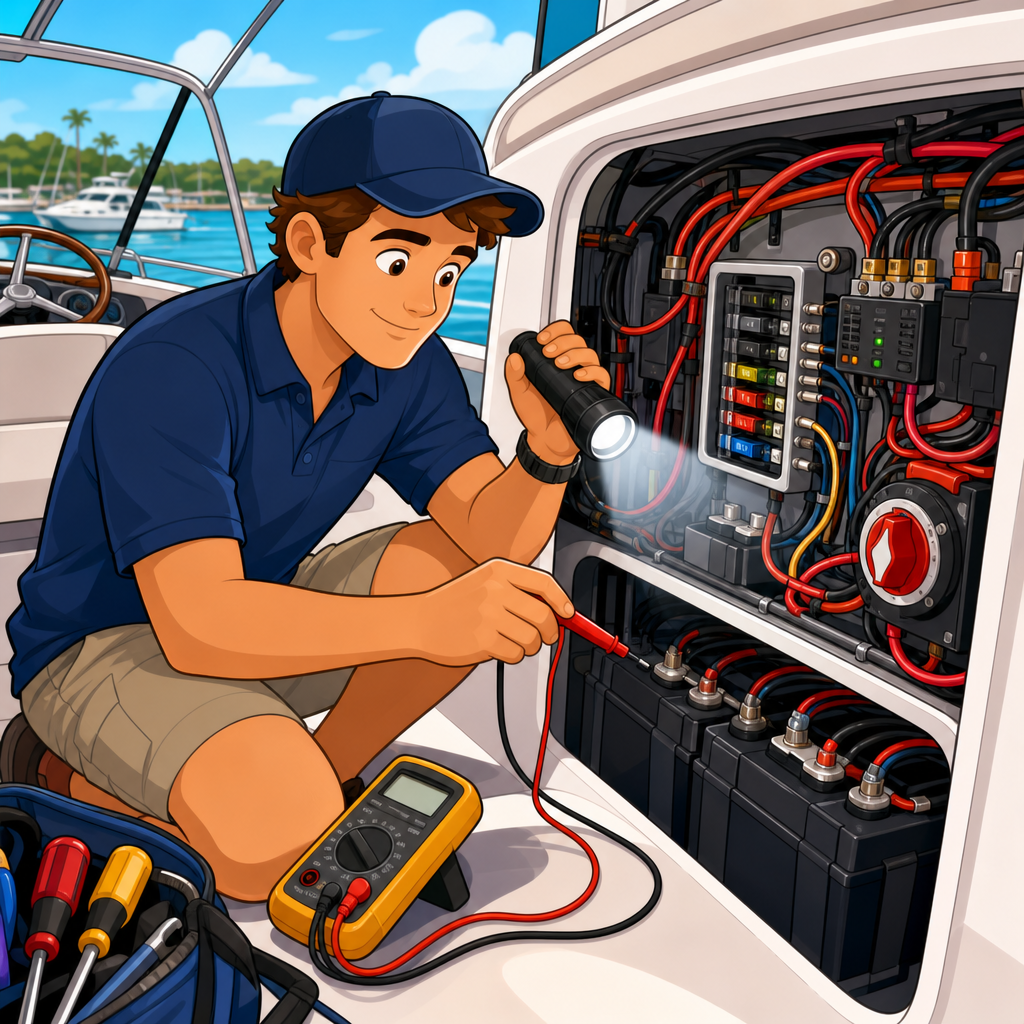
During a winter inspection, focus on what can be verified out of the water. Check hull condition, moisture readings where appropriate, service records, engine hours, wiring quality, bilge cleanliness, battery age, trailer brakes, tire date codes, and signs of freeze damage such as cracked housings or split plumbing. On canvas boats, inspect stitching and clear vinyl carefully; off-season storage often reveals deterioration. On pontoons, inspect the logs for repairs and look underneath for impact damage. On fiberglass boats, walk every deck section for soft spots and inspect around hardware fasteners. A competent surveyor will document deficiencies, estimate significance, and identify safety items required by ABYC or common marine practice. If a seller resists a survey or refuses conditional language around a delayed sea trial, treat that as a pricing signal at minimum and often a reason to walk away.
Financing, insurance, taxes, and timing your closing
Boat financing and insurance can be easier to arrange in the off-season because lenders, underwriters, and title processors are often less slammed than they are in spring. That said, approvals still depend on boat age, type, value, and survey condition. Many lenders tighten on older boats or unusual collateral, and insurers may require a survey before binding coverage on vessels above certain ages or values. Get preapproved early so you know your ceiling and can move quickly when a strong listing appears. Ask the lender whether trailer financing is included, whether electronics and accessories can be rolled in, and how long the approval remains valid.
Closing timing also affects taxes and logistics. Some states assess property or excise taxes based on ownership on a particular date, while others care more about where the boat will be berthed or registered. If you are buying across state lines, confirm title, registration, and sales-tax treatment before wiring funds. I have seen otherwise excellent deals become messy because buyers assumed a title existed when the state only issued registration, or because an old lien release was missing. Use an escrow or closing service for larger transactions, especially on brokerage boats. The money you save by buying off-season should not be exposed to avoidable paperwork risk.
Common mistakes buyers make when shopping in the off-season
The most common off-season mistake is letting a low price override fit. Buyers convince themselves a discounted boat is “too good to miss,” then discover in spring that the layout, draft, tow weight, or maintenance burden does not match how they actually boat. Another mistake is underestimating recommissioning costs. A stored boat may need batteries, impellers, fluids, bottom paint, trailer service, safety gear, and electronics updates before the first launch. A third mistake is failing to budget for storage and transport. Saving $5,000 on purchase price means less if your marina, haul-out, and tow vehicle realities were never considered.
Buyers also miss good opportunities by moving too slowly without preparation. The off-season reduces competition, but the best listings still sell to buyers who already know their target size, propulsion, budget, and must-have features. Build a shortlist, line up financing, identify a surveyor, and decide your walk-away points before making offers. That approach lets you capture the main benefit of off-season buying: better decisions made with less pressure. If you are comparing this timing against spring shopping, the conclusion is straightforward. For most categories and most seasonal markets, the best time of year to buy a boat is when demand is low, seller carrying costs are high, and you have enough time to inspect thoroughly before launch.
Buying a boat during the off-season is rarely about luck. It is about timing, preparation, and knowing where savings are genuine. Late summer and fall often provide the best selection, while late fall through winter usually provides the best negotiating environment. New boats can offer meaningful value on in-stock or prior-year inventory, and used boats can be excellent purchases if the survey, title work, and delayed sea-trial protections are handled carefully. Regional climate, boat type, and your personal goal—price, selection, or spring readiness—should determine the exact month you target.
The main advantage is simple: off-season buyers have room to think. You can compare listings, inspect with discipline, negotiate based on facts, and solve financing or registration details before the spring rush. That usually leads to a better boat at a better net cost, not just a lower sticker price. If you are planning your next purchase, start tracking local listings now, get preapproved, and build your inspection checklist before peak demand returns.
Frequently Asked Questions
When is the best off-season time to buy a boat?
The best off-season window usually falls between late fall and the middle of winter, but the exact timing depends on your location, the type of boat you want, and your main goal as a buyer. In most boating markets, demand starts dropping after summer ends, which means sellers, dealers, and brokers become more flexible from around October through February. If your priority is getting the lowest possible price, the deepest discounts often appear after peak boating season has ended and sellers are motivated to avoid winter storage, maintenance, insurance, and carrying costs. Private sellers may be especially willing to negotiate when they know the boat will sit unused for months.
If your goal is selection rather than the absolute lowest price, shopping earlier in the off-season can make more sense. In early fall and late fall, more owners are listing boats they do not want to store for another year, so inventory can be broader. By mid-winter, prices may improve even more, but the best-kept and most desirable listings may already be sold. Climate matters too. In northern regions with long winters, off-season pricing pressure is usually stronger because storage and winterization are a real concern. In warmer coastal markets, seasonality still exists, but the price swings may be less dramatic because year-round boating is more common.
The smartest approach is to decide what matters most: lowest price, best selection, or readiness for spring launch. Buyers who want maximum negotiating leverage often do best by shopping after boating season but before spring interest ramps up. Buyers who want time for a marine survey, financing, title work, repairs, and transport should not wait too close to spring, because service yards and lenders can get busier as launch season approaches.
How much money can you realistically save by buying a boat during the off-season?
Off-season savings can be significant, but the amount varies based on market conditions, boat age, brand, size, and seller motivation. In many cases, buyers can save thousands of dollars compared with spring pricing because demand is lower and sellers are dealing with the costs and inconvenience of holding the boat through winter. Dealers may offer incentives to reduce inventory before the next model year arrives, while private sellers may lower asking prices to avoid storage fees, winterization work, loan payments, and insurance expenses.
That said, savings are not always just about the sticker price. Off-season buyers often gain value through softer, more flexible terms. A seller who refuses to cut much on price may agree to include a trailer, electronics, safety gear, covers, recent maintenance, or delivery. Dealers may be more willing to add warranties, discounted service packages, or financing promotions when showroom traffic is lighter. On brokerage sales, buyers may find more room to negotiate after a listing has been sitting through the colder months without much action.
It is also important to factor in the total cost of ownership, not just the purchase number. A boat that seems heavily discounted may still require spring commissioning, repairs, transport, registration, storage, or upgrades. The real off-season advantage comes from having time to compare options carefully and negotiate from a position of patience. Rather than rushing to buy in spring when competition is high and good listings move quickly, you can evaluate overall value more thoroughly and often come out ahead financially.
What should you inspect before buying a boat in the off-season?
A careful inspection is essential in any season, but it becomes even more important in the off-season because boats may be winterized, shrink-wrapped, in dry storage, or sitting unused for extended periods. Start with the boat’s overall condition, including the hull, deck, transom, upholstery, flooring, compartments, and signs of water intrusion, neglect, or impact damage. Look for cracks, soft spots, corrosion, mildew, and uneven repairs. Cosmetics matter, but structural condition matters much more. A shiny exterior can hide expensive mechanical or moisture-related issues.
Next, review the engine, propulsion system, electrical components, and service records. Ask for maintenance documentation, winterization details, hours of use, and any records of repairs or upgrades. If the boat is stored out of the water, that can be an advantage because the bottom, propellers, through-hulls, trim tabs, and trailer condition may be easier to inspect. However, because some systems may not be fully operational in cold weather, you should still verify what can be tested and what cannot. Batteries, pumps, electronics, bilge systems, lights, steering, and controls all deserve attention.
Whenever possible, hire a qualified marine surveyor, especially for used boats or higher-value purchases. A marine survey can identify hidden issues that an untrained buyer may miss, including structural concerns, moisture intrusion, safety deficiencies, and signs of deferred maintenance. If the boat cannot be sea-trialed immediately because of winter conditions, discuss with the seller how that will be handled. Some buyers negotiate a sale contingent on a spring sea trial or mechanical inspection. The key is not to let the off-season bargain distract you from due diligence. A lower price is only a good deal if the boat is truly sound.
Is it harder to finance, insure, or complete paperwork on a boat during the off-season?
In many cases, buying during the off-season can actually make the administrative side easier, not harder, because lenders, insurers, brokers, and title services may be less overloaded than they are in spring. You may get more personalized attention and slightly faster responses when there is less market activity. However, timelines still vary by lender and by the type, age, and value of the boat. If you need financing, it is wise to get pre-approved before negotiating so you know your budget and can move confidently when the right boat appears.
Insurance should be arranged early in the process as well. Rates and coverage terms depend on the vessel type, navigation area, storage plans, operator experience, and whether the boat will be used year-round or laid up for winter. Some insurers have specific requirements for older boats or may ask for a marine survey before binding coverage. If you are buying in winter and not launching until spring, ask about lay-up provisions and whether your policy should begin immediately for storage and transport protection.
Paperwork is an area where buyers should slow down and be precise. Confirm title status, registration, hull identification number, lien releases, trailer ownership documents if applicable, and sales tax obligations in your state. If you are buying through a dealer or broker, they can often help coordinate the transfer process, but you should still review everything carefully. Off-season purchases can give you valuable time to get these details right before launch season, which reduces the risk of administrative surprises just when you are ready to use the boat.
What are the biggest advantages and risks of buying a boat before spring?
The biggest advantage of buying before spring is leverage. During the off-season, there are usually fewer active buyers, which means less competition and less pressure to make a fast decision. That often translates into better pricing, more negotiating room, and more willingness from sellers to include extras or complete repairs. You also gain time. Buying before launch season gives you the opportunity to schedule surveys, handle financing, register the boat, plan storage or marina arrangements, and make upgrades before the weather improves. Instead of spending the first warm weeks scrambling through paperwork and repairs, you can be prepared to launch on time.
Another important advantage is decision quality. Spring shopping can become reactive because attractive boats move quickly and buyers fear missing out. In the off-season, you are more likely to compare multiple boats thoughtfully, research market values, and inspect details without the same time pressure. That tends to lead to better purchase decisions, especially for first-time buyers who are still learning what layout, size, and features actually fit their boating plans.
The main risks involve limited testing conditions and the possibility of hidden storage-related issues. A winterized boat may not be fully demonstrated, and a sea trial may be delayed depending on climate. You may also discover that your “great deal” needs expensive recommissioning, electronics replacement, canvas work, or trailer repairs. That is why contingency clauses, surveys, documentation review, and realistic budgeting matter so much. Buying before spring is often a smart move, but the best outcomes come from balancing bargain hunting with careful inspection and total-cost planning.