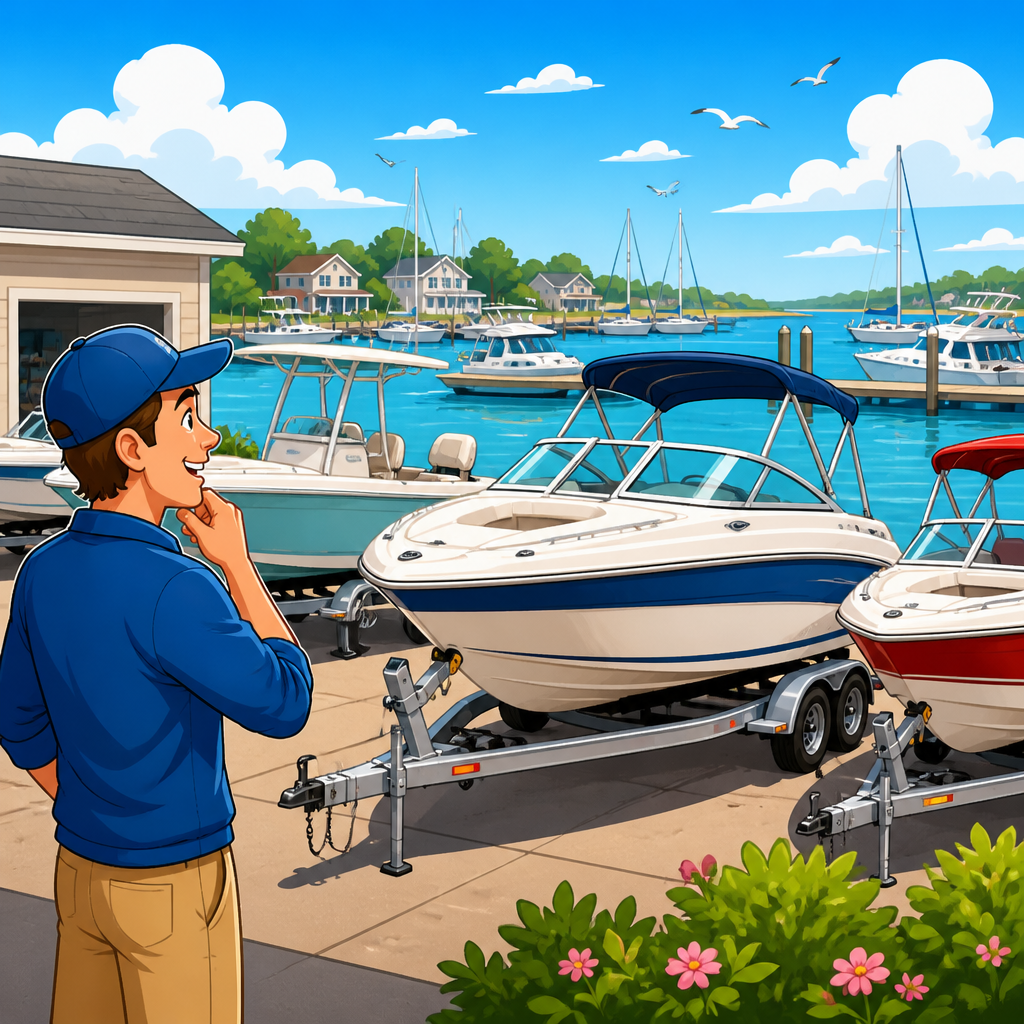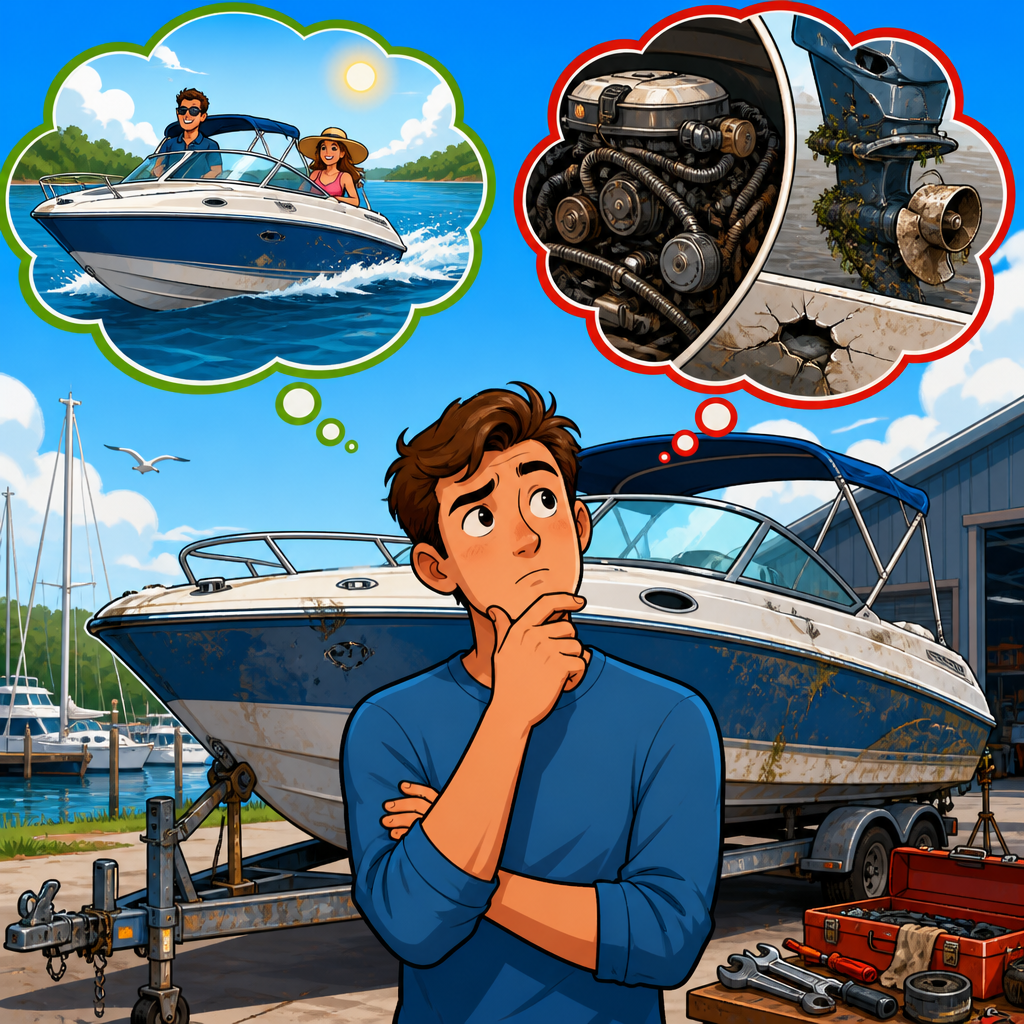
Buying a used boat can absolutely be worth the risk, but only when the buyer understands how condition, maintenance history, depreciation, financing, and intended use affect the real cost of ownership. In the boating market, “used” does not simply mean old, and “new” does not automatically mean trouble free. I have walked buyers through both choices, and the pattern is consistent: the best decision is rarely about the sticker price alone. It is about matching the boat’s age, construction, engine hours, and service record to the way you plan to use it over the next five to ten years.
For most shoppers, the central question is straightforward: should you buy a new boat or a used boat? A new boat offers modern electronics, a factory warranty, current safety features, and the ability to customize layout, power, and accessories. A used boat usually offers lower upfront cost, slower depreciation after the first owner absorbs the steepest drop, and sometimes a better value class, such as moving from a basic new runabout to a higher quality used center console or cruiser. The tradeoff is risk. Hidden moisture in a fiberglass transom, deferred engine maintenance, neglected wiring, soft decks, trailer corrosion, or incomplete paperwork can turn a bargain into a budget drain.
This matters because boats are discretionary purchases with ongoing costs that many first-time buyers underestimate. Storage, insurance, fuel, haul-outs, bottom paint, winterization, registration, routine engine service, and eventual repairs all continue whether the boat is new or used. According to common marine lending standards and valuation practices used by lenders and insurers, buyers should focus on total ownership cost, not just sale price. In practical terms, that means evaluating marine survey results, compression readings, service logs, title status, HIN verification, and realistic annual use before deciding where the better value sits. As a hub for new versus used boat decisions, this guide explains the major factors clearly so you can compare options with confidence.
Why Used Boats Attract So Many Buyers
A used boat attracts buyers for one reason above all: value. New boats often depreciate fastest in the first few years, especially mass-market bowriders, pontoons, and personal watercraft. When a buyer purchases after that initial decline, they may get a larger engine, better brand, upgraded electronics, and a trailer for less than the cost of a smaller new package. I have seen buyers step into a well-kept five-year-old fishing boat with a stainless prop, trolling motor, GPS/fishfinder, power-pole, and tandem trailer for the same money as a stripped new entry model.
Used inventory also creates more choice. A buyer shopping today can compare hull designs, builder reputations, and discontinued layouts that may suit their family better than current models. Some older boats were built heavier, with thicker glass layup or more conservative design standards, and they can be excellent buys if maintained correctly. This is especially true in certain categories such as offshore center consoles, trawlers, and premium aluminum fishing boats.
Another advantage is lower emotional risk during the learning phase. First-time owners often refine their needs after one or two seasons. They discover that they care more about shade, cockpit depth, fuel efficiency, draft, or overnight comfort than they expected. A used boat can be an effective way to learn without absorbing the steepest new-boat depreciation. If the purchase is sound and the market remains stable, resale loss may be manageable.
When a New Boat Makes More Sense
A new boat is usually the better choice for buyers who want predictability, warranty support, and a long ownership horizon. Modern outboards from Yamaha, Mercury, Suzuki, and Honda are reliable when maintained properly, but new buyers gain a major advantage from warranty coverage and known service history from day one. That reduces uncertainty and makes budgeting easier. It also matters for buyers who are not mechanically inclined and do not want to troubleshoot inherited problems.
New boats also benefit from current manufacturing improvements. Many recent models have better helm ergonomics, more efficient hulls, cleaner rigging, improved corrosion protection, and integrated electronics. Safety and compliance details matter too. Updated fuel systems, wiring protection, and bilge layouts can reduce hassle and improve reliability. If you plan to keep a boat for many years and run it heavily, buying new can spread the premium over a longer useful life.
Customization is another practical advantage. With a factory order, buyers can select power, canvas, seating, fishing packages, stereo upgrades, trolling motors, batteries, and trailer specs. That is hard to replicate in the used market without paying to retrofit later. Buyers who need a very specific setup for skiing, offshore fishing, or family cruising often decide that paying more upfront prevents compromises and post-purchase modifications.
The Real Risks of Buying a Used Boat
The risk in buying a used boat is not age by itself. The risk is unknown history. A ten-year-old boat with covered storage, annual service, dry wiring, and a clean survey is often safer than a three-year-old boat that sat neglected with water intrusion and poor repairs. The problems I see most often are transom rot in older wood-cored structures, wet foam or saturated coring, neglected outboard cooling systems, fuel contamination, trailer brake failure, cracked bellows on sterndrives, and electrical additions installed without proper fusing or marine-grade connectors.
Paperwork is another major issue. Before purchase, verify the title or registration requirements in your state, confirm there are no liens, match the hull identification number to documents, and check the engine serial number. If the boat includes a trailer, confirm separate title or registration status where required. These details are not glamorous, but title problems can delay financing, insurance, and future resale.
Sea trial results matter just as much as the listing description. A used boat should start correctly, shift smoothly, reach appropriate rpm at wide-open throttle, hold temperature, plane without excessive bow rise, and show normal trim response. Electronics, pumps, lights, tabs, and steering should all work under load. If anything feels off, assume there is a reason and investigate before closing.
| Factor | New Boat | Used Boat |
|---|---|---|
| Purchase price | Highest upfront cost | Usually lower, sometimes significantly |
| Depreciation | Steepest in early years | Often slower after initial drop |
| Warranty | Factory coverage typically available | Limited or none, unless transferable |
| Condition certainty | Known history from day one | Depends on records, survey, and inspection |
| Features | Latest tech and layouts | May include valuable aftermarket upgrades |
| Maintenance risk | Lower at first, but not zero | Higher if prior care was poor |
| Best for | Long-term owners wanting predictability | Value-focused buyers willing to inspect carefully |
How to Evaluate a Used Boat Before You Buy
If you are asking how to buy a used boat safely, the answer is simple: inspect, verify, and test everything. Start with service records. Ask for annual maintenance receipts, winterization records, impeller changes, gear lube service, manifold or riser replacement on inboards where applicable, and documentation of recalls or warranty work. Consistent records usually signal a careful owner. Gaps do not always mean abuse, but they do justify deeper inspection.
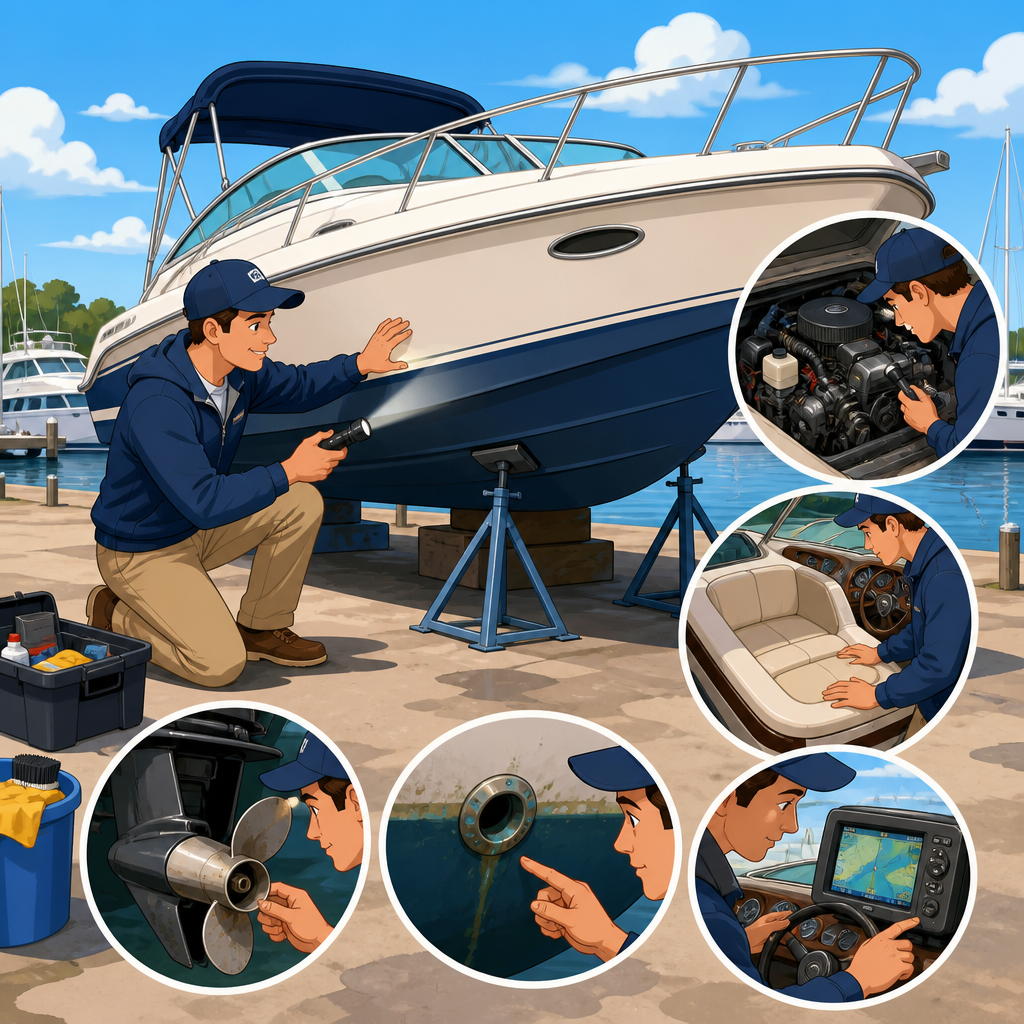
Next, look closely at the hull and structure. Check for spider cracking around stress points, signs of impact repair, uneven gelcoat, soft deck areas, moisture around hardware fasteners, and corrosion on aluminum hulls or trailers. Open every hatch. Smell the bilge. Inspect battery terminals, wiring runs, hose clamps, and fuel lines. Boats reveal their maintenance culture quickly.
A marine survey is the best money most buyers can spend, especially on larger, older, or more expensive boats. Accredited surveyors follow recognized inspection practices and provide a written report useful for pricing, financing, and insurance. On trailerable boats with outboards, an engine inspection by a dealer or qualified marine mechanic is equally important. Compression testing, leak-down testing where appropriate, computer diagnostics, and lower-unit checks can uncover costly issues that a visual walkaround misses.
Finally, insist on a sea trial. Evaluate cold start behavior, idle quality, steering feel, acceleration, vibration, trim response, bilge dryness, and electronics operation. Compare engine hours to age and use. Extremely low hours are not always a positive if the boat sat unused for long periods, because seals dry out, fuel degrades, and corrosion can progress quietly.
Cost of Ownership: Where New and Used Buyers Both Get Surprised
The biggest mistake in the new versus used boat decision is ignoring ownership cost after the sale. Insurance premiums vary by hull value, horsepower, navigation area, and owner experience. Storage costs differ sharply between dry stack, trailer storage, rack service, marina slips, and indoor winter storage. Routine service includes oil changes, water pumps, lower-unit service, filters, spark plugs, batteries, bottom cleaning, trailer bearings, and safety gear replacement. These expenses apply even when a boat is rarely used.
Fuel consumption is another common surprise. Hull weight, prop selection, load, sea conditions, and cruising speed all influence burn rates. A boat that seems affordable to buy may be expensive to run if it is underpowered, overpropped, or simply large for your needs. In my experience, buyers are happiest when they choose the smallest boat that comfortably handles their real use case rather than the biggest boat they can finance.
Repairs also differ by category. A used outboard boat may need a battery bank, trailer tires, pumps, upholstery, and electronics updates soon after purchase. A new boat may avoid those early hits but still require dealer trips for warranty punch-list items. Neither option is maintenance free. The goal is not to eliminate cost; it is to understand and plan for it.
Which Buyers Should Choose New, and Which Should Choose Used
Choose a used boat if you prioritize value, can move quickly on good listings, and are willing to pay for inspections before buying. Used is often ideal for first-time owners, buyers testing a new style of boating, and shoppers who want a better brand or larger size for the same budget. It is especially compelling when the previous owner added high-value equipment and kept excellent records.
Choose a new boat if you want maximum reliability, known history, current technology, and warranty support. New is often the smarter move for buyers with limited time, limited mechanical interest, or a long plan to keep the boat. It also fits buyers who need exact specifications, from engine choice to family seating to fishing rigging.
The smartest approach is to compare specific boats, not abstract categories. A carefully maintained used boat can be a better purchase than a poorly designed or overpriced new one. Likewise, a competitively priced new model with strong dealer support can beat a questionable used boat once survey findings, deferred maintenance, and financing terms are included. Decide based on condition, documentation, total cost, and fit for purpose.
So, is buying a used boat worth the risk? Yes, when the boat has a verifiable history, passes a professional survey and sea trial, and matches your budget beyond the sale price. The used market rewards disciplined buyers because depreciation often works in their favor, and well-kept boats can deliver years of reliable service at a lower entry cost. The key is refusing to confuse a low asking price with a good value.
The broader new versus used boat decision comes down to certainty versus savings. New boats offer warranty protection, customization, and the confidence of a known starting point. Used boats offer access to better equipment, lower initial cost, and less early depreciation. Neither option is universally better. The right choice depends on your experience level, intended use, tolerance for maintenance risk, and ownership timeline.
If you are shopping under the Buying and Selling Boats umbrella, treat this page as your starting point. Build your shortlist, estimate full ownership costs, verify paperwork, and never skip a survey or sea trial on a used purchase. A careful process turns risk into informed decision-making, and that is how buyers end up with boats they enjoy instead of boats they regret. Start comparing real listings with these factors in mind before you make your next move.
Frequently Asked Questions
Is buying a used boat really worth the risk?
Yes, buying a used boat can absolutely be worth the risk, but only when you evaluate it the right way. The biggest mistake buyers make is assuming the decision comes down to price alone. In reality, the value of a used boat depends on condition, maintenance history, engine hours, build quality, storage habits, and whether the boat actually fits how you plan to use it. A well-kept used boat from a reputable owner can offer tremendous value because much of the early depreciation has already happened, which means you may get more boat for your money than if you bought new.
That said, used boats are only a smart buy when you look past appearance. Fresh upholstery, clean gelcoat, and a polished hull do not tell you what is happening inside the engine, electrical system, transom, stringers, or fuel system. A used boat becomes “worth it” when the buyer understands the difference between cosmetic age and structural or mechanical risk. In many cases, a five- or ten-year-old boat that has been serviced consistently and stored properly is a safer financial decision than a newer boat that has been neglected. The real question is not whether used boats are risky. All boats carry some risk. The right question is whether the specific boat in front of you has been cared for well enough to make the risk manageable and the ownership cost predictable.
What should I check before buying a used boat?
Start with the boat’s overall condition, but do not stop there. You want to inspect the hull for cracks, repairs, blisters, soft spots, and signs of impact damage. Look closely at the transom, deck, and floor for flexing or water intrusion, especially on older fiberglass boats. Check the trailer too, if one is included, because worn tires, rusted brakes, bad hubs, and corroded wiring can add immediate costs. Inside the boat, inspect upholstery, compartments, gauges, lights, pumps, switches, and electronics. Small defects may not be deal-breakers, but they help paint a clear picture of how the boat has been treated over time.
The engine and maintenance records are even more important. Ask for service logs, winterization records, impeller replacement history, oil change intervals, and any major repairs or upgrades. Engine hours matter, but context matters more. A higher-hour engine with consistent maintenance can be a better buy than a low-hour engine that sat unused for long periods. If possible, get a professional marine survey and a mechanical inspection, especially for larger boats or anything with significant value. A sea trial is also essential. You want to see how the boat starts, idles, accelerates, shifts, steers, and handles under load. Before you buy, make sure you understand not just what the boat costs today, but what it may need in the next one to three seasons.
Is a used boat cheaper to own than a new boat?
Often, yes, but not always. A used boat usually has a lower purchase price and avoids the steepest period of depreciation, which can make it more affordable from the start. Insurance may also be lower, and depending on the model, you may be able to step into a larger or better-equipped boat than your budget would allow if you bought new. For many buyers, that creates real value. You are not paying a premium for showroom condition, and in some cases, the previous owner has already added useful upgrades such as electronics, covers, trolling motors, or trailer improvements.
However, lower purchase price does not automatically mean lower total cost of ownership. A used boat may need immediate work, such as batteries, tires, pumps, canvas, steering components, or engine service. Older boats can also become more expensive if parts are harder to find or if neglected maintenance begins to surface after purchase. New boats usually come with warranty coverage and fewer near-term repair needs, but they also lose value faster and often cost more to finance. The better financial choice depends on how long you plan to keep the boat, how often you will use it, and whether you have room in your budget for repairs and upkeep. The cheapest boat to buy is not always the cheapest boat to own.
How important is maintenance history when buying a used boat?
Maintenance history is one of the most important factors in the entire buying decision. A used boat’s condition today is largely the result of how it was cared for yesterday. Complete records showing routine oil changes, lower unit service, winterization, cooling system maintenance, battery replacement, and repairs tell you the owner likely stayed ahead of problems instead of reacting after damage occurred. That level of documentation reduces uncertainty, and uncertainty is where most used-boat risk lives.
Good records also help you judge the boat more accurately than appearance alone ever could. Two boats of the same age and model can have very different value if one was rack stored, serviced annually, and cleaned regularly while the other sat uncovered and went years between maintenance. If a seller cannot provide records, that does not automatically mean the boat is bad, but it does mean you should be more cautious and lean more heavily on inspection and survey results. In practical terms, maintenance history helps predict future costs. It tells you whether the boat has likely been managed as a long-term asset or simply used until something broke. For buyers who want to reduce surprises, service history is often as important as the asking price.
Who should buy a used boat, and when is buying new the better choice?
A used boat is often the better choice for buyers who want value, are comfortable doing careful research, and understand that ownership includes ongoing maintenance. It makes especially good sense for first-time buyers who want to learn what type of boating they actually enjoy before committing to a new model at a premium price. It is also a strong option for practical buyers who care more about function, layout, and engine condition than being the first owner. If your goal is to fish on weekends, cruise locally with family, or get into boating without absorbing heavy first-year depreciation, the right used boat can be the smartest path.
Buying new may be the better choice if warranty coverage, the latest technology, custom ordering, and maximum predictability matter most to you. Some buyers do not want the time commitment or uncertainty that can come with evaluating used inventory, and that is completely reasonable. New boats also make sense for buyers who plan to keep the boat for many years and want to control its maintenance history from day one. The best decision comes down to fit. You should match the boat’s age, construction, engine type, and ownership costs to your intended use, not just your initial budget. When buyers make that match well, a used boat can be an excellent investment in enjoyment. When they do not, even a bargain can become expensive very quickly.