
Boat trade-in programs let an owner apply the value of an existing boat toward the purchase of another one, usually through a dealership, broker, or large marine retailer. In practice, the dealer inspects the current vessel, estimates wholesale or resale value, subtracts any outstanding loan payoff, and applies the remaining equity as a credit on the replacement boat. I have worked through these deals with buyers moving from first runabouts into family cruisers and with anglers upgrading electronics, power, and trailer packages. The basic appeal is simple: one transaction can replace two separate projects, because the seller does not need to market the old boat privately while shopping for the next one.
That convenience raises the real question behind every boat trade-in program: is the offer a good deal compared with selling privately, consigning through a broker, bidding at auction, or negotiating directly with a dealer? The answer depends on condition, season, loan balance, local demand, and how the replacement boat is priced. A strong trade can reduce taxes in some states, shorten time on market, and eliminate reconditioning headaches. A weak trade can hide margin inside the new purchase, especially when buyers focus only on monthly payment instead of total transaction value.
This article serves as a hub for buying and selling boats within the broader question of acquiring a boat from a dealer or at auction. It explains how trade-ins are valued, how dealers structure offers, when auction buying makes sense, and how to compare all paths side by side. Key terms matter here. Fair market value is what a willing retail buyer might pay. Trade-in value is usually closer to wholesale. Actual cash value is what a lender or insurer may use in another context. Reconditioning includes detailing, mechanical service, safety repairs, and listing preparation. Once you understand those distinctions, boat trade-in programs become easier to judge on facts rather than emotion.
How boat trade-in programs work at dealerships
Most boat trade-in programs follow a predictable sequence. First, the dealer gathers hull identification number, make, model, year, engine hours, trailer details, service records, and photos. Then the dealership checks market comps using internal sales history, NADA Guides where available, Boat Trader listings, sold data from brokerage networks, and current local inventory. After that, a technician or buyer inspects the boat in person. On the boats I have evaluated, the biggest adjustments came from soft decks, outdated electronics, water intrusion, neglected trailers, and incomplete maintenance logs, not just from cosmetic wear.
Dealers price trades to cover risk. They need margin for transport, service, cleaning, repairs, warranty exposure on certain used inventory, sales commissions, floorplan interest, and the time it may take to resell the boat. If your center console could likely bring $42,000 in a private retail sale, a dealer may offer $32,000 to $36,000 depending on season and how quickly it can turn. That spread is not automatically unfair; it reflects the cost of converting your used boat into sellable inventory. During peak spring demand, offers often improve because the dealer can retail used stock quickly. In late fall, especially in colder markets, offers commonly tighten.
Loan payoff matters as much as vessel value. If the trade is worth more than the remaining loan, the positive equity becomes part of your down payment on the next boat. If the payoff exceeds trade value, the buyer has negative equity. Dealers can sometimes roll that shortfall into the next loan, but that increases loan-to-value ratio and may trigger higher rates, shorter terms, or outright lender rejection. Marine lenders usually care about age, collateral quality, and debt structure more than car lenders do, so underwater trades require extra caution.
Many buyers also overlook tax treatment. In several states, sales tax applies only to the difference between the new boat price and the trade allowance, reducing effective cost. In other states, no such offset exists or rules vary by registration structure. Because boat taxation differs from auto taxation and can involve state and local layers, confirm the rule with the dealer, your state revenue department, or a marine title specialist before assuming a savings figure.
What determines whether a trade-in offer is fair
A fair trade-in offer starts with realistic valuation, not with the number printed on a listing site. Asking prices are often optimistic and may include boats that sit unsold for months. Better evidence comes from recent sold comparables with similar engines, hours, trailer inclusion, electronics packages, and service history. A twenty-four-foot dual console with a newer Yamaha four-stroke and documented annual service can outvalue a superficially similar boat by several thousand dollars. Upholstery condition, canvas, livewell pumps, chartplotter generation, and tandem-axle trailer brake status all influence real money.
Condition grading should be specific. Dealers typically classify boats from rough wholesale-only inventory to clean front-line retail inventory. Front-line means the boat can be sold quickly with limited prep. If a boat needs manifolds, bellows, batteries, tires, bottom paint work, or moisture remediation, the dealer will discount accordingly. I have seen owners expect top-dollar because gelcoat still shines, while survey findings later uncover transom moisture or compression variance that wipes out negotiating leverage. Mechanical documentation is often the best defense against aggressive deductions.
Fairness also depends on the replacement purchase. A dealership can appear generous on the trade while holding firm on the new boat price, fees, freight, prep, and finance reserve. The right way to evaluate the offer is line by line. Ask for the sale price of the new boat before trade, exact trade allowance, loan payoff, taxes, registration, documentation fees, and any dealer-added accessories. Then compare that out-the-door number with what you could achieve through a private sale or consignment. Separate numbers prevent one concession from masking another.
| Option | Typical net price | Speed | Work required | Best for |
|---|---|---|---|---|
| Trade-in at dealer | Lower than private sale, sometimes offset by tax credit | Fast | Low | Buyers prioritizing convenience and immediate replacement |
| Private sale | Highest potential net | Variable | High | Owners with time, clean paperwork, and marketable boats |
| Broker consignment | Mid to high after commission | Moderate | Moderate | Larger boats or owners wanting professional marketing |
| Auction purchase or sale | Can be low or unpredictable | Fast event, variable outcome | Moderate to high due diligence | Experienced buyers comfortable with risk |
Buying a boat from a dealer versus buying at auction
Dealer and auction channels solve different problems. A dealer usually offers inventory inspection, titling assistance, financing access, sea trials on many boats, service department support, and sometimes limited used-boat warranties or extended service contracts. That structure reduces uncertainty, especially for first-time buyers. Auctions, by contrast, can produce attractive prices on repossessions, government surplus, insurer totals, estate assets, or dealer liquidations, but they transfer much more risk to the buyer. Many auction boats are sold as is, where is, with limited recourse once the hammer falls.
For buyers comparing these channels, the largest difference is information quality. Reputable dealers generally know whether a boat was serviced, what systems work, and what defects are already disclosed. Auction catalogs may provide only basic descriptions, a few photos, and terms of sale. Some marine auction houses allow preview inspections; some permit surveyors; some restrict engine starts or water tests. If you cannot inspect bilges, stringers, electrical systems, and engine condition, your bid should reflect that uncertainty aggressively.
Fees also change the economics. Dealer pricing may include freight, prep, documentation, and registration charges. Auctions often add buyer’s premiums, lot fees, storage deadlines, and transport obligations. A buyer who wins a $28,000 auction boat may actually spend several thousand more once premium, tax, hauling, battery replacement, trailer service, and deferred maintenance are counted. I have watched apparent bargains evaporate after impeller service, fuel cleaning, seized caliper replacement, and electronics troubleshooting.
That does not mean auctions are bad. They can be excellent for knowledgeable buyers who can estimate reconditioning costs quickly and who accept that some units are project boats. Salvage-title or insurance-loss boats can make sense for repower candidates, parts harvesting, or commercial operators with in-house repair capability. For a family seeking reliable summer boating, the safer path is usually a dealer or established broker because support, inspection access, and paperwork quality matter more than headline price.
How to evaluate a dealer purchase when a trade-in is part of the deal
The best way to negotiate a trade-in deal is to treat it as three separate transactions: the price of the boat you are buying, the value of the boat you are trading, and the financing terms. Ask the dealership to itemize each part. If you discuss only monthly payment, long loan terms can make almost any package look affordable while increasing total interest significantly. Marine loans often run ten to twenty years depending on amount and boat age, so even a modest rate difference matters.
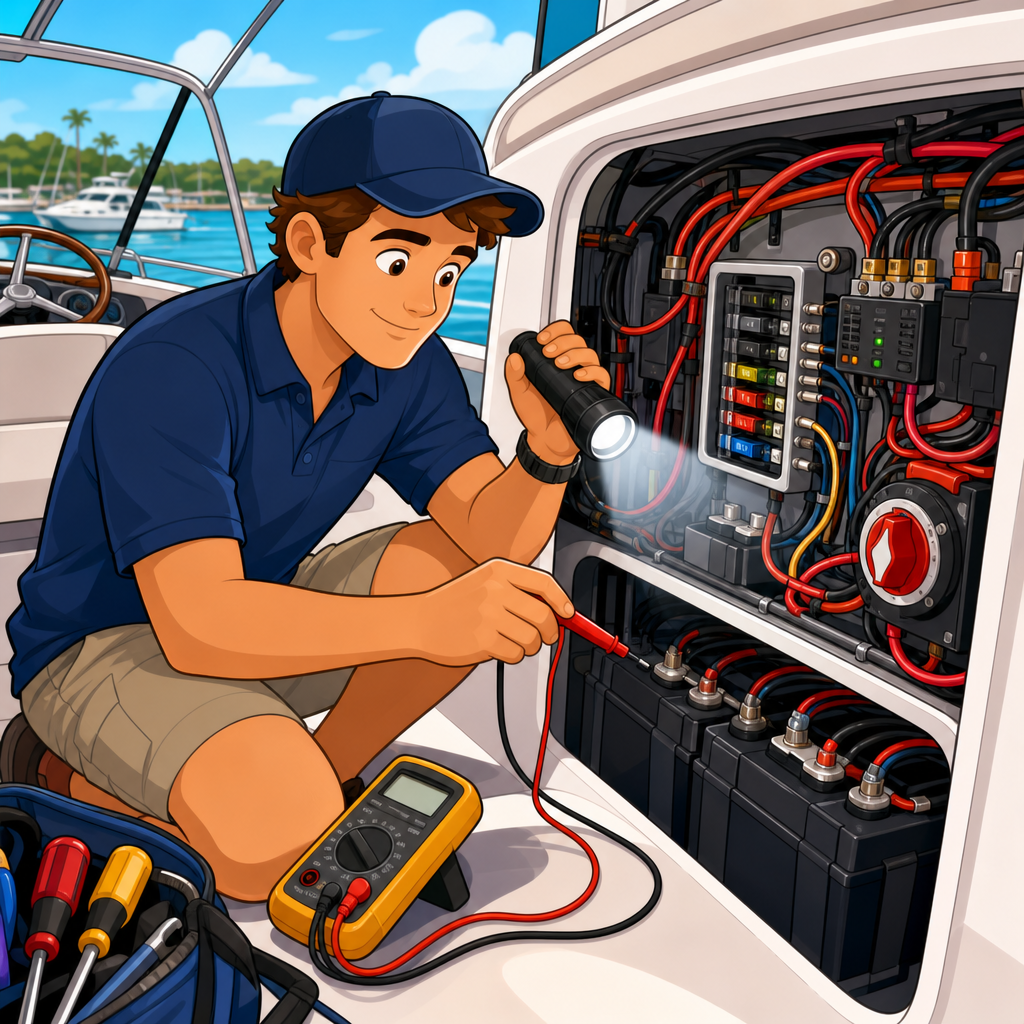
Inspection discipline protects both buyer and seller. On the purchase side, insist on a sea trial for used boats and strongly consider a marine survey by an accredited surveyor, especially for larger cruisers, older vessels, or any boat with signs of deferred maintenance. Standards from organizations such as ABYC and NFPA help frame what safe electrical, fuel, and ventilation systems should look like, and a surveyor will flag deviations. On the trade side, present organized service receipts, winterization records, engine diagnostic printouts where available, and proof that recalls or manufacturer service campaigns were completed. Clean documentation reduces the dealer’s uncertainty discount.
Watch for value shifts hidden in extras. Trailer inclusion, trolling motors, shallow-water anchors, radar, autopilot, lithium battery banks, or premium stereos can materially affect price, but only if they are functional, recent, and relevant to the market. Dealers rarely credit dollar for dollar on aftermarket add-ons. A five-thousand-dollar electronics upgrade might improve saleability more than trade value. The same principle applies to dealer-installed protection packages, ceramic coatings, and prepaid maintenance plans on the replacement boat. Buy them only if the terms are clear and useful.
If you are choosing between dealer inventory and an auction boat, calculate total cost of ownership for the first year. Include survey, transport, storage, insurance, registration, immediate maintenance, and likely repairs. That exercise usually clarifies whether a low upfront number is truly cheaper.
When boat trade-in programs are a good deal, and when they are not
Boat trade-in programs are usually a good deal when convenience has real economic value. Examples include short boating seasons, owners relocating, inherited boats that need quick disposition, or families who do not want strangers at their house for private showings and test rides. They are also attractive when the old boat needs enough cleanup or service that a dealer with in-house technicians can handle it more efficiently than the owner can. If a tax credit applies, the effective difference between trade and private sale can narrow meaningfully.
They are often less attractive when the boat is highly desirable, easy to market, and fully documented. A late-model freshwater pontoon with low hours, clean upholstery, and a trailer in a high-demand region may bring a strong private-sale premium. The same is true for certain offshore center consoles, wake boats, and fishing rigs with sought-after power packages. In those cases, a private sale or consignment may produce far more net equity than a trade.
Negative equity is the clearest warning sign. Rolling debt from one boat into the next can trap buyers in a cycle where they finance depreciation plus old obligations. Another warning sign is emotional urgency. If you fall in love with a replacement boat before researching your current boat’s realistic value, you lose leverage. Good decisions come from comparing multiple paths: trade, private sale, broker listing, and, for purchases, dealer inventory versus auction opportunities. Get at least two trade appraisals, review sold comps, and read every fee line before signing. A boat trade-in program is not inherently good or bad; it is a tool. Used carefully, it can simplify an upgrade and keep you boating sooner. Used casually, it can cost thousands. Start with a written valuation comparison, ask direct questions, and choose the route that delivers the best net outcome for your budget and risk tolerance.
Frequently Asked Questions
What is a boat trade-in program, and how does it work?
A boat trade-in program is a purchase arrangement that lets you use the value of your current boat as a credit toward another one. In most cases, the transaction happens through a dealership, broker, or large marine retailer rather than through a private sale. The basic process is straightforward: the seller evaluates your existing boat, reviews its age, condition, hours, maintenance history, electronics, trailer, and market demand, then assigns it a trade-in value. If you still owe money on the boat, the dealer also confirms the loan payoff amount. The difference between the boat’s appraised value and the remaining loan balance becomes your available equity, and that equity is applied to the next purchase.
For example, if your current boat is worth $40,000 on trade and your payoff is $25,000, you may have $15,000 in usable equity to put toward the replacement boat. If the payoff is higher than the trade value, you are in a negative equity situation, which means the shortfall may need to be paid out of pocket or rolled into the next loan, depending on the lender and deal structure. This is common when owners upgrade before they have paid down much of the original financing.
Trade-in programs are popular with owners moving from entry-level runabouts into family cruisers, center consoles, wake boats, or fishing rigs with upgraded electronics and power. The main appeal is convenience. Instead of listing the boat yourself, showing it, sea-trialing it with buyers, handling surveys, and negotiating separately, you complete the sale and purchase in one coordinated transaction. That simplicity is valuable, especially in seasonal markets where timing matters.
Are boat trade-in programs usually a good deal for buyers?
They can be a very good deal, but “good” depends on your priorities. If your top goal is getting the highest possible dollar amount for your current boat, a private-party sale often produces a better price than a trade-in. Dealers typically value boats at a wholesale or resale level because they are taking on reconditioning costs, storage, advertising, carrying costs, possible repairs, and the risk that the boat may sit before it sells. That means the trade offer is often lower than what you might get if you sold the boat yourself to an end buyer.
On the other hand, a trade-in can still be the better overall deal when you factor in speed, reduced hassle, and transaction efficiency. You avoid the work of cleaning and marketing the boat, answering inquiries, scheduling showings, negotiating with strangers, and handling the paperwork alone. You also reduce the risk of owning two boats at once or missing out on the replacement boat you want while waiting for your existing one to sell. For many buyers, especially families upgrading before the season or anglers trying to lock in a specific model with desired electronics and rigging, that convenience has real value.
There may also be tax advantages in some states when a trade-in reduces the taxable purchase amount on the next boat, though rules vary by state and transaction structure. That can narrow the gap between a higher private-sale price and a lower trade-in value. The smartest approach is to compare the total net result, not just the trade number. Look at the trade allowance, the price of the replacement boat, financing terms, loan payoff, possible tax effects, and any fees. A trade-in is a good deal when the complete package makes sense for your budget and saves you enough time and risk to justify accepting a somewhat lower value on the old boat.
How do dealers determine the value of a trade-in boat?
Dealers typically use a combination of market data, condition assessment, brand reputation, and resale potential to set trade-in value. They are not just asking what the boat might sell for online. They are asking what they can realistically resell it for after inspection, transport if needed, service work, detailing, marketing, and warranty or post-sale expectations. That is why two boats of the same make and model can receive very different offers depending on condition and equipment.
The evaluation usually includes hull condition, engine hours, service records, cosmetic wear, upholstery, canvas, trailer condition, electronics, battery and charging systems, signs of corrosion, and evidence of proper storage. Saltwater use, outdated navigation gear, soft flooring, neglected gelcoat, water intrusion, and deferred maintenance can all reduce value. By contrast, clean service documentation, updated multifunction displays, newer trolling motors, repowered outboards, fresh upholstery, and a clean survey can support a stronger offer. Dealers also consider how desirable the boat is in their local market. A family bowrider may move quickly in one region, while a bay boat or pilothouse model may be easier to resell in another.
Seasonality matters too. In peak buying months, dealers may be more aggressive because retail demand is stronger. During slower periods, trade values can tighten because inventory carries longer. If you want the best possible appraisal, present the boat as if you were selling it retail: clean it thoroughly, organize service receipts, fix obvious small issues, make sure electronics power up, and be honest about what needs attention. A well-prepared boat creates confidence and reduces the dealer’s risk, which can improve the offer.
What should I watch out for before accepting a boat trade-in offer?
The biggest mistake is focusing only on the trade-in number without looking at the entire transaction. A dealer can offer a generous trade allowance while holding firm on an inflated price for the replacement boat, or offer a lower trade amount but discount the next boat heavily. What matters is your final out-of-pocket cost, financing terms, and total deal structure. Ask for a clear breakdown showing purchase price, trade allowance, loan payoff, sales tax treatment if applicable, fees, and final financed amount.
You should also pay close attention to negative equity. If you owe more than the boat is worth, that shortfall does not disappear. It may be rolled into the next loan, increasing your monthly payment and putting you further upside down on the new purchase. That can limit flexibility later if you want to sell or trade again. Confirm whether the lender allows the structure and whether the payment still fits your long-term budget.
Another area to watch is reconditioning deductions. Some dealers present a strong headline value, then reduce it after deeper inspection for items like worn trailer tires, bad pumps, engine fault codes, cosmetic damage, or nonfunctioning electronics. That is not necessarily unfair, but it is a reason to ask how the appraisal was reached and whether it is firm pending survey or sea trial. You should also verify payoff timing with your lender, especially if automatic payments are due or if interest accrues daily. Finally, review all documents carefully to confirm title status, lien handling, included accessories, and any promises about repairs, delivery, or installation on the next boat. A clean, transparent paper trail is just as important as the valuation itself.
How can I get the best deal when trading in my boat for another one?
Start by researching both sides of the transaction. Know the approximate retail and trade value of your current boat by comparing similar listings, sold comps when available, and local market demand. At the same time, research fair pricing for the boat you want to buy. This gives you leverage and helps you judge whether the dealer is being aggressive on the trade, the replacement boat, or both. The strongest negotiators do not treat these as separate issues; they evaluate the net difference between the two boats.
Preparation matters. Clean the boat thoroughly, remove personal gear, gather maintenance records, address easy cosmetic fixes, and make sure key systems work. A boat that shows well is easier for a dealer to resell and less risky to appraise. If you have upgraded electronics, a new trailer, recent engine service, or major documented repairs, make sure those details are included in the valuation conversation. You should also know your exact loan payoff before negotiating so there are no surprises about available equity.
It is wise to get more than one opinion. Even if you prefer a particular dealership, obtaining multiple trade quotes can reveal how different sellers view your boat’s marketability. Some dealers may want your model more than others because it suits their customer base. If you are not in a rush, you can also compare the best trade offer against the likely net proceeds from a private sale after advertising, cleaning, storage, repair touch-ups, and your time. In some situations, the private route clearly wins. In others, the trade-in becomes more attractive once you account for timing, tax savings, financing simplicity, and reduced hassle.
Finally, negotiate professionally and look at the whole package. Ask for a written buyer’s order, confirm tax treatment in your state, review financing carefully, and make sure any installed accessories, electronics packages, or promised rigging work are spelled out. The best trade-in deal is not always the one with the highest allowance on paper. It is the one that gives you a fair value for your current boat, a competitive price on the next one, manageable financing, and a smooth path into a boat that better fits how you actually use the water.