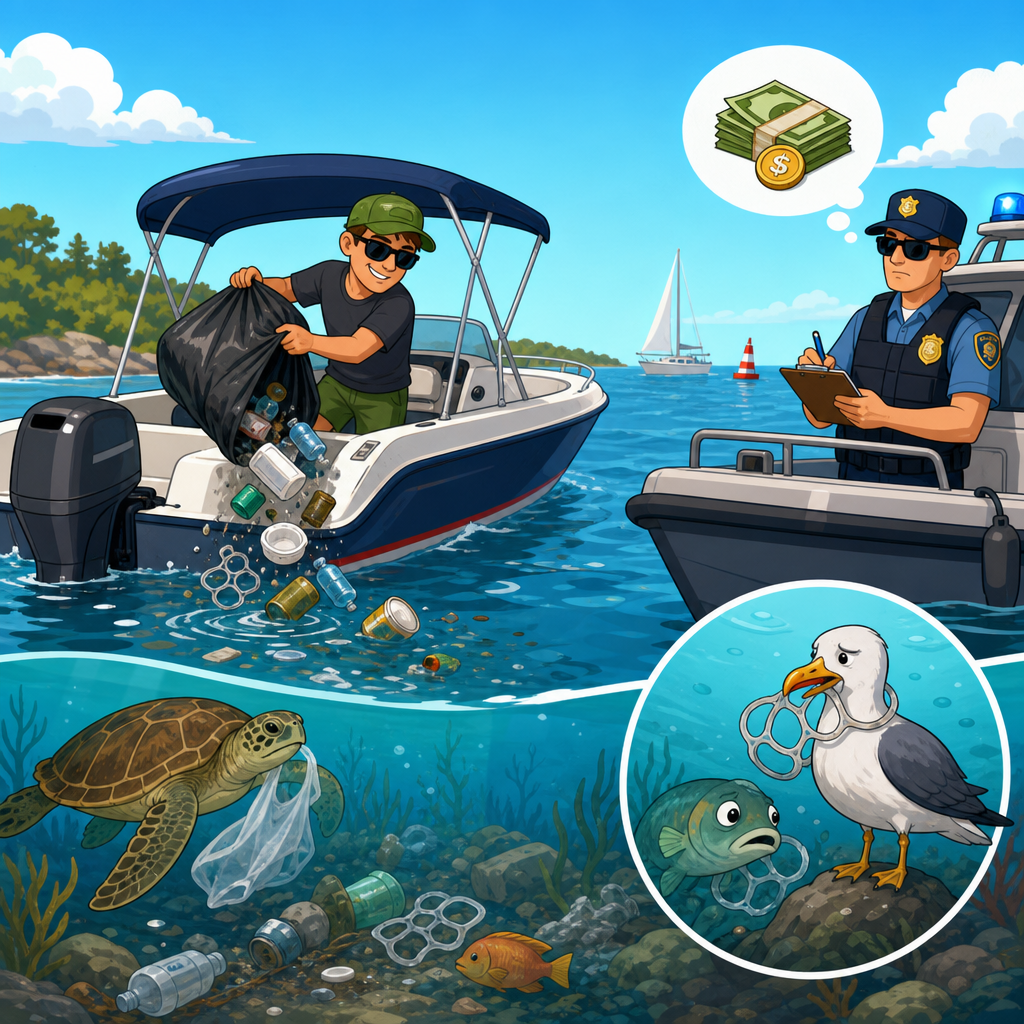
Boating under the influence is one of the most serious violations on the water because alcohol and drugs impair judgment, slow reaction time, and increase the chance of collisions, falls overboard, and drowning. A boating under the influence charge, usually shortened to BUI, refers to operating or being in actual physical control of a vessel while impaired by alcohol, controlled substances, prescription medication, cannabis where prohibited, or a combination of substances. In practice, I have seen many boaters assume BUI laws are looser than drunk driving laws because the setting feels recreational, but enforcement agencies treat intoxicated operation as a major public safety issue. Understanding boating under the influence laws matters for every vessel operator, owner, renter, passenger, and marina business because penalties can include arrest, fines, jail, license consequences, vessel impoundment, increased insurance costs, and long-term criminal records.
The legal framework for boating under the influence in the United States combines federal authority with state law. The U.S. Coast Guard enforces federal boating safety rules on navigable waters, and every state also has its own BUI statutes, procedures, and penalty schedules. Most states define intoxication through either actual impairment or a blood alcohol concentration threshold, commonly 0.08%, though lower limits may apply to minors, commercial operators, or repeat offenders. BUI investigations often involve field sobriety tasks adapted for marine conditions, portable breath testing, chemical tests of breath, blood, or urine, and observations about erratic operation, speed, wake violations, or unsafe anchoring. Because a boat does not stay centered like a car on pavement, officers are trained to distinguish ordinary vessel movement from signs of impairment, making evidence collection more specialized than many people realize.
BUI law also matters because boating creates unique risk factors that amplify intoxication. Safety experts often refer to environmental stressors such as sun exposure, wind, vibration, noise, heat, and motion, all of which can intensify alcohol’s effects. The U.S. Coast Guard and state agencies have long warned that “boater’s fatigue” can make a person feel more impaired than the same number of drinks on land. Open water, limited lighting, crowded holiday traffic, and the absence of lane markings leave less room for error. If an impaired operator causes injury or death, a case can escalate quickly from a misdemeanor offense to felony charges, civil lawsuits, and wrongful death claims. For anyone researching boating laws and regulations, BUI is not a narrow issue; it sits at the center of safe operation, enforcement, insurance exposure, and criminal liability.
This hub article explains how boating under the influence laws work, what counts as impairment, who can be charged, what penalties apply, how BUI differs from DUI, and what the consequences are beyond court. It also serves as a foundation for related topics such as implied consent, refusal penalties, field sobriety testing on boats, underage boating alcohol rules, passenger liability, accident reporting, and how BUI affects a driver’s license. If you operate a fishing boat, pontoon, sailboat, personal watercraft, charter vessel, or rented runabout, the core rule is simple: if alcohol or drugs affect your ability to operate safely, you can be investigated and charged, even if you never intended to leave the dock or believed you were only “buzzed.”
What counts as boating under the influence
Boating under the influence generally means operating or controlling a vessel while impaired by alcohol, drugs, or both. In most jurisdictions, prosecutors can prove a BUI case in one of two ways. First, they can show actual impairment through evidence such as poor balance, slurred speech, bloodshot eyes, delayed responses, unsafe turns, excessive speed near swimmers, failure to display navigation lights, or striking a dock. Second, they can rely on a prohibited alcohol concentration, typically 0.08% blood alcohol concentration for adult recreational operators. Some states mirror highway law closely, while others use slightly different wording such as “under the influence,” “impaired operation,” or “operating while intoxicated.” The exact label varies, but the legal idea is consistent: if substance use makes the operator unsafe, the state can act.
“Operating” is broader than many people expect. You do not always need to be underway at speed to face a charge. Depending on the jurisdiction, a person at the helm with the engine running, a hand on the throttle, or control over navigation may be considered in actual physical control. On a sailboat, trimming sails and directing course can qualify. On a personal watercraft, simply maneuvering away from shore is enough. I have seen cases where people argued they were merely drifting or repositioning near a sandbar, yet officers still documented operation because the person was controlling propulsion or steering. That broad definition prevents intoxicated operators from evading liability by claiming the vessel was not fully “in motion.”
Drugs create additional complexity. A BUI charge can involve illegal drugs, lawfully prescribed medications, over-the-counter products that cause drowsiness, or combinations of alcohol and cannabis. States increasingly address marijuana specifically because legalization has not changed the rule against impaired operation. Unlike alcohol, drug impairment does not always map neatly onto a single numeric threshold, so officers and toxicologists often rely on behavior, admissions, drug recognition protocols, and chemical testing. Boaters who mix alcohol with anti-nausea medication, sleep aids, opioids, or benzodiazepines can become dangerously impaired even when they think they consumed only a small amount.
Federal and state BUI laws and who enforces them
Boating law is layered. The Coast Guard has authority on federal navigable waters and may board recreational vessels to conduct safety inspections and investigate suspected impairment. State marine patrol units, county sheriffs, harbor police, wildlife officers, and local police departments also enforce BUI statutes. On boundary waters or coastal routes, more than one agency may have overlapping jurisdiction. That is why boaters sometimes encounter coordinated holiday enforcement campaigns, especially around Memorial Day, Fourth of July, and Labor Day.
Although each state writes its own boating under the influence laws, common elements appear nationwide. There is usually a per se alcohol threshold, an impairment-based alternative, implied consent for testing, enhanced penalties for high BAC, and stricter consequences for accidents causing injury. Many states also prohibit allowing an obviously intoxicated person to operate a vessel you own. Rental companies and charter operators are not immune either; they must follow safety obligations and may face business consequences if staff ignore obvious intoxication. Federal regulation under 33 C.F.R. Part 95 addresses intoxicated operation and sets a 0.08 standard for operators on waters subject to federal jurisdiction, but state procedures and sanctions still matter in most real-world cases.
| Issue | Typical BUI Rule | Why It Matters |
|---|---|---|
| Alcohol limit | 0.08% BAC for adult recreational operators | A chemical test at or above the limit can support a charge even without dramatic bad driving evidence |
| Underage operators | Often zero tolerance or very low BAC threshold | Teen boaters can face penalties at alcohol levels below the adult limit |
| Drug impairment | Illegal, prescribed, or combined substances may qualify | Prescription status does not excuse unsafe operation |
| Refusal to test | Often triggers separate penalties under implied consent laws | Refusal can lead to evidentiary use, fines, or privilege suspension |
| Accident cases | Enhanced charges when injury or death occurs | A routine stop can become a felony investigation after a serious crash |
Enforcement practices are more proactive on the water than drivers sometimes expect. Officers may stop a vessel for observable violations, after an accident, during a safety check, or because operation suggests impairment. Weaving is not the only clue. Frequent abrupt throttle changes, near misses in no-wake zones, failure to yield, circling behavior, improper anchoring in channels, and delayed responses to emergency lights all draw attention. Once an officer develops reasonable suspicion, the encounter can expand into a BUI investigation.
How BUI stops, tests, and evidence collection work
A boating under the influence investigation usually begins with officer observations. The officer will note the odor of alcohol, open containers, admissions about drinking, the condition of the operator’s eyes and speech, and whether the vessel was being handled safely. Marine officers also document environmental conditions because waves, current, and wind can affect performance on balance tasks. The National Association of State Boating Law Administrators has supported training for marine-specific enforcement, and standardized seated sobriety tasks are often used because roadside tests designed for flat pavement are not always reliable on a moving deck.
Chemical testing is critical evidence. Breath tests are common when equipment is available, but blood testing may be used in serious injury cases or when drug impairment is suspected. Urine testing appears in some jurisdictions, especially for drug screens, though blood is generally stronger evidence for many substances. Refusing a test can have immediate consequences under implied consent statutes, which are the boating equivalent of the rules many drivers know from DUI law. Depending on the state, refusal may trigger fines, boating privilege suspension, use of the refusal as evidence, or separate criminal penalties. Refusal does not guarantee a case goes away; prosecutors may still proceed based on observations, video, witness statements, and accident evidence.
Body camera footage, patrol boat video, marina surveillance, GPS data, fishfinder track logs, and 911 calls increasingly appear in BUI prosecutions. In one common scenario, passengers tell officers they begged the operator to slow down before a collision. In another, a boat’s chartplotter records erratic speed changes and sharp turns near a swim area. These digital details can reinforce or contradict witness recollections. Because modern boats generate usable electronic evidence, an operator’s choices before and after contact with law enforcement matter more than ever.
Penalties for boating under the influence
BUI penalties depend on the state, prior offenses, BAC level, and whether the incident involved property damage, injury, or death. A first offense is often a misdemeanor, but that does not mean it is minor. Typical penalties include fines ranging from several hundred to several thousand dollars, probation, jail exposure, mandatory substance education, community service, and court costs. Some states impose minimum jail terms at very high BAC levels. Repeat offenses often bring harsher fines, longer jail sentences, mandatory treatment, and felony classification.
Accidents transform the case dramatically. If an impaired operator causes serious bodily injury, prosecutors may file felony BUI with substantial prison exposure. If a death occurs, charges may include homicide by vessel, manslaughter, or negligent homicide, depending on local law and facts. I have seen operators focus only on the immediate ticket and overlook the civil side: insurers may deny or contest coverage, injured passengers may sue, and punitive damages become more plausible when intoxication is involved. Even where criminal penalties are manageable, the financial consequences can be severe for years.
Administrative consequences also matter. Some states suspend boating privileges. Others may affect a driver’s license because the legislature treats BUI similarly to DUI or requires reporting across systems. Employers, professional licensing boards, military commands, and foreign travel authorities may also care about an alcohol-related conviction. For commercial mariners, charter captains, and anyone whose livelihood depends on operating vessels, a BUI can jeopardize credentials and employment quickly.
BUI vs. DUI: important differences and practical consequences
Boating under the influence and driving under the influence share core concepts, but the experience of investigation and the practical aftermath differ. On the water, stops may begin as safety inspections, officers must account for marine motion, and probable cause often develops from a combination of navigation errors and physical signs. There is also no shoulder to pull onto, no lane lines, and often no immediate access to fixed breath equipment. These realities make witness testimony, officer training, and chemical testing logistics more central than in a routine roadside case.
The consequences can also spread differently. A DUI often affects commuting and vehicle insurance first. A BUI can affect boating privileges, marina access, charter eligibility, and ownership costs, while still potentially touching a driver’s license in some states. Many people are surprised that a day intended as leisure can lead to arrest in front of family, towing and storage fees, Coast Guard reporting, and a damaged relationship with a boat club or rental provider. The legal label may differ from a highway offense, but the stigma and collateral damage are comparable.
How to avoid BUI risk and what to do after an arrest
The best way to avoid a boating under the influence charge is simple: designate a sober operator before leaving the dock and keep that plan intact all day. Eating food, switching from liquor to beer, swimming, or waiting an hour does not reliably restore safe judgment. Alcohol affects decision-making before obvious stumbling appears, and sun plus fatigue can magnify the problem. Vessel owners should set rules for guests, lock up alcohol if needed, monitor medication use, and end the trip early if weather or group behavior deteriorates. Charter businesses and rental operators should document safety briefings and refuse handoff when a renter appears impaired.
If an arrest happens, take it seriously immediately. Preserve receipts, trip records, GPS logs, and names of passengers or marina staff who observed the events. Do not assume a BUI is “just like a ticket.” A lawyer who handles boating under the influence cases can assess whether the stop was lawful, whether testing procedures complied with statute, whether marine field sobriety tasks were administered correctly, and whether the state can prove operation or impairment beyond a reasonable doubt. Fast action is especially important where deadlines apply to contest suspensions or preserve video evidence.
Boating under the influence laws exist to prevent predictable tragedies. The key points are clear: BUI applies to alcohol and drugs, it can be proven by impairment or chemical test results, it is enforced by both federal and state authorities, and the penalties can reach far beyond a fine. For boaters, the main benefit of understanding these rules is practical risk reduction: safer trips, fewer accidents, and no false assumption that water excuses intoxicated operation. If you operate any vessel, make sober operation your standard, review your state’s boating laws and regulations, and use this hub as your starting point for the related topics that follow.
Frequently Asked Questions
What is boating under the influence, and how is a BUI different from a DUI?
Boating under the influence, or BUI, generally means operating a boat or being in actual physical control of a vessel while impaired by alcohol, illegal drugs, certain prescription medications, cannabis where prohibited, or a combination of substances. The key issue is impairment. If a substance affects judgment, balance, coordination, vision, reaction time, or decision-making, law enforcement may treat that as a serious safety risk on the water.
Although BUI is often compared to driving under the influence, there are important differences. A DUI involves a motor vehicle on a road, while a BUI applies to vessels on navigable waters, including motorboats, personal watercraft, and in some cases other types of boats depending on state law. The environment is also different. Sun, wind, heat, waves, vibration, and fatigue can intensify the effects of alcohol and drugs, which means a boater may become impaired faster than expected. Officers also evaluate operators differently on the water, often relying on observations, safety inspections, field sobriety testing adapted for marine conditions, and chemical testing when permitted by law.
Another important distinction is that a person can face a BUI charge even if the boat is not moving at high speed or even if no crash occurred. In many jurisdictions, being in actual physical control of the vessel while impaired can be enough. Because laws vary by state, the exact blood alcohol concentration threshold, definitions, and enforcement procedures may differ, but the overall rule is consistent: operating a vessel while impaired is dangerous and can lead to arrest, criminal penalties, civil liability, and long-term consequences.
What substances can lead to a BUI charge?
A BUI charge is not limited to alcohol. Any substance that impairs safe vessel operation may trigger an arrest or citation. That includes beer, wine, and liquor, but it also includes controlled substances, recreational drugs, cannabis in places where boating while using it is prohibited, and prescription medications that cause drowsiness, slowed reflexes, confusion, or poor coordination. Even over-the-counter medications can create problems if they impair alertness or interact with alcohol.
One of the most misunderstood issues is prescription drug use. People often assume that if a medication was legally prescribed, they cannot be charged. That is not correct. A legal prescription does not give someone permission to operate a vessel while impaired. If a medication affects the ability to steer, dock, navigate, respond to traffic on the water, or make safe decisions, it can form the basis of a BUI allegation. The same is true when multiple substances are combined. A small amount of alcohol mixed with medication or cannabis can significantly increase impairment, even if the individual does not feel obviously intoxicated.
From an enforcement standpoint, officers look at the total picture. They may consider odor of alcohol, slurred speech, bloodshot eyes, balance issues, delayed responses, unsafe boating behavior, admissions about substance use, the presence of containers or drugs on board, and test results if chemical testing is conducted. Because water conditions can mimic some signs of impairment, these cases often involve close factual analysis. Still, if the evidence suggests that drugs or alcohol affected the operator’s ability to safely control the vessel, a BUI charge is very possible.
What are the penalties for a boating under the influence conviction?
The penalties for BUI can be severe, and they often become much harsher when there are aggravating factors. In many states, a first offense may result in fines, court costs, probation, mandatory boating safety or substance abuse education, community service, and possible jail time. Some jurisdictions also impose vessel-related restrictions, suspend boating privileges, or enhance penalties if the blood alcohol concentration is especially high.
If the case involves a crash, injuries, death, minors on board, extremely reckless behavior, or prior alcohol-related convictions, the consequences can escalate quickly. A repeat offense may lead to substantially higher fines, longer jail sentences, extended probation, mandatory treatment, and enhanced criminal classification. In the most serious situations, especially where someone is badly hurt or killed, prosecutors may pursue felony charges. That can expose the accused to lengthy incarceration and a permanent criminal record with effects far beyond the boating incident itself.
There are also indirect penalties that people do not always anticipate. A conviction can affect employment, professional licensing, insurance rates, background checks, and future legal matters. In some cases, it may also be used against a person in related civil litigation if someone was injured or property was damaged. Because boating laws differ by state and because federal or multistate waters can add complexity, the exact punishment depends on where the incident happened and the facts involved. What remains constant is that courts and law enforcement treat BUI as a major public safety issue, not a minor ticket.
How do officers investigate and prove a BUI case on the water?
BUI investigations often begin with a lawful stop, a safety inspection, a report of unsafe operation, or a boating accident. Once officers interact with the operator, they look for signs of impairment such as erratic steering, excessive speed, poor docking, near-collisions, trouble following instructions, confusion, glassy eyes, slurred speech, or the odor of alcohol. Because the boating environment can affect balance and coordination even in sober individuals, officers usually rely on a combination of observations rather than any single factor.
In many cases, law enforcement may ask the operator to perform field sobriety exercises or submit to a chemical test, depending on state implied consent laws and the circumstances of the stop or arrest. Breath, blood, or sometimes urine testing may be used to measure alcohol or detect drugs. Officers may also document statements made by the operator or passengers, the presence of open containers, admissions about drinking, and video or body camera footage. In accident cases, investigators may reconstruct what happened using witness statements, vessel damage, GPS or electronic data, and photographs from the scene.
To prove a BUI case, prosecutors generally try to show two things: that the accused was operating or in actual physical control of the vessel, and that the person was impaired or over the legal limit at the relevant time. Defenses may focus on whether the stop was lawful, whether the person truly had control of the boat, whether testing procedures were reliable, whether medical conditions or water conditions affected performance on field tests, or whether the evidence actually proves impairment beyond a reasonable doubt. Because these cases can involve technical evidence and fact-specific issues, even an arrest that seems straightforward may have important legal weaknesses.
What are the real-world consequences of a BUI beyond fines and jail?
The most serious consequence of boating under the influence is the risk of tragedy. Alcohol and drugs dramatically increase the chance of collisions, falls overboard, poor navigation decisions, delayed rescue responses, and drowning. Water conditions already demand constant attention, and impairment reduces the ability to react to weather changes, other vessels, swimmers, and emergency situations. Many BUI incidents that begin as “just a few drinks” end with catastrophic injuries to passengers, other boaters, or the operator.
Beyond the immediate safety danger, a BUI can create long-lasting legal and financial problems. Insurance carriers may raise premiums, deny certain claims, or cancel coverage. If someone is injured, the impaired operator may face a civil lawsuit for medical bills, lost income, pain and suffering, wrongful death damages, or property loss. Employers may view a conviction negatively, especially when the job involves transportation, safety responsibilities, security clearances, or professional judgment. For licensed professionals, a criminal alcohol- or drug-related offense can trigger reporting requirements or disciplinary review.
There is also the reputational and personal impact. A BUI arrest can affect family relationships, child custody disputes, travel, military service, and future interactions with the court system. If a person later faces another alcohol-related charge, the prior BUI may be treated as an aggravating factor depending on the jurisdiction. In short, the consequences of boating under the influence extend far beyond a day in court. They can affect safety, finances, freedom, and future opportunities, which is exactly why the law treats impaired boating so seriously.