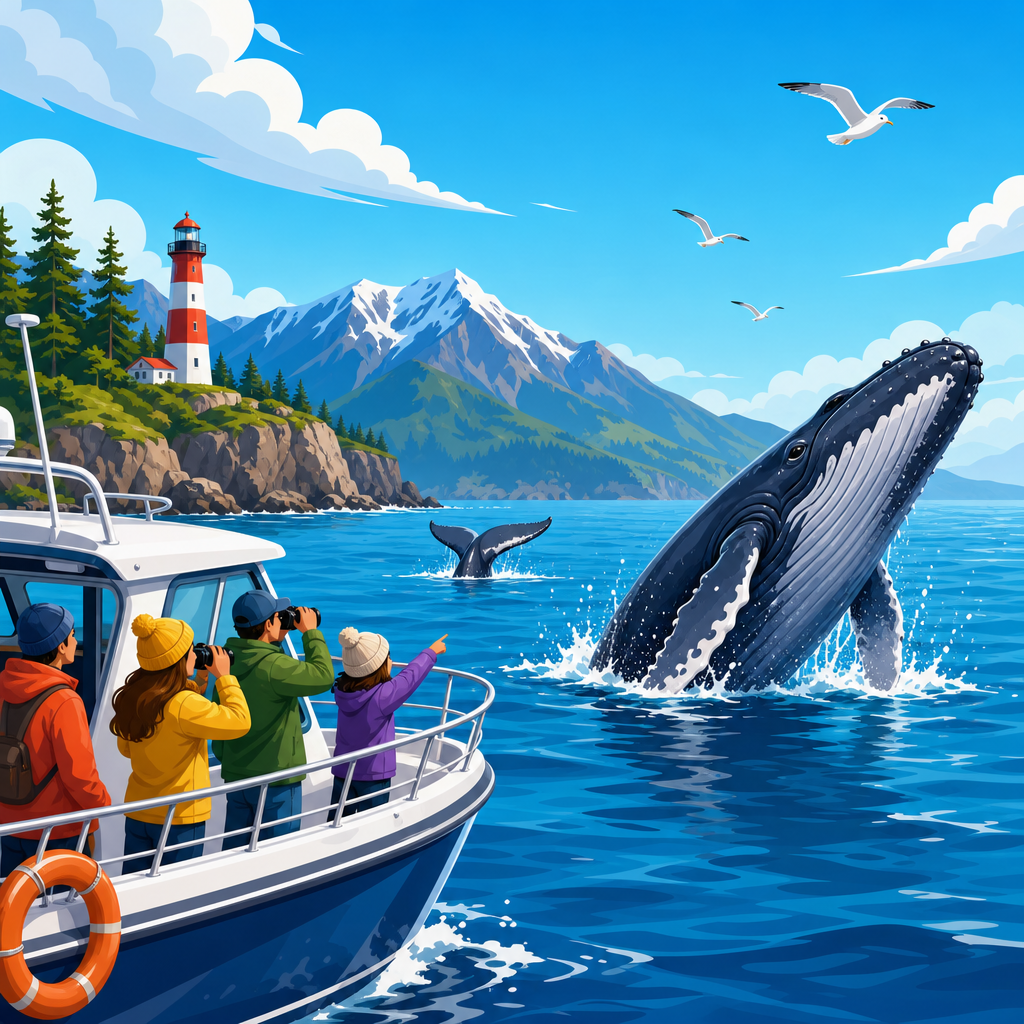
Whale watching by boat combines travel, seamanship, and wildlife encounters in a way few adventures can match. The best boating destinations for whale watching are not simply places where whales appear; they are coastal regions where ocean conditions, migration routes, local regulations, and marina access align to create safe, repeatable, and memorable trips. For travelers planning a wildlife-focused cruise, this topic matters because success depends on much more than luck. Species identification, seasonality, vessel choice, weather windows, and viewing ethics all shape the experience, and understanding those factors can mean the difference between a distant glimpse and a genuinely meaningful day on the water.
In practical terms, boating for adventure and wildlife watching refers to using private boats, charter vessels, expedition yachts, or small-ship cruises to reach habitats where marine animals gather. Within that broader category, whale watching is the flagship experience because whales are large, migratory, and visible enough to be observed from a range of boat types when operators plan correctly. I have planned itineraries around tide charts, upwelling zones, and harbor logistics, and the pattern is consistent across continents: the best destinations pair rich feeding grounds or migration corridors with clear operating guidelines and experienced skippers. Good whale watching is therefore a blend of geography and preparation.
Several key terms help frame the subject. A feeding ground is an area with concentrated prey such as krill, herring, anchovy, or squid. A migration corridor is a route whales travel between feeding and breeding habitats. Breaching is a full or partial leap from the water, while logging describes a whale resting at the surface. Fluking occurs when the tail rises before a deep dive. These behaviors are not just interesting to name; they help boaters interpret what they are seeing and position vessels responsibly. They also influence photography, trip timing, and the distance a captain should maintain.
This hub article covers the best boating destinations for whale watching across North America, Europe, Latin America, Africa, Oceania, and the polar regions. It also explains how to choose the right season, boat, and operator, and how to watch whales without disturbing them. Whether you are building a bucket-list voyage to Alaska or looking for a winter migration cruise in Baja California, the goal is the same: maximize sightings while minimizing impact. If you care about marine wildlife, there are few travel experiences more rewarding than seeing a humpback lift its flukes beside your boat under conditions that respect both animal welfare and good seamanship.
What Makes a Whale Watching Destination Truly Great
The best whale watching destinations share four qualities. First, they sit close to predictable whale habitat. Monterey Bay works because a deep submarine canyon brings nutrient-rich water close to shore, supporting krill and anchovy. Husavik in Iceland performs for similar reasons, with productive North Atlantic feeding grounds attracting humpbacks, minke whales, and occasionally blue whales. Second, they have reliable boating infrastructure, including launch ramps, marinas, fuel docks, VHF coverage, and weather services. Third, they operate under enforceable viewing guidelines. In the United States, the National Oceanic and Atmospheric Administration advises staying at least 100 yards from most whales and 500 yards from North Atlantic right whales. Fourth, they offer experienced local captains who know currents, birds, bait concentrations, and marine mammal behavior.
Weather and sea state matter just as much as whale density. A destination may host extraordinary wildlife, yet be frustrating for small boats if swell, fog, or wind regularly cancels departures. I have seen travelers focus entirely on species lists and ignore the operating reality of a port. That is a mistake. The practical winner is often the place with slightly fewer species but consistently fishable, navigable, and visible conditions. Water clarity, daylight hours, and transit time to the grounds all affect how much time you actually spend watching whales rather than pounding through chop. This is why successful trip planning starts with a chart and a seasonal forecast, not a brochure photo.
Top Global Boating Destinations for Whale Watching
Alaska remains one of the strongest all-around choices for boat-based whale watching. Southeast Alaska, especially Juneau, Icy Strait Point, Sitka, and Frederick Sound, is famous for humpback whales feeding on herring and krill during summer. Orcas are also common, especially around the Inside Passage. The advantage for boaters is the relative shelter provided by the archipelago, which creates workable routes even when offshore conditions are rougher. Charter boats and small expedition vessels can access nutrient-rich channels where bubble-net feeding is sometimes observed, one of the most dramatic cooperative feeding behaviors in the ocean.
Baja California Sur in Mexico is one of the best places on earth to watch gray whales from small boats. The lagoons of San Ignacio, Ojo de Liebre, and Magdalena Bay serve as winter breeding and calving habitat, while humpbacks and blue whales are seen offshore around Loreto and Los Cabos at different times of year. The appeal here is not only species diversity but interaction quality. In protected lagoons, gray whales can approach pangas closely, creating intimate encounters rare in more exposed destinations. For boaters, the key is understanding the distinction between sheltered lagoon tours and offshore runs, which require greater weather awareness and stronger hulls.
Monterey Bay, California, is exceptional because whale watching occurs nearly year-round. Humpbacks feed there for long seasons, blue whales appear in productive months, gray whales migrate past in winter and spring, and orcas are possible. The Monterey Submarine Canyon functions like an ecological conveyor belt, bringing deep-water conditions near the coast. From a boating perspective, that means relatively short transit times from harbor to active wildlife zones. It is one of the few destinations where a half-day trip can still deliver serious marine life value, including dolphins, sea lions, and seabirds alongside whales.
Iceland deserves its reputation, especially Husavik and Akureyri. Summer brings humpbacks and minkes, with chances for blue whales in Skjalfandi Bay and beyond. The country combines dramatic scenery with cold, food-rich water, making sightings productive and photogenic. Boat operators often use both traditional oak vessels and fast RIBs, letting travelers choose between comfort and agility. The tradeoff is weather exposure. North Atlantic conditions can change quickly, so seasickness preparation and layered gear are not optional. When conditions align, however, Iceland offers one of the clearest examples of how rich habitat and disciplined local operation create consistently high-quality whale watching.
For southern right whales, Peninsula Valdes in Argentina is a standout destination. From June through December, right whales gather in the gulfs around Puerto Piramides to breed and calve. The relative shelter of Golfo Nuevo improves viewing conditions, and the whales are often visible from shore before boaters even depart. This area is also famous for elephant seals, sea lions, and orcas along the broader Patagonian coast, which makes it a strong wildlife circuit rather than a single-species stop. Boat access is straightforward, and the concentration of whales in season can be remarkable.
Australia offers several regional options, but Hervey Bay in Queensland is especially important for humpback whales during migration. The bay acts as a resting area on the route between Antarctic feeding grounds and tropical breeding waters. Because Fraser Island helps buffer swell, conditions are often more manageable than fully exposed offshore routes. Western Australia, particularly around Perth, Albany, and Exmouth depending on season, also supports humpback and blue whale watching. New Zealand’s Kaikoura is another elite destination, known for deep offshore waters close to shore that support sperm whales year-round and migratory humpbacks, pilot whales, and dusky dolphins.
| Destination | Best Season | Common Species | Why Boaters Like It |
|---|---|---|---|
| Southeast Alaska | May to September | Humpback, orca, minke | Protected passages, rich feeding grounds, strong charter network |
| Baja California Sur | January to March | Gray, humpback, blue | Sheltered lagoons, close encounters, winter migration activity |
| Monterey Bay | Year-round | Humpback, gray, blue, orca | Short runs to deep water, strong biodiversity, flexible trip length |
| Husavik, Iceland | June to August | Humpback, minke, blue | Productive cold waters, dramatic scenery, expert operators |
| Peninsula Valdes | June to December | Southern right whale | Predictable calving season, sheltered gulf conditions |
| Kaikoura, New Zealand | Year-round | Sperm, humpback, pilot whale | Deep water close offshore, multi-species wildlife trips |
How to Choose the Right Season, Boat, and Route
Seasonality is the first filter because whales move for food and reproduction, not for tourism calendars. Humpbacks often appear in high latitudes during feeding season and low latitudes during breeding season. Gray whales migrate between Arctic feeding areas and Baja lagoons. Blue whales track dense prey blooms, which means timing can vary with ocean productivity. Before booking any trip, match the destination to the exact species and behavior you want to see. If your priority is breaching humpbacks, choose migration or social activity windows. If you want mothers with calves, target protected breeding bays and lagoons where sea state is calmer.
The right boat depends on distance offshore, weather exposure, and the style of trip. Rigid inflatable boats are fast and close to the water, excellent for maneuverability and photography, but less comfortable in chop. Cabin cruisers and catamarans provide stability and weather protection, making them better for family groups and colder climates. Expedition yachts and liveaboards extend range and improve flexibility because they can reposition overnight based on sightings and forecasts. For private boaters, fuel planning is critical. Whale grounds can be farther than expected once drift, detours, and idle time are included, so a conservative fuel reserve is nonnegotiable.
Route planning should account for more than the destination name. Productive days often follow signs that experienced captains read instinctively: bait balls on sonar, diving shearwaters, converging currents, tide rips, and slicks where feeding activity develops. In Alaska, captains may work edges of channels where herring concentrate. In Monterey, they often monitor bird piles and temperature breaks. In Baja lagoons, routes may be slower and more observational, with operators respecting nursery zones and managing drift rather than chasing whales. The common principle is patient positioning. The best captains do not pursue whales aggressively; they anticipate movement and let wildlife come into view naturally.
Responsible Whale Watching and On-the-Water Safety
Responsible whale watching starts with distance, speed control, and predictability. Sudden course changes or close passes can disrupt feeding, nursing, or resting behavior. Regulations differ by country, but reputable operators generally approach parallel to the animal’s direction of travel, avoid crossing ahead, keep engines in neutral when whales surface nearby, and limit viewing time if multiple vessels are present. In my experience, ethical operation often improves sightings because calm boats create calmer encounters. Whales are more likely to continue natural behavior when they are not pressured by noise and erratic wake.
Safety overlaps with ethics. A whale can surface unpredictably, and even small boats can be damaged by collision or destabilized by a close breach. Every trip should include a weather briefing, PFD availability, VHF radio checks, and a clear seasickness plan. Cold-water destinations require serious thermal protection because immersion risk is not theoretical. Operators in Alaska, Iceland, and Patagonia should carry EPIRBs or PLBs, first-aid kits, and man-overboard procedures that crews can execute quickly. Passengers should ask direct questions about safety gear, certifications, and local compliance before booking, especially in remote ports where rescue response may be slower.
Photography etiquette matters too. Long lenses outperform close approaches. A 70-200mm or 100-400mm lens often captures flukes and breaches without pressuring wildlife, while image stabilization helps on moving decks. Drones are heavily restricted or inappropriate in many whale habitats because noise and overhead presence can disturb animals. Good images come from patience, not intrusion. Watch the whale’s rhythm, note dive intervals, and prepare before the next surfacing. That approach produces better results and aligns with the basic principle of marine wildlife travel: the encounter is on the animal’s terms, not ours.
Building a Wildlife Travel Itinerary Beyond Whales
The strongest boating destinations for whale watching also work as broader wildlife travel hubs. That is why this subject sits naturally under boating destinations and travel rather than as a narrow single-species guide. In Alaska, a whale trip often includes Steller sea lions, puffins, sea otters, and brown bear excursions on nearby islands or shorelines. In Monterey Bay, humpbacks share the stage with common dolphins, Risso’s dolphins, harbor porpoises, mola mola in season, and dense seabird activity. Baja adds mobula rays, sea lions, whale sharks in selected areas, and desert-island cruising that broadens the appeal for mixed-interest groups.
This hub also supports deeper planning across the wider boating for adventure and wildlife watching category. Travelers often start with a whale watching goal, then branch into orca-specific regions, polar expedition cruising, dolphin encounters, seabird-rich pelagic routes, or photography-led charters. The smart way to build that itinerary is to use whales as the anchor experience and then layer nearby habitats, protected areas, and marina towns around it. A well-designed trip balances spectacle with logistics: manageable transfers, reliable provisioning, enough lay days for weather, and operators who understand both local ecology and vessel handling. Start with the species, choose the season, vet the operator, and then build the rest of your boating adventure around that foundation.
The best boating destinations for whale watching are the ones that unite predictable marine life, workable sea conditions, sound infrastructure, and responsible operating standards. Alaska excels for summer feeding behavior and protected passages. Baja California Sur stands out for winter gray whale encounters and diverse offshore options. Monterey Bay offers rare year-round variety with short access to deep water. Iceland, Peninsula Valdes, Australia, and New Zealand each deliver distinct strengths tied to species, season, and geography. Across all of them, the same rule applies: understand why whales are there, and your travel decisions become smarter, safer, and more rewarding.
For anyone exploring boating for adventure and wildlife watching, whale watching is the ideal hub topic because it teaches the core skills that improve every marine wildlife trip. You learn to read seasons, choose the right hull, assess operators, respect regulations, and watch animal behavior without causing harm. Those lessons transfer directly to dolphin cruises, expedition yachting, birding by boat, and remote coastal travel. The reward is not only better sightings but better judgment on the water, which is what turns a scenic outing into an informed wildlife experience.
If you are planning your next trip, narrow your shortlist to the species you most want to see, match it to the correct season, and prioritize operators with strong safety and conservation practices. Then use this hub as your starting point for building a broader boating destinations and travel itinerary centered on wildlife. Choose well, go prepared, and the ocean will give you a front-row view of some of the most powerful animals on earth.
Frequently Asked Questions
What makes a boating destination truly great for whale watching?
The best boating destinations for whale watching offer far more than occasional sightings. A truly strong destination sits along established migration routes or near reliable feeding grounds, which increases the chances of seeing whales consistently rather than by pure luck. Ocean conditions also matter. Protected bays, predictable seasonal weather, and manageable sea states make trips safer and more enjoyable, especially for recreational boaters who may not want to venture far offshore. In addition, access to quality marinas, fuel docks, launch ramps, charted navigation channels, and local marine services can make the difference between a smooth outing and a stressful one.
Another major factor is the local regulatory environment. The top whale watching regions usually have clear rules about vessel approach distances, speed limits, no-go zones, and wildlife interaction protocols. These regulations help protect whales while also giving boaters a framework for safe and responsible viewing. Destinations with a strong culture of marine stewardship often provide educational resources, seasonal sighting reports, and trained operators who understand both seamanship and animal behavior. When all of these elements come together—reliable whale presence, favorable boating conditions, good infrastructure, and well-enforced conservation rules—you get a destination that supports repeatable, memorable whale watching experiences.
When is the best time of year to go whale watching by boat?
The best time depends on the region, the species you want to see, and whether whales are migrating, feeding, or breeding in that area. In many parts of the world, peak whale watching seasons line up with migration windows, when large numbers of whales move along coastlines and become easier to spot from recreational boats and guided excursions. In other destinations, the most reliable time is during feeding season, when whales remain in nutrient-rich waters for extended periods. For example, humpbacks may be highly visible in some northern destinations during summer feeding months, while gray or right whales may be more predictably seen in warmer coastal areas during winter migration or calving periods.
Boaters should also think beyond whale calendars and consider local marine conditions. A technically “peak” whale month is less useful if that season also brings strong winds, rough seas, or limited marina access. The most successful trips usually happen when species activity and navigable conditions overlap. That is why serious trip planning should include reviewing historical sighting data, harbor conditions, sunrise and tide windows, offshore forecasts, and any seasonal restrictions in protected waters. If you are choosing between several destinations, the best strategy is to match your travel dates with a region known for consistent sightings and manageable boating conditions rather than simply picking the most famous whale watching location on the map.
Which whale species are most commonly seen from boats in top whale watching destinations?
The species you are likely to encounter depend heavily on geography, water temperature, prey availability, and migration patterns. Humpback whales are among the most sought-after because they are widely distributed in many whale watching regions and are known for dramatic surface behaviors such as breaching, tail slapping, and pectoral fin displays. Gray whales are another popular species in areas where they migrate close to shore, making them especially appealing for small-boat viewing. Blue whales, while less commonly guaranteed, attract major interest in destinations where seasonal feeding conditions bring them near boating routes. In colder or deeper offshore regions, boaters may also encounter fin whales, minke whales, sperm whales, and orcas, depending on the local ecosystem.
That said, species identification is an important part of the experience, and not every sighting will be obvious at first glance. Blow shape, dorsal fin size, surfacing pattern, tail fluke markings, body profile, and group behavior all help distinguish one species from another. A destination is often considered especially valuable for whale watching when sightings include not only whales in general but a mix of species over the course of a season. Many experienced boaters carry marine mammal identification guides, use local sighting networks, or book an outing with a naturalist-led operator before exploring independently. Understanding what species are commonly present in a destination helps set realistic expectations and turns a simple sighting into a more informed wildlife encounter.
How close can you get to whales when watching from a boat?
The short answer is: not as close as many people assume, and that is a good thing. Most respected whale watching destinations enforce specific approach-distance rules designed to minimize stress, avoid disruption of natural behavior, and reduce the risk of vessel strikes. These distances vary by country, region, and species, but they often require boats to stay well back and to avoid cutting across a whale’s path, circling tightly, or separating individuals from a pod. In some areas, special restrictions apply to mothers with calves, endangered species, or designated marine sanctuaries. Responsible captains know that the goal is observation, not pursuit.
It is also important to understand that whales often control the distance themselves. You may maintain the legally required stand-off range and still have an unforgettable encounter if a curious whale surfaces within view on its own. The proper response is usually to hold a steady course or neutral position, reduce noise and wake, and avoid sudden maneuvers. Good whale watching etiquette includes watching for changes in behavior, keeping speeds low in whale zones, assigning a lookout, and being prepared to move away if animals show signs of disturbance. Following these practices protects marine life, supports conservation goals, and usually leads to better sightings because whales are more likely to behave naturally around predictable, respectful vessels.
What should boaters do to prepare for a safe and successful whale watching trip?
Preparation starts with treating whale watching as a real boating trip, not just a scenic excursion. Before departure, review marine forecasts, wind patterns, swell direction, currents, and visibility for the full window of your outing. Confirm fuel range, navigation electronics, VHF radio function, safety gear, life jackets, first-aid supplies, and emergency procedures. Study local charts so you understand traffic lanes, reefs, shoals, no-wake areas, marine protected zones, and likely whale habitat. If you are launching from a marina in an unfamiliar destination, check operating hours, parking logistics, ramp conditions, fuel availability, and any permits or wildlife advisories that may affect your route.
Success on the water also depends on patience, observation, and realistic expectations. Bring binoculars, polarized sunglasses, layers for changing weather, sun protection, drinking water, and a camera with enough zoom to avoid the temptation of getting too close. Many experienced boaters monitor local sighting reports, bird activity, bait concentrations, and surface cues such as blows, flukes, or unusual water disturbance. It also helps to leave enough time for a measured search rather than rushing from point to point. If conditions are marginal or the area is unfamiliar, hiring a licensed local captain or joining a reputable whale watching charter can be the smartest choice. The best trips happen when boaters combine good seamanship, local knowledge, respect for regulations, and a conservation-minded approach to wildlife viewing.