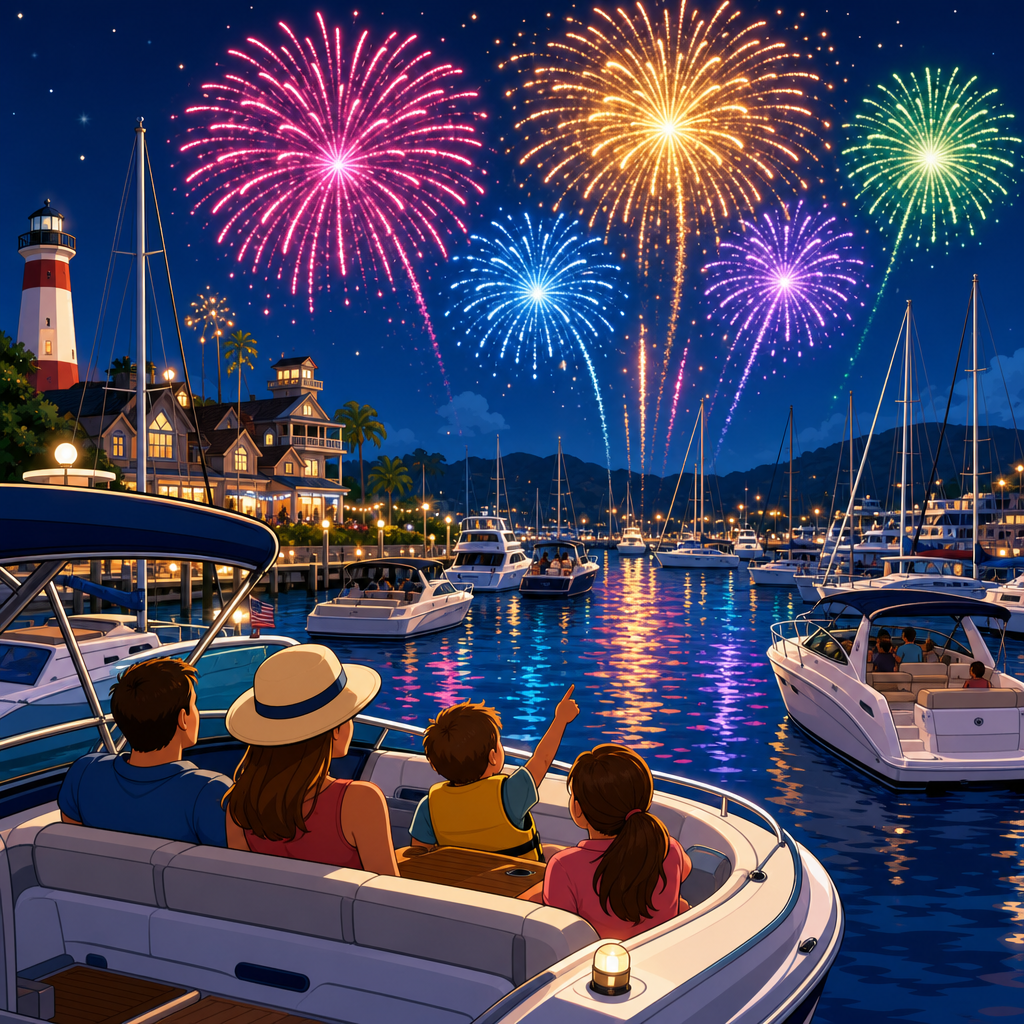
Best marinas for watching fireworks shows from your boat combine safe moorage, unobstructed sightlines, local event access, and practical amenities that make a crowded holiday evening enjoyable instead of stressful. For boaters planning around major celebrations, this topic sits at the center of boating events and festivals around the world because fireworks nights bring together navigation planning, destination research, marina booking strategy, and regional knowledge. A marina, in this context, is more than a docking facility. The best ones function as event bases, offering protected berths, shore power, fuel, pump-out, security, and a location close enough to the main display that you can watch comfortably without being trapped in dangerous vessel congestion. I have planned holiday itineraries around waterfront festivals for years, and the difference between a good marina and a poor one becomes obvious the moment the sky darkens and hundreds of boats begin moving at once. The right marina gives you choices: stay dockside and watch from the slip, idle to a designated viewing area, or step ashore for concerts, parades, and food events before returning to the boat. This hub article explains where marinas fit into the wider world of boating festivals, what separates top viewing marinas from ordinary harbors, and how to evaluate destinations across the United States, Europe, Asia, Australia, and the Caribbean. It also serves as a jumping-off point for related destination guides on regattas, waterfront concerts, harbor festivals, and seasonal cruising events.
Fireworks-focused boating travel matters because these nights compress every part of seamanship into a single experience. Timing matters for tide windows and bridge openings. Positioning matters for wind direction, smoke drift, and mast obstructions. Reservation lead times matter because premium slips for Independence Day, Bastille Day, New Year celebrations, and national festivals often sell out months ahead. Safety matters even more: the U.S. Coast Guard and local harbor authorities routinely establish safety zones around barges, and similar exclusion areas are common in ports worldwide. A marina that communicates clearly, has competent dock staff, and sits near official viewing zones can turn a stressful evening into one of the most memorable nights on the water. For travelers building a calendar of boating events and festivals around the world, fireworks marinas are often the easiest entry point because they combine spectacle with accessible infrastructure.
What makes a marina ideal for fireworks viewing
The best marinas for fireworks shows from your boat share five traits. First, they have protected water and reliable dockage, so wakes from passing traffic do not ruin the evening. Second, they offer clean sightlines toward the launch area or easy access to nearby viewing basins. Third, they are close to supporting festival activity, whether that means music stages, waterfront dining, or public transit. Fourth, they manage event-night operations well through dockmaster briefings, patrol coordination, and after-show traffic control. Fifth, they provide the basics that matter when crowds surge: fuel, restrooms, showers, provisioning, and parking or airport access for guests.
In practice, this means a marina slightly outside the center of the action can outperform one directly under the display. I have seen crews book slips with technically perfect location only to discover their masts, nearby buildings, or smoke from an upwind launch blocked half the show. Good destination research asks simple questions: Where is the fireworks barge anchored? Which way does the prevailing evening breeze push smoke? Will there be a no-wake zone? Are floating docks stable enough for guests who are not experienced boaters? Marinas that answer these questions clearly tend to produce better experiences across all boating events, not just fireworks.
Standout marinas in North America
North America offers the deepest bench of fireworks marinas because waterfront celebrations are woven into civic calendars. In the United States, Boston Harbor is a prime example. Marinas in the Inner Harbor and nearby Charlestown place boaters close to Fourth of July festivities tied to the Boston Pops Fireworks Spectacular. The strongest options are those with managed access to the harbor, competent launch services, and clear guidance on restricted zones along the Charles River and harbor approaches. Conditions can be crowded, but Boston rewards planning with one of the most recognizable urban waterfront backdrops in boating.
New York Harbor is another elite choice, especially for Macy’s Fourth of July Fireworks. Liberty Landing Marina in Jersey City and several marinas along lower Manhattan and Brooklyn position boaters near one of the world’s most famous skyline settings. What matters here is not only visibility but logistics. Current, commercial traffic, security perimeters, and police enforcement are all serious considerations. A marina with strong dockside communication and easy subway or ferry access gives you flexibility if weather or enforcement changes where the barges launch.
On the Chesapeake, marinas around Annapolis and Baltimore perform well for boaters who want a festival atmosphere without quite the same scale as New York. Annapolis City Marina and nearby facilities give direct access to holiday events and a walkable historic downtown. In Baltimore, Inner Harbor marinas can place you in the middle of coordinated waterfront programming where fireworks are part of a larger harbor festival experience. For Great Lakes boaters, Chicago’s lakefront harbors pair summer fireworks with a dramatic skyline, especially around Navy Pier’s regular displays. Dockage at Monroe Harbor or nearby facilities can work well if you value established harbor management and easy city access.
Canada adds strong options around Vancouver, Toronto, and Montreal. Vancouver marinas benefit from Celebration of Light, a competition-style fireworks event that draws both local boaters and visiting yachts. English Bay is heavily managed during show nights, so the best marina is often the one that balances access with the ability to avoid the densest post-show traffic. In Toronto, marinas near the waterfront and Toronto Islands let crews combine city festivals with relatively protected waters. In every case, booking early is essential because premium slips around national holidays and signature events disappear first.
Best European marina bases for festival nights
Europe’s fireworks marinas often stand out because the display is tied to centuries-old festivals rather than a single holiday. In France, marinas around Cannes, Antibes, and Monaco benefit from Mediterranean summer festivals where pyrotechnics are staged against iconic coastlines. Port Vauban in Antibes is especially useful as a hub because it provides high-level services and access to the broader Riviera circuit. While not every fireworks event is viewed directly from the slip, the marina gives crews a secure base for timed departures and late returns, which matters when anchorages fill quickly.
In the United Kingdom, marinas serving Portsmouth, Plymouth, and London can be excellent for waterfront events, Bonfire Night celebrations, and seasonal harbor festivals. Portsmouth Harbour’s combination of naval heritage, organized traffic schemes, and strong shoreside infrastructure makes it easier to manage event-night complexity than many open-roadstead destinations. In London, marina choice depends heavily on river conditions, bridge restrictions, and berth availability along the Thames. A marina farther from the center but with strong rail connections can be smarter than chasing the closest possible berth.
For Bastille Day, marinas near Nice and Marseille draw crews looking for urban celebrations with a clear national atmosphere. The tradeoff is that southern French ports can be intensely busy in July. Across Spain and Portugal, marina-based festival boating often extends beyond fireworks into patron saint celebrations, riverfront music programs, and late-night waterfront dining. This is why Europe works well as a fireworks hub topic: a marina reservation can unlock an entire regional calendar of boating events and festivals rather than a single evening show.
Asia-Pacific and Southern Hemisphere highlights
Asia-Pacific destinations are some of the strongest choices for New Year and summer waterfront fireworks. Sydney is the obvious benchmark. Marinas around Sydney Harbour offer access to one of the world’s definitive boat-based fireworks experiences during New Year’s Eve. The limiting factor is regulation. Exclusion zones, designated spectator areas, and heavy marine-police control mean not every berth translates into a good viewing plan. The best marina is one that briefs skippers clearly and helps them understand whether watching dockside or underway is more realistic under current event rules.
In New Zealand, Auckland marinas can pair holiday fireworks with regattas and harbor festivals, making them useful starting points for broader cruising itineraries. Across Asia, Singapore marinas are notable for combining strict harbor management with premium city access. Marina at Keppel Bay and nearby facilities can serve as polished bases for New Year events and waterfront celebrations, though local regulations and viewing-zone rules must always be checked. In Japan, Yokohama and Tokyo Bay marinas connect boaters to large hanabi festivals, where crowd management is meticulous and public transport links make shore excursions especially practical.
Australia beyond Sydney offers value too. Brisbane riverfront marinas become attractive around Riverfire, while Perth and Fremantle add western-coast alternatives. The common pattern in this region is clear: event quality is high, but rules are enforced tightly. Boaters who enjoy well-organized marine events usually appreciate that structure, especially when traveling with family or guests unfamiliar with crowded waterways.
Caribbean, Latin America, and warm-weather festival cruising
Warm-weather regions are often overlooked in discussions of fireworks marinas, yet they are excellent for boaters who want celebratory atmospheres outside peak northern summer. Puerto Rico, the U.S. Virgin Islands, and parts of the Bahamas host holiday displays where marinas provide a comfortable alternative to exposed anchorages. In San Juan, marina selection should prioritize security, transportation, and local guidance because harbor conditions and urban traffic can complicate simple plans. In the Mexican Caribbean, marinas near Cancún and the Riviera Maya often tie fireworks to New Year and resort-led celebrations, though visibility can vary depending on hotel positioning and coastal construction.
In Brazil, marinas serving Rio de Janeiro can offer extraordinary access to New Year festivities, but only for crews prepared to handle intense crowding and layered local logistics. Similar lessons apply in Panama and parts of Central America, where waterfront celebrations are increasing but marina quality varies more widely than in established North American or European hubs. When infrastructure is inconsistent, choose the marina with the strongest operational reputation rather than the lowest nightly rate.
How to compare marina options before booking
When readers ask me how to shortlist the best marinas for watching fireworks shows from your boat, I use a simple decision framework that balances viewing quality with operational reality.
| Factor | What to check | Why it matters on event night |
|---|---|---|
| Viewing angle | Launch site, skyline obstructions, mast interference | Determines whether you see the full show or only partial bursts |
| Harbor management | Safety zones, VHF procedures, patrol presence | Reduces confusion during departures and returns |
| Protection | Wake exposure, fetch, current, tidal swing | Keeps guests comfortable and gear secure |
| Amenities | Fuel, pump-out, restrooms, provisioning, shore power | Supports full-day festival use without unnecessary repositioning |
| Access ashore | Walkability, transit, rideshare, nearby dining | Lets crews enjoy the broader festival, not just the fireworks |
| Reservation policy | Minimum stays, deposits, cancellation terms | Protects your budget when weather or event plans change |
Use marina websites, Navionics or other charting tools, official harbor notices, and recent boater reviews together. No single source is enough. Reviews tell you whether staff communicate well. Charts reveal whether a “great view” actually faces a turning basin with commercial wake. Harbor notices confirm if the anchorage you expected to use will be closed. This cross-checking habit is valuable across all boating festivals, including regattas, holiday parades, and waterfront concerts.
Safety, etiquette, and trip-planning for festival boating
Fireworks nights create predictable risks, and experienced boaters plan for them early. Fuel before the crowd forms. Confirm your tender lights if you expect late returns from shore. Monitor VHF traffic, especially if local authorities assign event channels. Keep children in properly fitted life jackets on deck. Brief guests on lines, fenders, and moving around the boat after dark. If you plan to leave the slip for a better view, assign one person solely to lookout duty because small craft, paddleboards, and rental boats often move unpredictably during public events.
Etiquette matters too. Avoid blasting music that competes with neighboring boats. Control spotlight use so you do not impair other skippers’ night vision. Respect no-wake zones even after the finale, when impatience leads many operators to make poor decisions. The best marinas reinforce this culture by posting clear event rules and coordinating with harbor patrols. For a sub-pillar hub on boating events and festivals around the world, that is the larger lesson: memorable nights on the water are built on preparation, local knowledge, and choosing marinas that manage crowds as seriously as they market views.
The best marinas for watching fireworks shows from your boat are the ones that combine spectacle with control. A slip near an iconic skyline is valuable, but dependable harbor management, safe access routes, and practical amenities matter just as much. As you explore boating events and festivals around the world, use fireworks destinations as your foundation. They teach the core skills every event-focused cruiser needs: evaluating local rules, booking strategically, understanding sightlines, and choosing infrastructure that supports the experience. From Boston and New York to Sydney, Antibes, Vancouver, and Singapore, the pattern is consistent. The strongest marina bases are not always the flashiest. They are the ones that help you enjoy the show, protect your crew, and leave the harbor without chaos.
If you are building a calendar of waterfront travel, start by mapping major fireworks nights, then branch into related guides on regattas, harbor festivals, holiday boat parades, and city waterfront celebrations. The right marina can anchor an entire regional itinerary, not just one evening at the dock. Research early, confirm local restrictions, and book the marina that gives you both a view and a plan.
Frequently Asked Questions
What makes a marina one of the best places to watch fireworks from your boat?
The best marinas for watching fireworks from your boat usually combine four essentials: protected moorage, clear sightlines, convenient access to the event area, and reliable guest services. A marina may look close to the action on a chart, but if tall buildings, bridges, seawalls, or anchored fleets block your view, the experience can be disappointing. The strongest choices are marinas positioned near the fireworks launch zone while still offering enough separation to reduce congestion, wake, and last-minute maneuvering. In practical terms, that means easy approaches, well-marked channels, manageable current, and slips or mooring options that let you settle in before dark without constantly repositioning.
A great fireworks marina also supports the realities of a busy holiday evening. That includes fuel nearby, clean restrooms, shore power if you are staying overnight, food access, pump-out services, and staff who are used to high-traffic event nights. Some marinas become especially popular because they sit next to waterfront festival grounds, concert venues, or city celebrations, making it possible to enjoy both the atmosphere ashore and the fireworks from onboard. Others are valued because they provide a quieter, better-organized alternative to anchoring in a crowded harbor. In short, the best marina is not simply the closest marina. It is the one that gives you a safe, comfortable, low-stress platform for viewing the show while simplifying arrival, overnighting, and departure.
How far in advance should I reserve a marina slip for a major fireworks show?
For major fireworks events, reserving as early as possible is the safest approach. In many popular boating destinations, slips for Independence Day, New Year’s Eve, city waterfront festivals, and signature summer celebrations can book out weeks or even months in advance. Prime marinas with direct views of the launch area often fill first, especially those that accept transient reservations online or have a reputation among cruising boaters. If the event is tied to a destination known for boating tourism, it is smart to start checking availability as soon as the event calendar is announced. Waiting until the week of the show can leave you with limited options, longer approach distances, or no slip at all.
It is also important to ask the marina specific questions before confirming. Find out whether there are minimum-stay requirements for event weekends, special holiday rates, arrival cutoffs, or restrictions on late returns. Some marinas hold premium slips for larger vessels, and some assign spaces based on boat length, draft, and beam only after reviewing your reservation details. If you are flexible, ask whether there is a waitlist, a cancellation policy, or a recommendation for nearby overflow marinas with launch access or water taxi connections. Planning early does more than secure a berth; it gives you time to compare sightlines, understand local traffic-control zones, and build a realistic arrival plan around tides, currents, bridges, and expected vessel congestion.
Is it better to watch fireworks from a marina slip, mooring field, or anchorage?
Each option can work well, but marinas are often the easiest choice for boaters who want predictability and comfort. A marina slip gives you a fixed location, stable moorage, dock access, and shore-side amenities that can make a long evening much more enjoyable. If you are boating with family, guests, or anyone new to nighttime operations, that added structure matters. You can arrive early, secure the boat properly, avoid competing for anchoring space at dusk, and leave most of the navigation stress to your arrival window rather than the show itself. Marinas are especially appealing in destinations where current, wind shifts, or heavy spectator traffic make open-water anchoring less comfortable.
Mooring fields can be a strong middle-ground option when they are well maintained and close enough to provide a good view. They often offer more breathing room than a packed marina and can still reduce the uncertainty of anchoring. Anchorages, on the other hand, may provide the best direct line of sight in some harbors, but they require solid local knowledge, dependable ground tackle, and confidence handling crowded conditions before and after dark. In many fireworks destinations, the rush to leave after the finale creates one of the highest-risk periods of the evening. That is why many experienced boaters prefer a marina when available: it reduces the pressure to move immediately, allows traffic to thin out, and offers a more controlled setting for enjoying the event from start to finish.
What should I look for in a marina if I want the safest and most comfortable fireworks-viewing experience?
Start with navigational safety. Look for a marina with a straightforward entrance, adequate depth for your vessel at all tidal stages, clear charting, and enough maneuvering room to handle busy holiday traffic. Check whether nearby channels are affected by no-wake zones, patrol enforcement, bridge schedules, ferry routes, or event-related exclusions around the fireworks barge or launch site. If possible, review satellite imagery and harbor diagrams to understand whether your assigned slip will actually face the show or whether surrounding infrastructure could limit visibility. On a crowded evening, details such as crosswind exposure, fairway width, and dock lighting can make a meaningful difference.
Comfort and convenience matter just as much. A marina with reliable power, clean facilities, easy dock access, ice, provisions, and nearby dining can turn a potentially chaotic outing into a relaxed holiday tradition. Families may prioritize restrooms, security, and walkable attractions, while cruisers on longer itineraries may care more about fuel docks, pump-out, laundry, and maintenance support. It is also worth asking how the marina handles event-night operations. Experienced staff can tell you the best arrival time, the likely traffic patterns after the show, whether guests gather on dock edges, and how local law enforcement manages departures. The safest and most comfortable fireworks marina is one that not only has a good view, but also understands the demands of a high-traffic evening and helps boaters prepare for them.
How can I plan for departure after the fireworks without getting stuck in dangerous or frustrating boat traffic?
The most effective strategy is to decide before the show whether you are leaving immediately or staying put until traffic clears. Many accidents, close calls, and stressful moments happen after the finale, when hundreds of boats power up at once in darkness, haze, and heavy wake. If you are in a marina, one of the biggest advantages is that you may not need to go anywhere right away. Staying overnight or waiting an hour or two can be the safest and easiest option. If you do plan to leave, make sure your route is programmed, your navigation lights are working, your crew understands their roles, and your departure path avoids known bottlenecks such as channel intersections, bridges, ferry lanes, and patrol checkpoints.
It also helps to think beyond the chart. Fireworks smoke can reduce visibility, excited operators may ignore proper spacing, and local authorities may temporarily redirect traffic around safety zones. Check notices to mariners, event bulletins, marina briefings, and weather updates before you cast off. Have fenders and lines ready if you expect delays near docks, and keep a close watch for paddlecraft, dinghies, and unlit small boats in the confusion after the show. If conditions feel too chaotic, there is no advantage in forcing a quick exit. One hallmark of choosing a good marina for fireworks is having the flexibility to let the harbor settle down before moving. In many cases, the smartest departure plan is the one that values patience over speed.