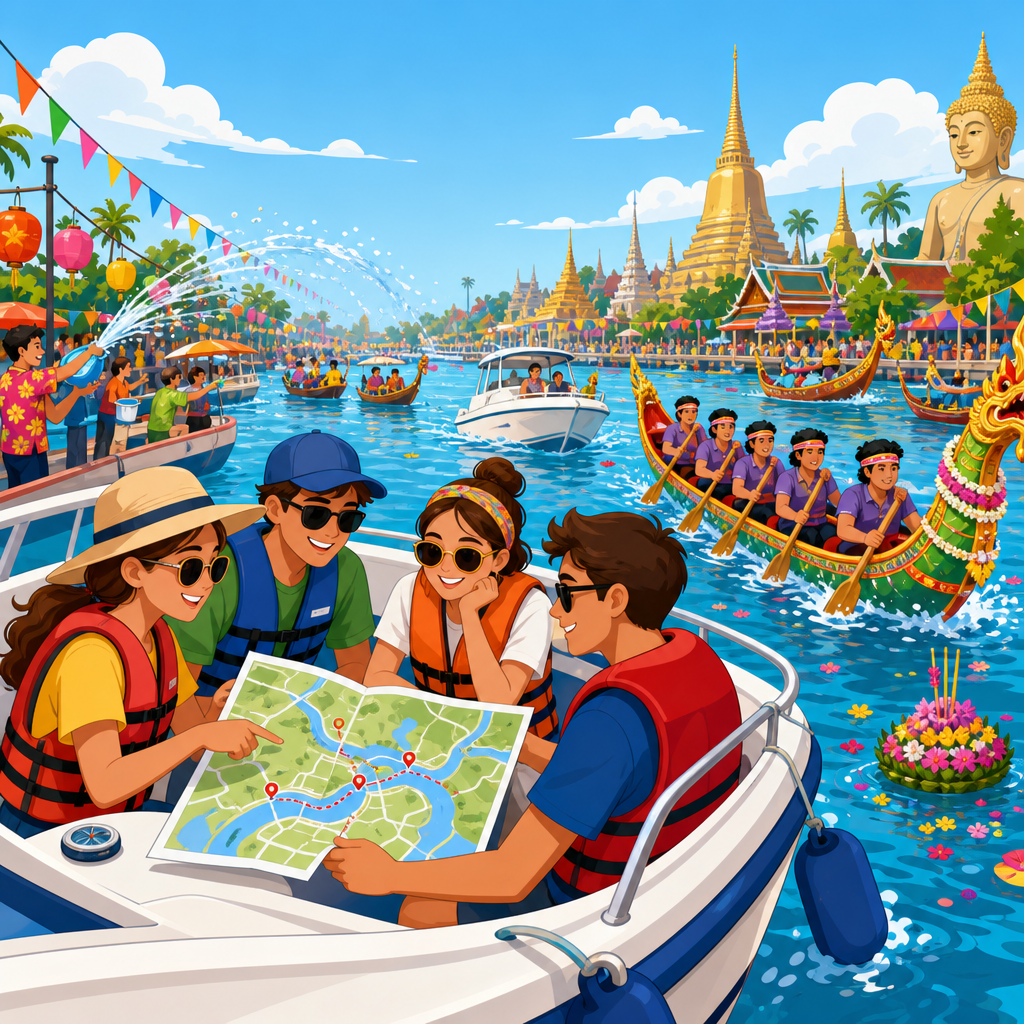
Planning a boating trip around major water festivals turns an ordinary cruise into a timed cultural experience, where navigation, local regulations, crowd management, and festival schedules matter as much as scenery. In practical terms, a water festival is any recurring event centered on rivers, lakes, canals, harbors, or coastlines, often combining boat parades, religious rituals, races, fireworks, floating markets, or waterfront concerts. Some are ancient civic traditions, such as Thailand’s Loy Krathong and Cambodia’s Bon Om Touk; others are modern spectacles built around regattas, tall ships, or citywide celebrations. For travelers, these events create rare access to local customs and high-energy waterfront scenes. For boaters, they also create logistical complexity.
I have planned festival-timed boating itineraries in crowded inland waterways and busy coastal ports, and the same lesson applies everywhere: the best experiences come from preparation, not spontaneity. Marinas fill months early, temporary exclusion zones appear with little room for error, and a perfect anchorage on a normal weekend can become unusable when parade routes, patrol craft, and charter traffic converge. Weather windows, vessel draft, fuel range, immigration rules, and tender access become more important when thousands of visitors arrive at once. If you want the view from the water without costly mistakes, you need to treat the trip as event logistics, voyage planning, and destination research combined.
This guide serves as a central resource for boating events and festivals around the world within the broader boating destinations and travel category. It explains how to choose the right festival, evaluate whether your boat matches local conditions, understand permits and safety controls, book berths and support services, and build an itinerary around peak festival days. It also highlights representative events across Asia, Europe, the Americas, the Middle East, Africa, and Oceania so you can identify which regions deserve a deeper follow-up article. If your goal is to watch illuminated boat processions, join spectator fleets, cruise to regatta villages, or anchor near waterfront fireworks, this hub will help you plan with confidence.
Choose the Right Water Festival for Your Boat and Travel Style
The first decision is not where to go, but what kind of festival your vessel and crew can realistically support. A trailerable runabout can work well for short-access river or lake events with easy ramps, while a cruising sailboat may be better suited to multi-day harbor festivals with marina infrastructure and offshore approach options. Houseboats fit slow inland gatherings where overnight berthing is simple, but they are a poor fit for narrow parade routes or fast-moving spectator fleets. Matching boat type to event style prevents the most common planning error: selecting a famous festival that is operationally wrong for your craft.
Water festivals generally fall into five useful boating categories. First are ceremonial lantern or floating-offering festivals, where the on-water value comes from calm evening viewing rather than active participation. Thailand’s Loy Krathong and parts of Japan’s river illuminations fit here. Second are racing and regatta festivals, such as Cowes Week in the United Kingdom or major rowing and dragon boat events, where course boundaries and support-boat restrictions dominate planning. Third are harbor celebrations and tall ship festivals, including events in Amsterdam, Boston, and Sydney, where marina reservations and controlled navigation channels matter most. Fourth are riverfront civic festivals with fireworks, like Pittsburgh’s Three Rivers Regatta heritage model or many national holiday gatherings. Fifth are religious or seasonal processions in places such as Kerala’s snake boat races or Venetian historical parades, where local custom carries as much weight as written regulations.
Your travel style matters as much as vessel class. Some crews want full-immersion participation, booking slips inside festival zones and accepting congestion for a front-row position. Others want a quieter base marina within taxi distance, using the boat for day access but retreating before nighttime crowds. Families with children often do better near structured marinas with shore facilities, predictable security, and short dinghy rides. Photographers may prefer anchorages with unobstructed sightlines over access to stage areas. Anglers or long-range cruisers may build the festival into a broader itinerary rather than making it the sole objective. Defining your priority early will shape every later decision.
Research Dates, Water Conditions, and Local Operating Rules
Major water festivals often look fixed on tourism calendars, but many are linked to lunar dates, religious observances, tidal windows, or race schedules that shift each year. Bon Om Touk in Cambodia, for example, aligns with the reversal of flow in the Tonle Sap system and usually falls in November, while Loy Krathong follows the full moon of the twelfth lunar month. Venice’s Regata Storica keeps a more stable annual pattern, yet route controls and spectator restrictions can still change. Confirm dates with the official event organizer, port authority, and local marina instead of relying on travel blogs or last year’s listings.
Water conditions can transform an attractive festival into an unsuitable boating destination. River festivals may involve strong current, debris after rain, low bridge clearance, or no-wake enforcement. Coastal events add tidal stream, surge from passing traffic, and limited shelter if weather turns. During Songkran-related boating activity in Thailand or festival traffic around Hong Kong’s Dragon Boat Festival, local weather and visibility can shift rapidly, especially in monsoon transition periods. Review official charts, Notices to Mariners, tide tables, current predictions, bridge schedules, and seasonal storm history before committing.
Operating rules deserve close attention because event authorities often impose temporary controls beyond standard navigation law. You may see exclusion zones around race courses, no-anchor sectors near fireworks barges, VHF monitoring requirements, one-way traffic schemes, speed limits, or mandatory escort periods. In some European cities, environmental rules also affect engine use, discharge, and wake. In inland festival locations, local police, coast guards, harbor masters, and volunteer marshals may all have overlapping roles. I always build a simple event brief listing contact numbers, VHF channels, charted restrictions, and arrival procedures so the crew can respond quickly under pressure.
Book Marinas, Moorings, Permits, and Services Early
Festival boating rewards early reservations more than almost any other type of leisure cruising. Prime berths in host cities can sell out six to twelve months in advance, especially where dockage is limited and demand spikes from charter fleets, media boats, and visiting yachts. This is common during Sail Amsterdam, Kiel Week, Cowes Week, and waterfront events in cities with small marina footprints. If an event attracts superyachts or race support craft, smaller recreational boaters can be displaced farther from the center than expected. Waiting too long usually means higher transport costs, longer tender runs, or no water access at all.
Reservations should cover more than a slip. Ask marinas about beam limits, maximum draft, shore power standards, fuel availability during event days, pump-out access, security patrols, launch ramp congestion, and late-arrival procedures. If you are trailering, confirm parking duration, vehicle security, and whether the ramp remains open during parade closures. For international trips, verify customs reporting, temporary import rules, cruising permits, and insurance minimums. In parts of Europe, inland waterways may also require vignettes, ICC-equivalent operator competence, or equipment inspections. Charterers should read festival surcharges carefully, because operators may restrict night navigation or attendance in exclusion areas.
| Planning item | Why it matters during festivals | Best timing |
|---|---|---|
| Marina or mooring reservation | Central berths fill first and determine your viewing access | 6–12 months ahead |
| Permit and harbor rule review | Temporary navigation controls can invalidate normal cruising plans | 3–6 months ahead, then recheck two weeks out |
| Accommodation backup | Weather or berth changes may force part of the crew ashore | 3–6 months ahead |
| Fuel, pump-out, and provisioning | Queues lengthen sharply once the event begins | Reserve or complete 24–48 hours early |
| Arrival and departure window | Road closures and harbor lockouts can trap late arrivals | Finalize one week ahead |
Service planning is the hidden differentiator between a smooth trip and a stressful one. Provision before the peak crowds arrive. Refill water and fuel early. If you rely on mobile internet for weather and route updates, check local SIM coverage on the waterfront; festival crowd density can overwhelm networks. Arrange shore transport in advance if your berth is outside the center. For larger boats, line handlers and pilotage may be worth pre-booking in unfamiliar tidal ports. These details sound minor until a closing parade or fireworks security perimeter blocks your movement for six hours.
Build an Itinerary Around Peak Viewing, Safety, and Crowd Flow
The best festival itineraries are built backward from anchor events: opening ceremonies, headline races, illuminated flotillas, fireworks, or closing parades. Start with the exact time and location of those moments, then decide where your boat should be one hour before and one hour after each one. That approach avoids the common mistake of focusing only on the highlight itself. In Venice, for example, reaching a canal-side viewpoint can be easy compared with exiting through congested waterways afterward. In harbor festivals, the departure rush can produce more risk than the main show.
Whenever possible, arrive at least one full day early. This gives you time to learn local traffic patterns, test tender routes, check sightlines, and identify fallback positions if your first anchorage becomes unavailable. For multi-day events, alternate high-intensity festival periods with quieter cruising legs or shore days. Crews tire quickly when every movement requires radio monitoring and collision avoidance in dense traffic. I also recommend setting hard decision points: if wind exceeds a certain threshold, if visibility drops below your comfort level, or if anchoring space disappears, move to the backup plan without debate.
Safety planning should be explicit. Review man-overboard procedures, nighttime lighting, lifejacket use, firework fallout risk, and alcohol policies. Festival atmospheres encourage casual behavior, but crowded waterways are unforgiving. Keep a charged handheld VHF in the tender, maintain navigation lights even in well-lit harbors, and brief guests on propeller safety before every shuttle. In busy spectator zones, station fenders early and rig lines for quick relocation. If children or inexperienced guests are aboard, assign one adult whose only role is supervision, not photography or helming. That simple rule prevents many near misses.
Top Water Festivals Around the World for Boaters
Asia offers some of the richest choices for festival-focused boating. Thailand’s Loy Krathong creates atmospheric night scenes of floating offerings and illuminated waterfronts, best approached as a viewing cruise rather than an active small-boat parade in most locations. Cambodia’s Bon Om Touk in Phnom Penh combines river spectacle with intense crowds, making secure mooring and current awareness essential. India’s Nehru Trophy Boat Race in Kerala showcases long snake boats on the Punnamada Lake backwaters, where hiring a local operator often works better than self-navigation. Hong Kong’s Dragon Boat Festival mixes race energy with world-class harbor logistics, ideal for crews comfortable with formal traffic control.
Europe balances tradition with excellent boating infrastructure. Venice’s Regata Storica and Festa del Redentore are legendary, but both demand careful attention to local wake rules, mooring scarcity, and municipal notices. Amsterdam’s SAIL event brings tall ships and dense spectator traffic to a city where berth location changes the entire experience. Cowes Week on the Solent is primarily a sailing event, yet nearby cruising boats can enjoy the atmosphere if skippers respect race areas and strong tidal conditions. In northern Europe, Kiel Week combines regattas and waterfront programming with a professional harbor system that rewards early planning.
The Americas present a different mix: patriotic waterfront festivals, regattas, and city harbor events. In the United States and Canada, many boaters build trips around Fourth of July or Canada Day fireworks, hydroplane weekends, or lakefront festivals where anchoring zones become floating neighborhoods. Rio de Janeiro’s New Year waterfront celebration is one of the world’s most dramatic coastal spectacles, but swell, security, and charter demand require disciplined planning. In Mexico and the Caribbean, carnival-linked harbor celebrations can be rewarding for cruisers already moving through the region, especially when paired with marina-based viewing rather than open-roadstead exposure.
Other strong options include Sydney Harbour’s New Year season, where official exclusion zones and premium berths define the experience, and South Africa’s waterfront regatta culture in Cape Town and Durban, where weather and surge deserve respect. In the Middle East, Dubai’s marine event calendar often favors modern marina access and regulated spectator boating. Across these destinations, the same principle holds: the best water festival for a boater is not always the most famous one, but the one where vessel capability, local rules, and personal goals align.
Common Mistakes and How to Avoid Them
The biggest mistake is assuming a festival destination operates normally during festival week. It does not. Fuel docks may close early, security cordons may shift with little notice, and waterside restaurants or dinghy docks may be reserved for event use. Another frequent error is underestimating transit time through congested waterways. A route that takes twenty minutes on an ordinary morning may take ninety minutes once patrol boats, no-wake traffic, and spectator crossings build. Skippers also overlook the return leg, especially after dark, when fatigue and glare reduce judgment.
Another avoidable problem is relying on generic travel advice instead of marine-specific sources. Official event pages are useful for entertainment schedules but often weak on navigation details. Use harbor master bulletins, coast guard notices, local yacht clubs, marina managers, and up-to-date electronic charts from providers such as Navionics or C-MAP. Paper charts still matter in unfamiliar river systems and where mobile coverage is inconsistent. Finally, avoid overcommitting. If every day is fully scheduled, you have no room for weather delays, mechanical issues, or simply moving the boat safely. A festival boating trip works best when the itinerary has margin built into it.
Planning a boating trip around major water festivals is ultimately about combining destination excitement with disciplined seamanship. Choose an event that fits your vessel, verify dates and local rules through official marine sources, reserve berths and support services early, and build your itinerary around both the headline moments and the traffic patterns around them. The reward is substantial: you gain a front-row perspective on cultural traditions, sporting drama, and waterfront celebrations that land-based visitors rarely experience.
As a hub for boating events and festivals around the world, this guide gives you the framework to evaluate destinations before you commit time and money. Whether you are targeting a lantern festival in Asia, a regatta in Europe, a harbor celebration in North America, or a fireworks-centered coastal gathering in the Southern Hemisphere, the same planning principles apply. Start with boat fit, move to regulations and reservations, then refine the itinerary around safe access and clear fallback options. Use this page as your starting map, then continue into destination-specific planning so your next festival cruise is memorable for the right reasons.
Frequently Asked Questions
1. How far in advance should I plan a boating trip around a major water festival?
You should ideally begin planning at least three to six months ahead for regional festivals, and even earlier for internationally known events that draw heavy tourism, charter demand, and temporary marine restrictions. Unlike a standard boating trip, festival travel involves several moving parts at once: launch access, marina reservations, dockage availability, permits, route timing, local event calendars, and crowd-related navigation rules. Dates can also shift slightly from year to year if they are tied to lunar calendars, religious observances, seasonal water levels, or municipal scheduling, so it is important to confirm the exact event window through official tourism boards, harbor authorities, or festival organizers rather than relying on old blog posts or generic travel sites.
Advance planning also gives you time to compare whether you should bring your own boat, rent locally, join a licensed operator, or use a combination approach. In many festival destinations, the best slips and moorings are reserved early, and some areas create temporary no-anchor zones, spectator corridors, or permit-only viewing sectors. Hotels near marinas, transport to launch ramps, and local guides can also sell out quickly. A good planning timeline starts with selecting the festival, mapping your cruising radius, identifying local marine rules, and then building a schedule that includes arrival at least a day or two before the main festivities. That buffer matters because crowded waterways, weather delays, and check-in requirements often complicate same-day arrivals.
2. What should I research before choosing a specific water festival for my boating trip?
Start by researching whether the festival is actually boat-friendly for independent travelers. Some water festivals are ideal for private recreational boaters, with designated spectator areas, marina support, and clear navigation routes. Others are better experienced from shore or through authorized tour operators because of heavy commercial traffic, ceremonial processions, racing lanes, or strict security zones. Before committing, look closely at the character of the event: is it a floating parade, a religious ritual, a race-based festival, a harbor fireworks celebration, a floating market, or a citywide waterfront event? Each format creates different boating conditions and viewing opportunities.
You should also evaluate waterway type and boating difficulty. A calm lake festival requires very different preparation than a tidal harbor celebration, a narrow canal procession, or a river event with strong current and temporary closures. Review likely congestion levels, wake restrictions, local right-of-way practices, bridge schedules, lock operations, anchoring rules, night navigation conditions, and patrol enforcement. Cultural context matters too. If the event includes sacred rituals, offerings, processional boats, or protected ceremonial zones, boaters need to understand where respectful distance is expected and what actions are considered disruptive. Finally, research practical support on the ground: fuel stops, pump-out stations, marina services, trailer parking, public launch access, marine VHF protocols, language barriers, emergency response coverage, and weather patterns during the festival season. The best festival for your trip is not just the most famous one; it is the one that matches your boating skill, vessel type, comfort with crowds, and interest in the cultural experience.
3. How can I navigate safely when waterways are crowded during a festival?
Safe navigation during a major water festival depends on patience, reduced speed, situational awareness, and a willingness to treat the day more like controlled event boating than open-water cruising. In festival conditions, hazards multiply quickly: inexperienced rental operators, distracted spectators, small paddle craft, official patrol boats, temporary buoys, floating debris, low visibility at dusk, and unpredictable course changes from neighboring vessels. The safest approach is to study the event navigation plan before departure, monitor official notices to mariners, and assume that normal traffic patterns may be altered. If local authorities publish exclusion zones, one-way movement lanes, no-wake corridors, or timed closures, build your route around them rather than trying to improvise on arrival.
On the water, keep speeds conservative, maintain extra distance, and assign roles on board so one person can focus on navigation while another watches nearby traffic, channel markers, and event activity. Avoid aggressive maneuvering to secure a better viewing position. In congested areas, the best decision is often to arrive early, hold a legal and stable position, and let the event come to you. Make sure all required safety equipment is ready and easy to reach, including life jackets, lights, sound signals, anchor gear, first aid supplies, and a charged communication device or marine radio. If the festival extends into evening hours, confirm your navigation lights work properly and that you can safely exit in darkness or reduced visibility. Most importantly, follow instructions from harbor patrol, coast guard units, race marshals, and event staff immediately. During large festivals, these authorities are not offering suggestions; they are actively managing risk in a dynamic environment.
4. What permits, local regulations, and etiquette should I expect when boating near a water festival?
Regulations vary widely by country, region, and event type, so never assume that your normal boating practices will apply unchanged during a festival. Some destinations require temporary access permits, special launch permissions, or pre-booked spectator moorings. Others impose emergency restrictions such as exclusion zones around parade routes, fireworks barges, ceremonial vessels, racing lanes, bridges, or waterfront stages. Depending on the jurisdiction, you may encounter alcohol enforcement, mandatory safety inspections, horsepower limits, environmental controls, noise restrictions, wake rules, anchoring prohibitions, or curfews tied to event operations. International travelers should also verify whether their boating license, operator certification, insurance, and vessel documentation are recognized locally.
Etiquette is just as important as formal regulation. Water festivals often carry cultural, historical, or religious significance, and respectful conduct can shape both your experience and how visiting boaters are received. Do not cut across ceremonial routes, crowd processional boats, blast music near observances, create excessive wake near small craft or shoreline audiences, or anchor where you block viewing lines or navigation channels. If local custom favors quiet observation during certain rituals, follow that lead. If waterfront neighborhoods are hosting family-centered celebrations, keep noise and speed low when arriving and departing. It is also smart to support the local system by using official marinas, approved launch points, and licensed guides when needed. In practice, the most successful festival boaters are the ones who combine legal compliance with cultural awareness and understand that being on the water is a privilege, not just a vantage point.
5. What should I pack and prepare for a boating trip centered on a water festival?
Prepare for the trip as both a boating outing and a high-demand event day. Standard marine essentials remain non-negotiable: properly fitted life jackets for everyone on board, anchor and rode suited to local conditions, dock lines, fenders, charts or reliable digital navigation, communication devices, lights, emergency signaling gear, sun protection, drinking water, first aid supplies, and weather-appropriate layers. Festival boating adds another layer of preparation because you may spend long hours idling, waiting, holding position, or moving slowly through congested zones. That makes fuel planning, battery health, engine reliability, and restroom strategy more important than many boaters initially expect. If the event includes fireworks or nighttime viewing, bring working navigation lights, spotlights only where appropriate and legal, and extra caution for post-event departures when traffic surges all at once.
Comfort and logistics also matter. Pack food that is easy to store and eat safely underway, along with trash bags so nothing blows overboard into crowded waterways. Bring cash or local payment options if waterfront vendors, moorings, or launch facilities are not fully digital. Waterproof storage for documents, phones, cameras, and permits is essential. If you are traveling to another region or country, carry copies of registration, insurance, identification, reservation details, and emergency contacts. It is also wise to prepare a backup plan in case the water becomes too crowded or restrictions tighten. That might mean identifying shore-based viewing alternatives, alternate marinas, or a second cruising day after the festival peak. The best festival boating experiences come from crews who are well supplied, flexible, and realistic about the fact that timing, crowds, and local conditions can change quickly.