A bilge pump is one of the most important safety devices on any boat because it removes unwanted water from the lowest part of the hull before that water threatens wiring, batteries, flotation, or stability. Testing and replacing a boat’s bilge pump sounds like a narrow maintenance job, but in practice it sits at the center of a larger system that includes float switches, manual helm controls, battery capacity, fuse protection, hose routing, check valves, thru-hull fittings, corrosion prevention, and leak diagnosis. In my experience maintaining trailer boats, center consoles, and small cruisers, most pump failures are not caused by the motor itself. They come from neglected wiring, clogged strainers, undersized discharge hose, a sticking float switch, or a boat owner assuming the pump can compensate for a leak that should have been fixed at the source.
For boat maintenance and repairs, understanding electrical and plumbing systems together is essential because the bilge pump depends on both. Electrically, the pump needs the correct voltage, tinned marine wire, watertight connections, proper fuse sizing, and a reliable on off auto switching circuit. Plumbing matters just as much. The bilge sump must let water reach the pump, the hose must rise without trapping air, and the overboard discharge must not siphon water back into the bilge. A bilge pump system is therefore not a standalone appliance. It is a network of parts that only works when each part is sized, installed, and tested correctly.
This hub article explains how to test and replace a boat’s bilge pump while also covering the wider electrical and plumbing context every owner should know. You will learn how bilge pumps work, what pump capacity ratings really mean, how to spot common failure modes, how to inspect associated components, and when replacement makes more sense than repair. If you maintain your own boat, these are foundational skills. If you hire a yard, they help you ask better questions and verify the work. Either way, a sound bilge pump system reduces risk, protects expensive equipment, and gives you time to respond when water shows up where it should not.
How a Boat Bilge Pump System Works
A standard small boat bilge pump is a 12 volt or 24 volt centrifugal pump mounted at the lowest practical point in the bilge. Water enters through a screened base, an impeller spins, and the pump pushes water up a discharge hose to a thru-hull fitting above the waterline. Because most recreational bilge pumps are centrifugal rather than diaphragm types, they are designed for high flow and intermittent duty, not for creating suction from a dry sump. That means they must sit where water naturally collects, and they should never be expected to remove every last ounce of water. A small residual puddle is normal.
Most systems use three control modes. Manual mode lets the operator run the pump from the helm switch. Automatic mode uses a float switch or electronic water sensor to activate the pump when water rises. Off mode isolates the manual circuit, though many panels still allow the automatic side to remain energized directly from the battery through an inline fuse. This arrangement follows common marine wiring practice because a bilge pump must work even when the battery switch is off. The American Boat and Yacht Council, commonly cited as ABYC, treats bilge pumping and overcurrent protection as basic safety concerns for good reason.
Pump ratings can mislead owners. A pump advertised at 500, 1100, or 2000 gallons per hour is usually tested at open flow with minimal head pressure, ideal voltage, and a short hose run. Real boats add vertical lift, bends, corrugated hose friction, and battery voltage drop, all of which reduce actual output. I have measured systems that moved far less water than the label suggested because the hose loop was too high, the wiring was too small, or the battery had sagged under load. Capacity matters, but installation quality matters just as much.
Signs Your Bilge Pump or Related System Needs Attention
The clearest sign of trouble is simple: water remains in the bilge when the pump should have cleared it. But many warning signs appear earlier. A pump that hums without moving water may have a jammed impeller, blocked intake, or split discharge hose. A pump that cycles repeatedly with little water present may be triggered by a stuck float switch, backflow from the hose, or a leaking check valve. Corroded terminals, brittle insulation, green copper oxide, and heat damaged connectors indicate electrical resistance that can lower motor performance long before the pump stops entirely.
Listen for changes in sound. A healthy centrifugal bilge pump produces a consistent whir and a steady stream at the discharge. Intermittent surging often points to air lock, debris, or poor hose routing. Slow startup can mean weak battery voltage or failing brushes in older motors. If the fuse blows, do not just install a larger one. That is a classic mistake. Repeated fuse failure means excessive current draw, a short circuit, seized motor, or incorrect wiring. Oversizing the fuse defeats the protection designed to prevent melted wire insulation and fire risk.
Bilge pump issues also reveal wider electrical and plumbing problems. Oily residue in the bilge can contaminate sensors and degrade hoses. Frequent pump operation may indicate rainwater intrusion through deck fittings, failed shaft packing on inboards, leaking livewell plumbing, cracked washdown lines, or a corroded thru-hull. When I inspect a boat with a busy automatic pump, I do not stop at the pump. I trace why the water is there. Pumps buy time; they do not solve leaks.
How to Test a Boat Bilge Pump Properly
Start with safety. Isolate shore power, ventilate the bilge, and confirm there are no fuel vapors before energizing anything. Then inspect the system visually. Check the pump base for debris, verify the float switch moves freely, look for chafe points in wiring, and inspect the discharge hose from pump to thru-hull. Manual testing comes first because it isolates the motor circuit. Turn the helm switch to manual and listen for immediate operation. Then verify water exits overboard. If the motor runs but no water discharges, the problem is likely mechanical or plumbing related rather than electrical.
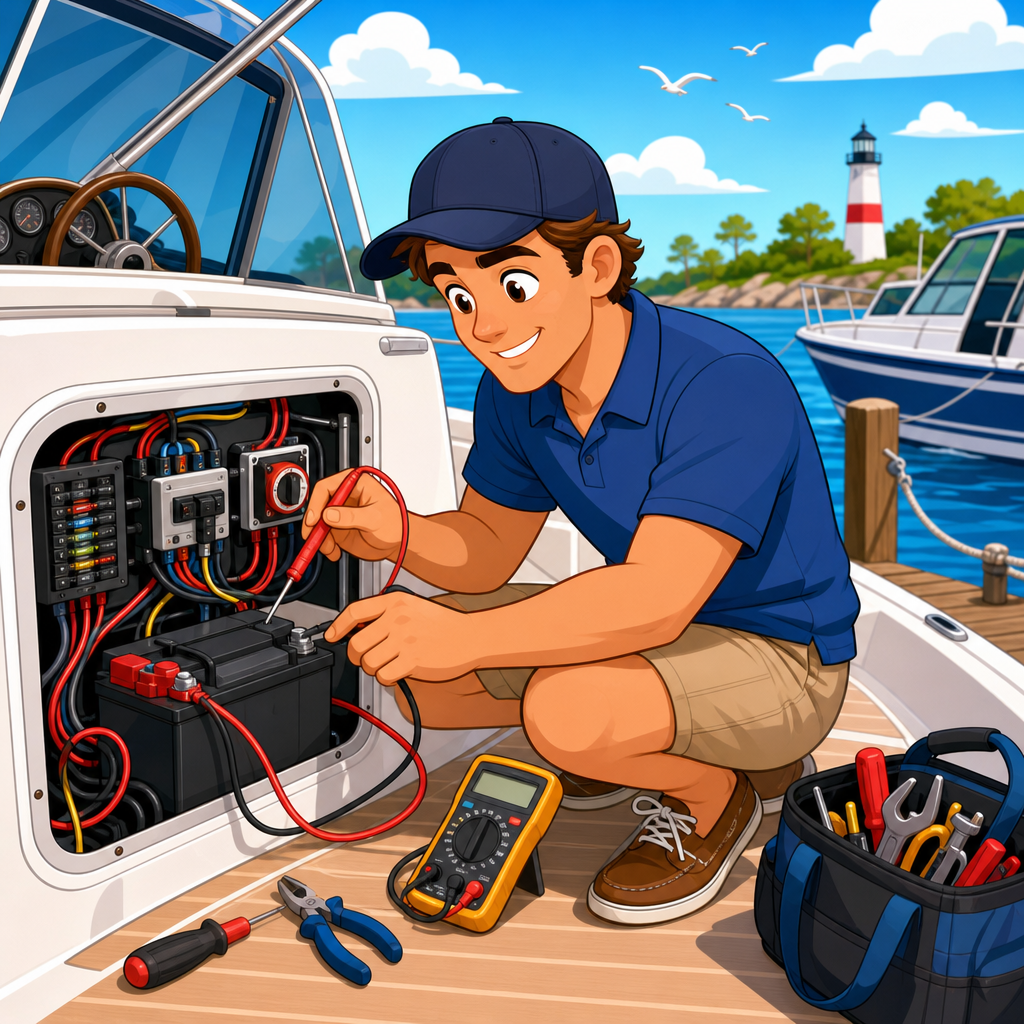
Next test the automatic function. Lift the float switch by hand or trigger the electronic sensor according to the manufacturer’s method. The pump should start promptly and continue until the switch drops or the sensor times out. If manual works but automatic does not, the switch, automatic fuse, or related wiring is suspect. Use a digital multimeter to confirm voltage at the pump under load. I look for battery voltage close to nominal while the motor is running. A strong static reading with a large drop during operation usually means resistance in the circuit, often at butt connectors, fuse holders, panel switches, or undersized wire.
The most useful real-world test is a controlled wet test with clean water. Fill the bilge area around the pump using a bucket or hose, enough to trigger the automatic switch. Time how long the pump takes to evacuate the water and watch the discharge stream. This confirms switching, pumping, hose integrity, and backflow behavior in one pass. It also shows whether the pump sits at the true low point. Many installations look correct until a wet test reveals trapped water on the opposite side of a stringer or under a limber hole obstruction.
| Test step | What to check | Normal result | Likely fault if failed |
|---|---|---|---|
| Manual switch on | Pump starts and discharges water | Immediate motor sound and steady outlet flow | Bad motor, blown fuse, clogged intake, blocked hose, low voltage |
| Float switch lifted | Automatic circuit activates pump | Pump runs without helm switch input | Failed float switch, auto fuse issue, wiring fault |
| Voltage under load | Measure at pump terminals while running | Near battery voltage with minimal drop | Corrosion, loose connectors, undersized wire, weak battery |
| Wet evacuation test | Observe water removal and cycling | Water level drops quickly and pump stops correctly | Poor pump placement, backflow, air lock, restricted discharge |
How to Replace a Boat Bilge Pump Step by Step
Replacement begins with selecting a pump that matches the boat’s needs and footprint. If the existing system worked well, matching voltage, hose diameter, and approximate capacity is usually the safest path. On small open boats, common sizes range from 500 to 1100 gallons per hour; larger offshore boats often use multiple pumps at different heights, including a high water emergency pump and alarm. Choose a marine rated pump from a recognized brand such as Rule, Attwood, or Johnson Pump, and use tinned copper marine wire, adhesive lined heat shrink connectors, a proper fuse, and a replacement float switch if the old one shows any doubt.
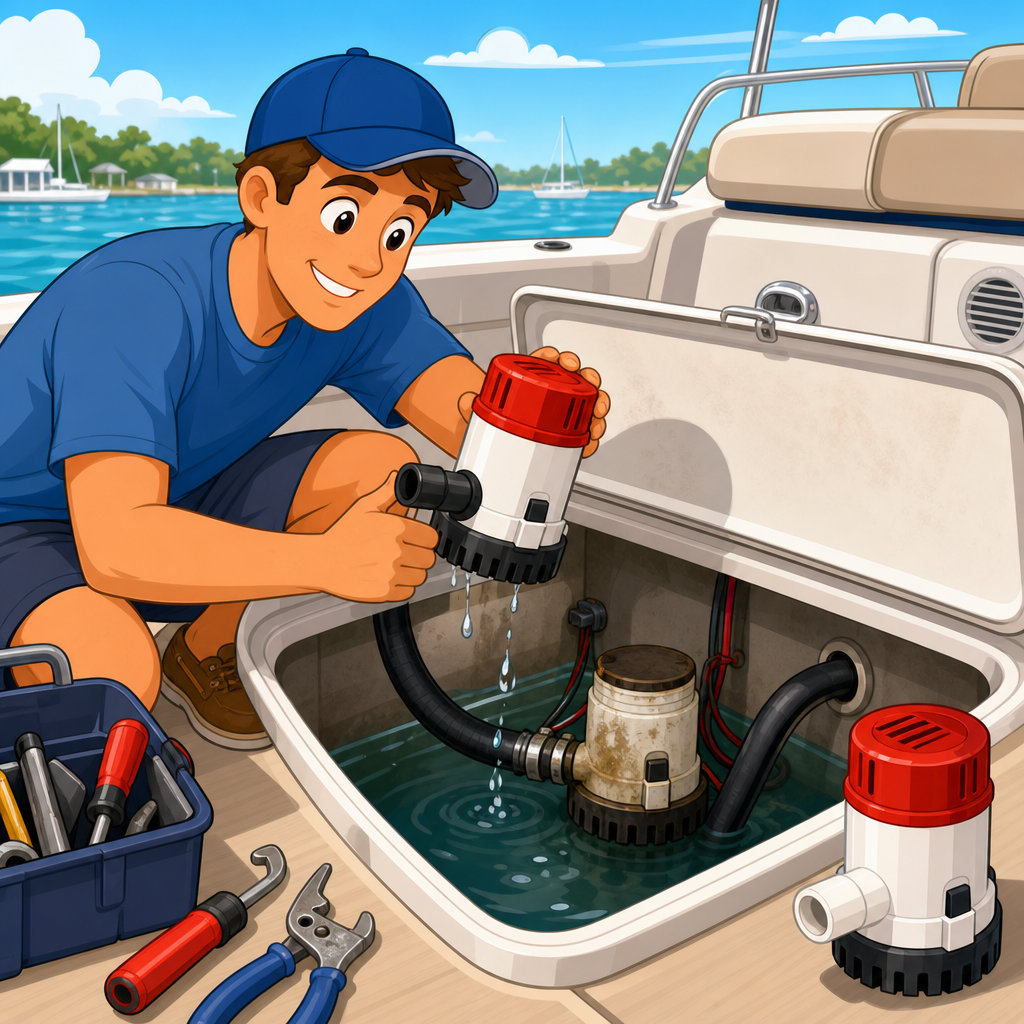
Disconnect battery power before removal. Take photos of wiring and hose routing, then label the conductors. Remove the discharge hose clamp, free the hose, and unsnap or unbolt the pump from its strainer base depending on design. Clean the bilge thoroughly before installing the new unit. Sand, zip ties, fish scales, and bits of fiberglass are common pump killers. If the base is mounted with screws, confirm they do not penetrate the hull. Many installers prefer bonding pads or manufacturer mounting plates in sensitive hull areas to avoid unnecessary fasteners below the waterline or near thin laminate.
Install the new pump at the lowest accessible point where water can reach it without being blocked by stringers or debris. Route the hose with a continuous rise where possible, support it to prevent sagging, and keep bends gentle. Double clamp larger hoses with marine grade stainless clamps if appropriate for the fitting size. Make electrical connections above normal bilge water level, not lying in the sump. Crimp properly with the right tool, seal with heat shrink, and secure the harness well clear of moving parts. Finally, reconnect power and perform both manual and automatic wet tests before considering the job complete.
Electrical Best Practices for Reliable Bilge Pump Performance
Bilge pump reliability depends heavily on voltage delivery. Even a quality pump loses output when voltage falls. The most common causes are undersized wire, long runs without gauge adjustment, corroded splice points, and battery neglect. Marine circuits should use stranded, tinned copper conductors sized for the run length and current draw. Manufacturers publish amp requirements, but practical sizing should account for voltage drop. In the field, I often replace factory butt connectors with adhesive lined heat shrink connectors because the originals may look intact while hiding blackened copper and rising resistance inside.
Fuse placement matters. The automatic feed should be protected close to the power source, often within seven inches by common marine practice unless the conductor is in a protected sheath or enclosure. The manual circuit also needs proper overcurrent protection and a switch rated for the load. Avoid household wire nuts, untinned automotive wire, and open barrel connectors in bilge spaces. They fail quickly in moisture, vibration, and salt exposure. If a bilge pump shares a battery with electronics, monitor resting voltage and charging performance. A weak battery may still start a lightly loaded pump once, then collapse during extended cycling in an emergency.
For hub-level understanding of boat electrical and plumbing systems, bilge pumps connect to broader maintenance habits. Battery terminals should be clean and torqued correctly. Ground returns need the same scrutiny as positive feeds. Panel labels must be accurate so a crew member can force manual operation instantly. Boats kept on moorings benefit from regular battery charging strategy, whether shore charger, solar maintenance, or engine charging review. A bilge pump is only as dependable as the electrical ecosystem feeding it.
Plumbing, Drainage, and Preventive Maintenance Across the Bilge System
Good plumbing layout turns a decent pump into an effective one. Use smooth bore hose when possible because corrugated hose increases friction losses. Keep discharge runs short, minimize elbows, and place the thru-hull above the static waterline with consideration for heel, following seas, and stern squat under power. Some boats use a vented loop to reduce siphoning risk. Check valves are often added to stop backflow, but they can also reduce flow and trap debris. In many small boat installations, smart hose routing is better than relying on a check valve.
Preventive maintenance should be scheduled, not improvised. During routine boat maintenance and repairs, inspect bilge pumps monthly in season and before long runs. Flush the bilge with fresh water, remove debris from the pump strainer, and cycle both manual and automatic functions. Inspect livewell pumps, washdown pumps, seacocks, hose clamps, freshwater pressure pumps, sump boxes, and cockpit drains at the same time because these systems interact. A leaking hose on one plumbing circuit often becomes a bilge pump symptom first. This is why bilge service makes a strong hub topic for electrical and plumbing systems.
Also think beyond the pump itself. A high water alarm adds critical redundancy and is inexpensive compared with the cost of sinking damage. Secondary pumps mounted higher in the bilge can provide backup if the primary clogs or the inflow rate rises. None of these measures replaces sound seamanship or leak prevention, but they add reaction time when conditions deteriorate. Test your system, replace worn parts before they fail, and treat every unexplained bilge cycle as a message to investigate the entire boat.
Testing and replacing a boat’s bilge pump is one of the highest value jobs in boat maintenance because it strengthens both safety and system awareness. The core process is straightforward: inspect the installation, test manual and automatic operation, measure voltage under load, verify discharge with a wet test, and replace any weak pump, switch, hose, or connector with properly sized marine components. The broader lesson is even more important. Bilge pumping belongs to the overlap between electrical reliability and plumbing integrity, so the best results come from servicing the whole chain rather than swapping one part and hoping for the best.
If you remember three things, make them these. First, pump ratings on the box are not real world performance; head height, hose friction, and voltage drop reduce output. Second, most failures start in the supporting hardware, especially float switches, connectors, and blocked strainers. Third, frequent automatic cycling means you should look for the water source, not congratulate the pump. Owners who adopt these habits catch problems earlier, reduce corrosion damage, and avoid the false confidence that leads to expensive emergencies.
Use this hub as your starting point for every electrical and plumbing inspection on board. Build a checklist, test the bilge pump before each season, and replace marginal components before they leave you relying on luck. A properly installed bilge pump will not make a boat unsinkable, but it will give you the time and control that good maintenance is supposed to deliver.
Frequently Asked Questions
How do I properly test a boat’s bilge pump to make sure it will work in an emergency?
The best way to test a boat’s bilge pump is to check the entire system, not just whether the pump motor spins. Start by visually inspecting the bilge area for debris, oil residue, loose wires, corrosion, cracked hoses, and anything that could block the pump intake or interfere with the float switch. Then test the pump from the helm using the manual switch. If the pump runs, listen for a smooth motor sound and verify that water is actually discharged overboard through the correct thru-hull fitting. A pump that hums but does not move water may have a clogged strainer, blocked hose, air leak, failed impeller, or wiring issue causing weak performance.
Next, test the automatic function. The simplest method is to lift the float switch by hand if it is accessible. If the float switch is electronic, follow the manufacturer’s testing procedure. You should also perform a realistic water test by pouring clean water into the bilge until the float switch activates. This confirms not only that the switch works, but that the pump turns on at the proper water level, clears the water efficiently, and shuts off correctly afterward. Watch how quickly the water level drops and make sure the pump does not leave excessive standing water beyond what is normal for the pump design.
Finally, test the electrical side. Confirm that the inline fuse or breaker is correctly sized, battery voltage is healthy, and all wire connections are clean, tight, and protected from corrosion. A bilge pump can appear functional at the dock but fail under load if the battery is weak or if the wiring has excessive resistance. For reliable protection, test the system regularly, especially before long trips, after heavy rain, after trailering, and anytime the boat has been stored for a while. A complete test gives you confidence that the pump, float switch, discharge hose, wiring, and battery supply will all work together when it matters most.
What signs tell me it is time to replace a bilge pump instead of just cleaning or repairing it?
A bilge pump should be replaced when it shows signs of unreliability, reduced output, or repeated electrical or mechanical problems. Common warning signs include the pump failing to start consistently, running intermittently, blowing fuses, making unusual grinding or whining noises, cycling without clearing water, or running but pumping very little water overboard. If the housing is cracked, the motor is corroded, the base is brittle, or the internal components have been exposed to significant contamination from oil, sludge, or salt buildup, replacement is usually the smarter choice.
Age also matters. Bilge pumps live in one of the harshest environments on a boat: damp, dirty, vibration-prone, and often corrosive. Even if a pump still works, older units can become less trustworthy over time, especially if they have sat in standing water or have visible corrosion at connectors and terminals. The same goes for float switches. If the pump motor is fine but the switch sticks, activates late, or fails to trigger consistently, replacing both components together is often the best preventive move because they function as a system.
Another reason to replace instead of repair is when the existing pump is undersized, poorly installed, or difficult to service. If you have recurring flooding in the bilge after rain, washdowns, or rough conditions, upgrading to a properly sized pump with better hose routing and modern wiring protection may solve more than a simple motor issue. In practice, bilge pumps are relatively inexpensive compared with the cost of water damage, electrical failure, or loss of vessel stability. If there is any doubt about reliability, replacement is generally the safest decision.
How do I choose the right replacement bilge pump for my boat?
Choosing the right replacement pump starts with matching the pump to the boat’s size, usage, and existing bilge system. Most owners begin by looking at gallons-per-hour, or GPH, ratings, but published ratings are often measured under ideal conditions with minimal hose lift and no installation losses. Real-world output is lower once the pump has to push water upward through a discharge hose and out a thru-hull. That means you should not choose a replacement based only on the number printed on the box. Consider how much vertical lift the pump must overcome, the hose diameter, the number of bends in the line, and whether the discharge path is efficient.
You also need to decide whether to replace just the pump cartridge or the full pump assembly. Many modern pumps allow quick cartridge replacement while keeping the original base in place, which can make service easier. However, if the base is damaged, clogged, loosely mounted, or incompatible with a newer design, replacing the full assembly may be better. Make sure the replacement pump fits the available bilge space and can be mounted at the lowest practical point without sitting where debris collects excessively. It should also be accessible enough to inspect and service in the future.
Electrical compatibility is equally important. Match the voltage of the existing system, typically 12V or 24V, and verify that wire size, fuse protection, and switch capacity are appropriate for the new pump’s current draw. If your boat relies heavily on automatic bilge protection while unattended, choose a quality pump and switch from a reputable marine manufacturer rather than the cheapest option. Many owners also use the replacement as an opportunity to review the entire setup, including float switch type, anti-corrosion connections, hose condition, check valve strategy, and thru-hull integrity. The right pump is not just one that fits; it is one that works efficiently and reliably within the complete drainage and electrical system.
What is the correct way to replace a boat’s bilge pump and float switch?
Begin by disconnecting battery power to the bilge circuit so the pump cannot energize while you are working. If there is water in the bilge, remove or control it first so you can work in a clean, visible area. Take photos of the existing installation before disconnecting anything. This helps you document wire routing, fuse placement, hose orientation, and switch connections. Remove the old pump and float switch carefully, noting how the discharge hose is attached and whether there are clamps, adapters, or mounting brackets that need to be reused or replaced. Inspect the hose itself for brittleness, internal blockage, low spots that trap water, and loose or corroded clamps.
Install the new pump in the lowest practical section of the bilge where water collects, but avoid placing it where it will be jammed by debris or become impossible to service. Mount the float switch so it can move freely and activate before water reaches a dangerous level, but not so low that it causes constant nuisance cycling. Use marine-grade tinned wire, heat-shrink butt connectors, and proper fuse or breaker protection according to the pump manufacturer’s specifications. Secure wires well above the wettest part of the bilge whenever possible, and support them so they do not chafe. If the manual helm switch and automatic float switch share the same pump, wire them exactly as intended so both modes function independently and safely.
Reconnect the discharge hose with the correct diameter and route it upward as efficiently as possible to the thru-hull, minimizing sharp bends and unnecessary restrictions. Double-clamp connections where appropriate and inspect the thru-hull for condition and watertight security. Be cautious about check valves. While some owners install them to reduce backflow, they can also restrict output, trap debris, and create failure points, so many marine professionals prefer good hose routing instead. Once everything is installed, restore power and perform both manual and automatic water tests. Confirm fast activation, strong discharge, proper shutoff, and no leaks at the hose or electrical connections. A careful replacement is not finished until the system has been tested under realistic conditions.
Why is the bilge pump only one part of a larger safety system on a boat?
A bilge pump is essential, but it is not a standalone guarantee against flooding or water damage. Its reliability depends on the condition of the float switch, helm control switch, battery bank, fuse protection, wiring quality, hose routing, and discharge thru-hull. If any one of those pieces fails, the pump may not turn on, may not receive enough power, or may not be able to move water efficiently out of the hull. That is why good bilge protection is really a systems issue rather than a single-component issue.
Battery capacity is a major part of that system. An automatic bilge pump is only useful if it has power when the boat is unattended or in an emergency. A weak battery, poor charging system, corroded terminals, or undersized wiring can reduce pump performance dramatically. Float switches are just as critical because they decide when automatic pumping begins. A stuck or failed switch can leave the pump silent while water rises, or cause the pump to run continuously and drain the battery. Fuse and breaker protection must also be correct. Over-fusing can create a fire risk, while under-fusing can cause nuisance trips that disable the pump when you need it most.
On the plumbing side, hose routing and thru-hull condition directly affect pumping efficiency. Long runs, tight bends, sagging sections, or partially blocked fittings reduce real discharge volume. Corrosion prevention matters too, because bilge spaces expose metal connectors, switches, and fasteners to moisture and contaminants constantly. Ultimately, the bilge pump should