How to legally use a VHF marine radio for emergency calls starts with understanding that a radio is not just boating equipment; it is a regulated safety device governed by international distress procedures, national licensing rules, and practical seamanship. On the water, minutes matter, and the difference between a clear distress call and a confused transmission can determine how quickly the Coast Guard, nearby vessels, or harbor authorities respond. I have trained new boat owners on VHF use at the dock and during sea trials, and the same pattern appears every season: many people buy a radio, mount the antenna, and assume they are ready. Legally and operationally, that is not enough.
A VHF marine radio is a very high frequency ship-to-ship and ship-to-shore communication system used for navigation, safety, working communications, and emergencies. In most coastal and inland recreational boating, it is the primary real-time emergency communication tool because it reaches all vessels and rescue stations monitoring the proper channels. A distress call is a transmission used when a vessel or person faces grave and imminent danger and needs immediate assistance. That threshold matters. The law distinguishes between distress, urgency, and safety traffic, and misuse of each category can lead to penalties, wasted rescue resources, and dangerous channel congestion.
This topic matters because marine radio rules sit at the intersection of boating law, Federal Communications Commission requirements, U.S. Coast Guard procedures, and International Telecommunication Union standards that shape the language mariners use worldwide. It also matters because distress communication is broader than saying “Mayday.” A complete understanding includes channel selection, Digital Selective Calling, MMSI registration, when to use “Pan-Pan” or “Securite,” what information to provide, and what not to transmit. As a hub within boating laws and regulations, this article connects the legal framework with the practical skills that make radio use effective during real emergencies.
For most recreational boaters in the United States, a VHF marine radio license is not required for a vessel traveling only domestically, but the radio must still be used according to FCC operating rules, and some voyages, vessel classes, and installations trigger licensing obligations. Operators also need to know that false distress calls, obscene transmissions, and unnecessary channel interference are prohibited. In practice, legal use means more than avoiding fines. It means programming the radio correctly, monitoring the proper channel, making calls in the right format, and preserving channel 16 for hailing and distress instead of casual chatter. Those basics support every other article in maritime distress signals and communication.
Know the legal framework before an emergency happens
The legal framework for marine radio use combines communication law and navigation safety rules. In the United States, recreational vessels using VHF domestically generally do not need an individual ship station license, but there are important exceptions. If the vessel travels to a foreign port, communicates with foreign coast stations, or carries certain regulated radio equipment, licensing may be required. Commercial vessels can face different obligations, and some vessels must carry specified radio installations under Coast Guard carriage rules. The practical lesson is simple: check whether your boat, voyage plan, and equipment create licensing requirements before leaving the marina.
Even where no station license is required, the operator must still follow FCC rules for marine radio service. That includes using assigned marine channels only for their intended purpose, identifying the vessel when appropriate, and avoiding transmissions that are false, deceptive, profane, or unnecessarily long. Deliberately making a false distress call is a serious offense. It can trigger rescue launches, aircraft deployment, and broad search operations, and penalties may include fines, cost recovery, and criminal consequences. I have seen charter operators include this point in every safety briefing because radio abuse is not treated as harmless experimentation.
Internationally, distress communication procedures are standardized so that mariners from different countries recognize the same priority language. “Mayday” is reserved for grave and imminent danger. “Pan-Pan” signals urgency without immediate life-threatening peril. “Securite” introduces important safety information such as navigation hazards or weather advisories. These distinctions are not etiquette; they are functional legal categories that help rescuers and nearby traffic prioritize attention. If a vessel is taking on water and could sink, that is distress. If a vessel is disabled in a busy shipping lane but not yet in immediate danger, urgency may be more accurate until conditions worsen.
Another legal concept boaters often miss is watchkeeping. Channel 16, 156.8 MHz, is the international distress, safety, and calling frequency, and many radios also support Channel 70 for Digital Selective Calling alerts. Recreational operators are expected to use channel 16 properly, then move routine conversations to a working channel. A radio tied up on 16 for a fishing conversation can delay emergency traffic. Good radio discipline is therefore both a legal expectation and a seamanship standard.
Understand distress, urgency, and safety calls
The clearest way to use a VHF marine radio legally is to match the message to the emergency level. A distress call is used only when there is grave and imminent danger to a vessel or person, such as fire aboard, flooding, collision, grounding with surf risk, capsizing, or a person overboard in severe conditions. The format is direct: say “Mayday” three times, identify the vessel three times, give position, nature of distress, assistance required, number of people aboard, vessel description, and any other useful details. If you have practiced this before, the transmission takes less than thirty seconds and gives rescuers what they need immediately.
An urgency call uses “Pan-Pan” three times. This is appropriate for serious situations that require help or alert traffic but do not yet meet the threshold for grave and imminent danger. Examples include engine failure near a lee shore with adequate anchoring in place, a medical issue requiring advice, or steering failure in reduced visibility. A safety call uses “Securite” to announce navigational or weather information, such as floating debris near an inlet or a dense fog bank across a traffic route. Using the right category protects the integrity of the distress system.
In training, I tell skippers to ask one question: if no one answers immediately, could someone die or the vessel be lost within minutes? If yes, use Mayday. If the situation is serious but stable for the moment, Pan-Pan may be correct. If you are warning others, use Securite. This framework prevents under-calling and over-calling, both of which create risk. Under-calling delays rescue. Over-calling reduces confidence in your transmissions and can congest emergency channels when clarity matters most.
| Call Type | When to Use It | Typical Example | Primary Channel |
|---|---|---|---|
| Mayday | Grave and imminent danger requiring immediate assistance | Fire aboard, sinking, person overboard in severe conditions | Channel 16 or DSC alert on Channel 70 |
| Pan-Pan | Urgent situation not yet immediately life threatening | Disabled vessel drifting toward hazard, medical concern | Channel 16, then working channel if directed |
| Securite | Safety information for other vessels | Floating container, sudden fog, unlit obstruction | Channel 16 for announcement, then assigned channel |
How to make a legal and effective Mayday call
A legal and effective Mayday call follows a standard sequence because standardization reduces confusion. First, if your radio has DSC and your MMSI is correctly programmed, lift the distress cover and send the distress alert if time allows. That alert transmits your vessel identity and, when connected to GPS, your position. Immediately afterward, make a voice call on channel 16. Press the push-to-talk button, speak slowly, and transmit: “Mayday, Mayday, Mayday. This is vessel Blue Harbor, Blue Harbor, Blue Harbor. Mayday Blue Harbor. Position 2 miles east of Cape Lookout buoy 12, latitude … longitude … We are taking on water after collision and require immediate assistance. Four persons aboard. White 24-foot center console. We are deploying life jackets and preparing life raft.” Release the button and listen.
If no one answers, repeat the call. Nearby boats often hear a distress call before a distant shore station does, especially around headlands, bridges, or heavy weather. If you do not know your coordinates, give a relative location using charted markers, buoys, landmarks, route headings, or the last known position and speed. A rough but usable position is far better than silence. The legal objective is to provide truthful, concise information that allows responders to act. Exaggeration, guesswork presented as certainty, or rambling commentary makes rescue harder.
Once contact is established, answer questions briefly and follow instructions. Keep channel 16 clear except for essential distress traffic unless directed to move. If the emergency changes, transmit updates. If the danger ends, send a cancellation so other stations know the situation is resolved. The accepted cancellation format includes addressing all stations and stating that the distress condition is no longer active. Canceling matters because rescue agencies may continue committing resources until they know the vessel is safe.
A handheld VHF can save lives, but it has limitations. Output power, antenna height, battery state, and water intrusion all affect range. Fixed-mount radios with an external antenna mounted high on the vessel usually perform better. In real incident reviews, the combination that works best is a fixed radio with DSC connected to GPS, plus a charged handheld in a ditch bag. That setup is not legally required on every recreational boat, but it is a strong best practice because redundancy improves survival odds.
Digital Selective Calling, MMSI, and equipment setup
Modern legal use of a VHF radio for emergency calls includes setting up Digital Selective Calling correctly before you ever need it. DSC is part of the Global Maritime Distress and Safety System framework and uses channel 70 to send automated distress alerts and direct digital calls between stations. To use DSC properly, you need a Maritime Mobile Service Identity number, commonly called an MMSI. In the United States, many recreational boaters obtain an MMSI from organizations such as BoatUS or the United States Power Squadrons for domestic use, while internationally voyaging vessels may need an FCC-issued MMSI tied to a station license.
The key rule is accuracy. Program the MMSI only after confirming the correct number, because many radios lock the entry and require manufacturer or dealer intervention to change it. Then connect the radio to a GPS source through NMEA 0183 or NMEA 2000, depending on the equipment. I regularly inspect boats where the owner proudly has DSC but never linked the radio to position data. In that state, the distress alert identifies the vessel but may not provide coordinates, which weakens one of the system’s greatest advantages.
Equipment setup also affects legal compliance and practical performance. Use approved marine radios, install antennas according to manufacturer guidance, protect connections from corrosion, and test the unit without making prohibited test calls on distress channels. Many coast stations and clubs provide accepted methods for radio checks, and some radios offer built-in test functions for DSC. Read the manual closely. Seemingly small settings such as transmit power selection, weather alert modes, or dual-watch scanning can materially affect how quickly you hear traffic and how well others hear you.
A final setup issue is registration consistency across safety devices. Your MMSI, emergency contact information, and vessel description should match records associated with your registration documents and emergency beacons where applicable. During an actual emergency, rescuers compare these data points. Consistent records reduce doubt, speed validation, and support better search planning.
Common mistakes, penalties, and best practices for boaters
The most common mistake is using a VHF marine radio like a casual walkie-talkie. Routine conversations belong on designated working channels after an initial hail, not on channel 16. Another frequent error is failing to learn the phonetic alphabet, channel naming conventions, and radio pacing. Fast, clipped, or emotional speech is hard to understand over noise and weak signals. I coach operators to hold the microphone a few inches from the mouth, pause for a second after pressing the button, and speak in short phrases. That one-second pause prevents the first words from being cut off.
Other mistakes have direct legal consequences. False distress transmissions, prank maydays, and repeated nonessential chatter during active emergency traffic can result in enforcement action. So can indecent language and intentional interference. Less dramatic but still harmful errors include not maintaining the radio, leaving batteries dead in handheld units, failing to update MMSI contact information, or never briefing passengers on how to call for help if the skipper becomes incapacitated. A legally sound radio plan includes crew familiarization.
Best practice is to integrate the radio into every departure routine. Confirm power, antenna connection, GPS input, weather channels, and a quick communications check using lawful methods. Review your float plan and keep your current position easy to state, whether through chartplotter coordinates, route notes, or recognizable landmarks. During training runs, practice a mock Mayday script out loud. The first real emergency is the worst time to figure out what information you should provide.
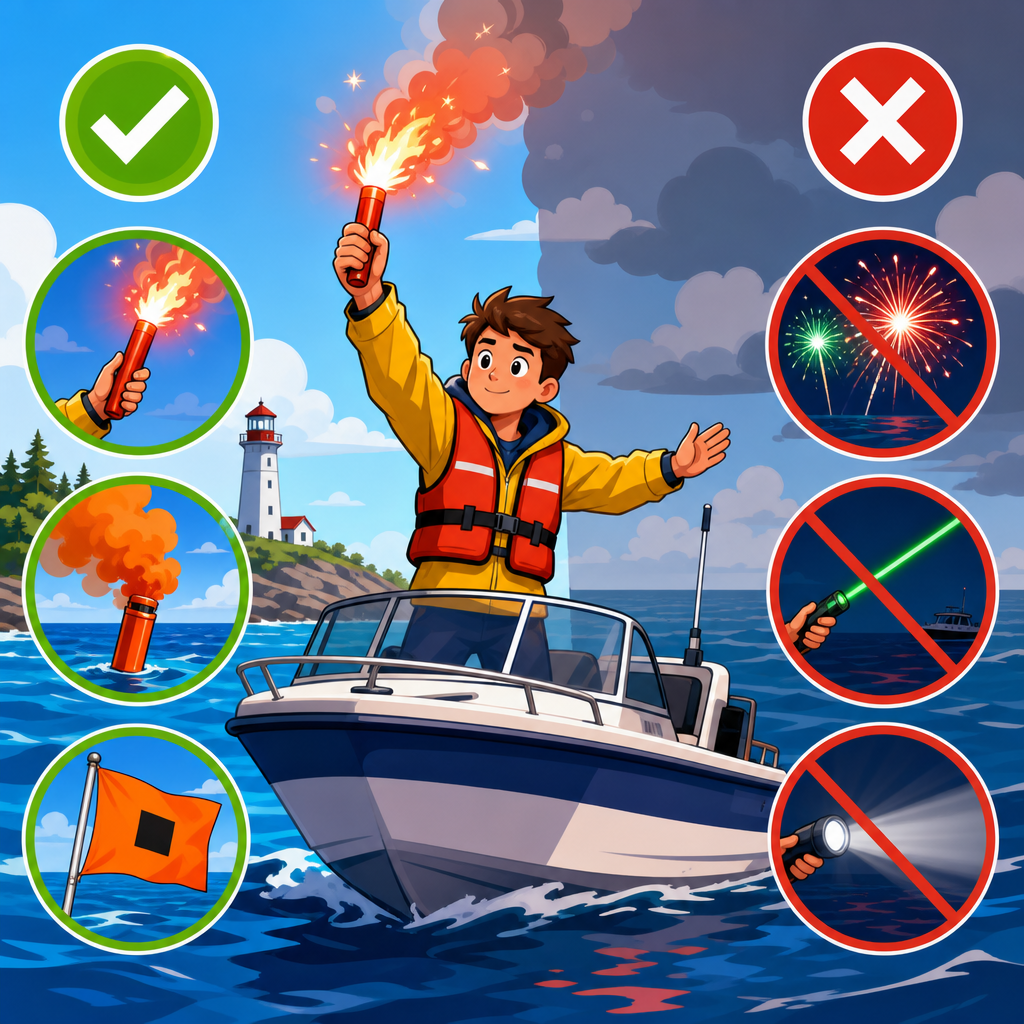
This hub on maritime distress signals and communication supports related topics every boater should study next: when an EPIRB or PLB outperforms voice radio, how AIS distress and MOB devices assist recovery, what sound and visual distress signals are legally required, and how local navigation rules affect communications in bridges, locks, towing areas, and vessel traffic services. VHF remains central because it is immediate, widely monitored, and interactive.
Legal VHF marine radio use for emergency calls comes down to preparation, proper categorization, disciplined procedure, and accurate equipment setup. You need to know when a situation qualifies as Mayday, when Pan-Pan is more appropriate, and how Securite protects other mariners. You also need to understand the regulatory side: FCC operating rules apply even when a recreational vessel does not need a station license, false distress calls carry real penalties, and channel 16 must be protected for hailing, distress, and safety traffic.
The strongest takeaway is practical. A radio helps only if it is programmed, connected, charged, and used in a standardized way. Register the correct MMSI, connect DSC to GPS, mount a quality antenna, carry a backup handheld, and rehearse your distress script until it feels routine. That preparation turns the radio from a compliance item into a rescue tool. It also makes you a better participant in the wider maritime safety system, where nearby vessels often provide the first response long before official assets arrive.
Use this article as your hub for maritime distress signals and communication, then build outward into related subjects such as emergency beacons, required visual distress signals, and boating communication rules in regulated waterways. Before your next trip, conduct a full radio check, review your emergency wording, and make sure everyone aboard knows how to send a distress alert and voice call. That small investment of time is one of the most legally important and life-protecting steps a boater can take.
Frequently Asked Questions
What is the legally correct way to make a distress call on a VHF marine radio?
The legally correct distress call is a Mayday transmission made on VHF Channel 16, which is the international hailing and distress frequency. A Mayday call is reserved for grave and imminent danger, such as sinking, fire, collision, capsizing, man overboard in life-threatening conditions, or a serious medical emergency where immediate assistance is required. To make the call, press and hold the transmit button and say “Mayday, Mayday, Mayday,” followed by the name of your vessel spoken three times, your call sign or registration number if available, your position as accurately as possible, the nature of the emergency, the kind of assistance needed, the number of people on board, and any other important details such as whether you are abandoning ship or wearing life jackets.
A practical example would sound like this: “Mayday, Mayday, Mayday. Vessel Sea Mist, Sea Mist, Sea Mist. This is recreational vessel Sea Mist, registration ABC1234. We are located two miles east of Harbor Point at position latitude 36 degrees 58 decimal 2 north, longitude 122 degrees 01 decimal 7 west. We are taking on water after striking an object. Three persons on board. Need immediate assistance. Over.” If you do not know your exact coordinates, give a clear relative location using landmarks, buoys, channel markers, or your direction and distance from shore.
Legally and operationally, clarity matters. Speak slowly, stay on Channel 16 unless instructed to switch, and listen for a reply from the Coast Guard or another responding station. If your radio has Digital Selective Calling, sending a DSC distress alert before or while making the voice call can significantly improve response speed because it transmits your vessel identity and, if connected properly, your GPS position. False distress calls are illegal and can lead to severe penalties, but hesitation during a real emergency is also dangerous. If the threat is immediate and serious, use Mayday without delay.
When should I say Mayday, Pan-Pan, or Securite, and what is the legal difference?
These three urgency levels exist for a reason, and using the correct one is part of lawful and effective radio procedure. “Mayday” is for distress: grave and imminent danger requiring immediate assistance. “Pan-Pan” is for urgency: a serious situation that is not yet immediately life-threatening, such as engine failure in a shipping lane, a non-critical medical concern, loss of steering, or running aground without immediate danger. “Securite” is for safety broadcasts: navigational or weather warnings, such as debris in a channel, dense fog, or a reported hazard that other mariners should know about.
The legal difference is tied to the priority each call receives under international marine communications rules and national enforcement standards. A Mayday call triggers the highest priority and requires other stations to avoid interfering. Pan-Pan receives urgent attention but does not carry the same immediate distress status. Securite is informational and used to promote safe navigation. Misusing these terms can create confusion, waste rescue resources, and expose an operator to enforcement consequences if authorities determine the transmission was knowingly false or reckless.
In practice, boaters often struggle with borderline situations. If your vessel has lost power but is drifting safely in calm water away from hazards, Pan-Pan may be appropriate. If that same loss of power is pushing you toward rocks, surf, heavy traffic, or severe weather, the situation can quickly escalate to Mayday. If you are unsure whether danger is immediate, it is better to communicate early and clearly rather than wait until conditions worsen. Rescue agencies would rather receive a timely urgency call that can be updated than a delayed distress call after options have narrowed.
Do I need a license to legally use a VHF marine radio for emergency calls?
In many domestic recreational boating situations, operators may use a VHF marine radio without holding an individual operator license, but that does not mean the radio is unregulated. The equipment itself is governed by communications law, and the user is still expected to follow proper marine radio procedures. In the United States, for example, most recreational vessels operating only domestically do not need an individual FCC ship station license for a standard VHF marine radio, but commercial vessels, certain larger vessels, and boats traveling internationally may have different licensing and documentation requirements. Rules can vary by country, so operators should verify the law that applies in their home waters and intended cruising area.
Importantly, emergencies are treated differently from routine operation in one key respect: if there is a genuine threat to life or the safety of the vessel, the law generally permits use of available radio equipment to summon help, even if every paperwork requirement has not been perfectly addressed. In other words, you should never avoid making a distress call because you are worried about whether your registration, MMSI setup, or licensing status is incomplete. Safety comes first in an actual emergency. That said, relying on that exception is not the same as being compliant. The responsible approach is to set up your radio, registration, and emergency features correctly before leaving the dock.
It is also wise to understand whether your radio includes DSC and whether your MMSI has been properly assigned and programmed. A properly configured radio can transmit your vessel identity immediately in a distress alert, and if linked to GPS, it can include your position automatically. That is not just a convenience; it can materially improve rescue response. So while the exact licensing requirement depends on vessel type and location, lawful use always includes proper installation, correct channel use, accurate identification when required, and disciplined operating habits.
What information should I include in an emergency VHF transmission to help rescuers respond faster?
The most useful emergency transmissions are short, structured, and complete enough to help responders act without having to drag critical details out of you one question at a time. At minimum, include your vessel name, exact or approximate position, the nature of the emergency, the type of assistance needed, the number of people on board, and any immediate survival details such as injuries, life jackets, rafts deployed, or whether the vessel is sinking, on fire, disabled, or taking on water. If you know your vessel type, size, hull color, and destination, those can also help search units identify you more quickly.
Your position is often the single most important detail. Give latitude and longitude if available from GPS, chartplotter, or your radio display. If not, describe your location using recognized marine references: “one mile south of red buoy 6,” “just outside the harbor entrance,” or “three miles northwest of the breakwater.” Avoid vague phrases like “near the island” unless that island is unmistakable and well known in the immediate area. If you are drifting, say so, and mention your drift direction if known. Conditions matter too, so mention weather, visibility, sea state, and whether you remain under any control.
One of the biggest mistakes inexperienced operators make is speaking too fast or too long. In a real emergency, think in priorities. First: identify distress level. Second: identify who you are. Third: identify where you are. Fourth: identify what is wrong. Fifth: identify how many people are affected. After that, answer questions from the Coast Guard or responding vessel. Keep your radio on, preserve battery power if necessary, and do not switch channels unless instructed. A calm, well-structured transmission is not just professional; it can save valuable minutes in a rescue.
What are the most common legal and practical mistakes boaters make when using a VHF radio in an emergency?
The most common legal mistake is misuse of distress channels and distress language. Channel 16 should not be treated like a casual chat channel, and words like “Mayday” should never be used jokingly, for minor inconvenience, or to get faster attention. False distress calls are taken seriously because they can divert rescue assets from real emergencies. Another frequent issue is failing to monitor Channel 16 when required or failing to follow instructions from the Coast Guard or local harbor authority once communication is established. In crowded waterways, poor radio discipline can interfere with urgent traffic and create unnecessary confusion.
On the practical side, many boaters wait too long to call for help, do not know how to read out their location, forget their vessel registration details, or hold the microphone incorrectly so their message becomes garbled. Others have DSC radios that were never connected to GPS or never programmed with an MMSI, which means a major emergency feature goes unused when it is needed most. Some operators also switch away from Channel 16 too quickly, stop listening after transmitting, or allow multiple people on board to talk over one another. In an emergency, one calm speaker should handle radio traffic whenever possible.
The best prevention is preparation. Before departure, make sure everyone who might operate the boat knows where the radio is, how to turn it on, how to select Channel 16, how to use the transmit button, and how to read a written distress script if the primary operator is injured. Keep your vessel name, registration number, MMSI, and a simple emergency call format posted near the radio. Practice speaking your position out loud. That combination of legal awareness and hands-on familiarity is what separates a chaotic emergency transmission from one that gets immediate, useful results.