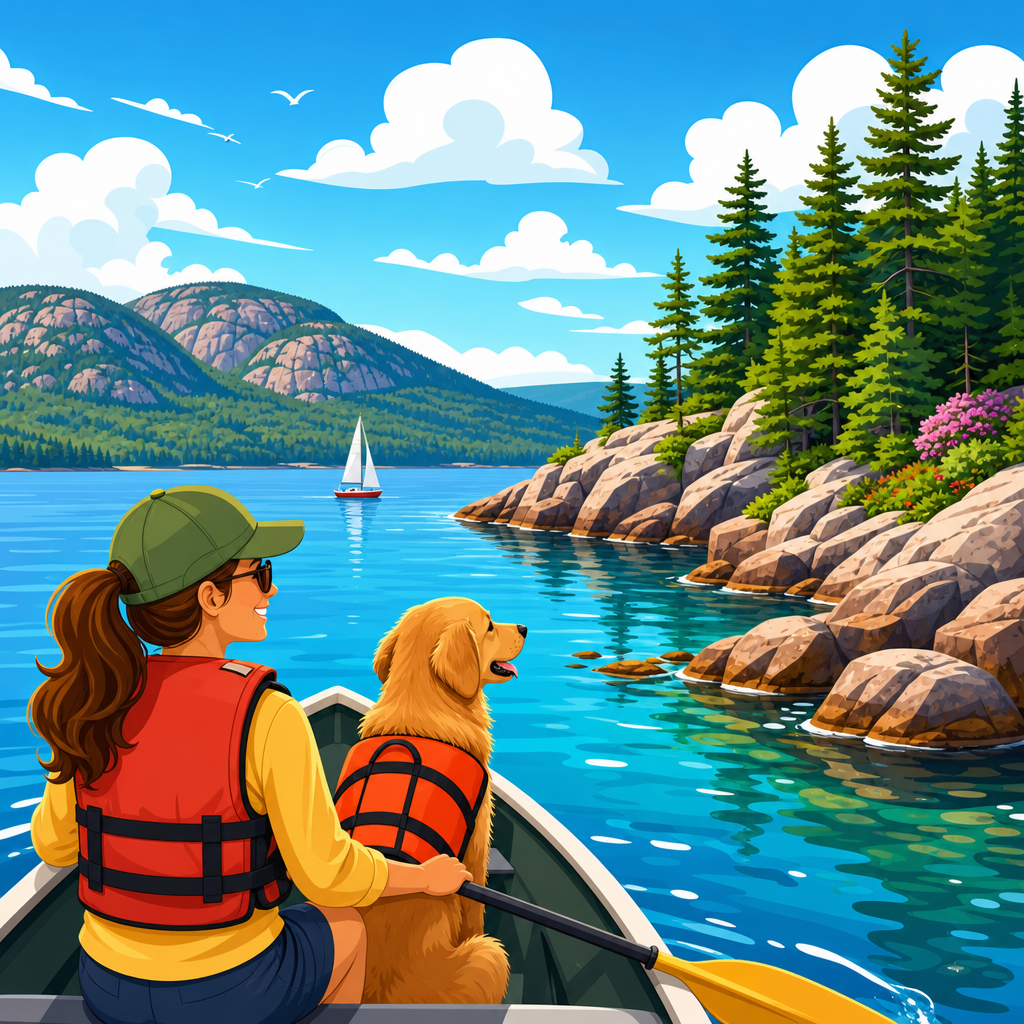
Boating in Acadia National Park combines granite shoreline, cold Atlantic water, sheltered coves, and working harbors into one of the most distinctive boating experiences in the United States. For travelers researching boating in national parks, Acadia is a natural starting point because it shows how recreation, conservation, navigation, and local maritime culture intersect in a single destination. Acadia National Park lies mainly on Mount Desert Island in Maine, with additional park lands on Isle au Haut and the Schoodic Peninsula. While many visitors know Acadia for Cadillac Mountain and the Park Loop Road, the park is also a serious boating destination, with opportunities for sea kayaking, sailing, wildlife cruises, tendering to offshore islands, and exploring nearby harbors by small powerboat.
In practical terms, boating here means operating in tidal coastal waters rather than on a calm inland reservoir. That distinction matters. Skippers must account for changing weather, fog, tide range, rocky ledges, lobster gear, and cold-water immersion risk, even in summer. I have found that first-time visitors often underestimate how quickly conditions can shift from glassy calm in a protected cove to steep chop outside a headland. Understanding launch access, no-wake areas, mooring rules, chart use, and park boundaries is essential before leaving the dock.
This hub article explains the best spots to explore, what type of boating fits each area, how Acadia compares with other national park boating destinations, and how to plan a safer trip. It is designed to answer the key questions most visitors have: Where can you launch? Which waters are best for beginners? Where do experienced boaters go? What regulations apply inside and near the park? By the end, you should know not only where to boat in Acadia National Park, but also how to use Acadia as a model for boating in national parks more broadly.
Why Acadia stands out for boating in national parks
Acadia stands out because it offers unusual variety within a relatively compact geography. On one trip, you can move from the protected western side of Mount Desert Island to the more exposed outer coast near Frenchman Bay, then continue to quieter waters around Southwest Harbor or the islands near Bass Harbor. Few national parks combine this level of scenic drama with active commercial marine traffic, village services, and multiple public access points.
The boating environment here is shaped by the Gulf of Maine. Water temperatures are cold for much of the year, often remaining dangerous for immersion long after air temperatures feel comfortable. Tides regularly affect launch timing, dock depth, and current around narrows and points. Fog is common, especially in late spring and early summer. That means Acadia rewards preparation more than speed. Operators who carry current NOAA charts, monitor marine forecasts from the National Weather Service, and use radar or reliable GPS chartplotters when appropriate have a substantially better margin of safety.
Acadia also matters as a hub topic because it illustrates the broader categories of boating found across the national park system. Some parks, such as Voyageurs or Everglades, are defined by internal waterways. Others, like Acadia, depend on adjacent state, town, and federal waters that connect directly to park scenery and recreation. Learning Acadia helps travelers ask smarter questions about any park: Is the water tidal or inland? Are there motor restrictions? Where are the official launch sites? What hazards are unique to that landscape?
Best boating spots in and around Acadia National Park
The best boating spots around Acadia depend on vessel type, weather tolerance, and experience level. Northeast Harbor is one of the most visually refined gateways, with elegant mooring fields, nearby access to Sutton Island and other Western Way islands, and relatively protected cruising compared with the open bay. It suits small powerboats, sailboats, and guided excursions. Southwest Harbor is another strong base, especially for boaters who want a working-harbor feel, service yards, and access toward Somes Sound, Bass Harbor, and offshore routes in good conditions.
Somes Sound is often described as the only fjard on the U.S. Atlantic coast, and it is one of Acadia’s signature boating corridors. Steep forested slopes rise directly from the water, creating a dramatic enclosed passage that feels very different from open Frenchman Bay. Conditions can still become windy, but the Sound is generally more protected than exposed outer sections of the park. For photographers, wildlife watchers, and paddlers with proper cold-water gear, it is one of the finest places to appreciate Acadia from the water.
Frenchman Bay, bordering Bar Harbor, offers iconic views toward the Porcupine Islands, Bar Island, and the eastern side of Mount Desert Island. It is convenient and popular, but it is not always the easiest water for novices. Ferry traffic, excursion vessels, variable chop, and changing visibility require attention. For boaters comfortable with traffic management and chart awareness, however, it delivers classic Acadia scenery and easy connections to nearby services.
Bass Harbor and Blue Hill Bay provide another character entirely. These areas feel less crowded than Bar Harbor and are often better for travelers seeking longer scenic runs, lobster-boat culture, and access to the quieter southwestern side of Mount Desert Island. On stable weather days, the cruising can be excellent. In unsettled weather, the same openness can create uncomfortable seas for smaller boats.
| Area | Best for | Main advantages | Key caution |
|---|---|---|---|
| Somes Sound | Scenic cruising, paddling, photography | Protected feel, dramatic cliffs, calmer water | Wind funnels can build chop |
| Frenchman Bay | Classic views, access from Bar Harbor | Convenient services, island scenery, central location | Traffic, fog, exposed sections |
| Northeast Harbor | Sailing, small powerboats, harbor cruising | Sheltered routes, attractive harbor, island access | Mooring congestion in peak season |
| Southwest Harbor and Blue Hill Bay | Longer runs, working waterfront atmosphere | Marinas, service facilities, varied routes | Open-water conditions can deteriorate quickly |
Launch points, marinas, and access planning
One of the most important realities about boating in Acadia National Park is that access is distributed among park areas, town facilities, and private marine infrastructure. Unlike a reservoir-style park with one obvious marina, Acadia requires planning by launch type. Bar Harbor has public and commercial marine facilities, but space can be tight during peak season. Southwest Harbor offers useful marina services and is often a better fit for trailered boats needing fuel, repairs, or transient support. Northeast Harbor is appealing but can be more limited for some launch logistics depending on vessel size and timing.
Before trailering a boat to Acadia, confirm ramp suitability, parking duration, tide sensitivity, and whether the facility accommodates your draft and beam. On the Maine coast, a ramp that works perfectly at mid tide may be problematic near extreme low water. I always advise checking local harbormaster information in addition to navigation apps, because conditions, fees, and seasonal policies change more often than broad travel websites reflect.
Transient moorings and slips may be available through municipal harbors or private marinas, but summer demand is high. Reservations are prudent whenever possible. Fuel docks are not everywhere, and range planning matters more than many visitors expect, especially if they intend to idle through harbors, detour for wildlife viewing, or wait out fog. Pump-out availability should also be verified in advance for larger cruising boats.
For paddlers, the same access logic applies. Choose launch sites with realistic exposure for your skill level, not simply the shortest walk to the water. A protected shoreline launch with awkward carry may be safer than an easy beach launch opening directly onto wind-against-tide conditions.
Safety, weather, tides, and navigation rules
The single most important safety fact about Acadia boating is that cold water changes the consequence of every mistake. In much of the season, immersion can become incapacitating within minutes. Personal flotation devices should be worn, not just carried, especially in small craft, shoulder seasons, or fog. For kayakers and open-boat operators, thermal protection such as wetsuits or drysuits can be the difference between a rescue and a fatality.
Weather planning should begin with the marine forecast, not the general park forecast. Wind direction matters because some routes remain manageable in one pattern and hazardous in another. A 10 to 15 knot breeze may be tolerable in a protected harbor but produce a much rougher ride once fetch increases. Fog requires equal respect. Radar reflectors, sound signals, AIS where appropriate, and conservative routing all help, but the best decision is often to delay departure.
Tides influence nearly everything: launching, beaching, currents around points, and under-keel clearance near ledges. Use NOAA tide predictions and current charts, and match them to your route. Navigation is mostly about avoidance. Rock outcrops, unmarked hazards, and lobster buoys demand continuous lookout. Paper charts remain valuable backup even for operators relying on chartplotters from Garmin, Raymarine, or Simrad.
Boaters should also review National Park Service rules, U.S. Coast Guard carriage requirements, and local harbor regulations. Speed limits, no-wake areas, discharge rules, and wildlife-distance guidance are not technicalities. They are basic operating standards in a crowded, environmentally sensitive coastal park.
Wildlife viewing, low-impact boating, and seasonal timing
Acadia rewards patient boaters. Harbor seals commonly haul out on ledges, porpoises surface in transit corridors, seabirds feed along rips, and bald eagles may be seen near shore. Whale sightings occur in the broader Gulf of Maine, though not every Acadia outing is a whale trip. The right approach is quiet observation. Keep legal and ethical distances, avoid cutting across animal travel paths, and never pressure wildlife for a photo.
Low-impact boating also means minimizing wake in harbors, reducing noise near shore, securing trash, and preventing fuel spills during refueling or portable-tank transfer. On busy summer weekends, I have seen more shoreline disturbance from unnecessary speed than from sheer boat numbers. Good seamanship in Acadia includes courtesy as much as technical skill.
Seasonally, July through early September offers the warmest air temperatures and broadest service availability, but also the highest congestion. June can be beautiful with long daylight, though fog may be frequent and water remains very cold. September is often excellent for experienced boaters because crowds thin and visibility can improve, but weather variability increases. Shoulder-season trips demand greater self-sufficiency, shorter daylight assumptions, and conservative go or no-go decisions.
How Acadia compares with other national park boating destinations
As a hub for boating in national parks, Acadia is useful because it teaches transferable lessons while remaining distinct from inland boating parks. Compared with Lake Powell in Glen Canyon National Recreation Area, Acadia has less houseboating infrastructure and more navigational complexity from tides, fog, and working-waterfront traffic. Compared with Voyageurs National Park, Acadia offers saltwater exposure and fewer protected interior channels. Compared with Everglades National Park, it has stronger cold-water risk, denser rocky hazards, and shorter distances between harbor services.
What Acadia shares with the best national park boating destinations is the need to match craft to conditions. A boat perfect for a desert reservoir may be a poor fit for foggy Atlantic chop. Likewise, paddling skills gained on a warm flatwater lake do not automatically transfer to tidal coastal crossings. The broader lesson is simple: every park creates its own boating system through geography, climate, regulation, and access. Acadia just makes those variables unusually obvious.
If you are building a national parks boating itinerary, use Acadia as the coastal benchmark. Study charts before arrival, book marine services early, prioritize weather windows, and choose routes with alternatives. Those habits will improve trips everywhere else, from Olympic’s marine waters to the inland lakes and river corridors found across the park system.
Boating in Acadia National Park is memorable because the water reveals a side of the park that road-based visitors never fully see. Granite headlands look larger from sea level, island passages feel more intimate than roadside overlooks suggest, and even familiar landmarks such as Bar Harbor or Somes Sound take on new depth when approached by boat. More importantly, Acadia shows what makes boating in national parks rewarding in the first place: access to landscapes where navigation, wildlife, weather, and stewardship all matter at once.
The best spots to explore are not defined by hype but by fit. Somes Sound is ideal for scenic, relatively protected cruising. Frenchman Bay offers iconic views and convenience for boaters comfortable with traffic and exposure. Northeast Harbor suits elegant harbor exploration and sailing. Southwest Harbor, Bass Harbor, and Blue Hill Bay appeal to travelers who want a working-coast feel and flexible route options. Each area can be excellent when matched to the right vessel, season, and forecast.
Plan carefully, launch conservatively, and treat local conditions with respect. Check marine weather, tide tables, charts, harbor access, and park rules before every outing. If you are exploring boating in national parks more broadly, start with Acadia, then use what you learn here to compare launch access, hazards, and boating styles in other parks. Build your itinerary around conditions, not assumptions, and you will find better water, safer days, and far more meaningful travel.
Frequently Asked Questions
What makes boating in Acadia National Park different from boating in other national park destinations?
Boating in Acadia National Park stands out because it blends dramatic coastal scenery with real working waterfront culture. Unlike many inland national parks where boating centers on lakes or slow-moving rivers, Acadia places boaters in a cold-water Atlantic environment defined by granite headlands, island-dotted passages, tidal movement, fog, lobster buoys, and harbors that are still actively used by commercial fishermen. That combination gives every trip a strong sense of place. You are not just boating through protected scenery; you are moving through a living maritime landscape where recreation, navigation, conservation, and local livelihoods all overlap.
Another major difference is the variety packed into a relatively compact area. Around Mount Desert Island and nearby park lands, boaters can experience protected coves, exposed shoreline, broad views toward offshore islands, and busy harbor approaches all within a short distance. Somes Sound, often described as the only fjord-like inlet on the U.S. Atlantic coast, adds another layer of uniqueness with its steep sides and deep, sheltered water. In contrast, places like Frenchman Bay offer wider open-water views and more exposure to weather and sea conditions. That means Acadia can appeal to different boating styles, from leisurely sightseeing cruises to more technical route planning that accounts for tides, wind, and cold-water safety.
Acadia also has a particularly strong connection between land and water. Many of the park’s most iconic sights, including rocky shorelines, forested slopes, and island profiles, are just as memorable from a boat as they are from scenic roads or hiking trails. For many visitors, being on the water provides a deeper understanding of why Acadia is so visually and ecologically significant. You see seabirds, intertidal zones, working docks, and wave-shaped coastlines from the perspective that historically mattered most in coastal Maine: the sea.
What are the best spots to explore by boat in and around Acadia National Park?
Several areas consistently rank among the best boating spots in and around Acadia National Park, and the right choice depends on whether you want sheltered cruising, scenic photography, wildlife watching, or a more classic harbor-to-island experience. Somes Sound is one of the top places to start. Its long, narrow shape and steep surrounding terrain create a calm, dramatic setting that feels very different from the more open coast. Boaters often appreciate it for its protected waters, scenic mountain backdrop, and the sense of quiet it offers compared with busier harbor zones.
Frenchman Bay is another essential destination. Located near Bar Harbor, it delivers sweeping views of the eastern side of Mount Desert Island, nearby islands, and open Atlantic waters beyond. This area is especially appealing for visitors who want to combine sightseeing with access to one of the park region’s best-known communities. From the water, Bar Harbor’s relationship to the surrounding coastline becomes much clearer, and the bay offers memorable perspectives on the park’s rocky shore, changing light, and marine traffic patterns.
Northeast Harbor and Southwest Harbor are also excellent boating bases and exploration areas. These harbors combine scenic beauty with a strong sense of Maine’s boating heritage. They are useful launch points for cruises through sheltered waters and for navigating among nearby islands and inlets. Boat owners and charter guests alike often prefer these locations because they balance convenience with classic coastal character. Depending on your route, you may pass mooring fields, lobster boats, wooded shorelines, and traditional harbor facilities that reinforce Acadia’s identity as both a national park destination and a maritime community.
For those interested in island views and less congested waters, the broader waters around the Cranberry Isles and the western side of Mount Desert Island can be especially rewarding. These areas often feel more remote and provide opportunities for slower, more scenic cruising. Conditions can change quickly, however, so even beautiful, calm-looking stretches should be approached with sound route planning and close attention to marine weather. In general, the best spots in Acadia are the ones that match your skill level, vessel type, and comfort with cold coastal conditions.
What should boaters know about safety, weather, and water conditions in Acadia National Park?
Safety is one of the most important parts of boating in Acadia because the park’s waters are beautiful but can be unforgiving. The Atlantic off coastal Maine is cold for much of the year, and that changes the risk profile significantly. Even on sunny summer days, the water temperature can be low enough to create serious danger if someone falls overboard. Boaters should not assume that pleasant air temperatures mean easy conditions. Wearing life jackets, carrying cold-water safety gear, and making conservative decisions about routes and distances are all especially important here.
Weather can shift quickly in and around Acadia. Fog is a defining feature of the Maine coast and can dramatically reduce visibility, sometimes with little warning. Wind can also transform an easy outing into a rough ride, especially in more open areas such as Frenchman Bay or along exposed shoreline sections. Before heading out, boaters should check a current marine forecast, monitor tide information, and evaluate whether their experience level and vessel are appropriate for the planned conditions. Navigation tools, charts, communication equipment, and backup planning are not optional in this environment; they are part of responsible boating.
Tides, currents, rocky shorelines, and heavy marine use also deserve attention. Acadia’s boating environment includes marked channels, mooring areas, fishing activity, and commercial traffic in some locations. Lobster gear is common, and boaters need to stay alert to buoys and lines that can create entanglement hazards. Operators unfamiliar with the area should move carefully, avoid hugging rocky shorelines too closely, and recognize that local knowledge matters. If you are new to boating in coastal Maine, a guided trip, charter, or boat tour can be an excellent way to experience the park safely while learning how the local waters behave.
Do I need a permit, reservation, or special planning to go boating in Acadia National Park?
Boating logistics in Acadia depend on the type of trip you are planning. In many cases, private boaters are not dealing with a single park-wide boating permit in the way they might expect for certain land-based park activities, but that does not mean planning is simple. Access points, harbor regulations, moorings, launch facilities, vessel requirements, and seasonal availability can all affect your trip. Because Acadia includes both national park lands and adjacent coastal communities, some boating arrangements are shaped as much by local harbor infrastructure and municipal rules as by park management itself.
That is why it is wise to research several layers before you go. Start by confirming where you plan to launch, dock, moor, or board a charter. Then check current National Park Service guidance, local harbor information, and Maine boating rules. If you are renting a boat or booking a guided excursion, the operator will usually handle much of the practical side, but it is still smart to ask about departure location, parking, weather cancellations, safety equipment, and what is included. If you are bringing your own boat, verify ramp conditions, trailer access, harbor restrictions, and any timing issues related to tides.
Advance planning becomes even more important during the busy travel season. Summer and early fall can bring higher demand for charters, tours, parking, and harbor access. Popular areas around Bar Harbor and Mount Desert Island can fill quickly, and a lack of planning may limit your options more than the park itself does. The best approach is to treat boating in Acadia as a coastal trip that requires both national park awareness and practical maritime preparation. Checking official park resources, local marine services, and weather updates before arrival will help you avoid surprises and spend more time enjoying the water.
What is the best way for first-time visitors to experience boating in Acadia National Park?
For first-time visitors, the best boating experience usually comes from matching the outing to your confidence level and goals rather than trying to cover as much water as possible. If your main priority is scenery, a guided sightseeing cruise or local boat tour is often the smartest introduction. These trips allow you to appreciate Acadia’s granite shoreline, island views, harbors, and wildlife without having to manage navigation, tides, and changing marine weather on your own. They also give valuable context about the park’s maritime history, lobster fishery, and ecology, which can make the landscape feel much more meaningful.
If you have boating experience but are new to Maine’s coast, choosing a more sheltered area such as Somes Sound or a harbor-based route can be a strong first step. That approach lets you build familiarity with local conditions before attempting more exposed water. Many visitors find that a half-day trip is ideal for a first outing because it provides enough time to explore without creating pressure to travel too far. Planning around favorable weather, moderate wind, and good visibility can make a major difference in comfort and safety.
It also helps to think beyond the boat itself. A great Acadia boating day often includes time ashore in places like Bar Harbor, Northeast Harbor, or Southwest Harbor, where you can connect the on-the-water experience with the region’s broader culture. Watching the working harbor, talking with local operators, and seeing how recreation fits alongside commercial fishing adds depth to the visit. For first-timers, that combination of scenic boating, practical caution, and local perspective usually creates the most memorable and rewarding introduction to