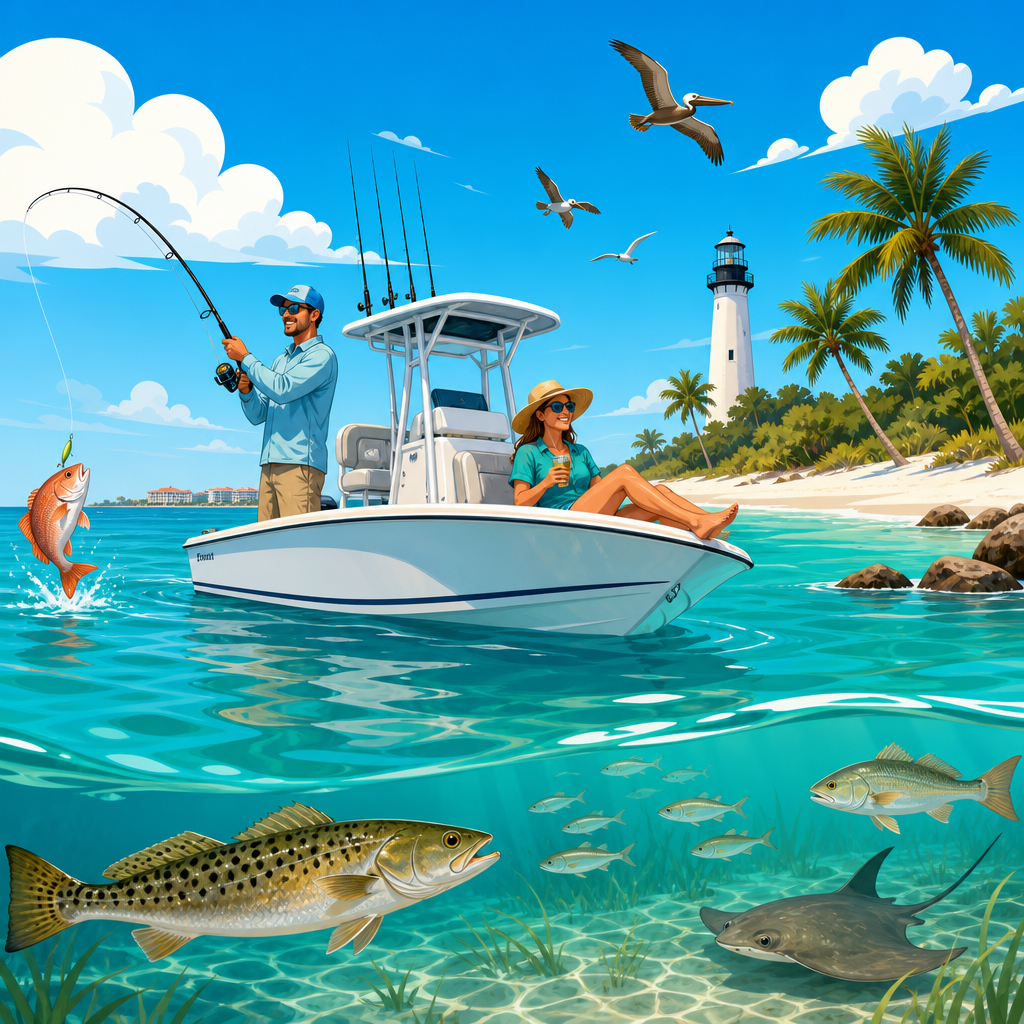
Boating and wildlife watching in Biscayne National Park offer one of the clearest examples of why boating in national parks deserves careful planning, local knowledge, and respect for fragile ecosystems. Biscayne National Park, just south of Miami, protects more than 170,000 acres, and about 95 percent of it is water. That single fact changes how visitors experience the park. Unlike mountain parks where roads lead to overlooks, Biscayne is reached and understood largely by boat. The park includes Biscayne Bay, mangrove shoreline, shallow flats, coral reefs, and keys that create habitat for fish, birds, sea turtles, and marine mammals. For travelers researching boating destinations, it is also an ideal hub topic because it shows the core issues that define boating in national parks everywhere: access rules, weather exposure, habitat protection, navigation hazards, wildlife ethics, and trip preparation.
When people search for boating in national parks, they usually mean more than renting a vessel for a scenic ride. They want to know what kind of boating is allowed, what they can realistically see, how to stay safe, and how to avoid harming the very wildlife they came to enjoy. In Biscayne, those questions are practical. Shallow water, seagrass beds, marked channels, changing winds, and limited services mean boaters must operate differently than they would on an inland lake. Wildlife watching also has a distinct meaning here. It includes observing roseate spoonbills and ospreys along mangroves, spotting rays over sand patches, watching bottlenose dolphins travel beside a wake, and snorkeling near reef fish offshore. This article explains how Biscayne works as a boating destination, then uses that lens to cover boating in national parks more broadly so readers can plan smarter trips across the wider category.
Why Biscayne National Park Is a Defining Boating Destination
Biscayne is unusual even among coastal parks because the water is not a side attraction; it is the park. The mainland visitor center at Convoy Point introduces the landscape, but the real experience begins offshore. In practice, that means private boaters, paddlers, guided tour guests, anglers, snorkelers, and divers all share the same protected environment. From years of working with boat-based itineraries, I have found that Biscayne teaches visitors an important lesson quickly: access by boat gives freedom, but it also removes the safety net people assume exists in heavily visited parks. Fuel, shade, fresh water, and mechanical help are limited once you leave shore. Cell coverage can be inconsistent, storms can build fast, and a grounding on seagrass can damage both your hull and the habitat.
The park’s boating appeal comes from variety. A short run may bring you to mangrove edges alive with wading birds, while a longer route opens onto clearer Atlantic waters and reef sites. Boca Chita Key is the best-known destination for many first-time boaters because of its harbor, lighthouse, picnic areas, and iconic appearance in park materials. Elliott Key draws visitors who want hiking, camping, and more room to explore. Adams Key has historical value and more limited access. Offshore, the Maritime Heritage Trail and reef areas connect boating with snorkeling, diving, and the broader history of shipwrecks along the Florida Reef Tract. Few national park boating destinations combine family day trips, heritage travel, shallow-water navigation, and marine wildlife watching as effectively as Biscayne.
What Boaters Need to Know Before Launching
The first question most boaters ask is simple: can you bring your own boat into Biscayne National Park? Yes, private boating is allowed, but legal access is not the same as easy access. The park requires operators to understand local regulations, check current conditions, and use up-to-date charts. Navigation in Biscayne Bay can be deceptive because the water may look deep and open while hiding flats and seagrass just below the surface. Running aground is common among inexperienced visitors. That is why tide awareness, route planning, and conservative speed choices matter. A GPS chartplotter helps, but it does not replace reading markers and understanding the difference between navigable channels and surrounding shallows.
Boat ramps and marinas around the greater Biscayne area can serve as staging points, but they vary in congestion, parking, and proximity to desired routes. Some travelers are better served by guided excursions from the Dante Fascell Visitor Center, especially if their priority is wildlife watching rather than independent seamanship. Rentals can work for visitors without trailers, though rental boundaries and weather restrictions often limit where you can go. For broader boating in national parks planning, Biscayne illustrates a rule that applies nearly everywhere: choose the vessel based on conditions and purpose, not on aspirational itinerary ideas. A skiff suited to flats exploration is very different from a boat intended for bay chop and offshore reef runs.
| Boating option | Best for | Main advantages | Key limitations |
|---|---|---|---|
| Private powerboat | Experienced boaters seeking flexible routes | Full control of timing, access to keys and open bay, can combine fishing and wildlife watching | Requires navigation skill, fuel planning, weather judgment, and habitat awareness |
| Guided tour boat | First-time visitors and families | Interpretation from park staff or guides, no launching stress, predictable itinerary | Fixed schedule, less route freedom, limited stop duration |
| Kayak or canoe | Quiet shoreline wildlife viewing | Low-impact access to mangroves, excellent birding, minimal wake disturbance | Exposure to heat, wind, and distance limits; not suited for open-water reef travel |
| Sailboat | Travelers comfortable with longer, slower exploration | Efficient for bay cruising, quiet wildlife encounters, overnight potential | Draft concerns, weather dependence, maneuvering limits in tight channels |
Wildlife Watching by Boat: What You Can See and How to See It Responsibly
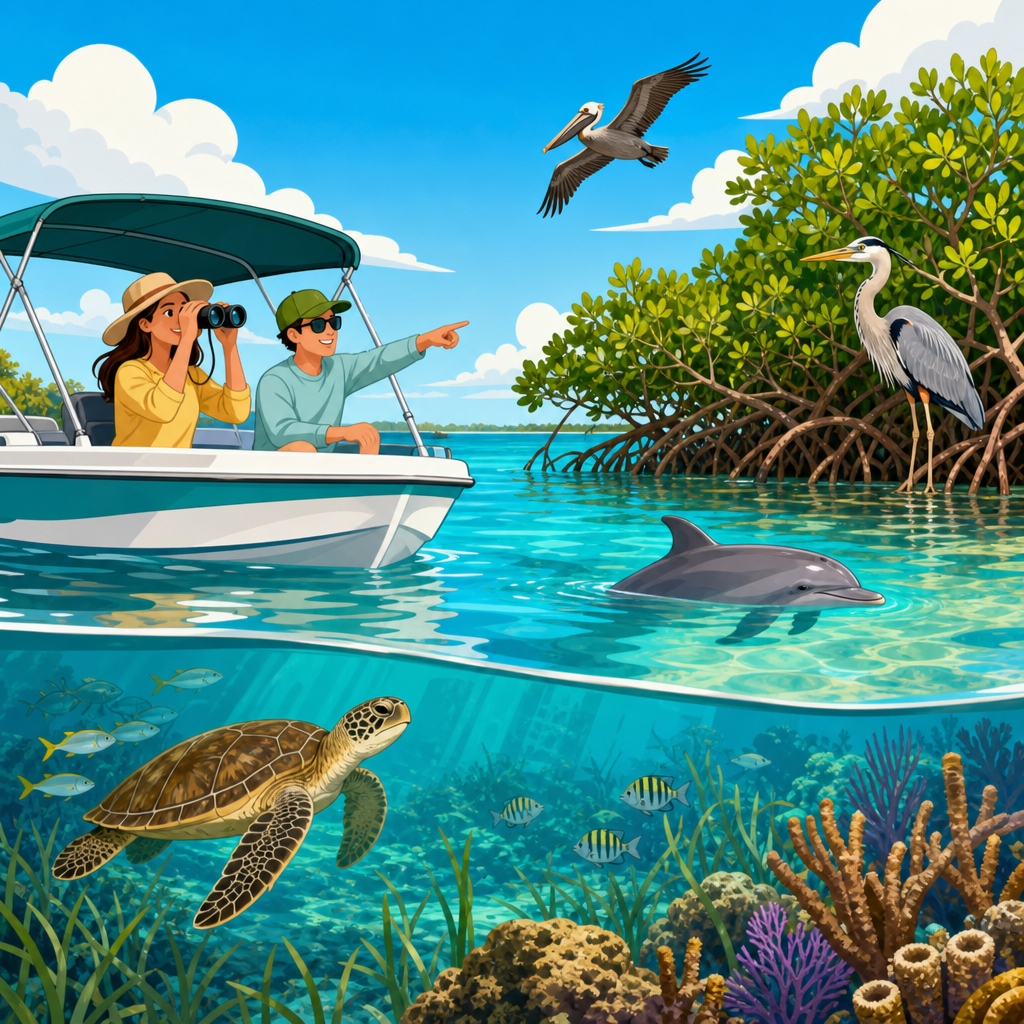
Wildlife watching in Biscayne National Park is excellent because multiple ecosystems overlap in a relatively compact area. Mangrove fringes support herons, egrets, cormorants, pelicans, and occasional spoonbills. Ospreys use channel markers and nest platforms as hunting perches, and brown pelicans patrol bait-rich shallows. In calmer water, boaters often see southern stingrays, nurse sharks, sea turtles, and schools of mullet or baitfish flashing near the surface. Bottlenose dolphins are among the most memorable sightings, especially when they travel parallel to a vessel at idle or slow cruise. During migration and winter, bird diversity increases, which is why cooler months can be especially productive for wildlife-focused trips.
The best wildlife watching technique is usually the least aggressive one. Slow down before you reach likely habitat, reduce engine noise, and watch edges rather than charging into them. Birds often reveal activity first; diving pelicans can indicate bait schools, while a line of waders along a mangrove margin points to productive shallows. Polarized sunglasses dramatically improve visibility into the water, making it easier to spot rays, turtles, and submerged obstacles at the same time. In my experience, visitors see more when they stop trying to cover distance and instead drift, idle, and scan carefully for fifteen minutes at a time.
Responsible viewing is nonnegotiable in a park setting. The National Park Service expects visitors to keep a respectful distance from wildlife and avoid any behavior that changes feeding, resting, or nesting patterns. Do not pursue dolphins, cut across birds rafting on the water, or beach a boat in vegetation. Seagrass scars from propellers can persist for years, and repeated disturbance in shallow nursery habitat has effects that visitors do not always see immediately. This is another lesson with national relevance. Whether you boat in Biscayne, Everglades, Voyageurs, Glacier Bay, or Channel Islands, ethical wildlife watching depends on distance, patience, and restraint more than on proximity.
Safety, Seasons, and Navigation in a Marine National Park
Boating safety in Biscayne starts with weather. South Florida’s dry season generally brings more stable conditions, while late spring through fall increases the likelihood of heat, thunderstorms, and tropical weather. Summer boating can still be rewarding, but early departures are wise because storms often build in the afternoon. Wind direction matters as much as forecast speed. A moderate wind over shallow water can produce uncomfortable chop in open sections of the bay, and inexperienced passengers may find the ride tiring long before the mileage looks significant on a chart.
Navigation requires respect for three facts: much of the park is shallow, visual water reading takes practice, and aids to navigation do not eliminate risk. Carry current NOAA charts or a current electronic equivalent, and never assume chartplotter confidence means physical clearance. Propeller scars across flats are visible evidence of boaters trusting screens more than situational awareness. Basic equipment should include life jackets for every passenger, a VHF radio, extra drinking water, sun protection, emergency signaling gear, and enough fuel for reserve margins rather than optimistic calculations. If you plan to cross into more exposed water toward reef areas, inspect marine forecasts closely and know your turnaround point before you depart.
These safety habits scale beyond Biscayne and form the core of boating in national parks as a travel category. Every park has its own dominant risk pattern. In Biscayne it is shallow water, sun, storms, and marine exposure. In mountain reservoir parks it may be cold shock and steep afternoon winds. In northern parks it may be remoteness and hypothermia. Smart park boaters adapt to local hazards instead of relying on generic boating confidence built elsewhere.
How Biscayne Connects to the Broader Topic of Boating in National Parks
As a hub for boating in national parks, Biscayne is valuable because it concentrates the decisions travelers face in many protected waters. First, access shapes experience. Some parks are easiest by motorboat, others by paddlecraft, ferry, or guided concessionaire tour. Second, regulations exist to protect resources, not to inconvenience visitors. No-wake zones, closures, permit systems, and seasonal restrictions usually correspond to safety needs, nesting wildlife, erosion control, or habitat sensitivity. Third, the most rewarding trips combine recreation with interpretation. Visitors who understand tides, reef ecology, bird behavior, or maritime history consistently rate their day higher than visitors who simply aimlessly cruise.
That broader framework helps when comparing destinations. Biscayne suits travelers who want warm-water boating, near-urban access, and marine biodiversity. Everglades National Park favors backcountry route planning, paddling, and wilderness patience. Dry Tortugas requires longer-distance passage or ferry access but rewards visitors with remote water clarity and extraordinary bird life. Apostle Islands emphasizes Lake Superior conditions, sea caves, and cold-water seamanship. Voyageurs offers houseboating and interconnected inland waterways. Channel Islands combines ocean crossings with marine mammal viewing and wind exposure. The common thread is that boating is the transportation layer that unlocks the park, but each park demands a different skill mix.
For content planning under a boating destinations and travel umbrella, this is why a hub article matters. Readers need one page that explains how to evaluate park boating destinations before they branch into narrower guides on launches, camping, snorkeling, paddling, fishing, or seasonal wildlife. Biscayne provides the clearest entry point because the questions it raises are universal: What craft should I use? What permits or rules apply? What wildlife might I see? How do I avoid damaging sensitive habitat? What weather patterns shape a safe itinerary? Answer those well here, and readers are prepared to explore the rest of the national park boating category with realistic expectations.
Planning the Best Itinerary for Scenery, Wildlife, and Low-Stress Travel
The best Biscayne itinerary depends on whether your priority is scenery, wildlife, family comfort, or independent exploration. For many visitors, a half-day guided boat tour is the strongest first experience because it reduces logistics and adds interpretation. Families with limited boating experience often get more value from one well-run tour plus shoreline time at the visitor center than from an overly ambitious self-guided day. Experienced private boaters can build a stronger outing by departing early, choosing one primary destination such as Boca Chita Key or Elliott Key, and leaving enough margin for wildlife stops and weather changes rather than trying to sample the entire park in one run.
If wildlife watching is the main goal, target lower-speed zones near mangroves in good light and bring binoculars, polarized glasses, reef-safe sun protection, and plenty of water. If your group wants the classic postcard stop, Boca Chita remains popular for good reason, but popularity means busier docks on peak weekends. If snorkeling is central to the plan, sea state becomes the deciding factor, and less experienced swimmers should avoid forcing reef stops on marginal days. The most successful boating days in national parks are not the longest; they are the best matched to conditions, skill, and energy levels.
Biscayne National Park rewards boaters who arrive prepared, move thoughtfully, and treat wildlife watching as observation rather than pursuit. It also serves as the ideal starting point for understanding boating in national parks as a whole. The same principles apply across the category: know the rules before launch, pick the right craft for the environment, study weather and charts, keep your distance from wildlife, and leave habitats undisturbed. In Biscayne, those habits lead to cleaner routes, better sightings, and a far less stressful day on the water.
If you are building a national park boating travel list, place Biscayne near the top because it combines accessibility, biodiversity, and memorable on-the-water scenery in a way few parks can match. Start with a realistic itinerary, use official park resources and current marine forecasts, and let the park set your pace. When you do, boating and wildlife watching in Biscayne National Park become more than a day trip; they become a practical model for exploring protected waters responsibly wherever you travel next.
Frequently Asked Questions
What makes boating the best way to experience Biscayne National Park?
Boating is the primary way to understand Biscayne National Park because the park is overwhelmingly aquatic. More than 170,000 acres are protected here, and roughly 95 percent of that area is water, which means visitors are not arriving to a park defined by scenic roads, pullouts, or long drive-up viewpoints. Instead, Biscayne is a landscape of open bay, mangrove shoreline, shallow flats, coral reefs, and islands that are best accessed by private boat, guided vessel, paddlecraft, or organized tour. The boating experience is not simply transportation in Biscayne; it is the park experience itself.
That matters because each part of the park reveals something different. On the bay, boaters can appreciate the scale of the protected waters and the changing conditions created by wind, tides, and weather. Near mangrove edges and island shorelines, wildlife activity often becomes easier to spot, especially birds and marine life. In clearer offshore areas, the park’s reef resources and shallow-water habitats begin to show why Biscayne is considered one of the most biologically important marine environments in South Florida. Boating allows visitors to move between these distinct habitats in a way that walking alone simply cannot.
It also explains why careful planning is so important. Because access depends on water, visitors need to think about navigation, depth, weather, fuel, safety gear, tides, and the sensitivity of the habitats they are entering. Biscayne rewards preparation. Those who approach it with local knowledge and respect typically have a far richer experience, whether they are anchoring near an island, joining a wildlife tour, or cruising slowly through areas where seabirds, fish, rays, and marine mammals may appear.
What wildlife can visitors expect to see while boating in Biscayne National Park?
Biscayne National Park supports a remarkable variety of wildlife, and boaters often have the best opportunities to observe it responsibly from the water. Depending on the season, time of day, weather, and location within the park, visitors may see wading birds such as herons, egrets, ibises, and pelicans along mangrove shorelines and shallow flats. Ospreys are common and are especially memorable to watch as they hover or dive for fish. In some areas, seabirds may be seen resting, feeding, or moving between nesting and foraging sites, which is one reason slow, observant boating is often more rewarding than rushing from point to point.
In the water itself, wildlife watching can be just as impressive. Dolphins are among the most exciting animals boaters may encounter, and manatees may also be present in certain seasons or locations, especially where warm, calm, shallow water provides suitable habitat. Sea turtles sometimes surface to breathe, and rays may glide over the flats in clear conditions. Fish life can be abundant, particularly in shallow seagrass areas and around reef environments, where boaters may notice schools moving beneath the surface or larger species feeding near changing currents.
The best wildlife viewing usually comes from patience, distance, and awareness rather than pursuit. Wildlife in Biscayne responds to noise, wake, and sudden approach. Visitors who idle slowly, scan mangrove edges, watch the water surface carefully, and avoid crowding animals generally have the most authentic sightings. It is also important to remember that not every outing will produce dramatic encounters. Nature in Biscayne is dynamic and sometimes subtle. A successful wildlife-watching trip often means learning to notice behavior, habitat, and seasonal patterns, not just checking off a list of species.
How should boaters prepare before visiting Biscayne National Park?
Preparation is essential in Biscayne National Park because the park’s beauty is closely tied to conditions that can challenge inexperienced boaters. Shallow water, exposed bay conditions, changing weather, limited on-water services, and sensitive habitats all require more forethought than many visitors expect. Before heading out, boaters should review current marine forecasts, wind expectations, tide information, and park maps. Weather in South Florida can shift quickly, and open water can become rough enough to affect both comfort and safety. A route that seems simple on paper may feel very different when wind, chop, or storms move in.
Navigation deserves special attention. Parts of Biscayne include shallow flats, channels, reef areas, and zones where poor route selection can lead to grounding or habitat damage. Having updated charts, a GPS or chartplotter, and a solid understanding of where deeper water and marked channels are located can help prevent problems. Fuel planning matters too, especially for longer trips that combine travel, wildlife viewing, island stops, and possible detours caused by conditions. Visitors should never assume convenience once they are out in the park. Bringing enough water, sun protection, communication equipment, first-aid supplies, and all required safety gear is part of responsible trip planning.
It is also wise to think in terms of conservation, not just logistics. Biscayne protects seagrass beds, mangrove habitat, reefs, and wildlife populations that are vulnerable to careless anchoring, prop scarring, wake damage, and disturbance. Boaters should know where they can anchor safely, where they should proceed at no-wake speeds, and how to avoid damaging shallow habitats. For first-time visitors, guided boat tours or ranger-supported programs can be especially valuable because they reduce uncertainty and provide context that makes the visit safer and more meaningful.
What are the most important rules and best practices for protecting wildlife and habitats while boating?
The most important principle is simple: enjoy Biscayne without leaving a trace of disturbance behind. In practice, that means boating slowly in sensitive areas, maintaining a respectful distance from wildlife, avoiding sudden course changes toward animals, and never feeding or attempting to attract them. Dolphins, manatees, sea turtles, and birds all depend on natural behavior patterns for feeding, resting, breeding, and migration. When visitors crowd them for a closer look, the result can be stress, displacement, or dangerous interactions with vessels. Responsible boaters understand that a good sighting is one that does not change the animal’s behavior.
Habitat protection is just as important as wildlife etiquette. Seagrass beds in Biscayne are especially vulnerable to propeller scars and groundings, and these scars can take years to recover. Staying in marked channels when appropriate, trimming up in shallow areas only when safe to do so, and avoiding shortcuts across fragile flats can make a major difference. Anchoring should be done carefully and only in suitable locations so anchors and chains do not damage underwater resources. Reef and bottom communities are living systems, not just scenic backgrounds, and careless boating can have long-term impacts that outlast a single visit.
Visitors should also minimize wake near shorelines, mangroves, docks, and other boats. Excessive wake can erode banks, disturb birds, and create unsafe conditions for paddlers and smaller craft. Proper disposal of trash, fishing line, and other waste is another basic but crucial responsibility, since marine debris can injure wildlife and degrade habitat quality. In Biscayne, the idea of stewardship is not abstract. Every boating decision, from speed to anchoring to where you stop for wildlife viewing, affects a protected ecosystem. The best visitors are those who treat the park as a living environment rather than a recreational backdrop.
Is it better to explore Biscayne National Park by private boat or on a guided wildlife tour?
That depends on a visitor’s boating experience, goals, and comfort level, but for many people, guided wildlife tours are the smartest introduction to Biscayne National Park. A guided trip removes much of the uncertainty that comes with navigating a largely water-based park, especially for first-time visitors who may not be familiar with South Florida weather patterns, shallow-water navigation, or the park’s protected habitats. Guides often know where wildlife is most likely to be active, how seasonal conditions affect sightings, and how to position a vessel for respectful viewing without causing disturbance. That expertise can make the experience more productive and educational.
Private boating, however, offers flexibility that many experienced visitors value. If you already have strong boating skills, reliable navigation tools, and a solid understanding of local conditions, exploring on your own can provide a deeper sense of freedom and connection to the park. You can set your own pace, spend more time in areas that interest you, and combine wildlife watching with fishing, island visits, or other recreational goals as allowed by park rules. The key is recognizing that private access comes with full responsibility for safety, compliance, and environmental protection.
For many visitors, the ideal approach is a combination of both. Taking a guided trip first can provide valuable orientation, help you learn the layout of the park, and teach you what responsible boating looks like in a fragile marine environment. After that, a later visit by private boat may feel more confident and more rewarding. Whether you choose a tour or your own vessel, the goal should be the same: to experience Biscayne in a way that is safe, informed, and respectful of the wildlife and ecosystems that make the park so special.