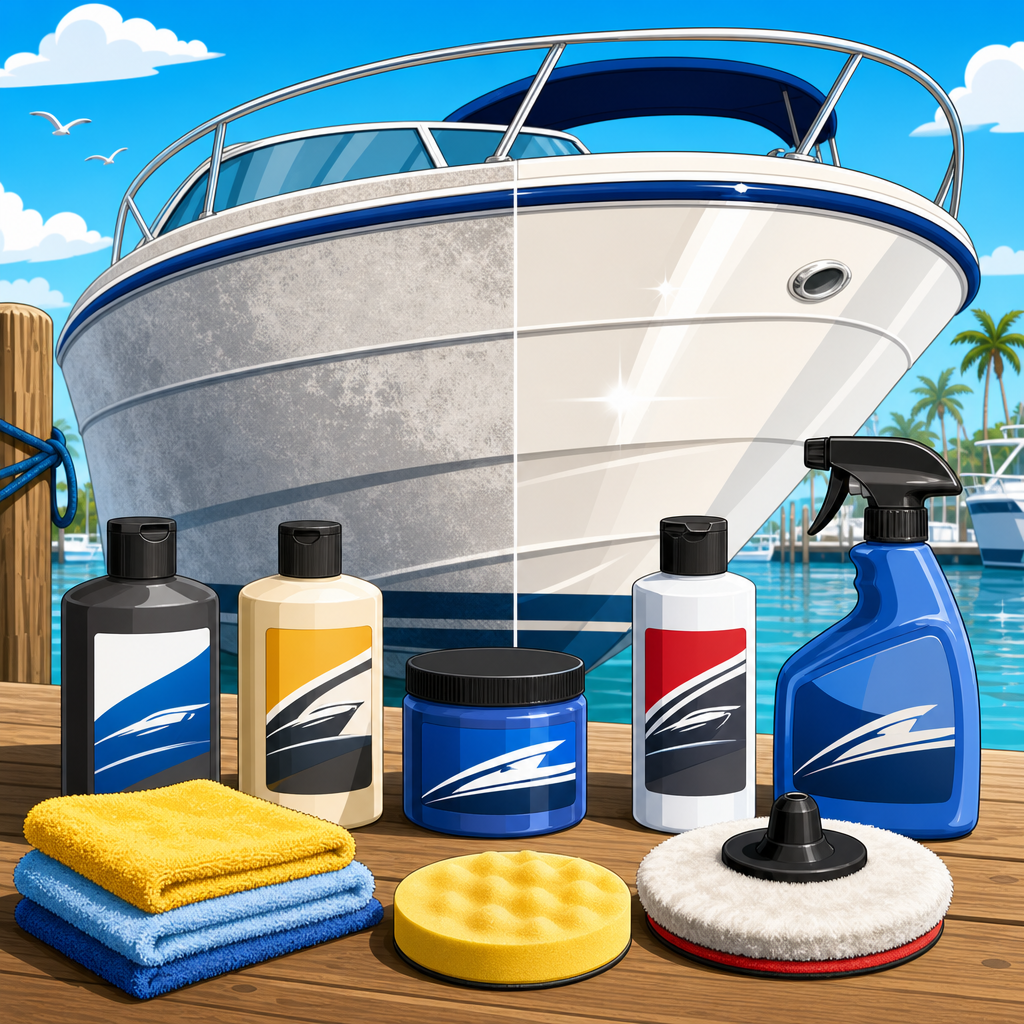
Gelcoat is the thin, pigmented polyester or vinyl ester resin layer that gives a fiberglass boat its gloss, color, and first line of weather protection. When that surface turns chalky, flat, or uneven, owners usually describe it as faded gelcoat, but the problem is often a mix of oxidation, UV degradation, embedded staining, and neglected protection. Choosing the best products for restoring a faded gelcoat on your boat is therefore not about finding one miracle bottle. It is about matching the right cleaner, compound, polish, sealant, and maintenance tools to the hull’s actual condition.
I have restored everything from lightly dulled center consoles to heavily oxidized cruising hulls that looked almost white where deep blue gelcoat once reflected like a mirror. The pattern is always the same: owners jump straight to wax, get a brief shine, and then wonder why it disappears after two washes. Lasting results come from a sequence. You clean contamination first, remove oxidation with measured abrasives, refine the finish, then lock in gloss with a durable protectant. On badly weathered hulls, you may also need wet sanding or gelcoat repair products before polishing can succeed.
This matters because neglected gelcoat is more than a cosmetic issue. Oxidation leaves the surface porous, which traps grime, accelerates staining around the waterline, and makes future cleaning harder. A restored and protected hull sheds dirt more easily, looks newer, and can support resale value. For a sub-pillar topic like hull cleaning and protection, gelcoat restoration is the central skill that connects washing, decontamination, polishing, sealing, and seasonal upkeep. Get it right, and many other maintenance tasks become faster and less expensive.
The products below are not random recommendations. They fit the practical workflow professionals use on fiberglass boats: boat soap for routine cleaning, acid or specialty stain removers for yellowing and rust, compounds for cutting oxidation, finishing polishes for gloss, marine waxes or polymer sealants for protection, ceramic coatings for longer intervals, and support tools such as wool pads, foam pads, dual-action polishers, and microfiber towels. The best choice depends on severity, color, age, and how much labor you can realistically invest. This hub explains what each product type does, when to use it, and where it fits in a complete hull cleaning and protection plan.
How to Assess Faded Gelcoat Before Buying Products
Start by diagnosing the surface instead of shopping by brand name alone. Run a clean dark microfiber towel over a dry section of hull. If the towel picks up heavy chalk, oxidation is active and wax alone will fail. Splash water on the same area. If the color briefly deepens and gloss returns while wet, the gelcoat can usually be restored mechanically with compound and polish. If the surface still looks patchy when wet, you may be dealing with deeper porosity, prior aggressive compounding, or thin gelcoat that needs a more cautious approach.
Separate fading from stains. Brown waterline marks, rust drips under hardware, black streaks below fittings, and tannin discoloration need dedicated cleaning chemicals before machine correction. Products such as MaryKate On & Off, Sudbury Hull Cleaner, or Star brite Instant Hull Cleaner target mineral and organic staining with acids that should be used carefully, with proper rinse control and surface protection. For general washing before correction, pH-balanced soaps like Meguiar’s M4363 Marine Wash or Star brite Boat Wash remove salt and grime without adding gloss agents that interfere with polishing.
Tool marks, scratches, and prior repair patches also affect product selection. A heavily oxidized white hull may respond well to a rotary polisher and wool pad with a stronger compound, while dark navy gelcoat usually benefits from a more refined process because haze and swirl marks show immediately. In practical terms, the same hull can require three classes of products in one job: a stain remover below the rub rail, a heavy oxidation compound on the topsides, and a finishing polish for the visible areas near eye level.
Best Cleaning and Decontamination Products for Hull Preparation
Preparation determines whether restoration products can actually contact the gelcoat. The first category to buy is a true marine wash. Meguiar’s Marine/RV Boat Wash is dependable because it lifts salt and surface dirt without stripping everything aggressively. Better Boat Boat Soap and 3M Boat Soap also perform well for maintenance washing. Use a soft wash mitt, two-bucket method, and dedicated brushes around non-skid and through-hulls. This is basic, but skipping it drags grit under pads and reduces correction quality.
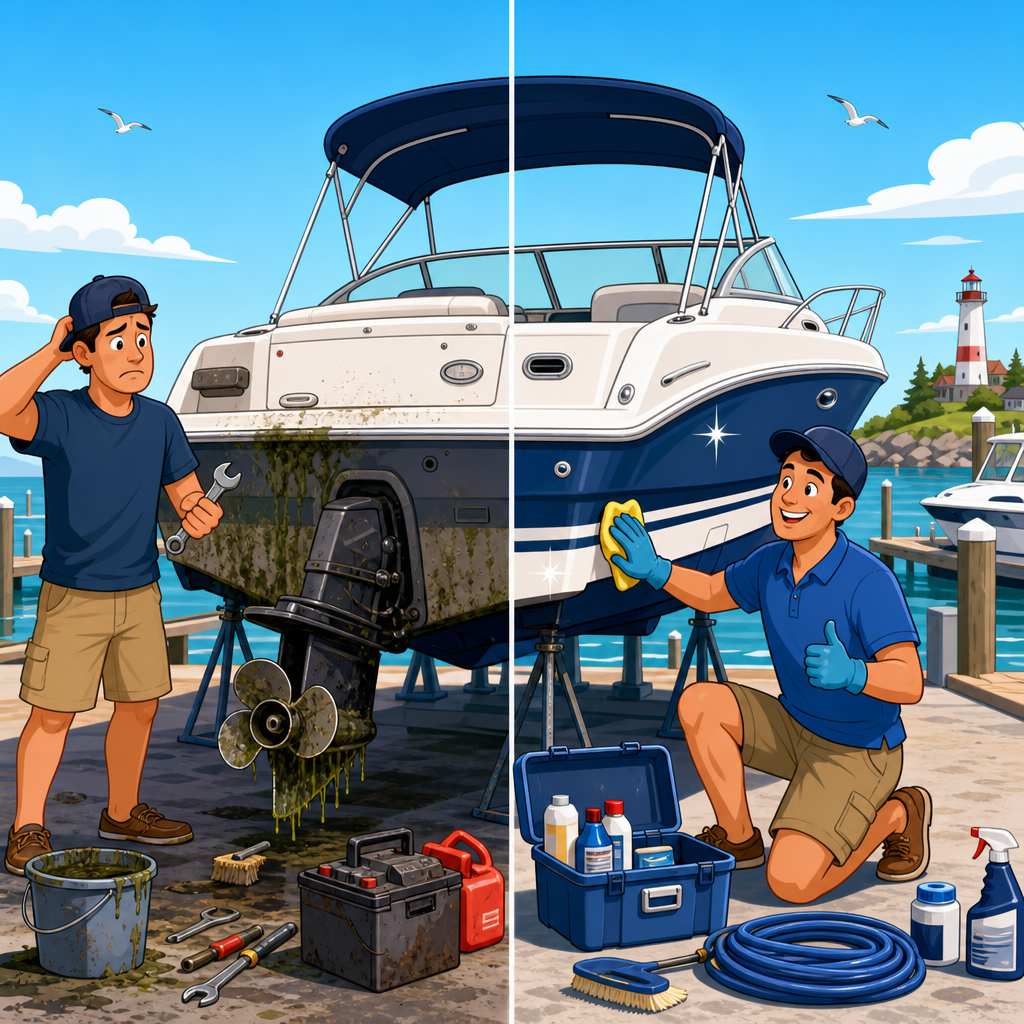
For stains, use targeted chemistry instead of excessive compounding. Waterline yellowing often responds fastest to acid-based hull cleaners. Oxalic acid and hydrochloric-acid blends dissolve mineral and organic deposits that abrasives would only smear. Rust streak removers are useful around anchor lockers, bow eyes, and stainless fittings where iron contamination runs down the hull. Black streak removers help around rub rails and plastic trim. After stain removal, neutral rinse thoroughly and wash again so no residue compromises polishing pads or sealant bonding.
Some boats also need decontamination beyond washing. If the surface feels rough after cleaning, use a synthetic decon towel or clay alternative with abundant lubricant, especially on smooth topsides above the waterline. Traditional detailing clay works, but marine surfaces are often larger and more contaminated, so synthetic tools save time. The goal is not showroom detail for its own sake. A decontaminated hull allows compounds to cut evenly and polishes to finish cleaner, which directly improves gloss restoration.
Best Compounds and Oxidation Removers for Restoring Gelcoat
If your boat looks faded, compounds do most of the restoration work. The best products in this class remove dead oxidized gelcoat and level the surface enough to restore reflected light. For severe oxidation, 3M Marine Restorer and Wax, Meguiar’s M6732 Marine One Step Compound, and Presta Gelcoat Compound are common starting points. On boats that have gone years without protection, I usually prefer dedicated compounds without wax because they cut more predictably and let me inspect the true finish before protecting it.
For professional-level correction, 3M Perfect-It Heavy Cutting Compound, Presta Ultra Cutting Creme, and Menzerna Marine Line compounds are strong options. Pair stronger compounds with a rotary polisher and wool pad for chalky, neglected gelcoat, especially on white hulls where maximum cut matters more than finishing perfection in the first step. Keep pad speed controlled, work manageable sections, and clean pads often. Oxidation residue builds quickly, and a clogged wool pad can scour rather than correct.
On moderate fading, a modern diminishing or hybrid abrasive compound on a dual-action polisher can restore gloss with less risk. Meguiar’s M4916 Marine/RV Heavy Duty Oxidation Remover and 3D One Marine are useful when you want cut and refinement together. The real rule is simple: use the least aggressive product that achieves full oxidation removal. If chalk remains, protection will fail early. If you over-cut, especially on edges and older repairs, you shorten gelcoat life unnecessarily.
Best Polishes, Finishing Products, and Protective Coatings
After compounding, a finishing polish refines haze, improves depth, and sharpens reflections. This is especially important on dark blue, black, and red gelcoat, where the hull can look restored from ten feet away yet still appear cloudy in direct sun. Products such as 3M Perfect-It Gelcoat Light Cutting Polish + Wax, Presta Chroma 1500, and Meguiar’s M4516 Marine/RV Polish bring back clarity after the oxidation is gone. Use foam polishing pads, slower arm speed, and inspect in multiple lighting angles.
Protection choices fall into three main categories: carnauba-based marine wax, synthetic polymer sealant, and ceramic-style coating. Traditional marine waxes still work well for owners who enjoy frequent maintenance and want an easy, forgiving application. Collinite 885 Fleetwax is a long-respected favorite because it resists detergent wash-off and holds up better than many retail waxes. Meguiar’s Flagship Premium Marine Wax remains popular for gloss and user-friendly application. These are strong choices for seasonal use on trailer boats and freshwater boats.
Polymer sealants usually last longer and maintain slickness better in harsh sun. Products like Jescar Power Lock, Klasse High Gloss Sealant Glaze, and some dedicated marine sealants offer extended durability with less chalking return between details. Ceramic marine coatings push longevity further, but only when prep is thorough. Gtechniq Marine, Glidecoat, and Ceramic Pro Marine products can reduce water spotting and make washing easier, yet they are not a shortcut past oxidation removal. Apply them only after the hull is truly corrected, oil-free, and dry.
Which Products to Use by Oxidation Level
Buying products by severity saves money and prevents frustration. The chart below reflects the combinations that work most consistently in real boat restoration jobs.
| Gelcoat condition | Recommended product types | Typical tools | Expected result |
|---|---|---|---|
| Light fading, minor dullness | Boat soap, finishing polish, wax or sealant | Dual-action polisher, foam polishing pad | Fast gloss recovery with minimal material removal |
| Moderate oxidation, chalk on towel | Wash, stain remover as needed, medium compound, finishing polish, sealant | Dual-action or rotary, wool or microfiber cutting pad, foam pad | Strong color return and smoother reflectivity |
| Heavy oxidation, uneven color, porous feel | Wash, acid cleaner for stains, heavy compound, possible wet sanding, polish, durable coating | Rotary polisher, wool pad, sanding blocks, foam finishing pad | Substantial restoration, but labor intensive |
| Failed repairs, cracks, thin or damaged gelcoat | Cleaning, localized repair materials, sanding, compound, polish, protectant | Repair kit, abrasives, machine polisher | Cosmetic improvement after structural or surface repair |
One-step cleaner waxes belong mostly in the light-fading category. They are useful for annual maintenance on boats that already have decent gloss, but they are not the best products for restoring a truly faded gelcoat on your boat. If the hull leaves white residue on your hand, move up to a dedicated oxidation remover. If compound still does not clear the surface, wet sanding with 1000 to 2000 grit, followed by compound and polish, is often the correct next step rather than repeating compound endlessly.
Tools, Technique, and Common Mistakes That Affect Product Performance
Even the best gelcoat restoration products underperform with the wrong pad or machine. Rotary polishers cut faster and are often necessary for severe oxidation, but they create heat quickly and demand experience around edges, decals, and corners. Dual-action polishers are safer and finish better for many owners, especially on moderate fading. For pads, twisted wool or blended wool cuts hard, microfiber offers controlled correction, and foam pads refine the finish. Keep multiple pads on hand because oxidized gelcoat loads them fast.
Work in shade on a cool hull whenever possible. Tape off rubber, unpainted plastics, and porous trim because compounds and acid cleaners stain them easily. Prime the pad lightly, spread product before increasing speed, and clean residue often so you can judge actual progress. I also recommend measuring success section by section instead of polishing the entire hull by hope. Use a 2-by-2-foot test spot and confirm that your chosen system restores gloss before committing to the rest of the boat.
The biggest mistakes are under-cleaning, overusing aggressive acid, relying on one-step products for severe oxidation, and skipping protection after correction. Another common error is assuming all shine means restoration. Fillers and wax can create temporary gloss that disappears after the first detergent wash. True restoration removes oxidation and reveals sound gelcoat beneath. Once the hull is corrected, maintenance becomes straightforward: wash with a non-stripping boat soap, remove stains early, and refresh your protectant before the surface turns chalky again.
Building a Complete Hull Cleaning and Protection Routine
As the hub page for hull cleaning and protection, this topic goes beyond choosing compounds. A complete routine starts with frequent rinsing after saltwater use, monthly washing during the season, prompt treatment of waterline and rust staining, and scheduled surface protection at least once or twice a year. Boats stored outdoors in Florida, Texas, Arizona, and other high-UV regions usually need more frequent attention than covered boats in northern climates. Dark colors also demand tighter intervals because fading is easier to see and heat stresses the surface more.
For most owners, the practical system is simple. Wash regularly with a marine soap. Use dedicated hull stain removers only where needed. Inspect gloss at the start and end of each season. If water stops beading and the finish feels dry, apply wax or sealant before oxidation accelerates. If the towel test shows chalk, step up to polish or compound rather than layering more protection. This approach lowers long-term labor because mild annual correction is far easier than rescuing a severely neglected hull every few years.
The best products for restoring a faded gelcoat on your boat are the ones that fit a disciplined process: correct cleaning, targeted stain removal, an oxidation remover matched to the damage, a finishing polish for clarity, and durable protection suited to your climate and storage conditions. Start with an honest assessment, test your system on a small section, and build your maintenance schedule around prevention, not rescue. If you want your boat to stay brighter, wash it consistently, protect it on schedule, and address dullness before it becomes heavy oxidation.
Frequently Asked Questions
What types of products are best for restoring a faded gelcoat on a boat?
The best results usually come from using a system of products rather than relying on a single cleaner or polish. Faded gelcoat is commonly affected by oxidation, UV damage, surface staining, and loss of protective wax, so the right product depends on the condition of the finish. In most cases, restoration starts with a dedicated boat soap and a chemical decontamination product or stain remover if there is waterline discoloration, rust staining, or embedded grime. From there, heavily faded surfaces often need a rubbing compound or oxidation remover to cut through chalkiness and restore clarity. Moderate fading may respond well to a polishing compound, while lighter dullness can often be corrected with a finishing polish alone.
After correction, the surface should be protected with either a marine wax, a synthetic sealant, or a ceramic-style marine coating. Traditional car products are not always suitable because marine gelcoat is thicker, more porous, and exposed to harsher UV, salt, and moisture conditions. That is why boat-specific compounds, polishes, and protectants are generally the better choice. The most effective product lineup typically includes a wash product, oxidation remover or compound, polish, and long-lasting protectant. Matching the aggressiveness of the product to the severity of oxidation is what prevents wasted effort and unnecessary gelcoat removal.
How do I know whether my boat needs a compound, a polish, or just a wax?
A simple test is to wipe a clean, dark cloth across the hull after washing and drying it. If the cloth picks up a chalky white residue, oxidation is present, and wax alone will not solve the problem. Wax can improve appearance temporarily, but it cannot remove dead, degraded gelcoat. In that situation, a compound or oxidation remover is usually needed first. If the surface looks dull but not heavily chalked, and it still has some shine when wet, a polish may be enough to restore gloss. If the gelcoat already looks clear and glossy but lacks slickness or water beading, then a protective wax or sealant may be all that is needed.
The severity of the fade also matters. Heavy oxidation, uneven color, and a flat, powdery texture usually call for a more aggressive marine compound, often applied by machine for consistent correction. Medium oxidation may need a lighter compound followed by polish. Light haze or swirl marks usually respond best to a finishing polish. Once the gloss is restored, a wax or sealant locks in the result and adds UV protection. The key is to avoid starting too aggressively unless the condition clearly demands it. Testing a small area first is the smartest way to choose the right product category and avoid removing more gelcoat than necessary.
Are oxidation removers and rubbing compounds safe for gelcoat?
Yes, marine oxidation removers and rubbing compounds are generally safe for gelcoat when they are used correctly, but they should be chosen carefully and applied with control. Gelcoat is thicker than automotive clear coat, which gives it some margin for correction, but it is still a finite surface. Aggressive compounds are designed to remove oxidized material from the outer layer, so overuse, repeated heavy passes, or poor technique can thin the finish over time. That is why boat owners should use the least aggressive product that gets the job done and step up only when necessary.
Product safety also depends on application method. A rotary buffer with a wool pad can cut quickly and restore badly faded gelcoat efficiently, but it also generates more heat and carries more risk in inexperienced hands. A dual-action polisher is typically safer for most owners and works well with many modern compounds and polishes. Hand application can work on small areas, but it is usually too inconsistent for severe oxidation. Always follow the manufacturer’s directions, keep pads clean, work in manageable sections, and inspect your results frequently. Done properly, compounding is one of the most effective and widely accepted ways to restore faded gelcoat before sealing and protecting it.
What is the best product to protect gelcoat after restoration?
After the oxidation is removed and gloss is restored, the best protective product is the one that matches how the boat is used, stored, and maintained. A quality marine wax is a solid choice for many owners because it enhances shine, is relatively easy to apply, and offers a sacrificial barrier against sun, salt, and water. Carnauba-based marine waxes are popular for warm gloss, but synthetic marine sealants usually last longer and provide more durable UV and detergent resistance. For owners who want longer intervals between applications, polymer sealants are often the most practical balance of durability, appearance, and ease of maintenance.
Some boaters also choose ceramic-infused or SiO2-based marine coatings for extended protection and easier cleaning. These can perform very well, especially on boats exposed to strong sun and frequent washdowns, but they usually require better surface preparation and more careful application than a standard wax. The most important point is that protection should go on only after the surface is properly corrected. Applying wax over oxidation just seals in a poor finish. For most faded gelcoat restorations, a marine sealant or high-quality wax applied after compounding and polishing is the product that preserves the restored shine and slows future fading.
Can badly faded gelcoat be restored with products alone, or will it need wet sanding or repainting?
Many boats with faded gelcoat can be restored successfully with the right sequence of wash products, deoxidizers, compounds, polishes, and protectants, especially if the damage is mainly surface oxidation. Even boats that look very dull and chalky often improve dramatically once the dead outer layer is removed and the finish is polished. However, products alone have limits. If the gelcoat is deeply pitted, crazed, uneven in color, or previously over-buffed, compounding may not fully restore a uniform gloss. In those cases, wet sanding may be required to level the surface before polishing, and very severe deterioration may eventually call for re-gelcoating or painting.
The deciding factor is whether the damage is superficial or structural within the finish. If water makes the surface look glossy temporarily, that is often a sign the gelcoat still has restorable potential. If it remains blotchy, rough, or flat even when wet, more intensive correction may be needed. Before jumping to sanding or repainting, it makes sense to test a small area using a marine oxidation remover or compound followed by polish. That test spot will tell you whether the finish can come back with standard restoration products. In many cases it can, but when it cannot, knowing that early helps you avoid wasting time and money on products that are not aggressive enough for the condition of the hull.