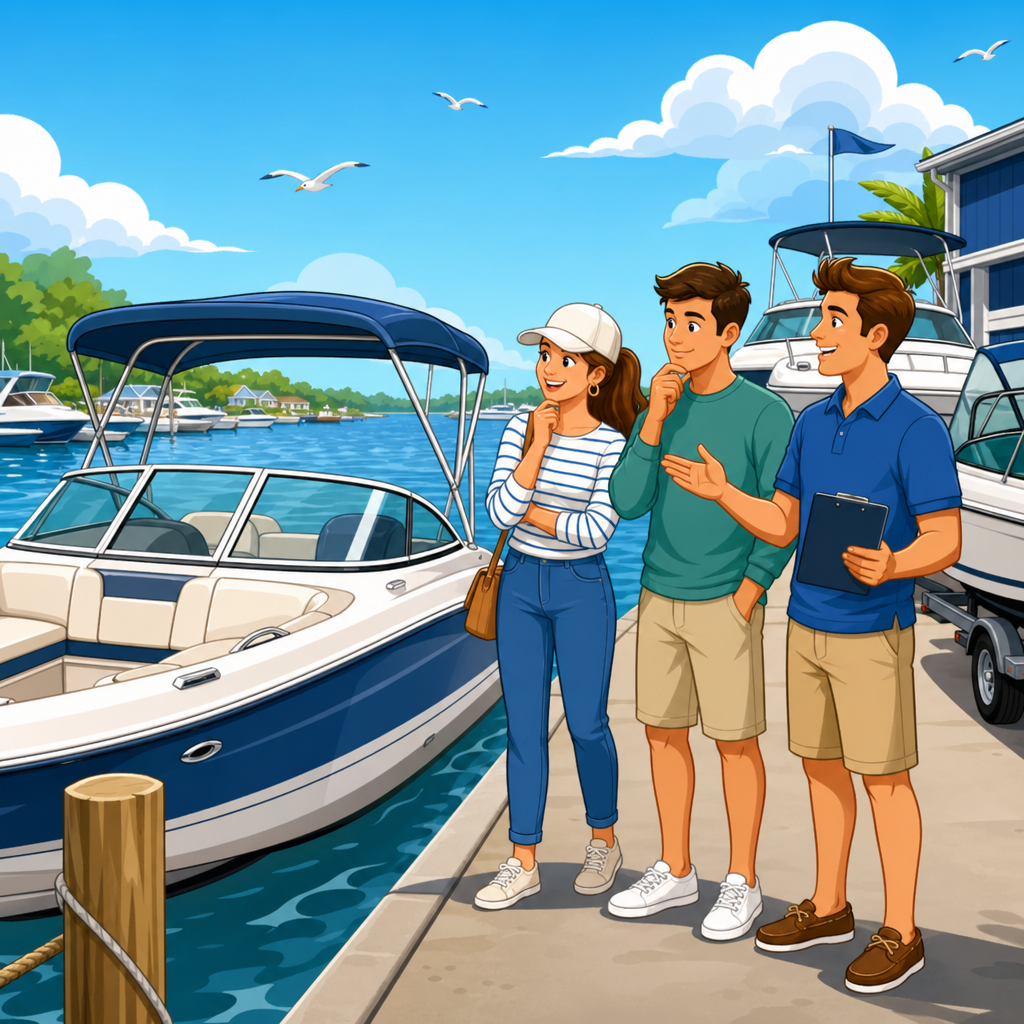
Choosing the best low-maintenance boats for beginners starts with understanding a simple truth I have seen repeatedly on docks, ramps, and dealer lots: the easiest boat to own is usually the one you use the most. New boaters rarely quit because boating is boring. They quit because storage is expensive, cleaning takes too long, repairs feel unpredictable, and operating the boat seems more complicated than expected. That is why low-maintenance beginner boats matter. They reduce friction, shorten the learning curve, and make first ownership realistic instead of overwhelming.
In practical terms, a low-maintenance boat is one that is simple to launch, forgiving to drive, inexpensive to clean, and less demanding mechanically than larger or highly specialized models. For beginners, that usually means durable hull materials, small or midrange outboard engines, uncluttered layouts, and systems with fewer pumps, electronics, and moving parts. Boats designed for day cruising, fishing, sandbar trips, and family recreation tend to fit this profile better than offshore center consoles, wake boats, or cabin cruisers. The goal is not buying the cheapest boat. The goal is buying the most manageable boat for your actual boating life.
This sub-pillar hub on the best boats for beginners focuses on entry-level options that are easy to own and easy to learn. It also serves as a decision framework you can use before reading deeper reviews across a broader Best Boats & Reviews cluster. If you are comparing pontoons, aluminum fishing boats, skiffs, personal watercraft alternatives, and compact bowriders, you need more than a list. You need selection criteria: maintenance burden, launch simplicity, seating flexibility, fuel economy, and how forgiving the boat feels at low speed. Those factors matter more for first-time owners than top speed or prestige.
From experience helping new owners choose first boats, I can say the best beginner boat is usually the one that matches three realities: where you boat, how many people you carry, and how much upkeep you will honestly do. A boat that performs brilliantly in one setting can be frustrating in another. A bass boat is excellent for serious anglers but often a poor family starter boat. A deck boat feels roomy but may introduce more cleaning and storage complexity than a small skiff or pontoon. The right beginner choice is less about aspiration and more about fit.
What Makes a Boat Low-Maintenance for Beginners
The best low-maintenance boats for beginners share a few characteristics that directly reduce ownership stress. First is propulsion. Small four-stroke outboard engines dominate beginner recommendations for good reason. They are easier to service than inboards, simpler to winterize, more accessible for inspection, and widely supported by service networks from brands like Yamaha, Mercury, Suzuki, and Honda. If an issue arises, a technician can often diagnose it faster than a complex sterndrive or ballast-equipped tow setup. Outboards also leave more interior room in smaller boats.
Second is construction and layout. Boats with straightforward interiors, molded seating, self-bailing cockpits, and limited onboard plumbing are easier to wash down and less likely to develop hidden maintenance problems. Beginners benefit from boats with fewer through-hull fittings, fewer batteries, fewer displays, and no enclosed cabin spaces trapping moisture. Aluminum hulls are especially practical on lakes and rivers because they tolerate beaching and dock contact better than gelcoat-heavy fiberglass. Fiberglass remains a strong option when ride comfort, aesthetics, and saltwater versatility matter more.
Third is handling. A beginner-friendly boat should track predictably, respond calmly around docks, and avoid demanding trim management. Stable platforms with moderate horsepower are easier to learn on than lightweight high-performance hulls. This matters for safety and confidence. New owners improve quickly when the boat behaves consistently during loading, idling, and trailering. The lower the intimidation factor, the more often they practice, and frequent practice is what creates competent boaters.
Best Low-Maintenance Boat Types for First-Time Owners
Several boat categories consistently stand out when people ask, “What is the best boat for beginners?” The answer depends on use case, but a short list covers most first-time buyers well: pontoon boats, aluminum fishing boats, small center consoles or skiffs, compact bowriders with outboards, and simple tiller or side-console utility boats. These designs are popular because they answer the searcher’s real question, which is not just what floats, but what can be owned without regret.
| Boat type | Why beginners like it | Main maintenance advantage | Best use |
|---|---|---|---|
| Pontoon | Stable, spacious, easy social layout | Simple deck plan and accessible outboard service | Lakes, family cruising, sandbar days |
| Aluminum fishing boat | Lightweight, affordable, easy to trailer | Durable hull with minimal cosmetic upkeep | Lakes, rivers, casual fishing |
| Skiff or small center console | Straightforward controls and open deck | Wash-down friendly with few complex systems | Inshore saltwater and mixed-use boating |
| Compact bowrider with outboard | Familiar seating and versatile recreation | Lower engine complexity than sterndrive models | Day cruising, watersports, family outings |
Pontoon boats are among the best boats for beginners because they prioritize stability and simplicity. On calm inland water, they are exceptionally forgiving. Boarding is easy, seating is obvious, and guests feel secure immediately. Maintenance is usually limited to upholstery care, deck cleaning, trailer upkeep, and standard outboard service. Brands like Bennington, Sun Tracker, and Harris build beginner-friendly models with practical layouts and manageable horsepower. The tradeoff is that pontoons are less suitable for rough open water and can be awkward in strong wind around docks because of their high profile.
Aluminum fishing boats are often the smartest first purchase for solo owners, couples, and small families. Lund, Tracker, and Lowe have long led this category because they offer simple, rugged boats that can handle years of use with limited cosmetic stress. A 16- to 18-foot aluminum boat with a modest outboard is easy to tow with a midsize vehicle, cheap to store compared with larger fiberglass boats, and fast to clean after a day on the water. The downside is that ride quality in chop is less refined, and bare-bones layouts feel utilitarian compared with family-oriented runabouts.
Small skiffs and center consoles are excellent beginner choices in coastal and inshore markets. They are among the easiest saltwater boats to own because open layouts rinse clean, fish scales and sand are not a big problem, and there is little interior trim to protect. Models from Boston Whaler, Carolina Skiff, Mako, and Key West often appeal to first-time buyers who want one boat for crabbing, harbor cruising, beach runs, and nearshore fishing. Their simplicity is the point. A beginner can see almost every system on the boat, understand it quickly, and maintain it without surprises.
Compact bowriders with outboards deserve more attention than they get in beginner lists. Many people still associate bowriders with sterndrives, but outboard-powered versions from Bayliner, Sea Ray, and Yamaha Jet Boat competitors have changed the equation. When equipped with an outboard, a 17- to 20-foot bowrider becomes much easier to service and own than many legacy family runabouts. It offers familiar seating, better all-around recreation use, and straightforward operation. For beginners who want tubing, cruising, and occasional swimming more than fishing, this can be the best balance of fun and manageable upkeep.
How to Choose the Right Beginner Boat for Your Water and Budget
The best boats for beginners are chosen backward from use, not forward from features. Start with where you boat. Small lakes reward pontoons, aluminum boats, and compact bowriders. Rivers favor shallow-draft aluminum hulls and utility boats. Protected bays and intracoastal water support skiffs and smaller center consoles. If you plan to face chop, boat traffic wakes, or changing weather, hull design matters more than upholstery or stereo packages. Match the boat to common conditions, not ideal conditions on the best day of the season.
Next, set a realistic ownership budget. Most first-time buyers focus on purchase price and miss the rest: trailer tires, wheel bearings, annual engine service, registration, safety gear, covers, batteries, and storage. National Marine Manufacturers Association guidance and dealer service experience both support a practical rule: ownership costs continue long after financing ends. A lower-maintenance boat does not eliminate spending, but it reduces surprise spending. That is why smaller outboard boats usually outperform bigger, feature-heavy boats for beginner satisfaction.
Also think about crew size honestly. If you usually boat with two people, do not buy for the one holiday weekend when eight relatives show up. Overbuying creates towing, storage, and maintenance burdens every other weekend. Finally, inspect dealer support before you buy. A good local service department can matter more than minor differences between brands. In first ownership, fast parts access and competent annual service are part of the product.
Common Beginner Mistakes and the Smartest Ownership Strategy
The most common mistake new owners make is choosing complexity disguised as value. A used larger boat with lots of seating, extra electronics, and a low sticker price can look attractive, but neglected pumps, wiring, bellows, upholstery, and trailer components quickly erase savings. I have seen beginners buy “cheap” boats that needed months of repairs before their first relaxed outing. A simpler, newer, smaller boat often delivers better value because it gets on the water immediately and teaches ownership in manageable steps.
Another mistake is underestimating storage and access. If launching is difficult, you will boat less. If cleaning takes ninety minutes, you will postpone it. If the marina is far away and the boat cannot stay covered, upkeep rises quickly. The smartest ownership strategy is friction reduction. Choose a boat you can store easily, launch confidently, rinse quickly, and service locally. Keep a written maintenance calendar. Flush the outboard after saltwater use, charge batteries regularly, inspect fuel lines, grease trailer fittings, and replace worn safety gear before the season starts.
For most people, the best low-maintenance boats for beginners are not the most exciting boats on a showroom floor. They are the boats that create repetition, confidence, and low-stress weekends. That is why pontoons, aluminum fishing boats, skiffs, and compact outboard bowriders consistently anchor any credible guide to the best boats for beginners. They are simple where it counts, versatile enough for real life, and affordable to operate compared with more specialized designs. If you are building your shortlist, start with how and where you will actually boat, then favor simplicity over ambition. Read the deeper reviews in this Best Boats & Reviews hub, compare local dealer support, and choose the boat that makes getting on the water easiest.
Frequently Asked Questions
What makes a boat low-maintenance for beginners?
A low-maintenance boat is one that reduces the routine work, surprise costs, and operating complexity that often overwhelm first-time owners. For beginners, that usually means choosing a simple design with fewer systems to inspect, clean, repair, and winterize. Boats with straightforward layouts, durable materials, reliable outboard power, and minimal onboard equipment are generally much easier to own than boats with cabins, plumbing, complex electrical systems, or inboard engines.
In practical terms, the easiest beginner boats are often those with open decks, easy-to-clean interiors, and hull materials that do not demand constant cosmetic upkeep. Aluminum fishing boats, small center consoles, basic skiffs, and many pontoons are popular because they are uncomplicated and forgiving. A single outboard engine is usually easier for new owners to maintain than more complex propulsion setups, and trailerable boats can lower storage costs while making access more convenient. That matters because a boat that is easy to store, launch, rinse, and cover is more likely to get used regularly.
Low-maintenance also means predictable ownership. Beginners benefit from boats that do not require specialized knowledge every time something needs attention. Simple wiring, basic fuel systems, fewer accessories, and strong dealer or parts support all contribute to an easier ownership experience. The best low-maintenance boat is not just the one that needs the fewest repairs. It is the one that fits your skill level, your budget, your storage options, and the kind of boating you will actually do most often.
What types of boats are usually best for first-time owners who want easy upkeep?
Several boat types consistently stand out for beginners who want ownership to feel manageable rather than stressful. Aluminum fishing boats are near the top of the list because they are durable, relatively lightweight, easy to trailer, and less demanding cosmetically than many fiberglass models. They work especially well for inland lakes, calm rivers, and simple recreational use. Small skiffs are another excellent option. Their simple construction, shallow draft, and minimal systems make them easy to launch, clean, and maintain.
Center consoles in smaller sizes also appeal to first-time owners because they offer a practical, open layout with good visibility and accessible mechanical components. With fewer enclosed spaces and less upholstery than more feature-heavy designs, they can be simpler to wash down and inspect. Pontoons can also be a strong beginner choice, particularly for families who want stability, comfort, and easy day cruising. While they are larger in footprint, many are mechanically straightforward and user-friendly on calm water. Their maintenance needs often center on engine care, cleaning, and keeping the deck and furniture protected.
What beginners usually want to avoid are boats that add complexity before they add value. Larger cruisers, older bargain boats with neglected systems, and models with extensive plumbing, multiple batteries, generators, enclosed cabins, or twin engines can quickly become expensive and time-consuming. Even if the purchase price seems attractive, the ownership experience may not be. In most cases, the best low-maintenance boat for a beginner is a trailerable, open, moderately sized boat with one reliable outboard engine and a layout designed around simplicity.
Is an aluminum boat or a fiberglass boat better if I want less maintenance?
For many beginners, aluminum boats have a slight edge in low-maintenance ownership because they are tough, practical, and generally less fussy about cosmetic wear. Minor scrapes, dock bumps, and trailering mistakes are often less stressful with aluminum than with fiberglass, and the overall cleaning routine can be very straightforward. Aluminum boats are also usually lighter, which can make towing, launching, and retrieval easier for new owners. That combination of durability and simplicity is a major reason they are often recommended for first-time buyers focused on easy upkeep.
Fiberglass boats, however, should not automatically be ruled out. A well-built fiberglass boat can still be a very manageable beginner option, especially if the design is simple and the boat is stored properly. Fiberglass often provides a smoother ride, more polished finish, and a wider variety of layouts. The tradeoff is that it may require more attention to appearance, including regular washing, waxing, and careful prevention of gelcoat damage. Repairs can also be more specialized if the hull is damaged.
The better choice depends on how and where you boat. If you prioritize ruggedness, simple ownership, and utility, aluminum is often the easiest path. If you want comfort, style, and a broader selection of recreational layouts, fiberglass may still work well as long as you keep the boat small and uncomplicated. For beginners, the key is not just the material. It is choosing a boat with a modest size, a simple setup, and a realistic maintenance routine you will actually follow.
How important is engine choice when buying a low-maintenance beginner boat?
Engine choice is one of the most important factors in overall maintenance, cost, and ease of ownership. In most beginner-friendly situations, a single modern outboard engine is the best option. Outboards are widely used, relatively accessible for service, and easier to inspect than many inboard configurations. Because the engine is mounted externally, routine checks and many maintenance tasks are more straightforward. They also simplify winterization and reduce the number of internal systems packed into the boat itself.
A newer, well-supported outboard from a reputable manufacturer can help beginners avoid one of the biggest traps in boat buying: chasing a low purchase price that hides future repair bills. Older engines can still be good, but they require more careful inspection and more comfort with mechanical uncertainty. For new owners, reliability and parts availability usually matter more than squeezing out the lowest initial cost. A dependable engine with documented service history is often worth paying more for because it lowers the chance of frustration during your first seasons on the water.
Beginners should also resist the assumption that more horsepower is always better. An appropriately powered boat is easier to handle, often more fuel-efficient, and may experience less stress than one that is constantly pushed hard. Simplicity wins here too. One engine, routine maintenance, clear service records, and easy access to local support make boat ownership far less intimidating. If you want a low-maintenance beginner boat, start by making engine reliability and serviceability a top priority.
What should beginners check before buying a boat to avoid high maintenance later?
Before buying, beginners should evaluate the total ownership picture, not just the boat’s appearance or advertised features. Start with the basics: hull condition, engine age and service history, trailer condition, and signs of neglect. Look for corrosion, soft spots, poor wiring, cracked hoses, water intrusion, damaged flooring, or evidence that repairs were done cheaply. A clean-looking boat can still hide expensive problems if maintenance was inconsistent. Whenever possible, have the boat inspected by a qualified marine technician and request a water test so you can see how it starts, idles, shifts, and performs under load.
You should also ask practical questions that affect long-term upkeep. Where will the boat be stored? Can you trailer it easily with your current vehicle? How hard is it to launch solo or with one helper? How long does it take to clean after a typical outing? Are replacement parts easy to find locally? Does the boat have extra systems you may not need, such as sinks, enclosed heads, livewells, extensive electronics, or multiple batteries? Every added feature can increase convenience on the water, but it can also increase maintenance, troubleshooting, and cost.
One of the smartest moves for beginners is to buy for the boating they will do 80 percent of the time, not the fantasy version of boating they imagine doing someday. A smaller, simpler, well-maintained boat that matches your local waters and habits is almost always the better investment than a larger, feature-heavy boat that drains time and money. The goal is to choose a boat that removes friction from ownership. If it is easy to store, easy to operate, easy to clean, and easy to service, you are far more likely to enjoy boating and keep using the boat for years.