Choosing the best boats for handling rough seas and high waves starts with understanding what “rough water” really means: steep chop, confused swell, breaking seas, strong wind, and rapid weather changes that expose weaknesses in hull design, construction, and seamanship. In practical terms, the best boats for rough waters are not simply the biggest or most expensive; they are the boats engineered to maintain buoyancy, directional control, structural integrity, and crew comfort when conditions deteriorate. I have run center consoles offshore in four-to-six-foot wind waves, tested pilothouse boats in quartering seas, and watched well-marketed models pound badly because their design priorities favored speed at the dock over composure underway. That gap between appearance and capability is why this topic matters.
For most buyers, “rough seas” includes everything from coastal inlets with standing waves to offshore runs where swell period, wind direction, and load distribution can transform a manageable ride into a punishing one. Key terms matter. Deadrise is the angle of the hull bottom relative to horizontal; more deadrise usually improves wave entry but can reduce stability at rest. Freeboard is the height from the waterline to the deck; more freeboard helps keep water out but can increase windage. Displacement, beam, chine design, hull weight, and fuel capacity all affect how a boat behaves when the water turns ugly. The best rough water boats balance these factors rather than maximizing one at the expense of the others.
This hub article covers the core categories buyers research when comparing the best boats for rough waters: deep-V center consoles, pilothouse boats, sportfishing convertibles, offshore catamarans, rigid inflatable boats, and passagemaking trawlers. It also explains the design features that matter most, the tradeoffs between comfort and efficiency, and the safety equipment no serious rough-sea platform should lack. If you want one answer up front, here it is: the best boat for rough seas is the one built for your actual operating area, with a proven hull, conservative loading, dependable power, and enough protection to let the crew function when conditions worsen. Everything else is secondary.
What Makes a Boat Good in Rough Water
The best boats for handling high waves share several measurable traits. First is hull form. A moderate-to-deep-V hull, often with 21 to 24 degrees of transom deadrise on offshore monohulls, slices steep chop more effectively than flatter bottoms. Deep-V designs from Regulator, Contender, Grady-White Canyon series, and Boston Whaler Outrage models have long offshore reputations because they combine sharp entries with enough displacement and structural stiffness to avoid the hollow pounding common in lighter boats. That does not mean every deep-V rides softly. Weight distribution, strakes, chine placement, and resin-to-glass quality matter just as much.
Second is structural build. In rough seas, slamming loads are repeated and violent. Solid lamination schedules, well-bonded stringer grids, quality coring practices, and properly backed hardware are not luxury features; they determine whether hatches stay sealed, windshields remain intact, and hulls retain rigidity over years of service. Reputable builders publish construction details for a reason. Look for vinylester barrier coats, foam-filled or sealed compartments where appropriate, mechanically fastened and bonded deck joints, and fuel systems that meet current ABYC recommendations. Rough water exposes shortcuts quickly.
Third is seaworthiness beyond the hull. Helm protection, sightlines, drainage, handholds, bilge capacity, and redundancy all matter. A boat that can physically survive rough conditions but leaves the operator fatigued, soaked, and unable to read the sea is not a top rough-water boat. Self-bailing decks, large scuppers, secure seating, and predictable trim response are central. So is reserve fuel. Offshore in head seas, burn rates rise sharply because boats spend more time climbing and recovering instead of cruising efficiently.
Best Center Console Boats for Rough Waters
For many anglers and coastal offshore operators, the best boats for rough waters are premium center consoles between 26 and 38 feet. This category dominates because it blends speed, deck space, fishability, and increasingly serious offshore design. A well-built deep-V center console can maintain safe, efficient progress in conditions that force lesser boats to back off dramatically. Models such as the Regulator 31, Contender 30ST, Jupiter 34, and Freeman 34, though not identical in hull philosophy, are frequently cited because they are built around offshore use rather than protected-water marketing.
Monohull center consoles excel when they have enough waterline length, substantial flare forward, and a dry-running hull with proper balance. In head seas, length matters because a longer hull bridges wave intervals better and reduces abrupt pitch. Heavier offshore center consoles also carry momentum through chop, though excess weight can hurt acceleration and fuel economy. In my experience, a 30-foot-class center console with twin or triple outboards, full transom, quality trim tabs, and an enclosed head inside the console is often the practical sweet spot for owners who need one boat to fish, cruise, and safely cross inlets in changing weather.
The limitation is exposure. Even with tempered glass windshields and hardtop enclosures, center consoles are physically demanding in sustained rough weather compared with true pilothouse designs. They also rely heavily on active helm input, trim management, and smart speed selection. Buyers who prioritize all-weather passage-making over open-deck versatility should look hard at enclosed options.
Pilothouse and Walkaround Boats for High Waves
Pilothouse boats are among the best boats for handling rough seas because they protect the crew while preserving offshore-capable hulls. Brands like Parker, Steiger Craft, NorthCoast, Jeanneau, and SeaSport have loyal followings in regions where cold water, wind, and ugly crossings are normal. These boats typically feature enclosed helms, higher bows, substantial freeboard, and practical interior layouts that let crews stay functional instead of simply enduring the ride.
The core advantage is reduced fatigue. In rough water, operator fatigue is a safety issue. A warm, dry helm with clear wipers, demisting, shock-mitigating seats, and protected electronics allows better decisions over long runs. Many pilothouse boats also carry weight lower and more centrally than center consoles loaded with towers and top-heavy accessories. Walkaround side decks provide safer movement forward when anchoring or handling lines, although narrow side decks require disciplined footing in a beam sea.
These boats can be slower than open offshore center consoles and may pound if their hulls prioritize interior volume over wave entry. Still, in real weather, average passage times often favor the boat that can maintain a steady, controlled speed with a crew that is not getting battered. For the Great Lakes, the Northeast, the Pacific Northwest, and exposed UK coasts, pilothouse boats deserve to be near the top of any best rough water boats list.
Offshore Catamarans, RIBs, and Other Specialized Rough-Sea Designs
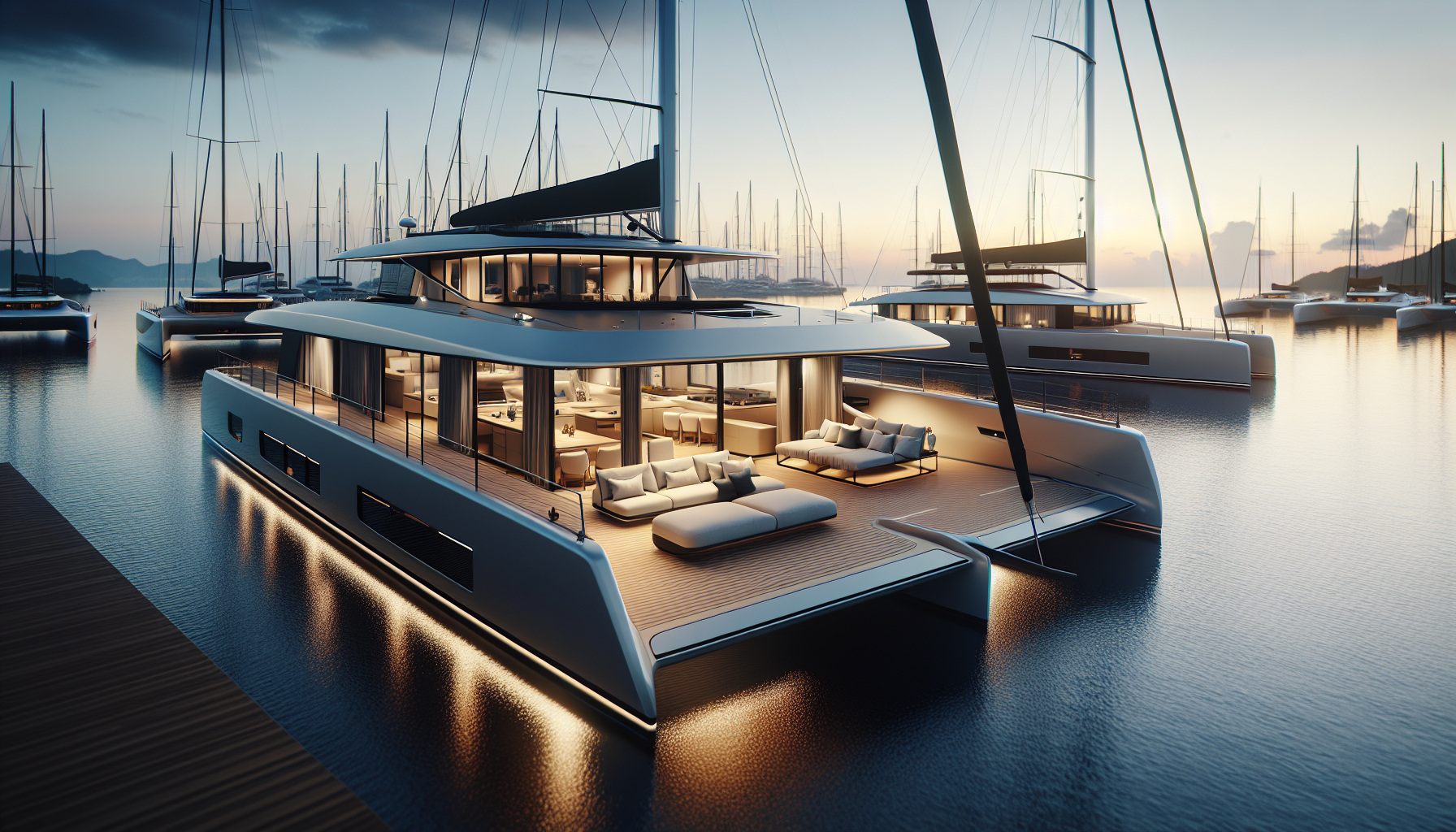
Not all of the best boats for rough waters are monohulls. Offshore power catamarans have become major players because twin narrow hulls can soften impacts, add lateral stability, and create remarkable deck space. Builders such as Freeman, World Cat, Invincible Catamaran, and Glacier Bay have shown that well-executed cats can run efficiently and comfortably in many offshore conditions. Their strengths are stability at rest, broad beam, and often excellent fuel economy at cruise. Their tradeoffs are different handling characteristics, sensitivity to load placement, and in some sea states a tendency for tunnel slap or less predictable behavior in tight quartering conditions compared with a proven deep-V monohull.
Rigid inflatable boats, or RIBs, also deserve mention. Used by military, rescue, and professional operators worldwide, RIBs combine deep-V hulls with inflatable collars that enhance buoyancy, shock absorption, and reserve stability. Zodiac Milpro and similar professional-grade platforms have earned their reputation in truly adverse environments. For private owners, however, mission fit is narrower. Exposure is high, storage can be limited, and family comfort may be lower than on a comparable hard-sided boat.
| Boat type | Rough-water strength | Main tradeoff | Best use case |
|---|---|---|---|
| Deep-V center console | Fast offshore performance, proven head-sea entry | More crew exposure | Fishing, day offshore runs, inlet crossings |
| Pilothouse boat | Crew protection, lower fatigue, all-weather utility | Usually less open deck space | Cold climates, long runs, mixed family use |
| Offshore catamaran | Stable platform, soft ride in many conditions | Different handling, wide beam | Offshore fishing, diving, comfort-focused operation |
| RIB | Excellent buoyancy, shock reduction, professional pedigree | Limited weather protection | Rescue, expedition, short aggressive runs |
| Sportfishing convertible | Mass, range, serious offshore capability | High cost and operating expense | Extended offshore trips, canyon fishing |
Large Offshore Boats: Convertibles and Passagemakers
Once you move into larger yachts, rough-water capability becomes more specialized. Sportfishing convertibles from builders such as Viking, Hatteras, and Cabo are among the best boats for handling high waves offshore because they combine long waterlines, substantial displacement, towering fuel reserves, and hulls developed for bluewater fishing. They can run through sea states that would be miserable or unsafe for smaller craft, and they offer enclosed accommodations that transform endurance. Their drawbacks are obvious: acquisition cost, dockage, crew demands, and maintenance complexity.
Passagemaking trawlers occupy a different niche. Nordhavn, Selene, and Fleming have built reputations around ocean-crossing capability, efficient displacement or semi-displacement hulls, and redundant systems. These are not boats for outrunning weather. They are boats for surviving and avoiding it through range, predictability, and disciplined voyage planning. In truly big water, seaworthiness is as much about motion comfort, system redundancy, and heavy-weather tactics as it is about speed. A trawler that can heave-to effectively, carry storm shutters, and maintain power generation during a multi-day blow may be a better rough-seas platform for passagemaking than a fast planing boat that depends on finding a weather window.
How to Choose the Best Boat for Your Conditions
The best rough water boat for Florida is not automatically the best rough water boat for the Pacific Northwest. Start with sea type. Short, steep wind chop favors hulls with sharp entries, enough bow height, and construction that tolerates repetitive pounding. Large ocean swell places more emphasis on tracking, reserve buoyancy, and the ability to manage quartering or following seas. Tidal inlets with standing waves demand quick throttle response, visibility, and a hull that does not broach easily when descending wave faces.
Then match boat size to operating radius. If your normal run is 10 to 20 miles offshore with flexibility to pick your days, a 26- to 30-foot offshore center console or pilothouse may be ideal. If you regularly run 40 to 80 miles, fish canyons, or boat in cold regions where weather changes fast, stepping up in length and protection is prudent. Evaluate fuel burn at realistic sea-state cruise speeds, not brochure speeds in calm water. Sea-trial any candidate in the roughest safe conditions available, with a representative load, and pay attention to windshield rattles, hatch movement, spray pattern, and how the hull lands off a crest.
Finally, remember that no list of the best boats for rough waters replaces training. The right boat widens your margin; it does not eliminate risk. Take advanced boating courses, learn weather-routing tools such as PredictWind or NOAA marine forecasts, and practice trim, tab, and throttle management. Good operators make good boats look great. Poor operators can make excellent boats dangerous.
Safety Equipment and Setup That Matter in Heavy Weather
Any boat marketed for rough seas should carry more than the minimum legal gear. At a minimum, I recommend an EPIRB registered with NOAA, a fixed-mount VHF with DSC linked to GPS, a backup handheld VHF, AIS receive or transceive capability, an automatic bilge system with high-water alarm, quality life jackets, jacklines where appropriate, and serviceable flares or an electronic distress light. Radar is extremely valuable in squalls, at night, and in reduced visibility. So are dual chartplotters or a chartplotter paired with a tablet loaded with offline charts.
Setup matters as much as equipment. Batteries should be isolated and labeled, pumps should be accessible, and all heavy gear should be secured against violent motion. In outboard boats, inspect scuppers, splashwell drainage, and transom rigging seals. In inboard boats, verify shaft seals, seacock condition, and emergency dewatering options. Keep maintenance records. Rough water punishes neglect first.
The best boats for handling rough seas and high waves share a simple truth: design matters, but design alone is never enough. Deep-V center consoles, pilothouse boats, offshore catamarans, RIBs, convertibles, and passagemaking trawlers can all be outstanding rough-water platforms when they are matched to the right mission. Hull shape, structural quality, freeboard, protection, fuel range, and redundancy determine how a boat behaves when conditions turn from inconvenient to serious. So does operator judgment.
If you are building your shortlist, focus on proven offshore hulls from established builders, then sea-trial them in realistic conditions and compare fatigue, visibility, dryness, and control, not just top speed. That approach will lead you to the best boat for rough waters for your region, crew, and budget. Use this hub as your starting point, then dig into specific reviews and category guides before you buy.
Frequently Asked Questions
What types of boats handle rough seas and high waves the best?
The boats that perform best in rough seas are usually designed from the keel up for offshore conditions rather than calm inland cruising. In most cases, that means deep-V center consoles, pilothouse boats, offshore sportfishing boats, well-built cuddy cabins, rugged trawlers, and certain passagemaking sailboats. What these boats have in common is not just size, but hull geometry, structural strength, freeboard, weight distribution, and the ability to maintain control when seas become steep, confused, or breaking. A well-designed offshore boat will typically have a sharper entry to cut through chop, enough deadrise to soften impact, and enough bow flare or reserve buoyancy to help keep water off the deck.
It is also important to understand that “best” depends on how and where the boat will be used. A heavy displacement trawler may feel reassuring and predictable in big rolling swell, while a high-quality deep-V powerboat may be better at running quickly and safely through short, steep coastal chop. Catamarans can offer excellent stability and deck space, but some designs may react differently in quartering or head seas than monohulls. Meanwhile, offshore sailboats are often among the most capable boats in truly serious conditions because they are built to recover, track, and endure over long distances. The key takeaway is that rough-water capability is about the complete design package, not just marketing labels or engine size.
What hull features matter most when choosing a boat for rough water?
Hull design is one of the biggest factors in rough-water performance. A deep-V hull is widely respected because it helps slice through waves instead of slamming flat against them. Higher deadrise at the transom often improves ride quality in chop, although it can require more power and may reduce some at-rest stability. A fine bow entry helps the boat part the water more cleanly, while bow flare and sufficient forward buoyancy can reduce spray and help prevent the bow from burying into the next wave. Strakes, chines, and running surfaces also matter because they influence lift, tracking, dryness, and how the boat behaves when turning or crossing uneven seas.
Beyond shape, construction quality is just as important. A rough-water boat should feel solid, with strong stringers, reliable hull-to-deck joints, quality lamination, well-supported decks, and hardware that can tolerate repeated pounding. Weight matters too, but only when balanced correctly. A heavier boat may feel more composed in rough conditions, yet poor weight distribution can still create bad handling, bow steering, or excessive pounding. Freeboard, cockpit drainage, self-bailing decks, secure handholds, and protected helm positions all contribute to seaworthiness in real-world conditions. In other words, the best hull for rough water is not simply the deepest or heaviest one, but the one that combines impact absorption, directional stability, structural resilience, and practical onboard safety.
Is a bigger boat always better in rough seas?
No, a bigger boat is not automatically better, although size can provide meaningful advantages. In general, a longer boat can bridge wave intervals more effectively, carry more weight, and often deliver a smoother ride than a smaller boat in the same conditions. Extra length also tends to improve tracking, increase onboard safety margins, and give designers more room for fuel, stronger structure, and better protection for crew. That is why many offshore operators prefer boats with enough length and displacement to avoid being overly reactive in short, steep seas.
However, size alone does not guarantee rough-water capability. A poorly designed or lightly built large boat can perform worse than a smaller boat with a proven offshore hull and excellent balance. The boat’s beam, hull form, center of gravity, structural integrity, and how it is loaded all affect how it handles waves. Seamanship also becomes more important as conditions worsen. A skilled operator in a properly equipped 26-foot offshore boat may make safer decisions than an overconfident operator in a 40-foot vessel. Bigger boats can offer more margin, but they can also create a false sense of security. The smartest approach is to choose a boat that is truly designed for the expected sea state, operate within its limits, and remember that no recreational boat is made to ignore weather, wave period, or changing marine conditions.
How important is boat construction and safety equipment for handling high waves?
Construction quality and safety equipment are absolutely critical. When a boat runs in high waves, it is subjected to repeated stress loads from slamming, torsion, and sudden changes in direction. That punishment exposes weak laminates, poor assembly methods, underbuilt hatches, inadequate hardware backing, and low-quality fittings very quickly. A boat intended for rough seas should have strong structural reinforcement, dependable bilge systems, watertight or highly secure compartments where appropriate, quality fasteners, and a layout that keeps water moving overboard instead of pooling inside the vessel. Even details such as windshield strength, cleat mounting, latch security, and fuel system protection become much more important when the boat is taking spray, impact, and hard motion for extended periods.
Safety equipment is just as essential because even the best hull cannot eliminate risk. At a minimum, offshore and rough-water boaters should think in terms of layered preparedness: properly fitted life jackets, marine VHF radio, GPS and chartplotter, EPIRB or personal locator beacon where appropriate, visual distress signals, reliable navigation lights, emergency steering options if possible, first-aid supplies, and redundant bilge pumping capability. Good grab rails, non-slip surfaces, jacklines on certain boats, and harness attachment points can also make a major difference. The best boats for rough water are not just capable underway; they are equipped to protect people when things go wrong. Real seaworthiness is always a combination of design, build quality, maintenance, and emergency readiness.
Can the best rough-water boat still be unsafe if the operator lacks experience?
Yes, absolutely. Even the most capable offshore boat can become unsafe in the hands of an inexperienced or poorly prepared operator. Rough-water handling is not just about what the boat can do; it is about how the captain reads the water, adjusts speed, trims the boat, angles into seas, and responds to changing wind and wave patterns. In steep chop, for example, running too fast can cause punishing slams and loss of control, while running too slowly at the wrong angle can leave the boat wallowing or vulnerable to awkward wave impacts. Quartering seas, following seas, inlet conditions, and tightly stacked wind waves all demand judgment that comes from training and time on the water.
Experienced operators also know that good seamanship begins before leaving the dock. They check marine forecasts, understand tide and current interactions, confirm fuel range, inspect critical systems, secure loose gear, brief the crew, and establish a conservative go/no-go decision. They know when to turn back, when to change course, and when to wait for conditions to improve. That matters because the best boats for handling rough seas are designed to improve safety and control, not to make weather irrelevant. In practice, the safest setup is a well-built offshore-capable boat paired with realistic trip planning, disciplined operation, and an operator who respects the limits of both the vessel and the sea.