Choosing the best new boats for 2026 requires more than scanning glossy brochures or chasing the biggest engine number. Buyers need to understand how today’s boat market has changed, what real innovations matter on the water, and which models fit specific uses such as offshore fishing, family cruising, watersports, or quiet electric day boating. After years of testing new models at dealer events, manufacturer demos, and marina launches, I have seen the same truth repeated: the best boat is not the most expensive one, but the one whose hull design, propulsion, layout, and support network align with how you actually boat. That is especially true for the 2026 model year, which brings meaningful gains in efficiency, electronics integration, comfort, and safety across nearly every segment.
In this guide, “best new boats for 2026” refers to standout production models and categories that offer strong value, modern design, dependable performance, and practical ownership potential. Reviews and recommendations matter because a boat purchase involves high upfront cost, ongoing maintenance, storage, insurance, and fuel or charging expenses. A bad fit becomes expensive quickly. A smart choice delivers years of reliable use, stronger resale, and fewer regrets at the dock. This article reviews the most compelling new-boat types for 2026, explains who each one suits best, and highlights the features buyers should prioritize before signing a purchase agreement.
What Makes a New Boat Worth Buying in 2026
The 2026 boating market rewards informed buyers because innovation is now concentrated in a few areas that genuinely improve ownership. The first is propulsion efficiency. New four-stroke outboards from Yamaha, Mercury, and Suzuki continue to dominate because they balance quiet operation, lower emissions, solid service networks, and better fuel economy than older two-stroke platforms. In sterndrive and inboard categories, digital throttle and shift systems, joystick docking, and integrated vessel control have become major quality-of-life upgrades rather than luxury extras. Electric boats are also more credible in protected-water applications, especially for day cruising on lakes and short-range marina hopping.
The second factor is helm technology. The best 2026 boats integrate multifunction displays from Garmin, Simrad, or Raymarine with engine data, navigation, sonar, switching, audio, and lighting in one system. On the water, this matters more than many first-time buyers realize. A clean helm reduces distraction, improves situational awareness, and simplifies learning for new operators. Third, hull design has improved across categories. Builders now use stepped hulls, variable deadrise bottoms, composite stringer systems, and better sound insulation to create boats that plane faster, ride drier, and feel more solid in chop.
The most important buying principle, however, is mission clarity. I always tell clients to write down their top three uses before touring a showroom. If wake surfing is first, a bowrider optimized for speed and beaching will disappoint. If overnighting matters, a center console with great fishability may feel spartan. Matching intended use to layout, range, and power matters more than any single badge on the hull side.
Best Center Console Boats for Fishing and Family Use
For many buyers, the center console remains the most versatile new boat for 2026. It can fish offshore, cruise sandbars, carry a family comfortably, and hold value well in coastal markets. Among the strongest picks in this category are models from Boston Whaler, Grady-White, Pursuit, and Sailfish. A standout example is a 28- to 32-foot twin-outboard center console with a deep-V hull, insulated fish boxes, foldaway seating, and a hardtop integrated with radar and outriggers. That size range is often the sweet spot because it remains trailerable in some configurations yet has enough beam, freeboard, and fuel capacity for serious offshore work.
Boston Whaler continues to appeal to buyers who prioritize build quality and broad dealer support. Their dual-purpose center consoles typically blend angling features with family seating better than pure tournament-style layouts. Grady-White, long respected for offshore ride quality, often wins buyers who run in variable coastal conditions and want secure deep cockpit design. Pursuit earns attention for fit and finish, premium upholstery, and helms that feel a step above the mass market. Sailfish, meanwhile, frequently delivers excellent value by packing practical features into a more attainable price point.
When reviewing center consoles, pay close attention to transom layout, fish box drainage, livewell placement, gunwale height, and whether aft seating interferes with fighting fish. For mixed-use owners, the best 2026 center consoles also include enclosed head compartments, quality stereo zoning, phone charging, and boarding-friendly side doors. These details determine whether a boat feels truly multipurpose or merely compromises between roles.
Best Bowriders and Deck Boats for Day Cruising
Bowriders and deck boats remain the best new boats for 2026 for families who prioritize social space, easy boarding, and all-day comfort. In this segment, Cobalt, Sea Ray, Chaparral, and Hurricane are especially relevant. A modern 24- to 28-foot bowrider can handle lake cruising, watersports, restaurant stops, and occasional overnighting if fitted with an enclosed head and convertible aft sun pad. These boats excel because their layouts are intuitive. Passengers understand where to sit, storage is easier to access than on many fishing boats, and water access from integrated swim platforms is usually excellent.
Cobalt has built a reputation for premium construction, polished hardware, and refined handling. Sea Ray remains a strong mainstream benchmark with broad product support and balanced layouts. Chaparral often offers a sharp mix of performance and price, while Hurricane’s deck boats continue to attract buyers who want maximum space per foot. In practical testing, one of the biggest differentiators is not top speed but how cleanly the boat transitions onto plane with a full crew, coolers, and watersports gear aboard.
Look for deep storage lockers, secure walkthrough windshields, easy anchor access, and seating that converts without awkward cushions. If your boating includes children or older passengers, prioritizing high freeboard, nonskid flooring, and ladder design is more important than another five miles per hour. The best day boats make boarding and moving around feel effortless.
Best Wake and Surf Boats for Watersports in 2026
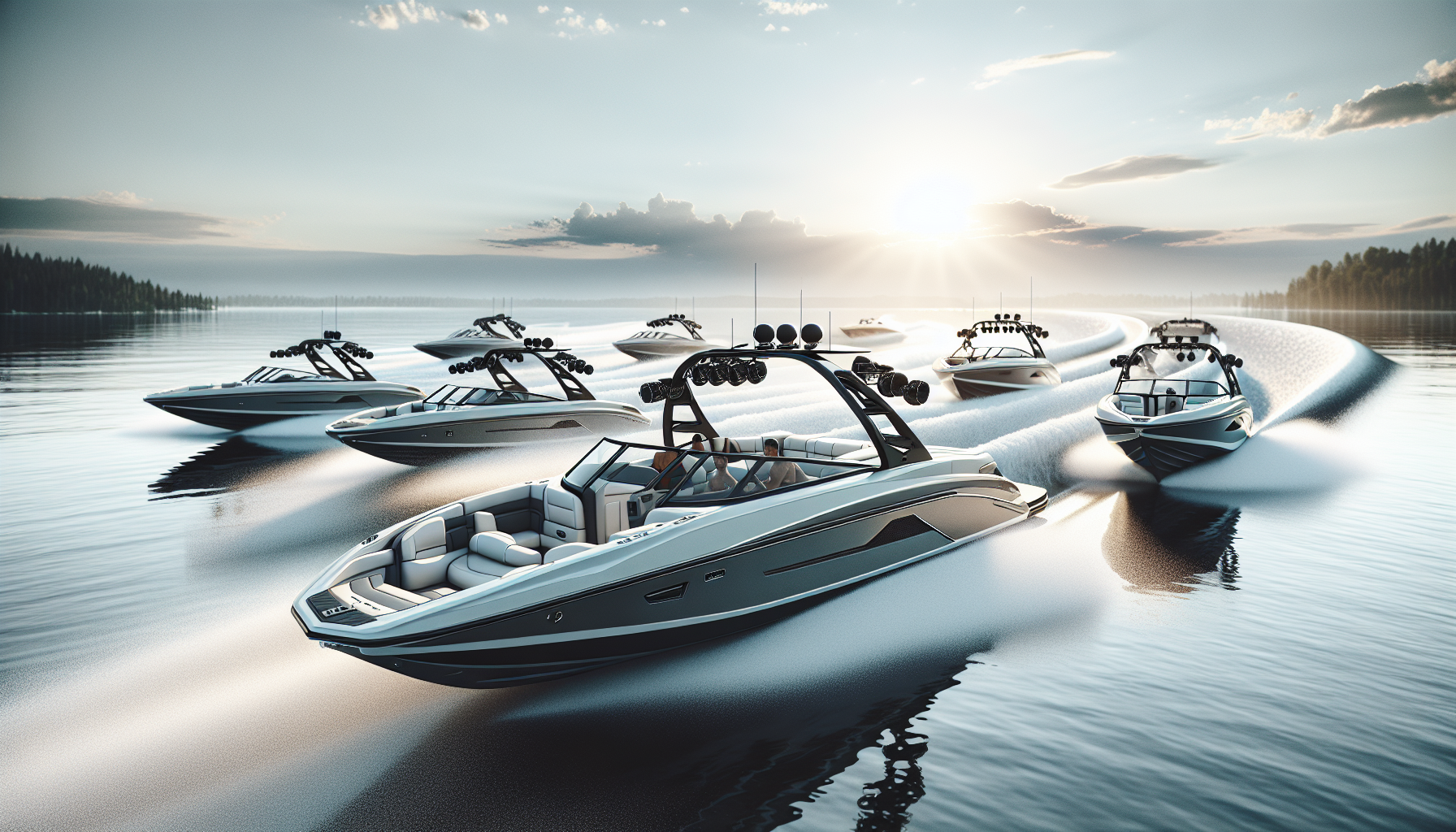
Wake and surf boats have become highly specialized, and that specialization is exactly why top models from MasterCraft, Malibu, Nautique, and Centurion stand out for 2026. These boats are built around ballast systems, surf tabs or plates, hull geometry, and software that shapes the wake consistently. Buyers who are serious about wakesurfing should not assume a generic runabout with enough horsepower can substitute. It cannot. Purpose-built towboats create safer, more repeatable wakes and provide better visibility, traction, and rider control at the lower speeds used in surfing.
Malibu remains influential because of its Surf Gate system and user-friendly presets. Nautique consistently earns praise for premium finish and world-class wake shaping. MasterCraft blends broad dealer reach with sophisticated touchscreen integration, and Centurion is favored by many surf-focused owners for large, powerful waves. In real use, the best towboats are judged less by acceleration alone and more by how quickly they let a crew switch from beginner to advanced rider settings without endless manual adjustment.
Storage matters here too. Boards, ropes, vests, pumps, and coolers consume more room than new buyers expect. Evaluate under-seat storage depth, tower rack usability, observer seating sightlines, and how easy it is to clear wet gear after a session. For many active families, the right wake boat becomes the most used boat they have ever owned because it turns every short outing into an activity-based day.
Best Cabin Cruisers and Weekend Boats
Buyers wanting overnight capability should look closely at express cruisers, compact cabin cruisers, and crossover boats from Jeanneau, Regal, Beneteau, and Cutwater. These are among the best new boats for 2026 for couples, small families, and owners who boat in shoulder seasons. A good weekend boat provides a real berth, enclosed head, galley essentials, shore power support, and enough cockpit comfort to avoid feeling like you are camping in a fiberglass shell. Models in the high-20-foot to low-30-foot range often deliver the best balance of marina maneuverability and onboard livability.
Regal’s express cruisers usually impress with smart interior volume and polished social layouts. Jeanneau and Beneteau bring European design efficiency, often using every inch of cabin space intelligently. Cutwater has built a loyal following with practical cruising features, outboard and inboard options, and a pilothouse feel that appeals in cooler climates. These boats are especially compelling for boaters on large lakes, the Intracoastal Waterway, Puget Sound, and similar mixed-condition routes.
Inspect ventilation, berth dimensions, battery capacity, refrigerator size, and visibility from the helm when seated and standing. Also evaluate whether the boat supports your climate. Air conditioning, diesel heat, generator options, and canvas design can transform usability. The best cabin cruiser is the one you will actually use for a spontaneous overnight, not just admire at the dock.
Best Pontoon and Electric Boats for Relaxed Boating
Pontoons continue to dominate inland boating because they are easy to board, stable at rest, and ideal for entertaining. For 2026, Bennington, Harris, Avalon, and Barletta remain leading names. Today’s premium pontoon is not the slow rental-style platform many people remember. Triple-tube performance packages, lifting strakes, larger outboards, upgraded helm controls, and plush furniture have turned modern pontoons into legitimate all-day recreational boats capable of towing, cruising, and hosting ten or more people comfortably.
Electric boats also deserve attention, particularly from brands focused on short-range premium day use. Their benefits are real: near-silent propulsion, no gasoline at the dock, reduced routine mechanical service, and a uniquely calm experience for lakefront owners. Their limitations are equally real: range sensitivity, charging infrastructure dependence, and a higher purchase price in many cases. In my experience, electric boats perform best for owners with predictable routes, private charging access, and no need for long-distance open-water travel.
| Boat type | Best for | Main advantage | Main limitation |
|---|---|---|---|
| Center console | Fishing and mixed coastal use | Versatility and resale strength | Less weather protection |
| Bowrider | Family day cruising | Comfortable social layout | Limited offshore capability |
| Wake boat | Wakesurfing and tow sports | Purpose-built wake control | Higher specialization |
| Cabin cruiser | Weekend trips | Sleeping and weather shelter | Higher maintenance complexity |
| Pontoon | Lake entertaining | Space and stability | Rough-water limits |
| Electric day boat | Quiet short trips | Low-noise clean operation | Range and charging constraints |
How to Choose the Right New Boat and Avoid Costly Mistakes
The smartest way to choose among the best new boats for 2026 is to evaluate ownership as a system rather than a one-time purchase. Start with water conditions. A boat that feels superb on a small reservoir may pound badly in a coastal chop. Next consider storage. Dry stack, trailer storage, lift storage, and wet slips each affect beam limits, tower height, bottom maintenance, and convenience. Then examine the local dealer and service network. I have watched buyers fall in love with a boat only to lose a season waiting for parts because the nearest competent dealer was several states away.
Use sea trials to test visibility, noise, turning confidence, and ergonomics. Bring the people who will actually use the boat. Sit in every seat while underway. Open every hatch. Stand at the transom. Check whether the anchor locker drains properly and whether the boarding ladder reaches deep enough into the water. Review National Marine Manufacturers Association compliance labeling and ask clear questions about warranties, hull construction, transferability, and corrosion coverage for saltwater use.
Budgeting must include more than the sale price. Add insurance, registration, electronics upgrades, safety gear, maintenance, winterization where relevant, haul-outs, trailer upkeep, detailing, and fuel. If financing, compare monthly payment assumptions against realistic annual usage. A slightly smaller boat used twice as often is a better investment than a larger one that is difficult to launch, dock, or afford. Before buying, request an out-the-door quote in writing and verify every option line. That discipline alone prevents many unpleasant surprises.
The best new boats for 2026 are the ones that deliver dependable enjoyment, not just showroom appeal. Center consoles remain the most flexible choice for offshore anglers and mixed-use coastal families. Bowriders and deck boats continue to lead for day cruising, watersports, and easy social boating. Dedicated wake boats are the clear answer for serious surf and tow enthusiasts, while cabin cruisers offer genuine weekend freedom for owners who want to sleep aboard. Pontoons dominate relaxed inland entertaining, and electric day boats have carved out a credible niche for quiet, short-range boating.
Across every category, the same selection rules apply. Match the boat to your primary mission, test it in realistic conditions, evaluate dealer support, and calculate total ownership cost before committing. Prioritize hull quality, safe deck design, practical storage, and propulsion systems with strong service networks. Modern electronics and premium upholstery are valuable, but they should support function rather than distract from it. The right recommendation is always grounded in where you boat, who comes with you, and how often you will use the vessel.
If you are shopping now, create a short list of three models in your target category, schedule back-to-back sea trials, and compare them using a written checklist. That simple process will do more for your purchase decision than any brochure. Buy for your real boating life, and your 2026 boat will reward you every time you leave the dock.
Frequently Asked Questions
What should I look for first when comparing the best new boats for 2026?
The first thing to evaluate is not the brand name, horsepower rating, or the flashiest electronics package. It is how you actually plan to use the boat. A center console built for offshore fishing, a dual console aimed at family cruising, a wake boat designed for watersports, and an electric day boat for quiet inland use all solve very different problems. Before comparing models, define your primary mission: offshore runs, sandbar weekends, towing skiers and wakeboarders, entertaining guests, or eco-friendly lake cruising. Once that use is clear, it becomes much easier to judge layout, seating, storage, ride quality, range, and onboard features in a practical way.
From there, focus on hull design, build quality, and onboard usability. A good hull should match your expected water conditions, whether that means a deep-V for rough offshore chop or a flatter, more stable platform for lakes and bays. Build quality shows up in the details: clean fiberglass work, secure hardware, smart drainage, easy access to pumps and batteries, and quality upholstery that can handle sun and salt. You should also pay close attention to how the boat feels during normal use. Is there enough dry storage for gear? Can passengers move safely around the deck? Is the helm intuitive? Are the seating arrangements genuinely comfortable for long days on the water, or just attractive in a brochure?
Finally, compare ownership realities, not just showroom appeal. That includes fuel efficiency, maintenance access, warranty coverage, local dealer support, trailer requirements, and resale potential. Many of the best new boats for 2026 stand out because they combine innovation with practical ownership advantages. A well-designed boat should make launching, docking, cleaning, and routine service easier, not more complicated. In the long run, the smartest purchase is usually the one that fits your boating lifestyle, budget, and local conditions better than the one with the biggest spec sheet.
Are the newest boat technologies for 2026 actually worth paying for?
Some are absolutely worth it, and some are little more than expensive distractions. The key is understanding which technologies improve safety, usability, and time on the water. For 2026, some of the most meaningful upgrades include joystick docking systems, advanced digital helm integration, better battery management, improved ride-control systems, and more refined outboard efficiency. These are not just luxury add-ons for many buyers. They can reduce stress at the dock, improve situational awareness, and make larger boats easier for newer owners to handle with confidence.
Integrated helm systems deserve special attention because they increasingly act as the central nervous system of modern boats. On the best new models, chartplotters, engine data, sonar, switching, lighting, audio, and navigation functions are organized in a cleaner, more user-friendly way than in previous years. That matters in real conditions, especially offshore or in crowded marinas, where the ability to access critical information quickly can make boating safer and more enjoyable. Likewise, updated ride-enhancement technology, such as trim assistance and stabilization features, can noticeably improve comfort for passengers who may not be used to rougher water.
That said, not every new feature justifies the price. Buyers should be cautious about highly specialized tech packages that add complexity without matching their boating habits. If you spend most of your time on a calm lake doing short family runs, you may not need every premium offshore navigation or fishing option. If you boat in a marina with easy slips and wide fairways, advanced docking features may be helpful but not essential. The best approach is to pay for technology that solves a real problem for your use case. Good innovation should make the boat easier to own and more enjoyable to use, not simply more expensive.
Which type of new boat is best for families who want to do a little bit of everything?
For many families, the best all-around choice is a versatile crossover design such as a dual console, bowrider, or family-friendly center console with flexible seating. These categories continue to improve because manufacturers know buyers want one boat that can handle cruising, tubing, sandbar trips, casual fishing, and entertaining without major compromise. In 2026, some of the most appealing models in this space offer convertible seating, better shade options, enclosed head compartments, swim platforms, and layouts that make it easy to move between the bow, cockpit, and stern.
A dual console is often a particularly smart family option because it blends comfort and utility. It typically offers more weather protection than a pure open bow layout, plus enough cockpit depth and seating to keep kids and guests comfortable. Bowriders remain popular for inland lakes and recreational watersports because they provide social seating, easy swim access, and a fun, open feel. Family-oriented center consoles have also evolved well beyond hardcore fishing machines. Many now include plush forward lounges, foldaway seating, upgraded audio, and practical amenities that make them excellent for mixed-use boating.
The deciding factors should be passenger comfort, storage, safety, and ease of use. Think about whether you need a changing area or enclosed head, whether the boat has enough shade for long summer afternoons, and how easy it is for children or older relatives to board and move around. Also consider tow-sports readiness, swim ladder design, cooler placement, and dry storage for bags and towels. The best family boat is usually the one that feels effortless to use for a full day, not the one that is strongest in only one category. If everyone onboard can relax, move safely, and enjoy multiple activities, you are looking in the right direction.
How do I choose between a gas-powered boat and one of the newer electric models?
That decision comes down to range, boating style, local infrastructure, and expectations. Electric boats are becoming more compelling in 2026, especially for protected waters, short day trips, resort communities, inland lakes, and owners who value quiet operation and low-emission boating. The appeal is real: instant torque, minimal engine noise, reduced routine maintenance, and a more peaceful on-water experience. For sunset cruises, neighborhood waterfront use, and shorter recreational outings, a well-designed electric boat can be a genuinely satisfying and modern alternative to traditional propulsion.
However, electric boating still requires a more careful look at practical limitations. Range remains one of the biggest factors. Real-world battery performance varies depending on speed, passenger load, wind, and current, so buyers should focus on realistic usage rather than idealized manufacturer numbers. Charging access matters too. If you have reliable dockside power and your boating pattern involves short trips with time to recharge, electric can work very well. If you regularly make long runs, spend full days at higher speeds, or operate in areas with limited charging options, a gas-powered boat is still likely the more flexible and dependable choice.
Ownership priorities should guide the final decision. Buyers who want simplicity, quiet cruising, and lower day-to-day mechanical complexity may find electric boats highly attractive. Buyers who need range, widespread fueling access, towing power, or offshore capability will usually be better served by gasoline outboards or sterndrives, depending on the boat type. Neither choice is universally better. The right answer depends on where you boat, how long you stay out, and what trade-offs you are willing to accept. In the best cases, electric boats are not replacements for every traditional model; they are excellent solutions for very specific, increasingly popular boating lifestyles.
Is it better to buy one of the most talked-about new 2026 boat models right away, or wait for more reviews and owner feedback?
In most cases, waiting for deeper reviews and early owner feedback is the smarter move, especially if the model is completely new rather than an update of a proven platform. Early excitement around a new release can be justified, but first-year boats sometimes reveal small design compromises, software issues, fit-and-finish inconsistencies, or rigging quirks that only become obvious after more hours on the water. Professional reviews, sea trials, and demo events are helpful, but they do not always capture the long-term ownership experience the way marina conversations and early customer reports do.
That said, you do not always need to avoid a new model entirely. If the boat comes from a builder with a strong track record, uses a hull concept that has already been proven in related models, and is backed by a dependable dealer network, the risk may be quite manageable. In fact, some of the best new boats for 2026 will likely be refinements of successful designs rather than radical departures. Those kinds of launches often deliver the best of both worlds: updated technology and layout improvements without the uncertainty of an untested concept. If you can arrange a water test and inspect the boat closely in person, that adds a great deal of confidence.
The best strategy is to balance timing, availability, and due diligence. If you want the newest model, look for independent reviews, owner forum discussions, warranty details, and evidence of strong dealer support. Ask direct questions about service intervals, known updates, software revisions, and real-world performance with the engine package you are considering. If you are not in a rush, waiting a few months can provide clearer insight and sometimes better pricing leverage. The goal is not to chase hype or avoid every new release. It is to buy with enough information that you understand what the boat does well, where it compromises, and whether it truly fits the way you boat.