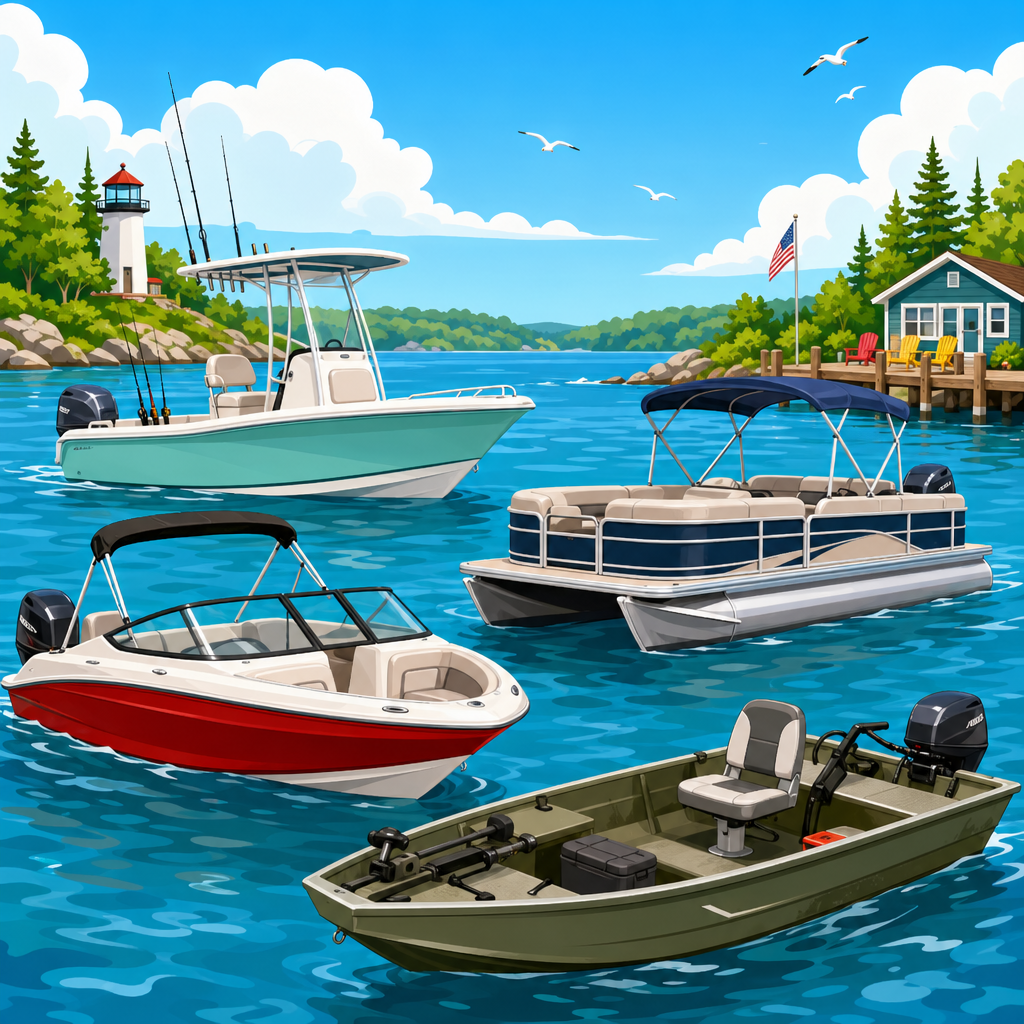
Choosing between a new and used boat comes down to one question: are you paying more for certainty, or less for risk? In practice, every buyer weighs the same core factors—price, depreciation, maintenance, warranty coverage, financing, technology, and intended use—but the right answer depends on how those factors interact in the real world. I have helped first-time buyers, seasoned anglers, and family cruisers through this decision, and the pattern is consistent: people who buy confidently start by defining the boat’s job before they compare listings. A boat is not just a product category. It is a platform for fishing, wake sports, coastal cruising, tender duty, overnight trips, or sandbar weekends. That intended use determines hull type, length, power, storage needs, and ultimately whether a new or used boat offers better value.
For buyers researching boat comparison and buying guides, this topic matters because the total cost of ownership can diverge sharply from the sticker price. A new center console may include modern electronics, factory rigging, and a warranty, yet lose value faster in the first years. A used bowrider may look like a bargain, but deferred maintenance, outdated safety gear, or a neglected outboard can erase the savings quickly. The decision also affects insurance, resale, downtime, and financing terms. Understanding the tradeoffs upfront prevents expensive surprises after launch day.
Key terms are worth defining clearly. A new boat is typically sold by a dealer as untitled current-year or prior-year inventory with full manufacturer support. A used boat has had prior ownership, whether sold by a dealer, broker, or private party. Depreciation is the decline in market value over time. Survey refers to a professional marine inspection, usually required for larger boats and wise for most used purchases. Sea trial means operating the boat on the water to verify performance, handling, and systems. These terms matter because the strongest boat buying guides are built on process, not guesswork.
This hub page explains how to choose between a new and used boat by breaking the decision into cost, condition, ownership experience, and buying process. It also serves as the foundation for deeper comparisons across boat types, brands, propulsion options, and inspection checklists. If you want to make a smart purchase, start here and use each section as a decision filter.
Start With Use Case, Budget, and Ownership Timeline
The fastest way to narrow the new-versus-used question is to match the boat to your use case. A family buying a 22-foot deck boat for occasional lake days has different priorities than an angler shopping for a bay boat that will log one hundred engine hours a season. I always advise buyers to write down three things before browsing inventory: primary use, realistic annual budget, and expected ownership timeline. If your goal is reliable weekend recreation with minimal troubleshooting, new often has the advantage. If your goal is stretching budget into more length, better offshore capability, or a premium brand you otherwise could not afford, used usually opens more options.
Budget needs to include far more than purchase price. Annual ownership costs commonly include storage or slip fees, winterization in seasonal markets, insurance, registration, fuel, routine engine service, trailer maintenance, cleaning supplies, and safety equipment replacement. On larger cruisers and offshore boats, haul-outs, bottom paint, and generator service can become meaningful expenses. Buyers who spend their full cash budget on the boat itself often regret not leaving reserve funds for first-year corrections. A sound rule is to keep contingency money aside, especially when buying used.
Ownership timeline matters because depreciation and refit cycles happen on different schedules. If you plan to keep the boat ten years and use it heavily, paying more upfront for exactly the layout, electronics, and power package you want can make sense. If you expect to learn the ropes for two or three seasons and trade up, a carefully chosen used boat often minimizes your cost of experimentation. That is particularly true for entry-level runabouts, pontoons, and small center consoles where the market is deep and resale demand remains healthy.
Cost, Depreciation, and What Value Really Means
New boats are more expensive at the point of purchase, but the premium buys predictability. You know the maintenance history because there is none, the hours are minimal, and the systems are current. Dealers may bundle electronics, trailers, safety gear, and first service. Manufacturers frequently provide hull, deck, and component warranties, though terms vary and exclusions matter. The downside is depreciation. Like cars, many boats lose the most value early, especially in the first one to three years. Exact numbers vary by brand, model, market conditions, and engine package, but the general principle holds: the first owner pays the steepest curve.
Used boats can deliver stronger value if prior depreciation has already occurred and the boat was maintained correctly. In many cases, a three- to seven-year-old boat offers the best balance between price and modern features. It may already have upgraded chartplotters, trolling motors, Power-Poles, or a premium trailer included. I have seen buyers save tens of thousands of dollars by purchasing lightly used inventory with clean service records and low hours. However, value is not the same as low price. A neglected used boat becomes expensive when transom repairs, soft decks, corrosion, worn upholstery, or fuel system issues surface after closing.
The smartest way to compare value is to estimate total cost over your intended ownership period. Add purchase price, taxes, finance charges, insurance, expected maintenance, likely repairs, and probable resale. Then compare that net number across a new option and two or three used alternatives. Buyers who use this framework stop focusing on headline price and start seeing the true economics.
Condition, Maintenance History, and Inspection Risk
Condition is where used boats separate into bargains and liabilities. Cosmetic wear is usually manageable; structural and mechanical neglect is not. Gelcoat oxidation, torn vinyl, faded canvas, and scratched rub rails may affect appearance and resale, but stringer damage, transom moisture, wiring hacks, and compression issues can turn ownership into a constant repair cycle. On outboard-powered boats, I look closely at engine hours, service intervals, lower unit condition, propeller damage, corrosion around brackets and fasteners, battery age, and the quality of the rigging. On sterndrive boats, bellows, manifolds, risers, and gimbal components deserve careful attention.
Maintenance history is often the deciding factor. A used boat with organized records, dealer invoices, winterization receipts, and evidence of preventive care is materially safer than one sold with vague assurances. Ask for engine diagnostics on modern outboards from brands such as Yamaha, Mercury, and Suzuki. Review whether recommended services at 20, 100, and 300 hours were completed. Confirm recalls or service bulletins were addressed where applicable. Documentation reduces uncertainty and strengthens resale later.
A professional marine survey is strongly recommended for many used purchases and essential for larger, more complex boats. Surveyors assess hull integrity, systems operation, safety compliance, and visible signs of water intrusion or poor repair work. A sea trial should verify cold start behavior, idle quality, wide-open-throttle performance against manufacturer RPM range, steering response, vibration, bilge operation, and electronics function. If a seller resists a survey or sea trial, treat that as a warning sign.
| Factor | New Boat | Used Boat |
|---|---|---|
| Upfront price | Highest | Lower |
| Depreciation | Greatest in early years | Often flatter if bought well |
| Warranty coverage | Usually included | Limited or none |
| Maintenance risk | Lower initially | Depends on history and inspection |
| Technology and layout | Current | May be dated or upgraded |
| Financing options | Often easier through dealers | Varies by age and lender |
| Best fit | Buyers prioritizing convenience | Buyers prioritizing value |
Warranty, Financing, Insurance, and Dealer Support
One of the clearest advantages of a new boat is support. Factory warranties can cover hull structure for multiple years and engines for defined periods, sometimes with promotional extensions. That does not mean every repair is free; wear items, abuse, improper storage, and certain components may be excluded. Still, warranty coverage reduces first-years uncertainty and can keep a seasonal boating plan intact when issues arise. Dealer setup and commissioning also matter. A competent dealer handles rigging correctly, explains systems, performs software updates, and acts as the first line of service support.
Financing generally favors new inventory. Lenders are often more comfortable with collateral that has clear valuation, lower age, and dealer documentation. Terms on used boats can shorten as the boat ages, and some lenders impose age caps. Insurance follows similar logic. A newer boat with modern safety equipment and agreed-value coverage may be straightforward to insure, while older boats can require more documentation or surveys. Hurricane-zone policies, navigation limits, and named storm exclusions deserve close review regardless of age.
Dealer support also has practical value after purchase. New buyers often underestimate how much they will need orientation on trailering, battery management, pump-out procedures, break-in schedules, electronics setup, and warranty claim timing. Good dealers reduce learning friction. Used buyers can still benefit from dealer purchases, especially certified pre-owned programs or dealer-inspected brokerage inventory, but they should verify exactly what support is included.
Technology, Safety, and Hidden Upgrade Costs
Modern boats increasingly justify their premium through technology and design improvements. Updated hulls can ride drier and more efficiently. Digital switching, joystick docking, touchscreen multifunction displays, integrated trolling motor control, lithium-ready charging systems, and improved livewell plumbing all make ownership easier. Safety has improved too. Newer boats may have better boarding access, stronger hardware backing, clearer helm ergonomics, improved fuel systems, and updated electrical installations aligned more closely with current ABYC practices.
Used boats may still be excellent performers, but buyers must account for hidden upgrade costs. Replacing obsolete chartplotters, adding NMEA 2000 networking, installing new VHF radios, swapping cracked thru-hulls, reupholstering seating, or replacing trailer tires and brakes can quickly add several thousand dollars. Even simple compliance items matter: life jackets, fire extinguishers, visual distress signals where required, carbon monoxide alarms on cabin boats, and anchor gear all cost money. I often see buyers underestimate how much it takes to bring an older boat up to the standard they expected from listing photos.
That said, technology should not overshadow fit. A clean older Grady-White, Boston Whaler, Cobalt, or Bennington that matches your needs can be a better buy than a new entry-level boat built to a lower specification. Construction quality, hull reputation, and maintenance history still outrank flashy screens.
How to Decide: A Practical Buying Framework
If you want a direct answer to whether you should buy a new or used boat, use this framework. Choose new when reliability, warranty support, latest features, and dealer guidance matter more than minimizing upfront cost. Choose used when you are comfortable inspecting carefully, can reserve cash for corrections, and want more boat for the money. That is the simple version, but a disciplined process produces the best outcomes.
First, define your mission profile. Is the boat for inland family cruising, inshore fishing, watersports, overnight coastal trips, or offshore runs? Second, set a total first-year budget, not just a purchase number. Third, shortlist three boat types and compare lengths, layouts, and power packages. Fourth, research common issues for each model year on owner forums, service bulletins, and dealer networks. Fifth, inspect every candidate in person. Sixth, sea trial before commitment. Seventh, verify title, hull identification number, lien status, engine serial numbers, and trailer paperwork. Eighth, negotiate based on facts uncovered during inspection, not emotion.
This hub for boat comparison and buying guides should help you branch into more detailed decisions: center console versus dual console, pontoon versus deck boat, outboard versus sterndrive, aluminum versus fiberglass, and new-build ordering versus in-stock buying. The same principle applies in every subtopic: buy the boat that fits your use, budget, and tolerance for maintenance complexity. The wrong bargain is always more expensive than the right boat.
Choosing between a new and used boat is not about finding a universal winner. It is about matching risk, budget, and expectations to the kind of ownership experience you want. New boats offer the cleanest path to predictable boating: current design, stronger support, simpler financing, and lower early repair risk. Used boats offer the strongest value when you buy selectively: more size, more features, or a premium brand at a lower entry cost. Both paths can be smart, and both can go wrong when buyers skip process.
The most important takeaways are straightforward. Start with your use case, not a listing photo. Calculate total ownership cost, not just sale price. Treat maintenance records, surveys, and sea trials as nonnegotiable on used inventory. Read warranty terms carefully on new inventory. Budget for upgrades, safety gear, and first-year surprises either way. If you do those things, you will make a decision based on evidence instead of optimism.
As the hub for boat comparison and buying guides within Best Boats & Reviews, this page gives you the framework to evaluate every next step with more confidence. Use it to narrow your shortlist, compare boat types, and ask better questions before you buy. Then move on to the specific guides that match your boating goals and inspect every candidate with a clear checklist.
Frequently Asked Questions
Is it better to buy a new boat or a used boat?
The better choice depends less on the boat itself and more on your budget, risk tolerance, and how you plan to use it. A new boat usually makes sense for buyers who want predictability. You typically get a factory warranty, current technology, cleaner service history, and fewer immediate repair surprises. That peace of mind is valuable, especially for first-time buyers who do not yet know what ownership costs feel like in the real world. You also have the benefit of choosing features, layout, electronics, and engine options that match how you actually plan to boat.
A used boat often makes more financial sense for buyers who want to reduce the initial purchase price and avoid the steepest early depreciation. If the prior owner absorbed that first drop in value, you may get more boat for your money. That can mean stepping into a better brand, a larger hull, or more equipment than your budget would allow if you were buying new. The tradeoff is that lower upfront cost often comes with more uncertainty. Condition varies widely, maintenance history may be incomplete, and older systems can create expenses that do not show up until after closing.
In practical terms, buyers who make the best decision usually start by defining what matters most: lower monthly payment, lower long-term risk, fewer repairs, newer features, or the best value per dollar. If you want simplicity and confidence, new is often worth the premium. If you are comfortable inspecting carefully, budgeting for repairs, and doing more homework, used can be the smarter buy.
What are the biggest cost differences between a new and used boat?
The most obvious difference is purchase price, but that is only the beginning. New boats usually cost more upfront and often carry higher sales tax, registration cost, insurance value, and borrowing amount. In exchange, they may require less immediate maintenance and fewer early repairs. Used boats are usually more affordable at the point of sale, but they can demand money quickly if the engine, trailer, electronics, upholstery, pumps, or fuel system need attention.
Depreciation is another major cost factor. New boats generally lose value fastest in the first years, just like cars, although the exact rate depends on brand, model, engine package, and market demand. A used boat has often already gone through that early value drop, which can make ownership more cost-efficient if you buy well and maintain it properly. That said, a neglected used boat can erase those savings fast. One hidden structural issue, one bad outboard, or one failed electrical system can turn a bargain into a money pit.
Maintenance and upgrades also need to be part of the comparison. With a new boat, you may spend more initially but less right away on repairs. With a used boat, you should expect catch-up costs unless the seller has documented recent service. Buyers should look past the sale price and build a full ownership budget that includes financing, insurance, storage, fuel, routine service, winterization, trailer work, cleaning, and a repair reserve. That broader view is where the real new-versus-used decision becomes clear.
How important is a marine survey when buying a used boat?
It is extremely important, and in many cases it is the step that protects you from making a very expensive mistake. A marine survey is one of the best tools available for evaluating a used boat beyond what a seller says and beyond what you can see during a casual walk-through. A qualified surveyor can identify structural concerns, moisture intrusion, hull damage, unsafe wiring, signs of poor repairs, and other issues that most buyers miss. If the boat has an engine of meaningful value, a mechanical inspection is also essential, because even a clean-looking boat can have major powertrain problems.
A survey matters because used boats often come with uneven histories. Some have been meticulously maintained, while others have been cosmetically cleaned up for sale. A sea trial and survey help separate the two. They give you leverage to renegotiate, require repairs, or walk away entirely before you inherit someone else’s deferred maintenance. Lenders and insurers may also require a survey, particularly on older or more expensive boats, so it is not just a good idea; it can be part of the transaction process.
Many buyers hesitate because a survey costs money, but skipping it to save a small amount can expose you to far larger losses. If you are considering a used boat, especially as a first-time buyer, treat the survey as part of the purchase price. It is not an optional extra. It is one of the smartest investments you can make before committing to ownership.
Do new boats always come with better financing and warranty options?
New boats often have an advantage here, but not always in a way that makes them automatically better. Manufacturers and dealers commonly offer promotional financing on new inventory, and that can produce lower rates, longer terms, or seasonal incentives that are unavailable in the used market. New boats also usually include factory warranty coverage on the hull, engine, and in some cases installed components. That warranty can significantly reduce risk during the early ownership period, especially if you are concerned about unexpected repair bills.
Used boats, however, are not necessarily difficult to finance. Many lenders will finance used boats, but approval, rate, and loan term often depend on the age of the boat, condition, brand reputation, and loan amount. Older boats may face shorter terms or higher rates, and very old boats can be harder to finance at all. Warranty coverage is usually more limited with used purchases unless there is transferable factory coverage remaining or you buy from a dealer offering a certified or backed program. Extended warranties may be available, but the terms, exclusions, and value vary widely.
The key is to compare the total ownership picture rather than assuming financing and warranty alone decide the issue. A low promotional rate on a new boat can be attractive, but if the purchase price is significantly higher, the monthly savings may not outweigh the overall cost difference. On the other hand, a used boat with no warranty may look affordable until one major repair appears. The strongest buyers compare rate, term, down payment, warranty scope, repair risk, and total cost over several years before making a final choice.
How should my intended use affect whether I buy new or used?
Your intended use should be one of the biggest factors in the decision because it shapes how much reliability, technology, comfort, and resale value really matter. If you are planning frequent family outings, longer coastal runs, watersports, or regular weekend use, a new boat may be the better fit simply because it offers greater reliability and fewer interruptions. When you want your time on the water to be predictable and hassle-free, paying more for certainty often makes sense. Newer layouts, updated electronics, improved fuel efficiency, and better seating or storage can also matter more when the boat will be used often.
If your boating plans are more occasional, a used boat may be the smarter value. Buyers who fish a few times a month, want to learn boat ownership without overspending, or need a practical entry point into the market can often benefit from buying used. This is especially true if you are still discovering what kind of boating you actually enjoy. Many first-time buyers think they need one style of boat and realize after a season that their priorities are different. A well-chosen used boat can let you gain experience without taking the full depreciation hit of a brand-new purchase.
Use also affects how much downtime you can tolerate. If missing a few weekends for service would be frustrating but manageable, used may still work. If your schedule is tight and every outing matters, reliability carries more weight. Think about passenger count, water conditions, trailering frequency, storage setup, and how often you will launch. The more clearly you define real-world use before shopping, the easier it becomes to decide whether paying more for a new boat is justified or whether a used boat offers the better balance of value and flexibility.