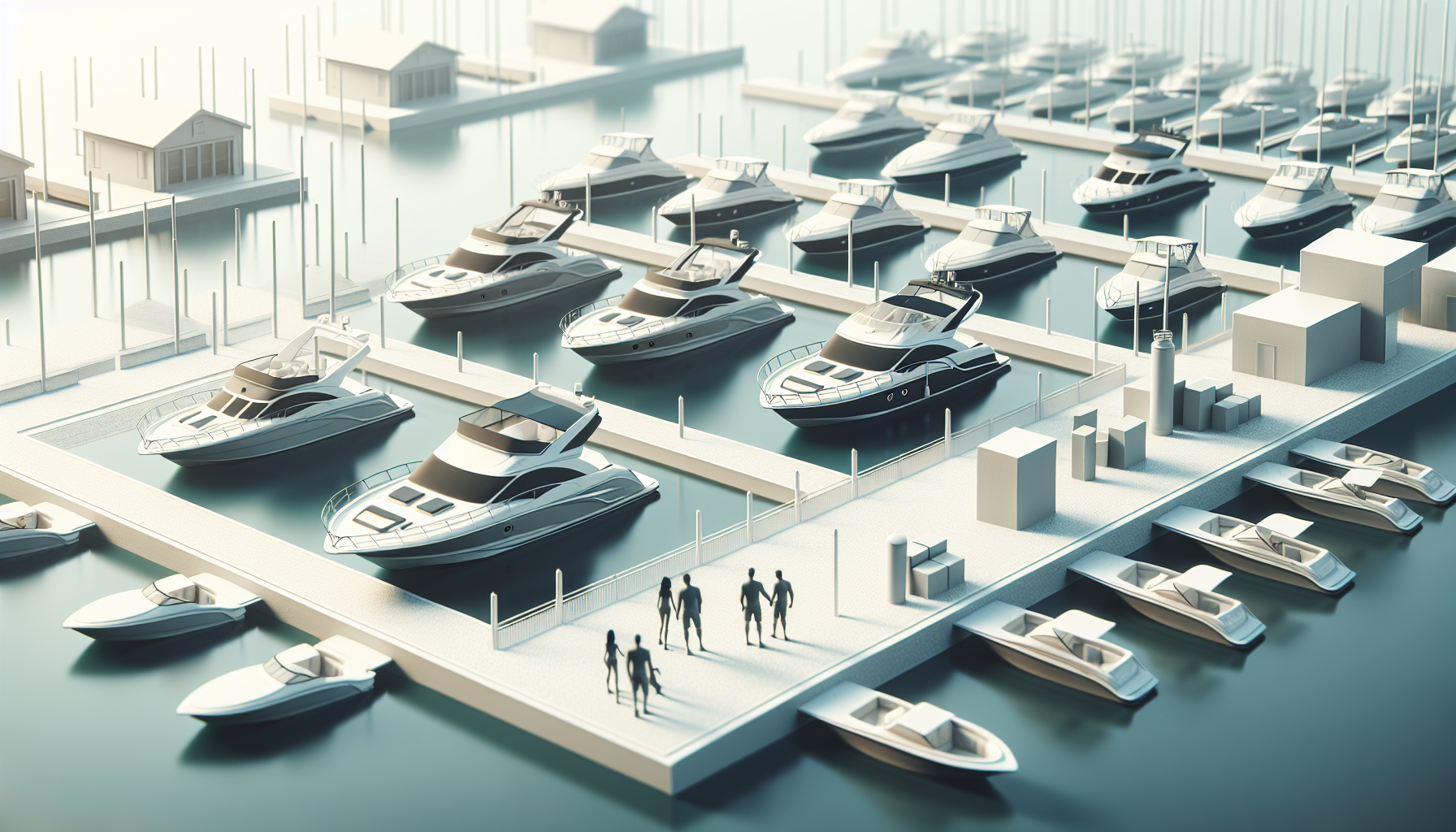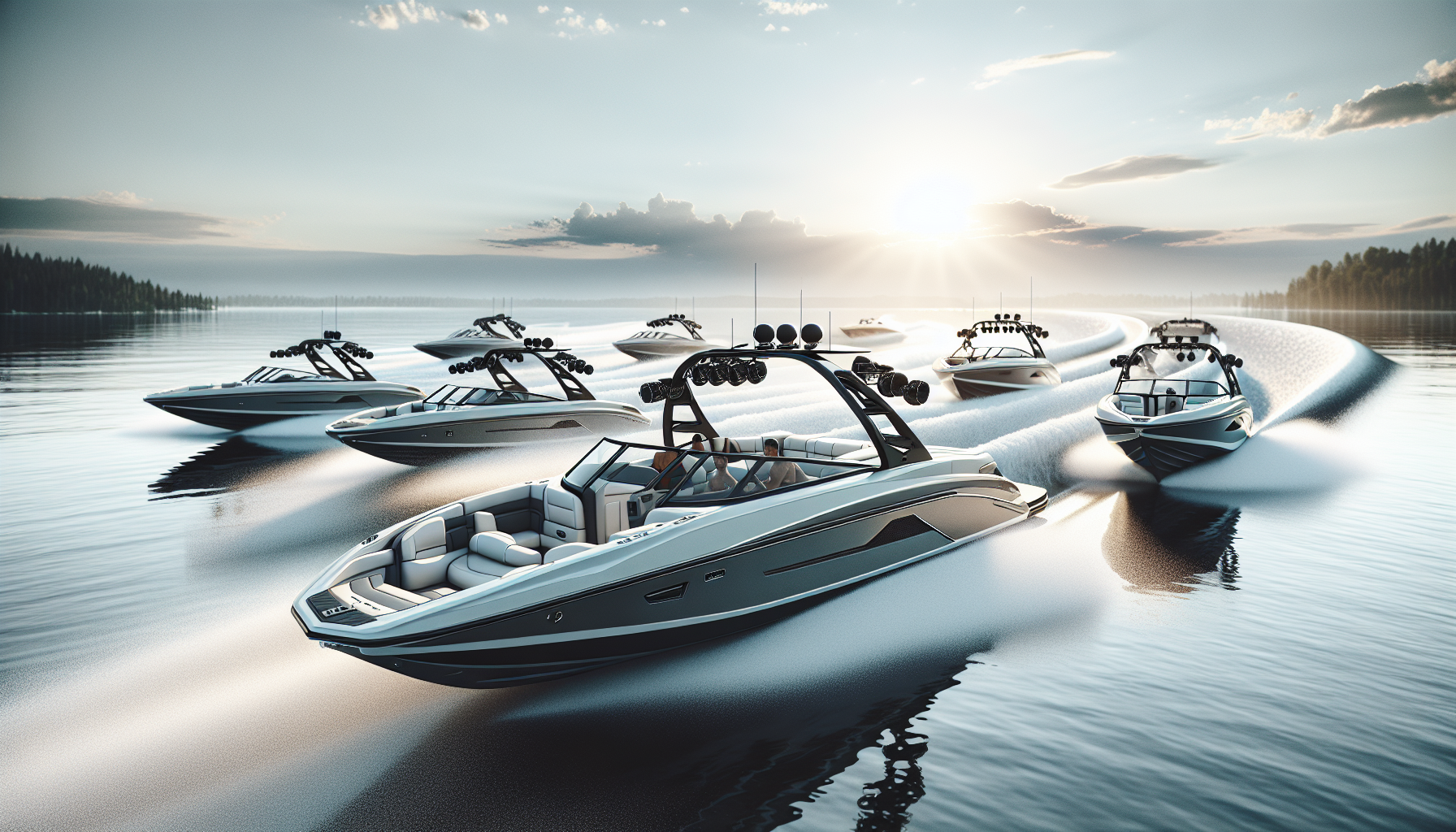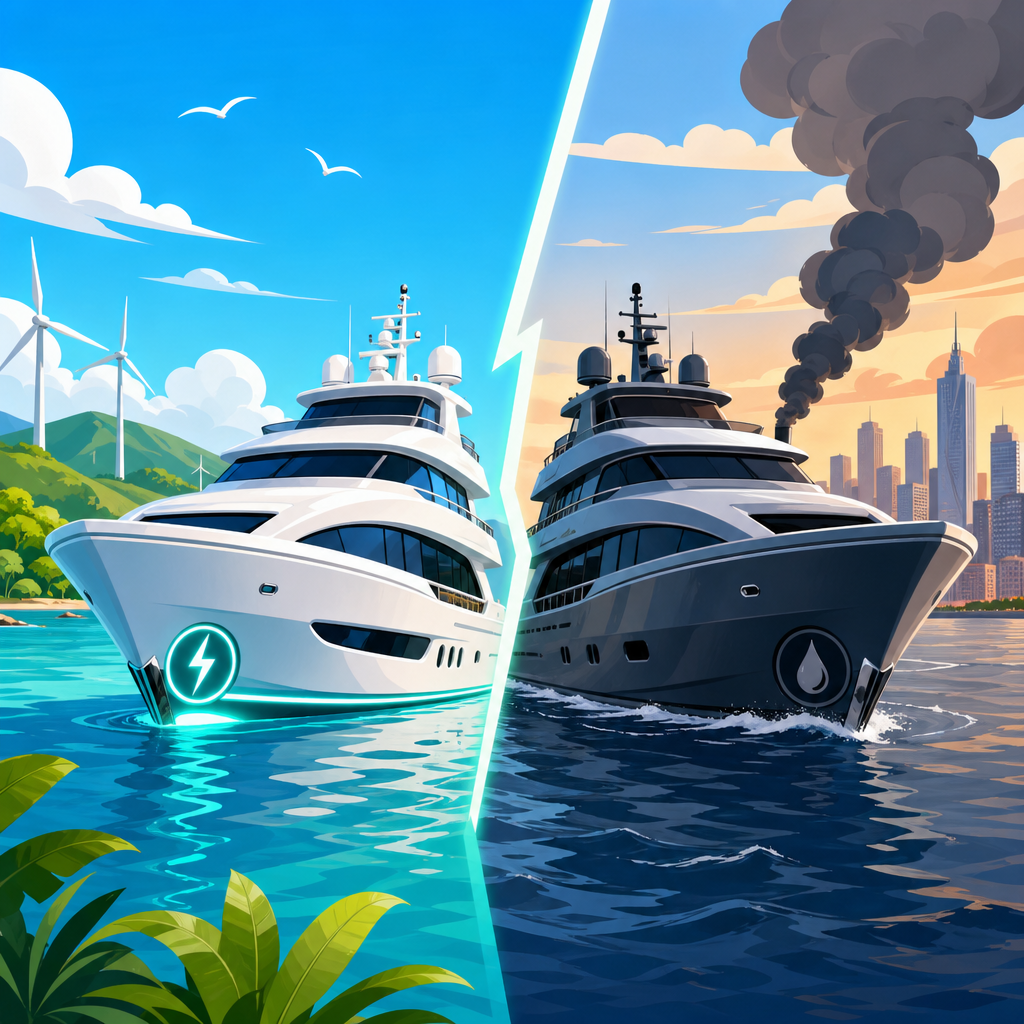
Electric vs. diesel luxury yachts is no longer a fringe debate reserved for boat shows and concept launches. It is now a central question for owners, builders, captains, brokers, and marina operators deciding what luxury yachting will look like over the next decade. In the high-end segment, a yacht is more than transport. It is a private resort, a statement of engineering, and a long-term asset shaped by fuel costs, emissions rules, onboard comfort, and resale demand. That is why this comparison matters within any serious guide to luxury yachts and high-end boats.
Before comparing the two, it helps to define the terms clearly. A diesel luxury yacht uses internal combustion engines as its primary propulsion system, often paired with diesel generators to power hotel loads such as air conditioning, stabilizers, lighting, refrigeration, watermakers, and entertainment systems. An electric luxury yacht uses battery-powered electric motors for propulsion, sometimes with solar input or shore charging, and often as part of a hybrid system that combines batteries with generators or conventional engines. In practice, the market today includes three categories: pure diesel, hybrid diesel-electric, and fully electric yachts.
I have spent years reviewing premium yachts, speaking with shipyards, and walking engine rooms where every design choice reveals a compromise between range, silence, speed, serviceability, and owner expectations. What becomes clear very quickly is that the future is not a simple winner-take-all contest. Luxury yacht design is shaped by physics as much as taste. Batteries are improving, but energy density still trails marine diesel by a wide margin. At the same time, owners increasingly want quieter cruising, lower operating emissions, easier marina compliance, and technology that feels current rather than legacy-bound.
This hub article covers the full luxury yachts and high-end boats landscape through the lens of propulsion. It explains how electric and diesel systems work, where each performs best, what builders are actually delivering, and which trends will define the next generation of superyachts, expedition yachts, day boats, and premium tenders. If you are comparing ownership costs, environmental impact, onboard experience, or investment value, this guide gives you the framework to judge the future of electric vs. diesel luxury yachts with realism rather than marketing spin.
How propulsion choice shapes the luxury yacht category
Propulsion is not an isolated technical decision. It influences hull design, machinery layout, noise levels, maintenance schedules, marina access, and even the guest experience. On a traditional diesel yacht, naval architects can count on dense onboard energy storage in fuel tanks, proven refueling infrastructure, and predictable performance at cruising and planing speeds. That is why diesel still dominates motor yachts from roughly 50 feet upward, especially in the long-range and superyacht sectors.
Electric propulsion changes the design brief. Batteries are heavy, volumetrically large, and expensive, but electric motors are compact, responsive, and exceptionally quiet. This creates opportunities for short-range luxury day boats, coastal cruisers, and hybrid displacement yachts optimized for low-speed efficiency. Builders such as Silent, X Shore, Frauscher, and Arc have shown that buyers will pay for premium electric boating when the use case fits: silent harbor departures, short excursions, waterfront hospitality, and high-tech ownership appeal. In larger yachts, companies such as Feadship, Sanlorenzo, Azimut, Sunreef, and Benetti are investing more heavily in hybrid architectures than in fully battery-electric ocean cruisers.
The reason is simple: luxury buyers expect uninterrupted comfort. A 70- to 120-foot yacht may need substantial continuous power not only for movement but also for hotel loads. Air conditioning alone can consume significant energy in Mediterranean and Caribbean conditions. Add gyro stabilizers, galley appliances, chilled storage, desalination, and entertainment systems, and battery reserves disappear quickly unless the yacht returns often to shore power or carries a range extender. That reality keeps diesel relevant even as electrification advances.
Performance, range, and onboard experience
For most buyers, the core question is practical: which propulsion system delivers the better real-world luxury experience? Diesel wins on range, refueling speed, and sustained offshore capability. A modern diesel motor yacht can run hundreds or thousands of nautical miles depending on hull type, tankage, and cruising speed. Expedition yachts and explorer vessels rely on this capability because remote cruising in Alaska, the South Pacific, Greenland, or the Red Sea demands dependable fuel logistics and robust service support.
Electric wins decisively on silence, instant torque, and low-speed refinement. The first time you leave a marina on battery power, the difference is striking. Conversation is easier. Vibration drops sharply. You hear water movement instead of engine clatter. For owners who use their boats for sunset cruises, short island hops, or premium guest entertainment, that sensory improvement is not a minor feature; it becomes part of the product’s value. Electric motors also deliver smooth acceleration and excellent maneuverability when integrated with advanced control systems.
Where electric still struggles is endurance. Even with efficient hulls, current battery technology limits practical range at useful speeds. That is why many of the most convincing premium electric vessels are smaller day boats or catamarans with lower speed expectations and supplemental solar generation. Hybrid yachts bridge the gap by allowing silent operation at low speed or at anchor while retaining diesel backup for passage making. In the luxury market, hybrids are often the most credible near-term answer because they improve comfort immediately without asking owners to accept major itinerary restrictions.
| Factor | Electric Luxury Yachts | Diesel Luxury Yachts |
|---|---|---|
| Noise and vibration | Very low, especially at harbor and low cruising speeds | Higher, though modern insulation reduces cabin impact |
| Range | Best for short coastal routes unless hybridized | Best for long passages and remote cruising |
| Refueling or recharging time | Charging can take hours and depends on marina power | Refueling is fast and widely available |
| Maintenance | Fewer moving parts in motors, but battery management is critical | Proven global service network, but more routine mechanical maintenance |
| Best use case | Day yachting, short-range luxury cruising, quiet anchoring | Superyachts, sport yachts, explorers, long-range itineraries |
Costs, infrastructure, and ownership realities
Purchase price and operating cost often shift the conversation from aspiration to reality. Today, electric and hybrid luxury yachts usually carry higher upfront costs because batteries, power electronics, thermal management systems, and integrated energy software add substantial expense. Custom engineering pushes that higher in the superyacht segment. Diesel remains cheaper to buy at scale because the supply chain is mature, engine packages are standardized, and yards know exactly how to build around them.
Operating costs are more nuanced. Electric propulsion can reduce routine mechanical maintenance because electric motors have fewer wear components than combustion engines. There is no oil change for a propulsion motor, and regenerative or load-balancing systems can improve efficiency in certain profiles. However, battery packs degrade over time, cooling systems must be managed carefully, and replacement costs can be significant. Owners should ask about cycle life, warranty terms, thermal runaway safeguards, and the supplier’s long-term support plan.
Infrastructure remains one of the biggest barriers to full electrification in luxury yachting. High-capacity charging is still inconsistent across marinas, especially outside major Mediterranean and North American hubs. Shore power quality also varies. A yacht designed around frequent fast charging will only perform as promised if marina electrical systems can support that demand. Diesel, by contrast, benefits from global bunkering infrastructure built over generations. That logistical advantage matters to charter programs and itineraries that cannot revolve around charger availability.
Resale value is another key ownership factor. Diesel yachts currently enjoy broader buyer familiarity and easier survey evaluation. Electric and hybrid vessels may attract strong interest from tech-forward owners, but secondary market pricing depends heavily on confidence in battery health and software support. As standards mature, that concern should ease. For now, prudent buyers treat battery documentation the way aircraft buyers treat engine hours and maintenance logs: as core value drivers, not side notes.
Environmental impact, regulation, and brand positioning
The environmental case for electric propulsion is compelling but must be discussed honestly. At the point of use, battery-electric yachts produce no tailpipe emissions and drastically reduce local air pollution, noise, and odor in marinas, anchorages, and near sensitive coastlines. That can improve the onboard experience and align with tightening environmental expectations in premium waterfront destinations. For yacht clubs, resort marinas, and urban harbors, quieter low-emission vessels are attractive for both operational and brand reasons.
Yet total environmental impact depends on the full energy chain. Electricity may come from renewable or fossil-heavy grids, and battery manufacturing has its own material footprint involving lithium, nickel, cobalt, graphite, and complex global supply chains. Diesel also varies in impact depending on engine efficiency, aftertreatment systems, vessel speed, and fuel type. Renewable diesel, shore power use at berth, optimized routing, waste heat recovery, and hybrid hotel systems can materially reduce emissions even on conventional yachts.
Regulation is accelerating change. The International Maritime Organization’s broader decarbonization pressure, local emissions rules, no-idling policies, and marina sustainability standards are all pushing builders to offer cleaner solutions. Classification societies such as DNV, Lloyd’s Register, and Bureau Veritas are developing clearer frameworks for battery installations, fire safety, and hybrid integration. In my conversations with builders, this regulatory direction is now treated as a design input, not a future possibility. Owners commissioning large yachts increasingly ask about emissions strategy alongside speed, draft, and interior volume.
Brand positioning also matters. Luxury buyers often want innovation that is visible and meaningful. A silent electric tender, a hybrid beach club power system, or zero-emission port entry can become part of the yacht’s identity. Builders know this. That is why even traditionally conservative shipyards are introducing battery banks, methanol studies, fuel-cell pilots, and energy dashboards that make efficiency legible to owners and guests.
What the future looks like for luxury yachts and high-end boats
The future of luxury yachts will be segmented, not uniform. Fully electric propulsion will grow fastest in smaller premium boats, luxury tenders, chase boats, day cruisers, lake yachts, and short-range coastal catamarans where charging is accessible and quiet operation is a primary selling point. In these categories, electric is not just viable; it is often superior. Owners get lower noise, cleaner marinas, simplified operation, and a distinctly modern product experience.
Diesel will remain dominant longer in large motor yachts, planing sport yachts, and expedition vessels because energy density still determines range, payload, and speed. No current battery system can economically replace the endurance of liquid fuel for a serious ocean-going superyacht without major sacrifices in interior volume or mission profile. That is why predictions of diesel’s immediate disappearance are not credible.
The strongest medium-term trend is hybridization. Expect more yachts with battery-assisted propulsion, intelligent energy management, peak shaving, silent anchoring modes, and optimized generator use. This approach solves present-day owner pain points while preparing platforms for future fuels and stricter regulation. It also gives yards flexibility as battery chemistry, charging standards, methanol systems, and hydrogen-adjacent technologies continue to evolve.
For readers exploring the broader world of luxury yachts and high-end boats, the most useful takeaway is this: match propulsion to how the yacht will actually be used. If your boating life centers on coastal leisure, premium day trips, and quiet marina departures, electric deserves serious attention today. If you need transoceanic capability, charter reliability, or remote cruising freedom, diesel still sets the benchmark. If you want the clearest view of the future, look at the best hybrid yachts entering the market now. They show where the industry is heading: cleaner, quieter, smarter, and increasingly electrified without pretending physics has already changed.
That makes the answer to electric vs. diesel luxury yachts straightforward. Electric is the future in parts of the market. Diesel remains the present and near future for large-range luxury cruising. Hybrid technology is the bridge connecting both worlds, and in many premium applications it is already the most intelligent choice. Use this hub as your starting point for deeper reviews, model comparisons, and buyer guides across the best boats and reviews category, then evaluate each yacht by range, comfort, support network, and real usage rather than trend alone.
Frequently Asked Questions
Are electric luxury yachts likely to replace diesel yachts completely in the future?
Electric luxury yachts are unlikely to replace diesel yachts completely in the near term, but they are expected to take a much larger share of the market as technology improves and regulations tighten. The future is more likely to be mixed rather than all-or-nothing. Pure electric yachts are especially promising for shorter-range cruising, day yachting, harbor use, and owners who prioritize quiet operation, low local emissions, and a more modern onboard experience. Diesel yachts, however, still hold a major advantage for long-distance passages, higher sustained speeds, and destinations where charging infrastructure is limited or unreliable.
In the luxury segment, the answer depends heavily on usage profile. Owners who spend most of their time cruising coastal routes between well-equipped marinas may find electric models increasingly practical. By contrast, owners who want true bluewater capability, remote-island itineraries, or long cruising seasons without careful recharge planning may continue to favor diesel or hybrid propulsion for years to come. What is becoming clear is that diesel no longer has an uncontested future. Emissions pressure, rising fuel costs, buyer interest in cleaner technology, and advancements in battery systems are steadily pushing the market toward electrification, even if that transition happens in stages rather than overnight.
What are the biggest advantages of electric luxury yachts over diesel models?
Electric luxury yachts offer several compelling advantages, particularly for owners focused on comfort, sustainability, and operating efficiency. One of the most noticeable benefits is the onboard experience. Electric propulsion is dramatically quieter than diesel, with less engine noise, vibration, and mechanical harshness. In a luxury environment, that matters. A quieter yacht improves guest comfort, makes sleeping cabins more peaceful, enhances dining and entertaining areas, and creates a more refined sense of travel that aligns well with premium expectations.
Another major benefit is emissions reduction. Electric yachts produce no exhaust emissions at the point of use, which is increasingly important as ports, marinas, and coastal regulators introduce stricter environmental standards. For buyers concerned about their environmental footprint, electric propulsion offers a more future-facing solution, especially when charged with cleaner shore power sources. Maintenance can also be simpler in some respects. Electric drivetrains typically have fewer moving parts than diesel engines, which can mean less routine mechanical servicing, fewer fluid changes, and potentially lower long-term maintenance complexity. In addition, electric systems often deliver instant torque and smooth acceleration, which improves maneuverability and responsiveness during docking and low-speed handling. Altogether, these benefits make electric yachts highly attractive for a growing segment of luxury buyers who value innovation, comfort, and cleaner cruising.
Why do diesel luxury yachts still remain competitive despite the push toward electrification?
Diesel luxury yachts remain competitive because they continue to solve practical problems that electric systems have not yet fully overcome at larger scales. The most important issue is energy density. Diesel fuel stores far more usable energy per unit of weight and volume than current battery technology, which gives diesel yachts a clear advantage in range and endurance. For larger luxury yachts carrying tenders, water toys, stabilizers, hotel loads, air conditioning, and extensive guest amenities, that matters enormously. Owners do not just buy propulsion; they buy a floating lifestyle platform that must support comfort and reliability over long periods.
Infrastructure is another major reason diesel remains relevant. Fueling networks for marine diesel are widespread and familiar, while high-capacity charging infrastructure for large yachts is still developing unevenly across regions. Captains and owners value predictability, and diesel offers a mature global support system that includes fueling, servicing, spare parts, and experienced technicians. Diesel also remains attractive from a scheduling standpoint. Refueling is generally much faster than recharging large battery banks, which can be critical for charter operations or owners who want flexibility without long marina stays. In short, diesel remains competitive not because it is future-proof, but because it is proven, practical, and deeply embedded in current yachting operations.
How do cost, resale value, and long-term ownership compare between electric and diesel luxury yachts?
The cost comparison between electric and diesel luxury yachts is more nuanced than simply looking at the purchase price. Electric yachts often come with higher upfront costs due to battery systems, advanced power management, and newer technology integration. However, operating costs may be lower in certain use cases, especially where shore power is affordable and cruising distances are moderate. Electric propulsion can reduce fuel spending significantly and may also lower some maintenance costs because there are fewer traditional engine components subject to wear. That said, battery replacement cycles, system upgrades, and specialized servicing must also be considered in any serious ownership calculation.
Resale value is currently one of the most interesting factors in this market. Diesel yachts still benefit from a larger established buyer base and clearer performance expectations, which can support resale in the short term. But over time, market sentiment may shift. As sustainability becomes a stronger buying criterion and emissions rules become stricter, well-designed electric or hybrid yachts could gain stronger resale appeal, particularly among younger luxury buyers and owners based in regions with aggressive environmental regulation. Long-term ownership decisions should therefore be based on expected cruising patterns, marina access, maintenance support, and future compliance risk. Buyers who think strategically about where the market is heading, rather than where it has been, may see electrified yachts as a stronger asset in the years ahead.
Is hybrid propulsion the most realistic future for luxury yachts?
For many segments of the luxury yacht market, hybrid propulsion is currently the most realistic bridge between traditional diesel power and fully electric operation. Hybrid systems combine the strengths of both technologies by allowing electric operation in low-speed or short-range scenarios while retaining diesel capability for longer voyages and higher energy demands. This gives owners more flexibility. They can cruise quietly in harbors, protected bays, or environmentally sensitive areas using electric power, then switch to diesel when range, speed, or charging limitations make that necessary.
From an industry perspective, hybrids are attractive because they reduce risk while still moving the market forward. Builders can offer meaningful fuel savings, quieter operation, and lower emissions without forcing owners to depend entirely on a charging network that may not yet be ready for every itinerary. Hybrid systems also fit the reality of luxury yacht usage, where propulsion is only one part of the energy picture. Hotel loads, climate control, navigation systems, and guest amenities all place heavy demands on onboard power. A well-engineered hybrid platform can manage those demands more efficiently while giving owners a more future-ready vessel. For that reason, many experts view hybrid yachts not as a compromise, but as the most practical next step in the evolution of luxury yachting.