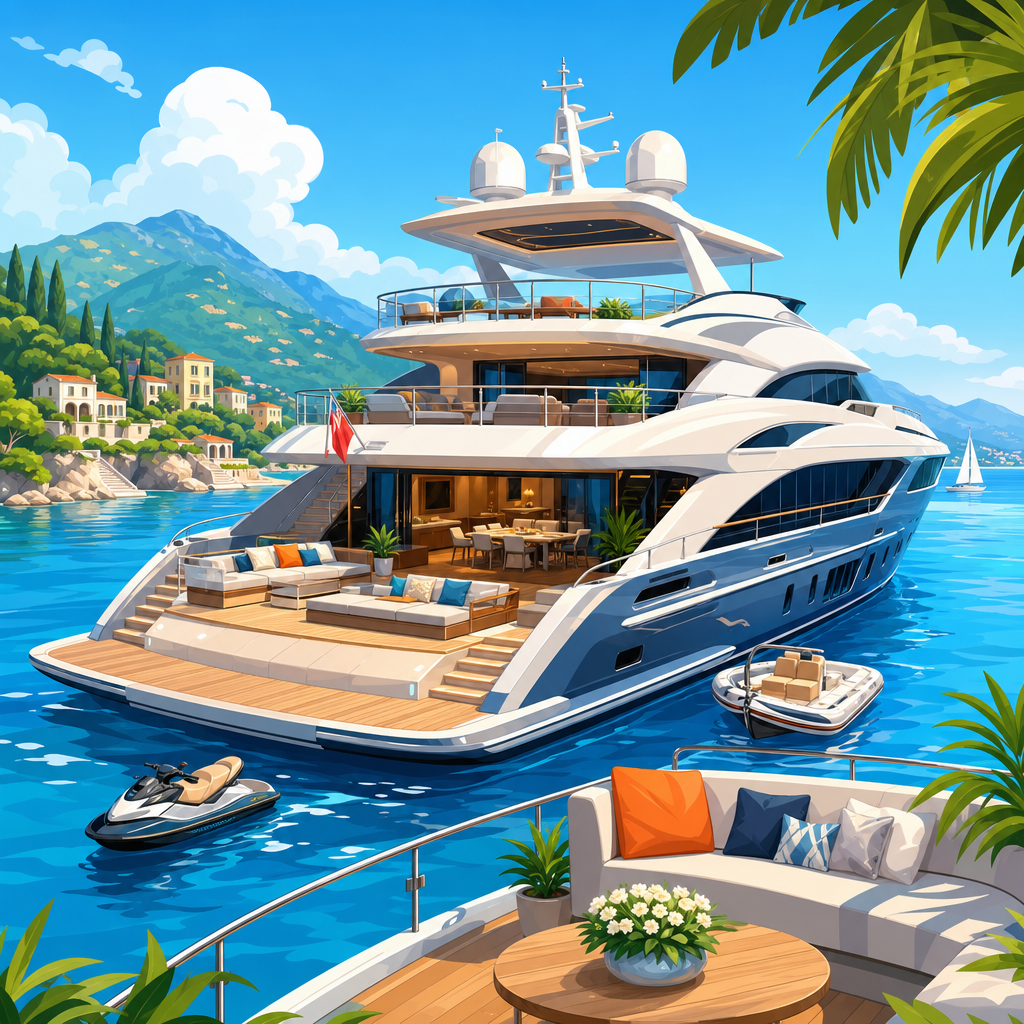
Best custom-built yachts for personalized luxury combine naval architecture, interior design, engineering, and owner lifestyle into a single floating residence. In the luxury yachts and high-end boats market, “custom-built” means a yacht created around an owner’s exact priorities rather than selected from a fixed production template. That can include a bespoke hull platform, fully tailored deck arrangement, unique spa or beach club spaces, hybrid propulsion, helicopter capability, or interior styling commissioned from a noted design studio. I have worked with buyers comparing semi-custom and full-custom projects, and the difference is decisive: a production yacht asks you to adapt to the boat, while a true custom yacht adapts the boat to you. For owners investing tens of millions, that distinction is the entire point.
This hub article covers the leading custom yacht builders, the design choices that most affect the ownership experience, the build process, operating realities, and how to evaluate a yacht beyond glossy brochures. It matters because high-end yacht ownership is no longer defined only by length or speed. Today’s serious buyers want privacy, long-range efficiency, wellness amenities, expedition capability, silent operation at anchor, and a layout that supports family use, charter revenue, or global cruising plans. A well-executed custom superyacht can deliver all of that. A poorly specified one can lock in expensive compromises for decades. If you are researching luxury yachts and high-end boats, this page gives you the framework to compare the best custom-built yachts with clarity.
What makes a custom-built yacht different from a semi-custom or production luxury yacht
A custom-built yacht starts with an owner brief, not a model number. The naval architect defines hull form, beam, draft, and displacement around intended use. The shipyard then engineers systems, accommodations, tankage, storage, crew workflow, and technical spaces to match that mission. By contrast, a semi-custom yacht usually starts from an established platform where owners can personalize interiors, finishes, and some layout elements while keeping the hull and core engineering package unchanged. A production yacht offers even less flexibility, though many premium brands still provide extensive decor choices.
The practical difference appears in everyday use. A family planning Mediterranean summers and Caribbean winters may prioritize fold-down sea terraces, a children’s bunk arrangement, a compact gym, and generous tender storage. An owner focused on transoceanic passages may want higher fuel capacity, reinforced structure, advanced stabilization, and a bridge configured for professional long-range navigation. Those goals often conflict, and only a custom project resolves them without forcing awkward compromises. That is why the best custom-built yachts begin with usage scenarios: owner trips, guest count, charter intentions, operating regions, and crew size.
Custom also affects resale, timeline, and budget. Fully bespoke yachts generally require more design time, more classification coordination, and stricter change control during construction. They can reward the owner with a stronger identity and a better fit for intended use, but highly specialized features may narrow resale appeal. In practice, the strongest custom yachts balance individuality with proven standards. The best projects borrow reliable technical solutions from commercial shipbuilding while keeping the visible experience personal, elegant, and unmistakably private.
Top custom yacht builders setting the standard in personalized luxury
When buyers ask which yards dominate the custom superyacht segment, several names consistently lead because they combine engineering depth, design flexibility, and delivery credibility. Feadship remains one of the clearest benchmarks for full-custom luxury yachts, known for Dutch build quality, meticulous systems integration, and exceptionally refined owner finishes. Feadship projects regularly showcase advanced noise and vibration control, a detail that matters more to comfort than headline speed. Lürssen operates at the very top of the megayacht market, delivering very large custom vessels with complex technical briefs, from helipads to submarine garages and extensive wellness decks.
Benetti and Codecasa represent Italian strength in custom and semi-custom luxury yachts, blending elegant styling with proven project execution. Benetti’s custom division has produced globally recognized yachts across a wide size range, often with strong charter appeal. Oceanco is a major force for ambitious, design-led custom yachts, especially for owners seeking innovation in profile, sustainability systems, and dramatic onboard spaces. Amels is especially respected for its limited-edition approach, a sophisticated bridge between semi-custom efficiency and custom personalization. Heesen, though strongly associated with semi-custom aluminum performance yachts, also deserves attention for owners who value speed, Dutch engineering, and lighter-displacement expertise.
For explorer-style custom yachts, Damen Yachting, formerly linked closely with support vessels and expedition concepts, stands out for integrating commercial-grade capability with luxury execution. Royal Huisman remains exceptional for custom sailing yachts and advanced motoryachts where craftsmanship and engineering precision are central. Turquoise, Tankoa, Rossinavi, Admiral, and CRN are all important names depending on size, style, and technical ambition. The right yard is not simply the most famous one. It is the one whose engineering culture, project management discipline, and after-sales support align with your intended use and tolerance for complexity.
| Builder | Primary Strength | Best Fit For | Notable Advantage |
|---|---|---|---|
| Feadship | Full-custom Dutch engineering | Owners wanting top-tier refinement | Outstanding finish quality and technical integration |
| Lürssen | Large custom megayachts | Complex, high-budget flagship projects | Scale, confidentiality, and engineering depth |
| Oceanco | Design-forward innovation | Owners prioritizing standout concepts | Strong collaboration with elite design studios |
| Benetti | Custom Italian luxury | Owners balancing style and brand heritage | Broad experience and global recognition |
| Amels | Limited-edition customization | Buyers seeking reduced build risk | Efficient platform with meaningful personalization |
| Damen Yachting | Explorer and support capability | Adventure-focused global cruising | Commercial-grade robustness |
Design decisions that define luxury on a personalized yacht
The best custom-built yachts are remembered less for isolated features than for how intelligently those features work together. Layout is the first major decision. Many owners now prefer a main-deck owner’s suite with private foredeck access, while others reserve that premium space for a full-beam salon and place the owner cabin above for panoramic views. Beach clubs have evolved from simple swim platforms into climate-controlled leisure areas with bars, steam rooms, fold-out terraces, and direct gym access. On yachts over roughly 60 meters, the circulation pattern between guest and crew spaces becomes critical. A beautiful interior loses value quickly if service routes interrupt privacy.
Interior design must translate taste into marine practicality. Materials need to meet fire standards, resist movement, and tolerate salt-laden air. Lightweight stone veneers, engineered flooring systems, and acoustic insulation packages often outperform conventional residential choices. Leading studios such as Winch Design, Reymond Langton, Sinot, Terence Disdale, and Bannenberg & Rowell understand this balance. They design for drama without compromising weight targets, maintenance access, or classification requirements. Owners who insist on residential solutions without marine adaptation usually pay later in repairs, vibration issues, or safety redesigns.
Technology now shapes luxury just as much as marble or rare wood. Zero-speed stabilizers from suppliers such as Naiad Dynamics, Quantum, and Sleipner dramatically improve comfort at anchor. Integrated AV and smart control systems can manage lighting scenes, blinds, climate, security, and media from a single interface. Hybrid propulsion and battery-supported hotel loads reduce noise and fuel burn during low-speed operations. Water treatment, HVAC zoning, and sound isolation are less glamorous than an infinity pool, but in real ownership they determine whether the yacht feels genuinely restful. Quiet cabins, low vibration, and stable temperatures are the true marks of sophisticated design.
Luxury yachts and high-end boats: matching yacht type to owner lifestyle
As a hub for luxury yachts and high-end boats, this page should help buyers identify which yacht category fits their lifestyle before they compare builders. A displacement superyacht is the classic choice for comfort, volume, and long-range cruising. These yachts are efficient at lower speeds, offer large interior spaces, and support serious amenities such as cinemas, spas, and full garages. A fast-displacement or semi-displacement yacht suits owners who want a blend of range and higher cruising speed, often useful for island-hopping itineraries where time matters.
Explorer yachts appeal to owners planning remote cruising in Norway, Alaska, Patagonia, or the South Pacific. They typically feature higher bows, robust tankage, greater storage, stronger crane capacity, and more practical deck arrangements for tenders and toys. Sporty custom motoryachts emphasize speed and sleek styling, but the tradeoff can be reduced interior volume and less efficient long-range operation. Custom sailing yachts deliver a different kind of luxury: lower fuel consumption, a strong connection to the sea, and often extraordinary craftsmanship, though sail handling, mast engineering, and deck safety become central design concerns.
There is also a strategic ownership question: private use, charter use, or mixed use. Charter-focused layouts usually increase guest flexibility with convertible cabins, stronger audiovisual zones, more visible leisure features, and service patterns designed for frequent guest turnover. Purely private yachts can be more idiosyncratic, from dedicated art display walls to owner-only terraces or specialized wellness suites. The best yacht for personalized luxury is the one optimized for the owner’s real calendar, not an imaginary life built from marina gossip or social media trends.
The custom yacht build process, timeline, and cost realities
A full custom yacht typically moves through six phases: concept and brief, design development, contract and specification, engineering, construction, and sea trials with final delivery. In early meetings, I always push owners to define non-negotiables first: cruising region, passenger numbers, tender inventory, privacy expectations, target delivery date, and annual operating budget. Without those anchors, projects drift into costly revisions. Once a concept is chosen, the owner’s team usually includes a broker, maritime lawyer, owner’s representative, designer, and technical surveyor. On larger projects, classification society and flag-state discussions begin early because compliance can significantly affect layout and equipment choices.
Classification commonly involves Lloyd’s Register, ABS, Bureau Veritas, or RINA, while flag options may include Cayman Islands, Marshall Islands, or Malta depending on use case. Build contracts should clearly define stage payments, permissible tolerances, equipment lists, warranty terms, delay provisions, and change-order procedures. That last point is where budgets often expand. A custom cinema, larger pool, heavier stone package, or revised staircase sounds manageable in isolation, but each change can affect weight, stability calculations, electrical loads, and delivery timing. On large yachts, one owner change can ripple through multiple engineering disciplines.
Costs extend far beyond construction. Annual operating expenses often run near 10 percent of capital cost, though the ratio varies with size, crew count, fuel use, and maintenance cycle. Refit planning matters from day one. Paint, teak, classification surveys, machinery overhauls, and electronics updates are inevitable. Buyers also need realistic expectations about crew. A 50-meter yacht may require around nine to twelve crew depending on operation, while larger yachts can need significantly more. Personalized luxury succeeds only when the yacht is maintainable, safely crewed, and economically sustainable over years of use.
How to evaluate the best custom-built yachts before purchase or commission
Start with evidence, not renderings. Review a yard’s delivered yachts, not only concept images. Ask about on-time delivery rate, warranty response, owner references, and the experience level of the project management team assigned to your build. Inspect engine room access, technical labeling, bilge finish, pipe runs, cable management, redundancy planning, and crew workflow. These details reveal whether the yacht has been engineered for real operation or merely styled for first impressions. An immaculate machinery space is not cosmetic; it usually signals disciplined systems thinking throughout the vessel.
Sea trials and onboard walkthroughs should focus on comfort and usability. Measure sound levels in guest cabins at cruising speed. Assess vibration in the owner suite and upper deck. Evaluate sightlines from the bridge and docking stations. Check whether tenders can be launched efficiently in moderate conditions. Review storage for provisions, watersports gear, linens, and spare parts. A yacht that photographs beautifully but handles poorly in service areas will frustrate owner and crew alike. Good custom yachts feel coherent from lazarette to sundeck.
Finally, compare values across the ownership cycle. New custom construction offers total personalization and the latest engineering, but it requires patience and close project oversight. A recently delivered custom yacht on the brokerage market can shorten the timeline and reduce early depreciation, provided the prior owner’s layout aligns with your needs. In either case, use an experienced owner’s representative and independent survey support. Personalized luxury is achieved through disciplined decisions, not impulse. Explore the related reviews in this luxury yachts and high-end boats hub, shortlist the builders that fit your mission, and start your brief with how you truly plan to live on the water.
Frequently Asked Questions
1. What makes a custom-built yacht different from a semi-custom or production yacht?
A custom-built yacht is designed around the owner first, not around a pre-existing showroom model. In practical terms, that means the naval architecture, engineering package, general arrangement, interior layout, onboard amenities, and even technical priorities are developed to match the owner’s lifestyle and intended use. If an owner wants an oversized beach club, a spa deck, a helipad, a wellness-focused owner’s suite, explorer-level range, hybrid propulsion, or a family-centric layout with flexible guest cabins, those requirements can be built into the yacht from the beginning rather than adapted later.
By contrast, production yachts are built from standardized templates. Buyers typically choose from a fixed hull, a limited range of layouts, and a menu of finishes or equipment options. Semi-custom yachts sit in the middle: they usually share an existing platform or engineering architecture, but allow meaningful personalization in areas such as interior styling, deck use, cabin arrangement, and selected onboard systems. For many buyers, semi-custom offers a good balance of flexibility and faster delivery, but it still works within predetermined technical boundaries.
The key advantage of full custom construction is integration. Instead of compromising between style, performance, and function, the yacht can be engineered as one coherent concept. That matters because major owner requests often affect stability, weight distribution, crew flow, storage, noise control, and operational efficiency. A successful custom yacht is not just visually unique; it is purpose-built so that design ambition, comfort, and seaworthiness all work together at the highest level.
2. How do owners decide what features to include in the best custom-built yachts for personalized luxury?
The best decisions usually start with how the yacht will actually be used. Experienced owners and project teams begin by defining the mission profile: Mediterranean entertaining, world cruising, family holidays, charter potential, wellness retreats, expedition travel, or a mix of all of these. From there, the specification becomes much clearer. An owner focused on long-range cruising may prioritize fuel efficiency, robust engineering, storage, and crew capability. An owner who entertains heavily may place more emphasis on deck circulation, dining areas, a beach club, audiovisual systems, and dramatic social spaces.
Lifestyle preferences shape nearly every major design choice. Some owners want a private apartment-style owner’s deck with office, terrace, and spa bath. Others prioritize children’s cabins, wellness studios, cinema rooms, wine cellars, beauty salons, dive centers, or toy garages for tenders, submarines, and water sports equipment. Increasingly, clients also request environmentally conscious features such as hybrid propulsion, battery support for silent operation at anchor, heat recovery systems, advanced wastewater treatment, and lower-emission materials.
Interior design is another defining area. Personalized luxury does not simply mean using expensive materials; it means creating an atmosphere that reflects the owner’s taste and habits. That could range from contemporary minimalism with architectural lighting and clean lines to classic craftsmanship with rare woods, stonework, and artisan detailing. The strongest custom projects achieve a balance between aesthetics and usability, ensuring that every room feels elegant but also practical at sea. In top-tier projects, the owner’s vision is translated into a yacht that feels like a true private residence, not a generic luxury vessel.
3. How long does it take to build a fully custom luxury yacht, and what does the process involve?
A fully custom luxury yacht typically takes several years from concept to delivery, with timing depending on size, complexity, shipyard capacity, and regulatory requirements. For large superyachts, a realistic timeline often includes an extended design and engineering phase followed by a lengthy build period. Smaller custom projects may move faster, while highly complex builds with new technology, unusual layouts, or advanced technical systems can take considerably longer. The reason is simple: a true custom yacht is effectively a one-off creation that requires intensive coordination among designers, naval architects, engineers, classification societies, and the shipyard.
The process usually begins with owner briefing and concept development. During this stage, the owner, broker or representative, designer, and shipyard define the vision, dimensions, style, operational needs, and budget framework. Next comes feasibility work, where naval architecture, engineering constraints, weight estimates, and regulatory compliance are assessed. Once the project is approved, detailed design and engineering move forward. This is where layout plans, structural design, machinery systems, electrical infrastructure, technical spaces, and interior detailing are fully developed.
Construction follows in phases such as hull fabrication, superstructure assembly, machinery installation, outfitting, interior completion, and systems integration. Sea trials are then conducted to verify performance, safety, comfort, and technical functionality. After delivery, there is usually a support period for final adjustments and optimization. The most successful owners understand that custom yacht construction is not a simple purchase but a managed development project. Patience, expert representation, and clear decision-making are essential to achieving a yacht that delivers both personalized luxury and long-term reliability.
4. What should buyers look for in a shipyard and design team when commissioning a custom yacht?
Buyers should start with proven capability, not just reputation. A shipyard may be famous for beautiful launches, but what matters most is whether it has direct experience delivering yachts in the size range, complexity level, and technical style the owner wants. If the project includes hybrid systems, a large wellness area, an owner’s deck, helicopter operations, or expedition-grade engineering, the yard should be able to demonstrate successful execution of similar features. Build quality, systems integration, after-sales support, and project management discipline are just as important as exterior styling.
The design team should also be evaluated as a collaborative partner rather than a purely artistic one. Great yacht designers do more than create attractive renderings. They understand circulation, privacy, sightlines, structural realities, regulatory limits, and how life onboard actually works for owners, guests, and crew. The best teams listen closely, challenge weak assumptions when needed, and translate lifestyle ambitions into feasible design solutions. That is especially important in custom builds, where one owner request can impact stability, technical layouts, maintenance access, and classification compliance.
Owners should also assess transparency and communication. A custom yacht is a long, expensive project with thousands of decisions, so the ability of the shipyard and design team to communicate clearly is crucial. Detailed schedules, cost reporting, change-order controls, mock-ups, material samples, and milestone reviews help keep the build aligned with expectations. Many experienced clients also appoint an owner’s representative or project manager to protect their interests throughout construction. In the luxury market, the best custom-built yachts are rarely the result of design talent alone; they come from disciplined teamwork between a capable shipyard, an intelligent design team, and an owner with a clear vision.
5. Are custom-built yachts a better long-term investment for luxury buyers?
A custom-built yacht should generally be viewed first as a lifestyle asset rather than a purely financial investment. Like most luxury assets, yachts involve substantial capital outlay, operating costs, maintenance, crew expenses, refit planning, insurance, and technical management. However, a well-conceived custom yacht can deliver strong long-term value in ways that go beyond resale price alone. If the yacht is built correctly, optimized for the owner’s intended use, and maintained to a high standard, it can provide an exceptional ownership experience that a compromise vessel may never achieve.
From a market perspective, resale value depends on several factors: pedigree of the shipyard, design reputation, timeless styling, technical quality, maintenance history, age, classification status, and how broadly appealing the layout is to future buyers. Extremely niche customization can sometimes limit resale appeal, while thoughtful personalization paired with balanced, functional design can enhance desirability. In other words, the smartest custom yachts reflect the owner’s vision without becoming so specific that they are difficult to reposition in the brokerage market later.
There can also be strategic value in future-proofing the yacht. Buyers who invest in efficient engineering, quality technical systems, adaptable spaces, strong crew logistics, and lower-impact propulsion options may benefit from better long-term usability and stronger market relevance. In the high-end yachts and luxury boats segment, the best custom-built yachts are often those that combine emotional satisfaction with intelligent planning. They are not simply extravagant purchases; they are carefully developed platforms for private travel, entertainment, and personal expression that can remain compelling for many years when built with quality, restraint, and purpose.