Rough seas expose every weakness in a boat, a passage plan, and a skipper’s judgment, which is why choosing the right vessel and knowing what to do when conditions deteriorate belong in the same conversation. In practical boating terms, rough water usually means wave heights, periods, and wind strengths that overwhelm a hull’s ability to maintain control comfortably and safely. That threshold varies by craft. A twenty-four-foot center console in a short, steep inlet chop can feel more dangerous than a forty-foot trawler in longer offshore swells. The best boats for rough waters are not simply the biggest or most expensive models. They are boats with hull forms, displacement, freeboard, construction quality, power, and safety systems matched to the sea state they are expected to face.
I have run offshore fishing boats, pilothouse craft, and heavier cruising hulls in confused chop, following seas, and breaking coastal bars, and the lesson is always the same: preparation matters, but design matters first. A well-built boat can reduce pounding, improve directional stability, shed water fast, and give the operator more time to make sound decisions. A poorly matched boat can turn a manageable weather window into a survival problem. That is why this hub article combines seamanship with boat selection. Readers searching for the best boats for rough waters usually have two immediate questions: what should I do if I get caught out there, and what kind of boat gives me the best margin when I do.
This guide answers both directly. It explains the traits that define rough-water capability, compares major boat categories, outlines the actions that keep crews safest when seas build unexpectedly, and helps you evaluate tradeoffs without marketing hype. If you boat offshore, cross large bays, transit inlets, or operate on big inland lakes where wind can stack steep waves quickly, understanding rough-water design is not optional. It is central to buying well, boating confidently, and getting home safely.
What to Do Immediately If You Get Caught in Rough Seas
If you get caught in rough seas, slow down, secure everyone in life jackets, trim and throttle for control rather than speed, and take waves at the safest angle your boat and route allow. That is the short answer, but execution matters. Start by getting all passengers seated low and inside the boat’s most protected area. Close hatches, secure loose gear, and check that bilge pumps are running properly. If anyone is on deck unnecessarily, bring them inboard. In many incidents I have reviewed, injuries came not from sinking but from passengers being thrown by sudden impacts.
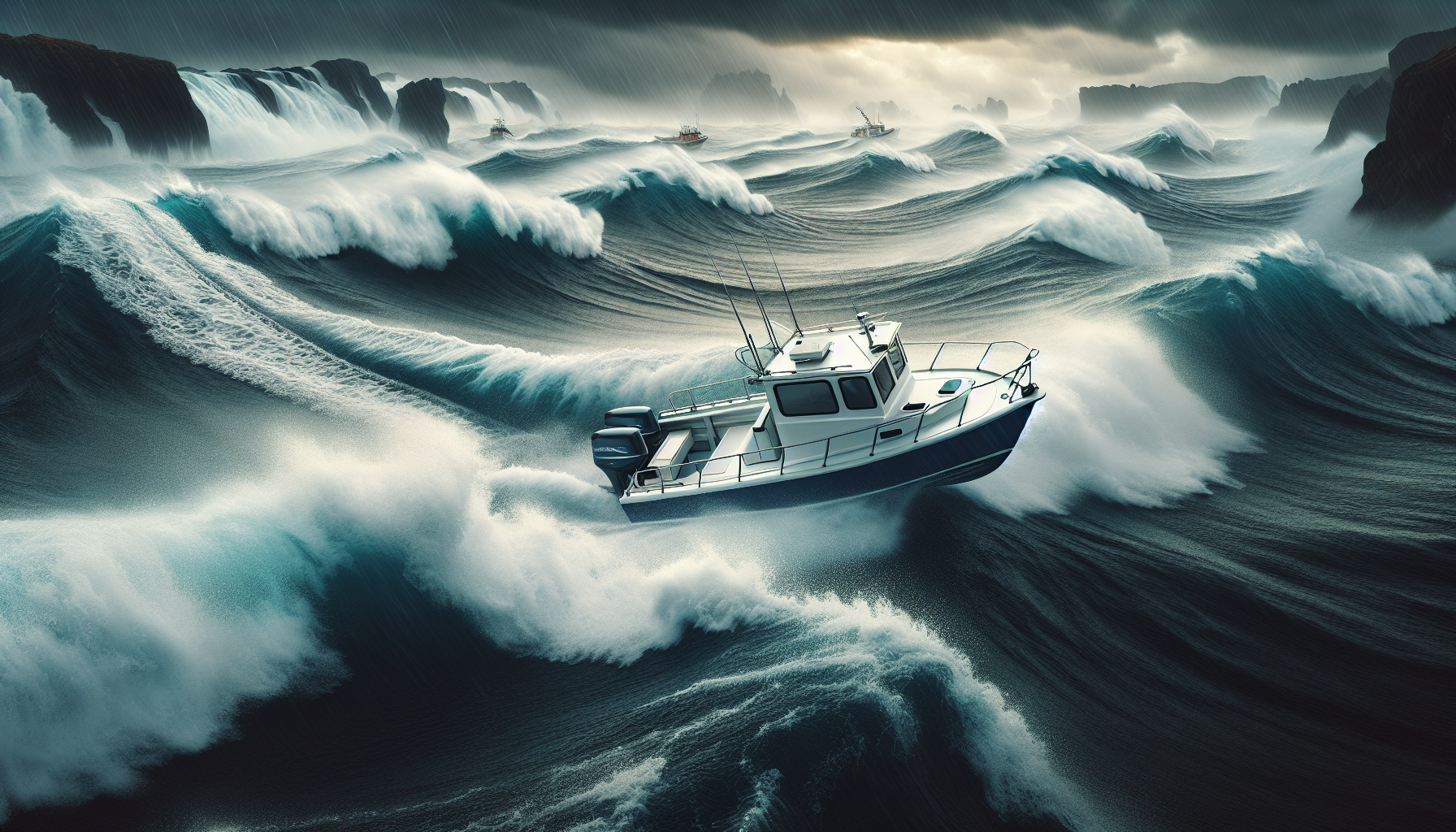
Next, reassess your heading. In head seas, taking waves straight on may cause severe pounding; quartering them at a controlled angle often softens impact. In following seas, the danger is broaching or stuffing the bow into the back of the next wave, so maintain enough power to keep steerage and avoid surfing uncontrollably. In beam seas, reduce exposure because rolling loads can destabilize smaller craft fast. If the nearest safe harbor requires running beam-to the sea, a slower offshore detour that lets you quarter in may be the safer choice.
Communication is part of seamanship, not an afterthought. Use VHF to monitor weather updates and, if conditions are genuinely threatening, alert the Coast Guard or local rescue authority to your position and intentions before the situation becomes critical. Modern chartplotters, AIS, DSC radios, and EPIRBs dramatically improve outcomes, but only if they are registered, powered, and understood by the crew. Rough-water survival is usually a chain of small competent actions, not one heroic move.
What Makes a Boat Good in Rough Water
The best boats for rough waters share several core traits: a hull that can manage steep waves, enough weight to carry momentum without being overpowered by chop, structural integrity, predictable handling, and systems that keep water out and drain what comes aboard. Deep-V hulls are common because sharper deadrise at the transom, often eighteen to twenty-four degrees, cuts through head seas better than flatter bottoms. The tradeoff is that deep-V designs can require more power, burn more fuel, and feel less stable at rest.
Length matters because a longer waterline spans wave intervals more effectively, reducing hobby-horsing and abrupt pitch. Beam matters too, but wider is not always better. Extra beam increases form stability and cockpit room, yet can create a harsher ride if paired with a hull that slaps instead of slices. Construction quality is equally important. Hand-laid fiberglass, resin-infused laminates, robust stringer grids, foam-filled compartments, and properly bonded bulkheads all contribute to offshore confidence. So do practical details such as oversized scuppers, high gunwales, protected helm positions, and accessible mechanical systems.
Seakeeping is the real measure. A rough-water boat should track predictably, recover from rolls without drama, and remain controllable when trimmed and throttled for changing wave patterns. Features like trim tabs, interceptor systems, gyro stabilizers on larger boats, and enclosed pilothouses can improve comfort and safety, but they cannot rescue a fundamentally unsuitable hull. The central buying principle is simple: choose the boat that fits the worst realistic conditions you will face, not the calm-water brochure photos that sold it.
Best Boat Types for Rough Waters
Different missions call for different rough-water boats. Offshore center consoles remain popular because they combine speed, fishability, self-bailing decks, and increasingly sophisticated hulls. Brands such as Regulator, Contender, Boston Whaler, and Grady-White have built reputations on deep-V performance in offshore chop. These boats excel when experienced operators need to run fast windows, but they expose crews more than enclosed designs and can become tiring in cold, wet conditions.
Pilothouse and walkaround boats are often the smartest middle ground for coastal and offshore use. Models from Parker, Defiance, Jeanneau, and Steiger Craft offer protected helms, safer movement forward, and respectable rough-water manners. They are especially effective in regions where wind, spray, and temperature make an open boat punishing. Sportfishing convertibles and express boats add size, range, and offshore pedigree, but cost and draft rise quickly. For long passages and comfort in ugly weather, few recreational categories match a well-found trawler or expedition yacht with a solid displacement or semi-displacement hull, though these boats trade speed for steadiness.
Rigid inflatable boats deserve mention because professional rescue agencies use them for a reason. Their collars add reserve buoyancy and impact forgiveness, while narrow deep-V hulls can perform impressively in broken water. However, they are not ideal for every owner, especially those wanting overnighting comfort or weather protection.
| Boat type | Rough-water strengths | Main tradeoffs | Best use case |
|---|---|---|---|
| Offshore center console | Fast, capable deep-V hulls, self-bailing decks, excellent fishability | Wet ride, exposed crew, higher fuel burn | Day offshore runs, fishing, fast weather-window operation |
| Pilothouse or walkaround | Protected helm, secure movement, strong all-weather versatility | Less deck openness, slightly lower top-end speed | Coastal and offshore boating in variable climates |
| Express or convertible sportfisher | Mass, range, excellent seakeeping, offshore systems | Expense, maintenance, draft | Serious offshore fishing and longer runs |
| Trawler or expedition yacht | Comfort, range, motion control, heavy-weather confidence | Slow speed, high purchase price | Long-distance cruising and exposed passages |
| RIB | Buoyancy, shock absorption, agile handling | Limited shelter and overnight comfort | Rescue, patrol, near-offshore utility |
How Hull Design Changes Safety and Comfort
Hull design determines whether a boat lands softly, throws spray wide, tracks straight, and resists broaching when seas get confused. Deep-V hulls dominate rough-water discussions because they part waves cleanly, but deadrise is only one variable. Entry shape at the bow, chine geometry, lifting strakes, flare, and the relationship between center of gravity and running surface all affect behavior. A sharp bow entry with sufficient flare can reduce pounding and keep water off the windshield. Wide reverse chines can improve lift and spray deflection, though they may change roll characteristics at rest.
Stepped hulls illustrate the need for nuance. In calm to moderate conditions, a well-designed stepped hull can reduce drag and improve speed and efficiency. In rough conditions, some stepped boats remain outstanding, but they can be less forgiving for inexperienced operators because balance, load distribution, and throttle input matter more. By contrast, a conventional deep-V from a builder with a long offshore track record often offers a broader margin for error.
Displacement also deserves attention. Heavy boats generally move through chop with less abrupt acceleration, which reduces fatigue and structural stress. Lighter boats can be easier to trailer, cheaper to power, and quick to plane, but they react more sharply to short-period waves. There is no perfect hull for every sea state. The most seaworthy choice is the one whose geometry, weight, and intended operating envelope align with your waters and skill level.
Key Features to Look for Before You Buy
When evaluating the best boats for rough waters, inspect safety and construction features before upholstery, electronics, or top speed. Start with the transom, stringers, deck hardware backing, and hatch fit. Solid engineering shows up in places buyers often overlook. You want strong cleats, proper gasketing, watertight rigging runs, quality fuel system components, and bilge access that does not require contortions at sea. A self-bailing cockpit is essential for offshore use, but it must be paired with scuppers sized to drain quickly under load.
Freeboard and interior depth affect security, especially for families and anglers moving around in bad conditions. Handholds should exist wherever a passenger naturally reaches. At the helm, shock-mitigating seats, clear sightlines, redundant navigation electronics, and easy access to trim controls improve decision-making when workload spikes. Twin engines provide redundancy offshore, but modern singles on smaller boats can be reliable if maintained rigorously and backed by kicker options or towing coverage. Fuel capacity should include real reserve, not brochure range calculated at perfect cruise in flat water.
Also look beyond the boat itself. The right trailer, tow vehicle, marina access, and service network influence whether you maintain the boat properly and use it within its strengths. In surveys I have done with owners, dissatisfaction often came not from a bad hull but from buying a capable offshore boat that was too expensive, too complex, or too difficult to launch often enough to build skill.
Handling Tactics That Reduce Risk in Heavy Weather
Good rough-water handling is a series of controlled compromises. First, reduce speed until the hull is no longer launching off crests or slamming into troughs. There is no prize for staying on plane if the boat is losing contact with the water unpredictably. Use trim deliberately. Tucking the engine or drives in can lower the bow and improve bite in some following-sea situations, while trimming out slightly may soften impact in head seas on certain hulls. Small adjustments are better than dramatic ones.
Balance your load. Move portable gear low and centered, keep passengers from clustering aft, and monitor how fuel burn changes trim during a long run home. Use your tabs carefully; aggressive tab in quartering or following seas can make a boat trip over itself. Visibility matters as much as hydrodynamics. Rain, spray, and low sun can hide the face of the next set, so slow down before you lose the ability to read the water.
Most importantly, know when not to continue. Turning back early is the hallmark of a competent skipper. Coast Guard incident patterns consistently show that weather, operator inexperience, and poor decision-making combine more often than equipment failure alone. The best heavy-weather tactic is often avoidance, followed by route adjustment, followed by speed and angle management.
Choosing the Right Boat for Your Waters
A Great Lakes boater, a Florida offshore angler, and a Pacific Northwest cruiser all face rough water, but not the same rough water. On large inland lakes, short, closely spaced chop punishes flat or lightly built boats. Along tidal inlets, standing waves and current-against-wind conditions demand strong acceleration, control, and reserve buoyancy. Offshore on the Atlantic or Pacific, longer swells can be manageable until wind shifts create confused cross-seas that expose weak directional stability.
Match your boat to the pattern, not the label. If you regularly cross exposed bays and fish twenty miles offshore, a twenty-six- to thirty-two-foot pilothouse or offshore center console may be the sweet spot. If your boating is mostly fair-weather coastal cruising with occasional breezy afternoons, a heavy deep-V dual console could suffice, but it is not the first recommendation for repeated ugly-water runs. If comfort on extended passages matters most, a trawler or expedition-style cruiser will outperform faster planing boats in crew endurance, even when it loses the speed race.
Use this hub as your starting point for deeper comparisons across offshore center consoles, pilothouse boats, trawlers, RIBs, and heavy-weather fishing platforms. The best boats for rough waters are the ones that fit your region, crew, maintenance discipline, and risk tolerance. Start with honest conditions, prioritize seakeeping over showroom appeal, and practice the handling skills that let a good boat do its job. If you are shopping now, shortlist proven hulls, schedule sea trials in imperfect weather, and evaluate every boat by one standard: how confidently it gets you home when the water turns against you.
Frequently Asked Questions
What should I do first if I suddenly get caught in rough seas?
The first priority is to slow down, stay calm, and regain control of the situation before the conditions control you. Rough seas become dangerous when wind, wave height, and wave period combine in a way that makes your boat pound, yaw, broach, or lose steering response. The moment you realize the ride is no longer simply uncomfortable but potentially unsafe, reduce speed to a level where the hull can meet the waves without slamming violently. In many boats, that means coming off plane and running at a controlled displacement or semi-displacement speed. Make sure everyone on board is wearing a properly fitted life jacket, and have passengers sit low, hold on, and stay centered to preserve balance and visibility.
Next, get a clear picture of your immediate surroundings and your safest options. Check your heading relative to the waves, confirm your position on the chartplotter or navigation app, and identify nearby inlets, harbors, lee shore hazards, shoals, and commercial traffic. Secure any loose gear, close hatches if necessary, and verify that bilge pumps are working. If conditions are severe, notify the Coast Guard or local marine authority of your position and intentions, especially if you are offshore or if you suspect the weather will continue worsening. The biggest early mistake skippers make is pressing on with the original plan instead of transitioning to heavy-weather decision-making. Once rough seas develop, your job is no longer to stay on schedule. Your job is to keep the boat under control, protect the crew, and choose the least risky route to safety.
How should I steer and handle my boat in rough water?
Boat handling in rough water is all about angle, speed, and patience. There is rarely one perfect heading for every situation because the safest approach depends on your hull type, loading, sea state, and the direction of travel you must make. In general, avoid taking steep waves directly on the beam because side-on seas can cause heavy rolling, loss of passenger footing, and in extreme cases a capsize risk. Instead, it is often safer to meet waves at an angle on the bow quarter or stern quarter, adjusting as needed to reduce pounding while maintaining steering control. If you are heading into the seas, do not try to power through every wave at high speed. Ease the throttle, keep enough power to retain helm response, and let the bow rise and fall in a controlled rhythm rather than launching off crests and slamming into troughs.
Running with following seas requires just as much care. Waves coming from behind can push the stern sideways, increase the risk of broaching, and cause the boat to surf faster than the helm can comfortably manage. Keep the boat square enough to the sea to stay in control, but use small course corrections rather than aggressive wheel inputs. In quartering seas, expect the boat to roll and yaw more than usual, and work with the wave pattern instead of fighting it. Trim can help too: many boats ride better with the bow slightly down in a head sea, but too much bow-down trim can make the boat stuff into the next wave. Every adjustment should be moderate and tested. The goal is a controlled, predictable ride that minimizes slamming, keeps the propeller hooked up, and preserves your ability to steer. If the boat feels out of balance, unstable, or hard to control, slow further and reassess.
Is it better to head back to shore, seek shelter, or ride it out?
The right answer depends on where you are, how fast conditions are deteriorating, and what dangers lie between you and your alternatives. In many cases, seeking the nearest safe shelter is smarter than insisting on returning to your original marina or destination. A protected harbor, cove, mooring field, or lee side of land may be a far safer choice than crossing a wind-against-tide inlet, running a long exposed stretch of open water, or attempting to beat a storm home. Good seamanship means making the safest decision available, not the most convenient or familiar one. If your chart shows a nearby refuge with adequate depth and a protected entrance, diverting early is often the best move.
That said, “riding it out” can sometimes be the safest option if navigating to shore would expose you to breaking bars, rocky lee shores, congested channels, or dangerous surf conditions. A common example is an inlet that becomes hazardous when outgoing current meets strong onshore wind, creating standing waves too steep for a smaller boat to handle safely. In that case, staying offshore in deeper water while keeping the bow or quarter to the seas and waiting for improved timing may be the better call. Evaluate fuel reserves, daylight, crew condition, and communications before committing. If you are uncertain, call for local guidance from the Coast Guard, marina operators, or tow services familiar with the area. The best decision in rough seas is the one that reduces exposure to the greatest hazard, even if it means changing plans completely.
What mistakes make rough-sea situations more dangerous?
One of the biggest mistakes is driving too fast for the conditions. Many skippers are comfortable at a certain cruising speed in moderate chop and are slow to recognize that rough seas demand a completely different handling mindset. Excess speed leads to hard impacts, loss of visibility at the wrong moment, hull damage, crew injuries, and steering problems when the propeller ventilates or the boat launches off wave tops. Another common mistake is taking the waves at the wrong angle for too long, especially on the beam, where repeated rolling can exhaust passengers and compromise stability. Overcorrecting at the helm also creates problems. In rough water, abrupt steering changes can make the boat less predictable, not more.
Passenger and deck management mistakes are equally serious. Allowing people to move around, sit on the bow, or remain without life jackets in worsening conditions can turn a manageable situation into an emergency within seconds. Loose gear, unsecured coolers, and open hatches can become hazards fast. Some operators also become overly focused on reaching home and ignore signs that a closer bailout point is safer. Others fail to monitor weather updates, current, or depth, which matters because rough water becomes especially dangerous near shoals, jetties, and inlets. Finally, many emergencies become worse because the skipper waits too long to ask for help. There is no award for struggling in silence. If conditions are beyond your confidence level, the boat’s capability, or the crew’s tolerance, communicate early and clearly. Getting assistance before the situation becomes critical is a hallmark of good judgment, not weakness.
How can I prepare for rough seas before I ever leave the dock?
The best way to handle rough seas is to avoid being surprised by them. Start with an honest match between the boat, the forecast, and the route. Rough water is not defined by wave height alone. A relatively modest sea can be dangerous if the period is short and steep, if wind opposes current, or if your boat is small, lightly built, heavily loaded, or prone to pounding. A twenty-four-foot center console may handle one offshore forecast reasonably well yet feel badly overmatched in a tight inlet chop or in afternoon winds stacked against tide. Read the full marine forecast, not just a weather app icon. Pay attention to sustained wind, gusts, wave intervals, tides, small craft advisories, and how local geography amplifies conditions.
Preparation also means making the boat mechanically and operationally ready. Confirm fuel quantity and range with reserve, inspect bilge pumps, check battery condition, test radios, and ensure navigation lights and electronics are functioning. Stow gear securely, brief passengers on life jackets and handholds, and file a float plan with someone ashore. If you are crossing an inlet, operating offshore, or boating in shoulder-season cold water, the margin for error is smaller, so your preparation must be better. Just as important, know your own limits. Experience in calm conditions does not automatically translate to competence in heavy weather. Build skill gradually, practice throttle and trim control in moderate chop, learn how your hull reacts from different angles, and never let optimism replace judgment. Good skippers do not prove toughness by launching into bad conditions. They prove seamanship by knowing when the boat, the crew, or the forecast says not today.