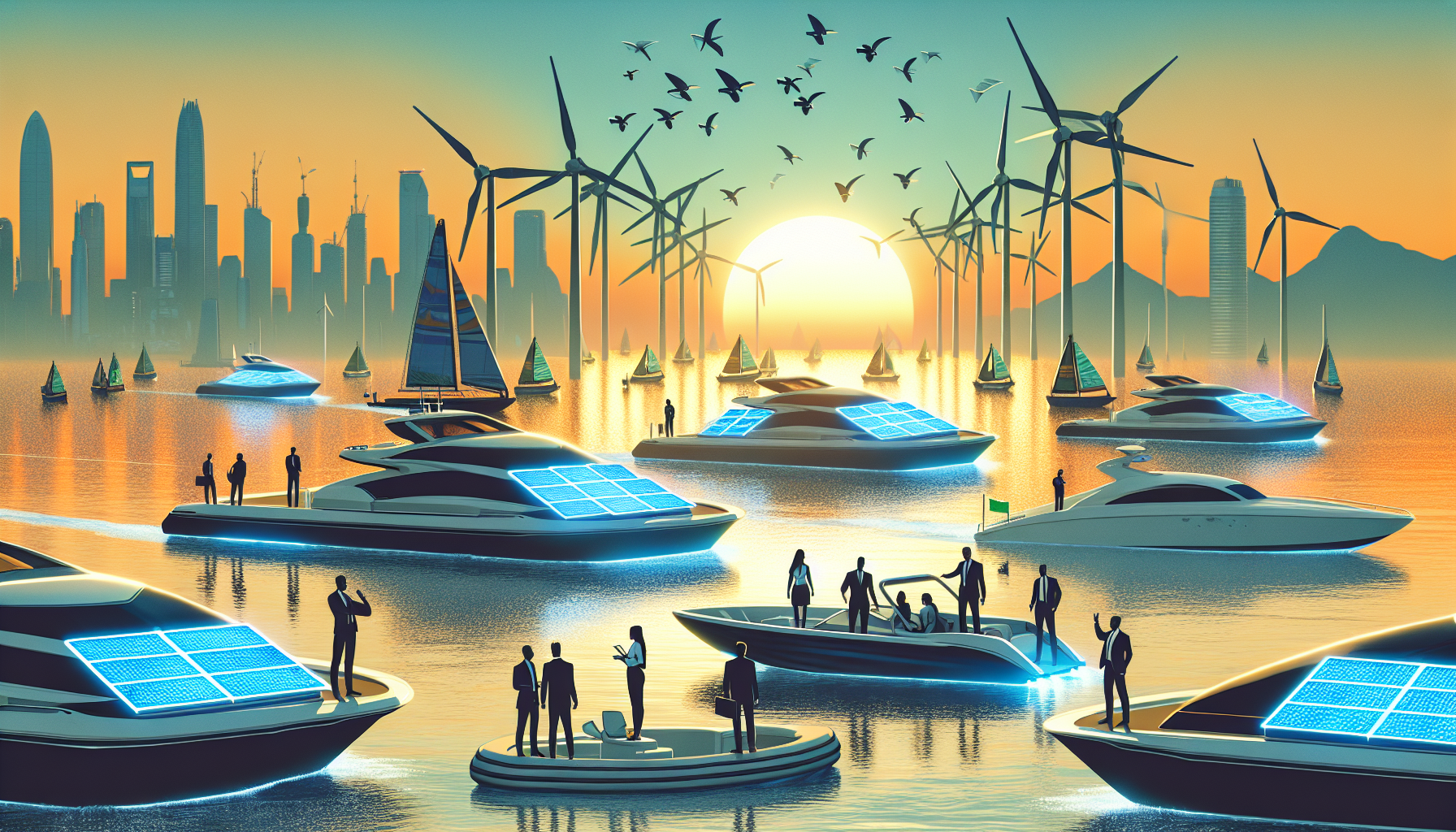
The best environmentally friendly boats for 2025 combine cleaner propulsion, lower operating costs, quieter running, and practical design choices that reduce emissions without giving up usability on the water. In this guide, I’ll break down what “eco-friendly boats” really means, which types of boats lead the market in 2025, and how to choose the right option for cruising, fishing, watersports, or tender duty. This topic matters because marine emissions rules are tightening, fuel prices remain unpredictable, and many boaters now want cleaner waterways, less engine noise, and simpler maintenance. In real-world ownership, sustainability is not a vague label; it comes down to propulsion system, battery chemistry, hull efficiency, charging access, materials, and the way a boat is actually used. Electric boats, hybrid boats, solar-assisted boats, and highly efficient low-emission craft all fit within the broader category of environmentally friendly boats, but they solve different problems. A lake day boat that returns to the dock each evening has very different needs from a coastal cruiser or a yacht tender. I’ve tested enough propulsion layouts to know that the best choice is usually the one matched to range, speed, recharge habits, and local infrastructure. For 2025, buyers have better options than ever, from pure electric runabouts and luxury day boats to electric outboards, hybrid catamarans, and efficient aluminum utility boats designed to minimize fuel burn.
What makes a boat environmentally friendly in 2025
An environmentally friendly boat is one that reduces total impact across operation, maintenance, and in some cases manufacturing. The biggest factor is propulsion. Pure electric boats produce no tailpipe emissions on the water, which makes them the cleanest operational choice where shore power is available. Hybrid boats reduce fuel consumption by pairing batteries with generators or combustion engines, especially at displacement speeds. Advanced internal combustion boats can still be relatively eco-conscious when they use efficient hull forms, modern four-stroke outboards, lightweight construction, and careful power matching. In practice, I evaluate eco performance across five categories: direct emissions, noise, wake and shoreline impact, energy efficiency per nautical mile, and maintenance-related pollution such as oil changes and fuel spills.
Battery and motor technology have improved significantly. Lithium iron phosphate battery systems are increasingly common because they offer strong cycle life and thermal stability. Permanent magnet synchronous motors deliver high torque instantly, which is why electric boats feel responsive even at low speeds. Regenerative charging remains limited in most recreational boats, but solar trickle support is improving for hotel loads and slow-cruise applications. Hull design also matters more than many buyers realize. A narrow displacement hull, catamaran platform, or lightweight planing hull can dramatically reduce power demand. Standards from ABYC, NMMA practices, and marine battery certification frameworks are shaping safer installations, while brands are investing in digital battery management, remote diagnostics, and smarter charging integration.
Best electric and eco-friendly boat categories for different uses
The best eco-friendly boat for one buyer can be the wrong choice for another, so it helps to think in categories rather than one universal winner. Electric day boats are currently the strongest segment because they suit predictable use patterns: short cruises, sunset runs, lake recreation, and resort operations. These boats are quiet, clean, and often easier to dock because electric drivetrains provide precise low-speed control. Electric pontoon boats are also growing because pontoons do not need extreme top speed to satisfy family use. For tenders and yacht support, electric outboard-powered RIBs make excellent sense because they run short distances and benefit from easy charging at the mothership or marina.
Hybrid cruising boats are more practical for longer ranges. A hybrid catamaran can leave harbor silently on battery power, then transition to diesel-assisted charging offshore. That reduces fuel use during low-load operation, where diesel engines are usually least efficient. Solar-assisted canal boats and houseboats form another smart category because their large roof area supports meaningful solar generation. For anglers, small electric fishing boats and electric jon boats work well on inland waters with horsepower restrictions. Finally, there is an important “efficient conventional” category. Some of the best environmentally friendly boats for 2025 are not fully electric; they are compact, lightweight, responsibly powered vessels that burn substantially less fuel than older equivalents while offering wider range and easier service access.
Top environmentally friendly boats and brands to watch in 2025
Several builders stand out in 2025 because they are shipping credible products, not just concepts. Candela remains one of the most important names in electric boating. Its hydrofoiling designs, including the Candela C-8, dramatically reduce drag by lifting the hull above the water at speed. That translates into longer electric range than conventional planing boats of similar size. In calm to moderate conditions, hydrofoils can deliver a meaningful efficiency advantage, though buyers should understand that complexity and price are higher than on simpler hulls. For luxury day use, RAND Boats continues to attract attention with minimalist electric models designed for clean deck layouts and efficient harbor cruising.
X Shore has established itself as a serious electric boat brand with Scandinavian styling and practical premium day boats. The X Shore Eelex 8000 and related models appeal to buyers who want all-electric propulsion without sacrificing build quality or modern interfaces. Vision Marine Technologies is a key player on the propulsion side, supplying high-output electric outboard solutions that can convert familiar boat formats into lower-emission platforms. On the small-craft end, Torqeedo remains one of the most trusted marine electric propulsion brands, especially for tenders, sailboats, and lightweight recreational boats. Its integrated battery, controls, and efficiency-focused design have made it a benchmark in the market.
For hybrid and solar-assisted cruising, Silent Yachts continues to shape expectations around catamarans that blend solar generation, battery storage, and electric drive. These are not mass-market boats, but they demonstrate where long-range eco-friendly cruising is headed. Arc Boats is another company worth watching because it has pushed high-performance electric wake and sport boat design into the mainstream conversation. Meanwhile, mainstream builders offering electric-ready pontoons, electric outboard packages, and highly efficient aluminum hulls deserve attention from practical buyers. In ownership terms, the best brand is usually the one with dealer support, battery service capability, and transparent range data under realistic conditions.
How the leading options compare in real-world use
Marketing often highlights top speed or headline range, but environmentally friendly boat buying should focus on mission fit. The table below compares the main options most buyers will evaluate in 2025.
| Boat type | Best use | Main advantage | Main limitation |
|---|---|---|---|
| Pure electric day boat | Lakes, short coastal trips, resort use | Zero on-water emissions, quiet, low maintenance | Range drops quickly at high speeds |
| Electric pontoon | Family cruising, no-wake zones, inland waters | Stable platform, efficient at modest speeds | Usually limited top speed and towing ability |
| Electric outboard tender or RIB | Marina runs, yacht support, short fishing trips | Simple propulsion package and easy charging | Payload and range are sensitive to battery size |
| Hybrid cruiser or catamaran | Extended coastal cruising | Lower fuel burn with better range flexibility | Higher system complexity and purchase cost |
| Solar-assisted houseboat or canal boat | Slow inland cruising, liveaboard use | Excellent low-speed efficiency and quiet operation | Not suited to fast passages or rough offshore water |
| Efficient modern gas or diesel boat | Mixed use where charging is limited | Long range and easy refueling | Still produces emissions and noise |
In my experience, buyers are happiest when they choose a boat with at least a 30 percent real-world range buffer beyond a normal outing. If your typical day is 20 nautical miles, shop for a setup that can comfortably deliver 26 or more in the speeds and conditions you actually use. That avoids “range anxiety” and protects battery longevity because you are not cycling from full to nearly empty every trip. Electric boats also perform best when owners have reliable charging habits. A 240-volt dockside charger changes the ownership experience completely compared with relying on slow overnight household power.
Key buying factors: range, charging, materials, and total ownership cost
Range is the first question most shoppers ask, and it should be. Electric boat range is affected by speed more dramatically than many first-time buyers expect. Doubling speed can require far more than double the energy because drag rises steeply as boats approach and exceed hull speed or move onto plane. That is why manufacturers should provide multiple range curves, not one optimistic number. Ask for data at 5 knots, 15 knots, and cruising speed in average load conditions. Charging is the second major issue. Marina charging infrastructure is improving, but it is inconsistent. Before buying, confirm available shore power amperage, connector standards, charging times, and whether your slip assignment permits routine charging.
Materials and manufacturing are becoming more important too. Recycled aluminum, responsibly sourced composites, cork decking, low-VOC finishes, and modular battery systems all contribute to a lower-impact boat. Some builders now design battery enclosures for serviceability and future replacement, which is far better than a sealed approach that makes long-term support difficult. Total ownership cost can strongly favor electric boating, especially for users with high annual hours. Electric drivetrains typically need less routine service because there are no oil changes, fewer moving parts, and less winterization complexity. However, battery replacement remains a long-term cost consideration, and insurance for high-voltage systems may vary. The smartest comparison is cost per season, including fuel or electricity, maintenance, haul-out, software updates, charging equipment, and depreciation.
Best picks by boating lifestyle and how to choose the right one
For lake homeowners and marina-based day boaters, the best environmentally friendly boats for 2025 are pure electric runabouts and pontoons. They deliver the cleanest ownership experience and align with repeatable, shorter routes. If you entertain frequently, prioritize cockpit layout, boarding access, and charging convenience over top speed. For anglers on restricted lakes, a small electric fishing boat or aluminum skiff with an electric outboard is often the most sensible option. Quiet operation can even improve the fishing experience in shallow water. Families wanting watersports should look carefully at emerging electric tow boats, but they need to be realistic about battery draw under heavy wake-surfing loads.
Coastal cruisers should think harder about hybrids and efficient low-consumption hulls. A hybrid catamaran or highly efficient displacement cruiser makes sense when overnighting, hotel loads, and uncertain charging access enter the picture. Yacht owners looking for a tender should strongly consider an electric RIB with a removable battery system, especially when silent shore transfers matter. Commercial operators, resorts, and municipalities may find the economics especially compelling because boats run on predictable routes, making charging scheduling straightforward. The right choice comes down to one honest exercise: map your actual trips, average passenger load, docking setup, local weather, and nearby service support. When those inputs are clear, the right eco-friendly boat category usually becomes obvious.
Environmentally friendly boats are no longer niche experiments; in 2025 they are practical, diverse, and increasingly polished options for mainstream buyers. The best choices include pure electric day boats for short predictable trips, electric pontoons for family cruising, electric outboard tenders for marina and yacht use, hybrid cruisers for extended range, and highly efficient conventional boats where charging still limits adoption. The key is to evaluate the full system rather than the marketing headline. Range at your true cruising speed, charging access at your dock, hull efficiency, service network quality, and long-term operating cost matter more than a single top-speed number. Buyers who make that shift usually end up with a boat that is not only cleaner, but quieter, simpler, and more enjoyable to own.
If you are building your shortlist, start with your boating pattern, not the newest technology. Define how far you travel, how fast you really run, where you charge, and what tradeoffs you accept. Then compare electric, hybrid, and efficient low-emission options against those realities. That process will lead you to the best environmentally friendly boat for 2025 and set up smarter decisions across every review in this subtopic hub. Explore the related boat reviews, compare propulsion types side by side, and use this page as your starting point for choosing a cleaner boat with confidence.
Frequently Asked Questions
What makes a boat environmentally friendly in 2025?
An environmentally friendly boat in 2025 is usually defined by a combination of cleaner propulsion, efficient hull design, lower fuel or energy consumption, reduced noise, and materials or systems that lessen its overall environmental impact. That can mean a fully electric boat with zero tailpipe emissions, a hybrid model that uses battery power at low speeds and an engine for longer range, or a modern fuel-efficient outboard setup that burns significantly less fuel than older marine engines. It is not just about what powers the boat, either. Weight, hull shape, battery efficiency, charging strategy, and onboard systems all influence how “green” a boat really is in real-world use.
For many buyers, the most practical definition is a boat that reduces emissions and operating costs without sacrificing the way they actually use it. A well-designed electric dayboat used for short local trips may be far more eco-friendly than a larger hybrid yacht that is rarely operated efficiently. Likewise, a compact boat with a highly efficient four-stroke or low-emission alternative fuel setup can still be a meaningful step forward compared with an older gasoline model. In 2025, the best eco-friendly boats are the ones that match cleaner technology with realistic boating patterns, giving owners quieter running, less maintenance, and lower environmental impact over time.
Are electric boats actually practical for everyday boating?
Yes, electric boats are increasingly practical for everyday boating, but practicality depends heavily on how and where you use the boat. For short trips, inland lakes, harbor cruising, tender duty, marina hopping, and low-speed recreational use, electric boats are often excellent. They offer instant torque, smooth acceleration, very quiet operation, and minimal routine maintenance compared with combustion engines. Owners also benefit from lower day-to-day energy costs, especially when shore power is readily available. For many families and casual boaters, that combination makes electric boating more convenient than people expect.
The biggest limitations remain range, charging access, and sustained high-speed use. If your typical boating day includes long offshore runs, all-day watersports, or remote destinations without dependable charging infrastructure, a fully electric boat may still feel restrictive. Battery capacity continues to improve in 2025, but energy density on the water is not yet as forgiving as filling a fuel tank in minutes. That is why electric boats are best viewed as highly practical for specific use cases rather than universal replacements for every type of vessel. Buyers should think less about top speed claims and more about average trip length, reserve range, time between outings, and whether overnight or dockside charging is realistic for their setup.
What types of environmentally friendly boats are leading the market in 2025?
The leading categories in 2025 include fully electric dayboats, electric pontoons, hybrid cruisers, electric tenders, and highly efficient small fishing and utility boats with modern low-emission propulsion. Electric dayboats are especially popular because they align well with predictable cruising patterns and short-to-medium recreational trips. Electric pontoons are also gaining traction thanks to their roomy layouts, moderate speed requirements, and appeal for lake use where quiet operation is a major benefit. In premium segments, hybrid cruisers are attracting attention by giving owners silent maneuvering and low-speed operation in marinas and protected waters while retaining engine-assisted range for longer passages.
Electric tenders are another standout because they solve a very specific problem well: short-distance transport from dock to shore with minimal noise, fumes, and maintenance. Meanwhile, some of the most practical eco-friendly choices for mainstream buyers are still efficient aluminum skiffs, bay boats, and compact center consoles paired with the latest cleaner outboards. These may not be fully electric, but they can dramatically cut fuel use and emissions compared with older setups while remaining affordable and versatile. In other words, the market leaders are not defined by one technology alone. The strongest options in 2025 are the boats that apply the right green solution to the right boating job.
How do eco-friendly boats compare on cost, maintenance, and long-term value?
Eco-friendly boats often cost more upfront, especially if they use advanced battery systems, integrated electric drivetrains, or hybrid propulsion. That initial purchase price is one of the biggest barriers for many buyers. However, the ownership equation changes when you look beyond the sticker price. Electric boats typically have fewer moving parts, no oil changes, less vibration-related wear, and lower routine service needs than traditional internal combustion systems. Charging can also be far less expensive than buying marine fuel, particularly for owners who boat frequently and keep their vessels at a dock or home location with dependable electricity access.
Long-term value depends on usage patterns, local energy prices, battery longevity, resale demand, and how quickly marine technology evolves. A buyer who uses a boat often for short-range trips may see significant savings over time, while someone who only goes out occasionally may not recover the premium as quickly. There is also the quality-of-use factor, which matters more than many first-time buyers realize. Quiet operation, no exhaust smell, smoother low-speed handling, and easier maintenance all contribute to owner satisfaction and can make an eco-friendly boat feel more valuable in everyday life. In 2025, the smartest way to compare costs is to calculate total ownership over several years rather than focusing only on the initial purchase price.
How should I choose the best environmentally friendly boat for cruising, fishing, watersports, or tender use?
Start by matching the boat to your actual boating routine, not your occasional idealized trip. For cruising, think about your normal distances, average speed, charging or fueling access, and how much quiet low-speed time you spend in marinas, coves, or protected waterways. If most of your cruising is local and relaxed, a fully electric dayboat may be the best fit. If you need flexibility for longer passages, a hybrid cruiser or highly efficient conventional setup may make more sense. For fishing, range, storage, and reliability are usually the key decision points. Small electric fishing boats can be excellent on lakes and sheltered water, but anglers making long runs may still prefer an efficient low-emission outboard until battery range expands further.
For watersports, the main question is energy demand. Towing skiers, wakeboarders, or inflatables uses a lot of power, so buyers need to be especially realistic about battery capacity, run time, and recharge downtime. Some electric models can handle watersports well, but they are not all equal, and this is one category where conventional or hybrid options may still offer better practicality for many households in 2025. For tender use, electric is often the clear winner because the trips are short, frequent, and close to shore support. No matter the category, evaluate range at your typical speed, charging convenience, payload needs, storage layout, and support from the manufacturer or dealer network. The best environmentally friendly boat is not simply the cleanest on paper; it is the one that delivers the least compromise for the way you actually use the water.