The Mississippi River boating experience is unlike any other trip in the United States because it combines working-waterway navigation, historic river towns, wildlife refuges, marinas, anchorages, and access to the broader conversation about the best boating lakes and rivers in the U.S. For boaters planning routes, “Mississippi River boating” usually means cruising part of the 2,300-plus-mile river corridor from Minnesota to Louisiana, while “best stops” refers to marinas, harbor towns, scenic reaches, lock-friendly day stops, and side excursions worth tying up for. I have planned and run multi-day itineraries on major inland waterways, and the Mississippi stands out for one reason: no other American river offers this mix of scale, infrastructure, and regional variety. It matters because one trip can shift from bluff country and backwaters to industrial shipping lanes and delta culture, and boaters need clear guidance on where to stop, what services to expect, and how conditions differ by section.
As a hub within boating destinations and travel, this guide also helps answer a broader question: where does the Mississippi fit among the best boating lakes and rivers in the U.S.? The short answer is that it is one of the country’s defining cruising routes, but not every stretch suits every boater. Upper sections favor trawlers, cruisers, fishing boats, and trailerable craft comfortable with locks and changing currents. Lower sections demand stronger passage planning because distances between dependable recreational stops can widen and commercial traffic becomes more consequential. Understanding the river by region is the key to a safe and rewarding itinerary. The stops below are selected for marina access, navigational practicality, scenery, nearby attractions, and their value as launch points for exploring America’s inland boating network.
Why the Mississippi River is a flagship U.S. boating destination
The Mississippi earns its reputation because it functions as both a scenic cruising ground and a transportation artery. That dual identity shapes every boating decision. On the recreational side, the river offers backwater sloughs in the Upper Mississippi River National Wildlife and Fish Refuge, broad pool systems created by lock and dam infrastructure, waterfront towns with transient slips, and long cultural arcs through states including Minnesota, Wisconsin, Iowa, Illinois, Missouri, Kentucky, Tennessee, Arkansas, Mississippi, and Louisiana. On the commercial side, tug-and-barge traffic is real, especially around major ports and industrial reaches. Boaters who respect right-of-way, monitor VHF, and time lock approaches well can have excellent trips, but this is not a “drift and improvise” river.
Compared with other top U.S. inland boating destinations, the Mississippi offers unusual range. Lake Powell is dramatic but remote and fuel planning is central. The Great Lakes deliver huge-water cruising but can turn oceanic. The Tennessee River is famously cruiser-friendly with many services, yet its rhythm is more controlled and lake-like in places. The Intracoastal Waterway excels for coastal passage, not river culture. The Mississippi combines meaningful current, history, and town-to-town variety. That makes it a natural hub topic when discussing the best boating lakes and rivers in the U.S., because many boaters eventually compare it with the Tennessee-Tombigbee Waterway, Lake of the Ozarks, the Columbia, the Hudson, the Florida Keys, and the San Juan Islands as part of broader destination planning.
Seasonality matters. In the Upper Mississippi, late spring through early fall is the core boating window, with June and September often delivering the best balance of comfortable weather and manageable traffic. Summer brings more recreational activity and thunderstorms. High water after snowmelt or heavy rain can accelerate current, close facilities, and alter floating debris risk. Lower river boaters must account for tropical weather near the Gulf, intense heat, and long stretches where fuel and transient dockage require advance coordination. The most important planning principle I use is simple: treat every Mississippi segment as its own cruising ground with different operating rules, distances, and stop quality.
Best Mississippi River stops from Minnesota to Wisconsin
For many recreational boaters, the upper river delivers the most approachable and scenic Mississippi River boating experience. Minneapolis and St. Paul provide urban access, but Red Wing, Wabasha, Winona, and La Crosse are where the trip starts to feel iconic. Red Wing is a strong early stop because it pairs a protected harbor environment with a walkable historic downtown. It is practical, not just pretty. You can refuel, restock, inspect systems, and enjoy a town known for river heritage and nearby bluff views. For newer river cruisers, stops like this reduce stress because you are not choosing between scenery and services.
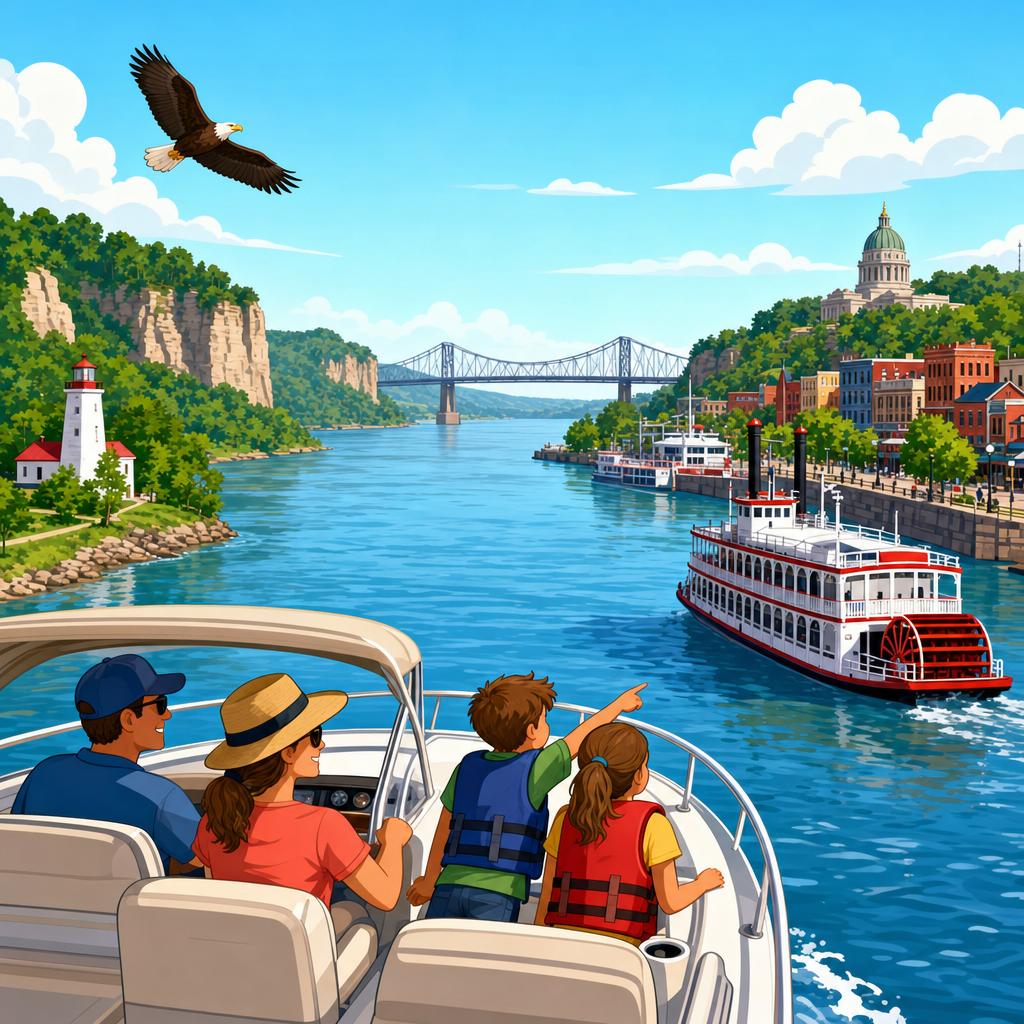
Wabasha is another standout. The river broadens into backwater habitat, and the area is associated with eagle watching, side-channel exploration, and a quieter pace than larger commercial nodes. Winona adds a college-town waterfront feel and easy provisioning. La Crosse is one of the best all-around upper river bases because it offers a substantial boating culture, multiple marina options nearby, repair access, and direct entry into some of the most photogenic reaches of the upper pools. The bluffs, islands, and sloughs in this section are why many anglers and cruisers argue that the Upper Mississippi belongs on every shortlist of the best boating rivers in America.
| Stop | Why it stands out | Best for |
|---|---|---|
| Red Wing, Minnesota | Protected harbor, fuel, walkable historic town, easy provisioning | First overnights, family cruising, trip staging |
| Wabasha, Minnesota | Backwaters, wildlife viewing, calmer atmosphere | Nature-focused boating, fishing, relaxed itineraries |
| Winona, Minnesota | Convenient supplies, waterfront access, regional attractions | Mid-route stopovers, restocking, weekend trips |
| La Crosse, Wisconsin | Strong marina network, service access, bluff scenery | Base cruising, longer itineraries, mixed-experience crews |
If you want a stop that combines navigational convenience with memorable scenery, this upper reach is hard to beat. Pools formed by the lock-and-dam system create relatively manageable cruising conditions for many recreational boats, though lock etiquette still matters. Have fenders ready, monitor channel instructions, and expect delays during busy periods. In practical terms, these towns work because they let you blend structured travel with exploration. You can run a planned leg in the main channel, then idle into side waters that feel far removed from the commercial river. That contrast is one of the upper Mississippi’s greatest strengths.
Best Mississippi River stops from Iowa and Illinois to Missouri
South of La Crosse, the river continues through some of the classic cruising and cruising-adjacent towns that make this waterway a serious destination rather than a novelty route. Dubuque is one of the most useful stops in the region because it offers a real waterfront city experience, dependable transient options nearby, and attractions within easy reach of the docks. This is the kind of place where crews can divide the day between maintenance, dining, museums, and a shore break without losing momentum on the itinerary. For many boaters, that matters more than postcard scenery alone.
Further south, the Quad Cities corridor, including Bettendorf and Davenport, gives practical access to marine services and supplies in a metropolitan setting. Then comes Burlington and the Hannibal area, where Mark Twain associations deepen the sense of place. Hannibal works well as a cultural stop because it is not just another fuel dock; it helps explain the river’s role in American literature, trade, and identity. St. Louis, meanwhile, is one of the most dramatic urban arrivals on any inland route. Approaching the Gateway Arch by boat is memorable, but it demands attention to commercial traffic, bridge clearance, current, and available secure dockage. This is where route planning must become more disciplined.
Alton, just north of St. Louis near the confluence region with the Missouri and close to the Illinois River system, is often the smarter operational stop. It has long been valued by experienced cruisers for marina infrastructure, access to services, and its strategic importance for boaters connecting between waterways. If your larger goal is to understand the best boating lakes and rivers in the U.S., Alton is a reminder that top destinations are not always the most glamorous. Sometimes the best stop is the place that gives you fuel, shelter, repairs, and routing flexibility. On a major river, those advantages are decisive.
Best Mississippi River stops from Kentucky and Tennessee to Louisiana
The character of the Mississippi changes significantly below St. Louis and again below the Ohio River confluence near Cairo, Illinois. Recreational stops become less frequent, distances can stretch, and the river feels bigger in every sense. That does not make the lower river less worthwhile; it makes preparation more important. Memphis is the first major city many boaters target in this section because it offers a legendary riverfront identity and a clear cultural payoff. Graceland, Beale Street, barbecue institutions, and music history create one of the strongest shore experiences on the entire river system. For crews who want a destination feel after a demanding leg, Memphis delivers.
Vicksburg is another meaningful stop, especially for boaters interested in Civil War history and the strategic importance of the river. The surrounding area explains why control of the Mississippi mattered so deeply to national commerce and military planning. Natchez offers a different tone: more intimate, architecturally rich, and often favored by cruisers who enjoy historic downtowns over large-city logistics. By the time you reach Baton Rouge and New Orleans, the river is fully operating as a global shipping corridor. These are extraordinary destinations, but they are not casual ones. Strong current, significant ship traffic, and terminal activity require attention, local knowledge, and conservative judgment.
New Orleans is the emotional finish for many Mississippi itineraries. It rewards effort with unmatched food, music, architecture, and maritime atmosphere. Yet it is best approached as a professionally planned endpoint rather than an impulsive detour. Confirm dockage well in advance, understand no-wake and security zones, and factor weather, particularly during hurricane season. In my experience, boaters who enjoy the lower Mississippi most are the ones who treat it as expedition cruising: fewer assumptions, more fuel margin, stronger communications discipline, and clearer turnaround points.
How to plan a Mississippi trip and connect it to other top U.S. waterways
A successful Mississippi River boating itinerary starts with the right segment, not the grandest ambition. For first-timers, the upper river between Red Wing and La Crosse or a slightly longer run through Dubuque is usually the best introduction. It offers services, scenery, manageable pool cruising, and enough lock experience to build confidence. For intermediate crews, adding the Quad Cities, Hannibal, Alton, and St. Louis creates a more complete river story. For advanced cruisers, lower river legs can be deeply rewarding, but they should be built around confirmed fuel, weather windows, commercial traffic awareness, and realistic daily mileage.
This is also where the Mississippi fits into the broader map of the best boating lakes and rivers in the U.S. If you want sheltered scenic cruising with marina support, compare the Upper Mississippi with the Tennessee River and parts of the Hudson. If you want fishing and open freshwater space, many boaters cross-shop it against Lake of the Woods, Kentucky Lake, Table Rock Lake, or Lake Champlain. If you want high-drama urban arrivals and historic ports, St. Louis and New Orleans belong in the same conversation as Chicago’s lakefront access, New York Harbor approaches via the Hudson, and Seattle entries through Puget Sound. The point of a hub article is not to force one winner. It is to help boaters match waterway personality to boat type, crew comfort, and trip goals.
Use NOAA resources where applicable, U.S. Army Corps of Engineers lock information, updated electronic charts, ActiveCaptain reports, marina confirmation calls, and river stage data before every departure. On the Mississippi, details matter: a lock delay can reshape your day, a fuel stop can define your range, and a high-water advisory can turn a routine leg into a no-go decision. Plan conservatively, choose stops for both enjoyment and resilience, and the river will give you one of the richest boating experiences in the country.
The best stops along the Mississippi River are the ones that match the river’s changing character: scenic and wildlife-rich towns in Minnesota and Wisconsin, service-friendly and historic hubs in Iowa, Illinois, and Missouri, and culturally powerful but more demanding city stops farther south. Red Wing, Wabasha, Winona, La Crosse, Dubuque, the Quad Cities, Hannibal, Alton, Memphis, Vicksburg, Natchez, Baton Rouge, and New Orleans each offer a different reason to tie up, and together they show why this route remains central to any serious discussion of the best boating lakes and rivers in the U.S.
The main benefit of boating the Mississippi is variety with substance. You are not choosing between scenery, history, or practical cruising support; on the right segment, you can have all three. The tradeoff is that the river demands respect. Currents, locks, barge traffic, long distances, and seasonal water conditions require planning that is more disciplined than a typical weekend lake trip. That is exactly why the experience feels so rewarding. Every well-chosen stop adds context, comfort, and confidence.
If you are building your next inland boating itinerary, start by selecting the Mississippi segment that fits your boat and crew, then use it as a gateway to explore other premier U.S. waterways. Map your fuel range, confirm dockage, study river conditions, and put the upper or middle Mississippi on your short list for the season. Few routes deliver a better combination of navigational challenge, memorable shore access, and genuine American travel.
Frequently Asked Questions
What makes the Mississippi River boating experience different from cruising other major rivers or lakes in the United States?
The Mississippi River stands apart because it is not just a recreational waterway; it is also a major commercial navigation corridor, a historic travel route, and a constantly changing natural system. Boaters on the Mississippi share the river with working towboats and barges, pass through lock-and-dam systems in the Upper Mississippi, and move between environments that range from wooded bluffs and backwaters to industrial ports, marshes, and broad southern floodplains. That combination creates a trip that feels larger, more varied, and more dynamic than a typical lake cruise or a short inland river outing.
Another key difference is the sheer geographic scope. “Mississippi River boating” can mean anything from a scenic cruise in Minnesota’s headwaters region to a longer passage through Wisconsin, Iowa, Illinois, Missouri, Kentucky, Tennessee, Arkansas, Mississippi, and Louisiana. Along the way, boaters encounter historic river towns, transient docks, marinas, fishing harbors, wildlife refuges, and anchorages that each offer a different atmosphere. Some stops are known for walkable downtowns and riverfront museums, while others are prized for protected overnight mooring, fuel access, or quiet natural scenery.
For many travelers, the appeal is that the river combines practical passage-making with destination cruising. It is possible to plan a route around fuel range, lock timing, current speed, marina services, and weather, while still enjoying memorable stops for local food, Civil War history, blues culture, birdwatching, and waterfront recreation. In that sense, the Mississippi belongs in any broader discussion about the best boating lakes and rivers in the U.S. because it offers both the challenge of real navigation and the rewards of a deeply regional travel experience.
What are some of the best types of stops to include on a Mississippi River boating itinerary?
The best stops along the Mississippi usually fall into a few core categories: full-service marinas, harbor towns, scenic anchorages, and nature-focused side trips. A strong itinerary typically includes a mix of all four. Full-service marinas are essential for fuel, pump-out access, repairs, provisioning, and weather planning. These stops are especially important on longer runs, where dependable dockage and local knowledge can make a major difference. Harbor towns and river cities add the cultural layer, giving boaters a chance to leave the dock and explore restaurants, historic districts, music venues, museums, and riverfront parks.
Scenic stops are equally important because they showcase the river’s natural character. In the Upper Mississippi, many boaters seek out backwater areas, islands, and protected side channels with good holding ground and reduced current. These spots can offer exceptional fishing, paddling, and wildlife viewing, especially during migration seasons. Farther south, the “best stops” may include municipal docks, oxbow lakes, quieter mooring areas off the main channel, and communities with strong ties to river commerce and culture. The exact choice depends on boat size, draft, season, and how much comfort versus seclusion a crew wants.
A well-balanced route might include one night at a marina for services, one night at a town dock for sightseeing, and another at a quiet anchorage for a more immersive river experience. That mix keeps the trip practical while also helping boaters experience the Mississippi as both a travel corridor and a destination in its own right. Rather than focusing only on famous cities, experienced cruisers often recommend identifying reliable stop types first—safe harbor, services, scenic value, and shore access—and then choosing the specific locations that match the boat and cruising style.
How should boaters plan for navigation, locks, currents, and commercial traffic on the Mississippi River?
Planning is critical on the Mississippi because boating conditions can change dramatically by region, river stage, and season. In the Upper Mississippi, lock-and-dam navigation is a central part of trip planning. Boaters should understand lock procedures, monitor VHF radio traffic, and expect occasional delays based on commercial traffic or maintenance schedules. South of the lock system, the river becomes a more powerful free-flowing waterway in many sections, and route planning shifts toward current management, harbor spacing, bridge clearances, safe fuel intervals, and conditions at ports and bends.
Commercial traffic deserves particular attention. Barges and towboats have limited maneuverability, long stopping distances, and priority in many practical navigation situations. Recreational boaters need to stay alert, monitor the proper radio channels, avoid crossing too closely in front of commercial traffic, and understand how currents and wing dams can affect boat handling. Reading charts carefully is essential, especially where sandbars, revetments, side channels, and changing shoals may affect the safest route. Updated electronic charts are helpful, but they should be supplemented with current local information, navigation notices, and a healthy respect for conditions on the day of travel.
It is also wise to plan conservative travel days. Distances that look manageable on paper may feel longer when factoring in current, weather, lock waits, no-wake harbor entries, and limited daylight. Many experienced Mississippi boaters build their route around dependable stopping points rather than trying to maximize mileage each day. A successful trip usually comes down to balancing ambition with flexibility: know your fuel burn, identify backup stops, leave room for weather delays, and treat local marina operators and harbormasters as valuable sources of real-time navigation insight.
When is the best time of year to go boating on the Mississippi River, and how do seasonal conditions affect the trip?
The best time to boat the Mississippi depends on which section of the river you plan to cruise and what kind of experience you want. In general, late spring through early fall is the most popular boating window, but each part of the river has its own seasonal rhythm. Upper Mississippi boaters often favor late spring and summer for comfortable temperatures, open marina services, and access to backwaters and river towns. However, spring can also bring higher water, stronger flows, floating debris, and changing conditions around docks and ramps. Summer generally offers easier trip planning, though weekend traffic and heat can be factors.
Fall is especially appealing for many cruisers because of cooler temperatures, reduced recreational traffic in some areas, and excellent scenery in northern stretches. It can be one of the most comfortable seasons for longer days underway and evenings in harbor towns. On the Lower Mississippi, the boating season can extend later, but river stages, fog, storms, and commercial traffic still require close attention. Hurricane season is an important consideration for southern routes, especially near Louisiana, where weather windows can narrow quickly and long-range forecasts matter.
Seasonal timing also affects what “best stops” means in practice. A marina that is ideal in midsummer may have limited shoulder-season services, while an anchorage that is calm at one river stage may be exposed or difficult at another. Wildlife viewing, fishing opportunities, and even the ease of going ashore can change with the season. The smartest approach is to select a general cruising window, then confirm regional conditions with marinas, local boating groups, lock authorities where applicable, and up-to-date forecasts before finalizing the itinerary.
What should boaters look for when choosing the best marinas, harbor towns, and anchorages along the Mississippi River?
The best stop is rarely just the most famous one; it is the one that fits the boat, the crew, and the day’s conditions. For marinas, boaters should look first at fundamentals: depth, approach conditions, current exposure, fuel availability, transient slip access, shore power, water, pump-out service, and dock assistance. On a river as varied as the Mississippi, an otherwise attractive marina can become less convenient if it has a difficult entrance in high current or limited services for larger cruising boats. Good communication with the marina in advance is especially important, since local staff can often explain the safest arrival route and any river-specific concerns.
For harbor towns, the best choices are usually those with easy dock-to-town access and enough nearby services to make the stop worthwhile. Walkable downtowns, grocery stores, marine supplies, transportation options, and restaurants can all improve the value of a stop, particularly on multi-day trips. Historic river towns are often highlights because they turn a practical overnight into a memorable part of the journey. Many boaters enjoy pairing service stops with local attractions such as river museums, scenic overlooks, public parks, or music and food districts that reflect the region’s character.
When it comes to anchorages, protection and predictability matter most. Boaters should evaluate current, wind exposure, swing room, bottom composition, passing wake, commercial traffic proximity, and the likelihood of overnight water-level changes. Quiet side channels and backwaters can be excellent choices, but they need to be assessed carefully for depth, debris, and entrance conditions. In many cases, the best anchorage is not the most remote one, but the one that offers a secure, restful night and a straightforward departure the next morning. Across all stop types, the most reliable strategy is to combine chart work, current conditions, and firsthand local advice before committing to the plan.