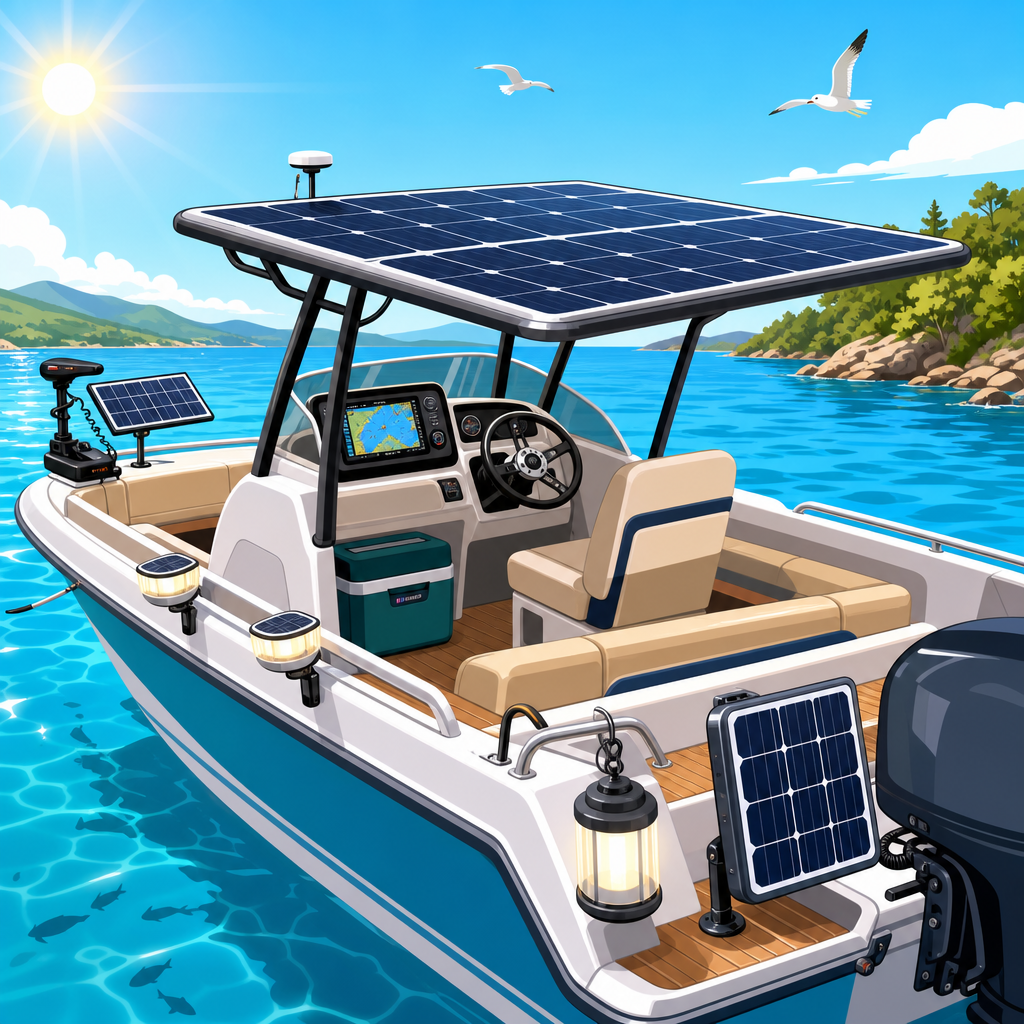

Choosing the best fishing accessories for your boat in 2026 is no longer just about convenience; it directly affects safety, efficiency, fishability, and how much value you get from every hour on the water. In practical terms, fishing accessories are the add-on tools, systems, and storage solutions that improve a boat’s ability to locate fish, manage gear, preserve catch, and protect crew. I have rigged center consoles, aluminum jon boats, bass boats, and bay boats for both weekend anglers and charter captains, and the pattern is always the same: the right accessories reduce wasted motion and increase time with lines in productive water. That matters even more in 2026 because marine electronics are smarter, lithium power systems are more common, and anglers expect cleaner, modular layouts that support multiple techniques. Whether you troll offshore, cast inshore, or chase crappie on reservoirs, the best boat fishing accessories are the ones that solve real on-water problems without creating clutter or electrical headaches.
Modern buyers also face a crowded market. One search for boat fishing gear now surfaces advanced fish finders with AI-assisted sonar interpretation, GPS trolling motors with anchor lock, networked batteries, app-controlled lighting, and modular tackle systems. Not all upgrades deserve a place on your deck. Some are transformative, while others become expensive distractions after a few trips. The most useful way to evaluate accessories is by function: finding fish, controlling the boat, organizing equipment, landing and preserving fish, and keeping anglers safe in changing weather. That framework reflects how experienced captains actually rig a boat. It also aligns with how searchers ask questions, such as what accessories do I really need on a fishing boat, what should I upgrade first, and which accessories are worth the money in 2026. The answers depend on your species, water type, hull size, and power capacity, but several categories consistently deliver measurable improvements.
Electronics That Actually Help You Catch More Fish
The most important fishing boat accessories in 2026 are still marine electronics, but the key is choosing systems that match how you fish rather than buying the largest screen available. A quality multifunction display from Garmin, Humminbird, Lowrance, or Raymarine paired with CHIRP sonar remains the core setup because it gives you bottom separation, bait visibility, mapping, and route control in one interface. For freshwater structure anglers, forward-facing sonar such as Garmin LiveScope, Humminbird MEGA Live, or Lowrance ActiveTarget has changed presentation strategy by showing fish behavior in real time. Offshore crews, by contrast, often get more value from radar integration, detailed charting, and transducer performance at speed than from forward sonar. In my experience, the best electronics package is the one you can interpret quickly under pressure, not the one with the longest feature list.
Networking matters more in 2026 because anglers increasingly expect data sharing between bow and helm units, trolling motors, shallow-water anchors, and engine systems. NMEA 2000 remains the standard backbone for connecting compatible devices, while Ethernet handles faster sonar and chart data. If you install electronics without planning network architecture, you often end up with duplicate sensors, cluttered wiring, and screens that do not share waypoints correctly. A practical example is a bass boat running two 12-inch displays, a Minn Kota Ultrex QUEST, and dual shallow-water anchors. When integrated properly, the driver can mark brush piles at the console, move to the bow, and approach them quietly with the same mapping and boat-position data. That is not a luxury feature; it directly improves casting angles and repeatability.
Another accessory category gaining ground is dedicated battery monitoring. Fish finders, live sonar, pumps, and charging systems all draw power differently, and lithium batteries behave differently from lead-acid systems under load. A monitor from Victron Energy or a smart battery management system can prevent the all-too-common problem of voltage drop causing sonar interference or screen shutdowns. If a searcher asks which electronic accessory is most overlooked, battery health monitoring is a strong answer because it protects every other investment on the boat.
Boat Control Accessories: Trolling Motors, Anchors, and Positioning
If electronics tell you where fish are, boat control determines whether you can stay in the strike zone. The best fishing boat upgrade for many anglers in 2026 is a GPS-enabled trolling motor. Minn Kota, MotorGuide, and Lowrance Ghost models allow spot lock or anchor mode, route recording, and precise directional adjustments. On windy points, bridge pilings, or offshore humps, holding position manually is exhausting and inconsistent. A GPS trolling motor keeps your lure in the target area longer, which statistically increases opportunities. In my own rigging work, this is the accessory clients praise most after a season because it changes how they approach structure and fish solo.
Shallow-water anchors such as Power-Pole and Minn Kota Raptors remain highly effective for inshore skiffs, bass boats, and flats boats fishing depths where a spike can pin the hull quietly. They shine when sight fishing redfish, working docks, or retying in current because they stop the boat without the noise and swing radius of a traditional anchor. However, they are not universal. They add transom weight, cost real money, and offer little utility in deep lakes or offshore conditions. That tradeoff is important. The best accessory is not the one everyone recommends online; it is the one that solves your specific positioning problem.
Drift control tools deserve mention too. Drift socks, stakeout poles, and quick-deploy anchor systems are affordable compared with electric positioning technologies, yet they remain effective. On walleye boats and multispecies rigs, a drift sock can slow the boat enough to maintain proper lure speed in wind. That simple adjustment frequently outperforms costly upgrades when the technique depends on presentation pace. For budget-conscious anglers asking what fishing accessories offer the best value, a drift sock and a reliable anchor setup belong near the top of the list.
Storage, Rigging, and Deck Organization That Save Time
One of the fastest ways to improve a fishing boat is to reduce deck chaos. The best boat fishing accessories for organization include modular tackle trays, vertical rod storage, under-gunnel tool holders, waterproof dry boxes, and rigging tracks from systems like YakAttack, T-H Marine, and Cisco. These are not glamorous purchases, but they create efficiency that compounds across a season. When pliers, leader spools, cull tags, and terminal tackle all have fixed positions, you spend less time searching and more time casting. On guide boats, organized storage also reduces customer confusion and prevents hooks from ending up where bare feet land.
Cooler management and insulated fish storage are equally important. A premium marine cooler from Yeti, Engel, or RTIC can double as seating, but the real value is temperature retention and secure tie-down integration. If you keep table fish, adding insulated kill bags or improving the existing fish box with better drainage and macerator pump maintenance preserves quality. In warm climates, I recommend anglers think of catch care as part of the accessory system, not an afterthought. Ice, circulation, and clean surfaces affect fillet quality as much as tackle choice.
Lighting is another underappreciated rigging decision. In 2026, low-draw LED deck lights, courtesy lights, and compartment lights are standard upgrades because they improve safety during pre-dawn launches and night fishing without crushing battery reserves. The right setup uses red or dimmable white light where possible to preserve night vision. Cheap, poorly installed lighting often fails due to corrosion at connectors, so marine-grade tinned wire, heat-shrink terminals, and proper circuit protection matter as much as the fixture itself. That is a recurring truth in boat rigging: installation quality determines whether an accessory becomes an asset or a maintenance problem.
| Accessory | Best For | Main Benefit | Key Limitation |
|---|---|---|---|
| GPS trolling motor | Bass, walleye, inshore structure fishing | Precise boat positioning and hands-free control | High cost and power demand |
| Forward-facing sonar | Structure and suspended fish anglers | Real-time fish and lure tracking | Steep learning curve |
| Shallow-water anchor | Flats, docks, shallow bays | Quiet stopping in skinny water | Limited usefulness in deep water |
| Modular storage system | All boat types | Faster access and safer deck layout | Requires planning to fit space well |
| Battery monitor | Electronics-heavy rigs | Prevents power-related failures | Often overlooked until problems appear |
Landing Gear, Livewell Upgrades, and Fish Care Essentials
Once fish are located and hooked, accessories for landing and fish care become the difference between success and frustration. A high-quality landing net with rubberized mesh is a smart 2026 choice because it reduces hook tangles and is gentler on fish intended for release. Frabill, EGO, and Ranger nets remain strong options. Offshore and nearshore anglers may prioritize a fixed or collapsible gaff, but that choice should match harvest intent and local regulations. For catch-and-release fisheries, fish grips, measuring boards, and knotless netting are better tools than aggressive handling methods that remove slime or damage gills.
Livewell performance is another area where a modest upgrade pays off quickly. Many stock systems struggle in summer heat, rough water, or tournament conditions. Adding a timer, oxygenation aid, recirculation pump upgrade, or vented livewell lid can dramatically improve fish survival. Bass anglers have understood this for years, but the principle applies broadly. If your target species spends hours in the well, water exchange, dissolved oxygen, and temperature control are not optional details. They are the system. I have seen anglers spend thousands on sonar and then lose fish because their livewell pumps were undersized or poorly maintained.
Deck wash systems and raw-water washdown pumps also earn their place, especially for saltwater boats. Blood, bait scales, and sand degrade comfort and create slip hazards. A washdown lets you clean as you go instead of ending every trip with a hardened mess. Pair that with durable cutting boards, knife storage, and a sealed trash container, and your cockpit becomes easier to fish and easier to maintain. Good accessories do not just help you catch fish; they reduce cleanup time and extend the life of the boat.
Safety and Power Accessories You Should Not Skip
The best fishing accessories for your boat are the ones you hope never to test fully. Safety gear in 2026 should include more than the legal minimum. A fixed-mount VHF with Digital Selective Calling, an EPIRB or PLB for offshore use, a well-stocked first-aid kit, and high-output bilge pumps are serious essentials. If you fish large water, weather can shift faster than a smartphone forecast suggests. A VHF connected to GPS can transmit your position during an emergency, and that capability is far more important than another rod holder. For inland anglers, throwable flotation, a reliable horn, fire extinguisher inspection, and navigation light maintenance remain basic but critical.
Power management is inseparable from safety now that boats carry more electronics. On many 2026 rigs, a DC-to-DC charger or onboard smart charger from NOCO, Power-Pole Charge, or Minn Kota helps keep cranking and house batteries balanced during long days. Blue Sea Systems fuse blocks, bus bars, and switch panels remain trusted standards because they simplify clean, safe electrical distribution. If accessories are installed with automotive wire, poor grounds, and random inline fuses, failures become inevitable. Good rigging follows ABYC principles, uses marine-grade materials, and labels circuits clearly for troubleshooting.
Security accessories also deserve a final mention. Trailer locks, electronics covers, battery compartment locks, and discreet GPS tracking devices can protect a significant investment. Boat theft and component theft are not rare in many marinas and storage lots. Practical security does not need to be elaborate; it needs to be layered and consistent.
The best fishing accessories for your boat in 2026 are the upgrades that make each trip more controlled, organized, safe, and productive. Start with the accessories that solve your biggest bottleneck: finding fish, holding position, managing gear, protecting power, or preserving catch quality. For most anglers, that means prioritizing a capable sonar and mapping unit, a GPS trolling motor, disciplined storage, dependable lighting, and sound electrical rigging before chasing trendy add-ons. The right setup is not the most expensive one. It is the one that matches your water, your species, and your actual fishing habits.
If you are planning upgrades this season, audit your boat the way a guide or captain would. Note where time gets wasted, where safety feels thin, and which failures happen repeatedly. Then build around proven systems from established marine brands and insist on clean installation. That approach delivers better fishing days and fewer headaches at the ramp. Make a short priority list, upgrade in stages, and turn your boat into a smarter fishing platform for 2026.
Frequently Asked Questions
1. What fishing accessories are the most important to add to a boat in 2026?
The most important fishing accessories for a boat in 2026 are the ones that improve safety, fish-finding ability, organization, and fish care. For most anglers, that starts with modern marine electronics such as a dependable GPS/chartplotter, sonar or fish finder, and, if the budget allows, trolling motor integration. These tools save time, help you stay on productive structure, and make it easier to return to proven spots. In many cases, upgraded electronics deliver more real-world fishing value than buying additional rods or tackle because they directly affect how efficiently you locate and stay on fish.
Right behind electronics are practical storage and rigging upgrades. Rod holders, tackle management systems, dry storage compartments, battery management accessories, and deck organizers make a major difference in how cleanly and safely a boat fishes. When gear is properly secured and easy to access, you spend less time untangling equipment or digging through compartments and more time casting. This matters on every platform, whether you are setting up a bass boat for tournament mornings, a bay boat for inshore drifts, or a jon boat for simple weekend trips.
Catch preservation and onboard comfort also deserve priority. A high-quality cooler or insulated fish box, livewell upgrades, non-slip decking, quality lighting, and washdown accessories all improve the experience and utility of the boat. If you regularly fish early mornings, at night, or through changing weather, details like LED deck lights, waterproof charging ports, and a reliable bilge and pump setup stop feeling optional very quickly. In short, the best accessories are not always the flashiest ones; they are the items that make your boat safer, more efficient, easier to fish from, and better suited to the way you actually use it.
2. How do I choose the right accessories for my specific type of fishing boat?
The right accessories depend heavily on your boat style, deck layout, power capacity, and fishing style. A center console often benefits from versatile rod storage, offshore-grade electronics, additional livewell support, raw-water washdown systems, and durable holders for trolling, bottom fishing, or drift fishing. A bass boat usually prioritizes bow electronics, shallow-water anchors, tournament-focused storage, trolling motor performance, and fast access to rods and tackle. A bay boat may need a blend of both worlds, with accessories that support sight fishing, inshore casting, bait management, and occasional nearshore trips. Aluminum jon boats and smaller utility rigs usually need lighter, more space-efficient upgrades such as compact sonar units, removable seating, portable tackle storage, and carefully planned battery placement.
One of the biggest mistakes boat owners make is buying accessories before thinking through space, weight distribution, and electrical demand. Not every boat can or should carry every upgrade. For example, adding multiple large screens, high-draw lighting, pumps, and charging systems without evaluating battery capacity and wiring can create more problems than benefits. Likewise, oversized coolers, extra tackle stations, or poorly mounted holders can clutter casting lanes and reduce safe movement around the boat. A smart setup supports the boat’s purpose instead of overwhelming it.
The best approach is to assess how you fish most often. Ask yourself where you spend your time, what species you target, how many people are usually onboard, and what frustrations repeatedly show up during a trip. If you constantly lose time re-rigging, storage and rigging accessories may matter more than another electronic display. If you fish tidal creeks and flats, a shallow-water anchor may be more valuable than a larger fish box. If you run long distances offshore, redundancy in navigation, communications, and power accessories becomes essential. The ideal accessory package is not built around trends; it is built around your boat’s layout and your fishing reality.
3. Are high-tech electronics and smart accessories really worth the investment for anglers in 2026?
For many boat owners, yes, high-tech fishing accessories are absolutely worth the investment in 2026, provided they match the way the boat is used. Today’s electronics do far more than simply show depth. Modern fish finders, chartplotters, integrated trolling motor systems, advanced mapping, and networked accessories can dramatically improve your ability to locate fish, repeat productive drifts, mark structure, and move efficiently between spots. Even for casual anglers, the ability to navigate safely in low light, monitor conditions, and save waypoints often pays off in both confidence and time saved on the water.
That said, value comes from proper selection and installation, not from buying the most expensive screen on the market. A mid-range setup that is clearly visible, correctly mounted, and powered by a reliable electrical system is usually more useful than a premium setup installed poorly. Many anglers overspend on features they will rarely use while overlooking basics like transducer placement, battery health, waterproof connections, and screen positioning. In real-world conditions, reliability and ease of use matter just as much as processing power or display size.
Smart accessories can also extend beyond fish-finding. Battery monitoring systems, digital switching, app-connected lighting, advanced trolling motor controls, and integrated safety alerts are becoming more common and more practical. These upgrades can reduce troubleshooting, improve power management, and simplify boat operation, especially on rigs with multiple accessories installed. The key is to think in terms of return on use. If a technology helps you fish more effectively, operate more safely, or reduce wasted time every trip, it is probably worth serious consideration. If it only looks impressive at the dock, it may not deserve space or budget on your boat.
4. Which boat fishing accessories improve safety the most?
The fishing accessories that improve safety the most are often the least glamorous, but they are among the most important upgrades you can make. A reliable GPS/chartplotter, quality navigation lights, a VHF radio for coastal use, battery monitoring tools, bilge pump upgrades, and dependable onboard charging systems all contribute directly to safer operation. These items help you navigate confidently, communicate in emergencies, manage electrical reliability, and respond to water intrusion before it becomes a serious problem. In 2026, safety-minded rigging is increasingly about prevention, not just emergency response.
Deck safety also matters more than many anglers realize. Non-slip flooring, secure grab points, properly mounted rod holders, organized tackle storage, and clean cable routing can prevent falls, hook injuries, and gear-related accidents. Boats become dangerous quickly when loose equipment shifts underfoot, rods clutter walkways, or batteries and wiring are installed carelessly. Good accessory choices reduce these risks by keeping the deck clear and making movement more predictable, especially when conditions change or multiple anglers are onboard.
There is also a strong safety case for accessories that support visibility and endurance. LED deck and compartment lighting improve low-light operation without forcing you to use a flashlight in one hand. Weatherproof phone charging ports and backup power solutions help maintain communication. Shade solutions, insulated coolers, freshwater washdown options, and better seating may sound like comfort upgrades, but they also reduce fatigue, dehydration, and poor decision-making during long days on the water. The safest fishing boat is usually not the one with the most emergency gear piled aboard; it is the one rigged thoughtfully so problems are less likely to happen in the first place.
5. How can I upgrade my fishing boat without overspending on accessories I do not need?
The smartest way to upgrade a fishing boat without overspending is to prioritize accessories based on impact, not impulse. Start by identifying the biggest weak points in your current setup. If you struggle to find fish efficiently, electronics may be the first upgrade. If your deck is always cluttered, storage and rod management accessories may provide more value than any new gadget. If your catch quality suffers, then improved fish storage, coolers, or livewell enhancements should move higher on the list. This kind of practical decision-making keeps your budget tied to real on-the-water results.
It also helps to upgrade in stages. Instead of trying to rig the entire boat at once, build around a core system of safety, power, fish-finding, and storage. Make sure your batteries, wiring, mounts, and available space can support future additions. This prevents you from buying accessories twice or creating conflicts between systems later. For example, installing a proper mounting solution and power distribution setup now can make future electronics upgrades simpler and less expensive. A phased approach usually leads to a cleaner, more reliable boat than chasing every trend in a single season.
Finally, focus on durability and compatibility. Cheap accessories often fail in the marine environment, and replacements quickly erase any initial savings. Salt, vibration, UV exposure, and constant moisture punish poorly built gear. Buy products designed for marine use, confirm they fit your hull and layout, and think carefully about how each addition affects available space, balance, and workflow. The best value does not come from buying the lowest-priced accessory; it comes from choosing equipment that solves a real problem, lasts through hard use, and makes every trip more productive and enjoyable.