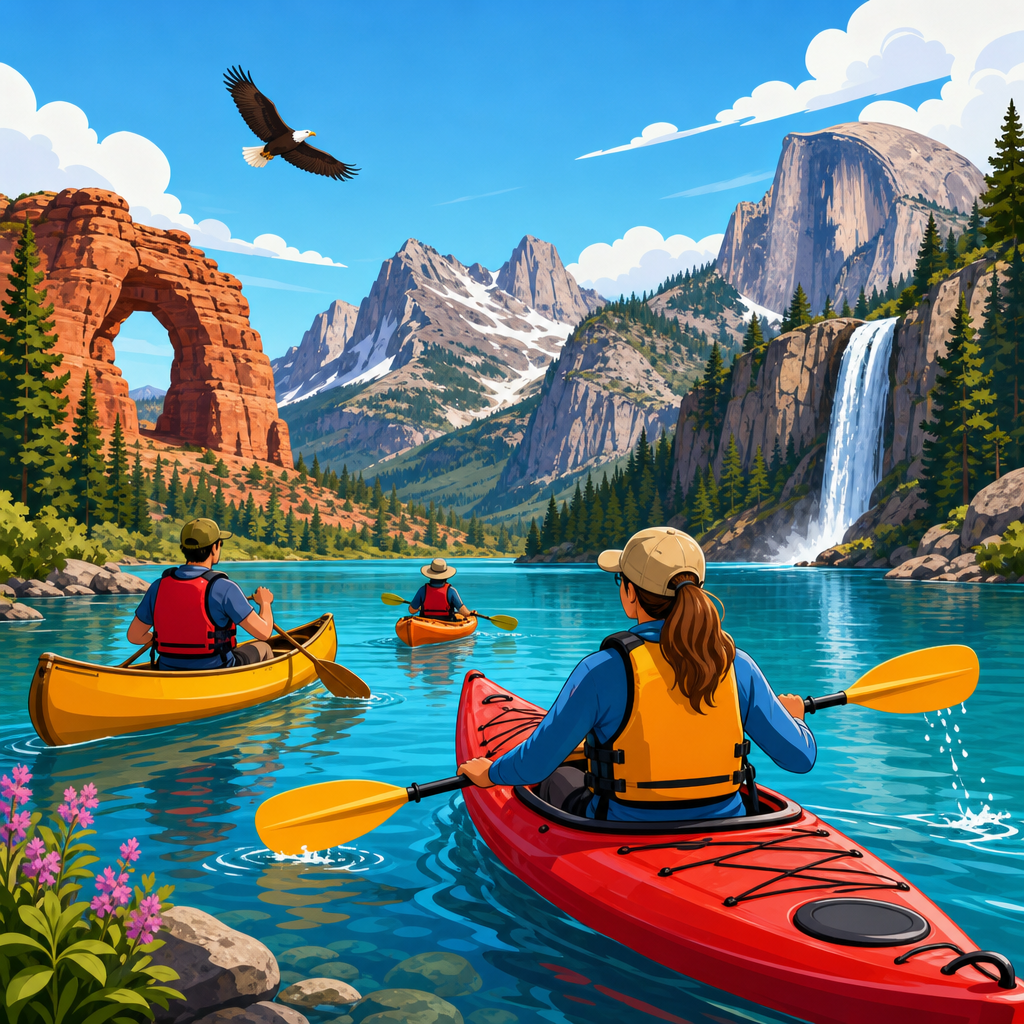
Boating in national parks offers a rare combination of access, scenery, and protected water that few other destinations can match. For paddlers, that means quiet coves, undeveloped shorelines, wildlife encounters, and routes that still feel exploratory even when they are well mapped. In this guide to the top 5 national parks for canoeing and kayaking adventures, I am focusing on parks where paddling is not a side activity but a defining way to experience the landscape. Canoeing and kayaking are often grouped together, but they shape a trip differently: canoes carry more gear and suit family travel or flatwater touring, while kayaks handle wind, chop, and longer mileage more efficiently. Understanding those differences matters when choosing a destination, because the best boating in national parks depends on matching your craft, skill level, and season to local conditions. This hub also matters because national park boating rules vary widely. Some parks require permits, some restrict motorized support, some have cold-water hazards even in summer, and others demand advanced route planning due to tides, afternoon storms, or remote campsites.
I have planned and paddled park waters where the launch looked easy on paper and proved far more technical once wind, distance, and ranger regulations came into play. That is why a useful hub article must do more than list beautiful places. It should answer the practical questions travelers actually ask: Which parks are best for beginners? Where can you do multi-day canoe trips? Which destinations require sea kayaking experience? What permits, shuttle logistics, and safety systems should you expect? The five parks below stand out because they represent different paddling styles across the national park system: wilderness lakes, island-dotted inland seas, mangrove coasts, glacial fjords, and river corridors. Together, they form the clearest starting point for anyone researching boating destinations and travel within the broader subject of boating in national parks.
1. Voyageurs National Park: the best all-around canoe and kayak park
Voyageurs National Park in northern Minnesota is the most complete paddling destination in the national park system for travelers who want variety without giving up infrastructure. Nearly 40 percent of the park is water, spread across large connected lakes including Rainy, Kabetogama, Namakan, and Sand Point. The headline advantage is flexibility. Beginners can stay near developed visitor areas and protected bays, while experienced paddlers can link campsites across long wilderness routes with portages into interior lakes. Because the park is shaped by water access, boating is not optional here; it is the primary transportation network.
For canoeing, Voyageurs excels because of its sheltered water options and designated backcountry sites. For kayaking, it rewards efficient travel between islands and along intricate shorelines. I recommend it first to paddlers who want a true national park immersion without needing coastal navigation skills. Campsites include tent pads, fire rings, bear lockers in many areas, and docks at numerous sites, which makes loading and unloading far simpler than in more primitive parks. Rangers also provide route advice based on weather exposure, which is critical because large lakes can build dangerous wind waves quickly.
The best trips usually fall into three categories: half-day paddles from visitor centers, overnight loops around island clusters, and multi-day expeditions combining big water with portage lakes such as Locator Lake or Quill Lake. Wildlife viewing is a major draw. Loons, bald eagles, beavers, and occasionally moose are part of the experience, especially during morning departures. Peak season runs from late June through early September, though bug pressure is often higher earlier in summer. If you are building out a broader boating in national parks itinerary, Voyageurs is the ideal hub destination because it teaches the permit habits, weather judgment, and campsite planning that transfer well to more demanding parks.
2. Everglades National Park: the premier wilderness paddling network
Everglades National Park in Florida offers the most extensive warm-water paddle trail system in the U.S. national parks. It is a different kind of canoeing and kayaking adventure from northern lake country. Instead of rocky shorelines and islands, paddlers move through mangrove tunnels, broad bays, brackish estuaries, and remote chickee camps. The park’s marked Wilderness Waterway runs about 99 miles from Everglades City to Flamingo, making it one of the most established long-distance paddle routes managed by the National Park Service. Shorter segments, day routes, and out-and-back trips also make the park accessible to less experienced boaters.
What makes the Everglades exceptional is route diversity. One day can involve narrow mangrove creeks with almost no wind exposure; the next can require crossing open water in Whitewater Bay or coastal sections where weather timing matters. Canoes remain popular here because they carry expedition loads well, but many skilled visitors prefer touring kayaks for efficiency in wind and for easier boat control in tidal current. Either way, trip planning must be specific. Tides affect water depth in creeks, afternoon thunderstorms are common in warmer months, bugs can be severe, and navigation can be tricky when every mangrove shoreline looks similar. A deck compass, chart, GPS backup, and printed route notes are not optional on longer trips.
The park also demonstrates why boating in national parks is as much about regulation as recreation. Wilderness camping requires reservations, designated sites fill early in peak season, and launch choices shape the entire route. Flamingo suits Florida Bay and coastal access, while Gulf Coast Visitor Center serves the western mangrove networks. Winter and early spring usually offer the most stable conditions. Summer is lush and dramatic but substantially harder due to heat, storms, insects, and exposure. For travelers seeking a true expedition with established management and unmistakable ecological value, Everglades belongs near the top of any list.
How the top 5 parks compare for boating in national parks
| National Park | Best For | Primary Water Type | Skill Level | Typical Trip Style |
|---|---|---|---|---|
| Voyageurs | Balanced canoe and kayak trips | Connected lakes | Beginner to advanced | Day trips to multi-day camping |
| Everglades | Long-distance wilderness routes | Mangroves, bays, coast | Intermediate to advanced | Expedition paddling |
| Isle Royale | Sea kayak exploration | Cold open lake | Advanced | Coastal touring and camping |
| Glacier Bay | Remote scenery and wildlife | Tidal marine water | Advanced | Supported backcountry trips |
| Big Bend | River canyon paddling | Rio Grande | Beginner to intermediate | Shuttle-based river runs |
3. Isle Royale National Park: the best advanced sea kayaking challenge
Isle Royale National Park, isolated in Lake Superior, is one of the most serious kayaking destinations in the park system. It belongs on this list because it delivers a rare combination of wilderness immersion, designated paddler campsites, and true expedition conditions in freshwater. The island’s convoluted shoreline, offshore islets, and protected inlets create extraordinary route options, but Lake Superior can shift from calm to life-threatening very quickly. Cold water is the defining hazard. Even in midsummer, immersion risk remains severe, and self-rescue standards should be treated with the same seriousness as ocean paddling.
This is not the first park I suggest to casual vacation paddlers. It is, however, one of the best places in North America for experienced sea kayakers who want to travel through a national park under their own power. Common routes include the Rock Harbor area for shorter basecamp explorations and longer traverses along the island’s south or north shore, depending on weather windows. Canoeing is possible in some inland waters, but the park’s reputation is built on decked kayaks designed for open crossings, surf landings, and rough-water control.
Logistics are part of the challenge. Access usually involves a ferry or seaplane from Michigan or Minnesota, gear loading must be efficient, and weather delays are real. On the water, paddlers need reliable navigation, cold-water clothing, and conservative judgment. Yet the rewards are enormous: rugged basalt shorelines, clear water, moose sightings, and nights in camps that feel notably removed from the mainland. If your research on boating destinations and travel includes serious kayak expedition planning, Isle Royale is the park that separates scenic paddling from technical wilderness travel.
4. Glacier Bay National Park: world-class paddling in a glacial marine landscape
Glacier Bay National Park in Alaska is one of the most dramatic kayaking environments on Earth. The reason it ranks among the top 5 national parks for canoeing and kayaking adventures is not convenience but scale. Few places let paddlers move beneath snow-covered peaks, past tidewater glaciers, and through waters frequented by sea otters, harbor seals, humpback whales, and brown bears on shore. This is marine paddling in a dynamic cold-water ecosystem, and every part of the experience depends on preparation.
Sea kayaks are the standard here. Canoes are generally impractical because of wind, swell, and landing conditions. Most paddlers use a drop-off or pickup service through the concessionaire or join guided trips, then camp in designated backcountry zones. Tides, katabatic winds descending from icefields, and calving glacier safety setbacks all shape route design. The National Park Service provides mandatory orientation for independent backcountry users, and that is not just administrative process. It covers bear storage, human waste management, marine charts, weather interpretation, and wildlife distance rules. Those briefings materially improve trip safety.
In practice, the best Glacier Bay journeys are not mileage contests. They are carefully timed coastal itineraries where paddlers travel when conditions are favorable and stay put when they are not. West Arm and other sectors can be stunning, but route choice should reflect your tolerance for exposure and your ability to wait out weather. I advise treating Glacier Bay as a premium expedition destination for strong paddlers or guided clients who want elite scenery and understand that marine wilderness has no easy backup plan. As a hub topic within boating in national parks, Glacier Bay shows the high end of remote paddle travel.
5. Big Bend National Park: the top river canoeing and kayaking destination
Big Bend National Park in Texas rounds out the list because it offers the strongest river-based paddling experience among major national parks. The Rio Grande cuts through spectacular desert canyons, including Santa Elena, Mariscal, and Boquillas, creating trips that feel geologically intimate and logistically distinct from lake or coastal paddling. If Voyageurs represents classic flatwater touring and Glacier Bay represents marine expedition boating, Big Bend is the best example of moving-water exploration in a national park setting.
The appeal is straightforward. Many sections are suitable for intermediate paddlers in stable conditions, outfitters can arrange shuttles, and day trips coexist with overnight canyon runs. Water levels determine everything. In lower flows, some stretches require dragging or scraping; in higher flows, current becomes more consequential and hazards change character. Canoes are common because they carry camping gear well, but kayaks are also widely used, especially by paddlers who prefer maneuverability in current. Before any launch, check flow data, ask rangers about recent changes, and confirm border-related regulations because the river corridor has specific legal and operational considerations.
Big Bend is also one of the best teaching parks for river judgment. Wind still matters, heat management is critical, and desert remoteness raises the cost of mistakes. Yet the route structure is easier to understand than in sprawling coastal wetlands or open Great Lakes crossings. For travelers building a portfolio of boating in national parks experiences, Big Bend adds a fundamentally different environment and skill set: reading current tongues, identifying strainers or undercut risk where applicable, and planning camps around river access rather than designated island sites.
How to choose the right park, season, and boat
The best national park for canoeing and kayaking is the one that matches your actual experience, not your aspirational itinerary. Choose Voyageurs if you want forgiving route options, family-friendly camping, and a strong first multi-day trip. Choose Everglades if you want a warm-weather expedition with route complexity and wildlife-rich wetlands. Choose Isle Royale if you are an experienced sea kayaker prepared for cold open water. Choose Glacier Bay if you want guided or highly competent independent marine wilderness travel. Choose Big Bend if canyon scenery and river progression appeal more than lake crossings or tidal coasts.
Season matters as much as location. Northern parks have short prime windows. Subtropical parks punish poor timing with storms and insects. Alaska compresses access into summer, while desert rivers swing with flow and heat. Boat choice follows environment. Recreational kayaks are fine for sheltered day paddles but not for exposed crossings. Touring kayaks suit distance and weather. Canoes excel for carrying loads and fishing-oriented travel on calmer water. Whatever craft you choose, pack for immersion, not just air temperature, and study each park’s permit system before building the route. If you are exploring this hub as a gateway into boating destinations and travel, start with one park that fits your current skill level, then use that experience to expand into the others with better judgment and better plans.
The top 5 national parks for canoeing and kayaking adventures are not interchangeable scenic backdrops. Each one represents a distinct style of paddling and a different decision framework. Voyageurs is the most versatile and accessible all-around choice. Everglades is the leading wilderness trail network for canoe and kayak expeditions. Isle Royale delivers advanced cold-water sea kayaking in a uniquely isolated setting. Glacier Bay offers unmatched glacial marine scenery for well-prepared paddlers. Big Bend stands out for river canyons, shuttle-based trips, and desert immersion. Together, they define the core of boating in national parks and provide the best starting map for this subtopic within boating destinations and travel.
The main benefit of using this hub is clarity. Instead of treating every park lake or launch ramp as equal, you can identify the destination that matches your goals, season, budget, and safety margin. From here, the smart next step is simple: pick the park that fits your present skill level, review its permit and launch requirements, and build a route with conservative daily mileage. Do that well, and national park paddling stops being a vague travel idea and becomes a trip you can actually execute with confidence.
Frequently Asked Questions
What makes a national park especially good for canoeing and kayaking?
The best national parks for paddling offer much more than just water access. They combine scenic waterways, protected shorelines, manageable boating conditions, and enough route variety to appeal to both beginners and experienced paddlers. In a top-tier paddling park, canoeing or kayaking is not simply an add-on activity at a marina or lodge; it is one of the most rewarding and immersive ways to experience the landscape itself. That often means long stretches of undeveloped shoreline, quiet backwaters, island chains, hidden coves, wetlands, estuaries, or lake systems that reveal the park from a completely different angle than roads or hiking trails can provide.
Another major factor is the quality of the on-the-water experience. National parks known for canoeing and kayaking typically have areas where paddlers can escape motor traffic, enjoy relatively calm water during the right conditions, and encounter wildlife in a less disruptive way. Loons, otters, moose, herons, dolphins, manatees, alligators, bears, or seabirds can become part of the experience depending on the park. Strong paddling destinations also tend to have practical infrastructure such as launch sites, mapped routes, ranger information, permit systems for backcountry travel, and seasonal guidance that helps visitors paddle safely and responsibly.
What truly separates the best parks is how naturally boating fits the setting. In places like Voyageurs, Everglades, Isle Royale, Channel Islands, or Grand Teton, paddling can define the visit rather than supplement it. You are not just looking at the park from a roadside turnout; you are moving through it at water level, hearing the shoreline, reading the weather, and noticing details that faster travel misses. That combination of access, scenery, solitude, and immersion is what makes a national park stand out as a true canoeing and kayaking destination.
Are these national parks suitable for beginners, or are they better for experienced paddlers?
That depends on the specific park, the season, and the exact route you choose. Some of the top national parks for canoeing and kayaking include excellent beginner-friendly water, but many also contain large lakes, coastal passages, tidal zones, or changeable weather that can become challenging very quickly. Beginners are usually best served by starting with sheltered water such as calm lakeshores, protected bays, marsh trails, slow-moving inland channels, or ranger-recommended short routes. In the right conditions, even iconic paddling parks can offer accessible outings that feel adventurous without being overly technical.
At the same time, it is important not to assume that a national park setting automatically means easy paddling. Parks with open water, strong afternoon winds, tides, surf landings, cold water, or long distances between access points often demand more skill and planning. For example, a quiet morning paddle near shore can be beginner-friendly, while a cross-lake route or exposed coastal section in the same park may be appropriate only for experienced boaters. Everglades routes can involve navigation challenges and remote camping logistics. Isle Royale and Channel Islands can expose paddlers to cold water and rapidly changing conditions. Even seemingly calm mountain lakes can become rough when winds build.
The best approach is to match your route to your ability, not your ambition. If you are new to paddling, choose shorter trips, stay close to shore, check weather carefully, wear a properly fitted life jacket, and consider a guided tour or rental outfitter familiar with the park. If you are more advanced, many of these parks offer multi-day expeditions, remote crossings, and backcountry itineraries that reward strong navigation, self-rescue skills, and sound judgment. In other words, these parks can work for a wide range of paddlers, but the key is choosing the right water for your experience level.
What should I pack for a canoeing or kayaking trip in a national park?
A well-packed paddling kit should cover safety, weather protection, navigation, and basic comfort. The non-negotiable item is a properly fitted personal flotation device, and it should be worn, not just carried. Beyond that, most paddlers should bring a paddle leash if appropriate, a whistle, drinking water, sun protection, a hat, sunglasses with retention, quick-drying clothing, and a dry bag for essentials such as a phone, map, permit, keys, and extra layers. Footwear matters too, especially in parks with muddy launches, rocky shorelines, shell beaches, or slippery boat ramps.
If you are paddling for more than a short outing, your packing list should become more deliberate. A waterproof map or navigation aid is especially important in large lake systems, mangrove mazes, estuaries, and island environments. A first-aid kit, emergency snacks, rain gear, and an extra insulating layer are smart additions in nearly every season. In buggy or subtropical parks, insect protection can make a major difference. In cold-water parks, dressing for immersion rather than just air temperature is essential, and that may mean specialized layers depending on conditions. On remote or backcountry routes, paddlers should also think about repair items, lighting, communication devices, food storage, and camping gear if overnight travel is involved.
The most common packing mistake is preparing for a beach day instead of a paddling day. Conditions can shift fast on open water, and national parks often have fewer immediate services than visitors expect. Bring less bulky gear, but bring smarter gear. The goal is to stay safe, dry, visible, and self-sufficient enough to handle weather changes, delayed returns, or minor problems without turning a memorable paddle into a stressful one.
When is the best time of year to go canoeing or kayaking in national parks?
The best season varies widely by park because water temperature, weather patterns, wind, insects, crowd levels, and wildlife activity can all affect the experience. In northern parks, summer and early fall are often the most practical times for canoeing and kayaking because ice is gone, launch access is open, and temperatures are generally more comfortable. Even then, cold water can remain a serious factor, especially in larger lakes. In places like Voyageurs or Isle Royale, mid-summer may offer the most reliable combination of access and conditions, while early fall can provide fewer crowds and beautiful scenery if weather remains stable.
In southern or subtropical parks, the shoulder seasons are often ideal. Everglades, for instance, is frequently better in the cooler, drier months, when heat, humidity, bugs, and thunderstorms are less intense. Coastal parks may be affected by hurricane season, seasonal fog, surf conditions, or prevailing winds, so there is rarely a one-size-fits-all answer. Mountain and alpine parks can also see strong afternoon winds, making morning paddles much safer and more enjoyable regardless of month.
A good rule is to research not only the best season overall, but the best window for the specific route you want to paddle. A sheltered marsh trail may be excellent almost year-round, while an exposed crossing might only be wise during a narrower seasonal window. Checking local ranger updates, marine forecasts, water temperatures, and current advisories is one of the most valuable parts of trip planning. The ideal time to go is when the park’s natural conditions align with your skill level and the type of paddling experience you want, whether that is wildlife viewing, solitude, backcountry exploration, or a relaxed half-day outing.
Do I need permits, reservations, or special planning for paddling in these parks?
In many cases, yes. One of the biggest misconceptions about canoeing and kayaking in national parks is that you can simply arrive, launch, and go anywhere. Some parks do allow straightforward day use from public access points, but others require permits, timed reservations, backcountry site bookings, boat inspections, or route-specific planning. Overnight paddling trips almost always involve more structure, especially in protected wilderness areas where campsites are limited and resource protection is a priority. If your itinerary includes island camping, wilderness beaches, chickees, designated shoreline sites, or remote backcountry zones, assume that advance planning will be necessary.
Even when permits are not required for a simple day paddle, there may still be regulations that affect your trip. Parks may restrict certain landing areas, seasonal wildlife closures, invasive species protocols, or motor zones. Weather exposure, tides, water levels, and shuttle logistics can also shape what is realistic. In larger or more remote parks, route planning should include distances, access points, bailout options, expected wind direction, and emergency contingencies. Renting from a local outfitter can help, but it does not replace the need to understand the park’s rules and conditions for yourself.
The smartest approach is to treat paddling in a national park as an activity that rewards preparation. Check the official park website, review current alerts, confirm launch and camping rules, and contact rangers if you are planning anything beyond a casual shoreline paddle. This is especially important in parks where waterways are vast, navigation is complex, or weather changes rapidly. A little extra planning usually leads to a much better trip: fewer surprises, safer decisions, and more time enjoying the exact qualities that make these parks exceptional for canoeing and kayaking in the first place.