Keeping your boat’s fuel system in top condition is one of the most important parts of preventative maintenance because fuel problems cause some of the most common on-water breakdowns, poor engine performance, and expensive repair bills. A boat fuel system includes the tank, fill and vent lines, hoses, primer bulb, anti-siphon valve, filters, water-separating components, fuel pump, injectors or carburetor, and the fittings that connect them. When any one of those parts becomes restricted, contaminated, cracked, corroded, or improperly vented, the engine may run rough, lose power, stall, or fail to start entirely. I have seen boats towed in for “bad engines” that actually needed nothing more than a clogged filter, stale gasoline, or an air leak at a hose connection.
Marine fuel systems deserve more attention than automotive systems because boats often sit for long periods, operate in humid environments, and are exposed to vibration, salt, and temperature swings. Ethanol-blended gasoline can absorb moisture and loosen debris in older tanks and hoses, while diesel systems are vulnerable to water contamination and microbial growth. The stakes are also higher on the water. A fuel leak is not only a reliability issue; it is a fire risk and a safety risk far from shore. Good fuel system care improves starting, fuel economy, throttle response, and engine life, but it also protects passengers and preserves resale value. This guide explains the core maintenance practices, inspection points, and storage habits that keep a boat fuel system clean, safe, and dependable for years.
Understand the fuel system components and the failures they prevent
The first step in effective boat fuel system maintenance is understanding what each component does. Fuel begins in the tank, moves through a pickup tube, passes through hoses and fittings, often through an anti-siphon valve and primer bulb, then through a water-separating fuel filter before reaching the engine’s low-pressure and high-pressure delivery components. On an outboard, that may include a lift pump, vapor separator tank, injectors, and a returnless rail. On an inboard gasoline engine, it may involve a mechanical or electric pump and either a carburetor or electronic fuel injection. Diesel engines usually add primary and secondary filtration because they are less tolerant of contamination at the injector level.
Each part addresses a specific risk. The vent line allows the tank to breathe so fuel can flow without vacuum lock. The anti-siphon valve reduces the chance of fuel draining into the bilge if a line ruptures. The water-separating filter removes free water and suspended debris before it can reach precision components. Hoses must be marine-rated and resistant to permeation, alcohol exposure, and fire. If you know the role of each part, troubleshooting becomes faster. A collapsing primer bulb often points to a venting issue or blocked pickup. A hard-start problem after the boat sits may indicate air intrusion, fuel drain-back, or a weak check valve. This systems view helps owners avoid random parts replacement and focus on causes.
Inspect hoses, clamps, tanks, and fittings on a schedule
Routine inspection prevents most fuel system surprises. I recommend a quick visual check before every trip and a thorough inspection at least every 100 engine hours or once each season, whichever comes first. Look for cracked hoses, wet fittings, fuel odor, corrosion around clamps, soft spots in primer bulbs, and staining beneath the tank or filter assembly. In enclosed spaces, use your nose carefully and ventilate first. A persistent fuel smell is a fault until proven otherwise. On older boats, hoses installed before modern alcohol-resistant standards may swell internally or shed particles that plug filters and carburetor passages.
Use only marine-rated hose that matches the application, such as low-permeation fuel fill, vent, or feed hose carrying the appropriate SAE and USCG markings. Clamps should be stainless and tight, but not so tight that they cut into the hose. Aluminum tanks deserve close attention where moisture can be trapped against the surface by foam, debris, or poorly drained compartments. Polyethylene tanks resist corrosion but still require secure mounting and inspection of fittings and sender seals. If a fitting rotates, weeps, or shows green or white corrosion, correct it immediately. Small leaks rarely stay small on a vibrating hull. Replace suspect components proactively rather than waiting for a failure during a long run offshore or across a busy channel.
Manage fuel quality to prevent water, varnish, and phase separation
Fuel quality is the foundation of fuel system longevity. Gasoline begins to oxidize as it ages, and light fractions evaporate, leaving gum and varnish that foul injectors and carburetors. Ethanol-blended fuel makes storage management even more important because it can absorb water from humid air. Once enough water is absorbed, the alcohol-water mixture can separate from the gasoline, a process commonly called phase separation. When that mixture reaches the engine, combustion quality drops sharply and corrosion risk rises. Diesel has a different problem set: water at the tank bottom supports microbial growth, creating sludge that clogs filters and corrodes components.
The best defense is to buy fresh fuel from high-turnover marinas or service stations, keep the tank clean, and avoid letting fuel sit too long. Follow the engine manufacturer’s octane or cetane recommendations; more is not automatically better. If the boat will sit, use a marine fuel stabilizer at the correct treatment rate and run the engine long enough to circulate treated fuel through lines and engine components. Keep the fill cap sealed and the vent system in proper condition to limit unnecessary moisture ingress. If you suspect bad fuel, do not keep trying to run through it. Drain and test the fuel, inspect the tank bottom for water or debris, and replace filters. Contaminated fuel can mimic ignition and mechanical problems, so always verify fuel quality early in the diagnostic process.
Change filters regularly and know what the filter is telling you
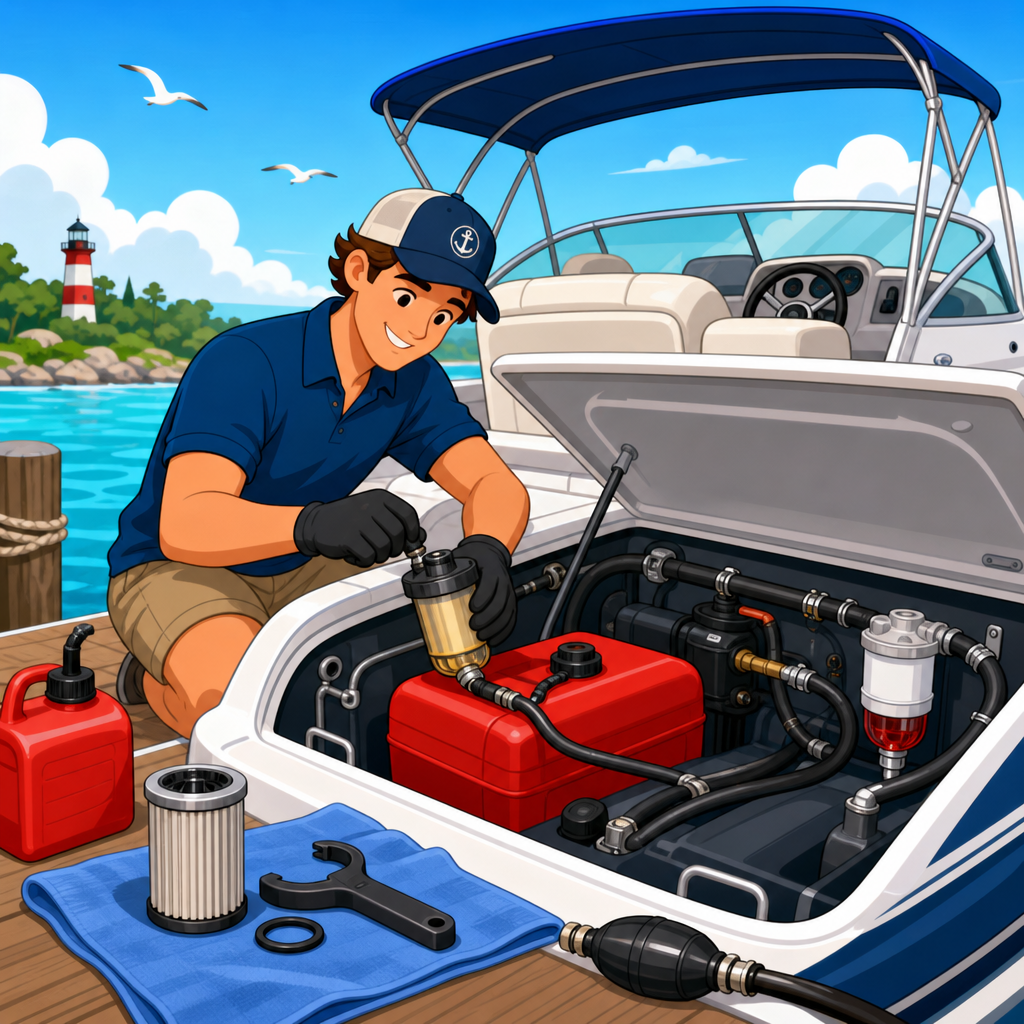
Fuel filters are not passive parts; they are early warning devices. A spin-on water-separating filter should be changed on the interval recommended by the engine or filter manufacturer, and sooner if you have any sign of contamination or restricted flow. Many owners change the primary filter every season and carry at least two spares onboard. That is a smart habit, especially for offshore fishing boats, trailer boats fueled from mixed sources, and any boat with an older tank. Engine-mounted filters, inline screens, and vapor separator strainers also need attention according to the service manual.
What matters just as much as changing the filter is inspecting it. When I cut old filters open in the shop, I often find clues that explain a season’s worth of complaints. Clean rust-colored dust may point to tank corrosion. Black particles can indicate deteriorating hoses. Milky contents signal water contamination. Heavy biological slime in a diesel filter almost always means water has been present in the tank for some time. If a new filter clogs unusually quickly, treat that as evidence of upstream contamination rather than bad luck. A filter should not be forced to compensate for a dirty tank, failing hose liner, or neglected vent. Record the date, engine hours, and observations every time you change one. That maintenance log becomes valuable when performance changes gradually.
Seasonal maintenance checklist for reliable operation
A strong maintenance routine is easier to follow when it is tied to the boating season. The table below covers the fuel system checks I rely on for spring commissioning, in-season monitoring, and winter layup. The exact interval may vary by engine manufacturer, usage, and fuel type, but these tasks fit most recreational boats and reduce both breakdown risk and long-term wear.
| When | Task | Why it matters |
|---|---|---|
| Before every trip | Check for fuel odor, visible leaks, loose clamps, and primer bulb condition | Catches fire hazards and airflow or fuel loss problems before departure |
| Monthly in season | Drain water trap if equipped; inspect filter bowl and vent opening | Removes water early and confirms the tank can vent properly |
| Every 100 hours or seasonally | Inspect all hoses, tank fittings, anti-siphon valve, and fuel fill components | Prevents age-related failures and restriction issues |
| At least annually | Replace water-separating fuel filter and engine fuel filter as specified | Maintains flow and protects pumps, injectors, and carburetor circuits |
| Before storage | Add stabilizer, top off or set fuel level per manufacturer guidance, run engine | Limits oxidation, condensation, and stale fuel in engine components |
| At spring launch | Inspect stored fuel quality, replace suspect fuel, and verify no leaks under load | Avoids starting the season with degraded fuel or hardened seals |
Storage practices that extend fuel system life
Proper storage is where preventative maintenance has the biggest payoff. Many fuel system failures appear at the first launch of the season because fuel degraded over the off-months, seals dried out, or water accumulated in the tank. For gasoline boats, whether to store with a full tank depends on the manufacturer’s guidance and tank material, but the principle is consistent: minimize condensation, stabilize the fuel, and avoid leaving untreated fuel in the system. In many cases, storing with a nearly full tank of fresh stabilized fuel works well because it reduces the humid air space above the fuel. For some portable tank setups or certain service recommendations, draining may be appropriate instead.
After adding stabilizer, run the engine long enough for treated fuel to reach the entire system. On carbureted engines, some technicians also drain float bowls for long storage to reduce varnish buildup, following the engine manual. Diesel owners should pay extra attention to water management before layup because microbes grow best in the interface between water and fuel. Keep deck fills capped tightly and inspect O-rings so rainwater cannot enter. If the boat is stored ashore, position it so water drains away from fill and vent fittings. In spring, do not assume stored fuel is usable because the engine starts. Confirm idle quality, acceleration, and filter condition. Storage success is measured by clean operation under load, not just by whether the starter turns the engine over.
Troubleshoot common symptoms before they become major repairs
Fuel system problems usually announce themselves early. Hard starting, surging at cruise, loss of top-end power, stalling when throttling up, frequent primer bulb pumping, or a sudden drop in fuel economy all justify immediate inspection. Start with the simplest causes: tank vent blockage, low fuel, contaminated fuel, clogged filters, and loose hose connections allowing air leaks. On portable tank setups, a closed vent cap is a classic cause of fuel starvation. On built-in tanks, spider nests, salt crystals, or kinked vent lines can create the same effect. If the engine runs better with a temporary clean fuel supply, the problem is usually upstream of the engine.
Modern engines often store fault codes, and scan tools can reveal low rail pressure or injector issues, but I still begin with basic fuel delivery tests because they are fast and decisive. Vacuum testing on the supply side can identify restrictions in the pickup, anti-siphon valve, or filter. Pressure testing can reveal weak pumps or regulator faults. Carbureted engines may show similar symptoms from internal contamination, while direct-injection outboards are far less forgiving of dirty fuel and should not be run repeatedly on compromised supplies. The main lesson is speed: a slight hesitation today can become a no-start tomorrow. When symptoms appear, stop guessing, document what changed, and inspect the system methodically.
Know when professional service is the safer choice
Boat owners can handle many fuel maintenance tasks, but some situations call for a qualified marine technician. If you find a persistent leak, a fuel smell in the bilge, tank corrosion, damaged fill hoses, recurring water contamination, injector performance issues, or the need to remove and clean a tank, professional service is the right move. Gasoline vapors are heavier than air and can collect in enclosed spaces, so mistakes around ignition sources are dangerous. ABYC standards, manufacturer procedures, and local environmental rules all matter when working on marine fuel systems. A technician can also pressure-test components, inspect anti-siphon protection, verify proper hose routing, and confirm replacement parts meet marine specifications.
The long-term benefit of disciplined fuel system care is simple: fewer breakdowns, lower repair costs, safer boating, and longer engine life. Inspect the system regularly, use fresh fuel, replace filters on schedule, manage storage carefully, and act quickly when symptoms appear. If you treat the fuel system as a complete system rather than a single filter or hose, problems become easier to prevent and easier to diagnose. For boat owners building a broader maintenance plan, make this fuel guide your starting point, then continue through the rest of your boat maintenance and repairs resources to create a seasonal checklist you can follow with confidence year after year.
Frequently Asked Questions
1. What are the most important parts of a boat fuel system to inspect regularly?
The most important fuel system components to inspect on a routine basis are the fuel tank, fill hose, vent line, fuel supply hose, primer bulb, anti-siphon valve, fuel filters, water-separating filter, fuel pump, and the carburetor or fuel injectors. Every one of these parts plays a role in delivering clean, unrestricted fuel to the engine. If even one component becomes clogged, cracked, loose, corroded, or contaminated, it can lead to hard starting, rough running, loss of power, stalling, or complete engine shutdown.
Start with a visual inspection. Look for cracked or brittle hoses, soft spots in fuel lines, corroded clamps, fuel stains, or the smell of gasoline in the bilge or around the tank compartment. Check that the primer bulb is in good condition and that it becomes firm when pumped. A bulb that stays soft may point to an air leak, restriction, or failing check valve. Inspect the fuel tank area for corrosion, leaking fittings, loose mounting points, and any signs of water intrusion. Pay close attention to the fill cap seal and vent opening, since both can allow moisture and debris into the system if they are damaged or blocked.
Filters deserve special attention because they often provide the earliest warning that something is wrong. A water-separating fuel filter should be checked and changed at recommended intervals, and more often if contaminated fuel is suspected. If your engine has additional inline or engine-mounted filters, those should also be inspected and replaced as needed. On modern engines, dirty fuel can quickly create injector problems, while on carbureted engines it can cause varnish buildup, sticking floats, and poor throttle response. Regular inspection of the full system helps catch small issues before they become expensive repairs or on-water breakdowns.
2. How can I tell if my boat has bad fuel or water contamination in the system?
Bad fuel and water contamination usually show up through both engine symptoms and physical evidence. Common warning signs include difficulty starting, sputtering at idle, hesitation when accelerating, surging, reduced top-end power, repeated stalling, and unusually rough engine performance. In severe cases, the engine may start and then die shortly afterward because water or debris has interrupted normal fuel flow. If the problem seems to appear after the boat has been sitting, after refueling, or after heavy rain, contamination becomes even more likely.
One of the best ways to confirm a problem is to inspect the fuel itself. If possible, draw a sample from the bottom of the fuel tank or from the water-separating filter into a clear container. Water will usually separate and settle to the bottom, while fuel remains above it. You may also notice rust-colored particles, sediment, cloudiness, phase-separated ethanol fuel, or a sour, stale odor that indicates old gasoline. Diesel fuel contamination may appear as sludge, microbial growth, or dark debris. Any of those signs mean the system needs attention before more fuel is run through the engine.
Water often enters through loose fill caps, damaged seals, blocked vents, or condensation inside partially filled tanks. Old fuel becomes unstable over time, especially if it is untreated and exposed to heat. Ethanol-blended gasoline can make matters worse because it attracts moisture. The safest response is to replace contaminated filters, drain or polish the fuel if necessary, inspect the tank and venting system, and refill with clean fuel from a reliable source. Catching contamination early can protect pumps, injectors, carburetors, and internal engine components from much more serious damage.
3. How often should I replace fuel filters, water separators, and fuel lines on a boat?
Fuel filters and water separators should be replaced according to the engine and filter manufacturer’s maintenance schedule, but for many boats, a water-separating filter is changed at least once per season or every 100 hours, whichever comes first. If the boat is used heavily, sits for long periods, or operates in areas where fuel quality is inconsistent, more frequent replacement is a smart preventative step. Inline filters and engine-mounted filters should also be changed on schedule because they protect sensitive fuel system components from debris and water that can reduce performance or cause premature wear.
Fuel lines do not usually follow the same short replacement interval as filters, but they should never be treated as permanent parts. Inspect them regularly for cracking, stiffness, swelling, chafing, loose connections, or fuel seepage. Any hose that shows age, wear, or compatibility issues should be replaced immediately with a marine-grade fuel hose that meets current standards. Older hoses are especially worth watching closely because some deteriorate internally, shedding particles into the fuel stream or allowing air leaks that are not obvious from the outside.
The key is not to wait for visible failure. A restricted filter can starve the engine of fuel long before it looks dirty enough to replace, and a weak hose can become a safety issue as well as a reliability problem. If you notice recurring loss of power, hard starting, a collapsing primer bulb, or a drop in fuel delivery, inspect and service the filtration and hose system right away. Routine replacement of relatively inexpensive parts is one of the best ways to avoid expensive injector cleaning, fuel pump repairs, or a tow back to the dock.
4. What preventive maintenance steps help keep a boat fuel system in top condition year-round?
The best preventive maintenance plan combines clean fuel practices, regular inspections, timely filter changes, and proper storage habits. Start by buying fuel from reputable marinas or stations with high turnover so the fuel is fresh and less likely to contain water or excessive sediment. Keep the fuel fill area clean before refueling so debris does not get knocked into the tank. After fueling, secure the cap tightly and check that the vent system is open and functioning properly. If the vent is blocked, the engine may struggle for fuel and the tank may not breathe correctly.
Use the right fuel treatment when appropriate, especially if the boat will sit between trips or during the off-season. Fuel stabilizer can help reduce oxidation and varnish formation in gasoline, while diesel treatments may help with stability and microbial control depending on conditions. It is also wise to keep the tank at a recommended level during storage based on your manufacturer’s guidance and local climate considerations, since minimizing excess air space can help reduce condensation. During the season, inspect the primer bulb, hoses, clamps, and filter housings regularly for leaks or deterioration, and replace worn parts before they fail.
At winterization or long-term layup, treat the fuel, change filters if needed, and make sure the engine is run long enough for stabilized fuel to circulate through the system. In the spring, inspect everything again before launch. Preventive maintenance should also include paying attention to engine performance. A small stumble, occasional stall, or slight loss of power often points to a developing fuel issue. Addressing those early symptoms quickly is what keeps a fuel system dependable year-round and prevents minor contamination or restriction from turning into a major mechanical problem.
5. What should I do if my boat engine is losing power because of a fuel system problem?
If your boat engine is losing power and you suspect a fuel system issue, begin with the safest and simplest checks first. Look at the primer bulb if your setup has one. If it is collapsed, there may be a blockage between the tank and bulb, often in the vent, pickup, anti-siphon valve, or fuel line. If the bulb does not firm up, you may have an air leak, failed bulb, clogged filter, or fuel supply problem. Also check whether the tank vent is obstructed, because a blocked vent can create vacuum in the tank and restrict fuel flow enough to cause power loss or stalling.
Next, inspect the fuel filter and water separator. Many performance problems trace back to a partially clogged filter or accumulated water. If the filter bowl or drained sample shows water, sediment, or discolored fuel, replace the filter and investigate the source of contamination before continuing to operate the boat. Check all visible fuel hoses and fittings for leaks, loose clamps, kinks, or signs of collapse. Air entering the line can cause symptoms very similar to fuel starvation. On carbureted engines, contamination can block jets and passages. On fuel-injected engines, even small debris can affect injector spray patterns and engine response.
If the engine continues to lose power after basic checks, it is best to stop running it hard and have the system diagnosed properly. Continuing to operate with restricted fuel flow can lean out the engine, worsen component damage, or leave you stranded. A marine technician can test fuel pressure, inspect the anti-siphon valve, verify pump performance, evaluate injector or carburetor condition, and determine whether the tank itself contains contamination. Acting quickly when power loss first appears usually limits the repair to filters, cleaning, or a small part replacement rather than a much larger and more expensive fuel system overhaul.