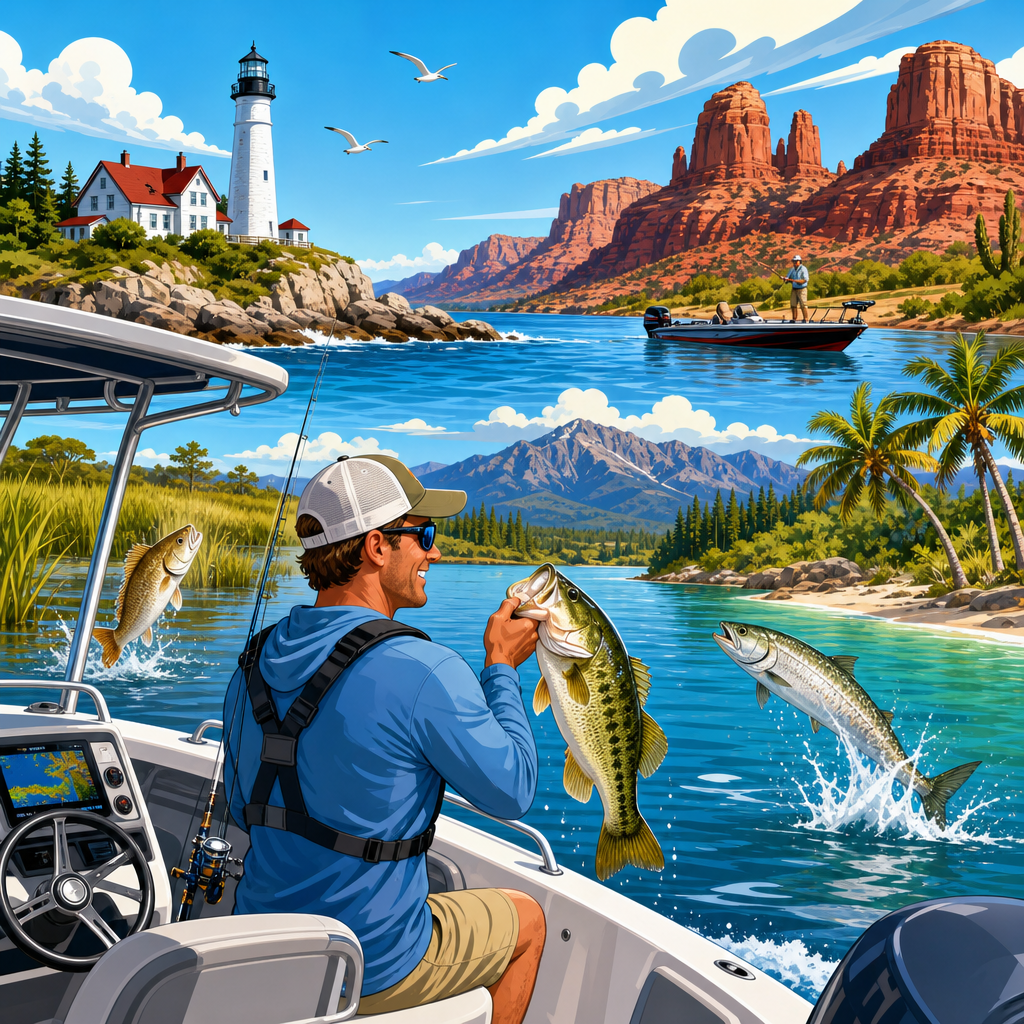
The best fishing destinations in the U.S. for boaters combine productive water, safe access, seasonal variety, and the infrastructure that lets a trip run smoothly from launch ramp to marina slip. For anglers traveling by center console, bay boat, bass boat, offshore sportfisher, or trailerable skiff, choosing the right destination matters as much as choosing the right lure. Fish behavior changes by region, tides dictate access, weather windows shape safety, and local regulations determine what you can keep and when. A strong boating destination for fishing is not simply a place with fish; it is a place where navigation is practical, bait and fuel are available, ramps are reliable, and nearby waters offer enough range to match different skill levels. I have planned and run boat-based fishing trips across freshwater lakes, inshore estuaries, and bluewater grounds, and the same pattern always holds: the best locations reward preparation while still giving visiting anglers a realistic shot at success.
In this guide, best fishing destinations by boat means U.S. waters where boating access directly improves the quality of the fishing experience. That includes major freshwater systems like the Great Lakes and legendary bass reservoirs, but also saltwater regions where a boat opens flats, passes, reefs, canyons, and nearshore structure inaccessible from shore. The destinations below are selected because they consistently produce target species, support boating visitors with marinas and charter services, and offer clear seasonal opportunities. Whether you want redfish on a Gulf grass flat, salmon on Lake Michigan, striped bass in the Northeast, or tuna out of Southern California, these are the places that deserve a spot on your route planning map.
Florida Keys, Florida
The Florida Keys are one of the most complete fishing destinations in the country for boaters because they deliver backcountry, reef, wreck, and offshore fishing from the same base. From Islamorada, Marathon, and Key West, boaters can target tarpon, bonefish, permit, redfish, snapper, grouper, mahi-mahi, sailfish, and blackfin tuna within manageable runs, depending on weather and season. The Keys sit between Florida Bay and the Atlantic, which gives small-boat and offshore crews options when wind direction changes. That flexibility is rare and valuable.
For visiting anglers, the Keys work best when you match your boat to your target water. Technical poling skiffs and shallow bay boats excel in the backcountry around Everglades channels, while center consoles are better for patch reefs, deeper wrecks, and bluewater trolling. The reef tract provides consistent action on yellowtail snapper and mutton snapper, especially with chum lines and light tackle. Spring tarpon migration around bridges and channels is world class, but strong current and boat traffic require disciplined handling. Navigation is straightforward compared with marsh systems, yet coral heads, skinny flats, and protected zones demand updated charts and careful route planning.
Outer Banks, North Carolina
The Outer Banks stand out because they let boaters access excellent inshore and offshore fishing from a relatively compact section of coast. Oregon Inlet, Hatteras, and Morehead City are the main jumping-off points, and each offers a different mix of species and run distances. Inshore anglers can work Pamlico Sound for speckled trout, red drum, and flounder around marsh edges, shoals, and grass. Offshore crews can reach Gulf Stream water for yellowfin tuna, blackfin tuna, mahi-mahi, wahoo, and billfish, especially from Hatteras, where geography can shorten the run compared with many East Coast ports.
What makes the Outer Banks especially attractive for boaters is variety by season. Fall is famous for giant red drum in the sounds and near the inlets. Winter and early spring can produce bluefin tuna offshore when conditions line up. Summer brings marlin, sailfish, dolphin, and wahoo to bluewater spreads. The tradeoff is seamanship. Shoaling at inlets changes frequently, weather turns quickly, and ocean bars can be unforgiving. Smart crews watch NOAA marine forecasts closely, check local inlet reports, and talk with marinas or charter captains before running unfamiliar water.
Gulf Coast Marshes, Louisiana
Louisiana offers some of the most productive inshore fishing in America, and it is best experienced by boat. Venice, Delacroix, Hopedale, Cocodrie, and Lake Charles all give access to marsh systems loaded with bait, current, and structure. Redfish are the signature target, but speckled trout, flounder, black drum, sheepshead, and seasonal tripletail make the fishery unusually diverse. The Mississippi River Delta near Venice also provides short runs to offshore rigs where yellowfin tuna, snapper, and cobia are legitimate options in favorable conditions.
The boating advantage in Louisiana is mobility through a huge maze of ponds, cuts, and bays. On falling tides, predatory fish stack at drains where bait flushes out of marsh grass. On higher water, redfish push shallow and become easier to sight-cast. A bay boat with a jack plate or tunnel hull can transform access, but even larger center consoles can fish the outer bays effectively. The challenge is navigation. Many routes look similar, shallow mud flats can strand an inattentive captain, and storms can rearrange shorelines. Good satellite mapping, local waypoints, and a conservative fuel plan are essential, not optional.
Great Lakes: Lake Erie and Lake Michigan
For freshwater boaters, the Great Lakes deserve hub status because they function like inland seas and produce multiple world-class fisheries. Lake Erie is widely considered one of the best walleye lakes on earth. The western basin, around Port Clinton and Sandusky, is especially famous for spring and early summer walleye, with trolling programs built around crankbaits, crawler harnesses, and bottom bouncers. Smallmouth bass fishing is also excellent around islands, reefs, and rocky structure. Lake Michigan, meanwhile, is a premier salmon and trout destination, with ports such as Ludington, Milwaukee, St. Joseph, and Traverse City giving access to Chinook salmon, coho salmon, lake trout, and steelhead.
These fisheries reward boaters who understand open-water systems. Electronics matter more here than almost anywhere else. Side imaging, down imaging, temperature breaks, speed control, and precise waypoint management routinely separate average days from great ones. Weather also matters more than many first-time visitors expect. A lake that looks manageable at dawn can build dangerous rollers by noon. Because distances are large, boaters need realistic range calculations, functioning VHF radios, and a strong respect for cold water risk even in shoulder seasons.
| Destination | Best-Known Species | Best Boat Fit | Primary Advantage |
|---|---|---|---|
| Florida Keys | Tarpon, snapper, mahi, sailfish | Bay boat or center console | Backcountry to offshore range |
| Outer Banks | Red drum, tuna, mahi, marlin | Inshore skiff or offshore center console | Strong seasonal variety |
| Louisiana Marsh | Redfish, speckled trout | Shallow-running bay boat | Exceptional inshore productivity |
| Great Lakes | Walleye, salmon, smallmouth | Deep-V multispecies boat | Huge water and consistent trolling bites |
Texas Gulf Coast
The Texas coast gives boaters a long chain of fisheries rather than one single hotspot, and that is exactly why it belongs on a hub page. Galveston Bay, Matagorda Bay, Port O’Connor, Corpus Christi, Baffin Bay, and South Padre each offer different habitat and target species. Redfish, speckled trout, flounder, black drum, and jack crevalle dominate inshore attention, while nearshore rigs and offshore grounds support snapper, kingfish, mahi-mahi, and tuna farther south. Baffin Bay is especially respected for trophy speckled trout because of its grass, rocks, and historical record of oversized fish.
Texas favors boaters who can adapt to wind. Long fetch across open bays can make a moderate forecast fish rough, and water clarity changes quickly. Still, access is excellent, launch options are numerous, and local tackle shops provide precise bite information. Drift fishing over grass, wading from a boat, and working shell pads with topwaters are standard approaches. For traveling anglers, the strongest reason to choose Texas is range: you can plan family-friendly bay days, serious trophy trout missions, or offshore runs from the same coastal trip.
Lake Okeechobee and Florida Bass Waters
If your version of the best fishing destinations in the U.S. for boaters centers on largemouth bass, Florida belongs near the top. Lake Okeechobee remains the headline water because its shallow grass flats, reed lines, and nutrient-rich system support both numbers and trophy potential. Harney Pond, Monkey Box, South Bay, and the rim canal are familiar names to tournament anglers and guides. Seasonal movements around spawning and post-spawn periods can create phenomenal fishing, especially with flipping baits, swimbaits, lipless crankbaits, and wild shiners.
Florida’s bass appeal extends beyond Okeechobee. The St. Johns River, Harris Chain, Kissimmee Chain, and Rodman Reservoir all reward boaters. What ties them together is vegetation management, fluctuating water levels, and the need to read current, wind lanes, and spawning habitat. Bass boats dominate these waters, but aluminum rigs and bay-style multispecies boats can perform well if draft and trolling motor control are dialed in. The practical advantage of Florida is consistency: somewhere in the state, conditions are usually fishable, and winter often fishes far better than northern anglers expect.
Alaska: Kenai Peninsula and Southeast
Alaska is the most dramatic boat-fishing destination in the country, but it is not the most forgiving. The Kenai Peninsula offers halibut, salmon, lingcod, and rockfish from ports such as Seward, Homer, and Whittier. Southeast Alaska, including Sitka, Ketchikan, and Juneau, adds sheltered passages, rich tidal flow, and serious opportunities for king salmon and halibut. Few places match the combination of scenery and fish quality, and a productive day can include mooching or trolling for salmon in the morning before switching to heavy tackle for bottom fishing on deep structure.
The reason Alaska belongs on a boater’s shortlist is simple: a boat multiplies access in a state where shoreline options are limited and fish-holding structure is spread across vast water. But planning errors carry consequences. Tides are powerful, water temperatures are cold, and weather systems can shut down runs quickly. Standard safety expectations rise here. Redundant electronics, immersion protection, an EPIRB, and conservative float plans are normal practice. For boaters willing to respect those conditions, Alaska offers some of the richest and cleanest fishing in North America.
Southern California and Baja-Style Bluewater from U.S. Ports
Southern California gives U.S. boaters a unique offshore experience shaped by current, bait movement, and highly migratory species. San Diego, Dana Point, Long Beach, and San Pedro are major gateways to yellowtail, calico bass, bluefin tuna, yellowfin tuna, dorado, and occasionally wahoo during warm-water years. Kelp paddies, temperature breaks, sonar marks, and bird schools all matter. The modern Southern California offshore scene has become especially dynamic because bluefin tuna now show up within trailer-boat range in some seasons, turning ordinary summer planning into genuine big-game opportunity.
This fishery rewards preparation and discipline. Live bait management, radar, gyro-stabilized optics on some boats, premium sonar, and strong gaffing procedures all influence results. Unlike destinations built around static structure, Southern California often requires covering water until signs develop. Fuel planning is critical because productive zones can shift far offshore. For many boaters, the biggest advantage here is access to a sophisticated support network: high-capacity marinas, receiver systems, tackle innovation, and a fleet culture built around sharing broad patterns while protecting exact numbers.
Northeast Striper and Tuna Grounds
The Northeast is one of the best fishing destinations by boat for anglers who want strong seasonal runs and multiple target species in close succession. From Chesapeake Bay to Cape Cod and Maine, striped bass define much of the calendar. Rips, ledges, bunker schools, estuary mouths, and rocky shorelines all hold fish depending on water temperature and bait migration. Montauk, Block Island, Cape Cod Bay, and Boston Harbor are proven names because they combine structure, current, and access. Boaters can troll tube-and-worm rigs, cast topwaters, live-line bunker, or drift eels based on the bite.
Offshore, ports such as Cape May, Point Judith, Cape Cod, and Gloucester provide access to tuna grounds for bluefin and yellowfin depending on season and range. The Northeast’s appeal lies in timing. When migration windows align, fishing can be extraordinary. The limitation is that timing matters a lot. Water temperatures, bait concentrations, and weather all shift rapidly. Visiting boaters do best when they monitor fisheries reports daily, not weekly, and treat local intel as part of the trip budget.
How to Choose the Right Fishing Destination for Your Boat
The best destination is the one that matches your boat, your crew, and your realistic operating range. A 22-foot bay boat is perfect for Louisiana marsh drains, Florida Bay shorelines, and many Texas inshore trips, but it is not the platform for running to canyon tuna grounds. A deep-V multispecies boat shines on the Great Lakes, where chop and long trolling passes are normal. A bass boat is unmatched on Okeechobee or the St. Johns, yet poorly suited to heavy tidal inlets or open-ocean swell. Matching hull design, draft, fuel capacity, freeboard, and weather tolerance to the fishery prevents expensive mistakes.
Trip planning should start with three questions: what species are in season, what weather creates safe access, and what local regulations apply? Then confirm ramp quality, marina services, trailer parking, bait availability, and communication coverage. Many successful traveling anglers also book a guide for day one, even if they plan to run their own boat later. That shortcut helps with navigation hazards, productive zones, and local etiquette. The best boating fishing trips are rarely accidental. They come from choosing a destination built for your style of fishing and preparing carefully before the boat ever touches the water.
The best fishing destinations in the U.S. for boaters are the places where access, fishability, and boating practicality come together. The Florida Keys excel because one trip can include flats, reefs, and offshore water. The Outer Banks offer elite inshore and bluewater options with serious seasonal peaks. Louisiana gives shallow-water anglers extraordinary redfish and trout action. The Great Lakes deliver freshwater scale and precision trolling opportunities. Texas, Florida bass waters, Alaska, Southern California, and the Northeast each stand out because a boat turns good fishing into exceptional fishing by opening structure, migration routes, and water that shore anglers simply cannot reach.
The main takeaway is straightforward: the right destination depends on your boat and your target species, not just on reputation. Plan around seasonal windows, choose waters that fit your hull and experience level, and use local information to shorten the learning curve. If you are building out a boating travel calendar, start with one inshore destination, one freshwater destination, and one offshore trip so you can compare what your crew enjoys most. Then use this hub as your starting point for deeper regional planning, marina research, and species-specific trip guides.
Frequently Asked Questions
What makes a fishing destination ideal for boaters, not just anglers?
The best fishing destinations for boaters offer much more than a strong bite. A truly boater-friendly fishery combines productive water with practical access, dependable infrastructure, and conditions that match the type of vessel you run. For example, a destination may hold outstanding fish, but if the launch ramps are limited, channel markers are confusing, marina services are sparse, or weather shifts quickly with little sheltered water nearby, it may be a difficult place to enjoy safely and efficiently by boat. The most reliable destinations give boaters a complete experience: well-maintained ramps, available fuel, transient slips, bait and tackle nearby, local repair support, and enough navigational guidance to move confidently between launch, fishing grounds, and dock.
Water type and boat type also matter. A bass boat owner may prioritize large freshwater lakes with protected coves, tournament-caliber ramps, and predictable structure, while a center console owner may look for inshore-to-nearshore versatility, multiple inlet options, and marinas that cater to offshore runs. Bay boats and skiffs often perform best in destinations with flats, estuaries, and backwater systems that can be explored safely without excessive draft. In other words, the “best” destination is rarely universal. It is the place where fishing opportunity, navigation safety, and boating logistics all align with your vessel, your target species, and the season you plan to travel.
Which U.S. regions are best for different types of boating and fishing?
Different regions shine for different reasons, and the right choice often comes down to the style of trip you want to make. Florida remains one of the most versatile options in the country because it offers offshore pelagic fishing, inshore flats action, backcountry opportunities, and year-round boating access in many areas. The Gulf Coast, including parts of Texas, Louisiana, Alabama, and the Florida Panhandle, is especially attractive for boaters who want a mix of nearshore and inshore fishing with strong redfish, speckled trout, snapper, and seasonal pelagic opportunities. These destinations often feature expansive bays, passes, marsh systems, and a boating culture built around easy ramp access and productive water close to shore.
For freshwater boaters, the Southeast and parts of the Midwest are hard to beat. Lakes in Texas, Tennessee, Alabama, Kentucky, and Missouri are well known for bass fishing, crappie, and catfish, while the Great Lakes region offers world-class trolling and big-water boating for salmon, walleye, lake trout, and smallmouth bass. On the West Coast, destinations in California, Washington, and Alaska appeal to boaters looking for saltwater variety, scenic runs, and species like halibut, salmon, rockfish, and tuna in season. Each region comes with its own considerations, including tide range, weather volatility, water depth, and seasonal regulations. A boater who studies those regional differences carefully will almost always have a better trip than one who chooses a destination based only on reputation.
How important are tides, weather, and seasonal patterns when planning a boating fishing trip?
They are absolutely central to the success and safety of the trip. Fish movement is tied closely to environmental conditions, and boat access often is too. In tidal fisheries, for example, the difference between a great day and a frustrating one may come down to whether you timed your launch and your fishing around incoming or outgoing water. Shallow flats, oyster bars, creek mouths, and backwater cuts may become highly productive at one stage of the tide and nearly inaccessible at another. For boaters, that means tide planning is not just about fishing strategy; it is also about avoiding grounding, navigating channels safely, and knowing when a ramp, inlet, or shoal area becomes difficult to use.
Weather is just as important. Wind direction and speed can reshape a day on the water, especially in open bays, the Great Lakes, and offshore environments. A destination that looks perfect on paper may become unsafe for smaller boats when afternoon storms build, swell increases, or a long fetch turns a manageable run into a punishing one. Seasonal timing matters because migrations, spawning behavior, water temperature, and forage patterns all affect where fish are and how boaters can reach them. Spring may favor shallow-water patterns and active feeding windows, summer may offer stable weather but heavier traffic, fall often delivers strong feeding behavior, and winter can produce excellent fishing in certain southern regions with fewer crowds. Smart trip planning means looking at all three together: weather forecast, tide tables, and seasonal fish behavior.
What infrastructure should boaters look for before choosing a fishing destination?
Infrastructure can make or break a destination, especially for traveling anglers. At a minimum, boaters should evaluate launch ramps, parking, fuel availability, marina access, and nearby services. A destination may be famous for fishing, but if trailer parking is limited, launch lanes are overcrowded, or fuel is only available far from the fishing grounds, the trip becomes much less convenient. Good boating destinations usually have multiple public ramps, clear signage, dock space for staging, and enough room to accommodate peak-season traffic. If you plan to stay several days, access to marinas with slips, pump-out services, shore power, and overnight security adds real value.
It is also wise to look beyond the ramp itself. Reliable destinations typically have local bait shops, marine repair services, tackle suppliers, weather and tide reporting, and a network of charter captains or marinas that can provide current information. Nearby lodging with trailer parking, fish cleaning stations, and easy road access can save a tremendous amount of time and frustration. For offshore or larger-boat trips, inlet conditions, fuel dock hours, and marina depth become especially important. For shallow-draft boats, local charts, marked channels, and knowledge of seasonal water levels matter more. Strong infrastructure does not just improve convenience; it gives boaters a margin of safety and flexibility that can keep a fishing trip on track when conditions change.
How can boaters compare destinations while accounting for fishing quality, safety, and local regulations?
The best approach is to compare destinations through a practical checklist rather than a single headline feature. Start with the fishery itself: what species are available, when they are most active, and whether they suit the type of fishing you want to do. Then evaluate access and boating conditions. How far is the run from the launch to the productive water? Are the channels marked? Is the area protected from wind, or does it become dangerous quickly? Is the destination suitable for your exact boat size, fuel range, draft, and experience level? A place that is excellent for a 26-foot center console may be a poor choice for a smaller skiff in changing weather, while a shallow estuary ideal for a skiff may not suit a deep-draft offshore boat.
Regulations are the final piece, and they should never be treated as an afterthought. State rules can vary widely on licenses, species limits, size restrictions, seasonal closures, required safety gear, and access zones. In some destinations, there may be special rules for protected areas, no-wake zones, invasive species prevention, or crossing state lines on shared bodies of water. Boaters should review regulations directly from the state wildlife agency and local marine authorities before traveling, not after arriving. Reading recent fishing reports, checking charts, studying launch reviews, and calling a local marina or bait shop can also provide valuable current information. When you combine fish quality, seasonal timing, navigation realities, and local rules, you get a much clearer picture of which destination is truly best for your boat and your style of fishing.