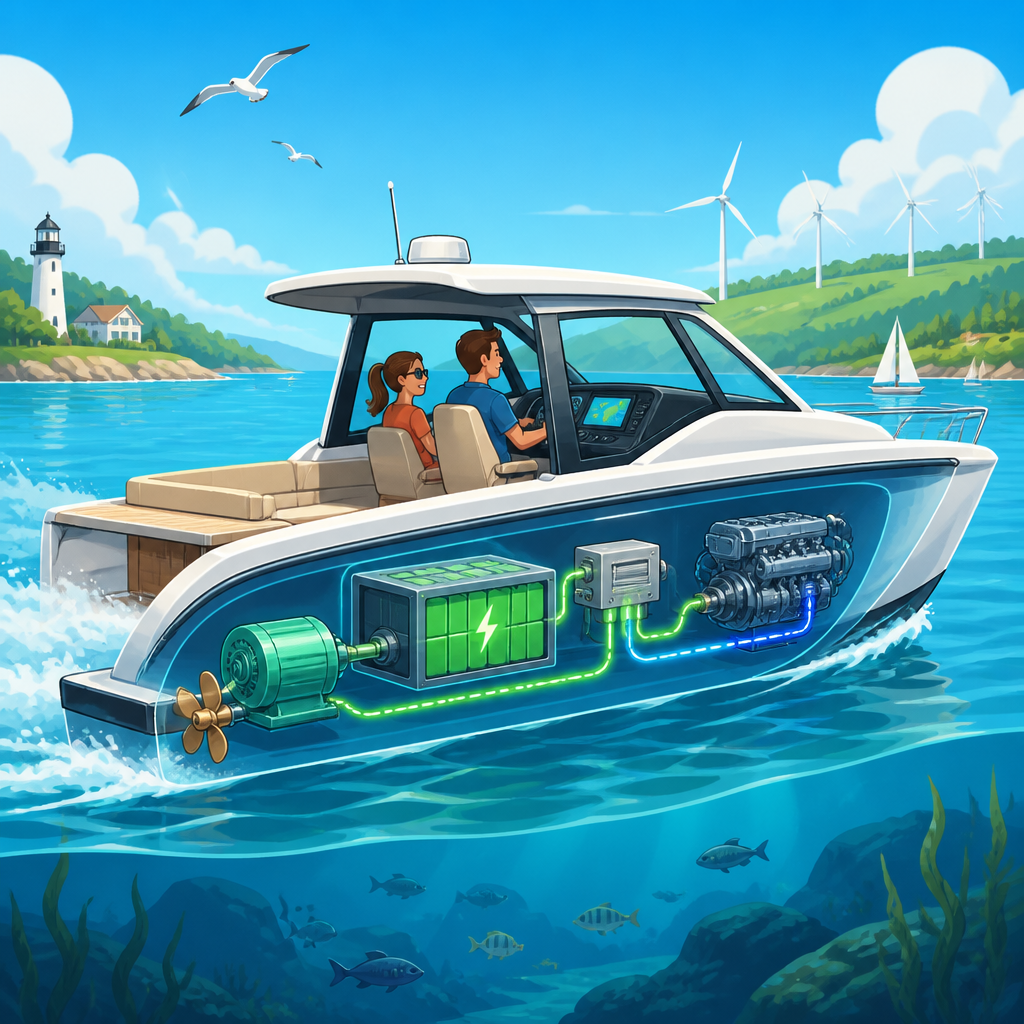
Electric boats are moving from niche curiosity to practical mainstream choice, and the benefits of switching to an electric boat now reach far beyond simple fuel savings. In the broad category of eco-friendly and electric boats, the term electric boat usually refers to a vessel powered fully by battery-electric propulsion, while hybrid boats combine batteries with an internal combustion engine, and solar-assisted boats use photovoltaic panels to extend range or support onboard systems. This distinction matters because buyers, marina operators, and fleet managers often compare very different technologies under one label. A quiet inland cruiser with a lithium battery bank solves a different problem than a hybrid patrol craft or a solar catamaran built for low-speed tourism.
The reason this topic matters is straightforward: boating is under pressure to cut emissions, reduce noise, and operate more efficiently without sacrificing reliability or enjoyment. Regulators in many waterways are tightening discharge and noise rules. Marinas are investing in shore power. Battery prices have fallen sharply over the past decade, and marine propulsion systems from companies such as Torqeedo, ePropulsion, Yamaha, Mercury, and Vision Marine are more capable than the first generation of electric outboards. At the same time, boaters are asking better questions. How far can an electric boat go? What does charging really look like? Is maintenance actually lower, or are costs simply shifted elsewhere? Those are the right questions, and the answers are now detailed enough to support real purchase decisions.
After working with owners evaluating electric day boats, tenders, and small commercial craft, I have seen the same pattern repeatedly. The switch makes the most sense when use is predictable, charging access is realistic, and buyers compare total operating cost instead of sticker price alone. Electric propulsion is not perfect for every mission. Offshore fishing boats running long distances at high speed still face meaningful range constraints. But for lakes, rivers, harbors, resort fleets, yacht tenders, rowing clubs, sailing auxiliaries, and low-speed leisure cruising, electric boats deliver clear operational advantages. As a hub topic within the wider world of boat types, eco-friendly and electric boats deserve close attention because they represent both a distinct category and a design direction influencing nearly every segment of the marine industry.
What makes electric boats especially important is that their benefits stack together. Owners gain cleaner operation, lower routine maintenance, immediate torque, quieter rides, and a more pleasant onboard experience. Waterfront communities benefit from less local air pollution and wake-free, low-noise tourism. Commercial operators can build a stronger sustainability story while reducing fuel handling and engine service downtime. Even buyers who are not motivated primarily by environmental concerns often become interested once they see how simple electric propulsion can feel in daily use. Understanding these advantages clearly helps you decide whether a full electric model, a hybrid setup, or a solar-supported platform best fits your boating needs.
Lower environmental impact and cleaner waterways
The most obvious benefit of switching to an electric boat is lower local environmental impact. A battery-electric boat has no tailpipe emissions on the water, which means no direct release of carbon dioxide, nitrogen oxides, particulate matter, or unburned hydrocarbons from onboard propulsion. That matters most in marinas, enclosed harbors, canals, lakes, and protected natural areas where boats operate close to people, wildlife, and sensitive ecosystems. Traditional two-stroke engines, especially older carbureted models, can release unburned fuel directly into the water. Electric propulsion eliminates that problem entirely at the point of use.
Cleaner operation also improves the boating experience for everyone nearby. Waterfront restaurants, swimmers, kayakers, and paddleboarders notice the difference immediately when a boat glides past without exhaust smell or engine rumble. In tourism settings, that quiet cleanliness has commercial value. Electric sightseeing boats in cities such as Amsterdam and Stockholm have helped operators align with local environmental rules while offering a more premium passenger experience. On smaller inland waters, some lakes already restrict gas engines or favor low-emission operation, making electric boats a practical way to preserve access as regulation evolves.
The environmental case is strongest when charging electricity comes from a low-carbon grid or renewable power, but even where grids are mixed, electric propulsion usually improves local air quality because emissions shift away from the water itself. That does not mean electric boats are impact-free. Battery production has material and energy costs, and responsible sourcing, battery chemistry choice, and end-of-life recycling all matter. Still, over regular use in suitable applications, electric boats reduce direct pollution in the places boaters value most: the waterways where they actually spend time.
Quieter operation, better comfort, and improved handling
Ask owners what they love after switching, and many mention silence before they mention savings. Electric motors produce very little vibration compared with internal combustion engines, especially at low and moderate speeds. The result is a calmer ride, easier conversation, less fatigue, and a stronger connection to the surroundings. For anglers, wildlife watchers, and families cruising on lakes or canals, this changes the character of the trip. You hear water against the hull, wind across the deck, and people on board, not a constant mechanical soundtrack.
Electric propulsion also performs differently in a useful way. Electric motors deliver maximum torque from zero revolutions, so acceleration feels immediate and smooth. Docking and low-speed maneuvering can be more precise because power delivery is linear and predictable. On tenders and small harbor craft, that controllability reduces stress in tight spaces. I have watched new users adapt quickly because there is less lag between throttle input and response. For training fleets or rental operations, that smoother behavior can reduce the learning curve.
Comfort extends beyond noise. Without hot exhaust components, oil smell, and fuel vapor, the deck area feels cleaner and more pleasant. Maintenance-related mess is lower too. There are no spark plugs to foul, no oil changes, and no fuel filters to clog from stale gasoline. That cleaner ownership experience matters more than brochures often admit. People who use boats casually or seasonally value systems that start consistently after periods of inactivity, and a properly maintained electric propulsion setup is generally better at delivering that reliability.
Lower maintenance and simpler ownership
Electric boats usually have lower routine maintenance requirements than comparable gasoline or diesel boats because they have fewer moving parts in the propulsion system. Internal combustion engines require oil changes, impeller inspections, fuel system service, belt replacement, cooling system maintenance, and winterization procedures tied to fuel and engine fluids. Electric systems still need care, but the checklist is shorter: inspect wiring, monitor battery health, update software where applicable, check cooling for the motor controller if fitted, and maintain the lower unit or drive components according to the manufacturer schedule.
That difference is practical, not theoretical. A marina service department can spend many hours each season on tune-ups, carburetor cleaning, injector issues, and fuel contamination repairs. Electric owners avoid most of those common service events. Commercial operators benefit even more because downtime is expensive. If a resort runs eight electric launches instead of eight gasoline launches, there is no fuel storage logistics, fewer engine service appointments, and less risk of a bad batch of fuel sidelining multiple vessels. For clubs with safety boats or committee boats, simpler maintenance means more predictable readiness.
Battery care does require discipline. Lithium-ion batteries perform best when charged and stored within manufacturer guidelines, and marine-grade battery management systems are essential. The key point is that maintenance shifts from mechanical complexity to electrical oversight. For many owners, that is a favorable trade. Marine electricians and trained dealers are increasingly comfortable with high-voltage systems, and diagnostic tools are improving. Simpler ownership does not mean zero responsibility, but it often means fewer seasonal headaches and less surprise spending on engine repairs.
Operating costs, charging, and real-world economics
Electric boats often cost more upfront, but they can be significantly cheaper to run. Electricity is typically less expensive per unit of propulsion than marine gasoline or diesel, especially for short, frequent trips. Exact savings depend on local energy prices, hull efficiency, and usage profile, yet the pattern is consistent: low-speed electric boating is economically attractive because displacement and semi-displacement hulls need relatively modest power. When paired with efficient propellers and modern batteries, those boats convert stored energy into motion with far less wasted heat than combustion engines produce.
Charging is the economic and operational center of the ownership experience, so buyers should evaluate it early. Most small electric boats charge from standard shore power, while larger systems may benefit from faster Level 2-style infrastructure or marina-specific high-capacity connections. Charging overnight is ideal for day boats because it turns idle time into refueling time. Fleet operators can go further by scheduling vessels around charging windows. A harbor shuttle making repeated short trips is often an excellent electric candidate because route length and return-to-base timing are predictable.
| Factor | Electric Boat | Gas or Diesel Boat |
|---|---|---|
| Upfront purchase price | Usually higher due to batteries and controls | Usually lower for comparable small craft |
| Energy cost per outing | Typically lower with shore charging | Higher and tied to fuel price volatility |
| Routine maintenance | Lower; fewer moving engine parts | Higher; fluids, filters, tune-ups, winterization |
| Range at high speed | More limited | Usually better |
| Noise and vibration | Very low | Moderate to high |
Total cost of ownership should include depreciation, battery warranty, charging equipment, insurance, and expected resale value. Some systems carry battery warranties measured in years or charge cycles, and those terms deserve close review. In my experience, buyers who use their boats regularly on short routes are the ones most satisfied financially, because they realize energy and maintenance savings continuously. Buyers who make occasional long-distance runs may still prefer hybrid or conventional propulsion until charging networks and battery energy density improve further.
Best use cases, current limitations, and where the market is heading
Electric boats are not best for every job, but they are already excellent in several categories. Day boats, pontoons, small center consoles used on inland lakes, yacht tenders, sailing auxiliaries, rowing coach boats, rental fleets, canal cruisers, and harbor workboats are strong candidates. These applications share three traits: moderate speeds, repeatable routes, and dependable access to charging. In these scenarios, range is manageable, efficiency is high, and the quiet operation becomes a genuine product advantage rather than a novelty.
The main limitation remains energy density. Liquid fuel stores far more usable energy by weight than current marine batteries, which is why high-speed offshore vessels and long-range passagemakers still rely mostly on gasoline or diesel. Cold weather, heavy loads, fouled hulls, and aggressive throttle use can all reduce range. Buyers need honest range calculations based on realistic cruising speeds, not optimistic headline numbers. A manufacturer may advertise maximum range at a slow displacement pace, while an owner expects planing performance. Those are different operating profiles and should never be confused.
Even with those limits, the market direction is clear. Battery chemistry continues to improve, software-based power management is getting smarter, and hull designers are adapting forms specifically for electric efficiency. Hydrofoiling electric boats from builders such as Candela show how reduced drag can extend range dramatically. Major engine manufacturers are investing in electric outboards and integrated helm systems, not treating electrification as a side project. Marinas are expanding charging options because they see demand from both private owners and commercial fleets. For readers exploring eco-friendly and electric boats as a boat type category, the key insight is this: electric propulsion is no longer experimental for everyday low- to moderate-duty boating. It is a mature option when matched carefully to the mission.
Switching to an electric boat delivers a combination of benefits that conventional propulsion struggles to match in the right use case. You get cleaner waterways at the point of operation, quieter rides, less vibration, lower routine maintenance, and often lower day-to-day energy costs. For families, that means more pleasant time on the water. For marinas and waterfront communities, it means less noise and local pollution. For commercial operators, it can mean simpler fleet management, stronger environmental positioning, and reduced downtime tied to engine service. Those gains are real, measurable, and increasingly accessible as technology improves.
The most important takeaway is that electric boating works best when the vessel, route, and charging plan align. If your boating consists of predictable day trips, inland cruising, harbor operations, tender use, or short recreational runs, an electric boat deserves serious consideration. If you regularly need long range at high speed, a hybrid model or efficient conventional setup may still be the smarter choice today. Good decisions in this category come from matching actual usage patterns to battery capacity, hull efficiency, and available infrastructure rather than buying on novelty or marketing claims.
As the hub for eco-friendly and electric boats within the broader types of boats landscape, this topic connects technology, ownership economics, environmental performance, and future marine design. The momentum is unmistakable: better batteries, stronger product support, smarter charging, and more purpose-built electric hulls are making the switch easier each year. If you are comparing your next boat purchase, start by reviewing how far you really travel, where you can charge, and how much maintenance you want to avoid. That simple assessment will tell you whether an electric boat is the right move for your next season on the water.
Frequently Asked Questions
1. What are the biggest benefits of switching to an electric boat?
The biggest advantage of switching to an electric boat is that the benefits extend well beyond fuel savings. Electric boats deliver clean, quiet propulsion, lower day-to-day operating costs, reduced maintenance, and a more enjoyable experience on the water. Because they run on battery-electric power instead of gasoline or diesel, they produce no direct exhaust emissions while underway, which makes them especially appealing to boaters who care about sustainability, local air quality, and reducing their environmental footprint.
Another major benefit is simplicity. Electric propulsion systems typically have fewer moving parts than internal combustion engines, which means fewer components to service, fewer fluids to change, and fewer opportunities for mechanical failure. Owners often appreciate the smoother acceleration, reduced vibration, and near-silent operation, all of which can make cruising, fishing, sightseeing, and marina maneuvering far more pleasant. For many people, an electric boat also changes the ownership experience itself: less time spent on engine upkeep and fuel logistics, and more time actually enjoying the boat.
Electric boats are also becoming more practical for mainstream use. Improvements in battery technology, charging options, and hull design have made them increasingly viable for inland lakes, rivers, harbors, short coastal trips, and recreational day boating. While not every use case is ideal yet, many boaters are discovering that an electric boat already fits how they really use their vessel most of the time.
2. How much money can you save with an electric boat compared with a gas or diesel boat?
In many cases, electric boats can be significantly less expensive to operate over time, although the exact savings depend on the size of the boat, how often it is used, local electricity rates, fuel prices, and charging setup. The most obvious savings come from energy costs. Charging a battery is often much cheaper than refueling with gasoline or diesel, especially for owners who charge at home, at a dock with access to shore power, or during off-peak electricity periods.
Maintenance savings can be just as important. Traditional marine engines require oil changes, fuel system maintenance, winterization steps, cooling system service, impeller replacement, and periodic attention to belts, filters, and engine wear. Electric drivetrains eliminate or reduce much of that routine maintenance burden. There is no engine oil to change, no spark plugs, and no fuel-related issues such as stale gasoline, clogged injectors, or carburetor problems. Over several seasons, those avoided maintenance costs can add up meaningfully.
Owners may also save in less obvious ways. Electric boats can reduce noise-related wear on the boating experience itself, meaning less fatigue on longer outings and easier communication onboard. Some marinas, lakes, or environmentally sensitive waterways may increasingly favor low-emission or quiet vessels, which could improve long-term access or convenience. While the upfront purchase price of an electric boat can still be higher than that of a conventional model, many buyers view the lower running costs, reduced servicing, and modern technology as strong long-term value.
3. Are electric boats practical for everyday recreational boating?
Yes, for many common boating patterns, electric boats are already very practical. They are especially well suited to day trips, lake cruising, marina hopping, short harbor runs, canal travel, resort use, tender service, fishing in regulated waters, and any boating activity where predictability, low noise, and low maintenance matter more than extreme range. In fact, one of the reasons electric boats are moving from a niche option to a mainstream choice is that many recreational boaters do not actually need long-distance capability every time they leave the dock.
The key is matching the boat to the use case. If most outings involve a few hours on the water and a return to a place where charging is available, an electric boat can be an excellent fit. Modern systems often include digital monitoring for battery state, range estimates, and power usage, which helps owners plan trips with confidence. This makes it easier to manage energy intelligently and avoid the guesswork that some people assume comes with electrification.
That said, practicality depends on expectations. For boaters who regularly make long offshore runs, tow heavy loads over long distances, or operate all day at high speed without access to charging, a conventional or hybrid setup may still be more appropriate today. But for a large share of recreational users, electric boats are not only practical, they can actually be more convenient. Quiet starts, no fuel dock stops, less engine maintenance, and a smoother onboard atmosphere are real everyday advantages that often matter more than maximum range on paper.
4. What is the difference between a fully electric boat, a hybrid boat, and a solar-assisted boat?
A fully electric boat is powered entirely by battery-electric propulsion. In this setup, the motor draws energy from onboard batteries, and those batteries are recharged from shore power or another external charging source. This is the purest form of electric boating and is usually what people mean when they refer to an electric boat. Its main strengths are zero direct emissions during operation, very quiet performance, mechanical simplicity, and lower routine maintenance.
A hybrid boat combines battery power with an internal combustion engine. Depending on the design, the engine may directly assist propulsion, serve as a range extender, or provide backup capability for longer trips. Hybrid systems can appeal to owners who want some of the quiet and efficiency benefits of electrification but still need the flexibility to travel farther or operate where charging infrastructure is limited. In that sense, hybrid boats often function as a transition option for buyers who are not ready to go fully electric.
A solar-assisted boat uses photovoltaic panels to supplement onboard energy use. In most recreational applications, solar panels do not replace primary charging entirely, but they can help extend range modestly, support house systems, or slow battery depletion while at anchor or underway. Solar assistance is best understood as a helpful efficiency layer rather than a complete propulsion solution for most boats. For owners evaluating eco-friendly and electric boats, understanding these distinctions is important because each approach serves a different boating profile, budget, and range expectation.
5. What should you consider before switching to an electric boat?
Before making the switch, the most important step is to evaluate how you actually use your boat. Consider typical trip length, average speed, passenger load, local water conditions, charging access, and whether your boating is mostly day-based or involves extended travel. Electric boats perform best when their battery capacity and propulsion system are aligned with realistic usage patterns, not worst-case assumptions. Buyers who clearly understand their boating habits are usually the ones most satisfied with the transition.
You should also examine charging logistics. Ask where the boat will be charged, how long charging typically takes, whether your marina or dock has adequate electrical service, and whether home charging is possible if the boat is trailered. Battery chemistry, warranty coverage, expected lifespan, and service support are also worth reviewing carefully. Because electric marine systems are still evolving quickly, it is smart to work with a reputable manufacturer or dealer who can clearly explain performance, charging requirements, software systems, and long-term support.
Finally, think about the experience you want from boating. If you value quiet cruising, low emissions, easier maintenance, and modern efficiency, an electric boat can be a compelling upgrade. If you require very long range, frequent high-speed operation, or remote refueling flexibility, you may want to compare electric, hybrid, and conventional options side by side. The good news is that electric boats are no longer just a futuristic concept. For a growing number of boaters, they are a practical, enjoyable, and increasingly mainstream choice right now.