Choosing the right fishing boat is a critical decision for any angler, whether you’re a seasoned fisherman or a novice eager to explore the open waters. With countless options available on the market, from sleek bass boats to rugged offshore anglers, selecting the perfect one can be an overwhelming task. The decision involves more than simply picking a boat that catches the eye; it requires a comprehensive understanding of what suits your specific fishing needs, local waters, and budget constraints. In this guide, we’ll delve deep into the essential factors to consider when choosing a fishing boat, providing you with the necessary knowledge to make an informed decision that will enhance your fishing experience.
Before diving into the types of boats available, it’s crucial to ascertain the primary fishing environments you anticipate encountering. Are you primarily fishing in inland freshwater lakes, weaving through narrow rivers, or exploring the vastness of the ocean? Each environment offers a distinct experience and demands a specific type of vessel. Moreover, understanding the target fish species, the number of passengers you plan to accommodate, and the frequency of outings are equally vital in guiding your choice. These factors collectively influence the design, size, and additional amenities required for a successful fishing trip.
Budget considerations cannot be overlooked either, as fishing boats come in a wide range of prices, often reflecting their materials, accessories, and advanced features. Setting a realistic budget at the onset will help in narrowing down options, preventing any post-purchase regrets. Furthermore, the maintenance costs over time, such as storage, insurance, and upkeep, should be factored into the financial plan. An informed choice leads to extended durations of enjoyment on the water, as opposed to bemoaning an impulsive purchase. Understanding these foundational elements sets the stage for a rewarding journey into selecting the right fishing boat tailored just for you.
Safety, comfort, and technology integration play pivotal roles as well. Modern fishing boats are equipped with the latest technology to make your trip not only safer but more efficient. These innovations, ranging from GPS navigation systems to sonar fish finders, can drastically improve your fishing game. Therefore, identifying the features that are essential rather than supplementary for your adventures is key. With these aspects in mind, let’s embark on a comprehensive exploration into the world of fishing boats, helping you pinpoint the vessel that will best meet your demands.
Identifying Your Fishing Environment
Understanding your primary fishing environment is the cornerstone of selecting the appropriate fishing boat. The body’s size and depth of water you plan to navigate are critical influences on the type of boat to consider. If your fishing outings are primarily concentrated in small alpine lakes with shallow waters, for instance, a flat-bottomed jon boat is an excellent choice. Conversely, if deep-sea ventures are your calling, a larger sport fishing vessel or center console boat, designed to withstand the rigors of ocean travel, may be more appropriate.
Each fishing environment offers unique challenges, and the boat you choose should be able to handle these effectively. For river angling, a lightweight and nimble design such as a drift boat can make navigating swift currents easier. Meanwhile, for coastal fishing in brackish waters, a bay boat equipped with a higher hull can handle small waves and sudden weather changes while providing a stable platform for casting. It’s crucial to factor in weather conditions and potential water hazards you might encounter to avoid picking a boat unsuitable for your typical fishing venues.
The type of waterway also influences propulsion method choices. For instance, paddles or oars may suffice in some smaller, calm lakes, while powered engines are necessary for larger rivers or the sea. In fast-running or shallower waters, boats with jet drives are advantageous, as they allow navigation without the risk of propeller damage. Similarly, electric trolling motors serve best in environments requiring slower, quieter movements to avoid startling fish.
Types of Fishing Boats
The selecting process becomes significantly simpler by familiarizing oneself with different types of fishing boats. Below, we will explore some of the most popular ones and their characteristics:
1. Jon Boats
Typically constructed of aluminum and known for their flat bottoms, jon boats are ideal for calm waters such as lakes and slow-moving rivers. Their straightforward design makes them affordable and easy to maintain, yet spacious enough for anglers and their gear. Jon boats can often be equipped with small outboard motors or used with paddles for quiet gliding across water.
2. Pontoon Boats
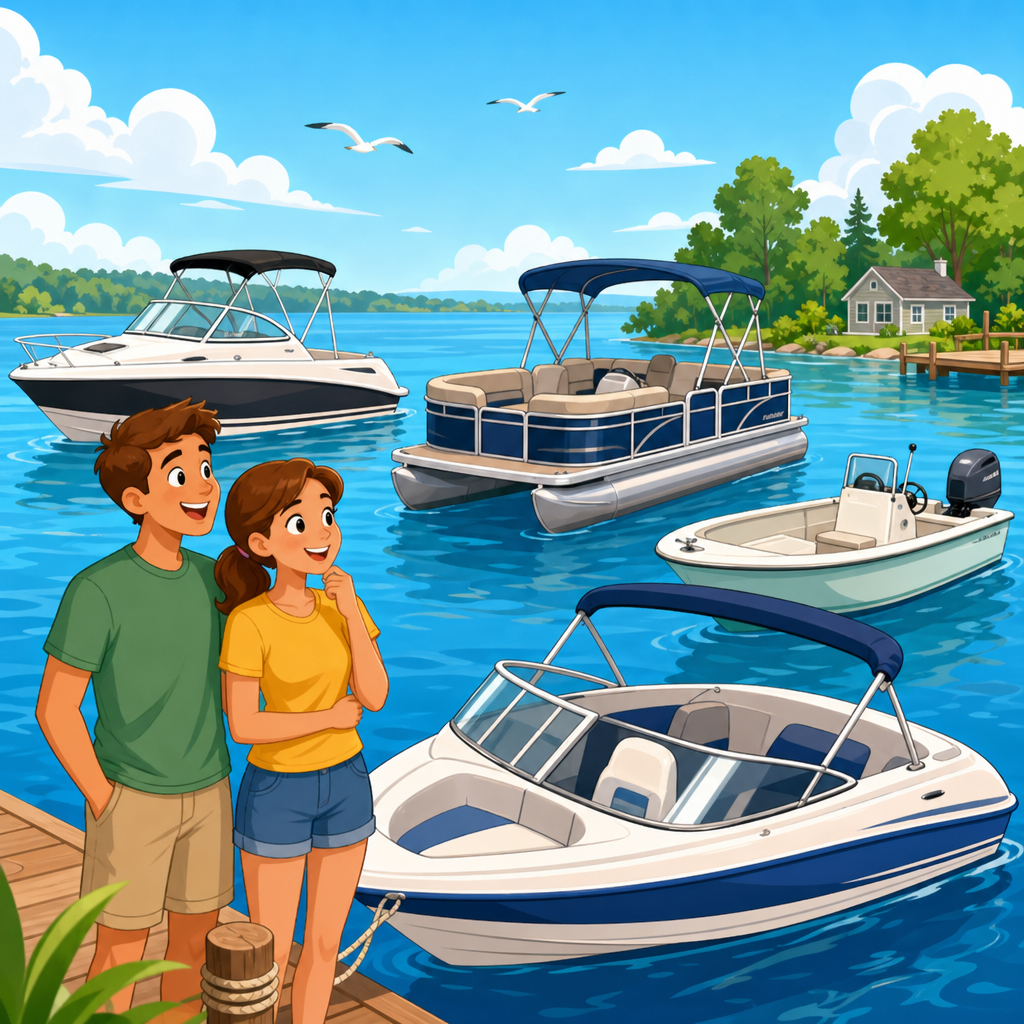
For those prioritizing comfort and a leisurely fishing experience, pontoon boats are an appealing option. With large, flat decks, pontoons offer plenty of space and stability, perfect for hosting family fishing trips. This makes them excellent choices for relaxed freshwater environments and multiple fishing parties, though not suited for open sea conditions.
3. Bass Boats
Specially designed for bass fishing, these sleek, streamlined vessels excel in speed and maneuverability. Typically equipped with powerful outboard engines and extensive fishing gear storage, bass boats provide anglers with a competitive edge. However, their specialized design makes them best suited for largemouth bass fishing in freshwater settings.
4. Center Consoles
Versatile and robust, center console boats are favorable for offshore and coastal fishing. The open design and central steering station offer excellent visibility and accessibility from any position on deck. These boats are equipped to handle a variety of environments, supporting a range of fishing activities, including deep-sea ventures, thanks to their highly adaptable nature.
5. Sportfishing Yachts
Reserved for passionate offshore anglers, sportfishing yachts are large vessels designed specifically for long sea voyages and tuna or marlin fishing. These luxurious boats come with sleeping quarters, full kitchens, and advanced navigation systems, elevating fishing trips to a new level of comfort and capability. However, such an investment is generally reserved for the most dedicated aficionados, due to the significant costs involved.
Considering Passenger Capacity and Comfort
The number of passengers and their comfort level directly influence your boat choice. If you often fish solo or with one partner, a smaller vessel will suffice. However, angling with friends or family requires larger accommodations, complete with adequate seating, rod holders, and storage room. Stability and comfort become priorities, as they directly affect the enjoyment of all aboard.
The type of seating is a key comfort aspect. Swivel chairs allow mobility while casting, whereas bench seating provides additional capacity. Cushioned seats minimize physical strain during long outings, while fishing-friendly features like built-in coolers, shaded areas, and non-slip decks amplify overall comfort, especially for extended periods on the water.
Fuel Efficiency and Maintenance
Fuel efficiency is a paramount consideration, as it impacts both operational costs and environmental footprint. Smaller boats generally consume less fuel but may lack the power required for certain fishing activities. Conversely, larger vessels with powerful engines consume more fuel but offer greater speed, agility, and versatility.
Choosing eco-friendly engines or hybrid propulsion options is beneficial for minimizing environmental impacts. Additionally, regular maintenance is crucial to ensure your chosen boat remains in top condition. This involves engine servicing, cleaning hulls, and checking electronic systems, to address minor issues before they culminate in costly repairs.
Ownership costs should encompass insurance, storage space, and potential docking fees. Seasonal factors, such as winter storage or antifreeze treatments, should also be considered when estimating the total cost of ownership.
Technology and Features
Incorporating technology enhances both safety and productivity. Fish finders, GPS systems, and VHF radios are standard technological amenities that elevate your fishing experience. These instruments help in locating fish, managing navigation, and ensuring communication, rendering your trips more efficient.
Some boats offer customizable electronic packages, allowing anglers to tailor features according to personal preference. This can include underwater cameras, autopilot functions, or advanced trolling systems. Identifying which technologies are indispensable versus desirable helps prioritize spending while maximizing vessel utility.
Conclusion
Choosing the right fishing boat requires careful consideration of your fishing environment, targeted species, passenger needs, and technological preferences. By clearly defining these criteria, you can identify the ideal boat that complements your unique requirements, maximizing your fishing experience. Understanding the diverse array of boat types helps in aligning their characteristics with your specific fishing pursuits.
Ultimately, investing in a fishing boat should not only reflect your angling goals but also cater to practical aspects such as safety, budget, and maintenance. The right boat transforms fishing trips into pleasurable adventures, building cherished memories along the waters you explore. Remember to approach the decision with patience and informed knowledge.
In conclusion, a well-chosen fishing boat becomes more than mere equipment; it embodies the gateway to exhilarating journeys on diverse waters. The joy of choosing wisely brings satisfaction for many seasons, contributing not just to successful catches, but also to deeper connections with nature, friends, and family on the pristine waters of your angling dreams.
Frequently Asked Questions
1. What factors should I consider when choosing a fishing boat?
When choosing a fishing boat, it’s crucial to start by considering several key factors to ensure your choice meets your fishing needs. First, think about the type of fishing you enjoy: are you more into freshwater fishing or do you prefer sailing the open ocean? This will influence the kind of boat you need. For freshwater fishing, especially in lakes and rivers, smaller boats or bass boats might be ideal. If you’re setting sail into expansive saltwater, look into offshore or center console boats designed to handle rougher conditions.
Next, you should evaluate the capacity of the boat. Consider how many people will typically accompany you. You’ll want a boat that comfortably fits all passengers and your fishing gear. Also, consider what fishing gear you plan to carry because storage on the boat is essential. Check for rod holders, live wells, and bait stations if they’re necessary for your style of fishing.
Additionally, assess your local waters and the necessary speed and maneuverability you need. Boats like flatboats or skiffs are excellent in shallow waters, while deep-V hulls are made to handle the rough open sea.
Finally, your budget will play a big role in defining what you can get. Remember to account not only for the initial purchase price but also for maintenance, fuel, and storage costs.
2. What are the different types of fishing boats available, and which should I choose?
The myriad of fishing boats available on the market is tailored to different fishing environments and preferences. Here’s a breakdown of popular types:
Bass Boats: These are low-profile boats suited for freshwater fishing, especially popular in North America for targeting bass in lakes. Known for their speed and maneuverability, they’re great if you like moving quickly across a lake.
Center Console Boats: A great choice for saltwater fishing, especially when you’re heading offshore. Their center-mounted controls give you 360-degree access to fish and are designed for versatility and performance in various sea conditions.
Jon Boats: Often used for freshwater fishing in shallow waters, they’re simple yet effective. These flat-bottomed boats are great if you’re fishing in calm, inland waters and prefer a no-frills, cost-effective option.
Pontoon Boats: A good option if you’re looking for a relaxing day out on the water with friends or family while fishing. They offer comfort and stability, ideal for calmer waters like lakes or rivers.
The choice largely depends on where you like to fish and how you plan to use the boat outside of fishing. Conduct thorough research, and consider renting different types before making your purchase decision.
3. How should the size of the boat influence my decision?
The size of the fishing boat is a significant factor influenced by your fishing habits, the fishing environment, and budget. Smaller boats, such as kayaks or 16-foot skiffs, are generally easier to maneuver, transport, and are more efficient in terms of fuel. These are great for solo fishers or if you’re commonly fishing in confined or shallow waters.
Larger boats, like those over 20 feet, offer more stability and comfort which is especially useful if you often fish in rough waters or plan to take more people out on the water. They come with additional luxuries such as expanded storage spaces, overnight cabins, and more room for amenities. However, larger boats also tend to incur higher costs related to docking, maintenance, and fuel expenses.
Understanding your usage frequency and typical fishing locations can help determine the right size for you, ensuring a blend of practicality and enjoyment during your fishing trips.
4. How does my fishing location dictate the type of boat I should buy?
Your fishing location is one of the most important considerations when buying a fishing boat. If your fishing spots are primarily freshwater areas like lakes or rivers, a smaller boat such as a bass boat or a Jon boat would be very practical because they can easily navigate shallow waters and smaller bodies of water.
If you’re venturing into the vast expanse of the ocean or large lakes known for choppy waters, looking into an offshore fishing boat with a deep-V hull is advisable. These boats are built to handle the open sea with superior stability and are equipped to tackle harsher conditions.
Similarly, if you plan to fish in a variety of areas, including both fresh and saltwater environments, an adaptable boat like a center console might be ideal. Its versatility allows for both nearshore and offshore fishing expeditions.
Ensure you tailor your choice to the most common conditions you’ll encounter to maximize your fishing experience’s safety and enjoyment.
5. What’s the role of fuel efficiency in choosing a fishing boat?
Fuel efficiency is a crucial aspect when choosing a fishing boat, influencing the overall cost and frequency of your fishing activities. Smaller, lighter boats typically consume less fuel, allowing for longer trips without frequent refueling, helpful for budget-friendly and eco-conscious anglers. For instance, a small outboard-engine vessel may cost significantly less in operational fees compared to large, high-horsepower boats.
However, opting for more fuel-efficient options does not mean compromising on power or performance. Consider boats equipped with fuel-efficient engines or hybrid models that can save costs over time. Additionally, examining the boat’s hull design can yield efficiencies, as certain designs enhance the vessel’s hydrodynamics.
Evaluating the trade-off between performance and cost is vital in aligning your choice with your financial resources and fishing aspirations, ensuring your decision optimally supports your fishing pursuits while keeping costs manageable.