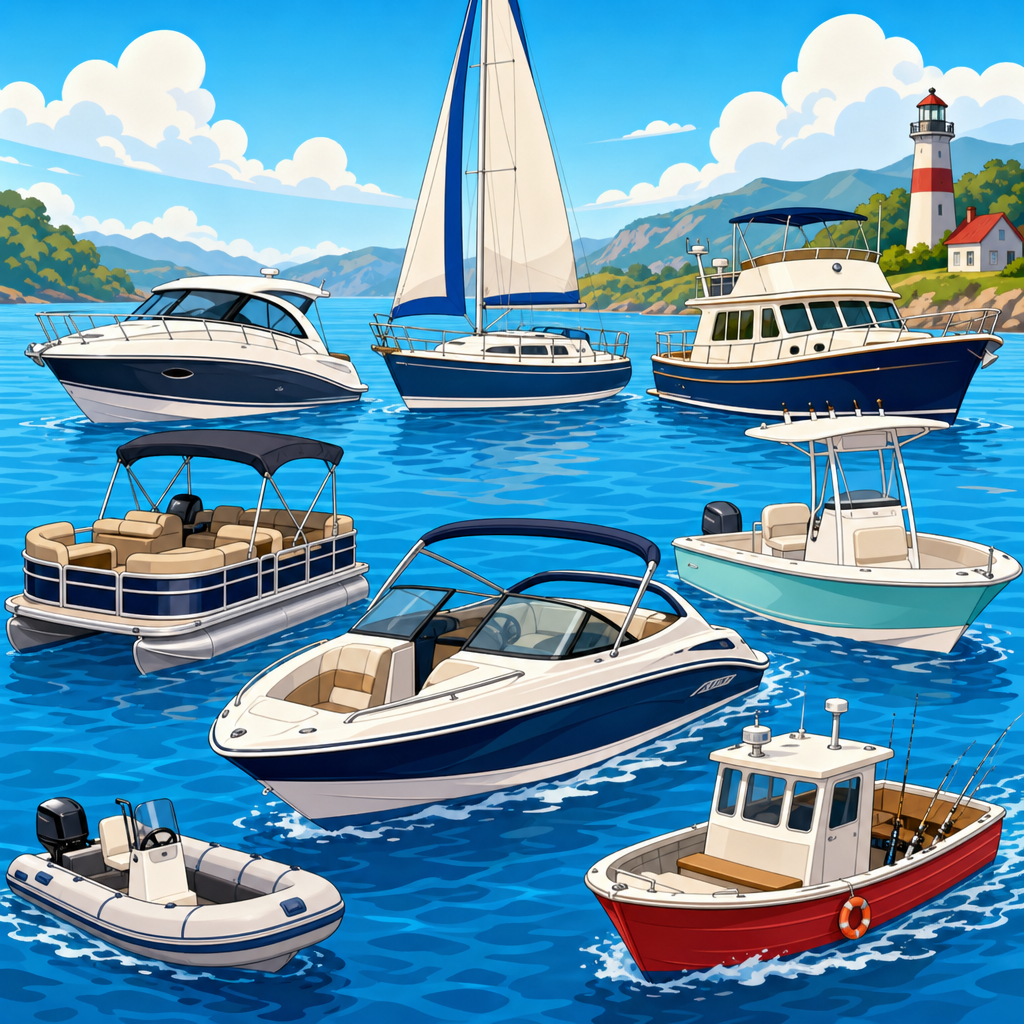
Choosing the best new boats for 2025 starts with understanding how today’s market has changed: builders are packing more capability, better fuel economy, smarter electronics, and more specialized layouts into every segment, from compact fishing skiffs to luxury cruising catamarans. In practical terms, a “best” boat is not the most expensive model or the newest hull release. It is the boat that matches how you actually use the water, where you launch, how many people you carry, and what ownership costs look like after the showroom excitement fades. That is why this guide focuses on boat comparison and buying decisions, not just glossy model names.
For 2025, buyers are also navigating a market shaped by higher financing costs, longer service backlogs at popular dealerships, tighter emissions expectations, and major improvements in helm technology. Digital switching, joystick docking, shallow-water anchors, lithium house systems, advanced chartplotter integration, and upgraded outboards are now moving from premium upgrades toward mainstream expectations. I have helped buyers compare center consoles, pontoons, surf boats, cruisers, and aluminum fishing rigs, and the same lesson comes up every season: the right purchase decision happens when hull design, propulsion, storage, passenger comfort, and local support are evaluated together.
This article serves as a hub for Best Boats & Reviews coverage within boat comparison and buying guides. It explains what to compare, which new 2025 boat categories stand out, and how to narrow choices with confidence. If you are asking what boat type is best for fishing, watersports, family cruising, overnighting, or all-around versatility, the answer depends on layout, deadrise, draft, tow requirements, and total cost of ownership. The sections below break those factors into plain language so you can compare new boats intelligently and move toward a shortlist that fits your water, your budget, and your real boating habits.
What Makes a New Boat Worth Buying in 2025
The strongest 2025 boats share a few traits regardless of category. First, they solve a real use case better than generic crossover models. A serious inshore bay boat should offer elevated casting decks, lockable rod storage, a trolling motor setup, and shallow draft, not just a fishing package added to a family runabout. A family bowrider should prioritize seating ergonomics, reboarding ladders, shade options, and dry storage before it adds big-horsepower bragging rights. In my experience walking docks and sea trials with buyers, the boats that age best in owner satisfaction are the ones with coherent design priorities.
Second, the best new boats for 2025 use space more efficiently. Builders such as Boston Whaler, Grady-White, Bennington, Jeanneau, Sea Ray, MasterCraft, and Barletta continue refining seat bases, transom access, under-gunwale storage, and convertible social zones. On a 24-foot platform, small design details matter: can two people access the bilge without emptying a locker, can fenders be stored quickly, can a child board safely from a floating dock, and can the helm be used standing or seated with clear sightlines? These are not minor comfort issues; they directly affect safety and enjoyment.
Third, propulsion and systems integration are better than they were even three years ago. New outboards from Yamaha, Mercury, and Suzuki deliver improved digital controls, cleaner rigging, and stronger diagnostics. Sterndrives still have a place in some runabouts, but outboard power dominates many segments because service access, corrosion management, cockpit space, and repower flexibility are usually better. On larger cruisers and catamarans, pod drives and refined diesel packages continue improving maneuverability and efficiency. The right drivetrain is the one your local market can support with qualified technicians and parts availability.
Best Boat Categories and Standout 2025 Choices
If you want the shortest path to a good decision, start by choosing the right category before comparing brands. Center consoles remain the most versatile saltwater option because they blend fishability, weather mobility, and family seating. In 2025, models in the 24- to 28-foot range are especially compelling because they can handle offshore runs, sandbar duty, and towing to regional ramps. Buyers should look closely at models from Regulator, Sailfish, Sea Hunt, Pursuit, and Boston Whaler, paying attention to transom design, fishbox insulation, and head compartment usability rather than published length alone.
For inland family boating, modern tritoons and premium pontoons are stronger than many first-time shoppers expect. Bennington, Harris, Barletta, and Manitou continue pushing performance with center tubes, lifting strakes, power assist steering, and higher horsepower ratings. A well-rigged 25-foot tritoon can comfortably handle cruising, tubing, and entertaining while offering easier boarding and more usable seating than many deck boats. The tradeoff is rough-water capability. On large, open lakes with frequent afternoon chop, hull shape still matters, and a deep-V bowrider or crossover may ride better.
Wake and surf boats remain highly specialized. MasterCraft, Malibu, Nautique, and Centurion are leading choices because their ballast management, surf systems, hull tuning, and driver-assist electronics produce consistent wakes with less trial and error. These boats are expensive, but the premium is tied to engineering, not image. Families who only tow tubes occasionally should not overbuy here. A quality bowrider or sterndrive crossover often delivers better value if wakesurfing is not the central purpose.
Aluminum fishing boats and multi-species rigs deserve more attention in 2025 because they solve practical ownership problems. Lund, Alumacraft, Tracker, and Crestliner offer durable platforms with easier trailering, lower draft, and lower operating costs than fiberglass alternatives. For freshwater anglers, especially on variable-depth lakes and rivers, these boats can be the smartest purchase in the market.
| Boat type | Best use | Key strengths | Main compromise |
|---|---|---|---|
| Center console | Saltwater fishing and family day boating | Versatility, deck space, offshore capability | Less weather protection |
| Tritoon | Cruising, entertaining, towing | Seating, stability, easy boarding | Can pound in bigger chop |
| Bowrider | Watersports and family lake use | Comfort, speed, social layout | Less dedicated fishing utility |
| Wake boat | Surfing and wake sports | Wave control, ballast, premium towing features | High price and specialization |
| Aluminum fishing boat | Freshwater angling | Low ownership cost, easy trailering, durability | Less refined ride than larger fiberglass hulls |
How to Compare Hulls, Layouts, and Powertrains
When comparing new boats, start with hull design because it determines ride, stability, draft, and fuel burn. Deep-V hulls generally soften impacts in chop because they cut through waves more effectively, but they may require more horsepower and can feel less stable at rest than wider, flatter designs. Modified-V and variable-deadrise hulls aim to balance ride quality and stability. Catamaran hulls improve deck space and efficiency in some conditions, though they do not behave identically in every sea state and docking scenario. There is no universally superior shape; there is only the right hull for your water and priorities.
Next, evaluate layout efficiency. Bring your normal boating day into the comparison. If you fish, where do wet lines go, where does the cast net sit, and can someone open a cooler without blocking the cockpit? If you cruise with children, is there secure movement from bow to stern, and are handholds available where the boat actually pitches? If you overnight, is the berth length realistic for adults, and can ventilation work without shore power? Showroom impressions are misleading unless you test real movement and storage access.
Then compare power honestly. Horsepower sells boats, but propeller selection, gear ratio, displacement, and expected load matter just as much. I regularly advise buyers to review manufacturer performance bulletins instead of relying on top-speed claims. A boat that planes quickly at moderate rpm and cruises efficiently at 28 to 34 mph is usually more satisfying than one that reaches a heroic top end with a light test load. Also check usable fuel capacity, not just total capacity, and ask whether range estimates include reserve. On trailerable boats, verify wet weight with engine, batteries, hardtop, and gear before assuming your tow vehicle is adequate.
Best New Boats for Specific Buyer Profiles
The best new boats for 2025 vary sharply by buyer profile. For first-time family buyers, a 22- to 24-foot bowrider or tritoon is usually the safest recommendation because ownership is easier, passenger comfort is better, and trailering remains manageable. Sea Ray’s SPX line, Yamaha jet boats, and premium pontoons from Barletta or Bennington all deserve consideration, but local service access should break ties. Buyers often underestimate the importance of a responsive dealership during the first season.
For serious coastal anglers, a 25- to 28-foot center console is the sweet spot. It offers meaningful offshore capability without the storage, slip, and fuel demands of larger twin-engine platforms. Look at livewell capacity, transom rigging access, freeboard, and whether the helm seating works for long runs. A flashy mezzanine-style leaning post means little if the boat’s fishbox drains poorly or the bow seating becomes unusable in rough weather.
For luxury-minded cruisers and couples planning weekends aboard, express cruisers and compact cruising catamarans stand out. Jeanneau, Beneteau, and Aquila continue offering efficient space planning, especially in galley and head design. The key question is not how many berths the brochure lists; it is whether tankage, refrigeration, air conditioning, and marina compatibility support your intended trips.
For anglers and hunters on inland waters, aluminum tiller boats, bass boats, and side-console rigs remain excellent values. The smartest buyers pair modest size with premium electronics and a high-quality trailer rather than overspending on hull length alone.
Buying Guide: Budget, Ownership Costs, and Sea Trial Rules
Purchase price is only the opening number. Real boat buying guides should emphasize annual ownership cost, because that determines whether the boat is used often or becomes an expensive driveway object. Budget for insurance, registration, winterization or off-season storage, routine engine service, trailer tires and brakes, bottom paint if slipped, cleaning supplies, safety gear, electronics updates, and unplanned repairs. In many markets, annual costs run roughly 10 percent of purchase price for actively used boats, sometimes more for larger cruisers kept in marinas.
Financing changes affordability as much as base price. Compare loan term, down payment, interest rate, and the cost of dealer-installed options rolled into the note. Extended terms can lower monthly payments while sharply increasing total interest. If you are comparing boats with different engine packages, calculate fuel use at realistic cruise speeds using performance reports from the builder or independent tests from Boating, Boating World, Salt Water Sportsman, or BoatTEST. Fuel burn at cruise matters more than top-end efficiency because that is where most owners spend their hours.
Never skip a sea trial. Test cold start behavior, helm visibility, trim response, noise levels during conversation, time to plane, slow-speed maneuvering, and boarding from the dock. Open lockers, inspect wiring runs, look for labeled breakers, and ask who performs warranty work locally. A well-supported brand with solid fit and finish is often a better long-term choice than a trendier model with weak dealer backing. Before signing, confirm trailer rating, included equipment, prop specification, battery setup, and whether navigation electronics, anchors, covers, and safety kits are standard or extra.
How This Hub Supports Smarter Boat Research
As a hub within Best Boats & Reviews, this page should help you build a shortlist, then move into deeper model reviews, category comparisons, and ownership guides. Use it as a decision framework. Start with your primary use case, eliminate boat types that do not match it, compare the leading brands in that narrowed segment, and then pressure-test your choice against towing limits, storage options, local service, and annual operating cost. That process prevents the most common buying mistake: purchasing for occasional fantasy use instead of routine reality.
The main takeaway is simple. The best new boats for 2025 are the ones engineered clearly for a purpose and supported by a dealer network you can actually rely on. Whether you are choosing a center console, tritoon, bowrider, wake boat, or aluminum fishing rig, compare hull design, layout efficiency, propulsion, and ownership cost together. If you are ready to move forward, use this hub to identify your category first, then continue into detailed reviews and side-by-side buying guides before you commit to a specific model.
Frequently Asked Questions
What should I look for when choosing one of the best new boats for 2025?
The best new boat for 2025 is the one that fits your real-world boating habits, not just the one with the flashiest debut or the longest options list. Start by thinking about how you will actually use the boat most of the time. A family focused on sandbar trips, cruising, and watersports will need a very different layout than an angler who runs offshore before sunrise or a couple planning overnight coastal travel. Usage should drive everything from hull style and length to seating, storage, livewell capacity, and weather protection.
Next, look closely at where and how you boat. Water conditions matter. A bay boat that performs beautifully in protected inshore waters may not be ideal for rough offshore runs, while a larger deep-V center console could be unnecessary if you mostly use inland lakes. Launching and storage also matter more than many buyers expect. If you trailer often, tow weight, beam, ramp access, and overall setup time should be part of the decision. If you keep the boat in a marina, dockage fees, draft, and power availability become more relevant.
New boats in 2025 are also bringing meaningful advances in fuel efficiency, digital helm systems, joystick controls, integrated trolling motors, and improved multifunction displays. These features can make ownership easier and safer, but they should support your use case rather than distract from it. Prioritize reliability, serviceability, and a practical layout over technology you may never use. A well-designed deck plan, quality fit and finish, and easy access to pumps, batteries, and wiring often matter more over time than headline-grabbing electronics.
Finally, think beyond the purchase price. Insurance, maintenance, fuel burn, storage, warranties, resale value, and dealer support all shape whether a boat remains enjoyable to own. In many cases, the smartest recommendation is not the biggest or most expensive model in a category, but the one that delivers the right mix of comfort, capability, efficiency, and manageable ownership costs.
Are center consoles still the best all-around new boats in 2025?
Center consoles remain among the strongest all-around choices in 2025, especially for buyers who want versatility. They continue to dominate because they can serve multiple roles in a single platform: fishing, family cruising, diving, island hopping, and watersports. Builders have refined this category with more comfortable seating, better head compartments, larger hardtops, improved transom arrangements, and more storage than earlier generations. For many boaters, that combination makes a center console the easiest single-boat solution.
That said, “best all-around” does not mean “best for everyone.” A center console shines if you value open deck space, 360-degree fishability, simple movement around the boat, and the ability to handle mixed conditions. It is especially appealing for coastal owners who want one boat that can fish in the morning and entertain family in the afternoon. Many 2025 models also offer advanced hull designs, improved ride quality, and efficient outboard packages that expand their usefulness even further.
However, there are tradeoffs. Bowriders may offer more lounge-oriented seating and a more social cockpit for lake use. Pilothouse boats provide more weather protection in cooler climates. Pontoon and tritoon models may be better for relaxed entertaining on inland waters. Cabin cruisers and power catamarans offer more overnight comfort. If your boating is highly specialized, a center console may be a compromise rather than the ideal answer.
The right way to judge a center console is to compare its strengths against your top three priorities. If you want broad capability, easy maintenance, strong resale appeal, and a proven layout that works in many environments, then yes, center consoles are still some of the best new boats for 2025. But if comfort at rest, overnight accommodations, or highly specific fishing or cruising needs lead your list, another segment may be a better match.
How important are fuel economy and engine choices when comparing new boats for 2025?
Fuel economy and engine selection are extremely important, and they often have a bigger impact on long-term satisfaction than buyers realize at first. A new boat may look perfect at a boat show, but if it is overpowered for your needs, inefficient at cruise, or expensive to maintain, ownership can quickly become more costly than expected. In 2025, many builders are emphasizing smarter hull designs, lighter construction methods, and more efficient propulsion packages, which means buyers have better choices than ever before.
The key is to match horsepower and engine configuration to your actual boating style. If you mostly take short trips on lakes or protected bays, you may not need the maximum rated horsepower. On the other hand, if you routinely run offshore, carry several passengers, or cruise heavily loaded with gear and fuel, underpowering a boat can hurt performance and efficiency just as much as overpowering it. The best setup is usually the one that allows the boat to plane easily, cruise comfortably in its most efficient rpm range, and still provide reserve power when conditions change.
Outboard technology remains a major driver in the 2025 market, with improved reliability, digital controls, quieter operation, and better fuel management. Multi-engine setups may offer performance and redundancy benefits, but they can also raise maintenance and fuel costs. Single-engine configurations can be simpler and more economical for many owners. For larger cruisers and specialty boats, inboard, sterndrive, or hybrid-adjacent systems may still make sense depending on the application, but service access and dealer support should be considered carefully.
When evaluating fuel economy, ask for real-world performance data, not just top speed claims. Look at cruise speed, gallons per hour, range with a reserve, and how the boat performs with a typical passenger load. Also consider where you boat and fuel availability in your area. A boat that is slightly slower but significantly more efficient may be the better recommendation for the average owner, especially if it extends range and lowers operating costs over several seasons.
What types of new boats are best for families versus anglers in 2025?
For families, the best new boats in 2025 tend to emphasize comfort, safety, flexibility, and easy access to the water. Bowriders, deck boats, pontoons, tritoons, and many dual consoles remain excellent choices because they prioritize seating, shade, swim platforms, enclosed heads on larger models, and user-friendly boarding. Families often benefit from layouts that include convertible lounges, removable tables, ski tow points, premium audio, and generous storage for bags, toys, and safety gear. In practical terms, a family boat should feel welcoming and uncomplicated, especially if you regularly boat with children, grandparents, or guests who are not experienced on the water.
Anglers typically need a very different set of priorities. Fishing-focused boats such as center consoles, bay boats, flats boats, and specialized freshwater bass boats are built around deck space, rod storage, livewells, fish boxes, casting access, trolling motor integration, and electronics visibility. Offshore anglers may prioritize range, deadrise, transom access, insulated storage, and the ability to handle rough water. Inshore anglers may care more about shallow draft, quiet maneuverability, and efficient layouts for casting and lure management.
There is also a growing middle ground in 2025. Many builders are blending fishing and family features into crossover designs. A modern dual console, for example, may include fishability, comfortable seating, and weather protection in one package. Some center consoles now offer foldaway seating, upgraded upholstery, and more refined social zones without giving up core angling functionality. These hybrid models are especially appealing to buyers who do not want separate boats for separate lifestyles.
The best recommendation comes down to honesty about how your boat will be used on most weekends, not on a few idealized days each year. If the majority of your time will be spent cruising, swimming, and entertaining, buy for comfort first. If fishing performance drives the experience, buy for fishability first. Boats that try to do everything can work very well, but only if their compromises align with your priorities.
Is it better to buy a fully loaded new boat in 2025 or keep the options list simple?
In most cases, a thoughtfully equipped boat is better than a fully loaded one. The temptation with new 2025 models is to select every available feature, especially because manufacturers are offering impressive electronics, lighting packages, premium sound systems, advanced helm controls, upgraded seating, and convenience accessories. Some of these features genuinely improve safety, usability, and resale value. Others mainly increase cost, complexity, and future maintenance demands without changing how much you enjoy the boat.
The smartest approach is to separate essential features from lifestyle upgrades. Essential features usually include safety equipment, adequate navigation electronics for your waters, a suitable anchoring setup, weather protection appropriate to your climate, enough battery capacity for your accessories, and practical storage solutions. For anglers, essentials may include a trolling motor, quality sonar, additional rod holders, and livewell upgrades. For family boaters, essentials may include shade, a boarding ladder, a head compartment, and durable upholstery. Start with the features that directly support your primary use case.
Then evaluate optional equipment through the lens of ownership. More systems mean more maintenance, more learning, and more potential repair costs