
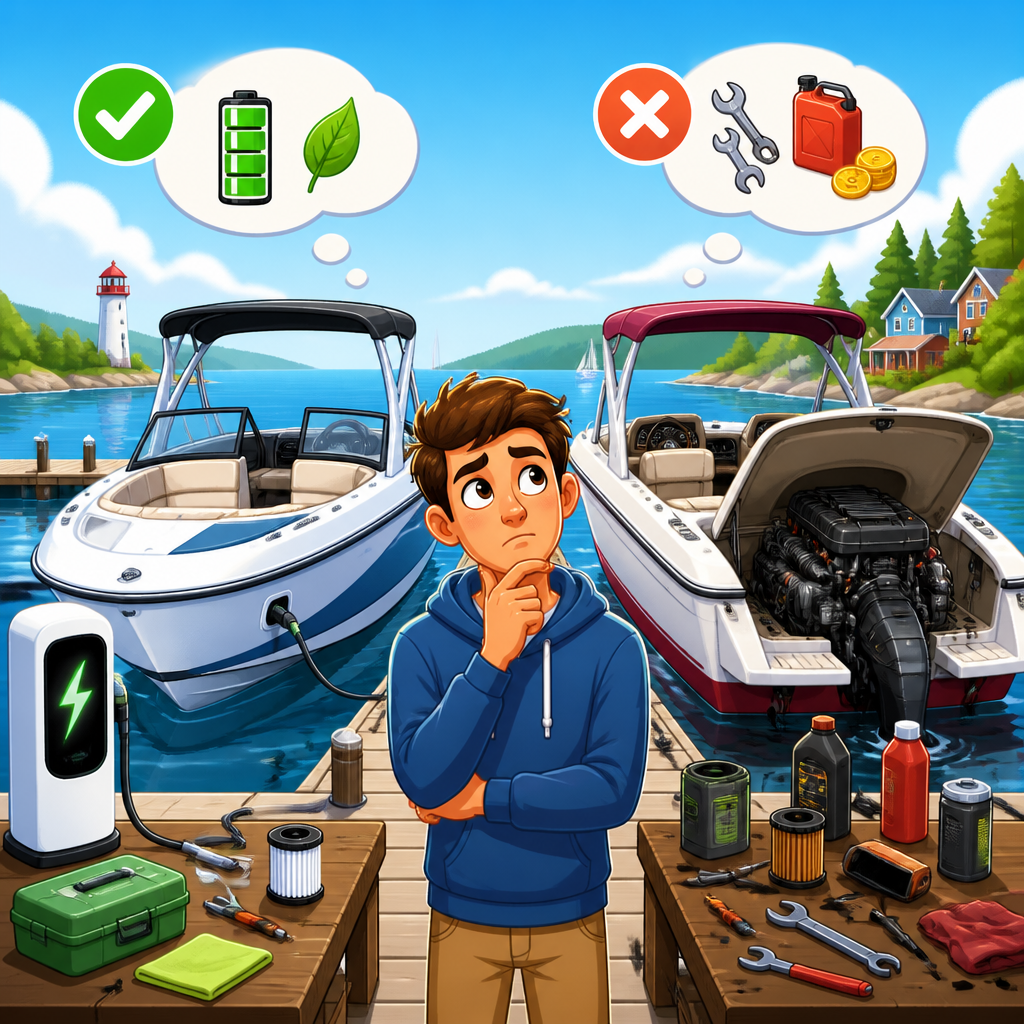
Electric boats are often assumed to be cheaper to own because they have fewer moving parts, but maintenance cost is more nuanced than that simple claim suggests. In practice, whether electric boats are more expensive to maintain depends on battery chemistry, charging habits, hull design, onboard electronics, duty cycle, and how the boat is stored and used. As someone who has worked around small electric launches, electric outboards, and hybrid commercial vessels, I have seen owners save substantially on routine service while underestimating the long-term cost of batteries, software-dependent systems, and specialized parts. That tension is exactly why this question matters to buyers comparing electric boats with gasoline or diesel alternatives.
An electric boat is any vessel propelled primarily by an electric motor powered by batteries, fuel cells, or a hybrid system. In the recreational market, most current models use lithium-ion battery packs feeding either an electric outboard, inboard motor, or pod drive. Eco-friendly boats is a broader category that includes electric boats, solar-assisted boats, hybrid boats, hydrogen concepts, and highly efficient hulls designed to reduce fuel burn or emissions. For readers exploring types of boats, this category deserves a hub article because the maintenance story changes across propulsion architectures. A trolling motor on a fishing skiff, a 25-foot electric day cruiser, and a battery-electric harbor ferry all share some principles, but their service profiles are not the same.
The core maintenance question can be answered directly: electric boats usually cost less for routine mechanical maintenance than combustion boats, but they can cost more in battery replacement, diagnostic complexity, and marine-grade electrical system repairs. Gas and diesel boats need oil changes, fuel filters, impellers, spark plugs, injectors, winterization steps around engines, exhaust system checks, and more frequent wear-item replacements. Electric boats eliminate many of those jobs. However, they introduce expensive battery management systems, high-voltage cabling, thermal management components, software updates, shore power equipment, and eventual battery degradation. For many owners, annual maintenance spending is lower with electric propulsion, while lifetime ownership cost depends heavily on battery life and usage pattern.
Why electric boat maintenance is different
Electric propulsion changes the service profile because the motor itself is mechanically simple. A typical electric motor has far fewer wear components than an internal combustion engine, and that simplicity reduces routine labor. There is no engine oil, no lower-unit oil in some drive designs, no fuel varnish clogging injectors after storage, no carburetor issues, and no exhaust risers corroding from saltwater exposure. On several electric craft I have inspected, the recurring service list centered on connectors, firmware, cooling loops, sacrificial anodes, steering components, and battery health reports rather than engine tune-ups.
That does not mean maintenance disappears. Marine environments are harsh on all systems. Salt spray drives corrosion into terminals and chargers. Vibration can loosen lugs. Moisture ingress can affect displays, contactors, and battery enclosures if sealing fails. Electric boats also rely heavily on integrated electronics, and owners sometimes need manufacturer-approved technicians for fault tracing. In the combustion world, an experienced mechanic can often diagnose issues with standard tools and broad engine familiarity. In the electric world, proprietary software and telematics matter much more, especially on premium brands.
Another difference is maintenance timing. Combustion boats demand frequent scheduled service based on hours or seasons. Electric boats shift more of the cost curve toward condition-based maintenance and long-horizon component replacement. You may spend less every spring, yet still face a large battery expense years later. That is why buyers should evaluate both annual service costs and total cost of ownership over eight to twelve years.
Where electric boats usually save money
The strongest cost advantage for electric boats is the reduction in routine engine service. A gas outboard commonly needs annual oil and filter changes, gearcase lubricant service, fuel-water separator replacement, spark plugs, thermostat checks, and winterization. A diesel inboard adds fuel polishing concerns, injector service, belt replacement, and exhaust inspections. By contrast, an electric drivetrain typically needs periodic inspection of motor mounts, couplings, seals, cooling circuits if liquid-cooled, and electrical connections. Labor hours are usually lower.
Owners also save money by avoiding fuel-system deterioration. Ethanol-blended gasoline creates storage headaches in many marinas, especially for boats that sit idle for weeks. Stale fuel, phase separation, blocked filters, and gummed injectors are common service events. Electric boats eliminate all of that. Charging systems do require care, but they do not suffer from microbial growth in tanks, leaking fuel lines, or fuel pump failures. In practical ownership, this reduction in nuisance repairs can be as valuable as the direct dollar savings.
Noise and vibration reduction has a maintenance effect too. Electric motors transmit less vibration through mounts, controls, and adjacent hardware. Over time, that can reduce fatigue-related loosening and wear in surrounding components. It is not a magic shield against marine wear, but on well-designed electric launches, I have consistently seen cleaner engine compartments, fewer fluid-related messes, and simpler seasonal commissioning. These factors lower service complexity, which often lowers invoices.
Where electric boats can cost more
The single biggest maintenance-related cost risk is battery replacement. Most marine electric boats use lithium-ion chemistries such as NMC or LFP. Battery life depends on depth of discharge, charging rate, temperature, cycle count, and storage habits. A carefully managed pack may deliver many years of service, but replacement remains expensive because marine batteries need robust enclosures, waterproofing, thermal protection, and certified battery management systems. A small electric outboard battery may be manageable, while a large cruiser pack can represent a major percentage of the vessel’s value.
Specialized diagnostics are another cost driver. Premium electric propulsion brands integrate controllers, displays, battery management, chargers, and cloud monitoring. When faults occur, technicians may need proprietary software, remote factory support, or replacement modules rather than simple repair. Parts availability can also be uneven in a younger market. With conventional engines, many marinas stock common service items. With electric systems, a failed charger, DC-DC converter, or touchscreen display may require ordering from a smaller network.
Insurance and survey expectations can add indirect maintenance expense. Some underwriters and surveyors pay close attention to battery installation standards, ventilation, fire suppression, shore power configuration, and emergency disconnects. Compliance with ABYC electrical guidance and manufacturer service intervals matters. If an owner modifies the charging system or uses non-approved batteries, future claims or warranty support can become difficult. That makes proper installation and documented service more important than many first-time buyers expect.
Cost comparison by maintenance category
The most useful way to judge cost is by category rather than by marketing claim. Routine annual service usually favors electric boats. Midlife repairs depend on brand maturity and component access. End-of-life replacement risk strongly favors combustion boats in the narrow sense that replacing an alternator or fuel pump is far cheaper than replacing a high-capacity battery pack. Energy cost, while not a maintenance line item, often improves the ownership equation for electric boats enough to offset some long-term risk.
| Maintenance category | Electric boats | Gas or diesel boats |
|---|---|---|
| Routine annual service | Usually lower; fewer fluids and wear items | Higher; oil, filters, plugs, impellers, winterization |
| Fuel or charging system care | Charger, cables, connectors, battery health monitoring | Tanks, pumps, injectors, separators, stale fuel issues |
| Major component replacement | Battery packs can be very expensive | Engines are costly, but many subcomponents are cheaper |
| Diagnostics | Often software-heavy and brand-specific | Broad mechanic familiarity, more standardized methods |
| Corrosion exposure | High-voltage and low-voltage terminals need protection | Engine, exhaust, fuel, and electrical systems all corrode |
| Storage and seasonal layup | State-of-charge management is critical | Fuel stabilization and winterization are critical |
For a small electric runabout used on inland lakes, routine maintenance can be dramatically lower than on a comparable gasoline boat. For a larger coastal cruiser, the savings are still real, but they can be diluted by marine air corrosion, higher-capacity battery systems, and more sophisticated onboard electronics. The broader the boat’s mission, the more carefully maintenance must be planned.
What affects battery lifespan and replacement cost
Battery longevity is the deciding factor in most electric boat ownership models. Heat is the enemy of lithium batteries, and so is keeping packs at very high state of charge for long periods. Fast charging also increases stress, especially when thermal management is limited. Good systems protect themselves with charge-rate controls, temperature monitoring, and conservative reserve buffers. That software is not a convenience feature; it is central to maintenance cost control.
Owners can materially extend battery life by charging to the manufacturer’s recommended everyday limit, avoiding deep discharges when possible, and storing the boat within the advised state-of-charge window. For many lithium systems, that means not leaving the pack at 100 percent for weeks at a dock. In colder climates, off-season storage procedures also matter. Some packs should remain installed and monitored; others may require a different routine. The owner’s manual is not optional reading on an electric boat.
Replacement cost varies by pack size, chemistry, integration, and certification. Lithium iron phosphate often offers longer cycle life and better thermal stability than nickel manganese cobalt, though energy density is lower. For displacement boats with modest speed demands, that tradeoff can be attractive. For planing boats chasing range and performance, designers may choose different chemistries and accept different replacement economics. Buyers should ask for warranted cycle life, usable capacity, thermal management details, and replacement pricing before signing a contract.
Maintenance realities across eco-friendly boat types
Eco-friendly and electric boats are not one category from a maintenance perspective. Electric outboards are generally the simplest entry point, especially for tenders, fishing boats, and small lake craft. They are easy to remove, charge, and inspect, and replacement cost exposure is limited by smaller battery capacity. Electric inboards suit launches, canal boats, and day cruisers that operate at lower speeds. These systems are often reliable, but battery bank size and charging infrastructure become more important.
Hybrid boats combine electric propulsion with a combustion engine or generator. They can reduce fuel use and offer quiet maneuvering, yet they do not eliminate engine maintenance because the onboard engine still needs service. In practice, hybrids can be the most maintenance-complex option because they combine two propulsion ecosystems. Solar-assisted boats can lower charging demand, but the panels themselves are usually low maintenance compared with the electrical integration behind them. Hydrogen fuel-cell boats remain niche and infrastructure-limited, with service demands tied closely to specialized equipment and regulatory oversight.
This makes the hub topic especially useful for buyers researching types of boats. The right question is not simply, “Are electric boats more expensive to maintain?” It is, “Which eco-friendly boat type best matches my range, speed, marina access, and service network?” A low-speed electric picnic boat on a short inland route may be one of the cheapest boats in its class to maintain. A high-performance electric day boat in saltwater, kept on a lift with limited dealer support, may be cheaper than a premium gas boat annually but riskier in long-term component cost.
How to keep electric boat maintenance costs low
Buy from a builder with a real service network, not just an attractive launch video. Ask who handles warranty work, which software tools technicians use, how replacement batteries are sourced, and whether the propulsion package follows recognized marine electrical practices. Verify charger compatibility with your marina power, because poor shore power quality can create recurring issues. Install galvanic protection where appropriate, inspect terminals regularly, and document battery health at least annually.
Use the boat often. Long idle periods are hard on both combustion and electric craft, but electric systems particularly benefit from active monitoring and proper charging cycles. Keep firmware current when the manufacturer recommends it, because updates often improve battery balancing, thermal control, and fault handling. Finally, budget for the battery from day one. If the expected replacement cost feels unacceptable, the boat is probably too large or too early-generation for your ownership plan.
Electric boats are usually less expensive to maintain in day-to-day service, especially when compared with gas and diesel boats that require regular engine work, fuel-system care, and seasonal mechanical servicing. They become more expensive when buyers ignore battery aging, choose unsupported brands, or underestimate the cost of specialized marine electrical repairs. The smartest comparison is not annual service alone but total ownership over the years you expect to keep the boat.
For anyone exploring eco-friendly and electric boats within the broader types of boats landscape, the main benefit is clear: you can reduce routine maintenance, noise, emissions, and fuel-related headaches without pretending the technology is cost-free. Match the propulsion system to your real boating pattern, verify service support, and treat battery management as central maintenance, not an afterthought. Do that, and an electric boat can be financially sensible as well as environmentally practical. If this subtopic fits your buying journey, continue into the related guides on electric outboards, hybrid boats, solar boats, charging infrastructure, and battery lifespan before making your final decision.
Frequently Asked Questions
Are electric boats actually cheaper to maintain than gasoline or diesel boats?
Often, yes—but not automatically. Electric boats usually have fewer routine service items than internal combustion boats because they do not need oil changes, fuel filter replacements, spark plug service, impeller-related engine work in the same way, or many of the tune-up tasks associated with gas or diesel propulsion. That reduction in mechanical complexity can translate into lower annual maintenance bills, especially for owners who use their boats regularly and keep their systems simple.
That said, maintenance cost is not just about the motor. The real answer depends on the battery system, charging setup, onboard electronics, cooling design, corrosion protection, and how hard the boat is used. A lightly used electric day boat stored properly and charged correctly may be very inexpensive to maintain. By contrast, a high-performance electric boat with a large lithium battery bank, advanced digital controls, and a demanding duty cycle may save money on engine service while still generating meaningful costs for battery monitoring, software diagnostics, charger maintenance, and eventual battery replacement planning.
Hull design also matters more than many buyers expect. An inefficient hull forces the propulsion system and battery bank to work harder, which can increase wear, heat, charging frequency, and long-term operating stress. In other words, some owners conclude that electric boats are “cheap to maintain” when what they really have is an efficient, lightly stressed system. Others discover that poor range, heavy loads, and aggressive usage push maintenance and lifecycle costs higher than expected. So while electric boats are frequently less maintenance-intensive in day-to-day ownership, the total picture is more nuanced than the simple “fewer moving parts means lower cost” argument.
What maintenance costs are reduced on an electric boat compared with a traditional engine boat?
The biggest savings usually come from eliminating combustion-engine service. Electric boats do not require oil and filter changes, fuel stabilizer programs, injector cleaning, spark plugs, valve adjustments, exhaust-system service, or many of the seasonal recommissioning tasks associated with gasoline and diesel engines. There is also no fuel contamination issue in the same sense, which removes one of the more frustrating and expensive maintenance problems common in conventional boats that sit for long periods.
Owners also often benefit from less vibration and fewer heat-related mechanical issues. Electric motors are generally smooth and mechanically simple, which can reduce wear on mounts, couplings, and adjacent components. In many small electric launches and electric outboards, there are simply fewer systems to break. If the installation is clean, sealed properly, and protected from corrosion, the annual maintenance checklist can be much shorter than on a comparable fuel-powered setup.
However, “reduced” does not mean “zero.” Electric boats still need shaft inspections where applicable, propeller checks, lower-unit or drive-component attention on some designs, cooling system review if the propulsion package uses liquid cooling, electrical connection inspections, corrosion control, and software or firmware updates on modern systems. The savings are real, but the maintenance category shifts from traditional engine service to battery care, electrical diagnostics, and system management. In practice, owners save the most when they understand that electric propulsion removes many old expenses but introduces a new set of priorities.
Is battery replacement the main reason electric boat maintenance can become expensive?
Battery replacement is usually the largest long-term cost concern, but it should not be confused with routine maintenance. In most cases, batteries are more accurately thought of as a lifecycle expense rather than an annual service item. A well-managed lithium battery bank can last many years, particularly when it is not repeatedly deep-cycled, overheated, fast-charged unnecessarily, or stored improperly. Good charging habits, proper battery management system calibration, temperature awareness, and avoiding chronic full-discharge events can make an enormous difference in longevity.
The type of battery chemistry matters as well. Lithium iron phosphate systems, for example, often offer strong cycle life and predictable behavior when installed correctly, while other chemistries may have different trade-offs in energy density, cost, and thermal characteristics. Lead-acid batteries can appear cheaper up front, but they generally require more attention and may wear out sooner under marine cycling demands, which can make them more expensive over time in practical ownership terms.
What catches some owners off guard is that battery-related costs are not limited to the cells themselves. Chargers, DC-DC converters, thermal management components, high-voltage cabling, monitoring systems, and periodic professional diagnostics can all be part of the ownership equation. If a battery bank is oversized, poorly ventilated, repeatedly run hard, or exposed to damaging storage conditions, replacement timing can accelerate significantly. So yes, batteries are often the biggest long-term cost variable, but whether they make the boat “expensive to maintain” depends heavily on how intelligently the entire electrical system is designed, charged, and used.
Do electric boats require special maintenance for charging systems and onboard electronics?
Absolutely, and this is one of the most overlooked parts of electric boat ownership. Modern electric boats rely on a tightly integrated system that includes chargers, battery management systems, displays, controllers, inverters in some cases, safety disconnects, and communication networks between components. These systems are typically reliable, but they must be kept dry, clean, properly ventilated, and protected from corrosion. Marine electrical issues can be subtle, and a minor connector problem or voltage irregularity can affect performance, charging behavior, or fault reporting.
Charging equipment deserves particular attention because it is central to battery health. Owners should periodically inspect shore power connections, cables, plugs, breaker protection, charger mounting, and any signs of heat, moisture intrusion, or corrosion at terminals. If the boat uses dockside charging often, wear at the plug interface can become a real maintenance item. If it uses higher-power charging, thermal conditions and connection integrity matter even more. Poor charging practices do not just create inconvenience—they can shorten battery life and raise long-term ownership cost.
Onboard electronics also influence maintenance costs because electric boats often depend more heavily on digital monitoring than conventional small boats. Software updates, sensor calibration, fault-code reviews, and occasional manufacturer diagnostics may be part of normal care. This does not necessarily make maintenance worse, but it does make it different. Instead of focusing mainly on engine fluids and mechanical adjustments, electric boat owners need to think in terms of electrical reliability, clean installation standards, and preventive inspection of smart systems. Owners who stay ahead of those tasks usually avoid bigger and more expensive problems later.
What factors have the biggest impact on whether an electric boat is expensive to maintain over time?
The biggest factors are usage pattern, battery treatment, storage conditions, and overall system design. A boat that operates within its intended range envelope, uses an efficient hull, carries sensible loads, and is recharged in a controlled way is usually much less expensive to maintain than one that is constantly pushed to its limits. Heavy cycling, long periods at very high power, frequent full discharges, and repeated exposure to harsh heat or moisture can all increase wear on batteries and electrical components.
Storage is another major variable. Boats kept in a dry, well-managed environment tend to experience fewer corrosion issues, fewer charging problems, and better battery longevity. Boats left in wet, salty, poorly ventilated conditions often develop connection problems, electronic faults, and accelerated deterioration at terminals, enclosures, and control components. For seasonal owners, improper lay-up can be especially costly if batteries are left at unhealthy states of charge or unsupported by the manufacturer’s storage recommendations.
Service access and installer quality matter just as much as the equipment itself. A well-engineered system with properly sized wiring, waterproofed connections, correct fusing, and sensible charger placement is usually easier and cheaper to maintain than a poorly executed retrofit. In my experience, the boats that become “surprisingly expensive” are often not the ones with electric propulsion as such, but the ones with mismatched components, inadequate charging infrastructure, or unrealistic performance expectations. When the propulsion package, battery bank, hull, and duty cycle are all aligned, electric boats can be very cost-effective to maintain. When they are not, the savings people expect can disappear quickly.


