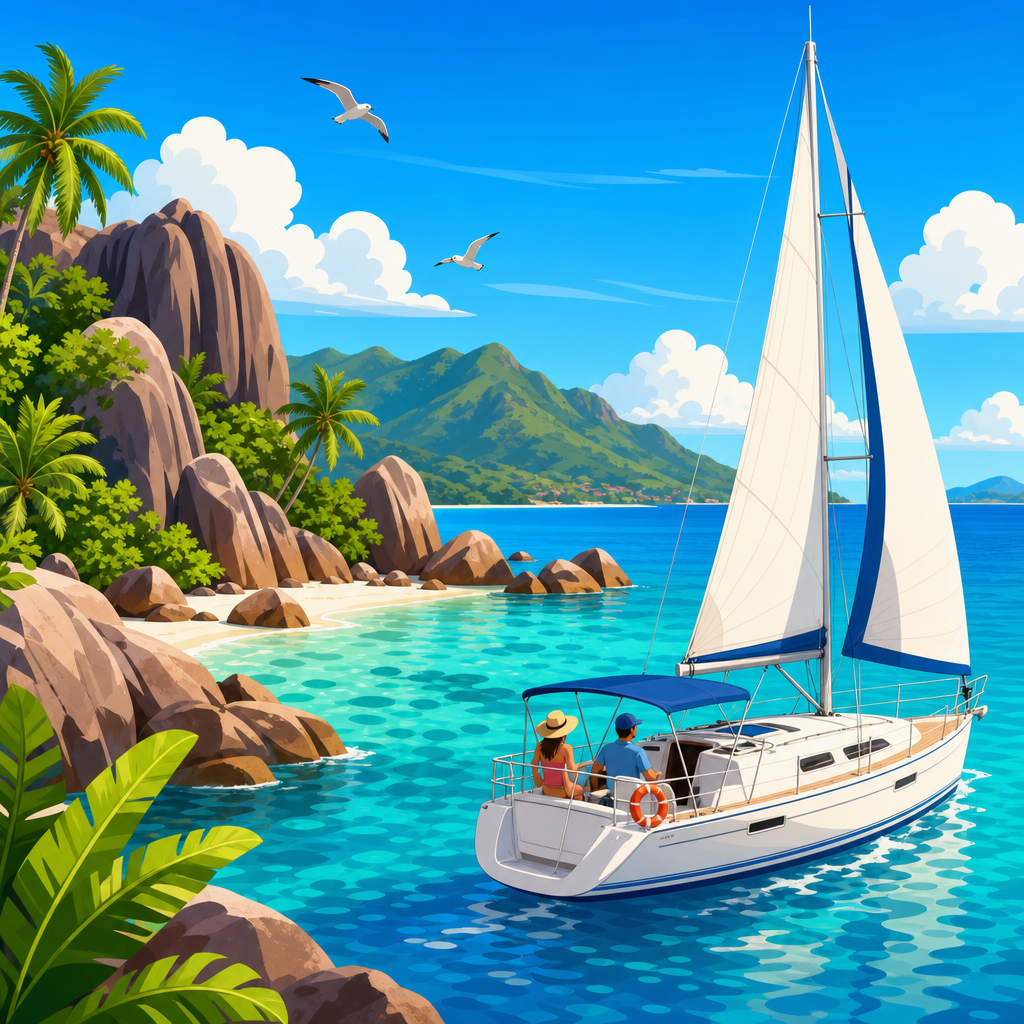
Sailing the Seychelles is one of the rare travel experiences that genuinely exceeds expectation, because the archipelago was shaped for life on the water. Spread across 115 islands in the western Indian Ocean, the Seychelles combines short passages, protected anchorages, warm trade winds, and some of the clearest cruising grounds anywhere in the world. For travelers researching the best sailing and yacht charter destinations, this island nation belongs near the top of the list, not as a niche option but as a complete cruising region that suits first-time charter guests, experienced bareboat skippers, honeymooners, divers, anglers, and families.
The term Seychelles usually refers to two broad groups: the granite Inner Islands around Mahé, Praslin, and La Digue, and the more remote coral Outer Islands stretching far southwest into the Indian Ocean. Most yacht charters focus on the Inner Islands because distances are manageable, infrastructure is reliable, and the scenery changes quickly from island to island. A typical itinerary delivers white-sand beaches, giant granite boulders, marine parks, Creole food, reef snorkeling, and easy line-of-sight navigation within a single week. That concentration of variety is what makes Seychelles stand out in any serious guide to best sailing and yacht charter destinations.
It matters for another reason too: not every tropical sailing destination works equally well for every kind of crew. Some places demand long open-water hops. Others are beautiful but crowded, overbuilt, or weather-limited. In Seychelles, especially around the Inner Islands, sailing feels accessible without being dull. You can spend the morning on a broad reach between emerald islands, the afternoon swimming over coral gardens, and the evening anchored off a beach that still feels genuinely wild. I have planned itineraries here for mixed-experience crews, and the region consistently performs because logistics are simpler than many guests expect while the reward remains unmistakably Indian Ocean.
As a hub for boating destinations and travel, this guide covers where to sail, when to go, what type of charter to choose, how costs and conditions compare, and which islands deserve priority. It also frames Seychelles in the broader context of best sailing and yacht charter destinations worldwide. If you are deciding between a catamaran holiday, a crewed yacht charter, or a self-skippered trip, the essential answer is straightforward: Seychelles offers a high-value blend of scenery, manageable navigation, premium swimming conditions, and memorable wildlife that few cruising regions can match.
Why Seychelles ranks among the best sailing and yacht charter destinations
Seychelles ranks so highly because it solves the core equation sailors care about: rewarding sailing days, practical distances, and exceptional time ashore. The Inner Islands are close enough for relaxed itineraries, yet diverse enough that each anchorage feels distinct. Mahé offers provisioning, marina services, and international air access. Praslin introduces famous beaches and the Vallée de Mai, a UNESCO World Heritage Site known for the endemic coco de mer palm. La Digue adds bicycle-friendly charm and iconic coves such as Anse Source d’Argent. Smaller islands including Curieuse, Cousin, Silhouette, and Félicité provide wildlife reserves, hiking, and excellent snorkeling in a compact radius.
Another reason Seychelles is often considered one of the best sailing and yacht charter destinations is the water itself. Visibility commonly reaches 20 to 30 meters in favorable conditions, making casual snorkeling unusually rewarding. Hawksbill turtles, eagle rays, reef fish, and occasional dolphins are regular sightings rather than rare luck. The cruising aesthetic is also distinctive. Unlike destinations defined by beach clubs or port towns, Seychelles feels geologic and elemental: pink granite formations, dense takamaka forest, and luminous shallows create visual drama from the deck all day long.
There are limits, and they should be stated clearly. Seychelles is not the cheapest charter market in the world, especially compared with some Mediterranean shoulder-season bases or parts of Southeast Asia. Mooring fields are less extensive than in heavily developed charter zones, so anchoring competence matters. During the northwest monsoon months, weather can be more humid and less predictable. Yet those tradeoffs are manageable, and for many travelers they are exactly why the destination retains a sense of space and authenticity.
The best islands and cruising routes for a Seychelles yacht charter
The classic one-week route begins on Mahé, usually from Eden Island Marina, the country’s main yachting hub. After provisioning, many crews head first to Sainte Anne Marine National Park for an easy shakedown anchorage close to the base. From there, a logical progression is north toward Beau Vallon or around to Baie Ternay, then onward to Silhouette for a quieter overnight stop with strong hiking options. Another common sequence points northeast and east through the Inner Islands: Mahé to St. Anne, then Cocos Island, La Digue, Curieuse, Praslin, and back.
Praslin and La Digue form the centerpiece of many itineraries because they deliver the strongest combination of scenery and shore activity. On Praslin, Anse Lazio and Anse Georgette are regularly counted among the world’s best beaches, while the Vallée de Mai gives visitors a terrestrial attraction with genuine ecological significance. La Digue is small, slow-moving, and ideal for a day off the boat. Crews typically rent bicycles, ride between beaches, and return for sunset aboard. Curieuse Island adds giant Aldabra tortoises and red-earth trails through mangrove habitat, making it a favorite stop for families.
For divers and snorkelers, islands east of Praslin, including Cocos, Félicité, and sometimes St. Pierre, can become trip highlights. Reefs around these islands hold dense fish life and dramatic underwater granite formations. If you have more than a week, you can build a deeper loop that includes Cousin Island for birdlife, Aride when access rules permit, or a slower circuit around Mahé’s west coast to Baie Ternay and Port Launay. Remote Outer Island expeditions are possible on larger crewed yachts or specialized voyages, but they are not the standard recommendation for most charter guests because of distance, fuel planning, and weather exposure.
| Area | Best For | Typical Highlights | Charter Notes |
|---|---|---|---|
| Mahé | Arrival, provisioning, marina services | Eden Island Marina, Beau Vallon, Baie Ternay | Main charter base with strongest support infrastructure |
| Praslin | Beaches, nature, relaxed cruising | Anse Lazio, Vallée de Mai, nearby anchorages | Excellent mid-itinerary stop with easy shore excursions |
| La Digue | Culture, cycling, photography | Anse Source d’Argent, village atmosphere | Popular day stop; book berths or anchor carefully |
| Curieuse | Wildlife, family outings, hiking | Giant tortoises, mangroves, ranger station | Protected area rules apply; respect landing guidance |
| Silhouette | Quiet anchorages, hiking, scenery | Mountain backdrop, less developed coastline | Good option for crews seeking fewer crowds |
When to sail in Seychelles: seasons, winds, and sea conditions
The best time to sail Seychelles depends on what matters most to your crew: steadier wind, flatter water, diving visibility, or quieter pricing. The southeast trade wind season, generally from May through September, brings drier conditions and more reliable breeze, often in the 15 to 25 knot range. This is the period many sailors prefer because passages are livelier and humidity is lower. The tradeoff is that some anchorages can be windier and exposed depending on aspect, especially on southeastern shores.
The transitional months of April, October, and November are often excellent for mixed-purpose charters. Winds are lighter, seas can be calmer, and underwater visibility is frequently very good, which appeals to snorkelers and divers. These shoulder periods can be ideal for families or crews that prioritize swimming and relaxed lunches at anchor over energetic sailing angles. December through March sits within the northwest monsoon pattern, with warmer, more humid weather and a higher likelihood of rain or variable wind. Charters still operate, but itinerary flexibility becomes more important.
Cyclones rarely strike the Seychelles directly because the islands sit outside the main cyclone belt, which is a genuine planning advantage over parts of the southwest Indian Ocean. That said, distant weather systems can still generate swell, and microconditions around reefs and headlands always deserve respect. Tide range is not usually a major stress point for visiting charterers, but coral heads, marked reserves, and anchoring restrictions require attention. Good route planning in Seychelles is less about extreme weather avoidance and more about matching daily legs to wind direction, anchorage protection, and crew priorities.
Choosing the right charter: bareboat, skippered, catamaran, or crewed yacht
The right charter format depends on sailing competence, vacation style, and budget. Bareboat charters are popular in Seychelles because the Inner Islands allow relatively straightforward line-of-sight navigation for qualified skippers. Charter companies typically expect a recognized sailing résumé or certification, and they may ask detailed questions about anchoring, pilotage, and prior command time. If your skills are solid but local confidence is limited, hiring a skipper for the first day or the full week is often money well spent. It shortens the learning curve and improves anchorage selection immediately.
Catamarans dominate the market for good reason. Their shallow draft opens more anchoring options, the deck layout works well for social groups, and stability is welcome for non-sailing family members. In Seychelles specifically, a catamaran is often the most practical platform because many itineraries blend beach landings, snorkeling stops, and short hops rather than long offshore passages. Monohulls still appeal to sailors who value upwind performance, helm feel, and lower charter cost, but the comfort equation pushes many mixed crews toward cats.
Crewed yacht charters raise the experience level considerably. A professional captain handles navigation and local knowledge, while a chef or host transforms the trip into a floating boutique hotel. This option fits milestone trips, multigenerational families, and travelers who want to reach less obvious anchorages without carrying the planning load. The cost is higher, but the operational friction drops sharply. In my experience, guests who care most about service, diving coordination, restaurant bookings, and wildlife interpretation are usually happiest on a fully crewed yacht rather than trying to self-manage every detail.
Costs, logistics, and practical planning for a smooth sailing holiday
A Seychelles yacht charter requires careful budgeting because the base charter rate is only part of the total. Expect separate line items for end cleaning, damage waiver or insurance, fuel, park fees, skipper or crew, provisioning, transfers, and sometimes marina nights. Flights into Seychelles International Airport on Mahé are straightforward from major hubs in the Gulf, Europe, and parts of Africa, which helps offset the destination’s premium pricing. Most charters start from Eden Island Marina, where supermarkets, chandlery access, restaurants, and taxi connections simplify arrival day planning.
Provisioning is easier than many first-time visitors expect. Mahé has solid grocery options, and many charter companies offer pre-order packages for basic stores, drinks, and breakfast supplies. Still, specialty dietary items, premium wine choices, and certain medical products may be harder to source than in major Mediterranean bases, so advance ordering is smart. Mobile coverage is generally good around the Inner Islands, though not perfect in every anchorage. Water sports gear, kayaks, stand-up paddleboards, and snorkel sets are commonly available as charter add-ons.
Environmental rules are not cosmetic here; they shape the charter experience. Protected marine areas have specific access guidance, and crews should verify where anchoring is permitted instead of dropping anywhere that looks appealing. Reef-safe sunscreen, careful dinghy handling, and strict waste management matter because the ecosystem is fragile and central to the destination’s value. A smooth holiday comes down to three habits: keep daily legs realistic, reserve shore excursions early when needed, and treat conservation rules as part of the itinerary rather than an inconvenience.
How Seychelles compares with other top sailing destinations
Compared with the British Virgin Islands, Seychelles offers a wilder visual identity and more Indian Ocean biodiversity, but fewer easy mooring balls and slightly more emphasis on anchoring judgment. Compared with Croatia, it has warmer water and stronger beach-and-snorkel appeal, while Croatia wins on historic harbors, dense waterfront dining, and simpler marina hopping. Compared with the Greek islands, Seychelles is less about village squares and meltemi sailing challenge and more about nature, reefs, and relaxed passages. Compared with French Polynesia, it is more compact and often easier to organize in one week.
That comparison matters because travelers searching for the best sailing and yacht charter destinations are usually choosing among styles of experience, not just maps. Seychelles is the right answer when you want tropical scenery without constant long-range passages, wildlife without expedition-level logistics, and luxury without losing the feeling of being in a real marine environment. It is less ideal if your dream trip centers on nightlife, medieval port towns, or highly technical bluewater sailing. In every planning conversation I have had, the best outcomes came from matching Seychelles to travelers who want balanced days: sail, swim, explore ashore, eat well, sleep at anchor, and repeat.
For anyone building a shortlist of best sailing and yacht charter destinations, Seychelles deserves a permanent place near the top. It combines accessible island-hopping, clear water, memorable wildlife, and high-end charter infrastructure in a region that still feels naturally grand rather than over-processed for tourism. Start with the Inner Islands, choose the charter style that matches your crew, sail in the season that fits your priorities, and plan enough time ashore to appreciate the islands beyond the anchorages. If you are ready to turn research into a real itinerary, make Seychelles your next Indian Ocean sailing adventure and use this guide as the hub for exploring every destination option that follows.
Frequently Asked Questions
Why is sailing the Seychelles considered one of the best yacht charter experiences in the world?
Sailing the Seychelles stands out because the geography, climate, and cruising conditions seem almost purpose-built for time on the water. The archipelago stretches across 115 islands in the western Indian Ocean, but many of the most rewarding sailing areas are concentrated within relatively manageable distances, especially among the Inner Islands. That means sailors can enjoy short passages between islands, spend more time swimming, snorkeling, exploring beaches, and anchoring in protected bays, and less time on long, exhausting open-water crossings. For both first-time charter guests and experienced sailors, that balance is a major advantage.
Another reason the Seychelles ranks so highly is the sheer quality of the scenery and marine environment. The water is famously clear, often in shades of turquoise and deep blue that make navigation visually rewarding and watersports especially appealing. Granite boulders, white-sand beaches, palm-fringed coves, and lush green hills create a landscape that feels dramatic without being inaccessible. Unlike some destinations that are beautiful from shore but less interesting underway, the Seychelles remains visually spectacular throughout the voyage, so the sailing itself is part of the experience rather than just transportation.
The conditions also contribute to its reputation. Warm temperatures, steady trade winds during much of the year, and generally protected cruising grounds make the islands attractive for catamaran charters, monohulls, and skippered sailing vacations alike. Add in excellent snorkeling, diving, fishing opportunities, wildlife encounters, and a sense of remoteness without total isolation, and the result is a destination that appeals to honeymooners, families, adventure travelers, and serious sailors at the same time. In short, the Seychelles delivers that rare combination of ease, beauty, and authenticity that travelers hope for but do not always find.
What is the best time of year to go sailing in the Seychelles?
The Seychelles is a true year-round sailing destination, but the best time for your trip depends on the type of experience you want. Broadly speaking, the islands enjoy a tropical climate moderated by trade winds, and temperatures remain warm throughout the year. Two transition periods, generally April to May and October to November, are often considered especially attractive because winds can be lighter, seas calmer, and underwater visibility excellent. These months are popular with travelers who prioritize relaxed cruising, snorkeling, diving, and comfortable anchorage conditions.
From roughly May to September, the southeast trade winds become more established. During this period, sailors often find fresher breezes and slightly cooler, drier conditions, which can make for lively and enjoyable passages. This season can be ideal for those who want a more classic sailing feel, with dependable wind and pleasant temperatures. However, exposed anchorages can be more affected by wind direction, so route planning matters. For many charter guests, this is still an outstanding time to sail, especially with the guidance of a local skipper or charter base.
From around December to March, the northwest monsoon influence tends to bring lighter winds, warmer weather, and a higher chance of rain or humidity. That does not make it a bad time to visit at all; in fact, many travelers enjoy the greener landscapes and calmer conditions for swimming and beach time. The main takeaway is that there is no single “wrong” season for a Seychelles yacht charter. Instead, the best time depends on whether you prefer stronger breezes, calmer waters, better diving visibility, or a quieter travel window. If flexibility matters, consulting a charter operator about your priorities can help you match the season to the exact style of trip you want.
Do you need sailing experience to charter a yacht in the Seychelles?
No, you do not necessarily need personal sailing experience to enjoy a yacht charter in the Seychelles. One of the destination’s biggest strengths is that it works well for different levels of confidence and expertise. If you are an experienced sailor with the right qualifications and charter history, you may be able to arrange a bareboat charter, depending on the operator’s requirements. This option gives you more independence and is often preferred by travelers who want to manage their own itinerary, anchoring decisions, and daily rhythm.
That said, many visitors choose a skippered charter, and for good reason. A professional skipper adds local knowledge that can significantly improve the trip, from selecting the best anchorages based on current weather and swell to recommending less crowded beaches, ideal snorkeling spots, and practical stopovers for provisioning or dining ashore. Even confident sailors often appreciate having someone aboard who understands local conditions, marine park rules, mooring practices, and the subtleties of route planning in the islands. In many cases, a skipper turns a good charter into a smoother and more rewarding one.
For travelers who want an even more relaxed experience, fully crewed charters are also available, often including a captain and sometimes a host or chef. This setup is ideal for families, couples celebrating a special occasion, or groups who want the atmosphere of a private floating boutique hotel. In other words, the Seychelles is not reserved for expert sailors. Whether you want to take the helm yourself or simply enjoy the islands from the comfort of a professionally managed yacht, there is a charter style to match your experience level and travel goals.
Which islands and sailing routes are most popular for a Seychelles itinerary?
Most sailing itineraries in the Seychelles focus on the Inner Islands, where distances are practical and the variety of experiences is exceptional. Mahé is a common starting point because it is home to the main international airport and charter infrastructure. From there, many routes include Praslin and La Digue, two of the country’s best-known islands. Praslin is famous for the Vallée de Mai and beautiful beaches such as Anse Lazio, while La Digue offers a slower pace, bicycle-friendly roads, and the iconic granite-framed shoreline of Anse Source d’Argent. These islands combine natural beauty with accessible shore excursions, making them staples of many charters.
Beyond the headline destinations, sailors often visit islands such as Curieuse, Cousin, Aride, St. Pierre, and Ile Cocos, depending on the permitted access and the structure of the charter. Curieuse is especially well known for its giant tortoises and mangrove ecosystems, while smaller islets offer some of the finest snorkeling in the region. Marine parks and nature reserves add another layer to the itinerary, creating a trip that is not just scenic but also rich in wildlife and conservation value. The appeal of these routes is that each leg feels distinct: one anchorage may be all about coral gardens and reef fish, while the next is about hiking, birdlife, or a quiet beach with almost no development in sight.
The best route ultimately depends on trip length, season, and whether you want a fast-paced island-hopping itinerary or a slower, more immersive cruise. A week can cover several major highlights, but longer charters allow for more flexibility, weather adjustments, and the chance to spend proper time in standout anchorages rather than constantly moving on. Because the Seychelles offers short passages and a high density of memorable stops, even relatively compact itineraries can feel full and varied. That is one of the reasons it is so highly rated among Indian Ocean sailing destinations.
What should travelers pack and prepare for before a sailing trip in the Seychelles?
Packing for a Seychelles sailing vacation is less about formal travel gear and more about smart, lightweight essentials suited to tropical life on the water. Soft luggage is usually better than hard suitcases because it is easier to store onboard. Clothing should be breathable, quick-drying, and simple: swimwear, light shirts, shorts, casual layers for sun protection, and a light waterproof jacket for passing showers or windy passages. Footwear should include non-marking boat shoes or sandals for onboard use and something comfortable for island walks or short hikes ashore.
Sun protection is absolutely essential. The equatorial sun can be intense, especially with reflection from the sea, so high-SPF reef-safe sunscreen, sunglasses with good UV protection, a wide-brim hat or cap, and long-sleeved rash guards or sun shirts are highly recommended. Travelers should also bring personal medications, basic seasickness remedies if they are unsure of their sea legs, insect repellent for evenings ashore, and waterproof storage for phones, cameras, and travel documents. Snorkeling gear may be provided by the charter operator, but many travelers prefer bringing their own mask and snorkel for comfort and fit.
Preparation goes beyond packing. It is wise to review your charter details carefully, including what is included onboard, whether meals or provisioning are arranged, and what documents are required for check-in. If you are on a bareboat charter, spend time understanding local navigation guidance, protected areas, and mooring expectations. If you are on a skippered or crewed yacht, communicate your preferences in advance, including dietary needs, activity interests, and the kind of pace you want for the trip. The more clearly you prepare, the more seamless the experience will feel once you are underway. In the Seychelles, that preparation pays off quickly, because this is a destination where the moment you cast off, the adventure begins almost immediately.