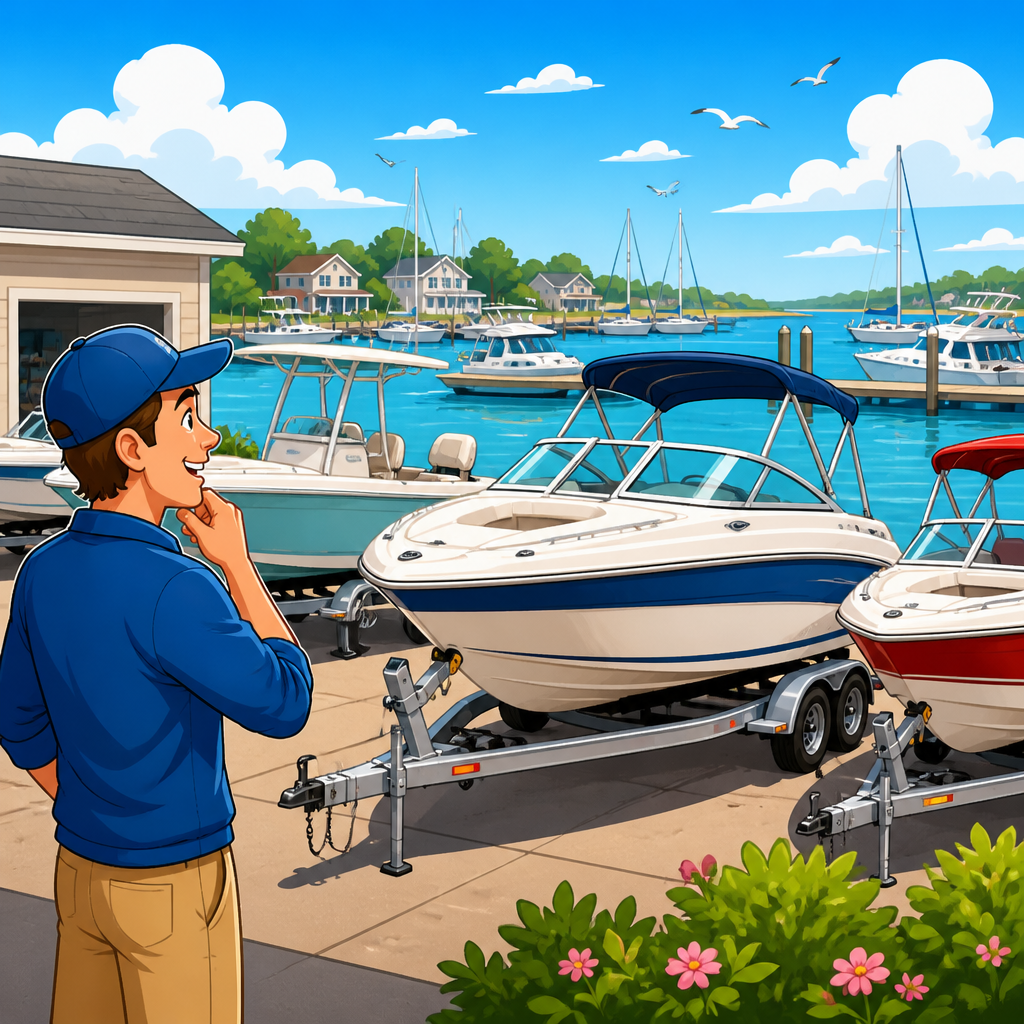

End-of-year clearance deals on boats can save buyers thousands of dollars, but the best results come from understanding how boat pricing, dealer incentives, model-year turnover, and seasonal demand work together. In practical terms, “end-of-year” usually means the period from late summer through December, when many dealers are trying to reduce aging inventory before winter storage costs rise and new model-year boats arrive. For shoppers researching the best time of year to buy a boat, this window matters because it often combines motivated sellers, factory rebates, and softer demand from casual buyers. I have helped buyers compare dealer inventory, auction listings, and private-party prices during this period, and the pattern is consistent: the lowest advertised price is not always the best deal, but the strongest negotiating leverage often appears when carrying costs start hurting the seller.
A clearance deal is more than a markdown sticker. It can include discounted rigging, free winterization, prepaid storage, lower financing rates, electronics upgrades, or a better trade-in allowance on your current boat. That broader definition matters because two offers with the same hull price can differ by several thousand dollars once transport, prep, taxes, trailer value, and warranty terms are counted. Buyers who focus only on the headline number often miss these hidden costs. Buyers who ask for a complete out-the-door breakdown usually find the real bargain faster. As a hub for the best time of year to buy a boat, this guide explains when end-of-year sales happen, why dealers discount, which boat categories see the biggest reductions, and how to evaluate whether a so-called clearance offer is genuinely worth taking.
The timing question matters because boats are discretionary purchases with highly seasonal demand. In northern markets, traffic drops sharply after peak summer. In warm coastal regions, usage can continue year-round, but model-year transitions and dealer floorplan expenses still create pressure to sell. Manufacturers also shape the calendar. New model launches often appear around summer dealer meetings, fall boat shows, or early winter ordering cycles. When incoming inventory competes with unsold current-year units, older stock becomes harder to justify on the lot. That is why buyers searching for the best time of year to buy a boat often hear different answers: there is no single month for every region and category, but there is a reliable pattern of advantage that builds as selling urgency rises and the pool of competing buyers shrinks.
Understanding a few key terms helps. Current-year inventory refers to boats designated for the active sales season. Non-current inventory means prior-model-year boats that remain unsold, even if they are new and untitled. Dealer holdback and factory incentives are manufacturer programs that can give sellers room to lower prices. Floorplan financing is the borrowed money many dealers use to carry inventory; interest on that inventory erodes margin over time. Depreciation also matters. A boat that becomes a prior-model-year unit can lose value relative to a newly arrived model, even if both are physically similar. Once you understand those mechanics, end-of-year clearance shopping becomes less about luck and more about identifying who needs to move inventory, what that inventory is costing them, and how that affects your negotiating position.
Why end-of-year boat deals happen
Dealers discount boats at year-end for reasons that are straightforward and measurable. First, inventory costs money every month it sits unsold. Floorplan interest, insurance, lot space, maintenance, battery care, shrink-wrap, and winterization all reduce profit. Second, non-current inventory becomes harder to market because buyers compare it with fresh arrivals, even when changes are minor. Third, dealers need open cash and space for spring inventory planning. In many cases, the pressure is strongest on units that have been in stock for one full season or were over-ordered during optimistic demand forecasts. These are the boats that create genuine clearance opportunities.
Manufacturers reinforce this cycle through retail incentives and dealer volume programs. A dealer close to a quarterly or annual target may accept a thinner margin to earn factory money tied to unit counts. I have seen buyers secure major savings simply because a dealer needed one more sale before month-end or year-end reporting. This is why calling several dealerships late in the season works: not every store has the same incentive structure, aging inventory, or appetite for discounting. One dealer may be firm on a popular center console, while another 200 miles away needs to clear an identical boat before snow arrives. Timing and inventory age matter more than broad assumptions.
Best time of year to buy a boat by season
If you want the simplest answer, the best time of year to buy a boat is usually late fall and early winter for price, and late winter to early spring for selection. End-of-year clearance shoppers prioritize price over perfect choice. From September through December, dealers in seasonal markets often mark down leftover inventory, private sellers become more realistic, and marine service yards may bundle offseason work. January and February can still offer value, especially for indoor-stored inventory, but selection narrows as spring demand starts building. By March and April, buyers get more choices, but bargaining power weakens.
Summer is usually the most expensive time to buy because demand peaks when weather, vacation schedules, and impulse shopping align. A family that wants to boat immediately will often pay close to asking price in June or July. That urgency benefits sellers. By contrast, a buyer willing to shop in October can ask stronger questions about age, warranty start date, included equipment, and dealer prep because the emotional pressure is lower. There are exceptions. In warm-weather states, year-round boating softens seasonality, and in high-demand categories such as premium wake boats or certain offshore center consoles, discounts may remain limited. Still, for most mainstream runabouts, pontoon boats, fishing boats, and cruisers, end-of-year remains the strongest price window.
Which boats get the biggest clearance discounts
Not every boat category is discounted equally. Entry-level bowriders, pontoons, aluminum fishing boats, and midmarket deck boats commonly see meaningful markdowns because dealers often carry several similar units and buyers compare on price. Boats with dated color schemes, unpopular engine packages, or extra inventory from a large preseason order are particularly negotiable. Pontoon boats can be strong year-end targets in northern states because they require storage space and appeal heavily to summer lake traffic. Basic fishing packages also move on price, so an aging unit loses competitiveness quickly once a newer model lands beside it.
Specialty boats can behave differently. Premium wake boats, high-horsepower center consoles, and limited-production trawlers may hold price better because production is tighter and buyers are brand-loyal. Used boats follow another pattern. Motivated private sellers often emerge in fall when they face winter storage, insurance renewals, haul-out costs, or a spouse who wants the driveway back. Estate sales and broker-listed cruisers can also become attractive late in the year, especially when survey issues have already scared off summer buyers. The best opportunities often sit where demand is narrow, carrying costs are real, and cosmetic imperfections create hesitation for shoppers who want a perfect spring-ready boat.
| Boat category | Typical year-end discount potential | Why sellers become flexible |
|---|---|---|
| Pontoon boats | Moderate to high | Seasonal demand drops fast; storage footprint is large |
| Bowriders and deck boats | Moderate to high | High inventory overlap and price-sensitive buyers |
| Aluminum fishing boats | Moderate | Package competition and aging inventory pressure |
| Cabin cruisers | Moderate | Winterization, docking, and maintenance costs add urgency |
| Wake boats | Low to moderate | Brand demand is stronger; discounts depend on inventory age |
| Premium center consoles | Low | Tighter supply and affluent buyer demand support pricing |
How to spot a real clearance deal
A real clearance deal starts with comparable pricing. Check the same model across dealer sites, marketplace listings, and marine aggregators such as Boat Trader, YachtWorld, or boats.com. Compare engine horsepower, trailer inclusion, electronics, canvas, trolling motors, and freight or prep charges. Then ask one decisive question: is this a current-year boat, a non-current new boat, or a used boat being advertised like new? The answer changes value immediately. A prior-model-year unit should usually be cheaper, even if untitled, because resale perception changes the moment it is no longer current.
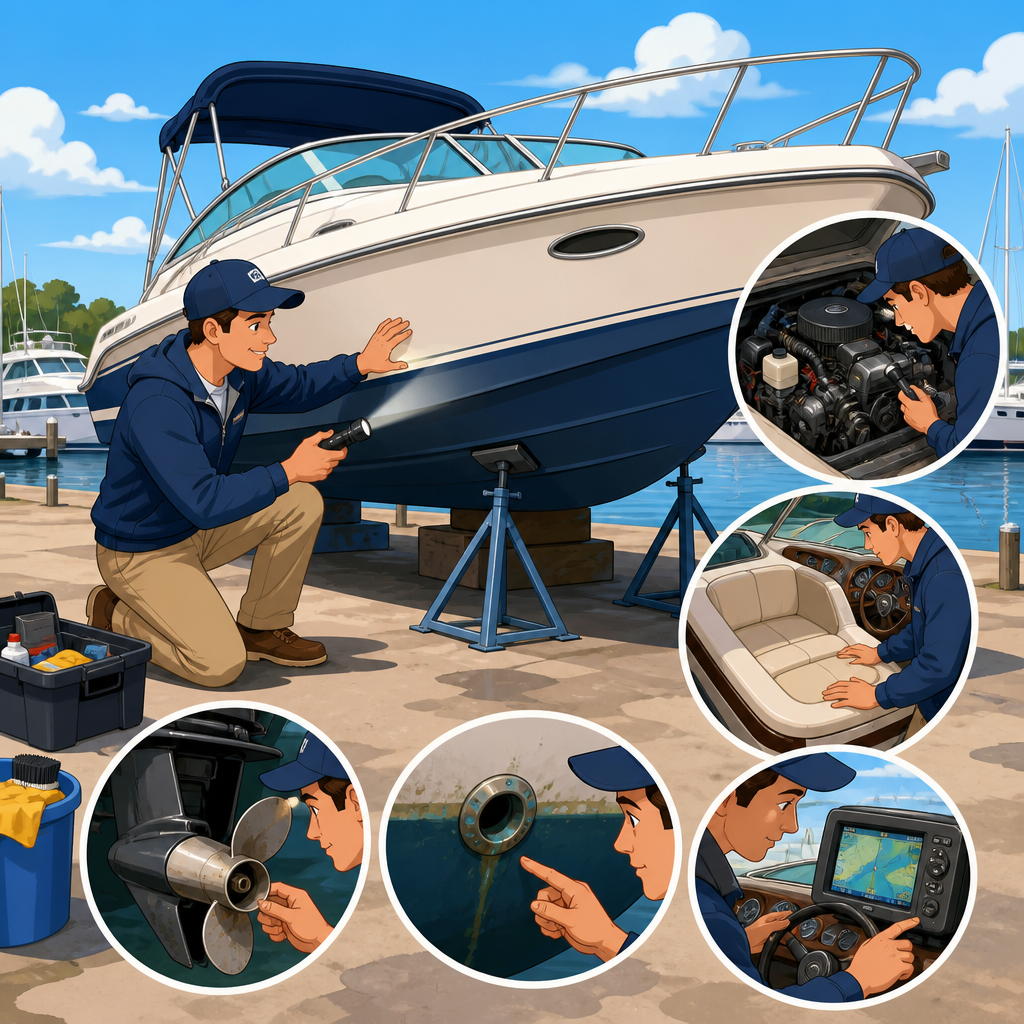
Next, verify age and condition. Ask when the boat arrived, whether it has been demoed, how many engine hours it has, whether it has been stored indoors, and whether batteries, tires, and upholstery have been maintained correctly. On used boats, insist on a marine survey for larger vessels and an engine diagnostic printout when available. On sterndrives and outboards, service history matters as much as cosmetics. A huge discount is meaningless if you immediately face soft floors, neglected lower-unit service, wet foam, or outdated safety gear. Strong buyers use the offseason to inspect carefully because they are not racing to be on the water that weekend.
Negotiation strategies that work at year-end
The most effective year-end negotiation tactic is to request a written out-the-door quote and negotiate from total cost, not MSRP. Dealers can shift value between hull price, trailer price, prep fees, documentation fees, and accessories. When you ask for a full breakdown, inflated charges become visible. I advise buyers to negotiate in this order: base boat price, included equipment, prep and freight, trade value, financing terms, and then delivery or storage concessions. That sequence prevents a seller from giving back a discount through padded fees.
Timing your offer also matters. Shop near month-end, quarter-end, major offseason boat shows, and especially after the first hard weather change in your region. Be ready to buy immediately if terms are met. A serious buyer with financing preapproval or proof of funds commands attention. Use calm language, not lowball theatrics. For example: “If you include winter storage, waive prep, and hold this price subject to inspection, I can leave a deposit today.” That kind of conditional commitment often works better than demanding an arbitrary percentage off. Sellers respond when the path to closing is clear and fast.
Where to find year-end inventory before others do
Dealer websites remain useful, but the best clearance opportunities often appear first in less polished channels. Check dealer Facebook pages, manufacturer inventory locators, local marina bulletin boards, brokerage email lists, and end-of-season open house events. Ask service managers whether they know of aging stock, cancelled custom orders, or trade-ins not yet advertised. In my experience, some of the best deals come from boats that are physically on-site but not yet marketed well. A quick phone call can uncover a non-current unit that has become inconvenient for the dealer to keep.
Private sellers deserve equal attention. Search regional classifieds, marina dry-stack boards, storage facilities, and owner groups for specific brands. People often list in autumn with more flexible expectations because they want to avoid another round of winter costs. If you are comparing new and used options, create a simple spreadsheet with asking price, year, hours, engine type, trailer, service history, and estimated immediate repairs. That removes emotion from the search and shows when a “cheap” boat is actually expensive after transport, survey, canvas replacement, and deferred maintenance are added.
Common mistakes buyers make when chasing bargains
The most common mistake is buying too much boat because the discount looks dramatic. A 30 percent markdown on a boat that is expensive to store, fuel, insure, and service is not a bargain if it strains your ownership budget. The second mistake is ignoring regional fit. A deep-V offshore hull may be a poor choice for a small inland lake, just as a lightly built lake boat may disappoint on rough coastal water. Clearance pricing should never override suitability. The right boat at a fair year-end price beats the wrong boat at an exceptional discount.
Another mistake is skipping due diligence because the season feels over and the boat seems easy to deal on. Buyers still need title verification, HIN checks, lien releases, trailer paperwork, tax planning, and a clear understanding of warranty transferability. On new leftovers, confirm warranty start dates and whether electronics or batteries have separate coverage clocks. On used boats, sea trials can still be possible in many regions, and winter compression or leak-down testing may be worth arranging if launch conditions are limited. Serious savings come from disciplined evaluation, not from rushing simply because a seller uses the word clearance.
For most buyers, the best time of year to buy a boat is the moment when seasonal demand softens, inventory pressure rises, and you are prepared to evaluate value with discipline. End-of-year clearance deals on boats work because sellers face real deadlines: storage, financing costs, model-year turnover, and shrinking buyer traffic. That pressure can translate into lower prices, better package terms, and more negotiating room on fees, accessories, or offseason services. Yet the cheapest sticker is not automatically the smartest purchase. The strongest deal is the one that matches your boating needs, includes the right equipment, and arrives with clean paperwork, verified condition, and manageable ownership costs.
If you use this page as your hub for the best time of year to buy a boat, remember the practical sequence. Start your search in late summer, intensify it through fall, compare current and non-current inventory carefully, and treat winter as a final window for motivated sellers before spring enthusiasm returns. Ask for out-the-door pricing, verify the boat’s true age and condition, and negotiate total ownership value rather than just MSRP. Whether you are shopping for a pontoon, fishing boat, bowrider, or cruiser, patience and preparation create leverage. Build a shortlist, contact several dealers and private sellers, and move when a well-documented year-end deal clearly beats waiting for spring.
Frequently Asked Questions
When is the best time to find end-of-year clearance deals on boats?
The best time to find end-of-year clearance deals on boats is usually from late summer through December, though the exact timing can vary by region, dealer inventory, and boat category. In many markets, dealers begin discounting current-year models in late summer or early fall as the main boating season winds down and showroom space becomes more valuable. By the time fall and early winter arrive, pressure often increases because dealers want to reduce floorplan interest expenses, avoid winter storage costs, and make room for incoming model-year inventory. That combination can create some of the strongest pricing opportunities of the year.
For buyers, the key is understanding that “end-of-year” does not always mean only the last few weeks of December. In the boat industry, pricing shifts can start well before the calendar year ends because model-year turnover and local boating seasons matter more than the holiday season itself. In northern climates, meaningful discounts may appear earlier because demand drops faster and storage becomes a bigger issue. In warmer markets, dealers may hold inventory longer if winter sales remain active. Watching listings from August onward, comparing how long boats have been in stock, and asking dealers when new inventory is scheduled to arrive can help you identify the point when a dealer is most motivated to negotiate.
Why do dealers offer bigger discounts on boats at the end of the year?
Dealers often offer bigger discounts at the end of the year because aging inventory becomes more expensive and less attractive the longer it sits. Boats tie up capital, accumulate carrying costs, and may require storage, maintenance, insurance, and lot space. Many dealers finance inventory through floorplan arrangements, which means interest and related costs can add up over time. As newer model-year boats arrive, last season’s inventory can become harder to sell at full price, even if the boat is brand-new and has never been used. Discounting becomes a practical way to convert aging stock into cash and free space for newer units.
There is also a strong psychological and market-based factor at work. Buyers generally place a premium on the newest model year, so a leftover boat may need a more aggressive price to stay competitive. Manufacturers may support this process by offering dealer incentives, rebates, promotional financing, or volume bonuses tied to moving certain inventory before year-end or before a model transition. That means a clearance price is not always just a dealer “taking less”; sometimes it reflects additional behind-the-scenes support from the manufacturer. For consumers, this matters because the best deal may come from understanding total transaction value, including discounts, financing offers, included upgrades, trailer packages, and service perks, not just the sticker price alone.
How can I tell whether an end-of-year boat deal is actually a good value?
A good end-of-year boat deal is about more than a large advertised discount. Start by comparing the asking price against similar boats of the same brand, model, length, engine package, and equipment level across several dealers or marketplaces. Boat pricing can vary significantly based on electronics, trailer inclusion, engine horsepower, upholstery upgrades, fishing or watersports packages, and local demand. If one clearance boat looks dramatically cheaper, verify what is and is not included. A lower price may simply reflect fewer options, an older engine package, cosmetic wear from being displayed, or added fees that appear later in the deal process.
You should also look at the age and condition of the specific unit. A leftover new boat may technically be unsold, but it may have been sitting outside for months, shown at events, or moved around multiple times. Ask whether it has ever been demoed, whether the engine has any hours, how it has been stored, and whether the batteries, tires, upholstery, electronics, and seals have been inspected. Request a detailed buyer’s order showing freight, prep, documentation, registration, and any add-on charges. Then evaluate warranty start dates, manufacturer coverage, and whether the dealer is including extras such as winterization, storage, safety gear, a trailer, or first-service maintenance. The strongest value usually comes from a clean, well-equipped unit with transparent fees, current warranty protection, and meaningful included benefits, even if it is not the absolute lowest advertised price.
What negotiating strategies work best when shopping for end-of-year clearance boats?
The most effective negotiating strategy is to arrive informed, specific, and ready to buy. Dealers are more likely to sharpen pricing for serious buyers who understand market conditions and can move quickly. Before visiting, research comparable models, recent asking prices, and the availability of similar inventory within a reasonable distance. Identify whether the boat is a current-year model, a leftover prior-year model, or an older unit that has been sitting longer than expected. The longer a boat has remained unsold, the more leverage you may have, especially if winter is approaching or newer replacements are already arriving.
In the negotiation itself, focus on the full package rather than only demanding a lower base price. Ask about manufacturer rebates, promotional financing, trailer inclusion, electronics upgrades, extended warranties, first-year maintenance, safety equipment, winter storage, delivery, and reduced prep fees. Dealers sometimes have limited room to move on headline price but can add substantial value through accessories or services. It also helps to ask direct questions such as, “Is this your best out-the-door number on this leftover unit?” and “Are there any factory incentives available right now that are not reflected in the listing?” If you are financing, compare dealer-arranged financing with outside lenders so you can evaluate the true total cost. Being polite, well-prepared, and willing to leave if the numbers do not work often produces better results than aggressive bargaining alone.
Are there any risks to buying a boat during end-of-year clearance season?
Yes, there can be risks, but most are manageable if you know what to check. One common issue is assuming that a “new” clearance boat is identical in value to a freshly delivered model. A leftover boat may have been exposed to weather, handled by many shoppers, displayed at boat shows, or stored for an extended period. That does not automatically make it a bad purchase, but it does mean you should inspect it carefully. Look for upholstery fading, gelcoat scratches, trailer tire aging, corrosion on hardware, dead batteries, outdated electronics software, and any signs that the boat has not been maintained properly while in inventory. Ask for a full pre-delivery inspection and written confirmation that all systems will be tested before handoff.
Another potential risk is missing out on the right fit because the deepest discounts often apply to whatever inventory remains, not necessarily to the exact layout, color, engine, or options you originally wanted. Buyers can save thousands at year-end, but only if the discounted boat truly matches their intended use. There is also the possibility of reduced selection, especially on popular models. Finally, pay attention to warranty timing, financing terms, and ownership costs after purchase. A low sale price can be offset by expensive storage, insurance, maintenance, or fuel if the boat is larger or more specialized than you need. The best approach is to treat a clearance opportunity as a value decision, not just a price decision: inspect carefully, confirm all fees in writing, and make sure the boat fits both your boating plans and your long-term budget.