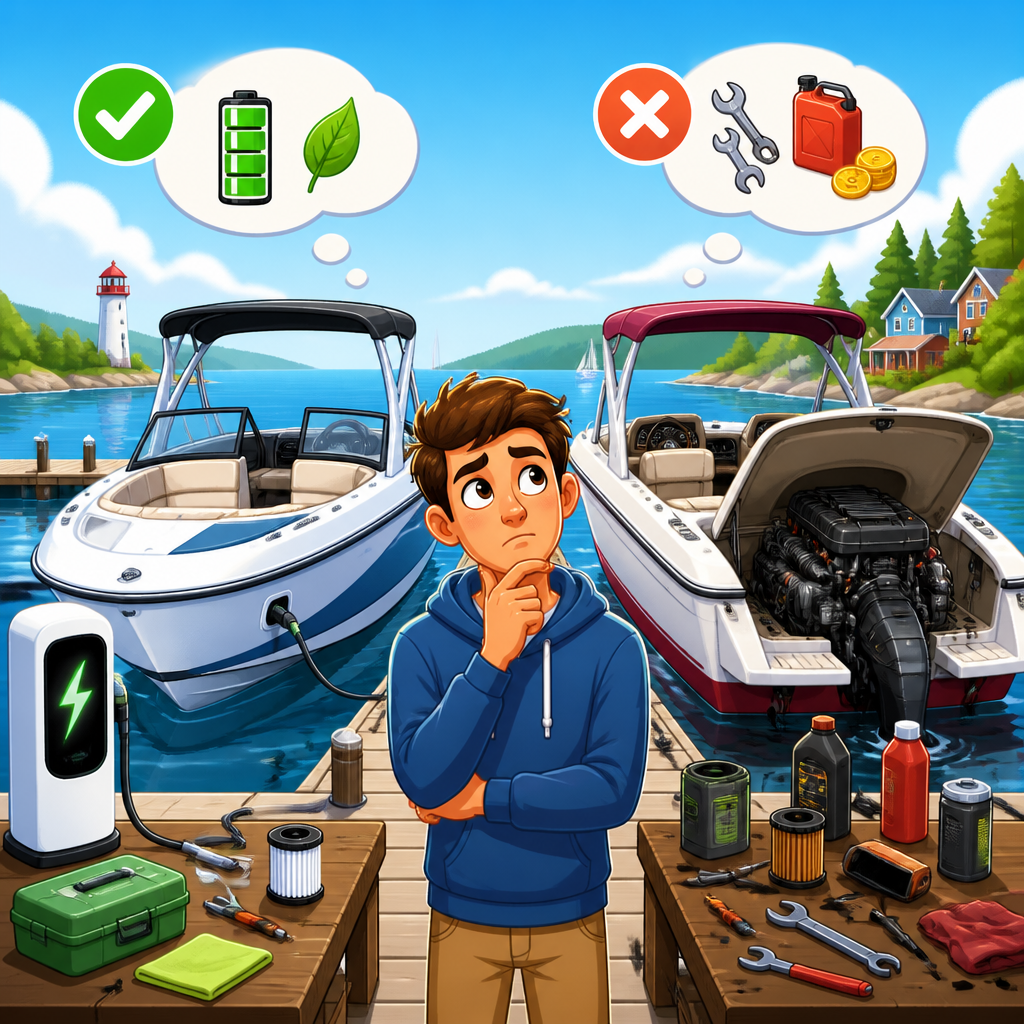
Electric boats have moved from niche prototypes to practical vessels, but the question that matters most is not whether they are novel; it is how sustainable today’s electric boats really are across manufacturing, operation, charging, and end-of-life. In the marine industry, sustainability means reducing total environmental impact over a boat’s full lifecycle, including emissions, water pollution, noise, habitat disturbance, resource extraction, maintenance, and disposal. When I evaluate electric propulsion for clients or compare models at trade events, I look far beyond the simple claim of “zero-emission boating,” because a boat can produce no exhaust on the water while still carrying significant upstream impacts in its batteries, hull materials, and electricity source.
That fuller view matters because boating sits at the intersection of climate pressure, local air quality concerns, waterfront tourism, and sensitive aquatic ecosystems. Conventional gasoline and diesel boats release carbon dioxide, nitrogen oxides, particulate matter, unburned fuel, lubricants, and noise directly into places where people swim, fish, and live. Electric boats can sharply reduce many of those harms, especially on lakes, rivers, canals, harbors, and short coastal routes. Yet sustainability is not absolute. Battery production requires minerals and energy, charging infrastructure can be carbon-intensive in some grids, and range limitations still make hybrid or alternative fuel systems more practical for many heavy-duty marine applications. The most accurate answer is that today’s electric boats are often substantially more sustainable than combustion boats in the right use cases, but their true performance depends on design choices, operating patterns, and power sources.
What makes an electric boat sustainable or unsustainable?
An electric boat uses battery packs, electric motors, power electronics, and onboard charging systems instead of an internal combustion engine as its main propulsion system. Some models are fully electric, while others are plug-in hybrids that combine batteries with diesel or gasoline backup. Sustainability improves when the vessel is matched to a route that suits battery energy density, such as ferry crossings, marina transfers, inland cruising, sailing auxiliaries, and low-speed recreation. It worsens when designers force batteries into high-speed or long-range profiles that demand oversized packs, heavier structures, and frequent fast charging.
In practice, four variables determine whether an electric boat is environmentally strong. First is operational efficiency, usually measured through hull design, displacement, speed profile, and hotel loads. A slim displacement hull moving at 6 to 10 knots consumes far less energy than a planing hull trying to run at 25 knots. Second is electricity carbon intensity. Charging from hydro, wind, solar, or a relatively clean grid cuts lifecycle emissions dramatically; charging from coal-heavy electricity reduces the benefit. Third is battery chemistry and sourcing. Most marine systems today use lithium-ion chemistries such as lithium iron phosphate or nickel manganese cobalt, each with different tradeoffs in safety, energy density, and material footprint. Fourth is vessel longevity. A durable hull and serviceable powertrain spread manufacturing impacts over more years.
These factors explain why electric canal boats in Amsterdam or passenger ferries in Norway can be sustainability leaders, while large offshore sportfishing boats are not yet ideal candidates. The technology is real, but the fit must be honest.
Lifecycle emissions: lower than combustion, but not impact free
The clearest sustainability advantage of electric boats is the reduction in operational emissions. A conventional outboard or inboard engine burns fossil fuel and emits greenhouse gases every hour it runs. Electric motors do not produce tailpipe emissions at the point of use. That distinction matters especially in enclosed marinas, urban waterways, and protected lakes where local air pollution accumulates. It also matters for carbon accounting. Studies of electric vehicles on land consistently show that even when battery manufacturing is included, lifecycle emissions are usually lower than those of fossil-fuel vehicles when the electricity mix is reasonably clean. Marine applications follow the same general pattern, although the exact savings vary more because boat hulls and duty cycles differ widely.
Battery production does create a front-loaded emissions burden. Mining and refining lithium, nickel, cobalt, copper, graphite, and aluminum require energy and water, and can produce social and ecological harms if supply chains are poorly governed. For that reason, the best electric boat builders now publish battery origin data, work with certified cell suppliers, and design packs for modular replacement rather than whole-pack disposal. From my experience reviewing vessel specifications, the companies making the strongest sustainability case are not those claiming batteries are harmless; they are the ones documenting expected cycle life, thermal management strategy, and service pathways.
Real-world carbon results depend heavily on the grid. Charging in Norway, where hydropower dominates, yields much lower emissions than charging in a region still dependent on coal. Shore power policy therefore matters as much as hull engineering. Ports that install renewable-backed charging can make electric ferries and workboats materially cleaner over time.
Water quality, noise, and wildlife impacts
Electric boats deliver environmental benefits that carbon accounting alone misses. Traditional marine engines can leak fuel, oil, coolant, and exhaust residues into the water. Two-stroke outboards historically released especially high levels of unburned fuel, though modern emissions rules have improved performance. Electric propulsion eliminates fuel sheens, reduces bilge contamination risk linked to engine systems, and lowers the chance of routine hydrocarbon release during operation. For freshwater reservoirs, urban canals, and ecologically sensitive estuaries, this is a practical sustainability gain, not a marketing footnote.
Noise is another major advantage. Electric motors are dramatically quieter than combustion engines, especially at low and moderate speeds. Anyone who has tested both back to back hears it immediately: less vibration at the helm, easier conversation onboard, and less disturbance to shoreline residents. For wildlife, lower underwater noise can matter because vessel sound interferes with animal communication, navigation, and feeding behavior. This issue is well documented for larger commercial shipping, but it is also relevant in recreational zones where concentrated boat traffic affects birds, fish, and marine mammals. Electric propulsion does not remove propeller cavitation noise, yet it significantly cuts engine noise and vibration.
Reduced wake and habitat disturbance often accompany electric designs because many are optimized for efficient displacement cruising rather than aggressive high-speed planing. That is not universal, but where it occurs, it further strengthens the sustainability profile.
Where electric boats work best today
The strongest use cases for electric boats are short, predictable routes with access to reliable charging. Passenger ferries, water taxis, rental fleets, lake cruisers, tender boats, sailing auxiliaries, patrol craft, and canal boats all fit this pattern. Stockholm, Copenhagen, and several Swiss lakes have expanded electric passenger operations because route planning is fixed, dwell time at docks can be used for charging, and local governments value low noise and clean waterfront air. In Norway, battery-electric ferries became commercially viable because crossings are short and policy support aligned with infrastructure investment.
Recreational boaters also benefit when their usage is modest. Many owners spend only a few hours per outing at low to medium speeds and return to the same dock. That profile suits overnight charging. Electric pontoon boats, day cruisers, and small center consoles can satisfy those habits with lower running costs and simpler maintenance. Torqeedo, Vision Marine, Candela, X Shore, and Pure Watercraft have each targeted different slices of this market, from compact outboards to premium coastal craft and hydrofoiling efficiency designs.
Hydrofoiling deserves special attention because it changes the sustainability equation. By lifting the hull above the water, a foiling boat drastically reduces drag, which cuts energy demand and extends battery range. Candela has demonstrated this principle in both leisure craft and commuter ferries. The lesson is broader than one brand: smart naval architecture can offset some battery limitations more effectively than simply adding larger packs.
| Use case | Why electric works | Main limitation |
|---|---|---|
| Lake day boats | Short trips, easy overnight charging, quiet operation | Limited high-speed range |
| Urban ferries | Fixed routes, dock charging, strong local air-quality benefits | Infrastructure cost |
| Sailing auxiliaries | Motor used intermittently, regenerative opportunities under sail | Weather-dependent energy recovery |
| Workboats in harbors | Low-speed duty cycle, reduced maintenance, no exhaust at docks | Heavy loads can shorten endurance |
| Offshore sport boats | Few current advantages at long range and high speed | Battery weight and charging time |
Battery technology, charging, and infrastructure constraints
Battery performance is the central limitation shaping electric boat sustainability. Marine propulsion requires large energy reserves because water resistance is high, and unlike cars, boats cannot coast efficiently for long distances. Energy use rises sharply with speed, often making fast electric boating disproportionately expensive in both battery size and embedded environmental footprint. This is why marketing claims based on ideal conditions should always be checked against speed, sea state, payload, and reserve requirements.
Most current electric boats rely on lithium-ion packs with advanced battery management systems, liquid or air cooling, and marine-certified enclosures. Lithium iron phosphate is popular because it offers strong thermal stability and long cycle life, even though it has lower energy density than some nickel-rich chemistries. Safety matters immensely afloat. Standards from organizations such as ABYC, DNV, and IEC help guide system design, ventilation, isolation monitoring, and emergency response. Better compliance improves not only safety but sustainability, because battery fires and early replacements erase environmental gains.
Charging remains uneven. Home or marina AC charging works well for private boats used casually, but commercial fleets need high-power DC charging and reliable grid capacity. Waterfront electrical upgrades can be costly, especially in older marinas. Smart charging can reduce demand peaks, and pairing chargers with on-site solar and stationary battery storage can lower carbon intensity and infrastructure stress. Still, installation timelines, permits, and utility coordination often slow projects more than vessel technology does.
End-of-life systems are improving but remain immature compared with the automotive sector. Recycling firms can recover metals from lithium-ion batteries, yet marine battery volumes are still relatively small. The sustainable path is clear: second-life use where safe, standardized pack formats where possible, and producer-backed takeback programs.
Cost, maintenance, and the practical tradeoffs boat buyers should know
Electric boats often cost more upfront than comparable combustion models, largely because batteries remain expensive. However, operating costs can be much lower. Electricity is typically cheaper per unit of propulsion than marine gasoline or diesel, and electric drivetrains have fewer moving parts, no oil changes, fewer filters, less winterization complexity, and reduced routine service labor. Over several seasons, that difference becomes meaningful for rental operators, ferry companies, and private owners with consistent use.
The tradeoff is utilization and residual risk. If a buyer needs long-range offshore capability, tows heavy loads, or boats far from charging points, an electric vessel may force compromises that undermine both convenience and sustainability. Carrying an oversized battery pack to cover infrequent extreme trips is not efficient. In those cases, a modern efficient diesel, a hybrid architecture, or even a conventional hull redesign may be the more responsible interim choice. Sustainability is not achieved by electrification alone; it comes from selecting the least damaging system that actually fits the job.
For most buyers, the right evaluation questions are simple. How far do I really travel in a day? At what speed? Where will I charge? What is the local electricity mix? Can the battery be serviced, upgraded, or recycled? When owners answer those questions honestly, the sustainability picture becomes far clearer.
The outlook for eco-friendly and electric boats
Today’s electric boats are genuinely more sustainable in many settings, especially where quiet operation, clean local waterways, and short predictable routes define boating behavior. They are not universally greener in every scenario, and claims should be judged on lifecycle evidence rather than showroom language. The biggest gains come when efficient hulls, right-sized batteries, renewable electricity, and dependable charging are combined in one system. That is why ferries, tenders, sailing auxiliaries, and lake boats lead the market, while high-speed offshore sectors remain harder to decarbonize.
Looking ahead, the subtopic of eco-friendly and electric boats will expand through better batteries, lighter materials, stricter marina emissions rules, and smarter hull designs, including hydrofoils and low-drag displacement forms. Expect this hub to connect naturally with deeper guides on electric outboards, hybrid boats, solar boats, battery maintenance, charging infrastructure, and the best boat types for low-impact cruising. If you are comparing types of boats for your next purchase, start with your real usage pattern, then weigh lifecycle impact alongside range, cost, and service access. That approach leads to the most sustainable decision on the water.
Frequently Asked Questions
Are electric boats truly more sustainable than conventional fuel-powered boats?
In many real-world use cases, yes, electric boats can be more sustainable than gasoline- or diesel-powered vessels, but the answer depends on the full lifecycle rather than the absence of a tailpipe. During operation, electric boats have a clear advantage because they produce no direct exhaust emissions on the water, which helps reduce carbon dioxide, nitrogen oxides, particulate pollution, and the risk of fuel and oil leaks entering sensitive aquatic environments. They are also typically much quieter, which can lower noise disturbance for wildlife and improve the onboard experience for passengers and nearby communities.
That said, sustainability does not begin and end with operation. Battery manufacturing requires energy and raw materials such as lithium, nickel, cobalt, manganese, graphite, and copper, all of which carry environmental and social impacts tied to mining, refining, and transportation. The hull materials, onboard electronics, motors, and charging systems also contribute to the boat’s footprint. Because of that, the most accurate way to judge sustainability is through lifecycle thinking: how much impact is created in manufacturing, how clean the electricity supply is during charging, how efficient the boat is in use, how long the battery lasts, and what happens at end-of-life.
Electric boats tend to perform best from a sustainability standpoint in short-range, predictable-duty applications such as harbor ferries, lake cruisers, water taxis, tender boats, rental fleets, and small recreational craft. In these settings, frequent low-speed operation and reliable charging access allow the boat to replace a high number of fossil-fuel operating hours. For high-speed offshore vessels or long-range heavy-duty marine applications, today’s battery technology can still be a constraint, and the sustainability case may be less straightforward if very large battery packs are needed or if operational compromises lead to lower overall efficiency. So electric boats are often more sustainable, but the strongest conclusion comes when the vessel is well matched to the job and evaluated across its full lifecycle.
How important is the source of electricity when judging the sustainability of an electric boat?
The source of electricity is one of the most important factors in determining how sustainable an electric boat really is. Electric propulsion shifts emissions away from the boat itself and toward the power system that charges it. If a boat is charged primarily from renewable electricity such as solar, wind, or hydropower, the climate benefits are significantly stronger because the operational carbon footprint can be very low. If it is charged from a grid dominated by coal or other high-emission fuels, the environmental gains may still exist, especially in terms of local air and water pollution, but the overall carbon advantage becomes smaller.
Even so, grid electricity often remains more efficient than burning fuel directly in a small marine engine. Centralized power generation and electric drivetrains can convert energy more effectively than internal combustion engines, which lose a large amount of energy as heat. That means an electric boat may still reduce emissions even on a mixed grid, especially if it is lightweight, efficiently designed, and operated at moderate speeds. The cleanest outcomes come from pairing efficient hull design and propulsion with low-carbon charging infrastructure.
Charging strategy matters as well. Marinas and operators that install solar canopies, battery-backed charging stations, or participate in renewable energy purchasing can further improve lifecycle sustainability. Charging at times when the grid is cleaner or less congested can also help. In commercial fleets, energy management software can optimize charging windows to reduce both emissions and electricity costs. So when evaluating an electric boat, it is not enough to ask whether it plugs in. A better question is what it plugs into, how often, and under what operating conditions.
What are the biggest environmental concerns related to electric boat batteries?
Batteries are central to the sustainability conversation because they provide the operational benefits of electric propulsion while also introducing some of the most significant upstream environmental impacts. The main concerns involve raw material extraction, energy-intensive manufacturing, battery weight, thermal management, longevity, and end-of-life treatment. Mining for battery materials can create habitat disruption, water stress, pollution, and social challenges depending on where and how those materials are sourced. Refining and manufacturing also require substantial energy, which means the carbon footprint of a battery pack can vary widely based on the production region and factory practices.
In marine applications, battery weight and packaging are especially important. A larger battery can extend range, but it also adds mass, which may reduce efficiency if the boat is not carefully designed around it. This is why right-sizing matters so much. Oversized battery packs may look attractive from a range perspective, but they can increase manufacturing impact without delivering proportional sustainability benefits. The most sustainable electric boat is often not the one with the biggest battery; it is the one with a well-matched battery, efficient hull, sensible speed profile, and reliable charging plan.
Battery lifespan is another major factor. A battery that lasts many years and many charge cycles spreads its manufacturing impact over more operating hours, improving lifecycle performance. Proper charging practices, cooling systems, quality battery management systems, and moderate operating patterns all help extend useful life. At end-of-life, reuse and recycling become critical. Some marine batteries may be repurposed for stationary energy storage before final recycling. Recycling technologies are improving and can recover valuable materials, but collection systems, chemistry-specific processes, and economic viability still vary by region. For that reason, the most responsible electric boat manufacturers increasingly emphasize traceable supply chains, durable battery design, serviceability, and planned recovery pathways rather than treating the battery as a disposable component.
Beyond emissions, how do electric boats affect water quality, noise, and marine ecosystems?
One of the strongest sustainability arguments for electric boats is that their benefits go beyond carbon accounting. Conventional marine engines can release exhaust directly near the water surface and are associated with fuel spills, oil leaks, unburned hydrocarbons, and maintenance-related pollutants. Electric boats eliminate onboard combustion, which reduces the risk of these routine operating pollutants entering lakes, rivers, harbors, and coastal areas. That can be especially meaningful in enclosed or ecologically sensitive waters where cumulative local impacts from recreational and commercial boating are high.
Noise reduction is another major advantage. Electric motors are generally much quieter than internal combustion engines, particularly at low and moderate speeds. Reduced underwater and surface noise may lessen disturbance to fish, marine mammals, birds, and shoreline communities. While propeller noise and hull interaction with the water still matter, removing engine noise changes the acoustic profile of the vessel in a meaningful way. This can make electric boats particularly attractive in protected areas, tourism zones, urban waterways, and wildlife-rich habitats where sound pollution has become an increasing concern.
However, electric propulsion does not automatically eliminate all ecosystem impacts. Wake generation, shoreline erosion, propeller strike risk, congestion in sensitive habitats, antifouling chemicals, hull cleaning practices, and the environmental cost of manufacturing materials still need attention. A fast, heavy electric boat can still create substantial wake and habitat disturbance. Likewise, poorly chosen hull coatings or irresponsible maintenance practices can undermine broader sustainability claims. In other words, electric propulsion improves several important environmental dimensions, but truly sustainable boating also depends on vessel design, speed management, route planning, maintenance choices, and responsible behavior on the water.
What should buyers and operators look for if they want the most sustainable electric boat option today?
The first thing to look for is fit between the boat and its intended use. Sustainability improves dramatically when an electric boat is chosen for a duty cycle it can serve efficiently and consistently. Buyers should consider average trip length, cruising speed, passenger or cargo load, access to charging, and whether the boat will operate in calm inland waters, coastal zones, or more demanding offshore conditions. A well-matched electric boat with a moderate battery and high annual utilization will usually deliver better lifecycle results than a poorly matched model carrying unnecessary battery capacity or being used in ways that force inefficient operation.
Design and engineering quality matter just as much as propulsion type. Efficient hull shapes, lightweight but durable construction, modern motor systems, advanced battery management, and regenerative or solar-assist features where appropriate can all improve sustainability. Buyers should also ask manufacturers direct questions about battery chemistry, expected cycle life, thermal protection, warranty terms, repairability, sourcing standards, and recycling or take-back programs. Transparent manufacturers should be able to discuss how their boats perform not just on range and speed, but also on lifecycle impact, maintenance demands, and end-of-life planning.
Operators should also evaluate the charging ecosystem. Access to low-carbon electricity, on-site renewable generation, smart charging controls, and safe marina infrastructure all strengthen the environmental case. High utilization is important too: the more fossil-fuel boating hours the electric vessel displaces, the more quickly its manufacturing footprint is offset by cleaner operation. Finally, sustainability is reinforced by how the boat is handled day to day. Sensible speeds, careful route planning, regular maintenance, proper battery care, and responsible disposal of all components contribute to better outcomes. The most sustainable electric boat today is not simply the newest or most advanced model. It is the one designed, charged, operated, and maintained with lifecycle impact in mind.