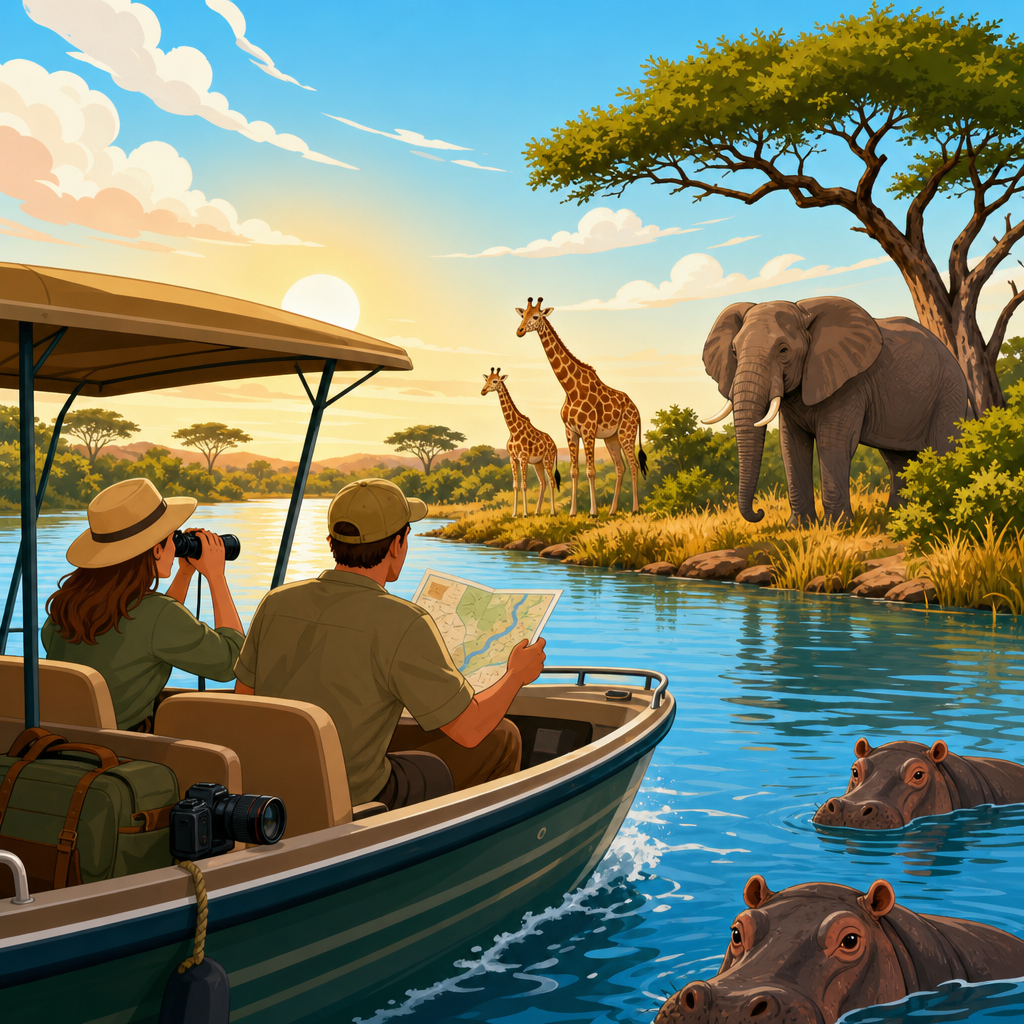
A safari by boat in Africa combines wildlife viewing, river travel, and expedition planning in a way that land safaris cannot match. Instead of driving dusty tracks, you move quietly through channels, floodplains, deltas, lakes, and coastal estuaries where animals come to drink, feed, hunt, and rest. In practical terms, a boat safari can mean a guided skiff in the Okavango Delta, a houseboat on the Chobe River, a dhow excursion off East Africa, or a small motor launch on Lake Kariba. The format changes by destination, but the principle stays the same: water gives you access to habitats that vehicles often miss and creates close, low-angle views of birds, crocodiles, hippos, elephants, and antelope.
Planning matters because boating for adventure and wildlife watching is far less forgiving than booking a generic sightseeing cruise. Water levels shift by season. Protected areas have different permit rules. Boats vary widely in safety equipment, draft, noise level, and suitability for photographers or families. I have planned river and lake-based wildlife trips where one poor decision on timing turned clear channels into mudflats, and another where the right local skipper transformed a simple transfer into the best game-viewing day of the trip. The difference usually comes down to understanding the ecosystem, matching the vessel to the conditions, and building an itinerary around wildlife behavior rather than convenience.
A well-planned African boat safari also solves a common travel problem: how to balance adventure with comfort and conservation. Travelers often ask whether a boat safari is safe, whether children can go, what they will actually see, and whether it is better than a vehicle safari. The direct answer is that it can be extraordinarily rewarding if expectations are realistic. Boat safaris are best for waterbirds, elephants at the shoreline, crocodiles, hippos, and scenic immersion; they are less reliable for big cats than game drives in classic savannah parks. For many itineraries, the strongest approach is to combine both. This hub explains how to choose destinations, seasons, boats, guides, budgets, and safety practices so your safari by boat in Africa is memorable for the right reasons.
Choose the Right Water Safari Destination
The first planning decision is destination, because each African water system offers a different style of adventure and wildlife watching. Southern Africa dominates classic freshwater boat safaris. Botswana’s Chobe River is one of the easiest introductions: excellent elephant concentrations, prolific birdlife, dependable sunset cruises, and lodges with polished logistics. The Okavango Delta is more intricate, with mokoro excursions, motorboat channels in deeper areas, and seasonal flooding that shapes where wildlife gathers. Zambia offers the Zambezi above and below Victoria Falls, plus stretches near Lower Zambezi National Park where canoe safaris and motorboat game viewing provide striking encounters with elephants, buffalo, and hippos. Zimbabwe’s Lake Kariba adds a different feel, with houseboats, fishing, and Matusadona shoreline game viewing.
East Africa broadens the options. In Uganda, the Kazinga Channel links Lake George and Lake Edward and is one of the most reliable places in Africa to watch dense concentrations of hippos from the water. The Nile in Murchison Falls National Park offers boat access to crocodiles, elephants, buffalo, and exceptional birdlife, including the shoebill in select wetland areas with specialist guides. In Kenya and Tanzania, marine safaris and estuary excursions support a coastal version of wildlife watching, where mangroves, dolphins, turtles, seabirds, and traditional dhow culture become part of the trip. These are not substitutes for inland river safaris, but they belong in the same planning framework because they rely on the same questions: what wildlife is likely, what boat is appropriate, and what season gives the best conditions?
When travelers ask for the single best boat safari destination in Africa, I usually narrow it to Chobe for first-time reliability, the Okavango for wilderness atmosphere, Lower Zambezi for active adventure, and Kariba for longer afloat itineraries. Your choice should reflect goals. If photography is the priority, calm water, stable platforms, and morning light matter. If family comfort matters most, choose a lodge-based destination with short, guided departures rather than a mobile expedition. If your aim is a sub-pillar overview of boating for adventure and wildlife watching, think in categories: river safaris, delta safaris, lake safaris, canoe expeditions, houseboat journeys, estuary tours, and dhow or coastal wildlife trips.
Match Season, Water Levels, and Wildlife Behavior
Seasonality is the most misunderstood part of planning a safari by boat in Africa. Travelers often assume high water always means better boating and low water means better wildlife. The reality is more nuanced. In deltas such as the Okavango, annual flood patterns can improve boat access while dispersing animals over wider areas. In river systems, dry-season shorelines may attract elephants and antelope to drink, creating concentrated viewing, but channels can become narrower and navigation more technical. Birders may prefer months when migratory species are present and breeding plumage is visible. Photographers often want still mornings, lower wind, and softer dry-season vegetation around the banks.
Because conditions vary so sharply, use recent local information rather than relying only on guidebook averages. Ask operators specific questions: What was the water level last season? Which channels were navigable? Are trips done by skiff, pontoon, canoe, or larger cruiser at that time of year? How long are transfers to reach productive wildlife areas? These questions expose whether a trip is a true wildlife safari by boat or simply a scenic cruise with occasional sightings. On the Chobe River, for example, late dry season often delivers remarkable elephant gatherings along the banks. In the Lower Zambezi, shoulder seasons can be excellent for both boat activity and shoreline game. Around Lake Kariba, wind can shape comfort and visibility more than rainfall alone.
The most effective way to plan is to match target species with habitat and month. Hippos and crocodiles are consistently visible in many rivers and channels, but birdlife changes quickly with water conditions. Shoebill tracking depends on specialist timing and habitat knowledge. Tigerfish-focused adventure itineraries on the Zambezi or Kariba have their own seasonal logic, different from birding or photography departures. If you want a broad wildlife experience, travel when water access is dependable and shoreline concentrations remain high. If you want a specialist trip, build everything around that objective and accept the tradeoffs. Good planning means choosing the right season for your safari style, not chasing a mythical perfect month.
Select the Best Boat and Trip Format
Not every safari boat is built for the same job, and the vessel determines comfort, safety, and wildlife access. Flat-bottomed skiffs and aluminum launches are common on rivers and channels because they can operate in shallower water and approach reed edges quietly. Pontoon-style boats offer stability and space, making them good for group viewing and sundowner cruises, though they are less nimble for photography. Mokoros and canoes deliver intimacy and silence, ideal for birds and smaller channels, but they require confidence around heat, posture, and close proximity to wildlife. Houseboats suit travelers who want multi-day floating accommodation, especially on large lakes such as Kariba, where the journey itself is part of the safari.
In practice, I advise travelers to think about three variables: duration on the water, tolerance for exposure, and purpose. A two-hour photographic outing needs swivel seating, low railings, dry storage, and a guide who understands light angles. A family wildlife cruise needs shade, life jackets in correct sizes, easy boarding, and predictable timing. An adventure-focused canoe safari needs strict safety briefings, dry bags, backup support, and realistic paddling distances. Fast transfer boats are sometimes used in lodge logistics, but they are not always pleasant for wildlife watching because engine noise and speed reduce the quality of sightings. If wildlife viewing is the priority, slower and quieter is almost always better.
| Trip format | Best destinations | Main strengths | Main limitations |
|---|---|---|---|
| Guided motorboat safari | Chobe, Kazinga, Lower Zambezi | Reliable sightings, comfort, good for first-timers | Can be busy in popular areas |
| Mokoro or canoe safari | Okavango, Lower Zambezi | Quiet approach, immersive, strong birding | Less suitable for very young children or limited mobility |
| Houseboat safari | Lake Kariba | Multi-day access, scenic cruising, flexible pace | Less agile for close shoreline positioning |
| Coastal dhow or estuary trip | Zanzibar, Kenya coast, Mozambique | Cultural element, marine wildlife, snorkeling add-ons | Different wildlife profile from inland safaris |
Work With Qualified Guides, Operators, and Protected Areas
The best wildlife sightings on water rarely happen by accident. They come from experienced guides who read currents, wind, bird calls, shoreline tracks, and animal behavior while keeping guests safe. A qualified boat safari operator should be licensed where required, carry commercial insurance, maintain engines and safety equipment, and employ guides who know both the ecosystem and boating protocols. In many top safari areas, the strongest operators also coordinate with national park authorities, private concession managers, and local communities. That matters because access rules, launch points, and wildlife zones can change by season.
When vetting an operator, ask practical questions that reveal standards. How many guests per boat? Are life jackets worn or merely carried? Is there a radio or satellite communication device? What is the guide-to-guest ratio on canoe trips? What happens in the event of engine failure? In reputable operations on the Chobe, Zambezi, and Okavango systems, these answers should be immediate and specific. Look for affiliations with recognized tourism bodies, current park fees listed transparently, and clear child-age policies. If a company cannot explain its safety procedures in plain language, do not book it.
Protected area rules deserve equal attention. National parks and concessions may restrict fishing, drones, off-channel access, night boating, landing on islands, or approach distances to wildlife. These rules are not red tape; they protect animals and reduce risk. Hippos are responsible for more serious incidents on African waterways than many travelers realize, and careless positioning near pods is a mark of a poor guide. The same applies to nesting birds, crocodile basking banks, and elephant crossings. Responsible operators keep respectful distance, cut engines when appropriate, and avoid crowding sightings. If your goal is wildlife watching that supports conservation rather than disrupts it, operator quality is the decisive factor.
Plan Safety, Packing, Budget, and Trip Logistics
Safety planning for a safari by boat in Africa starts before departure. Many waterways are in remote areas where medical care and spare parts are not close. Buy travel insurance that covers evacuation, activity-based excursions, and any pre-existing conditions relevant to heat or mobility. Pack sun-protective clothing, polarized sunglasses, reef-safe sunscreen for coastal areas, insect repellent, a dry bag, and secure camera protection. Neutral colors help around wildlife, but on boats the bigger issue is fabric performance: lightweight long sleeves and quick-dry trousers are more useful than heavy safari styling. Closed footwear is safer for boarding, while soft-soled shoes work well in mokoros and canoes.
Budget varies more than many travelers expect. A short shared river cruise in a major park can be affordable, while a private specialist photographic boat, multi-day canoe expedition, or luxury houseboat charter can be a premium product. Costs typically include guiding, park fees, boat fuel, drinks on sundowner departures, and transfers from lodge jetties, but not always all of them. I have seen travelers compare prices without noticing that one quote excluded conservation fees and another used a larger, shaded boat with fewer guests. Always compare like with like: duration, group size, inclusion of private guiding, quality of vessel, and exact route.
Logistics should be built conservatively. Leave buffer time around charter flights, border crossings, and weather-sensitive connections. Morning departures usually deliver better light, calmer conditions, and more active birdlife, while afternoons can be excellent for elephants and sunset photography. On mixed itineraries, place boat safaris strategically: after a flight-heavy segment they provide a slower rhythm, while before a long road safari they sharpen your understanding of the landscape. The central lesson is simple. Plan your safari by boat in Africa around the water system, not around a generic vacation template. Start with destination and season, choose the right boat, insist on a strong guide, and pack for exposure and flexibility. If you do that, boating for adventure and wildlife watching becomes one of the most rewarding ways to experience the continent. Use this hub as your starting point, then map your next step: river, delta, lake, canoe, or coast.
Frequently Asked Questions
What is a safari by boat in Africa, and how is it different from a traditional land safari?
A safari by boat is a wildlife experience built around rivers, deltas, lakes, floodplains, and coastal waterways rather than roads and game-drive tracks. Instead of exploring by 4×4 for most of the day, you travel by skiff, motor launch, houseboat, mokoro, dhow, or other small vessel, depending on the destination. This changes both the scenery and the rhythm of the safari. You move more quietly, often at water level, which creates a very different perspective on wildlife behavior. Animals come to drink at the shoreline, elephants cross channels, hippos surface nearby, crocodiles bask on banks, and birds concentrate heavily around reeds, lagoons, and shallow edges.
It also opens up habitats that are difficult or impossible to access by vehicle. In the Okavango Delta, for example, channels and lagoons are part of the experience itself. On the Chobe River, boats can provide excellent views of large elephant herds gathering at the water. On Lake Kariba, a boat-based trip combines scenery, fishing culture, island landscapes, and wildlife along the shoreline. Along East Africa’s coast, dhow excursions may focus more on marine life, islands, mangroves, and estuaries than on classic big-game viewing.
The biggest difference from a land safari is that boat safaris are often more specialized and more place-dependent. You may not see the same range of predators you would on a vehicle-based safari in the Serengeti or Maasai Mara, but you gain close access to aquatic ecosystems and a calmer, more immersive form of wildlife viewing. Many travelers find the combination ideal: a few days on land for broad game viewing and a few days on water for atmosphere, birds, shoreline animals, and a fresh angle on African landscapes.
Where are the best places in Africa to plan a boat safari?
The best destination depends on what kind of experience you want. If your priority is classic freshwater wilderness with exceptional scenery and birdlife, the Okavango Delta in Botswana is one of the top choices. It offers channels, lagoons, and seasonal floodplains that support a huge variety of animals, and many camps combine mokoro excursions with motorboat outings and guided walks. It is ideal for travelers who want a quiet, intimate safari with a strong sense of remoteness.
If you want large mammals in big numbers, the Chobe River area in Botswana and Namibia is one of the most reliable boat safari regions in Africa. This is especially true in the dry season, when elephants, buffalo, antelope, and birdlife gather along the riverbanks. Chobe boat cruises are popular because they often deliver dramatic sightings in a relatively accessible format, and they pair very well with Victoria Falls or a broader southern Africa itinerary.
Lake Kariba, on the border of Zambia and Zimbabwe, is another standout for travelers interested in houseboat safaris or slower expedition-style trips. The appeal here includes broad open water, beautiful sunsets, fishing opportunities, island visits, and wildlife along the shoreline in areas such as Matusadona. It feels different from a delta or river cruise and tends to suit travelers who enjoy a laid-back pace with a mix of comfort and adventure.
For East Africa, boat-based experiences may include the Rufiji River and its channels in Tanzania’s Nyerere National Park, where boating adds a strong contrast to standard game drives, or coastal and island settings where dhows and small boats explore estuaries, mangroves, reefs, and marine habitats. In short, there is no single “best” destination. The right one depends on whether you want high-density riverbank wildlife, tranquil delta exploration, scenic houseboat travel, birding, marine landscapes, or a multi-activity safari that mixes water and land.
When is the best time of year to go on a safari by boat in Africa?
Timing matters a great deal because water levels, wildlife concentrations, weather patterns, and boating conditions can all change throughout the year. In many safari regions, the dry season is the easiest time for wildlife viewing because animals gather at permanent water sources, making shorelines especially active. This is why places like the Chobe River are so productive during dry months: the river becomes a focal point for daily animal movement, and boat-based viewing can be outstanding.
That said, some water-based destinations are shaped by seasonal flooding rather than local rainfall alone. The Okavango Delta is the classic example. Its floodwaters arrive from rains that fell far away in Angola, so the best boating conditions and the best visual sense of a “full” delta often occur months after the regional rainy season. This means travelers should not assume that local rain automatically determines the best boating window. In some cases, shoulder seasons can be ideal because the landscape is lush, water access is good, and visitor numbers may be lower than peak months.
For lakes and coastal areas, wind and weather can influence comfort just as much as wildlife activity. A destination may be technically open year-round, but rougher water, heavy rain, humidity, or heat can affect how enjoyable daily excursions feel. Birdwatchers may also prefer specific months tied to migratory species, breeding plumage, or nesting activity. If photography is a priority, you should also consider sun angle, haze, water reflections, and how much vegetation obscures shoreline animals at different times of year.
The best approach is to plan around your goals rather than looking for a universal answer. If you want dramatic big-game gatherings, focus on dry-season river safaris. If you want lush scenery and strong birdlife, a greener period may be excellent. If your trip centers on a specific ecosystem such as the Okavango, check water-level patterns for that exact region. A safari specialist or lodge operator can usually tell you not only when conditions are “good,” but what the experience will actually feel like month by month.
What should you pack and prepare for a boat safari in Africa?
Packing for a boat safari is slightly different from packing for a vehicle-based safari because you need to think about sun exposure, spray, space limitations, and changing temperatures on open water. Lightweight, breathable clothing in neutral colors is still a smart choice, but quick-drying fabrics are especially useful. A light waterproof jacket or windbreaker is worth bringing even in dry conditions, because early morning outings can be cool and boat movement can create extra wind chill. A hat with a secure fit, polarized sunglasses, and high-SPF sunscreen are essential because sunlight reflects strongly off the water.
Footwear depends on the style of safari. For lodge-based trips with short boat excursions, simple comfortable shoes or sandals may be enough, while more expedition-focused itineraries may call for sturdy shoes for shore landings or guided walks. Dry bags are highly recommended for phones, cameras, binoculars, passports, and other valuables. Camera gear should be protected from spray and dust, and a beanbag or image stabilization can help if you are photographing from a moving boat. If you are prone to motion sickness, bring medication even if the waterway is usually calm; lakes and larger rivers can become choppy.
Preparation also means understanding practical logistics. Ask in advance what kind of boat you will be using, how long excursions last, whether there is shade onboard, whether life jackets are provided, and whether luggage weight limits apply. On small aircraft transfers common in safari regions, soft-sided bags are often required. It is also wise to confirm vaccination guidance, malaria precautions if relevant, travel insurance coverage, and any mobility considerations if boarding requires stepping on uneven docks or climbing in and out of smaller craft.
Finally, prepare your expectations. A boat safari is usually less about chasing sightings and more about reading a living landscape. Patience matters. You may spend time drifting quietly, watching birds, listening to hippos, or observing elephants approach the water in their own time. Travelers who pack for comfort and arrive with the right mindset tend to enjoy the experience most.
Is a boat safari safe, and should you combine it with a land safari?
Yes, a boat safari is generally very safe when it is run by reputable operators with experienced guides, suitable equipment, and clear safety procedures. Professional guides understand local currents, wildlife behavior, channel depth, and how close boats should approach animals such as hippos, crocodiles, elephants, and buffalo near the shoreline. Good operators provide life jackets, brief guests before departure, maintain boats properly, and adapt routes according to weather and water conditions. As with any safari activity, the key is to follow instructions carefully, remain seated when asked, keep noise low, and never assume that animals near water are harmless simply because they appear calm.
Travelers sometimes worry specifically about hippos and crocodiles, and those concerns are reasonable because both can be dangerous. However, risk is managed through guide judgment and proper distance. Boat safaris are not casual self-drive experiences in wild areas; they are guided activities shaped around local knowledge. Weather is another safety factor. Wind, storms, and low visibility can affect larger rivers, lakes, and coastal outings, so professional operators may delay or adjust excursions when needed. That is a sign of a responsible operation, not a disappointing one.
As for trip design, combining a boat safari with a land safari is often the best option. The two formats complement each other