A marine toilet system is one of the most important and least forgiving parts of a boat’s electrical and plumbing systems because it combines sanitation, through-hull safety, freshwater or seawater supply, waste storage, venting, pumps, valves, wiring, and legal discharge compliance in one compact installation. On boats I have commissioned and refit, the toilet has often been the single component owners fear most, not because the technology is mysterious, but because small installation errors create outsized problems: odors that seem impossible to remove, clogs in hidden hose runs, dead batteries from undersized wiring, flooded bilges from failed hose clamps, and expensive tank replacements caused by poor vent design. Understanding how to install and maintain a marine toilet system correctly matters because it protects crew health, preserves onboard comfort, avoids environmental violations, and reduces emergency repairs while underway.
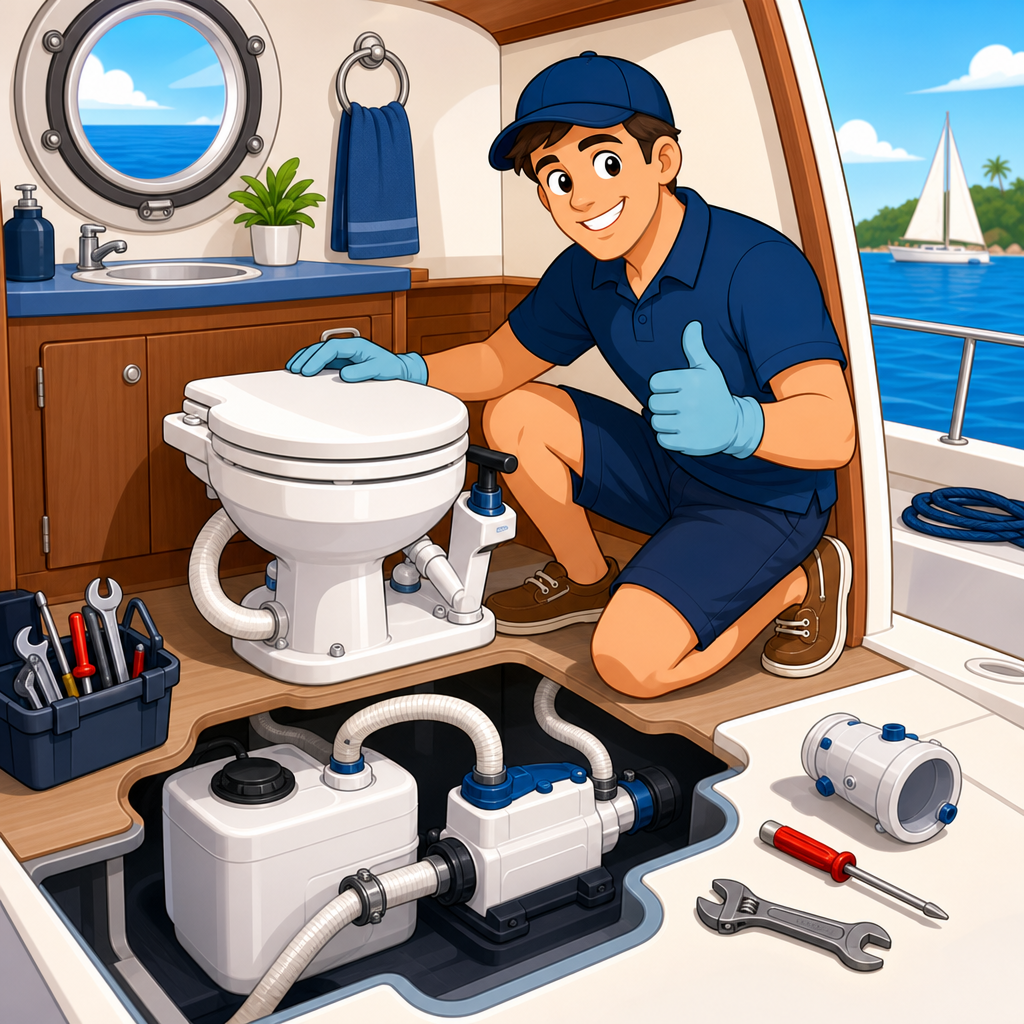
In practical terms, a marine toilet system includes the toilet itself, intake plumbing, discharge plumbing, a holding tank, vent lines, seacocks, anti-siphon protection, pumps, macerator or transfer equipment where fitted, electrical circuits for electric models, and the maintenance practices that keep every part functioning. Manual toilets use a hand pump to bring in water and send waste to a tank or treatment path. Electric toilets use a motorized pump or a separate flush pump and generally need careful attention to voltage drop, fuse sizing, and wire gauge. Some boats use raw water for flushing, which saves freshwater but can add odor and mineral buildup. Others use freshwater flush systems, which reduce smell and scaling but increase plumbing complexity and water demand. The best system is not the fanciest one; it is the one matched to the boat’s layout, cruising style, and service access.
This page serves as a hub for electrical and plumbing systems within boat maintenance and repairs, so marine toilets are the right place to connect the wider picture. A proper installation touches nearly every adjacent system. Hose routing affects bilge cleanliness and winterization. Tank venting affects odor control and pump-out speed. Through-hull placement affects flooding risk. Circuit protection affects fire safety. Even battery condition matters, because an electric toilet that stalls under low voltage often masks a wiring problem rather than a failed motor. When owners treat the toilet as a standalone appliance, they miss the fact that it behaves more like a system of systems. When they inspect and maintain it as part of the whole boat, reliability improves dramatically.
Before starting an installation, define the key terms. A seacock is the shutoff valve mounted directly to a through-hull fitting and is the primary safety device for any plumbing line open to the sea. A joker valve is the one-way rubber valve used in many toilets to prevent backflow from the discharge side. An anti-siphon loop is a high loop with a vented fitting that prevents seawater from siphoning into the boat or waste from siphoning back toward the bowl. A holding tank stores sewage until pump-out or legal offshore discharge. A Y-valve diverts waste between destinations but may need to be locked to comply with no-discharge zones. A macerator pump grinds waste and pumps it overboard where permitted. Knowing these terms makes every installation decision clearer and helps you troubleshoot logically instead of guessing.
Planning the Right Marine Toilet System
The best installation starts with layout, not with the toilet model. Measure the compartment, identify existing through-hulls, locate the holding tank, and map hose runs before ordering parts. I look first at serviceability: can you reach hose clamps, seacocks, pump covers, electrical terminals, and mounting bolts without dismantling cabinetry? A compact electric toilet may fit the footprint but fail the service test if the discharge elbow is trapped against a hull liner. A manual toilet may be mechanically simpler yet require awkward pumping clearance. Good planning also means choosing hose diameters specified by the manufacturer, usually 3/4 inch for intake and 1 1/2 inch for discharge on many systems, and minimizing unnecessary bends that trap waste and create scale.
System choice should match the boat’s use. Weekend coastal boats often do well with a manual toilet and a straightforward holding tank because simplicity outweighs convenience. Family cruisers and larger express boats may prefer electric flush for comfort and consistency, especially when children or guests use the head. Long-range boats benefit from freshwater flush or well-designed raw-water flushing with robust venting and easy access to anti-siphon loops. If the boat spends long periods in marinas, odor control and pump-out efficiency become top priorities. If it spends time offshore, legal discharge arrangements and reliable tank level monitoring matter more. ABYC guidance and manufacturer installation manuals should be treated as baseline requirements, not optional reading.
Budgeting should include all supporting components, not just the toilet. In real refits, the toilet itself may account for less than half the project cost. Sanitation hose, seacocks, proper backing plates, tank fittings, vent filters if used, anti-siphon loops, wire, terminals, breakers, and access panels add up quickly. It is false economy to pair a quality toilet with cheap PVC hose intended for household drains. Marine sanitation hose is formulated to resist permeation, and premium hoses from brands such as Trident or Shields can materially reduce future odor problems. Likewise, using a proper tinned marine wire and adhesive-lined heat-shrink terminals costs more up front but is standard practice for a corrosion-prone compartment.
Installation: Plumbing, Wiring, and Safety
Installation begins with the hull openings and shutoff points. Every intake or discharge line connected to the sea should have a proper marine seacock securely mounted to a compatible through-hull with a substantial backing plate. Ball valves threaded onto random fittings are not an acceptable substitute. Check that the seacock can be operated quickly and fully; I have seen several heads rendered unsafe because the handle fouled a bulkhead and could not close under load. Hoses should rise as high as practical in vented loops above the waterline, particularly on intake lines to electric toilets and on discharge lines where heeling or stern squat can change the effective waterline. These loops are not optional accessories; they are flood prevention devices.
The holding tank should be installed as close as practical to the toilet or at least with a discharge route that avoids long low spots. Waste sitting in a sagging hose line hardens into scale and becomes a recurring clog source. Tank venting deserves special attention. A vent line should be short, continuously rising where possible, and sized generously enough to allow air exchange during pump-out and aerobic action in the tank. Undersized vents are one of the most common causes of odor complaints because they promote anaerobic conditions. On several refits, replacing a restrictive 5/8 inch vent arrangement with a straighter, larger vent path reduced smell more effectively than any chemical treatment. Keep vent outlets away from cockpit seating and opening ports when feasible.
Electrical installation for an electric marine toilet is where many otherwise skilled owners make mistakes. Motors draw significant current during startup, and long cable runs can cause damaging voltage drop. Use the toilet manufacturer’s amperage specification and circuit length to determine wire gauge, then protect the circuit with the recommended breaker or fuse placed close to the power source. Tinned copper wire, proper crimp tools, sealed terminals, and support every 18 inches or so are standard marine practices. Never share the toilet circuit with critical navigation equipment. If the toilet includes a control panel, route signal wiring away from high-amperage cabling where possible. A weak flush, intermittent cycling, or repeated fuse blowing often points to poor connections, undersized wire, or a binding pump rather than a defective unit.
| Component | Best Practice | Common Failure | Practical Fix |
|---|---|---|---|
| Intake line | Install seacock and vented loop above waterline | Siphoning or restricted flow | Re-route hose and replace clogged anti-siphon vent |
| Discharge hose | Use sanitation hose with smooth, supported runs | Odor permeation or scale blockage | Replace hose and eliminate low spots |
| Holding tank vent | Keep vent short, straight, and adequately sized | Tank odor and slow pump-out | Increase vent capacity and clear restrictions |
| Electrical circuit | Size wire for current draw and length | Low voltage, stalled motor, blown fuse | Upgrade wire gauge and clean terminals |
| Joker valve | Inspect and replace on schedule | Backflow into bowl | Install new valve and inspect discharge elbow |
Once installed, test methodically. Open the relevant seacocks, energize the circuit, and run multiple flush cycles with clean water before introducing waste. Inspect every connection with a dry paper towel because very small leaks can hide in textured hose or beneath clamps. Verify that the toilet primes correctly, the bowl seals as designed, and the tank vent passes air during filling and pump-out simulation. Label all valves clearly so crew members do not guess which position sends waste to the holding tank. If your system includes a Y-valve, secure it in the legal position required by local regulations. Good labeling and a simple system diagram near the head compartment save time during troubleshooting and reduce operator error.
Routine Maintenance That Prevents Odor, Clogs, and Failure
Most marine toilet emergencies are maintenance failures that developed slowly. The highest-value routine task is regular freshwater rinsing, even on raw-water systems. Before leaving the boat, I like to flush several bowls of fresh water through the system to reduce salt crystallization, organic residue, and stagnant seawater odor. Raw-water systems often smell because microorganisms grow in intake lines and because salt deposits constrict pump passages over time. Freshwater flush systems avoid much of that but still need periodic cleaning to prevent soap and waste film buildup. Use cleaners approved by the toilet manufacturer; harsh household chemicals, petroleum products, and thick bleach concentrations can damage seals, hoses, and valves.
Create a maintenance schedule by component rather than waiting for symptoms. Weekly or before each trip, operate the seacock, inspect for drips, and confirm the toilet flushes normally. Monthly, check hose clamps for corrosion, inspect wiring terminals for heat or green deposits, and clean strainers if your intake line has one. Every season, replace worn joker valves, inspect pump diaphragms or pistons on manual units, test the anti-siphon valve, and check tank vent flow by listening for unrestricted air movement during flushing or pump-out. In many boats, the joker valve should be treated as a consumable part replaced annually or at the first sign of bowl backflow. A ten-dollar rubber valve can prevent a weekend of foul troubleshooting.
Odor diagnosis should be systematic. If the head smells even when clean, isolate whether the source is permeated hose, stagnant intake water, a vent problem, or leakage around fittings. A simple hot-cloth test works well on suspected sanitation hose: wipe the hose with a warm rag and smell the rag. If it carries sewage odor, the hose has likely permeated and replacement is the durable solution. If odor increases after flushing, the intake side is often the culprit on raw-water systems. If odor is strongest near the tank or vent outlet, improve venting before buying additives. Tank treatments can help manage waste breakdown, but they cannot compensate for bad airflow or a hose run that traps sewage.
Clog prevention depends on what goes into the system and how the discharge path is designed. Marine toilets are engineered for human waste and rapid-dissolving marine toilet tissue, not wipes, paper towels, cotton products, or excessive paper. Crew education matters as much as hardware. On charter and family boats, a brief head-use talk prevents most blockages. If clogs do occur, avoid forcing the pump or repeatedly tripping an electric motor. Shut the system down, close the seacock if appropriate, and clear the blockage from the correct access point. Repeated clogs often indicate hose scale, especially on systems flushed with seawater in warm climates. In that case, the cure is usually hose replacement or descaling compatible components, not stronger pumping.
Troubleshooting and Long-Term Reliability
When a marine toilet fails, symptoms usually point to a specific subsystem. If the bowl fills but will not empty, suspect the discharge side: joker valve, discharge hose obstruction, holding tank blockage, or a seized macerator if one is in the path. If the toilet will not bring in water, check the intake seacock, strainer, vented loop, and pump condition. If an electric unit clicks or hums but does not run properly, confirm battery voltage at the unit under load before replacing the motor. Low voltage at the toilet with healthy battery voltage at the panel almost always traces to cable size, a corroded connection, or a weak breaker. These are electrical and plumbing systems working together, so diagnosis must consider both at once.
Long-term reliability improves when you document the system like any other critical onboard installation. Keep a diagram showing hose sizes, valve positions, wire gauges, breaker ratings, and part numbers for consumables such as joker valves, seals, impellers, and pump kits. Note the installation date of sanitation hoses and the service date of anti-siphon valves. This record turns an unpleasant emergency into a controlled repair. It also supports the rest of your boat maintenance and repairs program by linking the head to adjacent systems: batteries, freshwater plumbing, bilge management, tank monitoring, and winterization. If you haul out in freezing climates, winterize thoroughly by pumping out the tank, flushing with fresh water, draining or protecting vulnerable lines, and using the correct non-toxic antifreeze where specified by the manufacturer.
A properly installed and maintained marine toilet system is not just about convenience; it is a foundation of safe, legal, and comfortable boating. Choose the right toilet type for the way you use the boat, install every plumbing and electrical component to marine standards, give the holding tank and vent system as much attention as the bowl, and maintain consumable parts before they fail. The payoff is immediate: fewer odors, fewer clogs, lower risk of flooding, more reliable electrical performance, and less money spent on avoidable repairs. As the hub for electrical and plumbing systems within boat maintenance and repairs, this topic connects directly to battery care, through-hull inspection, freshwater systems, pumps, tank monitoring, and winterization. Build your checklist, inspect the system regularly, and address small symptoms early so your next trip is remembered for the water outside the boat, not the plumbing inside it.
Frequently Asked Questions
1. What are the most important steps when installing a marine toilet system correctly?
The most important part of installing a marine toilet system is treating it as a complete sanitation and safety system rather than just mounting a toilet and connecting a couple of hoses. A proper installation starts with planning the full layout: toilet location, intake source, discharge route, holding tank position, vent line, pump access, electrical supply if applicable, and seacock accessibility. Every hose run should be as short and direct as possible, with smooth bends instead of tight turns, because long or poorly routed runs increase the chances of clogs, odor permeation, slow flushing, and pump strain. Before any drilling or mounting, confirm that the chosen location allows safe service access to hose clamps, joker valves, pumps, macerators, and electrical connections. If a component cannot be reached easily, it will not be maintained properly later.
Through-hull safety is equally critical. Intake and discharge lines that pass below the waterline must have properly installed marine seacocks mounted on sound backing pads, and all hoses attached to them should be sanitation-grade and double-clamped with marine-grade stainless clamps where appropriate. Many installations also require anti-siphon loops, especially on intake or discharge runs that could otherwise allow seawater to siphon into the boat or waste to flow unintentionally. These loops must be installed at the correct height above the waterline under all operating conditions, including heel. For electric toilets, wiring should be sized to handle the manufacturer’s specified current draw with minimal voltage drop, protected by the proper fuse or breaker, and routed away from wet bilge areas whenever possible. Finally, the system must be configured to comply with local discharge laws, including proper holding tank plumbing, deck pump-out fittings, venting, and any Y-valves secured in the legally required position. A clean, accessible, code-conscious installation is what separates a reliable head system from one that becomes a constant source of leaks, smells, and failures.
2. Should I choose a manual or electric marine toilet, and how do I decide?
The right choice depends on your boat’s size, power capacity, cruising style, crew expectations, and willingness to perform routine maintenance. Manual marine toilets are popular because they are mechanically simple, relatively affordable, and independent of the boat’s battery system. They are often an excellent fit for smaller sailboats, daysailers, and cruisers where reliability and simplicity matter more than push-button convenience. A quality manual head, installed correctly, can give years of dependable service, and most repairs can be handled with straightforward rebuild kits and basic tools. They also tend to be more tolerant of voltage issues simply because they do not rely on electrical power.
Electric toilets, however, offer easier operation and are often preferred on larger boats, family cruisers, and yachts where guests may be unfamiliar with manual pumping procedures. Push-button flushing can reduce user error in some cases, but electric systems are not maintenance-free. In fact, they introduce additional variables such as wiring quality, breaker sizing, motor protection, switch placement, current draw, and the condition of relays or control modules. They can also be less forgiving if inappropriate materials are flushed or if the discharge line is undersized or overly long. When I evaluate whether electric is worthwhile, I look at whether the boat has adequate battery reserve, whether the owner can maintain the system proactively, and whether the installation can support proper electrical and plumbing routing without compromise. If simplicity, easy field repair, and low power demand are priorities, manual often wins. If comfort, accessibility, and guest-friendliness are more important, an electric system may be the better choice, provided it is installed and maintained to a high standard.
3. How can I prevent marine toilet odors, clogs, and common maintenance problems?
Most marine toilet problems are preventable, and almost all of them come back to three areas: what goes into the system, how the hoses and tank are installed, and whether routine maintenance is done before symptoms appear. The first rule is simple and non-negotiable: do not flush anything except human waste and marine-safe toilet paper if the manufacturer permits it. No wipes, no paper towels, no hygiene products, and no “flushable” household items. Even products marketed as septic-safe are notorious for causing marine head blockages because marine systems use smaller hoses, less water, and tighter bends than residential plumbing. User education is one of the best maintenance tools on any boat.
Odor control depends heavily on proper venting and hose quality. The holding tank needs an unrestricted vent line of adequate diameter so aerobic bacteria can break down waste more effectively and reduce sulfur-like smells. A poorly vented tank becomes anaerobic and far more odor-prone. Sanitation hose quality matters too, because low-grade hose can allow odor permeation over time even when there is no leak. Regular freshwater flushing, especially before leaving the boat unattended, helps reduce salt buildup and biological growth in seawater-fed systems. On manual heads, replacing wearable components such as joker valves, pump seals, and O-rings at sensible intervals can prevent backflow, weak pumping, and chronic drips. On electric units, inspect impellers, macerator components, and electrical terminals routinely. Also monitor hose clamps, seacock operation, and tank vent fittings. A marine toilet should be part of your scheduled maintenance calendar, not something you wait to address after a blockage, odor event, or overflow has already occurred.
4. What plumbing and safety mistakes cause the biggest problems in marine toilet systems?
The biggest installation mistakes are usually the ones that seem minor at the time: poorly supported hoses, missing vented loops, inaccessible seacocks, undersized wiring, low-quality hose, and discharge runs that are far longer or more convoluted than they need to be. One of the most serious errors is failing to protect against siphoning. If an intake or discharge line is positioned incorrectly, water can siphon into the bowl or, in the worst case, into the boat. That is why anti-siphon loops and correctly located vented loops are so important on many installations. Another common issue is mounting the toilet where it fits physically but leaves no room to service the pump, clamps, or valves. A system that cannot be inspected easily is a system that will eventually surprise you in the worst way.
Holding tank venting is another area where shortcuts create long-term trouble. A tank with an undersized, kinked, or poorly routed vent line will smell worse, pump out poorly, and may stress fittings. Hose selection also matters more than many owners realize. Using general-purpose hose instead of true sanitation hose may save money initially, but it often leads to odor permeation and premature replacement. On the electrical side, an electric marine toilet with inadequate conductor size or poor grounding can suffer from voltage drop, weak performance, nuisance tripping, overheated wiring, or motor damage. Finally, legal compliance is often overlooked during DIY installs. The discharge arrangement must match the laws in the waters where the boat operates, and Y-valves, overboard discharge plumbing, and holding tank systems need to be installed and secured properly. A marine toilet is not just a convenience fixture; it intersects directly with flooding risk, onboard hygiene, and environmental law, so details matter.
5. How often should a marine toilet system be inspected and maintained?
A marine toilet system should be checked lightly on a frequent basis and serviced more thoroughly on a seasonal schedule. Before or during regular use, I recommend quick visual inspections of hose connections, seacocks, the toilet base, pump area, and any signs of moisture, staining, or odor. Operate seacocks periodically so they do not seize, and confirm that the bowl holds or drains exactly as the manufacturer intends. If a manual toilet feels harder to pump, if an electric unit sounds strained, or if the bowl begins to refill unexpectedly, address the issue immediately rather than continuing to use it. Early symptoms are often warnings of worn valves, partial clogs, siphon issues, or failing seals.
At least once each season, conduct a more complete service. This should include inspecting sanitation hoses for softness, cracking, or odor permeation; checking double clamps and fittings for corrosion; cleaning vent lines; verifying tank level indicators if fitted; and servicing the toilet pump or motor components according to the manufacturer’s schedule. In seawater-flush systems, salt and mineral deposits can accumulate and should be managed with the cleaning products approved for that specific toilet type. Before winter layup or any long idle period, flush the system thoroughly, pump out the holding tank completely, rinse if possible, and winterize with the correct non-toxic antifreeze where climate requires it. Replacing wearable parts proactively every year or two, depending on usage, is far cheaper and cleaner than dealing with a failure underway or while guests are aboard. Consistent inspection and routine preventive maintenance are the real secret to a marine toilet system that stays reliable, sanitary, and trouble-free.