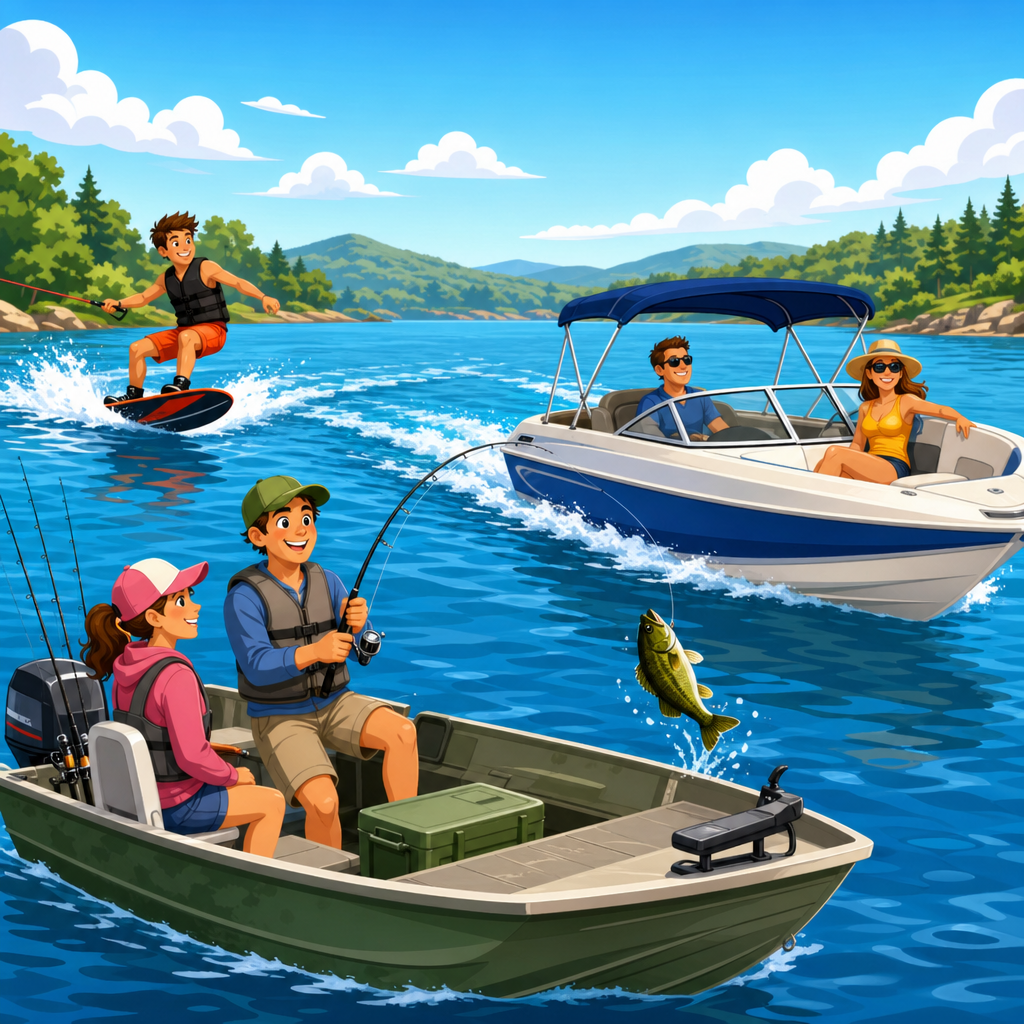
The best multi-purpose boats for watersports and fishing solve a problem many boat owners know well: one crew wants to wakeboard, tube, or ski, while another wants a stable platform for casting, trolling, and spending a full day on the water. A true crossover boat can do both without forcing major compromises in comfort, performance, storage, or safety.
In practical terms, a multi-purpose boat is designed to support several on-water activities with one hull, one propulsion setup, and one deck layout. For this category, that usually means enough horsepower and tow capability for watersports, enough stability and usable cockpit space for fishing, and enough seating and storage to handle family boating. The best boats for watersports are often optimized for speed, wake shape, and passenger comfort. The best fishing boats prioritize deck space, livewells, rod storage, electronics, and access around the gunwales. The challenge is finding models that bridge both missions intelligently.
This matters because ownership costs are real. Marina fees, fuel, insurance, maintenance, and trailer storage add up quickly, and most families do not want separate boats for skiing and angling. After testing crossover models and walking buyers through tradeoffs for years, I have found that the right all-around boat usually comes from understanding how you actually spend your time on the water. If 70 percent of your weekends involve tow sports and sandbar stops, you need a different design than someone who trolls at dawn and pulls kids on tubes in the afternoon. The strongest choices balance hull efficiency, seating flexibility, fishability, and drivability instead of chasing extremes.
This hub article explains how to evaluate the best multi-purpose boats for watersports and fishing, which boat types fit specific use cases, what features matter most, and where each layout shines or falls short. It also highlights proven brands and design details that consistently perform in the real world, so you can narrow your shortlist with confidence and compare the right models in the broader Best Boats & Reviews category.
What Makes a Boat Good for Both Watersports and Fishing
A genuine crossover boat needs four things: a capable hull, versatile deck design, the right propulsion, and activity-specific equipment that does not get in the way. Hull shape affects nearly everything. A deep-V runabout or dual console cuts chop better and gives skiers and tubers a comfortable ride across larger lakes, bays, and reservoirs. A modified-V fish and ski boat offers a flatter, more stable fishing platform while still delivering fast holeshot and predictable towing manners. Deck boats add huge social space and easy boarding, but some ride harder in rough water than a deeper hull.
Propulsion matters just as much. Sterndrives have long been popular in family sport boats because they combine strong acceleration with a clean transom for tow ropes, swim platforms, and broad aft seating. Outboards dominate many newer crossover designs because they are easier to service, free up cockpit space, and perform efficiently across a wide speed range. Modern four-stroke outboards from Yamaha, Mercury, and Suzuki are quieter and smoother than older generations, making them increasingly attractive for family use. For many buyers, outboard power is now the default choice unless wake-specific performance is the top priority.
Layout is where many boats either succeed or fail as true dual-purpose platforms. For watersports, you want rear-facing seating, secure boarding from a swim platform or ladder, accessible life-jacket storage, and room for a tow pylon or tower. For fishing, you need clean casting space, lockable rod storage, pedestal seat bases or convertible fishing chairs, and ideally a trolling motor mount with dedicated battery capacity. The best designs hide fishing hardware when not in use and keep upholstery protected from hooks, sinkers, and wet gear.
The final piece is balance. A boat packed with fishing features can become cluttered for family cruising. A pure bowrider may pull a wakeboard effortlessly but frustrate anglers with limited deck access, no livewell, and nowhere to secure rods. The best multi-purpose boats accept that no single model can beat a dedicated wake boat at wake shaping or a tournament bass boat at technical fishing. Instead, they offer enough competence in both roles that most owners never feel under-equipped.
Best Boat Types for Multi-Purpose Use
Fish and ski boats are the most obvious answer for buyers who want serious flexibility. Built on performance-oriented fiberglass hulls, they usually include bow seating, rear jump seats, removable fishing chairs, livewells, rod lockers, and strong outboard power. Brands such as Ranger, Skeeter, and Lowe have produced fish and ski designs that can run fast, tow a slalom skier, and still support casting from elevated decks. Their advantage is focus: they are intentionally built for this hybrid mission. Their limitation is space. Compared with deck boats or larger dual consoles, they can feel tighter for bigger groups.
Dual console boats are among the most practical family choices today. Models from Grady-White, Scout, Robalo, and Sea Fox often provide wraparound seating, a walkthrough windshield, marine head options, and enough cockpit depth for children and non-anglers to feel secure. Because many dual consoles are based on offshore-friendly hulls, they handle rougher afternoon chop better than many runabouts. Add removable cushions, casting inserts, rod holders, and ski tow points, and they become highly capable all-rounders for coastal areas and inland lakes alike.
Deck boats excel when your priority is passenger capacity with occasional fishing. A wide beam carried far forward creates exceptional usable space, making models from Hurricane, Bayliner, and Starcraft especially appealing for tubing, swimming, and all-day social boating. Many newer deck boats offer fishing packages with pedestal seats, livewells, and trolling motor prep. They are easy to board and easy to enjoy, though serious anglers may still find the layouts less dedicated than a fish and ski or dual console.
Bowriders remain popular because they are fun, fast, and comfortable. Brands such as Sea Ray, Chaparral, Four Winns, and Cobalt build bowriders with excellent ergonomics and strong tow-sport capability. If your fishing needs are light, such as occasional casting for bass, panfish, or inshore species, a bowrider with removable gear storage and a transom tow setup can work well. The drawback is limited fishing infrastructure. You may need aftermarket rod holders, portable coolers instead of livewells, and careful gear management to protect upholstery.
Center consoles can also qualify, especially for buyers in saltwater markets. They are not traditional tow-sport platforms, but many 21- to 25-foot center consoles with 200 to 300 horsepower can pull tubes and skiers effectively while offering excellent fishability. Their open deck, 360-degree fish access, and self-bailing cockpits are major advantages. However, family seating and watersports comfort are usually less refined than on dual consoles or deck boats.
How the Leading Boat Types Compare
| Boat type | Watersports strengths | Fishing strengths | Best for | Main compromise |
|---|---|---|---|---|
| Fish and ski | Fast holeshot, tow-ready layouts, sport handling | Livewells, rod storage, elevated casting decks | Lakes and rivers with balanced family use | Less social space than deck boats |
| Dual console | Smooth ride, secure seating, strong outboard options | Rod holders, removable cushions, adaptable cockpit | Families boating in mixed inland and coastal conditions | Usually costs more than a comparable bowrider |
| Deck boat | Excellent capacity, easy boarding, tubing-friendly space | Optional fishing packages, wide stable platform | Large crews and casual anglers | Ride quality can suffer in heavy chop |
| Bowrider | Great tow performance, comfort, sporty handling | Works for occasional fishing with add-ons | Watersports-first buyers who fish sometimes | Limited angling features from the factory |
| Center console | Can tow tubes and skis with enough power | Best deck access and fishability of any crossover option | Saltwater anglers with family boating needs | Less lounge seating and weaker tow-sport refinement |
Features That Separate Good Crossover Boats From Average Ones
Horsepower should match both load and activity. For a 20- to 24-foot crossover boat carrying family, coolers, gear, and a full fuel load, 200 horsepower is often the practical floor if watersports matter. Buyers who plan to wakeboard, pull multiple riders, or boat at higher elevations should look closer to 250 or 300 horsepower. Underpowering is one of the most common mistakes I see. It hurts holeshot, increases strain when towing, and can make a boat feel sluggish once anglers, batteries, and fishing accessories are added.
Storage design is another separator. The best models have long rod lockers, insulated coolers, under-seat compartments that drain properly, and dedicated space for tow ropes, fenders, and life jackets. Wet storage should stay isolated from dry storage. Hooks and tackle should never share space with inflatable towables or premium upholstery. Smart builders use removable liners, gasketed hatches, stainless hinges, and finished storage compartments that are easy to clean after a messy fishing day.
Electronics and rigging also matter. At minimum, a crossover fishing setup should support a quality multifunction display from Garmin, Humminbird, Lowrance, or Simrad, plus transducer placement that actually delivers readable sonar at fishing speeds. If you plan to fish structure seriously, look for trolling motor compatibility, battery trays, onboard charging, and enough bow access to use them safely. For watersports, practical extras include a sturdy ski tow bar, wakeboard tower, transom stereo controls, and a boarding ladder that remains usable with the engine tilted appropriately.
Do not overlook fit and finish. Stainless hardware, quality vinyl, proper cockpit drainage, and well-supported hinges are more than cosmetic details. Multi-purpose boats see hard use because they shift between swimmers, anglers, children, tow ropes, bait, and gear. Durable materials reduce long-term ownership headaches. In my experience, the boats owners keep longest are not always the fastest or flashiest. They are the ones with sensible layouts, strong hardware, and enough flexibility that every family member feels the boat was built for them.
Recommended Brands and Real-World Buying Guidance
Several builders consistently stand out in this category. Ranger and Skeeter remain strong names in fish and ski designs, especially for freshwater buyers who want true angling functionality without giving up skiing or tubing performance. Hurricane and Starcraft are dependable deck-boat choices for large families who value interior room and versatility. Chaparral, Sea Ray, and Cobalt serve buyers wanting upscale bowrider comfort with occasional fishing potential. In the dual console market, Grady-White, Scout, Robalo, and Boston Whaler offer durable layouts with strong resale value, especially in coastal regions.
Used boats can offer exceptional value if you inspect them carefully. Check compression or engine diagnostics, service records, transom condition, floor integrity, trailer brakes, steering smoothness, and electronics function. On sterndrives, inspect bellows, gimbal bearings, and corrosion history. On outboards, verify maintenance intervals, prop condition, and total hours in context. A well-kept ten-year-old dual console from a quality builder can outperform a cheaper new boat with lower-grade hardware and weaker resale prospects.
Before buying, map your actual usage. Count passengers, identify your most common body of water, define whether fishing is casual or technique-driven, and decide where you can compromise. If your kids spend every weekend on wakeboards, do not buy a fishing-first hull hoping accessories will make it feel like a tow-sport boat. If you fish dawn patrol regularly, do not buy a plush bowrider and assume portable rod holders will replace a real casting layout. The best boat is the one that fits your real calendar, not your idealized one.
The best multi-purpose boats for watersports and fishing are the boats that deliver credible performance across both activities without creating daily frustration. Fish and ski boats remain the clearest freshwater hybrid. Dual consoles are arguably the strongest all-around family choice, especially where rougher water is common. Deck boats lead for passenger space, bowriders favor watersports-first owners, and center consoles serve saltwater anglers who still want family fun. Each has a place, but the right fit depends on how often you tow riders, how seriously you fish, how many people you carry, and what water conditions you face most often.
Focus on hull design, horsepower, storage, layout flexibility, and build quality before cosmetic extras. Prioritize boats with smart rigging, durable materials, and features that support both missions instead of forcing constant setup changes. That approach saves money, reduces buyer’s remorse, and gives you a boat your whole crew will actually use. If you are building a shortlist in the Best Boats & Reviews hub, start by choosing your primary use split, then compare fish and ski, dual console, deck boat, and bowrider models side by side. A careful comparison now will lead to better weekends on the water for years.
Frequently Asked Questions
What makes a boat truly “multi-purpose” for both watersports and fishing?
A true multi-purpose boat is designed to handle very different activities without feeling like it is only tolerating one of them. For watersports, that means enough power for strong acceleration, predictable handling, seating that keeps passengers comfortable, and features like a tow point, swim platform, and onboard storage for ropes, vests, and boards. For fishing, it means a stable hull, practical deck space, durable surfaces, accessible rod storage, livewell or cooler options, and room to move around without constantly stepping over gear.
The best crossover designs balance these needs through smart layout and hull engineering. A boat that works well for both uses typically has a versatile seating arrangement, easy-to-clean materials, integrated storage, and a hull shape that can provide a comfortable ride while still feeling stable at rest. You also want enough freeboard for family safety, enough horsepower to pull skiers or tubers confidently, and enough utility features to support casting, trolling, or spending a full day on the water. In short, a multi-purpose boat is not just one that can technically do more than one activity. It is one that does both well enough that owners do not feel forced into major compromises every time they change plans on the water.
Which types of boats are usually best for combining watersports and fishing?
Several boat categories can work well, but the best choice depends on how you split your time between towing and angling. Fish-and-ski boats are the most obvious answer because they are specifically built for this crossover role. They often include fishing seats, livewells, rod storage, and trolling motor compatibility, while still offering ski pylons, comfortable passenger seating, and enough performance for tubing, skiing, or wakeboarding. They are especially appealing for families who want a practical compromise without moving into a much larger or more expensive platform.
Deck boats are another strong option because they provide generous seating, open space, and good all-around usability. Many modern deck boats have enough power and passenger comfort for watersports while also giving anglers room to cast and store gear. Center consoles can also work, particularly for owners who prioritize fishing but still want the flexibility to tow tubes or enjoy casual watersports. They offer excellent fishability and easy movement around the boat, although they may not deliver the same plush seating or dedicated watersports features found in more family-focused models. Bowriders can also be effective crossover boats, especially when equipped with fishing packages, removable pedestal seats, and transom tow features. The key is to match the boat type to your actual use pattern. If your weekends are evenly split, a fish-and-ski or versatile deck boat is often the best fit. If fishing clearly comes first and watersports are occasional, a center console or fishing-oriented dual-console may be the smarter choice.
What features should I look for if I want one boat that can tow skiers and still fish comfortably?
Start with the fundamentals: engine performance, hull design, and deck layout. You need enough horsepower for quick planing and steady towing speeds, especially if you plan to pull multiple riders on a tube or tow heavier wakeboards and skiers. Look for a hull that delivers a smooth, controlled ride and remains stable when people shift positions during fishing. A practical tow point, whether that is a ski pylon, wake tower, or reinforced transom tow eye, is essential for watersports. At the same time, the boat should have uncluttered deck areas where anglers can cast without dealing with permanent obstacles.
Storage is one of the most important details and one of the easiest to underestimate. A good multi-purpose boat should have dedicated space for life jackets, tow ropes, boards, tackle, rods, anchors, and day-trip essentials. Convertible seating can make a major difference, allowing the boat to feel family-friendly in the morning and fishing-ready in the afternoon. Removable fishing seats, snap-in carpet, insulated compartments, livewells, rod holders, a boarding ladder, and a swim platform all add real value. Also pay attention to flooring and upholstery. Marine-grade vinyl and easy-clean non-slip surfaces are ideal because they can handle wet swimmers, fish slime, sunscreen, and heavy use. Finally, consider electronics and convenience options such as GPS, fishfinder integration, stereo controls, battery management, and shade features. The best crossover boat is one where these practical details work together so switching activities feels easy instead of disruptive.
Do multi-purpose boats involve major compromises compared with dedicated fishing boats or dedicated tow boats?
Yes, but the best models keep those compromises manageable and worthwhile. A dedicated wake boat is designed to create ideal wakes, deliver specialized ballast systems, and maximize towing performance. A dedicated fishing boat is built around fishability, with highly optimized casting space, storage, and species-specific functionality. A multi-purpose boat will rarely outperform either specialist category in its purest form. That is simply the reality of trying to cover multiple uses with one hull and one layout.
However, for many owners, the tradeoff is more practical than problematic. A well-designed crossover boat can still tow riders confidently, cruise comfortably, and provide enough fishing capability for recreational anglers and family outings. The benefit is that you own one boat, one trailer, one storage solution, and one maintenance schedule instead of trying to satisfy every activity with separate platforms. The best way to think about it is not whether a crossover boat beats a specialist in a head-to-head comparison. It is whether it supports your real lifestyle better. If your family spends one part of the day tubing, another part casting near structure, and the rest relaxing at anchor or cruising, a multi-purpose boat can be the smartest and most efficient choice. The right model minimizes inconvenience, keeps everyone engaged, and avoids the high cost and logistical complexity of buying a second boat.
How do I choose the right size and layout for a family that wants to do both watersports and fishing?
Begin with crew size, local water conditions, and how you actually use the boat most often. If you regularly bring several passengers, larger models with more seating and storage become much more appealing because they handle the transition between activities with less clutter and less frustration. A boat in the right size range should let passengers move safely, provide enough room for fishing gear, and still leave space for coolers, bags, tow ropes, and watersports equipment. If you boat on larger lakes, bays, or choppier water, a hull with more length and freeboard will usually improve comfort and confidence. If you use smaller inland lakes and keep your crew compact, a smaller crossover model may be easier to trailer, store, launch, and maintain.
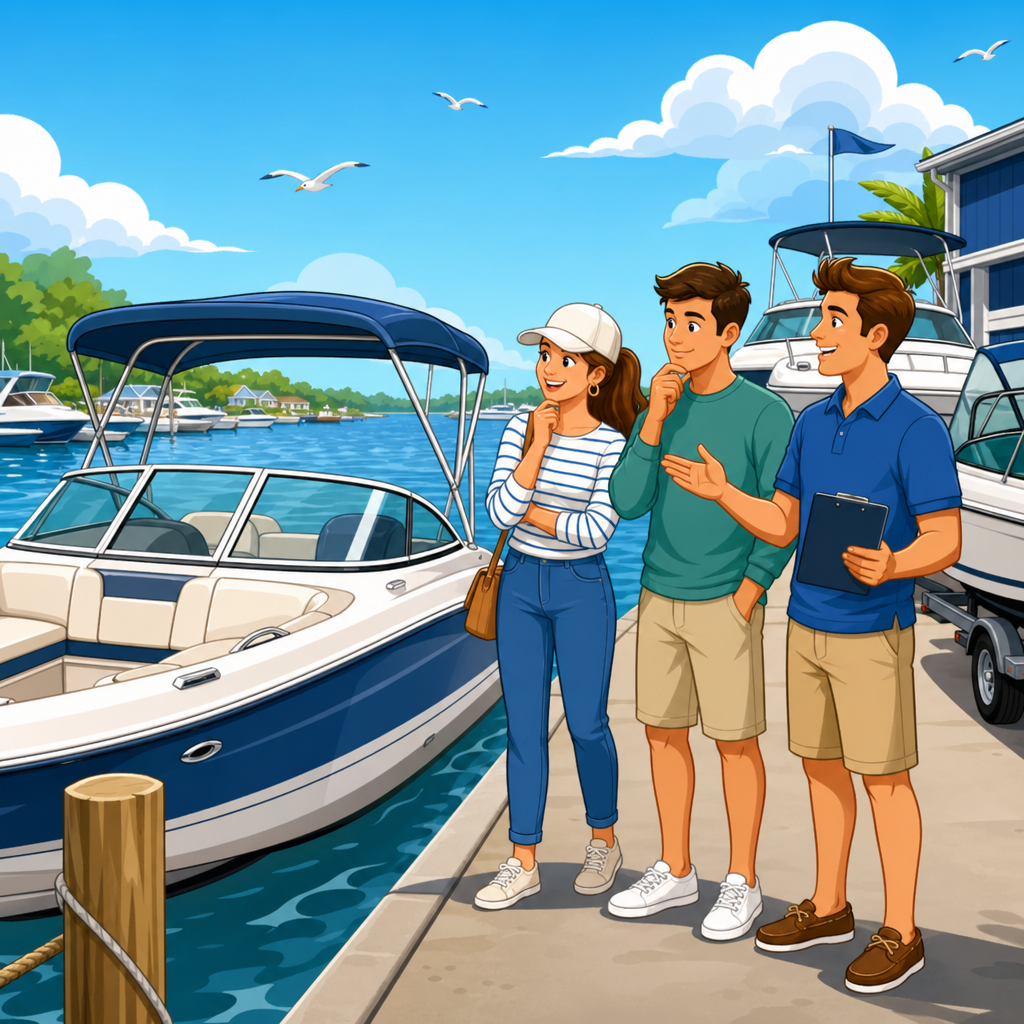
Layout matters just as much as size. Look for flexible seating that can support social cruising without interfering with fishing access. Bow seating is great for family comfort, but make sure the cockpit and stern area remain usable when lines are in the water. Walk-through designs, convertible aft benches, removable fishing chairs, and open transom access all make a boat more adaptable. Also think carefully about where wet gear will go, where anglers will stand, and how easily a rider can reboard after watersports. The best family-oriented multi-purpose boats feel organized, not cramped, and they let different activities happen without a complete reconfiguration each time. When possible, step aboard in person and imagine a real day on the water, from launching to towing to fishing to cleanup. That practical test often reveals far more than a spec sheet alone.