The best budget-friendly boats for under $25,000 offer a realistic entry point into boating without forcing buyers to accept unsafe construction, unusable layouts, or constant repair bills. In this price range, “budget-friendly” does not mean cheap in the disposable sense; it means a boat that delivers dependable performance, predictable operating costs, and enough versatility to match how people actually spend time on the water. After walking buyers through dealer lots, comparing entry-level packages, and evaluating used listings across pontoons, aluminum fishing boats, skiffs, and personal watercraft, I have found that the smartest purchases under $25,000 come from matching the boat type to the job rather than chasing the longest hull or the biggest horsepower sticker.
For most shoppers, the main question is simple: what is the best affordable boat for family fun, fishing, or easy weekend use? The answer depends on total ownership cost. Purchase price matters, but trailer quality, fuel burn, insurance, storage, maintenance access, and resale value matter just as much. A 16-foot aluminum fishing boat with a modest outboard may cost less to own over five years than a heavily discounted fiberglass runabout with an aging sterndrive. Likewise, a compact pontoon can be a better value than a “deal” on an older bowrider if your priority is comfort, not speed.
This hub article covers the most affordable boats under $25,000 and explains which categories consistently deliver value. It also shows where new boats are realistic, where used boats make more sense, what features matter most at this budget, and which compromises are acceptable. If you are building out a shortlist within the broader Best Boats & Reviews category, this guide gives you the framework to compare practical entry-level options with confidence and avoid the expensive mistakes that make a low purchase price feel anything but affordable.
What Kinds of Boats Can You Realistically Buy for Under $25,000?
You can realistically buy several usable boat types for under $25,000: small aluminum fishing boats, compact center consoles or skiffs, entry-level pontoons, basic jet boats from the used market, inflatables with outboards, and many used bowriders. The strongest values in today’s market are usually aluminum boats and simple outboard-powered platforms. They are lighter, easier to tow, cheaper to fuel, and generally less complicated to service than larger fiberglass boats with sterndrives or twin engines.
New boats under $25,000 usually live in the 12- to 18-foot range and often come packaged with a trailer and outboard. Think Lowe, Tracker, Sun Tracker, Alumacraft, Lund, Carolina Skiff, and similar builders that offer entry-level packages. Used boats expand your choices substantially. With patience, buyers can find a clean 18- to 20-foot pontoon, a mid-2000s bowrider, or a well-kept bay boat in this budget. Condition is more important than age. A ten-year-old boat with service records, a healthy compression test, and dry storage history is often a better buy than a newer model that sat uncovered with neglected maintenance.
Boaters sometimes assume that under $25,000 means accepting major limitations. In practice, that budget can cover a very functional package for inland lakes, rivers, protected coastal water, and family sandbar days. The real limitation is not capability; it is specialization. A budget buyer should prioritize one primary use and one secondary use. Trying to buy one boat for offshore runs, watersports, bass fishing, and all-day lounging usually leads to a compromised choice.
Best Budget-Friendly Boat Categories and What They Do Best
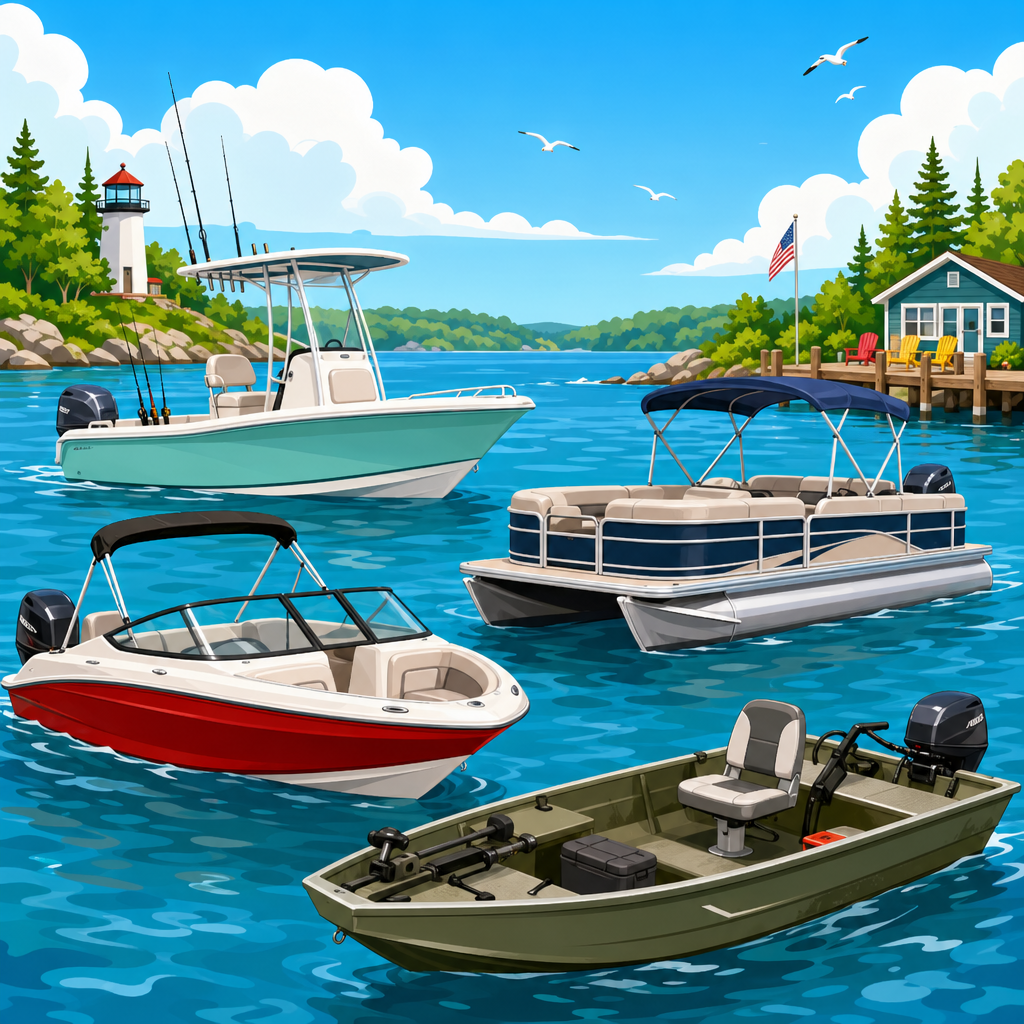
The best affordable boat category depends on how you will use it. Aluminum fishing boats are the strongest choice for anglers who want low operating costs and easy towing. Compact pontoons are ideal for relaxed family cruising. Skiffs and small center consoles work well for shallow water and simple coastal use. Used bowriders appeal to buyers who want seating and watersports potential. Personal watercraft with a trailer can even fit this budget, though they serve a different purpose than a conventional boat.
| Boat type | Typical price under $25,000 | Best use | Main advantage | Main tradeoff |
|---|---|---|---|---|
| Aluminum fishing boat | New or used | Freshwater fishing, small lakes | Low cost to own | Limited comfort seating |
| Compact pontoon | Mostly used, some new base models | Family cruising, sandbar days | Space and comfort | Modest speed |
| Skiff or small center console | New or used | Inshore fishing, utility use | Simple, durable layout | Basic ride quality |
| Used bowrider | Commonly available | Day cruising, towing tubes | Versatile seating | Higher maintenance risk |
| Inflatable with outboard | New or used | Tender, small water access | Portable and efficient | Not ideal for groups |
From firsthand review experience, the most consistently satisfying purchases come from buyers who embrace simplicity. A tiller or side-console aluminum boat with a 40 to 75 horsepower four-stroke may not look glamorous online, but it launches easily, sips fuel, and leaves room in the budget for safety gear, electronics, and registration. The same principle applies to a skiff with a straightforward outboard package. Fewer systems mean fewer surprise bills.
Why Aluminum Fishing Boats Are Often the Best Value
If you want the best boat under $25,000 for overall value, an aluminum fishing boat deserves the first look. Brands such as Tracker, Lowe, Alumacraft, Crestliner, and Lund have spent decades refining small, durable platforms that can be sold in complete packages. Typical examples include 16- to 18-foot mod-V or deep-V hulls with a trailer, an outboard between 25 and 90 horsepower, basic fishfinder capability, livewell access, and enough deck space for two to four anglers.
The value comes from three factors. First, aluminum hulls are lighter than fiberglass, which reduces towing demands and fuel use. Many can be towed by midsize SUVs and crossovers with proper ratings. Second, outboard maintenance is straightforward compared with sterndrive systems. A modern four-stroke outboard from Mercury, Yamaha, Suzuki, or Honda is familiar territory for most service shops. Third, these boats hold demand in the used market because they solve a practical need. That supports resale better than many niche recreational models.
There are tradeoffs. Aluminum boats can ride harder than heavier fiberglass hulls in chop, and entry-level interiors are intentionally basic. But basic is not a flaw when the goal is affordability. A simple vinyl floor, pedestal seats, and a trolling motor mount are often exactly what entry-level buyers need. For freshwater anglers and first-time owners, this category routinely offers the lowest stress path into boating.
Affordable Pontoon Boats for Families and Casual Cruising
For comfort per dollar, affordable pontoon boats are difficult to beat. Buyers looking for the best family boat under $25,000 should focus on older but clean 18- to 20-foot pontoons or small new base packages from value-oriented brands. Sun Tracker frequently appears in budget searches because its entry-level packages are designed to hit accessible price points. On the used side, Bennington, Harris, Sylvan, and Godfrey can be excellent buys if upholstery, flooring, and the motor have been preserved well.
The advantage of a pontoon is straightforward: usable space. Families can spread out, children have easier movement than on narrow fishing decks, and boarding from a dock or beach is less intimidating. Most budget pontoons in this range run moderate horsepower, often 40 to 90 horsepower, which keeps insurance and fuel costs down. On protected lakes and rivers, that is usually enough. You are not buying a performance tritoon; you are buying a floating patio with practical mobility.
Inspect pontoons carefully. Sun-faded furniture, soft deck sections, corroded wiring, and neglected trailers can erase the apparent bargain quickly. Also verify tube condition and lifting strakes where applicable. A clean survey of structure matters more than stereo upgrades or cosmetic lighting. For entertaining and relaxed lake use, however, a well-selected used pontoon remains one of the most affordable boats that feels generous rather than stripped down.
Skiffs, Small Center Consoles, and Utility Boats That Stay Cheap to Run
Skiffs and small center consoles are among the most underrated budget-friendly boats. Carolina Skiff is the obvious name in this category, but used examples from Mako, Boston Whaler’s older small models, Key West, and similar builders can sometimes fall under $25,000 as well. These boats shine because they are honest tools. They offer open deck space, easy cleanup, and practical layouts for crabbing, casting, beach landings, and nearshore use in good conditions.
A 15- to 18-foot skiff with a reliable outboard can serve a wide mix of jobs: inshore fishing in the morning, island hopping at noon, and marina dinner runs in the evening. Because the interiors are sparse, there is less upholstery to rot and fewer amenities to fail. That matters when shopping used. You are evaluating hull condition, engine health, steering, wiring, and trailer integrity, not a long list of luxury systems.
The tradeoff is comfort in rough water. Flat-bottom and shallow-deadrise hulls are efficient and stable at rest, but they can pound when conditions turn sloppy. Buyers should match them to protected bays, rivers, estuaries, and fair-weather coastal runs. Used correctly, they are excellent affordable boats. Used incorrectly, they feel harsh and limiting. Budget shoppers do best when they respect that boundary from the start.
Should You Buy a Used Bowrider or Jet Boat on a Budget?
A used bowrider can be the right choice under $25,000, but it requires more discipline during inspection. This category appeals to families because it blends wraparound seating, swim platforms, and towing capability for tubes or beginner wake sports. Sea Ray, Bayliner, Four Winns, Chaparral, and Regal have all produced bowriders that can now fall into this budget range. The problem is not the layout; it is complexity. Older sterndrives add maintenance points including bellows, gimbal bearings, manifolds, risers, and transom assemblies.
That does not mean you should avoid them. It means you should buy only after checking engine hours, compression, service history, and evidence of proper winterization. A marine mechanic inspection is money well spent. If you find a clean outboard-powered deck boat or bowrider instead of a sterndrive, ownership risk usually improves. Jet boats from Yamaha or Sea-Doo can also appear in this price range, especially older 19-foot models. They are fun and family-friendly, but pump maintenance, wear rings, and debris ingestion risks should be understood before purchase.
In practical terms, used bowriders and jet boats are value plays only when condition is exceptional. They can be among the best boats for family recreation under $25,000, but they are less forgiving than aluminum boats or skiffs when maintenance has been skipped. Buyers who want predictable ownership costs should be selective, not impulsive.
How to Shop Smart: Features, Inspection Points, and Total Cost
The smartest way to buy an affordable boat is to build your budget backward from ownership, not forward from sticker price. Leave room for life jackets, registration, anchor gear, fire extinguishers, dock lines, fenders, electronics updates, and immediate maintenance. Many first-time buyers spend the full $25,000 on the boat package and then get surprised by the first service, battery replacement, trailer tires, or storage bill.
Start with the engine. Compression should be even across cylinders, service intervals should be documented, and cold-start behavior should be clean. Check the trailer next because poor trailers strand owners as often as poor boats. Inspect bunks, lights, tires, brakes, wheel bearings, coupler condition, and frame corrosion. On the hull, look for soft spots, cracked welds on aluminum boats, stress cracks on fiberglass, damaged transoms, and water intrusion around hardware. Test every electrical function. If a seller says a bilge pump or navigation light “just needs a fuse,” assume nothing until verified.
Finally, consider where the boat will live and how often you will use it. If storage is limited, a lightweight aluminum package or inflatable may unlock actual usage. If your ramp is shallow and your tow vehicle modest, a heavy pontoon or older fiberglass runabout may become a frustration. The best budget-friendly boat is the one you can afford to launch, maintain, and enjoy regularly. Build a shortlist, compare real operating costs, and then buy the simplest boat that fits your primary mission.
Choosing the best budget-friendly boats for under $25,000 comes down to aligning purpose, condition, and cost of ownership. Aluminum fishing boats deliver the most reliable all-around value. Compact pontoons offer the best comfort for families. Skiffs and small center consoles keep maintenance simple and utility high. Used bowriders and jet boats can work, but only when inspection results are excellent and the maintenance history is clear. Across every category, outboard-powered simplicity usually beats complicated layouts when affordability is the goal.
The biggest takeaway is that a low purchase price alone does not define the most affordable boat. Real affordability means dependable use, manageable fuel burn, service access, easy towing, and resale demand. Buyers who focus on hull condition, engine health, trailer quality, and realistic use cases make better decisions than buyers who chase horsepower or cosmetic upgrades. In this subtopic hub for Most Affordable Boats, that principle should guide every deeper review and comparison you read next.
If you are narrowing your options, start by identifying your primary use, then compare aluminum boats, pontoons, skiffs, and carefully vetted used family runabouts in your local market. Shortlist three models, inspect them thoroughly, and price ownership before you commit. Do that, and your first affordable boat is far more likely to become a smart long-term purchase instead of an expensive lesson.
Frequently Asked Questions
What type of boat can you realistically buy for under $25,000?
In today’s market, a budget of under $25,000 can still put you into several practical, enjoyable boat categories, especially if you stay focused on value instead of flashy extras. Buyers in this price range often find entry-level aluminum fishing boats, basic center consoles, small deck boats, compact pontoon boats, and used fiberglass bowriders in very good condition. In some cases, brand-new small utility or fishing packages may also fit the budget, especially when paired with a modest outboard and trailer.
The key is to understand that under $25,000 usually buys simplicity, not sacrifice. You may not get premium electronics, oversized horsepower, luxury upholstery, or top-tier sound systems, but you can absolutely get a safe, dependable boat that covers the basics well. For many families and first-time owners, that is actually an advantage. Simpler boats tend to be easier to tow, easier to store, less expensive to maintain, and more forgiving to learn on.
It also helps to match the boat to your actual use. If your priority is relaxed cruising on small lakes, a compact pontoon or deck boat may be ideal. If you want to fish inshore or on rivers, an aluminum fishing boat or small center console can deliver excellent utility for the money. If you want all-around family fun, a used bowrider with a solid service history can be one of the strongest values available. The smartest purchase is not the biggest boat you can afford, but the one that fits your water, your towing setup, and the way you genuinely plan to spend your weekends.
Is it better to buy a new boat or a used boat in this price range?
That depends on what matters most to you: warranty protection and simplicity, or more boat for the money. New boats under $25,000 can be appealing because they often come with manufacturer warranties, clean titles, current safety equipment, and no mystery about how they were treated. For first-time buyers, that peace of mind can be worth a lot. A basic new package boat with a trailer and small outboard can offer years of dependable service if you stick to reputable brands and avoid stretching into a model that is underpowered or stripped down too far.
Used boats, however, often provide the better overall value. In the under-$25,000 segment, the used market can open the door to larger layouts, more horsepower, better seating, upgraded electronics, and stronger overall versatility. A well-maintained used boat from a quality builder can outperform a lower-end new boat in both comfort and longevity. The catch is that buying used requires more diligence. Condition matters far more than age alone, and buyers should closely inspect the hull, transom, floors, wiring, upholstery, trailer, and engine service records before making a decision.
For many shoppers, the best answer is to compare both markets side by side. If you find a simple new boat from a respected manufacturer that fits your needs and comes with a good dealer relationship, it may be the safer path. If you are comfortable doing research and arranging a pre-purchase inspection, a used boat can deliver much more capability without exceeding your budget. In either case, the goal is the same: avoid a boat that looks inexpensive up front but turns expensive after the sale.
How can you tell whether a budget-friendly boat is actually reliable?
Reliability in an affordable boat comes down to construction quality, mechanical condition, and evidence of responsible ownership. Start with the hull and structure. Look for clean, even lines, no signs of major repairs, no soft spots in the deck, and no cracking around high-stress areas such as the transom, motor mounts, or cleats. On aluminum boats, check for poor weld repairs, corrosion, and damage along the keel. On fiberglass models, pay attention to spider cracks, delamination concerns, and signs of water intrusion.
The engine deserves the closest scrutiny because it is often the single most expensive component to repair or replace. Ask for maintenance records, including oil changes, impeller service, lower-unit service, winterization, and any recent repairs. A compression test and a professional marine inspection are wise investments, especially on used boats. If the seller cannot answer basic questions about service history or seems vague about how the boat was used and stored, that is a sign to slow down.
Do not overlook the trailer, either. A budget-friendly boat package is only a bargain if the trailer is roadworthy. Check the tires, bunks, bearings, lights, brakes if equipped, and frame condition. Beyond that, pay attention to the little things: working bilge pumps, tidy wiring, secure battery mounting, functional navigation lights, and hardware that feels solid instead of loose or improvised. Reliable boats usually show consistent care across the entire package. A clean, honestly represented boat with documented maintenance will almost always be a better choice than a bigger or fancier model with unanswered questions.
What ownership costs should buyers expect beyond the purchase price?
This is one of the most important questions any first-time buyer can ask, because the purchase price is only part of the total cost of owning a boat. Even an affordable boat under $25,000 comes with recurring expenses that should be planned for from the beginning. Common costs include fuel, insurance, annual maintenance, registration, winterization in colder climates, storage, safety gear, cleaning supplies, and occasional trailer service. If you finance the boat, interest costs will also affect your real budget.
The good news is that smaller, simpler boats usually keep these expenses manageable. A modest outboard-powered boat typically costs less to maintain than a larger sterndrive or inboard setup, and it usually burns less fuel as well. That is one reason many value-focused buyers prefer aluminum fishing boats, small center consoles, and compact pontoons in this price category. They offer easier access to systems, simpler maintenance routines, and fewer expensive surprises.
As a practical guideline, buyers should reserve money after the purchase for immediate needs such as life jackets, fire extinguishers, dock lines, fenders, an anchor, and basic emergency equipment if those items are not included. It is also smart to build a maintenance cushion for the first year of ownership. A boat can still be a strong value and very budget-friendly, but only if you account for ownership realistically. The most satisfying boat purchases are the ones that leave room in the budget to use the boat confidently, not just to buy it.
What features matter most when choosing the best budget-friendly boat for families or beginners?
For families and first-time owners, the most valuable features are usually the least glamorous ones: stable handling, easy boarding, sensible seating, straightforward controls, and enough storage to keep the deck uncluttered. A good beginner-friendly boat should feel predictable on the water and manageable at the ramp. That often means choosing a modest size with a layout that is easy to understand rather than chasing maximum length or horsepower. Comfortable access to the bow, secure handholds, and open sightlines from the helm all make a meaningful difference in day-to-day usability.
Safety and versatility should rank high on the list. Families tend to benefit from boats with deeper seating areas, non-slip flooring, reliable boarding ladders, and room for basic gear without crowding passengers. If children or older adults will be coming aboard, easy movement around the cockpit matters more than luxury trim. Beginners also tend to appreciate simple outboard setups, uncomplicated gauges, and hull designs known for stable low-speed behavior. These qualities make launching, docking, and loading passengers much less stressful.
Finally, think about how the boat will be used most often, not how it might be used once or twice a year. If your family wants to cruise and swim, prioritize seating, shade options, and swim access. If fishing is the main activity, focus on deck space, storage, and easy cleanup. If you need a true all-around option, a practical bowrider, deck boat, or small pontoon may provide the best balance. The best budget-friendly boats for under $25,000 are the ones that make ownership easy, enjoyable, and sustainable from the first trip onward.