Boats built for extreme ocean conditions are engineered to survive punishment that would overwhelm ordinary pleasure craft, and choosing the right one matters if you run offshore, cross bars, fish canyons, patrol exposed coastlines, or cruise where weather changes faster than forecasts. In practical terms, the best boats for rough waters combine hull shapes that soften impact, structures that resist torsion, deck layouts that protect crews, and systems that keep operating after repeated slamming, green water on deck, and long hours in cold spray. I have spent years testing offshore boats in steep chop, beam seas, and confused inlets, and the pattern is consistent: brand reputation helps, but design details decide whether a day offshore feels controlled or punishing.
Extreme ocean conditions usually mean one or more of these factors: wave heights large enough to launch a boat off crests, short wave periods that create violent reentry, cross seas that induce rolling, strong tides against wind, heavy following seas that threaten broach, and long offshore runs where reliability becomes as important as speed. A rough-water boat is not simply “big.” It is a boat with deep enough deadrise to cut chop, enough displacement or length to bridge wave trains, enough freeboard to stay dry, and enough reserve buoyancy to recover predictably. Self-bailing decks, robust scuppers, welded or heavily bonded structure, oversized hardware, and protected helm positions are not luxury features here; they are baseline requirements.
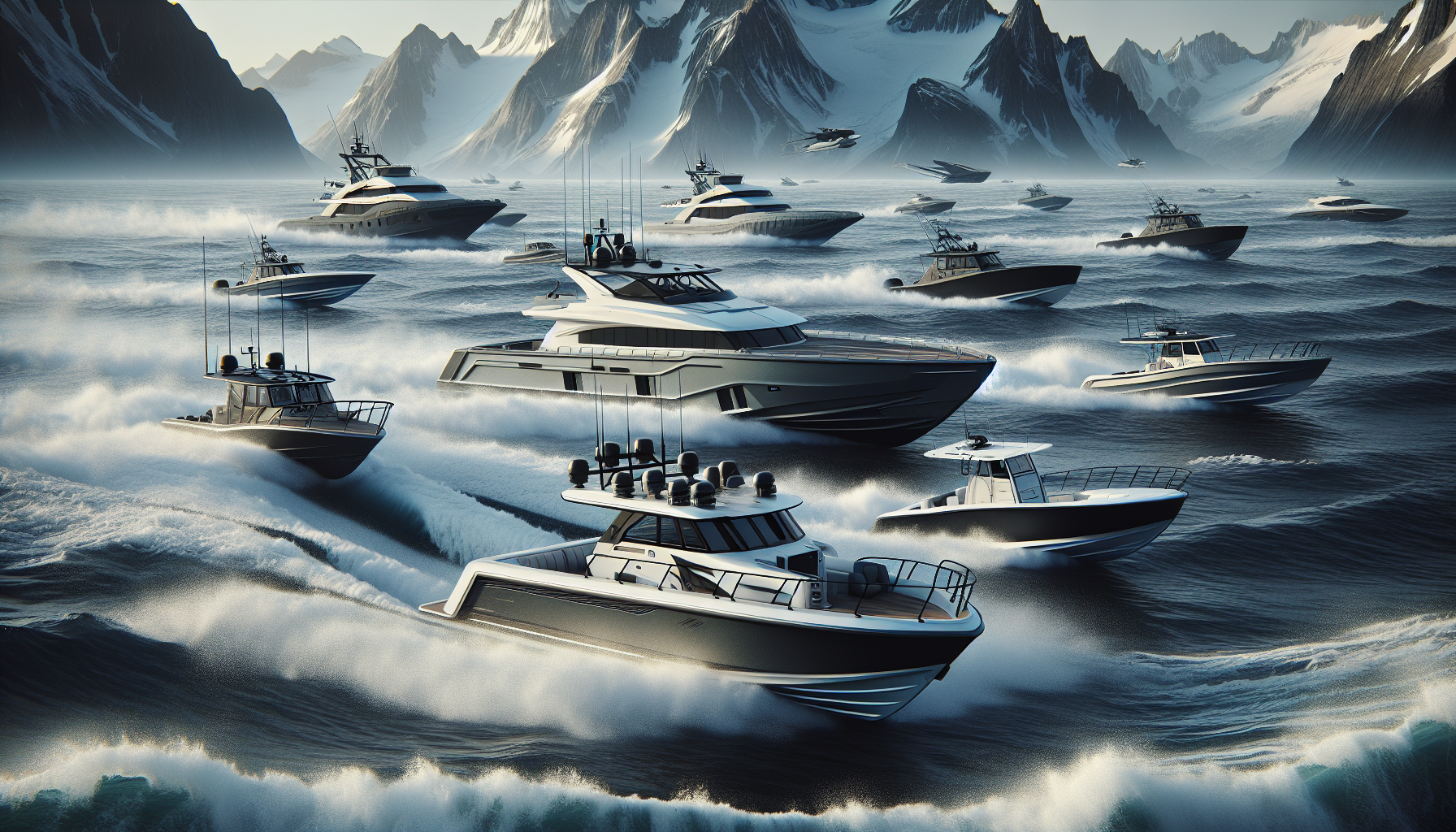
This hub article explains the top 10 boats built for extreme ocean conditions and, more importantly, the reasons they succeed. The list includes pilot boats, offshore center consoles, expedition yachts, military-grade RIBs, and commercial rescue craft because rough-water performance is not limited to one category. If you are researching the best boats for rough waters, this page gives the overview you need before diving into deeper reviews on hull design, offshore safety gear, outboard versus inboard reliability, and passagemaking range. It also answers common buyer questions directly: which designs handle head seas best, what tradeoffs come with deep-V hulls, and which boats combine seaworthiness with practical ownership.
The term “best” always depends on mission. A 32-foot stepped center console that dominates a bluewater fishing run is different from a 60-foot expedition yacht crossing the North Atlantic, and both differ from a self-righting rescue craft that must launch in conditions sensible operators avoid. Still, certain models have earned durable reputations in extreme water because they repeatedly prove themselves under professional use. The ten boats below stand out not because of marketing claims, but because their categories have long records in naval architecture, commercial service, and owner experience.
What makes a boat truly capable in extreme ocean conditions
The best boats for rough waters share a handful of non-negotiable design principles. First is hull geometry. Deep-V hulls, often carrying 22 to 26 degrees of transom deadrise, slice through steep chop better than flatter hulls, reducing vertical acceleration and impact loads. Modified-V and variable-deadrise designs can still perform well if they balance entry angle, chine placement, and lift distribution, but truly harsh offshore work usually favors a finer bow and more aggressive deadrise aft. Second is structure. Hand-laid fiberglass with substantial stringer grids, resin-infused laminates, welded aluminum plate, or military-spec inflatable collars paired with rigid hulls all work, but only if scantlings are appropriate for repeated slamming loads.
Weight distribution matters just as much as headline specifications. I have run boats with impressive published deadrise numbers that still pounded because engines, tanks, and hardtops pushed the center of gravity too far aft. A balanced boat lands flatter, tracks cleaner, and lets the skipper adjust trim without fighting the hull. Helm ergonomics also influence safety. Shock-mitigating seats, protected sightlines, redundant electronics, and handholds in every movement path reduce fatigue, which becomes critical after six hours in quartering seas. Standards from ABYC, ISO, SOLAS, and classification societies do not guarantee comfort, but they create a baseline for electrical safety, flotation, fire protection, stability, and lifesaving systems that offshore buyers should treat seriously.
Another key factor is redundancy. Extreme ocean conditions expose every weak point. Dual bilge pumps should be expected, not optional. Independent battery banks, backup navigation, manual steering contingency plans, and accessible fuel filtration matter more offshore than upgraded upholstery ever will. Finally, capability depends on the operator. Even the toughest hull can be mishandled in a breaking inlet or overloaded with gear. A well-found boat, conservative loading, and disciplined weather planning make the greatest rough-water package.
Top 10 boats built for extreme ocean conditions
The boats below represent classes and models with proven reputations in rough water, commercial service, offshore fishing, patrol work, or ocean passagemaking. They are not ranked by luxury or speed alone. They are ranked by how convincingly they answer the central question: which boats keep crews safest, most functional, and least fatigued when the sea turns hostile?
| Boat | Type | Why it stands out in rough water | Best use case |
|---|---|---|---|
| Safehaven Marine XSV17 | Extreme offshore interceptor | Self-righting capability, huge fuel capacity, ocean-crossing design | Professional offshore operations |
| Fassmer/modern lifeboat class | Rescue craft | Built for survival, enclosed protection, self-righting systems | Rescue and evacuation |
| SARGO 36 | All-weather cabin boat | Protected pilothouse, Baltic offshore pedigree, practical deck safety | Cold-water coastal and offshore runs |
| Grady-White Canyon 336 | Offshore center console | SeaV2 hull softens head-sea impacts and runs dry | Bluewater fishing |
| Regulator 34 | Offshore center console | Heavy build, deep-V heritage, predictable tracking | Serious offshore fishing |
| Boston Whaler 380 Outrage | Unsinkable offshore center console | Foam-filled construction, redundancy, big-water confidence | Family offshore and canyon runs |
| Ribcraft 9.0 Professional | Professional RIB | Shock-absorbing collar, excellent reserve buoyancy, patrol heritage | Rescue, patrol, support work |
| Nordhavn 57 | Expedition trawler | Long-range displacement stability and passagemaking systems | Ocean crossings |
| FPB 64 | Expedition motoryacht | Efficient ocean-range platform built for high-latitude work | Fast expedition cruising |
| Steiger Craft 31 Miami | Pilothouse fishing boat | Protected helm, practical offshore layout, Northeast rough-water credibility | Cold, exposed fishing grounds |
The Safehaven Marine XSV17 is among the clearest examples of a boat designed from the outset for extreme ocean conditions. Safehaven’s interceptors are known for self-righting engineering, shock-mitigating seating, enclosed protection, and range that supports long offshore missions. These boats are not compromise recreational platforms; they are purpose-built for agencies and operators who must launch when others stay tied up. If your definition of rough-water capability starts with survivability after capsize or severe weather exposure, this type belongs near the top of any list.
Modern enclosed lifeboats from builders such as Fassmer are another reminder that the harshest-sea designs are often commercial or industrial rather than recreational. They are not comfortable day boats, but they embody the highest standard of survival-oriented marine engineering: self-righting ability, impact-resistant enclosed structures, and operation in conditions associated with offshore platforms and merchant ships. They deserve mention because they show what “extreme” means when human survival is the design brief.
For owner-operators, the SARGO 36 stands out as one of the smartest all-weather boats in current production. Built in Finland for Baltic conditions, it combines a secure walkaround deck, sheltered pilothouse, practical handholds, and diesel sterndrive efficiency. In ugly crosswinds, cold spray, and shoulder-season seas, that enclosed layout reduces fatigue dramatically. It is not the fastest boat on this list, but in real offshore use, crew endurance often matters more than top-end speed.
Among center consoles, Grady-White’s Canyon 336 and similar SeaV2 models have an exceptionally strong reputation for soft rides. The variable-deadrise concept gives sharper entry forward and more stability aft, creating a hull that lands softer than many competitors without feeling tender at rest. Regulator’s 34 brings a different personality: heavy, planted, and confidence-inspiring in head seas. Boston Whaler’s 380 Outrage adds unsinkable foam construction, serious systems redundancy, and family-friendly offshore capability. These are premium offshore fishing boats, but their popularity is grounded in genuine rough-water competence.
Ribcraft’s professional RIBs and similar patrol-grade rigid inflatables earn respect because they solve rough water differently. Instead of relying only on mass and deep-V shape, they add inflatable collars for reserve buoyancy, impact damping, and lateral stability. In steep harbor chop, surf-zone support, or transfer work alongside larger vessels, a well-designed RIB can be astonishingly capable. Finally, long-range passagemakers such as the Nordhavn 57 and FPB 64 represent the expedition end of the spectrum. These boats are designed less to attack waves at speed than to survive and continue efficiently through major ocean weather systems with proper routing, fuel management, and watchkeeping. Steiger Craft’s 31 Miami rounds out the list as a practical rough-water pilothouse favored in exposed Northeast fisheries, where enclosed protection and simple fishability matter every week.
Choosing the right rough-water boat for your mission
The best boats for rough waters are not interchangeable, and buyers make expensive mistakes when they shop by image instead of mission. If your typical use is running 40 to 80 miles offshore to fish and returning the same day, a premium center console or pilothouse boat makes more sense than an expedition trawler. You need speed windows, fishable deck space, and enough deadrise to keep the ride controlled in afternoon chop. For that job, Regulator, Grady-White, Boston Whaler, Contender, Freeman, and Everglades all deserve close comparison. If your boating happens in cold climates with spray, wind, and frequent shoulder-season weather, enclosed all-weather designs like SARGO, Steiger Craft, and Axopar’s more protected layouts may deliver more usable days per year.
If your goal is true offshore passagemaking, range and systems integrity outrank speed. Nordhavn, FPB, and similar expedition yachts are built around fuel efficiency, tankage, stabilizing strategies, machinery access, and redundancy. A fast center console can outrun a local squall; it cannot replace a passagemaker on a 1,500-mile leg. Professional users should think differently again. Rescue services, harbor patrols, offshore energy operators, and military units often choose RIBs, pilot boats, or interceptors because these platforms prioritize boarding ability, crew shock mitigation, and survivability during repeated high-load operations.
Budget and maintenance should shape the shortlist early. The deeper the capability, the higher the systems complexity and upkeep. Triple or quad outboards provide redundancy and speed, but annual service costs are substantial. Inboard diesels offer longevity and torque, but shaft, cooling, and fuel systems need disciplined maintenance. Aluminum boats tolerate hard work and impacts well, yet corrosion control around dissimilar metals remains critical. Before buying, sea-trial in real conditions, inspect structural tabbing and hardware backing, review fuel-burn curves, and ask how the boat behaves when loaded with full gear, full crew, and half-finished weather windows.
Key tradeoffs every offshore buyer should understand
Every design that excels in rough water gives something back. Deep-V hulls ride softer, but they generally require more horsepower, burn more fuel at planing speeds, and may feel less stable at rest. Heavier boats can bridge chop and feel more secure, but that mass increases draft, transport difficulty, and operating expense. Enclosed pilothouses protect crews from exposure, yet they can reduce open deck space and sometimes limit overhead visibility when close-quarters maneuvering around gear or docks. RIBs are highly capable and forgiving, but tube maintenance, exposure, and storage constraints may not suit every owner.
The same tradeoffs apply to size. Bigger is usually better offshore because longer hulls span wave intervals more effectively and carry more fuel, systems, and reserve buoyancy. But size can create false confidence. A poorly designed 40-footer can ride worse than a carefully balanced 32-footer, and no recreational boat is “all-weather” in the literal sense. Seamanship remains the limiting factor. When I evaluate rough-water boats, I look less at brochure speed and more at whether the boat maintains control at sensible cruise in three ugly scenarios: tight head seas, quartering following seas, and drifting beam-to in building wind. Those conditions reveal chine behavior, trim authority, windshield wiper usefulness, drainage, and whether crew movement still feels safe.
The smartest purchase is usually the boat that fits 80 percent of your real use while preserving enough reserve capability for the worst 20 percent you reasonably expect to encounter. That means honest self-assessment. If your crew includes family members new to boating, a brutally fast open boat may be less useful than a slightly slower enclosed platform that keeps everyone functional. If you routinely fish distant grounds, cockpit layout and fuel range may matter more than luxury seating. Matching design priorities to your actual water is how serious offshore buyers avoid regret.
Final thoughts on the best boats for rough waters
The top 10 boats built for extreme ocean conditions prove that seaworthiness is a product of design discipline, structural integrity, and mission clarity rather than marketing language. Self-righting interceptors and enclosed lifeboats set the benchmark for survival. Offshore center consoles from builders like Grady-White, Regulator, and Boston Whaler show how recreational boats can deliver serious big-water performance. RIBs from Ribcraft demonstrate the value of buoyancy and impact forgiveness. Expedition yachts such as Nordhavn and FPB redefine rough-water capability around range, systems, and endurance. Pilothouse boats like SARGO and Steiger Craft remind buyers that shelter can be as important as speed.
If you are building a shortlist, start by defining where you boat, how far offshore you run, who comes with you, and what conditions you must handle rather than merely tolerate. Then study hull design, construction standards, fuel range, redundancy, and real-world owner reports. Use this hub as your starting point for deeper comparisons within the Best Boats & Reviews category, and narrow your options to the platform that keeps you safest, most efficient, and most confident when the ocean stops cooperating.
Frequently Asked Questions
What makes a boat truly capable in extreme ocean conditions?
A boat built for extreme ocean conditions is designed around one core priority: maintaining control, structural integrity, and crew safety when seas turn violent. That starts with hull design. Deep-V hulls are popular because they cut into steep chop and help reduce pounding, while variable deadrise and carefully engineered chines can improve lift, tracking, and spray deflection. But hull shape alone is not enough. The best offshore boats also have reinforced laminates or advanced composite construction, strong stringer systems, heavily bonded bulkheads, and transoms engineered to handle repeated shock loads. In rough water, every landing after a wave impact places stress on the entire structure, so rigidity matters just as much as ride quality.
Beyond the hull, serious rough-water boats are defined by deck layout and systems reliability. Secure footing, high freeboard, aggressive non-skid surfaces, deep cockpits, dependable scuppers, and handholds positioned where people actually move all make a real difference when the deck is wet and the boat is pitching hard. Protection at the helm matters too, whether that comes from an enclosed pilothouse, a highly protective console, or an intelligently designed windshield system. Then there are the mechanical and electrical systems: redundant bilge pumps, quality fuel filtration, robust wiring, reliable steering, and hardware that stays functional after constant pounding. In short, a capable extreme-conditions boat is not simply “big” or “expensive.” It is a complete package built to absorb punishment, protect its crew, and keep operating when ordinary pleasure craft would force a retreat.
Are bigger boats always better for rough water and offshore use?
Not always, although size does provide meaningful advantages. In general, a longer and heavier boat tends to bridge wave intervals more effectively, carry momentum more smoothly, and feel less reactive in confused seas than a smaller, lighter hull. More length often translates into a softer ride, a drier deck, greater fuel capacity, better storage, and a larger margin of safety when conditions deteriorate. Offshore crews also benefit from more protected seating, larger cabin volume, and room for additional systems such as extra bilge pumps, larger electronics suites, and redundant batteries. That is why many serious canyon runners, expedition cruisers, and patrol operators prefer boats with substantial displacement and a hull built for heavy weather.
That said, bigger does not automatically mean better if the design, setup, or operating profile is wrong. A poorly balanced large boat can still slam badly, and a heavy hull with the wrong deadrise or weight distribution may be less comfortable than a smaller but better-engineered offshore platform. Draft, handling at low speed, tow vehicle limitations, marina access, maintenance costs, and fuel burn all increase with size. For some operators, a well-built 25- to 30-foot offshore boat with a proven deep-V, self-bailing deck, excellent helm protection, and dependable power is a smarter and safer choice than moving into a much larger boat that exceeds budget or experience. The best rough-water boat is the one whose size, construction, and capabilities align with the waters you run, the loads you carry, and the conditions you are genuinely prepared to handle.
Which features should buyers prioritize when comparing boats for extreme ocean conditions?
Buyers should focus first on seaworthiness fundamentals rather than luxury features. Hull construction should be at the top of the list: look for a proven offshore design, quality lamination, strong stringers, well-bonded bulkheads, and a reputation for structural durability in real-world use. Pay attention to freeboard, deadrise, bow flare, beam, and the way the hull transitions through the water. A boat that lands softly, tracks predictably, and sheds spray effectively will be far more valuable offshore than one with a long list of cosmetic upgrades. Also examine the deck layout carefully. A rough-water boat should have safe movement paths, substantial grab rails, secure seating, dry storage, and a cockpit that drains quickly and efficiently.
After the structural and layout basics, buyers should evaluate systems and redundancy. Reliable powerplants, accessible maintenance points, corrosion-resistant hardware, oversized bilge systems, fuel-water separators, secure battery installations, and high-quality electrical components are essential. Helm ergonomics are another major factor. In bad weather, visibility, wiper performance, electronics placement, and the ability to operate comfortably while braced matter more than many first-time buyers expect. If the boat will be used for bar crossings, canyon fishing, exposed coastal runs, or long-distance cruising, weather protection and communications gear become even more important. Finally, consider pedigree. Boats that have established reputations among commercial crews, law enforcement, charter captains, or experienced offshore anglers usually earn that respect through years of hard service, not marketing language. Proven performance is one of the strongest indicators of extreme-condition capability.
How important is hull type when choosing a boat for heavy seas?
Hull type is one of the most important factors because it shapes how the boat meets, absorbs, and recovers from ocean energy. A deep-V hull is often considered the benchmark for rough-water performance because its sharper entry helps it slice through chop and reduce the jarring impacts associated with flatter hulls. This can make a major difference in head seas, where repeated slamming causes fatigue for both crew and structure. Variable-deadrise hulls can offer a useful compromise by preserving a softer ride forward while adding some stability aft. Catamarans are another important category. In many conditions, they provide exceptional lateral stability, broad deck space, and efficient running characteristics, although their ride in certain sea states can feel different from a monohull and should be evaluated based on the waters they will actually encounter.
Still, hull type should never be judged in isolation. The same general hull category can perform very differently depending on beam, weight distribution, center of gravity, lifting strakes, chines, construction methods, and how the boat is powered and loaded. A deep-V with poor balance can be wet or inefficient, while a carefully designed pilothouse monohull or offshore cat can inspire tremendous confidence when operated within its design envelope. The practical takeaway is that buyers should not chase terminology alone. They should sea-trial boats in realistic conditions, pay attention to trim response, visibility, handling in quartering and following seas, and how the hull settles after impact. In extreme ocean conditions, the right hull is the one that delivers predictable, controllable behavior and preserves the crew’s stamina over long runs.
Can the safest rough-water boat still be dangerous if it is operated incorrectly?
Absolutely. Even the most rugged offshore boat can become dangerous if it is driven too fast for conditions, loaded improperly, maintained poorly, or taken beyond the limits of crew experience. Extreme-condition boats offer greater capability, but they do not suspend the laws of seamanship. Running into steep head seas at excessive speed can cause punishing impacts, structural stress, and loss of control. Mishandling following seas can lead to broaching risks. Poor weight distribution can affect trim, visibility, and stability. Inadequate fuel planning, neglected bilge systems, failing batteries, or contaminated fuel can turn a manageable weather event into a serious emergency. A strong boat gives the operator more margin, but that margin only matters if it is used wisely.
Safe operation comes down to training, judgment, and preparation. Operators should understand weather interpretation, wave patterns, bar-crossing technique, emergency communications, navigation in reduced visibility, and the specific handling traits of their hull. Before departure, that means checking forecasts, tides, fuel reserves, safety gear, electronics, pumps, and crew readiness. On the water, it means adjusting speed constantly, trimming the boat correctly, keeping watch for changing conditions, and knowing when to turn back. The best boats built for extreme ocean conditions are designed to help crews survive punishment that would overwhelm ordinary craft, but no design can replace disciplined decision-making. In offshore boating, the safest platform is always a combination of strong construction and skilled, conservative operation.