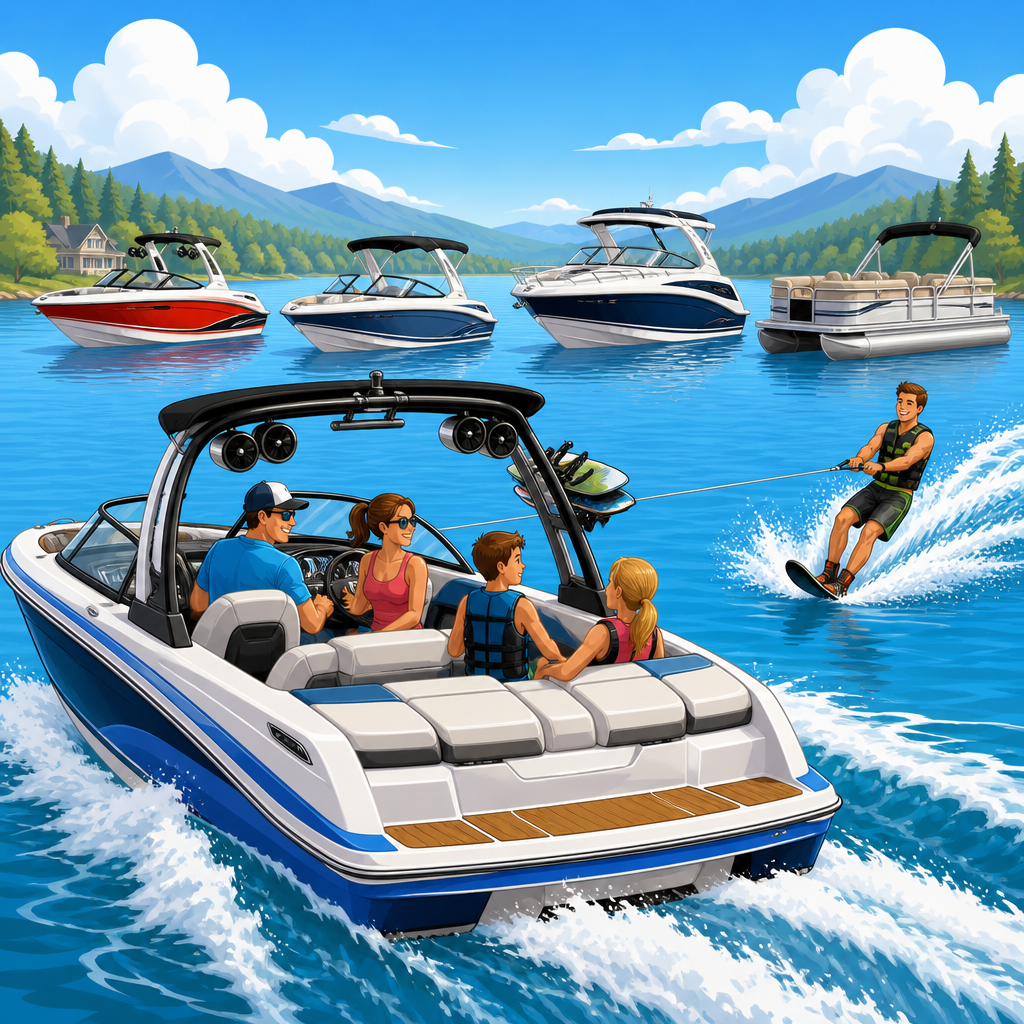
Choosing the best tow boat for waterskiing starts with understanding a simple truth: the boat shapes the entire skiing experience, from the pull out of the water to the consistency of the wake at tournament speed. In my experience testing ski boats, crossover models, and family runabouts on private lakes and busy public reservoirs, small design differences create huge on-water results. A boat that feels powerful at the dock may still produce a wide, hard wake that punishes skiers, while a less flashy direct-drive ski boat can deliver the flat, clean table serious riders want. For buyers building out a fishing and water sports lifestyle, this makes the tow boat decision one of the most important purchases in the category.
A tow boat for waterskiing is a powerboat designed or configured to pull a skier with steady speed, reliable tracking, and a wake profile matched to the skier’s skill and discipline. The main terms matter. A direct-drive places the engine near the center of the boat, improving balance and producing a flatter wake. A V-drive moves the engine aft, usually creating more interior space and a larger wake that often suits wakeboarding better than slalom skiing. An inboard uses a fixed propeller and rudder under the hull, which improves pull characteristics and low-speed control. Sterndrive and outboard boats can tow skiers, but they rarely match purpose-built ski boats for wake shape, tracking, and speed control.
Why this matters is practical, not theoretical. The wrong boat can slow a beginner’s progress, tire out intermediate skiers, and frustrate experienced slalom riders who need predictable line tension and a soft crossing wake. It also affects safety, fuel burn, maintenance cost, passenger comfort, and resale value. Families often want one boat for skiing, wakeboarding, tubing, and cruising, but multiuse convenience usually involves tradeoffs. This hub article covers those tradeoffs clearly so you can choose the best tow boat for waterskiing based on how you actually use the water, not how marketing photos make a boat look.
As a hub for water skiing and wakeboarding boats, this guide focuses on the decisions that matter most: hull design, engine setup, speed control, wake characteristics, seating layout, towing hardware, and ownership costs. It also explains how boat choice changes by skier profile, whether you are teaching kids on combos, running a recreational slalom course, or shopping for a crossover boat that can support wake sports and weekend cruising. By the end, you should know which boat categories deserve your attention, which specifications deserve skepticism, and which features are worth paying for.
Start with the Type of Skiing You Actually Do
The best tow boat for waterskiing depends first on the type of skiing, because each discipline asks the boat to do something slightly different. Recreational open-water skiing rewards forgiving acceleration, moderate wakes, easy boarding, and enough seating for family or friends. Slalom skiing, especially course skiing at 30 to 36 mph, demands a narrow, soft wake and extremely consistent speed. Trick skiing values a flat table and responsive handling. Barefoot skiing benefits from smooth pull and stable high-speed operation. Wakeboarding and wakesurfing shift the goal entirely toward larger, shaped wakes and ballast capacity.
I tell buyers to write down the percentage of time they will spend in each activity. If waterskiing is 70 percent or more of your usage, a dedicated inboard ski boat usually makes the most sense. Brands such as MasterCraft ProStar, Nautique Ski Nautique, and Malibu Response built their reputations by optimizing hulls for slalom performance. These boats hold speed accurately, track straight through skier load, and create smaller wakes than most crossover or wake-oriented models. If your family mostly wakeboards with occasional skiing, a crossover model like the Malibu Wakesetter LXI legacy concept or more modern crossover lines from Nautique, Centurion, or Tigé may be a better compromise.
Be honest about skill level too. Beginners often assume they need the biggest engine and the most features, but they benefit more from predictable throttle response, good mirror visibility, and a manageable wake. Advanced skiers are more sensitive to wake hardness, rooster tail placement, and tracking through edge changes. The right answer for a public-lake family differs from the right answer for a tournament-minded slalom skier. That is why waterski boat shopping should begin with use case, not brand loyalty.
Hull Design, Drive Layout, and Wake Shape
Hull design is the single biggest factor in how a tow boat performs for waterskiing. A true ski hull is engineered to displace less water at skiing speeds, creating a flatter wake and cleaner table. These boats usually ride lower, run lighter, and keep weight centered. Direct-drive inboards are the classic example. Because the engine sits near midship, the boat stays balanced, planes quickly, and produces the low, soft wake skiers want when crossing at speed. That layout also helps maintain even pull on both sides of the wake.
V-drive boats reverse that formula. By putting the engine near the stern, manufacturers free up cockpit space and create a social seating layout that many families love. The tradeoff is wake size. More stern weight generally means a taller, firmer wake, which can be excellent for wakeboarding but less comfortable for slalom. Some crossover V-drives mitigate this with wake plates, surf tabs, and careful hull shaping, yet they still rarely equal a tournament ski boat for pure waterski performance. If you plan to ski aggressively, especially short-line slalom, this distinction matters immediately on the water.
Sterndrive bowriders and some outboard-powered runabouts sit in another category. They can pull skiers effectively for casual use, and modern examples from brands like Chaparral, Regal, and Yamaha offer strong acceleration and family versatility. However, prop placement, transom design, and hull geometry usually produce a larger or less consistent wake than inboard ski boats. Tracking under skier load can also be less precise. They are practical crossover family boats, but they are not ideal tools for dedicated slalom skiing.
Length and beam influence wake shape as well. Boats around 19 to 21 feet are common in the ski segment. Narrower beams often help maintain a ski-friendly wake, while wider beams improve interior room but can widen the wake path. Weight is equally important. More weight can improve ride comfort in chop, yet it generally works against the goal of a small wake. That is why many of the best waterski boats look modest beside large wake boats: they are built for function, not visual mass.
Engine Power, Speed Control, and Tracking
For waterskiing, raw horsepower matters less than smooth torque delivery, speed consistency, and driveline efficiency. Most modern inboard ski boats use V8 engines from PCM, Ilmor, Indmar, or Mercury-based platforms, commonly producing between 343 and 450 horsepower. For recreational skiing, that range is more than adequate. A properly propped 5.7L or 6.0L inboard can pull adults out cleanly, recover speed quickly after turns, and maintain 30 to 36 mph without drama. More power helps with heavy crews, high elevation lakes, and multi-sport use, but excess horsepower alone does not improve slalom wakes.
Speed control is nonnegotiable. Systems such as Zero Off became the standard in tournament skiing because they hold speed with far more precision than a human driver using only throttle feel. Older but respected systems like PerfectPass still appear on used boats and can serve recreational users well. If you are shopping the used market, prioritize a boat with reliable digital speed control or budget to install or update it. Consistent speed improves learning, reduces driver stress, and makes each pass more repeatable.
Tracking is what keeps the boat moving straight when a skier applies load to the rope. Tournament-focused hulls use tracking fins and precise rudder geometry to resist side pull. On water, that means the boat feels planted instead of being tugged off line every time the skier cuts hard. I have driven family runabouts that pulled skiers acceptably in a straight line, then wandered noticeably under load. That may be tolerable for casual skiing, but it becomes exhausting for drivers and limiting for progressing skiers.
| Boat Type | Best For | Wake Size for Skiing | Interior Space | Typical Tradeoff |
|---|---|---|---|---|
| Direct-drive inboard ski boat | Slalom, trick, recreational skiing | Smallest and softest | Moderate | Less lounge seating |
| V-drive crossover | Mixed skiing and wakeboarding | Moderate | High | Compromise wake for serious slalom |
| Wake boat with ballast | Wakeboarding and wakesurfing | Largest | High | Poor fit for dedicated skiing |
| Sterndrive or outboard runabout | General family towing | Variable, often larger | High | Less precise speed and tracking |
Features That Improve the Skiing Experience
The most valuable tow boat features for waterskiing are often the least glamorous. A sturdy center-mounted ski pylon gives a clean rope angle and dependable pull point. A tournament tow point or extended pylon can help in some setups, but for standard waterskiing the goal is stable geometry, not extra height. A wide-angle mirror is essential because the driver must monitor the skier continuously without losing forward awareness. Supportive driver seating, readable gauges, and simple controls matter more over a long day than oversized touchscreens.
Wake-management tools deserve careful interpretation. Adjustable wake plates and trim systems can soften the wake in some crossover boats, but they cannot rewrite the physics of a hull built around ballast and stern weight. Ballast itself is usually a negative for waterskiing. If you buy a crossover boat, make sure ballast can be fully emptied and that the boat still performs cleanly at skiing speeds. Some buyers assume they can simply switch modes and get tournament-level ski wakes from a wake boat; that expectation usually leads to disappointment.
Storage and boarding design still count. Wet gear storage, an easy reboarding ladder, nonskid swim platforms, and walkthrough transoms all improve the real family experience. Inboards also offer a safety advantage for watersports because the propeller sits under the boat rather than exposed at the stern as on some sterndrive and outboard designs. That does not remove the need for strict prop awareness and engine-off pickup routines, but it remains a meaningful design benefit for tow sports.
If you buy used, inspect upholstery, engine hours, shaft alignment, tracking fins, rudder play, trailer condition, and service records. Gelcoat shine can hide mechanical neglect. Compression checks, a lake test, and verification of speed control operation are worth the effort. On older direct-drive ski boats, a well-maintained drivetrain often matters more than updated cosmetics.
Choosing by Budget, Crew Size, and Long-Term Ownership
Budget should include purchase price, insurance, storage, fuel, maintenance, trailer needs, and eventual resale. New tournament ski boats can exceed the price of many family cars, but the used market offers strong value because dedicated ski boats often age well when maintained properly. A ten- to fifteen-year-old Nautique, MasterCraft, or Malibu ski model may still outperform a newer general-purpose runabout for waterskiing. That is one of the smartest used-boat lessons I have seen buyers learn.
Crew size influences layout. Direct-drive ski boats are ideal for a skier, driver, observer, and a few passengers, but they are not floating living rooms. If your normal crew is eight to ten people, you may outgrow the cockpit quickly. In that case, a crossover model with better seating may be the reasonable answer, provided you accept a moderate compromise in wake quality. Buyers who ignore this often purchase a pure ski boat, then realize their family mainly wanted space and lounging comfort.
Think about your water conditions too. On a protected ski lake, a low-profile ski boat is nearly perfect. On a large reservoir with afternoon chop, some crossover boats offer a drier, softer ride thanks to deeper freeboard and more hull volume. Maintenance access matters in both cases. Inboard ski boats are usually straightforward to service, but parts support and dealer network vary by brand and model year. Before buying, confirm local service availability for PCM, Ilmor, Indmar, or whichever engine package the boat carries.
Resale follows use case. Dedicated ski boats hold value best among informed tow-sports buyers, especially when hours are reasonable and maintenance is documented. Crossover boats can attract a wider family audience. Heavily modified wake boats are less attractive to skiing-first buyers. Matching the boat to your realistic usage protects both your enjoyment and your money.
Best Tow Boat Decision Framework
If waterskiing is your main priority, buy the smallest-wake boat that fits your crew and budget, then insist on proven speed control and a clean mechanical inspection. If you split time between waterskiing and wakeboarding, choose a true crossover with strong ski credentials rather than a wake boat claiming it can also ski. If your usage is mostly casual family towing, a sterndrive or outboard runabout can work, but you should test it at skiing speed with a rope behind it before committing. Brochure claims never replace a lake test.
The best tow boat for waterskiing is the one that delivers consistent pull, a manageable wake, safe operation, and ownership costs you can sustain season after season. For most serious skiers, that points to a direct-drive inboard from an established ski-boat brand. For mixed-sport families, it points to a carefully chosen crossover with realistic expectations. Start with your skiing goals, test boats in the conditions you actually use, and let wake quality and speed consistency decide. If you are building out your fishing and water sports setup, make this article your hub, then compare specific ski boats, crossover boats, and wakeboarding boats before you buy.
Frequently Asked Questions
What type of tow boat is best for waterskiing?
The best tow boat for waterskiing is usually a direct-drive inboard ski boat because it is purpose-built to create a flatter, softer, and more predictable wake at skiing speeds. For slalom skiing in particular, wake shape matters just as much as engine power. A true ski boat is designed to track straight, hold speed consistently, and give the skier a clean path across the wake. That translates to easier deep-water starts, smoother crossings, and less fatigue over a full set.
That said, the right choice depends on how you actually use the boat. If your priority is dedicated skiing on a course or serious open-water slalom, a tournament-style ski boat is usually the strongest option. If your family wants to mix skiing with wakeboarding, tubing, cruising, and occasional entertaining, a crossover tow boat may be the better fit. Crossover models can still ski well, but they often involve compromise in wake softness, interior layout, or versatility. Family runabouts can pull skiers too, but many produce a larger, firmer wake and may not have the precision speed control or tracking that serious skiers want.
The key is to match the boat to the level of skiing you plan to do most often. If waterskiing is the main event, choose a boat engineered around ski performance rather than one that can simply tow a skier. That distinction makes a major difference once you are on the water.
Why is wake size and shape so important when choosing a ski boat?
Wake size and shape are critical because the skier interacts with the wake on every pass, every cut, and every crossing. A good ski boat produces a wake that is narrow, soft, and manageable at typical skiing speeds. That allows the skier to maintain rhythm, edge control, and body position without taking repeated hits from a steep or hard wake. Even if a boat has plenty of horsepower, it can still be a poor ski platform if the wake is too wide or aggressive.
For beginner skiers, a softer wake makes learning easier and less intimidating. Deep-water starts feel cleaner, basic cuts are more controlled, and the skier can focus on balance instead of bracing for impact. For intermediate and advanced skiers, wake consistency becomes even more important. In slalom, the skier depends on repeatable wake crossings to build timing and confidence. If the wake changes noticeably with passenger load, fuel level, or minor speed variation, performance suffers quickly.
Hull design, weight distribution, engine placement, and overall boat length all affect wake characteristics. Inboard ski boats tend to perform best because their design centers on minimizing wake disruption at skiing speeds. By contrast, boats made for wake sports often intentionally create larger wakes, which is exactly the opposite of what most waterskiers want. If possible, always test the boat at the actual speeds and rope lengths you plan to ski. The wake that looks acceptable from the driver’s seat may feel completely different from behind the rope.
How much horsepower does a tow boat need for waterskiing?
A tow boat does not need extreme horsepower to be effective for waterskiing, but it does need the right kind of power delivery. What matters most is strong low-end torque, smooth acceleration, and the ability to hold speed under load. A boat that gets a skier out of the water quickly and then settles into a stable pull is usually far more valuable than one with a big headline horsepower number but uneven throttle response.
For lighter skiers, beginners, and casual recreational use, many well-designed ski boats and tow boats with moderate horsepower are more than adequate. For larger adults, multiple skiers in a session, or boats operating at higher elevations, additional power becomes more important. Elevation reduces engine performance, and a heavily loaded boat can feel noticeably less responsive during starts. If your typical crew includes several passengers and gear, you should account for that when evaluating engine options.
It is also important to separate acceleration from speed control. A powerful engine helps with pull-up and recovery, but precise towing requires consistency once the skier is moving. Features like modern speed control systems are often just as important as raw engine output because they reduce surging and help maintain the exact pace the skier expects. In practical terms, choose an engine package that feels effortless rather than merely sufficient. A boat that is always working hard to pull skiers will usually be less refined and less enjoyable over time.
Should I choose a dedicated ski boat or a crossover boat for family use?
If your household is serious about waterskiing but still wants flexibility, this is one of the most important decisions you will make. A dedicated ski boat is usually the better performer for slalom and traditional skiing because it is optimized for small wakes, crisp handling, and accurate tracking. If skiing quality is your top priority, a true ski boat will almost always outperform a crossover when the rope is tight.
However, crossover boats appeal to many families because they balance multiple activities in one platform. They often provide more seating, more storage, and greater versatility for tubing, wakeboarding, casual cruising, and social use. For families that ski recreationally but also want a boat that feels comfortable during a full day on a public lake, a crossover can be a smart compromise. The tradeoff is that compromise tends to show up directly in wake characteristics and sometimes in skiing precision.
The best way to decide is to be honest about your actual use pattern rather than your ideal one. If 70 to 80 percent of your outings revolve around skiing, a dedicated ski boat is usually worth it. If skiing shares equal time with other activities, a crossover may deliver better overall value. In either case, avoid choosing based only on showroom appearance or passenger layout. The boat’s on-water behavior at skiing speed is what determines whether it will still feel like the right purchase after the excitement of buying wears off.
What features should I look for when comparing tow boats for waterskiing?
Start with the fundamentals: hull design, engine placement, tracking, and speed control. These are the features that define how the boat tows a skier. A waterski-friendly hull should produce a relatively flat wake and predictable pull. Inboard layouts are generally preferred because they improve balance and tracking while keeping the prop safely under the boat. Reliable speed control is another must-have because even small speed fluctuations can disrupt timing and make skiing harder than it should be.
Next, evaluate the tow point, seating layout, visibility from the helm, and overall ergonomics. A proper ski pylon or tow point should feel secure and correctly positioned for clean rope tracking. The driver should have clear sightlines to the skier, the water ahead, and the observer. Good communication between driver, spotter, and skier matters more than many buyers expect, especially on busy lakes where quick reactions are essential.
You should also consider practical ownership factors such as build quality, storage, maintenance access, fuel efficiency, and dealer support. A boat that skis beautifully but is difficult to service or hard to store may become frustrating in real ownership. If you buy used, inspect upholstery, stringers or structural components, engine hours, service records, and any evidence of poor storage or neglect. Finally, test the boat with a skier behind it whenever possible. Specs and brochures can narrow the field, but the real answer comes from how the boat performs during actual starts, pulls, and wake crossings.