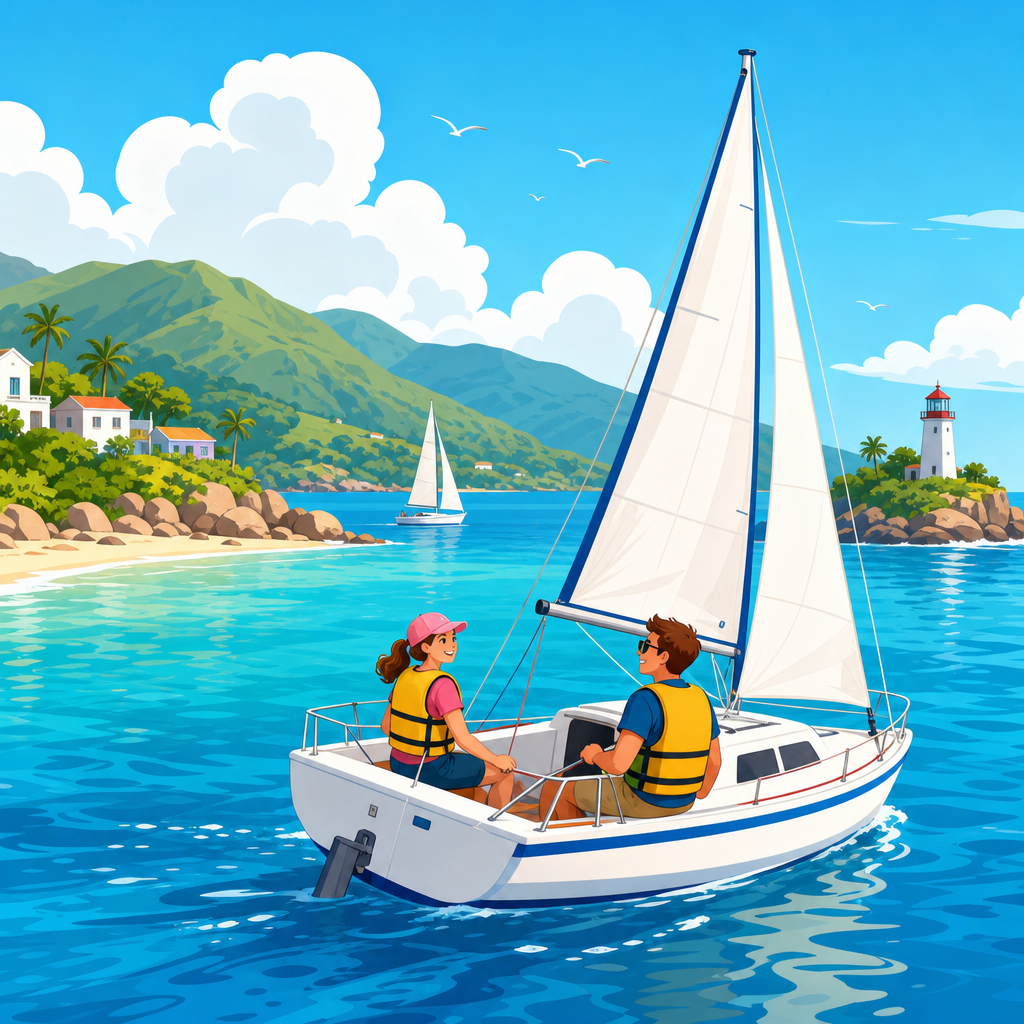
Learning to sail is easier when the destination matches a beginner’s skill level, and the best sailing destinations for beginners combine protected waters, predictable weather, short day passages, and supportive charter infrastructure. New sailors often imagine that any beautiful coastline will work, but that is rarely true in practice. I have planned starter charters for couples, families, and first-time flotilla crews, and the difference between a confidence-building week and a stressful one usually comes down to geography, wind patterns, marina spacing, and how forgiving an anchorage is when you arrive late or misjudge your approach.
For this reason, beginner-friendly sailing destinations are not simply places with warm water and scenic coves. They are sailing areas where you can make manageable decisions, repeat core skills, and recover from small mistakes without drama. Protected waters reduce swell and make docking less intimidating. Reliable afternoon breezes let crews practice sail trim without being overpowered. Short hops between harbors mean there is time for training, lunch stops, and weather checks. Strong charter bases, sailing schools, and marine services matter too, because new skippers benefit from good briefings, easy provisioning, and nearby technical help.
This hub article covers the best sailing and yacht charter destinations for beginners across the Mediterranean, Caribbean, North America, and the South Pacific, while also explaining how to choose the right destination for your first trip. It is designed as a starting point for the broader Boating Destinations & Travel topic, so it highlights where each region excels, what level of experience it suits, and which tradeoffs you should know before booking. If you are comparing Greece vs Croatia, the British Virgin Islands vs the Bahamas, or a sailing school holiday vs a bareboat charter, the key questions are the same: How strong is the wind, how exposed are the passages, how close are safe overnight stops, and how easy is it to get help?
At a practical level, beginners should define a suitable sailing destination as one where average daily passages are modest, navigation hazards are well marked, mooring options are abundant, and severe local weather is uncommon during the main season. Most entry-level crews do best in waters that allow sailing by line of sight rather than demanding long offshore legs. Destinations with mooring buoys, marina staff, and clear pilot information dramatically lower risk. Areas famous for stronger seasonal winds, fast tides, coral congestion, or crowded med-style berthing can still be wonderful, but they are better approached after a first confidence-building charter elsewhere.
What Makes a Sailing Destination Beginner Friendly
The best beginner sailing grounds share five characteristics. First, they have manageable conditions: moderate winds, limited swell, and low current. Second, they offer short distances between anchorages, marinas, or towns. Third, they provide simple navigation with clear landmarks, updated charts, and good buoyage. Fourth, they have reliable support systems, including charter companies, sailing schools, mechanics, and fuel docks. Fifth, they reward conservative planning. In a good beginner destination, if the crew chooses to stop early, there is still a safe harbor nearby rather than a punishing open-water leg ahead.
Weather pattern matters more than postcard appeal. For example, the Greek Cyclades are visually unforgettable, yet the Meltemi can blow forcefully in summer and create uncomfortable, at times unsafe, conditions for novice crews. By contrast, the Saronic Gulf near Athens offers relatively sheltered waters, straightforward island hops, and many harbors within a few hours of each other. The same principle applies in the Caribbean. Open Atlantic exposure and acceleration zones can challenge new sailors, while a more enclosed chain of islands with settled trade winds feels structured and learnable.
Boat choice also shapes destination suitability. Beginners are often better served by a modern 36- to 42-foot monohull with bow thruster or a forgiving catamaran in calm waters than by a larger yacht that is harder to dock. In protected areas, catamarans add comfort, deck space, and shallow draft for beach access. In crowded marinas, however, a monohull may be easier to berth and less expensive. I usually advise first-timers to match destination and vessel together rather than selecting a boat in isolation.
Top Mediterranean Sailing Destinations for Beginners
The Mediterranean offers some of the world’s best entry points into yacht chartering, but not every subregion suits new sailors equally. Three standouts are Croatia’s Dalmatian Coast, Greece’s Saronic Gulf, and Turkey’s southwest coast around Göcek and Fethiye. Each combines scenic cruising with manageable passages and solid charter infrastructure. These destinations also work well as a hub because they represent different styles of beginner sailing: village-to-village island hopping, sheltered gulf cruising, and calm bay exploration with easy anchoring.
Croatia is one of the most consistently recommended sailing destinations for beginners because the islands are close together, marinas are frequent, and line-of-sight navigation is straightforward. A first charter from Split can include Brač, Hvar, Vis, and Šolta with daily legs often under 20 nautical miles. Summer weather is generally settled, though local winds such as the Bora and Jugo require attention to forecasts. What makes Croatia especially useful for learners is the combination of secure ACI marinas, plentiful restaurants, and many opportunities to stop early if conditions or confidence change.
Greece’s Saronic Gulf is even more forgiving for many first-time crews. Starting from Athens or nearby bases, sailors can reach Aegina, Poros, Hydra, and Spetses on moderate day sails. Compared with the Cyclades, seas are usually calmer and the wind less intense. Harbors can be busy in peak season, but distances are short and the cruising rhythm is relaxed. For beginners who want culture as much as seamanship, the Saronic is ideal because every stop offers walkable towns, provisions, and sheltered bays for lunch anchoring and repeated maneuver practice.
Turkey’s sailing coast around Göcek is one of the gentlest charter regions I have used for training-focused holidays. The Gulf of Fethiye is dotted with coves, islands, and protected anchorages where crews can practice anchoring techniques in flat water. Distances are short, scenery is dramatic, and many yachts use stern-to lines in calm conditions that feel less pressured than crowded urban marinas elsewhere. The tradeoff is that some crews who prefer lively old towns each night may find the cruising more nature-focused, but for learning boat handling it is excellent.
| Destination | Why It Suits Beginners | Main Caution | Best First-Trip Style |
|---|---|---|---|
| Croatia Dalmatian Coast | Short island hops, many marinas, simple navigation | Peak-season crowding and occasional Bora | One-week marina and village cruise |
| Greece Saronic Gulf | Sheltered waters, close ports, easy access from Athens | Busy harbor berths in summer | Cultural island-hopping charter |
| Göcek and Fethiye | Protected bays, calm anchorages, training-friendly waters | Fewer urban marina nights | Relaxed anchoring-focused itinerary |
Best Caribbean Sailing Destinations for Beginners
For winter sun, the British Virgin Islands remain the benchmark beginner sailing destination. They are not the cheapest option, but they are often the most successful for first charters because the route planning is simple and the cruising pattern is proven. The islands are close, anchorages are numerous, and navigation is largely visual. A classic itinerary from Tortola includes Norman Island, Cooper Island, Virgin Gorda, Anegada for more experienced beginners with careful planning, and Jost Van Dyke. Mooring balls are widely used, which reduces anchoring stress for new crews.
The British Virgin Islands also benefit from a mature support network. Charter companies deliver detailed chart briefings, provisioning can be arranged in advance, and there are many beach bars, fuel docks, and repair options. The trade winds can be brisk, especially in open channels such as the Sir Francis Drake Channel, but conditions are usually manageable for novices with sensible reefing. After many beginner itineraries there, my consistent advice is simple: start each day early, pick conservative distances, and treat mooring pickup as a skill worth practicing rather than a shortcut.
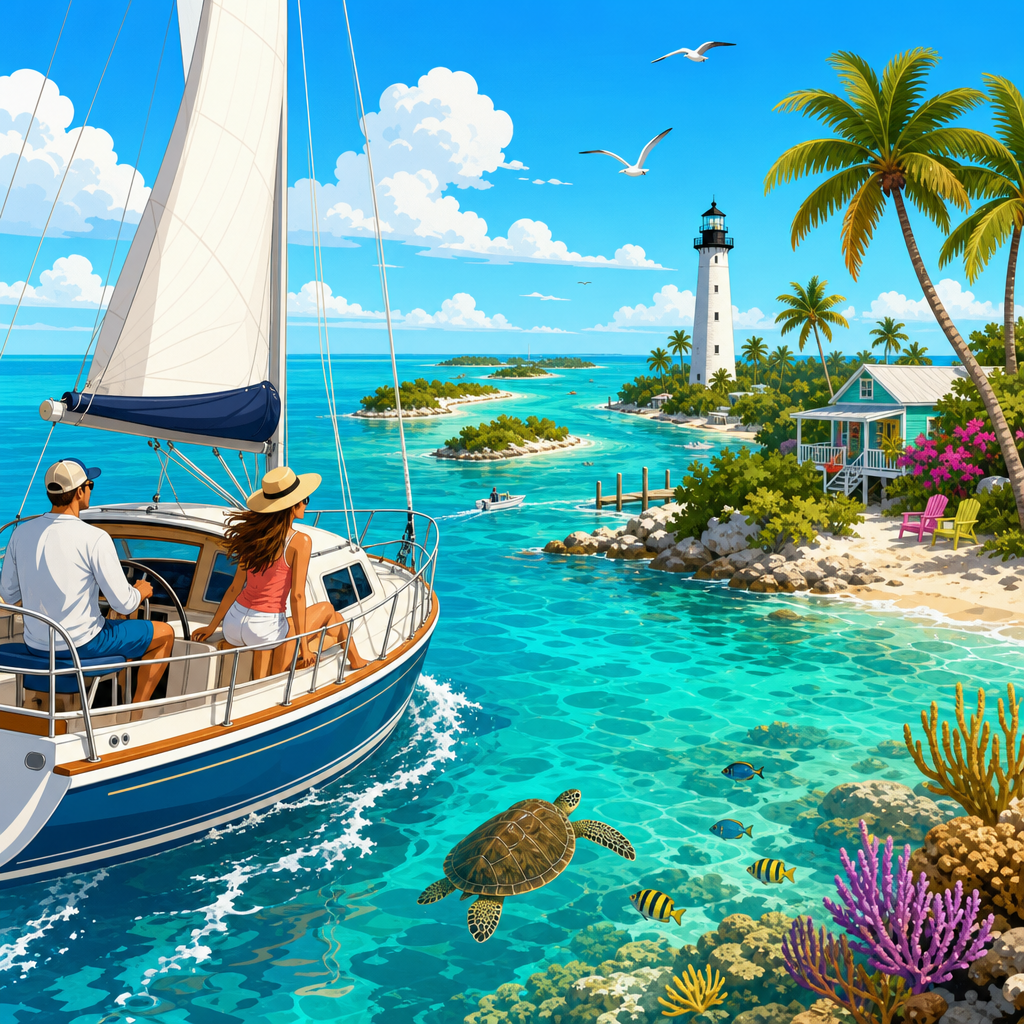
The Bahamas can also be beginner friendly, especially in the Abacos, where relatively protected waters and short passages have long made the area popular for family charters. Clear water helps with reading depth visually, and the cays offer appealing stopovers. However, Bahamian cruising demands close attention to tide, depth, and route timing. Shallow banks are forgiving in calm weather but can become uncomfortable in wind-against-tide conditions. For this reason, I place the Abacos just behind the British Virgin Islands for absolute beginners, though they are superb for cautious crews who prepare thoroughly.
St. Martin and the Grenadines attract sailors with glamorous scenery, but they are more variable for beginners. In the Grenadines, trade-wind passages and acceleration zones between islands can create stronger conditions than charter marketing suggests. St. Martin offers excellent services and nearby islands such as Anguilla and St. Barth, yet exposed waters can be choppy. These regions are better classified as next-step destinations after one easier charter, not because they are extreme, but because they ask more of helming, sail handling, and weather judgment.
Best Beginner Sailing in North America and the South Pacific
In North America, the San Juan Islands in Washington State are often mentioned by new sailors, and they can be rewarding, but they are not universally beginner easy. The scenery is outstanding, marinas are good, and distances can be short. Yet currents, tidal planning, cold water, and changeable weather introduce complexity. I recommend the San Juans for beginners who have done formal instruction and want to build navigation discipline, not for travelers seeking a simple sun-and-swim charter. Chesapeake Bay can also work for learning, especially through sailing schools, because it offers protected waters and extensive facilities, though summer heat and squalls require planning.
French Polynesia, particularly the Society Islands around Tahiti, Moorea, Raiatea, Taha’a, and Bora Bora, is one of the most beautiful places on earth to learn charter cruising if budget is secondary and the crew respects reef navigation. Lagoon sailing there is often calm and spectacular, and charter catamarans dominate for good reason. The challenge is coral. Entrances, bommies, and reef-protected anchorages demand precise piloting in good light. With a skipper, flotilla support, or prior training, it can be magical. As a first bareboat destination, it is better for confident beginners than absolute novices.
Whitsundays sailing in Australia deserves similar nuance. The islands offer many protected anchorages, short legs, and world-class scenery, making them attractive for entry-level charters. Charter operators around Airlie Beach are experienced with beginner crews, and many itineraries focus on sheltered routes. Still, tidal range, coral awareness, and stronger southeasterlies at times mean the Whitsundays are best approached with a conservative plan. Like the South Pacific generally, this is an outstanding region once a crew understands anchoring, reefing, and the importance of arriving early enough to assess the anchorage in daylight.
How to Choose the Right First Sailing Destination
When choosing your first sailing destination, start with season, not price. The same place can feel easy in one month and demanding in another. Check prevailing wind strength, local weather systems, hurricane or cyclone dates, and daylight hours. Then assess your crew honestly. If nobody has docked a yacht before, prioritize destinations with mooring balls or anchorages over those requiring nightly stern-to berthing. If children are aboard, choose short passages and reliable swimming stops. If seasickness is a concern, protected waters matter more than nightlife.
Next, match the charter format to your learning goals. Bareboat is best for crews with qualifications and recent practice. A skippered charter is ideal if you want local knowledge and hands-on coaching without full responsibility. Flotilla sailing works well for first-timers in Greece, Croatia, and the British Virgin Islands because route support, social contact, and technical backup reduce stress while still allowing active participation. I have seen hesitant crews gain more confidence in one well-run flotilla week than in months of classroom theory because every maneuver is tied to a real anchorage, wind shift, or docking decision.
Budget should include more than the base charter fee. Marina nights in Croatia, fuel in the Mediterranean, park permits in some regions, end cleaning, damage waivers, provisioning, and skipper gratuities all affect affordability. Beginners often overspend by choosing a glamorous destination with complex logistics when a closer, easier base would produce a better first experience. The smartest plan is to select a forgiving cruising ground, keep daily mileage modest, and leave room for weather days, swim stops, and the inevitable slower pace of a new crew.
Conclusion
The best sailing destinations for beginners are the places that let new sailors build skills steadily while still enjoying the freedom that makes yacht charter travel special. Croatia, the Saronic Gulf, Göcek, the British Virgin Islands, and selected parts of the Bahamas stand out because they offer manageable passages, accessible harbors, and enough support to keep mistakes small. Regions such as the Grenadines, French Polynesia, the Whitsundays, and the Pacific Northwest can be rewarding too, but they usually suit confident beginners or crews with extra guidance.
If you remember one principle, make it this: choose simplicity over ambition for your first charter. Sheltered water, short hops, and clear logistics create better sailors than long passages and stressful arrivals. Use this hub as your starting point for exploring the wider world of best sailing and yacht charter destinations, then narrow your search by season, skill level, and desired experience. Pick the right region, book the right boat, and your first sailing holiday will teach the habits that make every future voyage safer and more enjoyable.
Frequently Asked Questions
What makes a sailing destination good for beginners?
A beginner-friendly sailing destination is not just beautiful; it is forgiving. The best places for new sailors usually have protected waters, moderate and predictable winds, short distances between harbors or anchorages, and plenty of safe places to stop if conditions change. These factors reduce pressure on a new crew and create more opportunities to practice boat handling, anchoring, navigation, and teamwork without being overwhelmed.
Another major advantage is reliable support infrastructure. Destinations with well-established charter bases, flotilla options, clear charts, marina services, and helpful local operators make the learning curve much smoother. If something unexpected happens, whether it is a minor technical issue, confusion about mooring, or a weather question, access to experienced support can turn a stressful moment into a manageable one. For beginners, that safety net matters just as much as the scenery.
Just as important, a good starter destination lets sailors build confidence step by step. Calm mornings, line-of-sight navigation, and easy day passages allow a crew to learn at a realistic pace. Instead of spending the week coping with heavy swell, strong tides, or difficult marina entries, beginners can focus on the fundamentals and actually enjoy the experience. That combination of safety, simplicity, and enjoyment is what makes a destination truly suitable for learning to sail.
Which sailing destinations are usually considered best for first-time sailors?
Several destinations consistently stand out for beginners because they combine manageable conditions with excellent cruising infrastructure. The Ionian Sea in Greece is one of the best-known examples. It offers relatively sheltered waters, straightforward island hopping, short passages, and many charming ports close together. For a first charter, that means more flexibility and fewer high-pressure sailing days. Croatia, especially certain parts of the Dalmatian Coast, is another strong choice because of its numerous islands, well-developed marinas, and relatively easy route planning when weather is settled.
The British Virgin Islands are also frequently recommended for beginners, particularly those looking for warm weather and easy navigation. Distances are short, anchorages are plentiful, and the islands are close enough together that crews can maintain visual reference throughout much of the trip. This creates a reassuring environment for sailors who are still developing confidence in passage planning and anchoring. In Europe, some areas of Turkey can also work well, especially when itineraries focus on protected gulfs and short coastal hops with experienced local charter support.
That said, the best destination is not always the most famous one. The right choice depends on the season, the specific route, the crew’s comfort level, and whether the trip is bareboat, skippered, or part of a flotilla. Even a generally beginner-friendly region can become challenging in the wrong month or on the wrong itinerary. That is why experienced planning matters. A destination should be judged not only by reputation, but by the exact conditions a new crew is likely to face during that particular trip.
Should beginners choose a bareboat charter, a skippered charter, or a flotilla holiday?
For most beginners, the best option depends on how much real experience they have and what kind of learning environment they want. A bareboat charter can be a great next step for sailors who already have basic qualifications and some practical time on the water, but it is not always the smartest choice for a first-ever sailing holiday. Managing navigation, docking, anchoring, weather decisions, and crew coordination without guidance can feel like a lot, even in an easy cruising area. If confidence is still developing, a bareboat trip may turn into a stressful experience rather than a rewarding one.
A skippered charter is often the most effective choice for people who want to learn while still enjoying the holiday. With a professional skipper onboard, beginners can observe good seamanship in real conditions, ask questions, practice maneuvers, and gain hands-on experience without carrying full responsibility from day one. It is one of the fastest ways to build practical understanding because the crew learns by doing, but with expert oversight. For couples, families, and mixed-experience groups, this format is often the most relaxed and educational.
Flotilla sailing is another excellent middle ground, especially for first-time charterers who want some independence without feeling isolated. In a flotilla, each boat follows a supported route, usually with a lead crew available to assist with planning, weather guidance, and marina arrivals. This setup gives beginners the satisfaction of sailing their own boat while still benefiting from structure and backup. For many new sailors, especially those nervous about mooring or daily route decisions, a flotilla can provide exactly the right blend of freedom, confidence-building, and support.
What weather and sea conditions should beginners avoid when planning a sailing trip?
Beginners should generally avoid destinations or seasons known for strong winds, large open-water swells, complicated tidal streams, and rapidly changing weather systems. These conditions increase workload dramatically and can make even routine tasks feel difficult. A docking maneuver that might be straightforward in calm conditions becomes much more demanding in crosswinds. A short passage can feel intimidating if there is steep chop or poor visibility. For new crews, the goal should be to reduce variables, not add them.
It is also wise to be cautious about places with long exposed crossings, heavy commercial traffic, or navigation that depends on advanced pilotage skills. Strong current and tidal range can be especially challenging for sailors who have only trained in non-tidal waters. Likewise, destinations that are famous for thermal winds or afternoon acceleration zones may sound exciting, but they are often better suited to crews with more experience. A beginner destination should leave room for small mistakes and learning moments, rather than punishing them immediately.
Seasonality matters just as much as geography. A region that is calm and welcoming in one month can be difficult in another. Before booking, beginners should look beyond average brochure descriptions and ask detailed questions about local wind patterns, sea state, harbor crowding, and typical afternoon conditions. This is where charter companies and sailing planners can provide real value. Good advice is not just about where to go, but when to go, and that timing can make the difference between a smooth, confidence-building trip and a week that feels far beyond a crew’s skill level.
How can beginners plan a sailing itinerary that builds confidence instead of creating stress?
The smartest beginner itinerary is simple, flexible, and conservative. New sailors often try to fit in too many islands, too many miles, or too many overnight stops because they want to make the most of the trip. In practice, that usually creates pressure. A better plan is to choose short day sails, allow plenty of time for departures and arrivals, and build in alternatives for changing weather or crew fatigue. When the distances are modest, the crew has more time to practice, recover, and enjoy each stop without feeling rushed.
It also helps to prioritize easy arrivals. For a first trip, destinations with straightforward mooring options, well-organized marinas, or roomy anchorages are much more forgiving than harbors known for tight spaces or difficult crosswinds. Arriving early in the afternoon, rather than late in the day, gives beginners more options and reduces stress. The same is true for route design: line-of-sight navigation, nearby shelter, and multiple bailout points are far more valuable than an ambitious schedule. A successful beginner charter should feel manageable every day, not just on paper.
Finally, confidence grows when expectations are realistic. The best first itinerary is not the one with the longest mileage or the most famous landmarks; it is the one that lets a new crew finish the week feeling capable and eager to go again. That means leaving margin in the plan, listening carefully to local weather advice, and being willing to shorten a leg or stay put when needed. Good beginner sailing is about building judgment as much as building skill. When the route supports that process, sailors come away with stronger habits, better decision-making, and a much more enjoyable introduction to cruising.