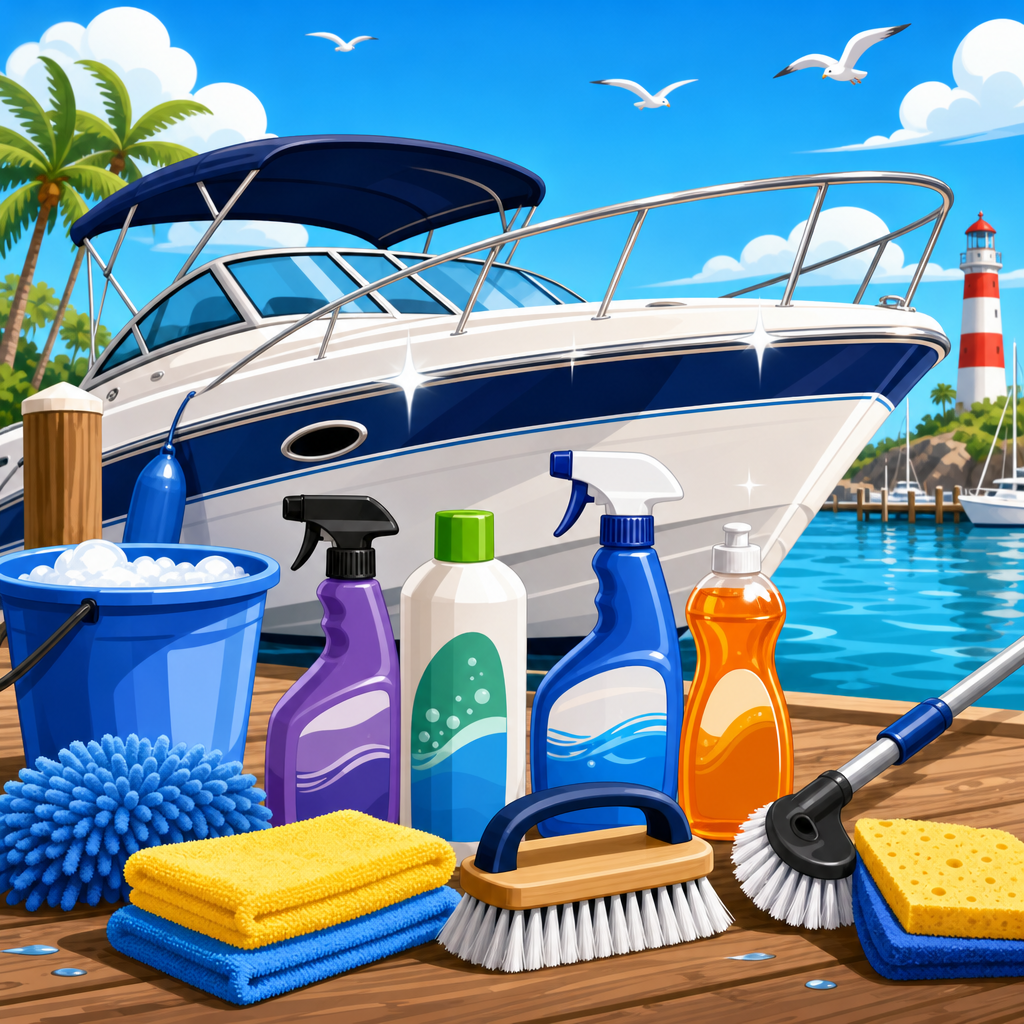
Keeping a boat looking new takes more than occasional rinsing; it requires the right boat cleaning supplies, a clear maintenance routine, and products matched to gelcoat, fiberglass, vinyl, metal, teak, canvas, and glass. In practical terms, “boat cleaning supplies” means the soaps, brushes, protectants, stain removers, polishes, and tools used to remove salt, grime, oxidation, mildew, water spots, fish residue, fuel marks, and environmental fallout without damaging marine surfaces. This matters because marine environments are harsh. Salt crystals abrade finishes, ultraviolet exposure degrades polymers and upholstery, tannins stain hulls, and standing moisture encourages mold growth that can permanently discolor soft goods.
I have learned through years of maintaining center consoles, trailer boats, and cruising sailboats that the wrong product can create more work than the dirt itself. Household degreasers strip wax. Stiff brushes scratch dark gelcoat. Bleach may whiten mildew temporarily while weakening stitching and thread. On the other hand, purpose-built marine cleaners save time, preserve resale value, and reduce long-term restoration costs. The best boat cleaning supplies are not simply the strongest chemicals on a shelf; they are the products that clean effectively while respecting material compatibility and environmental rules at the marina or launch ramp.
For boat owners building a complete maintenance kit, this hub covers the full scope of maintenance and cleaning supplies. It explains what to buy first, which tools belong in every onboard locker, how to choose cleaners for common marine surfaces, when specialty products are worth the cost, and how to organize a routine that keeps a vessel consistently presentable instead of periodically overhauled. If you want a simple answer up front, start with a pH-balanced boat soap, soft wash brush, microfiber towels, non-skid deck cleaner, vinyl cleaner and protectant, glass-safe marine cleaner, metal polish, mildew remover, oxidation compound, and a quality wax or sealant. Those ten categories handle most routine cleaning tasks on recreational boats.
This page also functions as the central reference point for the wider maintenance and cleaning supplies topic under boating gear and equipment. From here, a reader can branch into more specialized questions: how to remove black streaks from a hull, what cleaner is safe for teak, whether ceramic coatings outperform wax on boats, how to clean eisenglass without scratching it, or which bilge cleaners control odor without harming pumps and hoses. A strong hub article should answer the broad questions directly, then help owners recognize when a niche product solves a recurring problem better than a general cleaner ever will.
Core boat cleaning supplies every owner should have
The best starter kit balances routine washing, stain control, protection, and surface-safe tools. At minimum, I recommend a concentrated marine boat soap, a telescoping handle, a soft bristle deck brush, a separate medium brush for non-skid, multiple microfiber towels, a chenille wash mitt, a bucket with grit guard, a hose nozzle that can deliver both rinse and gentle sheet flow, and a drying towel or synthetic chamois. These are the backbone supplies because frequent light cleaning prevents the need for aggressive compounding later. Boat owners who wash after each outing usually spend less on restoration products over time.
Choose marine-specific soap rather than dish detergent. Dedicated boat soaps from brands such as Meguiar’s, Star brite, and 3M are formulated to remove salt and grime without stripping protective wax layers. That matters on gelcoat, where preserving the existing barrier slows oxidation. For tools, separate brushes by task and color-code them. A brush used on the hull should never be used on vinyl seating where grit can grind in. Microfiber quality matters too: edgeless, higher GSM towels reduce marring on glossy gelcoat and acrylic surfaces.
| Supply Category | Best Use | What to Look For | Common Mistake |
|---|---|---|---|
| Boat soap | Routine washing of hull and topsides | pH-balanced, wax-safe, salt-removing formula | Using dish soap that strips protection |
| Soft wash brush | Gelcoat, painted surfaces, enclosures | Flagged bristles, non-marking block | Using stiff bristles on glossy finishes |
| Non-skid cleaner | Textured decks and swim platforms | Grime-lifting formula with good dwell time | Over-scrubbing and polishing the texture flat |
| Vinyl cleaner/protectant | Seats, bolsters, coamings | UV inhibitors, mildew-safe, non-greasy finish | Applying silicone-heavy dressings that attract dirt |
| Metal polish | Stainless rails, cleats, aluminum trim | Corrosion removal plus protective film | Cross-contaminating with rust particles |
| Wax or sealant | Protecting gelcoat after cleaning | UV resistance, easy application, durability | Waxing over oxidation or embedded stains |
Storage is part of supply selection. If a product leaks in a dock box, it becomes an expensive mess and a safety issue. I prefer trigger bottles with positive-off nozzles, clearly labeled secondary spray bottles, and a divided caddy that keeps acids, alkalines, towels, and polishing pads separated. Keeping supplies organized makes regular cleaning more likely, and consistency is the real secret behind a vessel that always looks freshly detailed.
Choosing the right cleaners for each boat surface
Different materials fail in different ways, so the best boat cleaning supplies are surface-specific. Gelcoat is porous compared with automotive clear coat, which means contaminants can embed and oxidation can form a chalky layer. Fiberglass hulls therefore benefit from boat soap for maintenance, dedicated stain removers for waterline discoloration, and compound or polish when gloss has faded. Vinyl seating needs a cleaner that lifts sunscreen, food oils, and mildew without drying plasticizers out of the material. Clear plastics and enclosure panels require ammonia-free cleaners because household glass sprays can haze or micro-crack them over time.
Teak deserves special caution. Strong two-part teak cleaners can brighten badly weathered wood quickly, but they also remove soft grain and should not be part of casual weekly cleaning. For routine care, a teak soap and soft brush are safer. Stainless steel and aluminum also differ. Chloride exposure can pit stainless despite its name, while aluminum towers and pontoons may react badly to the wrong acidic cleaner. Always confirm compatibility with anodized finishes before applying metal brighteners. On painted hulls, especially Awlgrip and Alexseal systems, manufacturers typically advise mild soap and water only, with paint-safe protectants rather than abrasive polish.
Canvas, carpeting, and bilges form another group many owners overlook. Canvas cleaners should remove bird droppings, mildew, and soot without compromising water repellency. After cleaning, a fabric guard such as 303 Fabric Guard can restore repellency on many marine textiles. Bilge cleaners need to emulsify oil and reduce odor, but they should be used sparingly and according to local discharge rules. The point is simple: one miracle cleaner for the whole boat usually means mediocre results somewhere and damage somewhere else.
Specialty products that solve stubborn marine cleaning problems
Once the basics are covered, specialty supplies make maintenance faster and more precise. Waterline stain removers are a good example. Tannin stains, rust drips, and scum lines often need oxalic or similar acids to dissolve discoloration that soap will not touch. Used correctly, these products save a lot of scrubbing. Used carelessly, they can etch trailers, irritate skin, and damage nearby metals. I apply them with controlled dwell time, rinse thoroughly, and avoid windy conditions that can drift product onto galvanized parts.
Oxidation removers, compounds, and finishing polishes are another category worth understanding. If your hand comes away chalky after rubbing the hull, the surface is oxidized and needs correction before any wax or sealant. A compound cuts the dead layer; a polish refines gloss; a protectant locks in the result. Dual-action polishers from brands like Porter-Cable, Rupes, and Flex reduce labor dramatically on larger hulls, though tight spaces still need hand work. For owners who store boats outside year-round, this category often delivers the biggest visual improvement.
Mildew removers, enzyme odor treatments, and spot-specific degreasers also earn space in a well-built kit. Marine mildew is common under cushions, in anchor lockers, and around livewells. Bleach-based products can be effective on hard non-porous surfaces, but on vinyl and stitched seams I usually prefer dedicated mildew removers that are less aggressive. Enzyme cleaners are useful where fish blood, bait residue, and organic smells linger in drains or storage lockers. Spot degreasers handle engine splash, exhaust soot, and fuel fills, but they should be targeted rather than sprayed broadly across waxed surfaces.
How to clean a boat efficiently without causing damage
The safest process starts from the top down and from the least aggressive method to the most aggressive. First rinse thoroughly to remove loose salt and grit. Then wash shaded surfaces in sections so soap does not dry prematurely. I begin with hardtops, rails, and glass, move to seating and consoles, then finish with hull sides and the dirty waterline area last. This sequence prevents dragging contamination back onto clean surfaces. Use one bucket for soap, one for rinse if possible, and fresh mitts for delicate areas.
Agitation should match the material. Non-skid decks need more mechanical action than smooth gelcoat, but even there, let chemistry do some work. Apply cleaner, allow dwell time according to label directions, then scrub with controlled pressure. For bird droppings, fish scales, and bug remains, soften first before scraping. On clear vinyl curtains, flush grit away and wipe with a clean microfiber only; rubbing dry dust into eisenglass is one of the fastest ways to create permanent haze. Drying matters too. Mineral-heavy water leaves spots, especially on dark hulls and polished metal, so a final sheet rinse and towel dry improve results.
Frequency is more important than intensity. A five-minute freshwater rinse after each trip, a proper wash every few outings, monthly vinyl and metal attention, and seasonal polishing will outperform one annual deep clean. This is especially true in saltwater regions such as Florida, the Gulf Coast, and the Chesapeake, where heat, salinity, and sun rapidly compound neglect. Efficient cleaning is really scheduled prevention.
Protection, storage, and building a long-term maintenance kit
Cleaning alone does not keep a boat looking new; protection does. After washing and decontamination, apply either a traditional marine wax, a synthetic sealant, or a ceramic-based protectant suited to gelcoat. Carnauba wax can deliver rich gloss but tends to have shorter durability in harsh sun. Polymer sealants typically last longer and are easier to maintain. Ceramic sprays and coatings can improve hydrophobic behavior and reduce wash effort, but preparation must be meticulous, and not every owner needs a professional-grade coating. On vinyl, use a protectant with ultraviolet inhibitors and a natural finish. On metals, leave a corrosion-inhibiting film after polishing.
Your maintenance kit should evolve with the boat’s age, storage conditions, and use case. A garage-kept freshwater bowrider may need little beyond soap, protectant, and occasional polish. An offshore fishing boat needs stronger fish-box cleaners, anti-mildew products, salt removers for reels and hardware, and more frequent metal care. A pontoon owner may add aluminum brightener and toon-specific cleaners. This is why a hub page on maintenance and cleaning supplies matters: the right supply list depends on the vessel and environment, not just the owner’s budget.
Keep supplies inventoried, replace contaminated towels, clean brushes regularly, and note what works on your exact materials. Manufacturer care guides from Sea Ray, Boston Whaler, Grady-White, Beneteau, and major coating brands are worth following because they reflect real material specifications, not generic advice. The best boat cleaning supplies are the ones that let you clean predictably, safely, and often. Build a kit around your surfaces, use the mildest effective product first, and expand into specialty treatments only when recurring problems justify them. If you want your vessel to keep turning heads at the dock, review your current cleaning kit, replace the weak links, and create a routine you can actually maintain every month.
Frequently Asked Questions
What boat cleaning supplies do I actually need to keep my vessel looking new?
For most boat owners, the best approach is to build a simple but complete kit that covers routine washing, spot cleaning, protection, and occasional restoration. Start with a marine boat soap that is specifically labeled for use on gelcoat, fiberglass, painted surfaces, and vinyl. Unlike harsh household cleaners, marine soaps are designed to remove salt, grime, and light environmental buildup without stripping wax or drying out sensitive finishes. Add a few soft-bristle deck brushes, microfiber wash mitts, microfiber drying towels, and a telescoping handle so you can clean broad areas without scratching the surface.
From there, include targeted products for the materials on your boat. A non-abrasive vinyl cleaner and protectant helps prevent cracking, fading, and mildew staining on seats and cushions. A metal polish or rust stain remover is useful for stainless rails, cleats, and fittings that are constantly exposed to moisture and salt air. For glass and clear panels, choose a marine-safe glass cleaner that leaves no haze or residue. If your boat has teak, use a teak cleaner made for marine wood rather than bleach-heavy alternatives that can damage grain and shorten the life of the material. Canvas and covers benefit from a fabric cleaner and water-repellent treatment to maintain appearance and weather resistance.
It is also smart to keep specialty supplies on hand for common marine messes. These may include mildew remover, water spot remover, oxidation remover or cleaner wax, fish blood and bait stain cleaner, degreaser for bilge or engine-related residue, and a stain remover for fuel marks or black streaks. Finally, protective products matter just as much as cleaners. A quality marine wax, polymer sealant, or UV protectant helps preserve shine and reduces how quickly dirt and salt stick to the surface. The right supplies do not just make your boat look better after a wash; they help reduce long-term wear and make future cleaning much easier.
Can I use household cleaners on my boat, or do I need marine-specific products?
In most cases, marine-specific products are the safer choice. Household cleaners may seem convenient, but many of them are too aggressive for common boat surfaces. General-purpose sprays, kitchen degreasers, bathroom mildew products, and glass cleaners with ammonia can damage wax layers, dry out vinyl, dull plastics, stain canvas, or cause premature wear on gelcoat and painted finishes. Boats are made from a wide range of materials, and those materials are exposed to UV light, salt, moisture, and temperature swings in ways household products are not designed to handle.
Marine cleaners are formulated for the conditions a vessel faces every day. A proper boat soap lifts salt, dirt, and light scum without stripping protectants. A marine vinyl cleaner is made to clean seats while helping preserve flexibility and color. Plastic-safe cleaners for enclosures and gauge covers avoid the clouding and fine scratching that common glass products can cause. Even metal polishes for boats are often designed to work around saltwater corrosion and repeated washdowns. The goal is not simply to get the boat clean in the moment, but to clean it without creating long-term cosmetic or structural problems.
That said, not every non-marine product is automatically off-limits, but caution is important. If a product contains bleach, ammonia, strong solvents, or heavy abrasives, it is generally a poor fit for routine boat care unless a manufacturer specifically recommends it for a certain task. Always check the label and test in a small hidden area first. When boat owners run into fading vinyl, hazy clear panels, stripped wax, or dried seals, the cause is often not neglect but the use of the wrong cleaner. If you want your vessel to keep a like-new appearance, matching the product to the surface is one of the most important habits you can develop.
How often should I clean and protect different parts of my boat?
The ideal schedule depends on how often you use the boat, where it is stored, and whether it lives in freshwater, saltwater, or under heavy sun exposure. As a general rule, a quick rinse after every outing is one of the best things you can do, especially in saltwater. Salt crystals, fish residue, sunscreen, fuel splatter, bird droppings, and airborne fallout can all start affecting finishes if they sit too long. A gentle rinse followed by a wipe-down of high-touch areas helps prevent buildup and keeps routine cleaning manageable.
For full washing, many boat owners do well with a weekly or biweekly wash during active boating season. This should include the hull sides above the waterline, deck, seating, hardware, windshield, and any canvas or enclosure panels that have collected grime. Vinyl should be wiped frequently and treated with a protectant on a regular basis, often every few weeks in peak sun conditions. Glass, stainless steel, and brightwork usually benefit from touch-up cleaning as needed because fingerprints, water spots, and salt haze show quickly. Teak may need lighter cleaning more often rather than aggressive deep cleaning less often, since over-scrubbing can wear it down.
Protective treatments work on a separate cycle from washing. Wax or sealant on gelcoat typically needs reapplication every few months, though climate, storage, and product quality make a big difference. UV protectants for vinyl and plastic trim may need more frequent use, particularly on open boats exposed to direct sunlight. Canvas should be cleaned when visibly dirty and retreated with water repellency as performance declines. If oxidation, stubborn stains, or hard water spots appear, that usually means it is time for corrective care rather than just another wash. A consistent light-maintenance routine almost always produces better results than occasional heavy cleaning, and it is much easier on the boat’s surfaces over time.
What is the best way to remove oxidation, stains, mildew, and water spots without damaging the finish?
The safest method is to treat each problem based on what it is and what surface it is affecting. Oxidation on gelcoat and fiberglass usually requires a dedicated oxidation remover, compound, polish, or cleaner wax depending on severity. Light chalkiness may respond well to a cleaner wax, while heavier oxidation often needs a more corrective product followed by polishing and protection. The key is to start with the least aggressive option that will get the job done. Jumping straight to heavy abrasives can remove more material than necessary and shorten the life of the finish.
For mildew, use a mildew remover that is safe for vinyl, cushions, seals, or the affected marine fabric. Mildew is common in damp storage conditions, but harsh bleach-based products can weaken stitching, discolor materials, and cause premature aging if overused. A marine-safe mildew cleaner paired with a soft brush or microfiber towel is usually a better long-term solution. For black streaks, fish blood, tannin stains, fuel marks, and organic residue, choose a stain remover formulated for marine use and apply it according to the label. Letting the product dwell briefly often works better than aggressive scrubbing, which can grind dirt into the surface or leave swirl marks.
Water spots need prompt attention, especially on glass, polished metal, and dark gelcoat. Mineral deposits can harden over time and become more difficult to remove. A marine water spot remover is designed to dissolve deposits without etching the material underneath. Use soft applicators, rinse thoroughly, and follow with a protectant where appropriate. No matter the issue, avoid stiff brushes on delicate surfaces, avoid mixing chemicals, and always test a product in a small inconspicuous area first. When owners damage finishes during cleaning, it is usually because they used too much force, the wrong product, or both. Targeted cleaners, gentle tools, and patience are what produce professional-looking results.
Which tools and techniques help clean a boat effectively without scratching gelcoat, vinyl, metal, or glass?
The best cleaning results come from pairing the right product with the right tool. Soft-bristle brushes are ideal for decks, non-skid, and broader wash areas, while microfiber mitts and cloths are better for smooth gelcoat, painted surfaces, windshields, and glossy trim. Using a dedicated brush or towel for each area is a smart habit because cross-contamination is a major source of scratches. For example, a brush used on the hull or non-skid may hold grit that should never touch clear plastic or polished metal. Many boat owners maintain separate color-coded towels for glass, vinyl, metal, and general washing for exactly this reason.
Technique matters just as much as the tools themselves. Always rinse loose dirt and salt away before scrubbing so you are not dragging abrasive particles across the finish. Work from the top down so dirty water does not keep running over cleaned areas. Wash in sections and rinse frequently to prevent soap and minerals from drying on the surface, especially in direct sun. Use light to moderate pressure rather than hard scrubbing, and let the cleaner do the work whenever possible. On clear panels, acrylic, polycarbonate, and instrument covers, use only products specifically approved for those materials, along with very soft microfiber cloths, because these surfaces scratch and haze easily.
Drying is another overlooked step that affects appearance. A quality microfiber drying towel or chamois alternative helps prevent water spots and leaves the surface cleaner-looking than air drying alone. For metal, use non-abrasive applicators and cloths when applying polish, and buff gently to avoid swirl