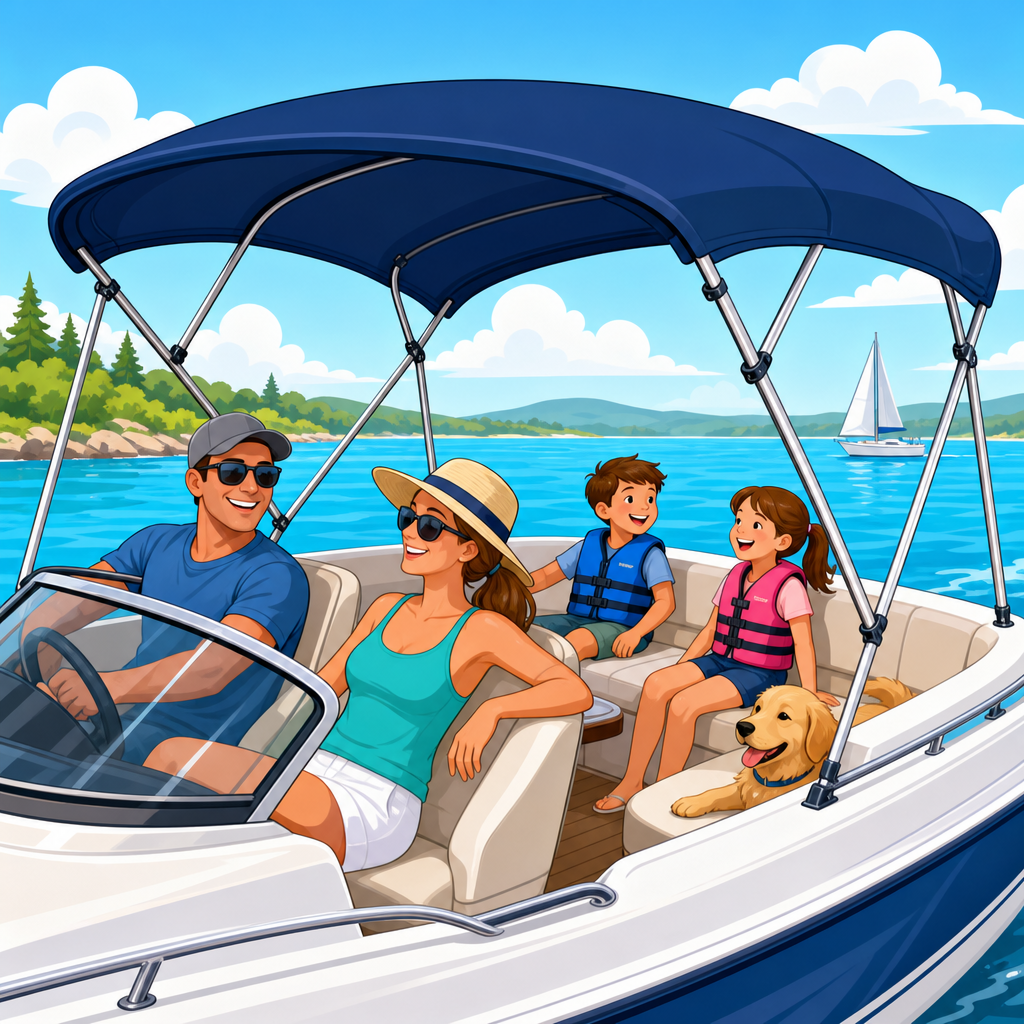
Boat canopies and bimini tops are essential boat covers for protection, comfort, and usability because they shield passengers from sun exposure, reduce heat buildup, and help preserve upholstery, electronics, and helm surfaces during long days on the water. In practical terms, a bimini top is an open-front fabric canopy stretched over a metal frame, while broader boat canopies may include extended coverage, side curtains, aft shades, and enclosure panels designed for specific hull types and boating conditions. I have installed, adjusted, and replaced these systems on center consoles, bowriders, pontoons, and small cruisers, and the difference between a well-fitted top and a cheap universal kit is obvious within one season. Stitching fails, frames rack, fabric sags, and mounting points loosen when the product does not match the boat’s beam, use case, or storage habits. This matters because poor shade coverage affects safety as much as comfort: ultraviolet exposure, glare fatigue, overheated vinyl, and exhausted passengers all make a day on the water shorter and less enjoyable. As the hub page for boat covers and protection, this guide explains the best boat canopies and bimini tops, how they compare, which materials last, what measurements matter, and when to choose related protection products such as mooring covers, T-tops, storage covers, and full enclosures.
Choosing the right setup starts with understanding purpose. Shade systems are not interchangeable with travel covers, and a bimini top that performs perfectly at anchor may not be suitable for highway towing or rough offshore runs. Most buyers need to answer five direct questions: what kind of boat do you own, how much deck area needs shade, will the top remain deployed while underway, what climate do you boat in, and how much maintenance are you willing to do? Once those are clear, the product field narrows quickly. Pontoon owners usually benefit from large square-frame tops with maximum overhead area. Fishing boats often need foldable designs that clear rods and casting space. Runabouts and deck boats typically use three-bow or four-bow bimini tops sized to cockpit seating. Cruisers may need a modular canopy system that connects to a windshield, radar arch, or aft extension. Understanding these distinctions helps you avoid the common mistake of shopping by price alone. In the boat covers and protection category, fit, hardware quality, and fabric performance determine value far more than the initial purchase cost, especially when exposure to sun, salt, and wind is constant.
What makes the best boat canopies and bimini tops
The best boat canopies and bimini tops combine four traits: accurate fit, durable frame construction, weather-resistant fabric, and hardware that holds alignment under load. Fit starts with beam width, mounting point spacing, and desired top height. On most installations, I measure the exact deck hinge locations first, then choose a frame width that allows slight tension without forcing the side straps outward at an awkward angle. Height matters more than many buyers expect. A top mounted too low blocks visibility and interferes with movement; too high, and it catches more wind and becomes harder to support. Length determines usable shade, especially on family boats where passengers shift between helm and lounge seats. In general, a four-bow top offers better fore-aft coverage than a three-bow design of similar quality.
Frame material is the next major factor. Aluminum is common, light, and affordable, but wall thickness and grade make a huge difference. Thin anodized tubing works for light inland use, while heavier-gauge aluminum or polished stainless steel better resists flexing on larger boats and in coastal conditions. Stainless steel costs more but provides superior corrosion resistance and rigidity, especially with 316-grade hardware in saltwater environments. Fabric quality separates premium tops from disposable ones. Solution-dyed acrylic fabrics such as Sunbrella hold color, resist ultraviolet degradation, and maintain strength longer than lower-cost polyester. Polyester fabrics can still be good choices when coated properly, but they usually have shorter service lives in harsh sun. Good canopy systems also include reinforced stress points, double-wall main bows, marine-grade zippers where applicable, and support poles or quick-release struts that prevent pooling and flutter.
How bimini tops compare to other boat covers and protection options
A bimini top is primarily a shade product, not a full protection system. It protects occupants from overhead sun and light drizzle, but it does not seal the boat against rain, debris, bird droppings, or trailering wind unless paired with additional panels or enclosure pieces. That distinction matters across the broader boat covers and protection category. Mooring covers are designed to protect the entire cockpit and seating area when the boat is stored in the slip, on a lift, or on the trailer. Full storage covers prioritize water shedding, secure hem tension, and ventilation rather than standing headroom. Console covers, seat covers, and outboard covers target vulnerable components that weather faster than fiberglass. T-tops and hardtops offer permanent shade, stronger mounting, and better electronics integration, but they add cost, weight, and installation complexity.
In use, I advise owners to think in layers. The bimini top handles comfort while boating. The mooring or trailering cover handles protection when the boat is idle. Side curtains and aft drop panels extend the weather envelope in shoulder seasons. A windshield connector or camper enclosure can turn a fair-weather runabout into a more versatile platform for spring and fall boating. This layered approach is often less expensive than retrofitting a hardtop and works for many trailer boats that need fold-down clearance. The key is matching the product to the duty cycle. If your priority is all-day summer shade, focus on canopy size and fabric. If your priority is storage protection, invest first in a fitted mooring cover. If you fish in exposed coastal water, a T-top or hardtop may outperform a soft bimini altogether.
Best canopy types by boat style and boating use
Different boats need different shade geometries. On pontoon boats, the best canopy is usually a wide, long, square-profile top with sturdy rear supports because passengers spend time spread across multiple seating zones. Pontoon-specific frames often include beefier hardware and taller uprights to maximize headroom. On bowriders and runabouts, cockpit-focused bimini tops remain the standard because they protect helm and aft seating without interfering too much with windshield access. A four-bow design is usually the best balance of shade and folding convenience. On center consoles, tops must clear casting, rod movement, and electronics sightlines; many owners graduate from a soft top to a T-top, but a well-positioned canvas top can still work on smaller boats used inshore.
Deck boats and family cruisers often benefit from modular systems. A forward bimini paired with an aft extension can create nearly continuous shade at anchor. Wake boats present a unique case because towers may dictate mounting geometry; tower biminis often provide excellent coverage but need robust fabric tension to survive towing and wakeboard use. Inflatable boats and small tenders usually do best with compact, quickly removable canopies that emphasize low weight and corrosion resistance. Fishing skiffs that beach frequently need tops that fold down fast and stay out of the way of casting and landing fish. In every case, the best boat canopy is not the biggest one on paper. It is the one that shades the people who need it without blocking operation, line handling, sightlines, or access to storage compartments.
Materials, hardware, and sizing details that determine longevity
Long-term durability comes down to details buyers often overlook in product listings. Fabric should be marine-rated, mildew resistant, and UV stable. Sunbrella remains a benchmark because its solution-dyed acrylic fibers carry color through the yarn, reducing fade compared with surface-dyed materials. Marine polyester fabrics from established brands can also perform well when treated for water resistance and UV protection, but they generally need replacement sooner in tropical or high-elevation sun. Thread quality is critical. PTFE thread, such as Gore Tenara, can outlast standard polyester thread significantly, especially where tops stay deployed for entire seasons. If the stitching fails, the fabric panel fails, no matter how good the cloth is.
Hardware deserves equal scrutiny. Nylon fittings reduce cost but become brittle over time, particularly in intense sun. Stainless steel deck hinges, jaw slides, and eye ends last longer and hold alignment better. Quick-release pins are useful on tops folded often, while rigid rear support poles outperform webbing straps when the boat runs at speed with the top deployed. Measurement should be exact: width is taken at the mounting point, length is the fabric coverage along the boat, and height is measured from the mounting surface to the desired canopy top. Errors of even an inch or two can create wrinkles, poor tension, and frame stress.
| Feature | Better choice for inland casual use | Better choice for heavy sun or saltwater use |
|---|---|---|
| Frame | Anodized aluminum | Stainless steel |
| Fabric | Marine polyester | Solution-dyed acrylic |
| Fittings | Reinforced nylon | Stainless steel |
| Support | Web straps | Rear support poles |
| Thread | Marine polyester thread | PTFE thread |
Recommended features and buying criteria for real-world performance
When evaluating the best boat canopies and bimini tops, look beyond brand marketing and focus on performance criteria that show up on the water. First, prioritize coverage over nominal size. A top that shades the helm and the main passenger bench is more useful than one that leaves the driver in direct sun. Second, inspect the mounting hardware package. Many lower-priced kits save money by including screws and deck hinges that are acceptable for freshwater weekend use but inadequate for long-term salt exposure. Third, check whether replacement parts are easy to source. Brands with available boots, fittings, straps, and fabric skins make ownership much easier because tops are wear items. Fourth, confirm the deployed speed rating. Some tops are meant for idle or low-speed use only, while others, when properly braced, can remain open at cruising speeds recommended by the manufacturer.
Features worth paying for include zippered storage boots, vented fabric to reduce uplift, colorfast cloth, double-stitched seams, anti-rattle fittings, and integrated light or electronics cutouts where relevant. For family boats, easy folding matters because owners actually use gear that can be deployed in under a minute. For anglers, rod clearance and rear visibility are non-negotiable. For owners storing on lifts, compatibility with a mooring cover or console cover should influence the canopy shape. If you trailer frequently, ask whether the top must be folded and booted before transport; in most cases, the safest answer is yes. The best purchase is usually not the cheapest universal top or the most expensive custom frame, but the system that aligns with your storage method, climate, cruising speed, and crew habits.
Installation, maintenance, and common mistakes to avoid
Proper installation determines whether a canopy lasts three years or ten. I always dry-fit the frame, verify windshield and seat clearance through the full folding arc, and back mounting points with plates or substantial substrate when needed. Screwing hardware into thin fiberglass without backing is a common failure point. Bedding compound around fasteners helps prevent water intrusion. Strap angles should be even, and the frame should fold without binding. On boats exposed to chop, rigid supports reduce shake and protect fittings. After installation, hose-test the setup and look for pooling, chafe points, and loose hardware.
Maintenance is straightforward but should be consistent. Rinse salt from fabric and frame, allow the top to dry before booting, and clean with manufacturer-approved soap rather than harsh household detergents that strip water repellency. Reapply fabric guard where recommended. Inspect stitching, hinge screws, and strap webbing at least monthly during peak season. The most common mistakes are storing a wet top, towing with an unsecured canopy, ignoring small tears until they spread, and assuming all mildew stains mean the fabric itself has mildewed rather than dirt on the surface. Owners also underestimate sun damage to thread and webbing. Replacing straps and restitching seams early is much cheaper than replacing the whole top. For complete boat covers and protection, pair routine canopy care with seasonal inspection of mooring covers, venting systems, snaps, support poles, and any canvas that shelters electronics or upholstery.
The best boat canopies and bimini tops improve every warm-weather outing because they combine shade, cooler seating, better passenger endurance, and meaningful protection for the parts of a boat that age fastest in direct sun. The right choice depends less on flashy branding than on fit, frame strength, fabric quality, mounting hardware, and how the boat is actually used. For most owners, the ideal system is part of a broader boat covers and protection plan: a bimini or canopy for comfort underway, a fitted mooring or storage cover for protection at rest, and accessory covers for consoles, seats, or engines that see constant exposure. If you remember only one principle, make it this: buy for your boat type and operating conditions, not for a generic size range. Measure carefully, choose marine-grade materials, and install the hardware correctly. Done well, a quality canopy delivers years of dependable service and makes longer days on the water safer and more enjoyable. Use this hub as your starting point, then compare specific cover types and fit options before you buy your next protection system.
Frequently Asked Questions
What is the difference between a bimini top and a boat canopy?
A bimini top is a specific type of boat shade system: an open-front fabric top supported by a metal frame, usually designed to provide overhead sun protection for the cockpit, helm, or passenger seating area. It is popular because it is lightweight, relatively easy to fold down, and effective for creating shade without fully enclosing the boat. Most bimini tops are made with aluminum or stainless-steel tubing and marine-grade fabric that can handle UV exposure, spray, and regular use.
A boat canopy is a broader term that can include a bimini top, but often refers to more complete coverage systems. Depending on the boat type, a canopy setup may add side curtains, aft extensions, full enclosures, windshield connectors, or drop-down panels to protect against wind, rain, and low-angle sun. In other words, all bimini tops are shade covers, but not all boat canopies are just simple bimini tops. If you mainly want open-air shade for warm-weather cruising, a bimini top is often enough. If you need longer weather protection, more usable space, or coverage tailored to your hull and layout, a more complete canopy system may be the better fit.
How do I choose the right size bimini top for my boat?
Choosing the correct size starts with three core measurements: width, length, and height. Width is typically measured at the mounting points on each side of the boat, not necessarily the widest point of the hull. Length refers to how much fore-and-aft area the top covers, and height determines how much headroom you will have underneath. These dimensions should be matched to the area you actually want shaded, such as the helm, lounge seating, or fishing cockpit, while also accounting for windshield clearance, rod holders, rails, and other hardware.
It is also important to think about how you use the boat. A center console may benefit from a taller, narrower top that allows movement around the deck, while a pontoon often works well with a wider canopy that shades multiple seating zones. On a runabout, you may want a top that covers the driver and passengers without interfering with sightlines or folding too far into the rear seating area when stowed. Frame material matters too: stainless steel generally offers more strength and corrosion resistance than aluminum, especially in saltwater, while fabric quality affects UV durability, color retention, and water resistance.
Before buying, verify mounting surface strength, folded storage position, and whether the top will conflict with towers, antennas, lights, or tow points. A properly sized bimini should feel integrated with the boat rather than oversized or cramped. If the fit is wrong, you can end up with poor shade coverage, rattling hardware, limited visibility, or stress on the frame in windy conditions. Careful measuring and matching the top to your boating style will always produce better comfort and longer service life.
Are bimini tops and boat canopies worth it for sun protection and comfort?
Yes, for most boat owners they are absolutely worth it because they improve both comfort and long-term protection. On sunny days, direct exposure on the water is more intense because sunlight reflects off the surface, increasing heat and UV exposure. A quality bimini top or canopy creates a noticeably cooler space, making it easier to stay comfortable during cruising, fishing, lounging, or entertaining. That shade can be especially valuable for children, older passengers, and anyone spending several hours on board.
Beyond passenger comfort, these covers help preserve the boat itself. Continuous sun exposure can fade upholstery, dry out vinyl, heat up helm surfaces, and accelerate wear on plastics, displays, and trim. By reducing direct sunlight and heat buildup, a canopy can help extend the life of seating, electronics, and interior finishes. That makes it a practical upgrade, not just a convenience item. Many owners also find that having reliable shade encourages longer trips and more frequent use of the boat during the hottest part of the season.
The value becomes even clearer when you choose the right style for your needs. A simple bimini is excellent for open-air shade, while an expanded canopy or enclosure can add weather flexibility and make the boat more usable in changing conditions. While no top should be treated as a substitute for sunscreen or protective clothing, a well-built marine shade system is one of the most effective upgrades for making time on the water safer, more enjoyable, and easier on your boat’s materials.
What materials are best for a durable marine canopy or bimini top?
The best systems combine a corrosion-resistant frame with marine-grade fabric designed for harsh outdoor conditions. For frames, stainless steel is typically the premium choice because it offers excellent strength, rigidity, and resistance to corrosion, especially in saltwater environments. Aluminum is lighter and usually more affordable, making it a strong option for freshwater use or for boaters who want to minimize weight. What matters most is that the tubing, fittings, hinges, and mounting hardware are made for marine use and can handle vibration, wind load, and repeated folding.
For the canopy itself, solution-dyed marine fabrics are generally preferred because they hold color well, resist UV degradation, and perform better over time than lower-cost materials. High-quality fabric should resist fading, mildew, and tearing while still allowing the top to remain manageable when folding and storing. Stitching quality, reinforced stress points, and protective boots or zippered storage covers also make a meaningful difference in longevity. In lower-end tops, the frame may flex too much and the fabric may stretch, fade, or break down more quickly after exposure to sun and spray.
Hardware quality should not be overlooked. Fasteners, deck mounts, straps, and support poles all affect stability and service life. Inferior hardware can loosen, corrode, or fail long before the fabric wears out. If you boat regularly in coastal conditions, stainless hardware and premium fabric are usually worth the added cost. A durable marine canopy is not just about looking good when new; it is about holding shape, staying secure underway, and continuing to provide dependable shade season after season.
How should I maintain and store a boat canopy or bimini top to make it last longer?
Regular cleaning and proper storage are the keys to extending the life of any marine shade system. Rinse the frame and fabric with fresh water after use, especially after saltwater exposure, to remove salt, dirt, and airborne residue that can damage finishes and stitching over time. Use a cleaner recommended for marine canvas or vinyl-coated fabrics, and avoid harsh household chemicals that may strip water repellency or weaken the material. Let the fabric dry fully before folding or covering it for storage to reduce the risk of mildew and odor buildup.
Inspect the top routinely for loose screws, worn straps, cracked fittings, bent tubing, frayed stitching, and small tears in the fabric. Catching these issues early can prevent more expensive damage later, especially because a minor weak point can fail quickly when the boat is underway in wind or chop. If your top uses zippers, enclosure panels, or side curtains, keep those components clean and lubricated with marine-safe products as needed. When trailering, confirm whether the manufacturer approves leaving the top deployed; many tops should be folded and secured in a boot while towing to avoid frame stress and fabric damage.
For off-season storage, clean the canopy thoroughly, allow it to dry completely, and store it in a protected area if possible. If it remains on the boat, make sure it is tightly secured and not positioned in a way that allows water pooling or snow load to collect. Long-term durability often comes down to small habits: rinsing after trips, avoiding storage while damp, and replacing worn hardware before it fails. With consistent care, a quality bimini top or boat canopy can provide years of reliable shade, better comfort, and protection for both passengers and the boat itself.