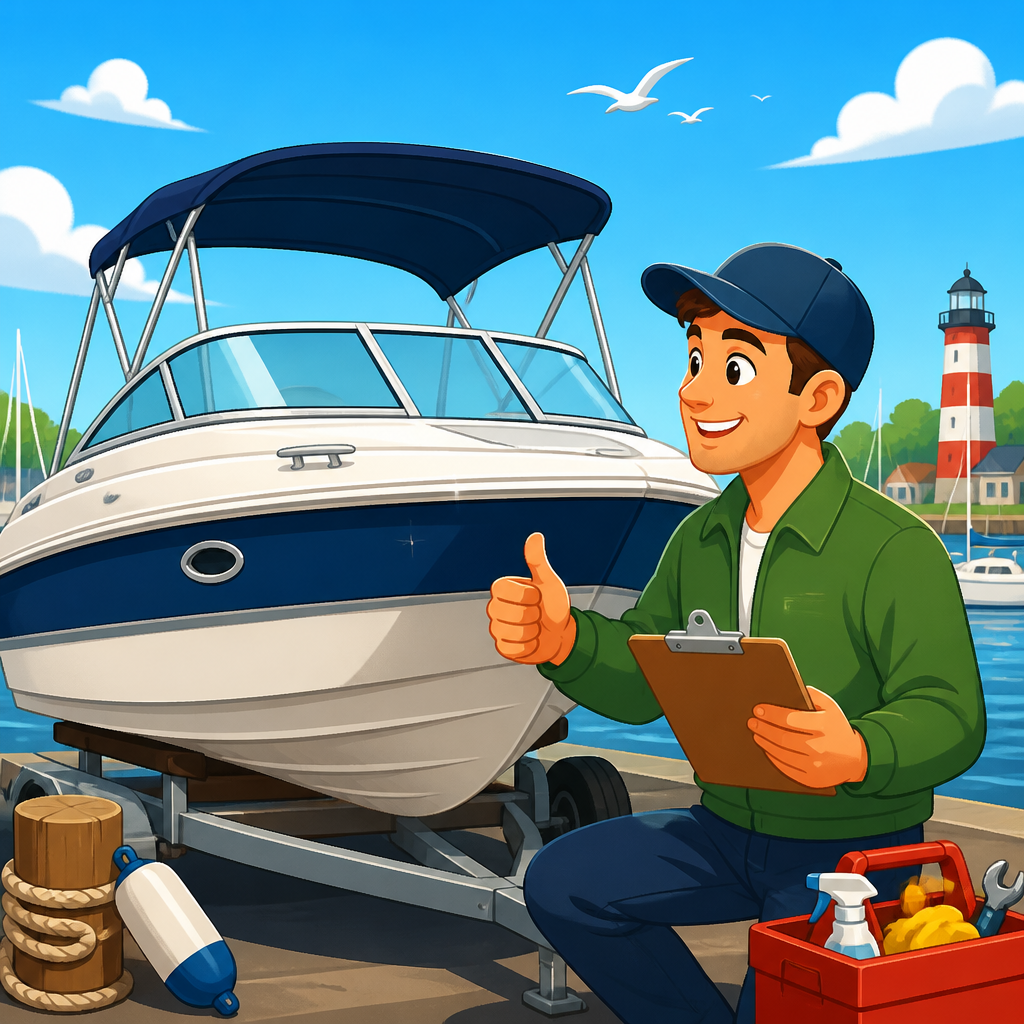
What boat dealers look for when buying used boats comes down to one question: can the boat be resold quickly, legally, and profitably without unpleasant surprises. If you are considering selling your boat to a dealer or using a trade-in program, understanding that question changes the entire process. Dealers do not buy boats the same way private buyers do. A private buyer may fall in love with a layout, a color scheme, or a brand memory from childhood. A dealer evaluates inventory risk, market demand, reconditioning cost, title status, financing appeal, and how long the boat will sit on the lot before it turns into cash.
In practice, I have seen sellers overestimate upgrades and underestimate paperwork. A new stereo rarely matters as much as clean service records. Fresh canvas helps, but not if the engine hours are high and compression numbers are inconsistent. Dealers look at used boats through the lens of margin and liability. They ask whether the vessel fits current demand in their region, whether it can pass inspection, whether it matches price bands customers are financing, and whether hidden defects could erase profit. That is why two similar boats can receive very different offers.
This matters because selling to a dealer is often the fastest path to a completed transaction. It reduces the hassle of listings, showing appointments, sea trials with strangers, and post-sale disputes. Trade-in programs can also simplify an upgrade by applying value directly toward another boat, and in some states that can reduce sales tax exposure on the next purchase. The tradeoff is simple: convenience usually lowers the seller’s net proceeds compared with a successful private-party sale. To judge whether the offer is fair, you need to know exactly how dealers build value.
Used boat dealers typically assess five broad areas: marketability, condition, documentation, cost to recondition, and projected gross margin. Every detail you can improve inside those categories strengthens your negotiating position. The sections below explain how dealerships evaluate trade-ins and direct purchases, what lowers an offer, and how to prepare your boat so the dealer sees an easier, safer resale opportunity.
How dealers determine used boat value
Dealers begin with market reality, not emotion. They compare your boat with current retail listings, recent sold data when available, auction results, and the performance of similar inventory already on their lot. Tools and sources vary by dealership, but many rely on NADA Guides or J.D. Power valuation references, Boat Trader listing trends, local brokerage comps, and internal sales history. The key distinction is that a dealer does not value the boat at retail. They back into a buying number after subtracting expected reconditioning, transportation, carrying costs, warranty exposure, sales commissions, floorplan interest, and target profit.
For example, a late-model 24-foot center console may appear online at $78,000. A dealer will not simply offer close to that amount. If the boat needs $4,500 in service, $1,500 in cosmetic cleanup, $1,000 in haul-out and logistics, and the dealer wants room for negotiation plus margin, the buy number might land near $62,000 to $66,000. Sellers often interpret that spread as lowballing. In reality, the spread reflects the dealer’s business model and the probability that retail asking prices are aspirational rather than achieved sale prices.
Seasonality also matters. In northern markets, dealers may discount offers in late fall because winter storage, delayed demand, and capital tie-up increase risk. In Florida, the Gulf Coast, or other year-round boating regions, demand can stay more stable, especially for fish boats, cruising pontoons, and family bowriders with broad appeal. Brand matters too. Boats from Grady-White, Boston Whaler, Sea Ray, Scout, Bennington, Malibu, MasterCraft, and similar high-recognition names often attract stronger offers because they have clearer resale markets and easier financing support.
Condition factors that raise or lower an offer
Mechanical condition is usually the biggest swing factor. Dealers want engines that start cleanly, idle evenly, show normal oil analysis where available, and have verifiable service intervals. On outboards, they check hours, corrosion, lower unit condition, prop damage, steering performance, and diagnostic reports from manufacturer software such as Yamaha YDS, Mercury CDS or G3, and Suzuki SDS. On sterndrives and inboards, they look closely at bellows, manifolds and risers, cooling systems, transom assemblies, and signs of water intrusion. Deferred maintenance reduces the offer fast because service surprises are expensive and delay resale.
Hull and structural integrity come next. Dealers inspect gelcoat, stress cracks, soft spots in decks, transoms, stringers, moisture readings around fittings, and evidence of previous repairs. A professionally documented fiberglass repair is not automatically a deal breaker, but unexplained damage is. The same is true for trailers. Tires, brakes, bunks, lights, axles, and VIN documentation all affect value because many retail buyers expect a roadworthy package. A poor trailer can cost a sale even when the boat itself is sound.
Cosmetics matter more than many sellers expect because first impressions drive showroom conversion. Faded upholstery, mildew odor, torn bolsters, oxidized gelcoat, stained carpet, damaged flooring, cloudy isinglass, and brittle canvas all suggest neglect. Electronics are evaluated for function and relevance. A working Garmin, Simrad, or Lowrance multifunction display supports value; obsolete or nonfunctional screens do not. Dealers also notice practical details: bilge cleanliness, battery age, navigation lights, horn, pumps, trim tabs, windlass operation, and whether every hatch latch and seat hinge works properly.
| Factor | What dealers prefer | What reduces value |
|---|---|---|
| Engine | Documented service, clean diagnostics, normal compression | Unknown maintenance, warning codes, corrosion, hard starting |
| Hull | Dry structure, clean gelcoat, documented repairs | Soft spots, damage history, moisture intrusion |
| Interior | Clean upholstery, no odor, working systems | Mildew, tears, stains, broken hardware |
| Trailer | Roadworthy, titled, good brakes and tires | Rust, lighting faults, bad bunks, missing paperwork |
| Documentation | Clear title, HIN match, service records | Liens, missing registration, inconsistent serial numbers |
Why paperwork and legal status matter so much
A clean boat with messy paperwork can be worth less than an average boat with a clean title. Dealers need certainty that they can take legal ownership and resell without delays. They verify the hull identification number, registration, title, lender payoff status, and any state-specific transfer requirements. If there is an outstanding lien, the dealer will want a formal payoff letter and a process that ensures clear title release. If the boat was documented with the U.S. Coast Guard, they will examine Abstract of Title details and recorded liens. Any mismatch between paperwork and physical serial numbers creates friction and lowers the offer.
Service records are equally important because they reduce uncertainty. Annual engine maintenance invoices, winterization records, impeller replacements, bellows service, manifold intervals, bottom paint history, and generator maintenance all support value. Dealers do not expect perfection, but they do pay more for predictable boats. Original manuals, transferable warranties, emissions labels where applicable, and receipts for upgrades can help, especially on newer models. Missing keys, missing remotes, and missing title signatures sound small, yet they regularly slow deals and force dealers to spend time solving avoidable problems.
This is one reason trade-ins at franchised dealers can move efficiently. Their finance and title departments already manage payoffs, state filing rules, and lender coordination every day. If you are trading toward another boat, the convenience can be substantial, especially when timing matters and the selling season is active.
How trade-in programs work and when they make sense
A trade-in program is essentially a dealer purchase tied to your next boat purchase. The dealership assigns a wholesale-oriented value to your current boat, applies that amount as credit, pays off any existing loan if necessary, and handles the transfer paperwork. The benefit is speed and reduced hassle. You avoid advertising, strangers, negotiation fatigue, and the risk of owning two boats at once. If your upgrade is time-sensitive, the trade-in can be the cleanest path.
Trade-ins make the most sense when convenience has financial value. For example, if a private sale might net $5,000 more but requires three months of storage, insurance, detailing, repairs, listing fees, and missed opportunities on a desirable replacement boat, the gap can shrink quickly. In some states, sales tax is calculated on the purchase price minus trade value, which can materially offset a lower trade number. Sellers should verify local tax rules because they vary by state and transaction structure.
The limitation is straightforward: trade-in values are rarely top dollar. Dealers must protect margin on both sides of the transaction. Some also focus only on inventory that fits their customer base. A freshwater wake boat may trade well at a tow-sports dealer but poorly at a coastal fishing dealership. Matching your boat to the right dealer category often improves the offer more than minor cosmetic upgrades ever will.
What dealers avoid, and why certain boats are harder to sell
Dealers are cautious with boats that have narrow demand, complicated power, heavy cosmetic neglect, or unresolved title issues. Older project boats, uncommon brands with weak parts support, grey-market imports, and vessels with storm or insurance history often receive very low offers or no offer at all. The reason is not snobbery. It is downstream risk. If parts are hard to source, financing is limited, or inspection findings are likely to scare retail buyers, the boat ties up capital and service labor for too long.
High-hour engines are not automatically unsellable, especially modern four-stroke outboards with strong maintenance records. But high hours paired with weak documentation almost always depress value. Custom modifications can also hurt. Tower additions, amateur wiring, unusual paint schemes, removed seating, and nonstandard fuel system changes may reflect owner preferences while reducing mainstream appeal. Dealers prefer boats in original or professionally upgraded configuration because they are easier to explain, finance, and support after the sale.
Saltwater use is another nuance. Saltwater itself does not kill value, but corrosion exposure changes the inspection standard. Dealers look for seized fasteners, corroded electrical connections, exhaust deterioration, trailer rust, and neglected flushing habits. A carefully maintained saltwater boat can still bring a solid offer. An ignored one quickly becomes an expensive service file.
How to prepare your boat before approaching a dealer
Preparation should focus on return on effort. Start with a full cleanout, deep wash, compartment organization, odor removal, and a realistic assessment of small defects. Replace burnt bulbs, repair obvious safety items, charge or replace weak batteries, and make sure pumps, electronics, and gauges function. Gather title documents, registrations, loan payoff information, engine printouts, service invoices, and accessory manuals in one folder. If the trailer is included, confirm the VIN plate is readable and the title is available where required.
Do not overinvest in upgrades right before sale unless the improvement clearly solves a dealer objection. Routine service can be worth doing if overdue because dealers will discount heavily for uncertainty. Cosmetic refreshes such as buffing oxidation, fixing torn upholstery panels, or replacing broken latches often help because they improve first impression cheaply. Major custom accessories usually do not return full cost.
When requesting offers, provide accurate photos, engine hours, hull identification number, trailer details, and a candid defect list. That transparency builds trust and produces firmer numbers. If possible, get quotes from more than one dealer, including a specialist in your boat category. Comparable offers reveal how the market sees your boat far better than online asking prices alone.
Negotiating the offer and choosing the best selling path
The strongest negotiation tactic is evidence, not emotion. Bring maintenance records, recent service receipts, engine diagnostics, and realistic market comps from similar sold or actively listed boats in your region. Ask the dealer which deductions are driving the number. Sometimes a seller can close the gap by addressing one item, such as replacing trailer tires, resolving a lien release, or completing overdue engine service. Other times the difference is simply the spread between wholesale and retail, and no amount of debate will erase it.
Compare the dealer offer with the true net from a private sale, not just the hoped-for asking price. Subtract detailing, repairs, marketing time, storage, insurance, survey responses, sea-trial hassle, and the probability of price reductions. For many owners, especially those moving into another boat, the dealer route wins on certainty and speed. For others, particularly owners of highly desirable late-model boats with clean records, a private sale may justify the extra effort.
Boat dealers buy used boats when the package is easy to verify, straightforward to recondition, and likely to resell in the current market. That is the central lesson for anyone considering selling your boat to a dealer or using a trade-in program. Clean paperwork, documented maintenance, broad market appeal, and honest presentation matter more than sentimental value or expensive accessories. Dealers are not just buying a vessel; they are buying a timeline, a risk profile, and a projected margin.
If you want the best result, prepare the boat like a dealer will inspect it tomorrow. Organize records, fix obvious defects, understand your local market, and request multiple quotes from dealers who specialize in your category. Then compare those offers against the real net and effort of a private sale. When you know what boat dealers look for when buying used boats, you can choose the path that delivers the right balance of price, speed, and simplicity. Start by gathering your paperwork and booking a realistic condition review today.
Frequently Asked Questions
What is the main thing boat dealers evaluate when deciding whether to buy a used boat?
The biggest question a dealer asks is whether the boat can be resold quickly, legally, and at a profit with minimal risk. Dealers are not shopping the way a private buyer does. They are evaluating the boat as inventory, which means they look at how fast it can turn, how much money must be invested before resale, and whether there are any hidden issues that could create delays or unexpected expense. A boat with broad market appeal, a clean title, complete paperwork, and a strong maintenance history is far more attractive than a boat that is rare, heavily customized, or difficult to verify.
Condition matters, but marketability matters just as much. A dealer will consider the age, brand reputation, engine hours, cosmetic presentation, service records, trailer condition if included, and how the boat compares to similar units already for sale in the local market. They also think about seasonality, buyer demand, financing eligibility, and whether the boat fits the type of inventory their customers actually purchase. Even a decent boat may receive a lower offer if the dealer expects a long selling cycle or narrow buyer pool.
Why is clean paperwork such a major factor for boat dealers?
Clean paperwork is one of the most important parts of any dealer purchase because paperwork problems can stop a resale before it starts. Dealers typically want clear title status, current registration, matching hull identification numbers, proof of ownership, lien releases if applicable, and documentation for the engine and trailer when required. If anything is missing, inconsistent, or unresolved, the dealer may have to spend time and money sorting it out, and in some cases the boat may not be worth the trouble at all.
From the dealer’s perspective, documentation issues are more than a nuisance. They are a direct business risk. A buyer cannot be found quickly if the title cannot be transferred cleanly. Financing and insurance may also become more difficult if records are incomplete. That is why sellers who gather service invoices, manuals, ownership documents, registration records, and payoff information before approaching a dealer usually make the process smoother and strengthen their position. A boat that is easy to process is often viewed as more valuable than a similar boat with unanswered legal or administrative questions.
How do dealers determine what a used boat is worth?
Dealers typically value a used boat by starting with realistic resale potential rather than sentimental value or original purchase price. They look at current market comparables, recent sale trends, local and regional demand, age, brand strength, engine condition, included equipment, and the amount of reconditioning needed before the boat can be offered for sale. In other words, they are calculating not just what the boat is, but what it will cost to turn it into retail-ready inventory.
That is why dealer offers are often lower than what sellers hope to receive in a private-party transaction. The dealer must leave room for inspection risk, detailing, repairs, storage, transport, administrative costs, warranty exposure in some cases, sales overhead, and profit margin. If the boat needs upholstery work, electronics updates, trailer tires, gelcoat correction, engine service, or cleanup, those costs come off the top of the offer. Dealers also discount for slow-moving models, niche setups, or boats priced in segments with weak demand. A fair dealer number is based on what the boat can net after all costs, not just on listing prices seen online.
What kinds of problems make dealers hesitate or lower their offer?
Dealers become cautious when they see anything that suggests hidden expense, title complications, or difficulty reselling the boat. Mechanical issues are a major concern, especially engine trouble, poor compression, excessive hours without records, electrical faults, corroded wiring, soft floors, transom weakness, water intrusion, or signs of neglected winterization. Cosmetic problems also matter because buyers notice them quickly. Torn upholstery, faded gelcoat, mildew, damaged canvas, cracked electronics, and trailer rust all affect first impressions and reconditioning cost.
Beyond physical condition, dealers also worry about mismatch with the market. An unusual model, extreme customization, obsolete equipment, or a layout that appeals to only a narrow audience can reduce demand and lengthen time on the lot. Missing service history, unresolved liens, accident damage, salvage branding, and non-running status can lower confidence even further. In many cases, a dealer will still buy a problem boat, but only at a price that protects against worst-case outcomes. The more uncertainty involved, the more conservative the offer usually becomes.
How can a seller improve the chances of getting a better offer from a boat dealer?
The best way to improve a dealer offer is to reduce risk and make the boat easier to resell. Start by organizing all paperwork, including title or registration documents, lien payoff information, service records, manuals, receipts for upgrades, and trailer documents if applicable. Then focus on presentation. A clean, dry, well-kept boat signals that ownership has been responsible. Basic detailing, mildew removal, odor control, battery charging, fluid checks, and making sure systems operate properly can make a meaningful difference in how the boat is evaluated.
It also helps to be realistic and transparent. Disclose known issues instead of hoping they will be overlooked during inspection. Dealers usually discover problems anyway, and honesty builds credibility. If the engine has been serviced recently, the trailer has new tires, or major maintenance has already been completed, highlight that clearly. Timing can matter as well, since some boat categories bring stronger dealer interest ahead of peak selling season. Ultimately, sellers who present a boat with clean records, solid maintenance history, honest condition, and broad market appeal give dealers exactly what they want: inventory that can be resold quickly, legally, and profitably without unpleasant surprises.