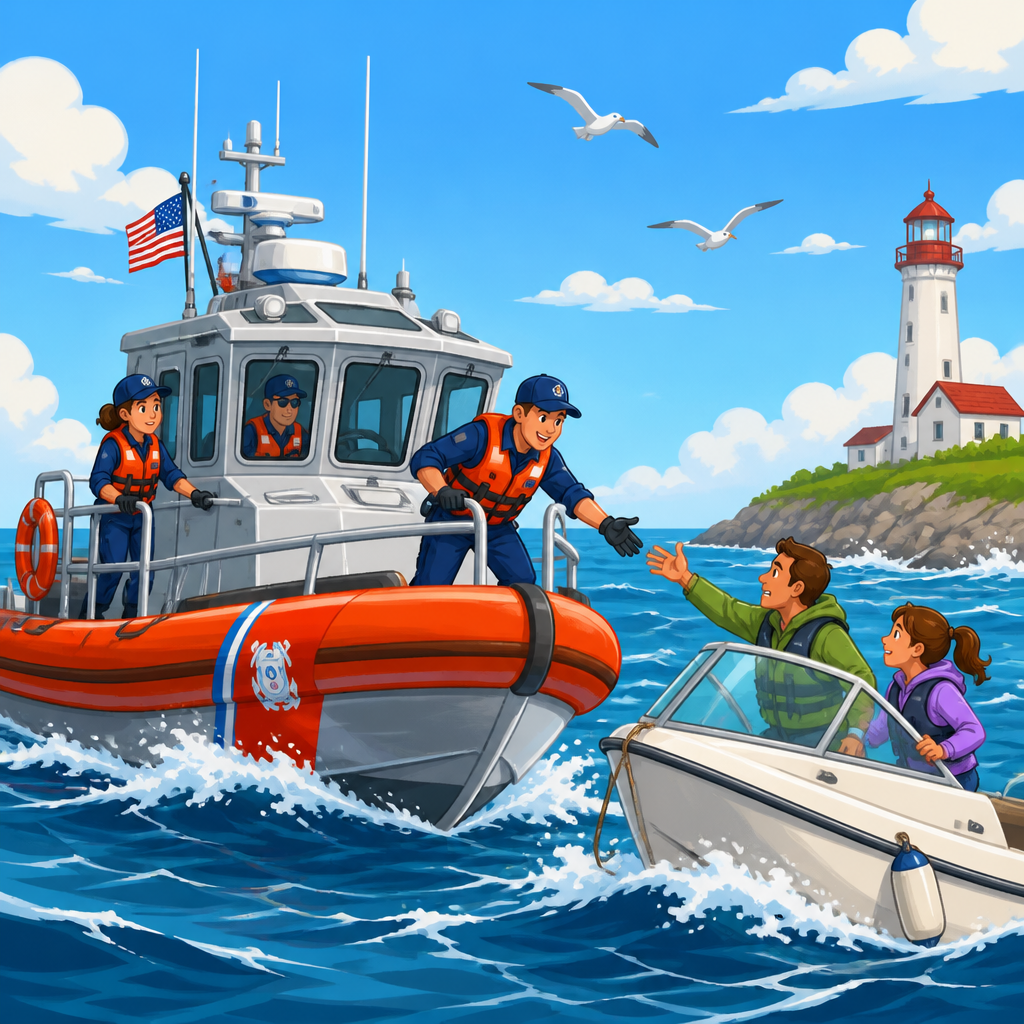
Work boats are the practical backbone of maritime operations, and nowhere is their value clearer than in Coast Guard rescue missions. In the broadest sense, a work boat is any vessel designed primarily for a task rather than leisure: search and rescue, towing, law enforcement, firefighting, construction support, aids to navigation, pollution response, or crew transfer. Utility boats are a closely related category, usually smaller and highly adaptable, built to carry equipment and personnel in demanding conditions. As a subtopic within Types of Boats, Work & Utility Boats matter because they show how design follows mission. Hull shape, propulsion, deck layout, electronics, and crew arrangements are all chosen to solve real problems on the water, often in bad weather and under severe time pressure.
I have spent years studying and writing about commercial and government vessels, and the Coast Guard’s use of work boats stands out because every design decision has consequences measured in minutes, yards, and lives. Rescue missions demand boats that launch quickly, maneuver in surf, hold position near rocks, tow disabled craft, recover people from the water, and keep crews safe while they do it. The Coast Guard therefore relies on a family of specialized boats rather than one all-purpose platform. Understanding these vessels gives readers a practical map of the entire Work & Utility Boats category, from rigid inflatable boats and response boats to buoy tenders, inland construction tenders, and small harbor craft. This hub article explains how those boats are used, what features make them effective, and why the category deserves close attention from anyone learning how professional boats actually work.
What counts as a Coast Guard work boat
A Coast Guard work boat is a mission-built vessel used to perform operational tasks, not recreational cruising. That definition includes rescue boats, patrol boats, aids-to-navigation boats, construction support craft, ice-capable utility boats, and shallow-draft river vessels. In practice, the service groups these craft by mission profile and operating environment. A fast response boat used for a medical evacuation offshore needs very different characteristics than a utility boat servicing buoys in a harbor. The common thread is function. These vessels emphasize durability, deck utility, shock mitigation, towing hardware, communications systems, and safe boarding arrangements rather than cabins, berths, or passenger comfort.
Several Coast Guard platforms illustrate the range. The 45-foot Response Boat–Medium is a self-righting aluminum work boat used for search and rescue, ports and waterways security, and law enforcement. The 29-foot Response Boat–Small II, built by Metal Shark, serves as a trailerable and station-based utility craft with speed and agility. The 24-foot Special Purpose Craft–Shallow Water operates where draft is limited, including marshes, river systems, and flood zones. Larger cutters also carry over-the-horizon small boats, often rigid-hull inflatable boats, that extend rescue reach beyond the mothership. Even buoy tenders and inland tenders support rescue indirectly by maintaining aids to navigation that prevent casualties in the first place. For a hub page on Work & Utility Boats, that breadth is essential: the category is not one boat type but an ecosystem of purpose-built vessels.
How rescue missions shape boat design
Rescue missions begin with constraints. Crews may have to reach a capsized skiff in breaking surf, a fisherman with chest pain ten miles offshore, or a family adrift at night in a narrow tidal inlet. Because the emergency defines the platform, Coast Guard work boats are designed around response time, survivability, and control. Speed matters, but only usable speed counts. A boat that can plane at high speed in calm water yet pounds violently in chop is less useful than a platform that maintains safe, sustained transit speeds in rough conditions. Deep-V hulls, reinforced aluminum construction, collision-resistant rub rails, and waterjet or propeller systems are selected according to where the boat must operate.
Self-righting capability is one of the clearest examples of rescue-first design. On the Response Boat–Medium, if the vessel capsizes in heavy seas, enclosed buoyancy and superstructure geometry allow it to roll back upright. That is not a luxury feature; it directly protects the crew and preserves the rescue asset. Shock-mitigating seats reduce spinal and leg injuries during repeated impacts at speed. Open aft decks give crews room to handle lines, baskets, litters, and survivors. Twin engines provide redundancy and tighter maneuvering. Thermal imaging, radar, GPS chartplotters, Automatic Identification System data, and encrypted radios allow crews to search effectively when visibility is poor or traffic is dense. In every case, the boat’s hardware supports a simple objective: get there, stay effective, and bring people home.
How different work boats support different rescue environments
The Coast Guard does not answer every distress call with the same boat because waterways vary dramatically. Surf stations on exposed coasts face steep waves, breakers, and bar crossings. Urban harbor units work around ferries, bridges, commercial traffic, and piers. River and flood operations involve debris, shoals, strong current, and limited launch sites. Offshore rescues add distance, wind, fatigue, and communications complexity. Matching the platform to the water is basic seamanship and smart asset management.
| Boat type | Primary environment | Key rescue strengths | Typical mission example |
|---|---|---|---|
| Response Boat–Medium | Coastal waters, harbors, near offshore | Self-righting, all-weather response, towing, survivor recovery | Assisting a disabled 35-foot cruiser in rough seas |
| Response Boat–Small II | Ports, rivers, inland waterways, coastal zones | Fast acceleration, trailerability, shallow draft, flexible deployment | Reaching a person overboard near a busy shipping channel |
| Special Purpose Craft–Shallow Water | Marshes, flats, flood areas, shallow rivers | Minimal draft, debris tolerance, access where deeper boats cannot go | Evacuating stranded residents during flooding |
| Rigid-hull inflatable boat | Shipboard launch, boarding zones, close-quarters rescue | High maneuverability, buoyant collar, safe alongside operations | Recovering survivors from the lee of a larger vessel |
These examples show why Work & Utility Boats should be studied as a system. A rigid-hull inflatable boat excels in close-quarters recovery because its collar absorbs contact and adds buoyancy. A shallow-water craft wins where a propeller-driven deep-V would ground out. A larger response boat handles colder, rougher conditions and can tow or medically stabilize survivors during transit. The rescue mission is constant, but the right boat changes with geography, weather, and the likely casualty scenario.
Core rescue tasks work boats perform
Search is the first task many people imagine, but rescue missions are usually a chain of jobs. The crew must receive the case, launch, navigate safely, establish communications, locate the distressed vessel or person, assess hazards, recover survivors, provide first aid, and either tow, transfer, or coordinate evacuation. Work boats are set up for that sequence. On deck, crews need heaving lines, tow bridles, life rings, scrambling devices, rescue baskets, dewatering pumps, and medical kits. In the cabin, they need radios linked to command centers, weather updates, electronic charts, and enough visibility to approach safely at night.
Towing is one of the most common rescue-related tasks. A powerless boat drifting toward a jetty can become a life-threatening emergency within minutes. Coast Guard work boats carry towing bitt arrangements and line-handling gear designed for controlled assistance, not improvised pulls from cleats. Survivor recovery is equally specialized. Pulling an exhausted person over a high gunwale is harder than it sounds, especially in cold water and chop. Many rescue boats use transom doors, recovery platforms, or low-freeboard sections to reduce lift height. Medical support is another critical function. Even when a boat is not an ambulance in the formal sense, it must provide a stable enough platform for bleeding control, hypothermia management, oxygen support, and patient monitoring until transfer to EMS or a helicopter is possible.
The role of crew training, equipment, and command systems
A rescue boat is only as effective as the people operating it. Coast Guard boat crews train continuously in seamanship, surf operations, navigation rules, towing procedures, man-overboard recovery, communications discipline, and emergency medicine. Coxswains learn precise boat handling under pressure: approaching from downwind, using current to advantage, maintaining station without collision, and reading wave sets near inlets or jetties. Engineers and crew members must understand engine limitations, fuel planning, maintenance checks, and casualty control. This is why work boats belong in a serious boating taxonomy. They are professional tools used within a disciplined operating system.
Equipment readiness is equally important. Rescue stations use checklists because failure usually begins with small omissions: a dead radio battery, a fouled line, expired flares, or a radar issue that was not corrected before the call. Standardized navigation electronics, digital selective calling, AIS, emergency position-indicating beacon awareness, and interoperable radios improve response quality. Command systems matter too. Cases are coordinated through watchstanders who collect distress information, plot search areas, assign assets, and adapt the response as conditions change. A small utility boat close to the scene may launch first, while a cutter, helicopter, or local fire-rescue unit supports. The work boat is the visible part of the rescue, but it succeeds because it is integrated into a larger command, communications, and maintenance structure.
Why work and utility boats matter beyond dramatic rescues
Headlines usually focus on storm rescues, but much of the Coast Guard’s life-saving impact comes from routine work boat operations that reduce risk before emergencies escalate. Buoy tenders maintain channels and mark hazards, helping boaters avoid groundings and collisions. Utility boats inspect waterfront areas, enforce safety zones, and support pollution response that keeps harbors navigable. Ice-capable craft keep routes usable in colder regions. During natural disasters, shallow-draft utility boats reach neighborhoods cut off by floodwater when road vehicles cannot pass. These missions may look less dramatic than helicopter hoists, yet they are foundational to maritime safety.
For readers exploring Work & Utility Boats as a sub-pillar topic, this preventive role is the key insight. Utility boats are valuable not only when they pull someone from the water but also when they keep the maritime system functioning. The same practical traits appear again and again across the category: rugged construction, adaptable deck space, predictable handling, easy maintenance access, and equipment mounting points for mission packages. Whether the operator is the Coast Guard, a harbor authority, an offshore energy company, or a marine contractor, the logic is similar. A work boat earns its keep by being available, versatile, and dependable in conditions that would expose weaknesses in a pleasure craft almost immediately.
What recreational boaters and marine buyers can learn
Coast Guard rescue boats offer useful lessons for anyone comparing utility boats, pilot boats, center consoles, aluminum skiffs, or commercial inflatables. First, define the mission honestly. If a boat will carry tools, operate in changing weather, or support towing and boarding, layout matters more than cosmetic finish. Second, prioritize seamanship features. Non-skid decks, strong handholds, accessible cleats, self-bailing cockpits, redundant bilge pumps, and reliable communications equipment do more for safety than raw horsepower alone. Third, understand tradeoffs. A shallower draft improves access but may reduce offshore comfort. An inflatable collar improves fendering and recovery safety but adds maintenance considerations. Waterjets reduce exposed running gear in shallow areas yet have different efficiency and handling characteristics than propellers.
The Coast Guard’s example also reinforces that no boat substitutes for training. The best work boat cannot compensate for poor weather judgment, weak line handling, or lack of emergency drills. If this hub article leads to one practical action, it should be this: study boats by mission, not marketing category. Look at response boats, patrol craft, service boats, utility skiffs, RHIBs, and tenders through the same lens professionals use. Ask what task the boat performs, what environment it is built for, what compromises it makes, and what support systems it requires. That approach will make you a better buyer, operator, or simply a more informed reader within the wider Types of Boats topic. Explore the related Work & Utility Boats articles next and compare each vessel type by job, water conditions, and design purpose.
Frequently Asked Questions
What kinds of work boats does the Coast Guard use during rescue missions?
The Coast Guard uses several types of work boats depending on the emergency, water conditions, and distance from shore. In general, a work boat is any vessel built primarily to perform a job rather than provide recreation, and rescue work is one of the clearest examples of that purpose-driven design. For nearshore search and rescue, the Coast Guard often relies on fast response boats and utility-style craft that can launch quickly, maneuver in tight areas, and reach distressed boaters without delay. These boats are designed for practical performance, with durable hulls, strong propulsion systems, open working decks, secure handholds, and space for rescue gear, medical equipment, and recovered passengers.
In rougher offshore conditions, larger response boats and cutter-based small boats may be used to cover more water, operate longer, and handle heavier seas. Specialized work boats may also support towing disabled vessels, transporting rescue personnel, conducting firefighting support, or assisting with pollution response after a maritime accident. The specific platform matters because each mission has different demands. A capsized fishing boat in choppy coastal water requires speed and stability, while a flooded harbor incident may call for a shallow-draft utility boat that can move close to piers, rocks, or debris. What ties all of these vessels together is their practical design: they are built to carry people, equipment, and capability directly into difficult maritime situations where reliability is essential.
Why are work boats so important to Coast Guard search and rescue operations?
Work boats are central to Coast Guard rescue missions because they provide the combination of speed, control, toughness, and versatility that emergencies demand. Rescue operations rarely happen in ideal conditions. The Coast Guard may need to reach someone in cold water, approach a vessel taking on water, navigate strong currents near an inlet, or recover people in reduced visibility. Work boats are purpose-built for exactly this kind of mission profile. Unlike leisure craft, they are designed around operational needs such as rapid deployment, predictable handling, shock-mitigating performance, communication systems, towing capability, rescue equipment storage, and crew safety.
Just as important, work boats give the Coast Guard flexibility on scene. A helicopter may locate survivors, but a boat is often needed to physically recover them from the water, transfer medical personnel, stabilize the incident, or tow a damaged vessel clear of danger. In many cases, the work boat becomes the primary rescue platform once the initial response begins. Its crew can assess the situation up close, coordinate with command centers, deliver flotation devices, bring people aboard, and provide first aid during the return trip. That practical, hands-on role is why work boats are often described as the backbone of maritime response. They do the difficult close-quarters work that turns a search into a successful rescue.
How are Coast Guard work boats equipped to rescue people safely in dangerous conditions?
Coast Guard work boats are outfitted with equipment and structural features specifically intended to improve survival outcomes and protect both the rescue crew and the people being helped. On the physical side, these boats are typically built with rugged hulls, powerful engines, dependable navigation systems, and layouts that allow crew members to move safely while handling lines, lifting survivors, or operating in heavy spray and rough seas. Many have reinforced decks, high-visibility markings, rails, rescue platforms, towing points, and communications gear that allows constant coordination with other vessels, aircraft, and shore stations.
For the rescue itself, crews may use life rings, recovery slings, heaving lines, dewatering pumps, medical kits, thermal protection gear, and portable damage-control equipment. Depending on the boat and mission, there may also be radar, GPS, night-vision support, floodlights, loudhailers, and electronic systems that help crews find people in low visibility or maintain position near a distressed vessel. Safety is about more than gear, though. The way the boat is designed matters just as much. A stable work platform helps rescuers bring exhausted or injured people aboard without creating additional risk. Good deck access and open working space reduce delays during recovery. In short, Coast Guard work boats are not simply transportation to the scene; they are integrated rescue platforms built to support detection, approach, recovery, stabilization, and evacuation under pressure.
How do utility boats differ from other work boats in Coast Guard missions?
Utility boats are a closely related category within the broader world of work boats, and their value in Coast Guard operations comes from their adaptability. While the term “work boat” covers many task-focused vessels, utility boats are usually smaller, highly maneuverable craft designed to carry personnel, tools, and mission-specific equipment in demanding environments. In rescue scenarios, that makes them especially useful for operations in harbors, rivers, marinas, nearshore zones, and other areas where quick movement and close access matter more than long-range endurance.
Compared with larger rescue boats, utility boats may not stay at sea as long or handle the same offshore conditions, but they offer important tactical advantages. They can often operate in shallower water, approach docks and shorelines more easily, and support boarding, transport, inspection, and localized recovery work. During a rescue mission, a utility boat might shuttle responders to a stranded vessel, move injured passengers to a transfer point, deliver pumps or emergency supplies, or help secure an area while a larger response asset works nearby. Their versatility makes them valuable not only in direct lifesaving but also in the support tasks that keep a mission moving efficiently. In that sense, utility boats expand the Coast Guard’s reach by filling the gap between large offshore assets and the close-in operational needs of complex rescue scenes.
What happens during a typical Coast Guard rescue mission involving a work boat?
A typical rescue mission begins with a distress call, emergency beacon alert, report from another mariner, or observation by Coast Guard personnel. Once the Coast Guard assesses the situation, it selects the response assets best suited to the incident, and a work boat is often among the first and most important resources dispatched. The crew prepares the vessel, reviews weather and sea conditions, confirms communications, loads mission-specific gear, and gets underway quickly. En route, they receive updates on the distressed vessel’s location, number of people involved, medical concerns, and any hazards such as fire, flooding, grounding, or fuel leakage.
When the work boat arrives on scene, the crew first establishes situational awareness. They assess the condition of the vessel or people in the water, determine the safest approach, and coordinate with any aircraft, nearby good Samaritan vessels, or additional Coast Guard units. If people are in immediate danger, the focus shifts to recovery and lifesaving measures. Crew members may throw flotation devices, bring survivors aboard, provide emergency medical care, and account for everyone involved. If the vessel itself can be stabilized, the work boat may assist with dewatering, towing, or escorting it to safety. If not, evacuation becomes the priority.
After the immediate danger has passed, the work boat often continues serving as the operational center for the incident. The crew may transport survivors ashore, relay medical needs ahead to waiting responders, preserve awareness of navigational hazards, or support follow-on actions such as investigation or pollution control. That sequence shows exactly why work boats matter so much: they are fast enough to respond quickly, strong enough to operate in harsh conditions, and practical enough to carry out the hands-on tasks that save lives on the water.