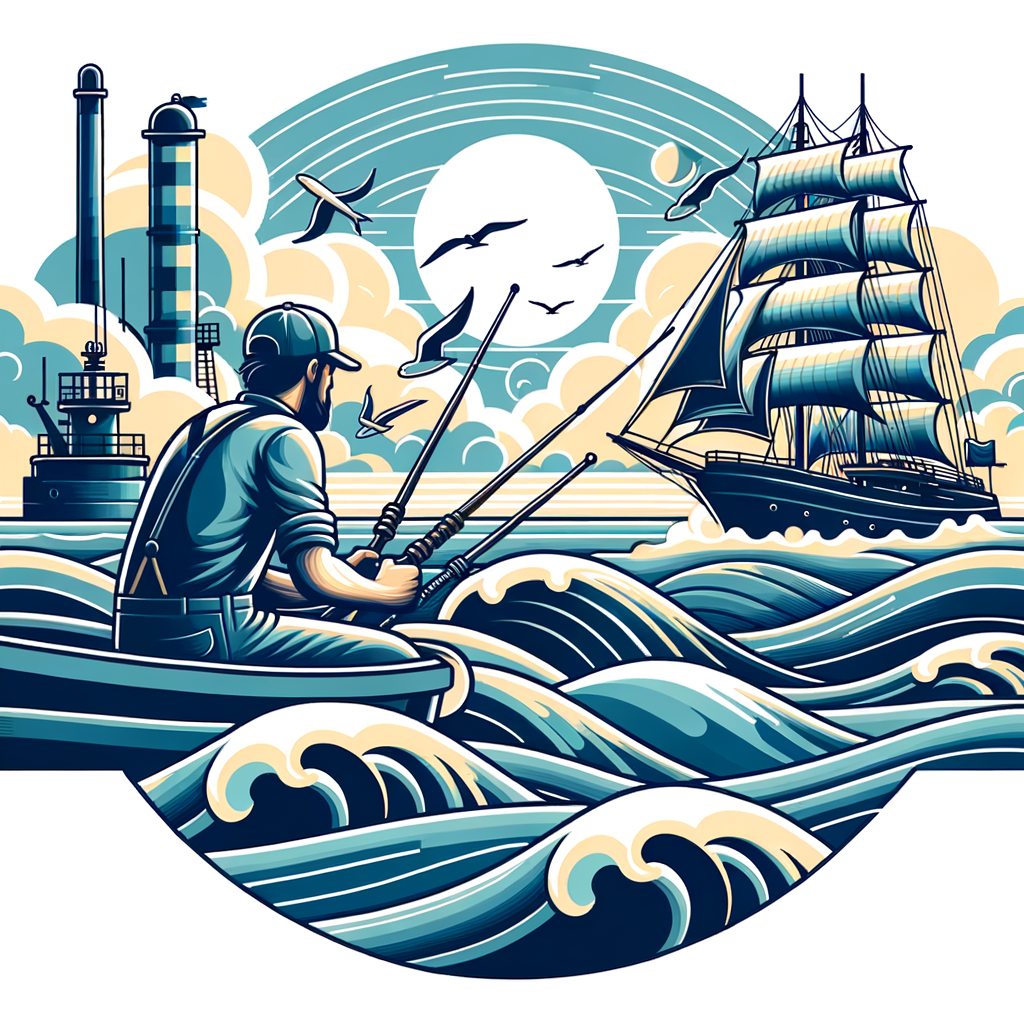
The sea, with its vast expanse and mystery, has long fascinated humanity. This fascination extends not only to the ocean itself but also to the rich maritime culture and language that has developed over centuries. Nautical terms are not just jargon for seafaring individuals; they are a blend of historical, practical, and cultural elements that have shaped the way we perceive and interact with the maritime world. Marine vocabulary is as varied as it is vast, reflecting the various elements one encounters at sea—from the weather conditions to navigation techniques and ship operations. Understanding these terms facilitates communication among mariners and offers insights into the evolution of seafaring. With roots in various languages and regions, nautical terminology has been essential in helping sailors navigate the treacherous waters and maintain communication across the oceans. This article aims to elucidate some common nautical terms and their meanings, offering readers a window into the unique lexicon of the sea. By examining the origins and uses of these terms, we can gain a deeper appreciation of the seafaring world, bridge connections between past and present mariners, and foster a greater understanding of maritime traditions. Whether you are a seasoned mariner or a landlubber curious about the life at sea, this exposition on nautical terminology will serve to enrich your knowledge and enhance your understanding of one of humanity’s oldest and most enduring occupations.
The Basics of Nautical Terms
Many common nautical terms have been derived from various cultural and linguistic backgrounds. Understanding these basic terms is key to gaining insight into maritime activities. For instance, “starboard” refers to the right side of a vessel when facing forward, while “port” denotes the left side. These terms originate from the Old English words “steor” (meaning steer) and “bord” (meaning the side of a ship). Historically, ships were steered with a paddle on the right side, which influenced this terminology. The term “port” originally came from “larboard,” meaning “loading side,” but was changed to port to avoid confusion with “starboard.”
Navigational Terms
Navigational terms are crucial for orienting oneself at sea. Terms like “bearing” define the direction of an object from the observer, using degrees from true north. Mariners use “latitude” and “longitude” to pinpoint precise locations on the Earth’s surface. “Latitude” measures north or south of the equator, while “longitude” indicates positions east or west of the Prime Meridian. Additionally, “dead reckoning” is a navigational method that estimates the ship’s current position based on previously determined points, factoring in speed, time, and course.
Weather and Sea Conditions
Understanding the weather and sea conditions is vital for mariners. The term “Beaufort scale” describes wind speed based on observable effects on the sea’s surface and land objects. “Fathom” represents a nautical unit of depth, equivalent to six feet, which helps sailors determine water depths crucial for navigation. “Squall” is a sudden, sharp increase in wind speed, related to storms or turbulent weather, while “gale” refers to a strong wind at sea, dangerous and requiring a spectator’s caution. Knowing these terms helps mariners prepare and react accordingly to environmental conditions.
Ship Structure and Components
Familiarity with ship structures and components is instrumental in understanding nautical terminology. The “bow” is the front part of a ship, while the “stern” is the rear part. Specific areas within the ship have designated terms, such as the “bridge,” where the ship is controlled, and the “galley,” which serves as the kitchen. The ship’s primary support structures are “masts,” standing tall and often bearing sails if necessary. “Hull” refers to the main body of the vessel, including sides and bottom, while “keel” is the structural backbone running along the bottom of the hull from bow to stern.
Sailing and Rigging Terms
Sailing and rigging terms narrate the maritime experience when wind powers vessels. “Tack” and “jibe” are the two primary maneuvers for changing a ship’s direction relative to the wind. “Tacking” is turning the bow of the ship through the wind, requiring more energy but providing control, while “jibing” turns the stern through the wind, a gentler maneuver but riskier during high winds. The “yardarm” refers to the horizontal spar from which sails are hung, and “reefs” reduce sail surface to control speed and stability in high winds. “Cunning” involves adjusting sails to optimize wind use.
Docking and Mooring Terms
Docking and mooring terms describe securing a vessel to a fixed position. “Anchorage” specifies a designated area where ships can drop “anchors,” heavy devices to harness the seabed and prevent drifting. “Bollard” refers to a sturdy post on a dock, used to tie a ship using strong “hawsers” or ropes. “Cleats” are T-shaped metal fixtures on decks or docks for securing lines. The term “berth” indicates an assigned docking position, while “fenders” are protective devices placed between ship and dock to prevent damage when docking or mooring.
Communication Terms
Effective communication is vital in maritime operations to ensure safety. “Mayday” is an emergency distress signal indicating catastrophe requiring immediate assistance, originating from the French “m’aider,” meaning “help me.” “Roger” and “Wilco” indicate receipt and willingness to comply with information or instructions received via radio. “Aye aye” confirms understanding and intent to obey orders. “Signal flags” convey messages from ship to shore or between ships, with distinct designs representing letters and meanings based on maritime code.
Hierarchy and Crew Terms
Understanding maritime hierarchy and crew terms illuminates ship operation and management. The “Captain,” also known as the “Master,” is the highest authority, responsible for the vessel and crew. “First Mate” or “Chief Officer” holds the second-highest rank, assisting the Captain and overseeing navigation. “Boatswain” supervises the deck crew handling maintenance, rigging, and cargo operations. “Quartermaster” is responsible for steering, navigation duties, and maintaining equipment. “Able Seaman” denotes an experienced sailor skilled in deck duties, while “Ordinary Seaman” is a junior crew member aiding more experienced crew.
Conclusion
The language of the sea, steeped in history and cultural exchange, provides depth to maritime navigation, operations, and communication. Understanding nautical terms helps mariners navigate safely and efficiently across the waters. These terms also resonate with anyone intrigued by the ocean’s grandeur and history. The nuances embedded in nautical terminology offer a wealth of knowledge about human ingenuity, adaptability, and perseverance in the face of nature’s formidable challenges. As ships and technology continue to evolve, the fundamental terminology remains a testament to the enduring spirit of exploration and discovery. By embracing the linguistic heritage of the sea, individuals forge a connection with mariners past and present, sharing stories, experiences, and aspirations tied to the infinite horizon. Consequently, acquiring nautical lexicon fluency enhances maritime storytelling and fosters respect and admiration for the arduous journeying conditions sailors have faced throughout time. Whether traversing the seven seas or appreciating from afar, this lexicon serves to enrich one’s maritime comprehension, bridging gaps between land and water-based worlds.
Frequently Asked Questions
1. What does the term “aft” mean in nautical language?
The term “aft” is commonly used in nautical contexts to describe a specific location on a vessel. It refers to the direction towards the rear or stern of the ship. Essentially, if someone asked you to move aft, they would be asking you to go towards the back end of the ship. This term is rooted in the Old English word “æftan,” meaning behind or in the rear. Understanding terms like “aft” is crucial for navigation and movement on board, ensuring that everyone on board can effectively communicate directions and positions without confusion. In the grand scheme of maritime language, “aft” is part of the basic directional vocabulary that simplifies communication in a busy environment where every second might count.
2. Can you explain what “port” and “starboard” mean?
“Port” and “starboard” are essential nautical terms that help sailors and mariners specify directions on a ship without ambiguity. ‘Port’ refers to the left side of the ship when you are facing forward, towards the bow (the front). On the other hand, ‘starboard’ denotes the right side. These terms replace the generic ‘left’ and ‘right’ to avoid confusion, particularly important at sea where simple directional errors can lead to significant navigational mistakes or safety hazards. The reason for these specific terms arises from their historical significance; originally, ships had a steering paddle on the right side (‘steorbord’ in Old English, leading to ‘starboard’). To protect this side during docking, ships would always tie up on the other side. Thus, the ‘larboard’ side came to be known as ‘port’. Knowing and using ‘port’ and ‘starboard’ ensures precision and universality in maritime communication, a necessity when language barriers might otherwise pose challenges.
3. What do sailors mean when they say “leeward” and “windward”?
“Leeward” and “windward” are nautical terms that describe relative directions concerning the wind. When sailors refer to the “leeward” side, they are talking about the side sheltered from the wind, essentially the direction towards which the wind is blowing. Conversely, “windward” is the side or direction from which the wind is coming. These terms are crucial in sailing because understanding the wind’s direction is essential for navigation and maneuvering. A sailor needs to know which way to position the sails to gain the best speed and control of the vessel. Historically, understanding and utilizing “leeward” and “windward” could significantly impact a ship’s journey, especially when facing adverse weather conditions or when navigating through challenging seas. The terms still hold vital practical importance today in everything from recreational sailing to professional maritime operations.
4. What is meant by the term “keel” in a maritime context?
The “keel” is a critical structural element of a ship. It is the principal structural component that runs along the bottom of the hull from the bow to the stern. The keel acts as the ship’s backbone, providing support and stability. It’s crucial in stabilizing the ship to prevent it from capsizing, and it also enhances the vessel’s ability to sail straight. There are different types of keels depending on the ship’s design, including flat bottom, bulbous, and fin keels, each offering distinct advantages. In shipbuilding, laying the keel traditionally marks the official start of a ship’s construction, often commemorated with a ceremony. The concept of the “keel” isn’t limited to its physical presence but also symbolizes the heart and soul of a vessel, reflecting its origins and the commencement of its life at sea.
5. What does “knot” measure, and why is it used in nautical terminology?
In nautical terms, a “knot” is a unit used to measure speed, specifically how fast a vessel is moving through water. One knot is equivalent to one nautical mile per hour, which is about 1.15 statute (land) miles per hour. The origin of the term “knot” comes from the 17th century practice of using the ‘log and line’ method to measure a ship’s speed. Sailors would throw a log connected to a reel of rope into the sea. The rope, which had knots tied at regular intervals, would be allowed to unwind for a set time and the number of knots on the rope let out during that period would indicate the ship’s speed. This term is still in use today because knots provide a consistent and practical measure of speed that is aligned with the nautical mile, which takes into account the Earth’s circumference and the nautical charts extensively used in navigation. The use of “knots” remains an enduring element of marine tradition and is essential for calculating travel time, fuel needs, and navigation, making it indispensable for maritime travel.