Choosing the best starter boats for families and weekend trips means balancing safety, simplicity, comfort, towing weight, and cost without buying more boat than a new owner can realistically handle. A starter boat is not a stripped-down compromise. It is a boat with forgiving handling, predictable maintenance, practical seating, and enough versatility for swimming, cruising, fishing, and short overnight plans. When I help first-time buyers narrow options, the same questions always matter most: How many people will actually come aboard, where will the boat be stored, what vehicle will tow it, and what kind of day on the water sounds ideal? Those answers shape every smart purchase.
For beginners, the stakes are higher than they seem. The wrong first boat creates frustration at the ramp, higher fuel and maintenance bills, and a learning curve steep enough to reduce how often the family goes out. The right first boat does the opposite. It builds confidence quickly, makes weekend trips easy to organize, and gives new owners room to develop skills without outgrowing the platform in one season. This guide explains the main types of beginner-friendly boats, who each one suits best, what features to prioritize, and how to compare options realistically. If you are researching the best boats for beginners, think of this article as the central starting point before diving into more specific reviews, size guides, and ownership costs.
What makes a boat beginner-friendly
The best boats for beginners share five traits: stable hull design, simple controls, manageable size, straightforward maintenance, and predictable ownership costs. In practical terms, that usually means an outboard-powered boat between about 16 and 24 feet, with easy boarding, open sightlines from the helm, and enough freeboard to feel secure with children aboard. Boats in this range are easier to trailer, easier to store, and less intimidating in marinas and no-wake zones than larger cruisers or specialized offshore platforms.
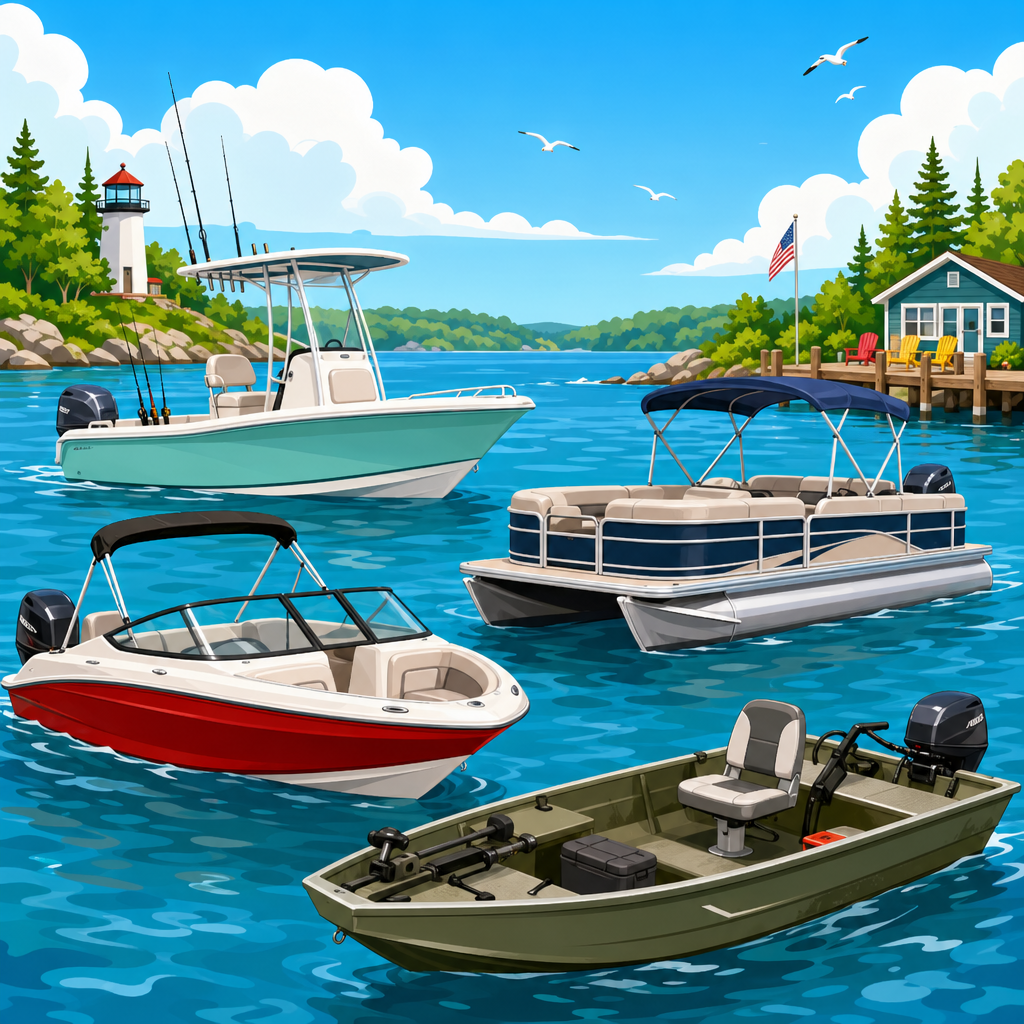
Hull shape matters immediately. A deep-V hull cuts chop better and gives a softer ride on larger lakes or bays, but it may roll more at rest and typically needs more power. A modified-V or tri-hull often feels steadier for family cruising and nearshore use. Pontoon boats, with their twin or triple aluminum tubes, are among the most stable platforms a beginner can buy. Deck boats offer similar social space with more speed and sport capability. Bowriders remain popular because they combine seating, watersports utility, and intuitive layouts in one package.
Power choice is another core decision. Modern four-stroke outboards dominate the starter market for good reason. They are quieter than older two-strokes, easier to service, easier to tilt clear of the water, and they free interior space compared with sterndrives. Sterndrives still appear on many used bowriders and can be excellent values, but they add winterization complexity and require close attention to bellows, gimbal bearings, and corrosion prevention. For most first-time owners prioritizing low drama, a late-model outboard is the safer bet.
Best starter boat types for families and weekend trips
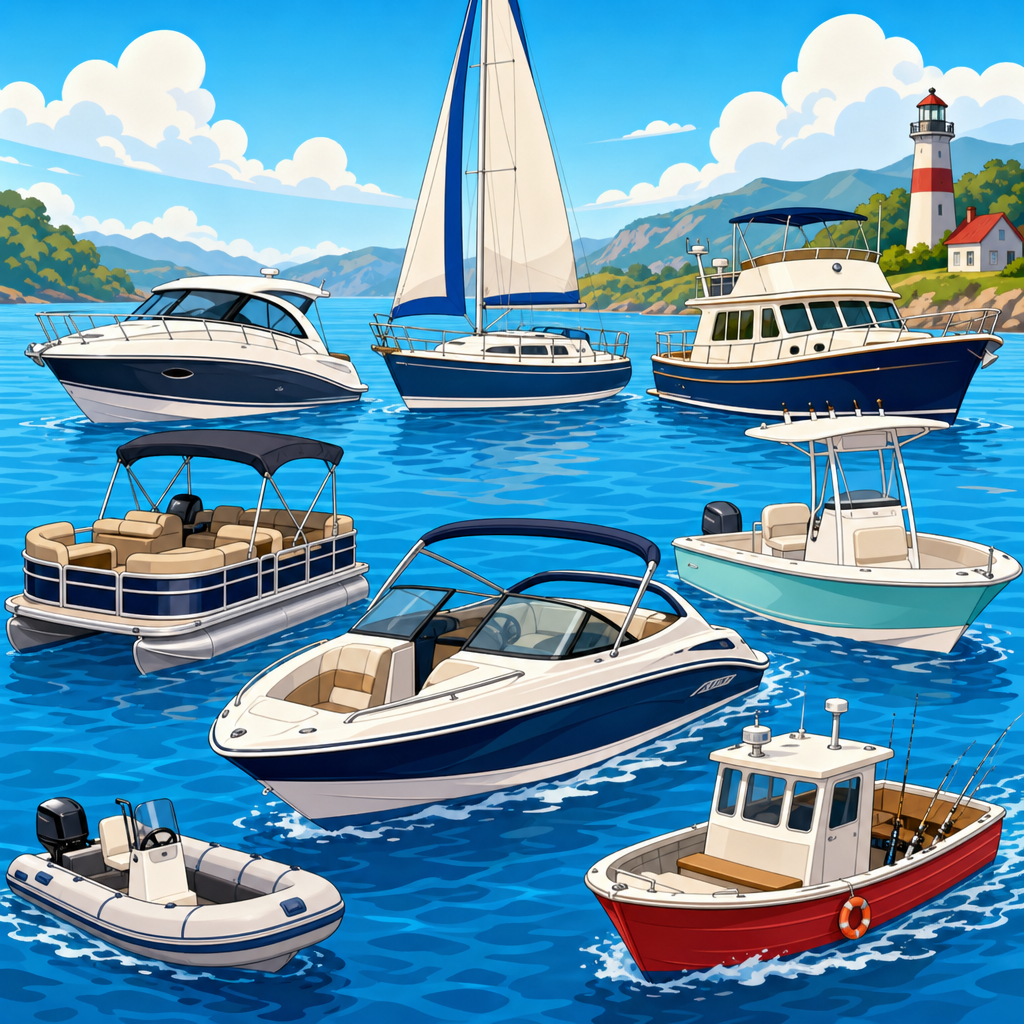
Several categories consistently work well for new owners, but each fits a different version of family boating. The best choice depends less on brand marketing and more on how the boat will actually be used on Saturday morning.
| Boat type | Typical length | Best for | Main advantages | Main tradeoff |
|---|---|---|---|---|
| Pontoon | 18 to 24 feet | Relaxed family cruising, swimming, entertaining | Huge seating capacity, stability, easy boarding | Less agile in rough water |
| Bowrider | 17 to 23 feet | All-around day boating and watersports | Versatile layout, good speed, familiar controls | Less deck room than a pontoon |
| Deck boat | 18 to 24 feet | Large families wanting speed and space | Open seating, fast planing, tow-sports capable | Can ride harder in chop |
| Center console | 18 to 22 feet | Families mixing cruising and fishing | Easy movement around deck, simple cleanup | Less weather protection |
| Cuddy cabin | 20 to 24 feet | Couples or small families doing short overnights | Shelter, storage, weekend-trip flexibility | Less open seating space |
Pontoons are often the easiest recommendation for families with young children or grandparents aboard. Their flat, predictable deck layout reduces tripping hazards, and boarding from a dock or beach is simple. On many inland lakes, a 20- to 22-foot pontoon with a 90 to 150 hp outboard is the sweet spot. It tows tubers, handles sunset cruises, and supports picnic-style boating better than most entry-level runabouts.
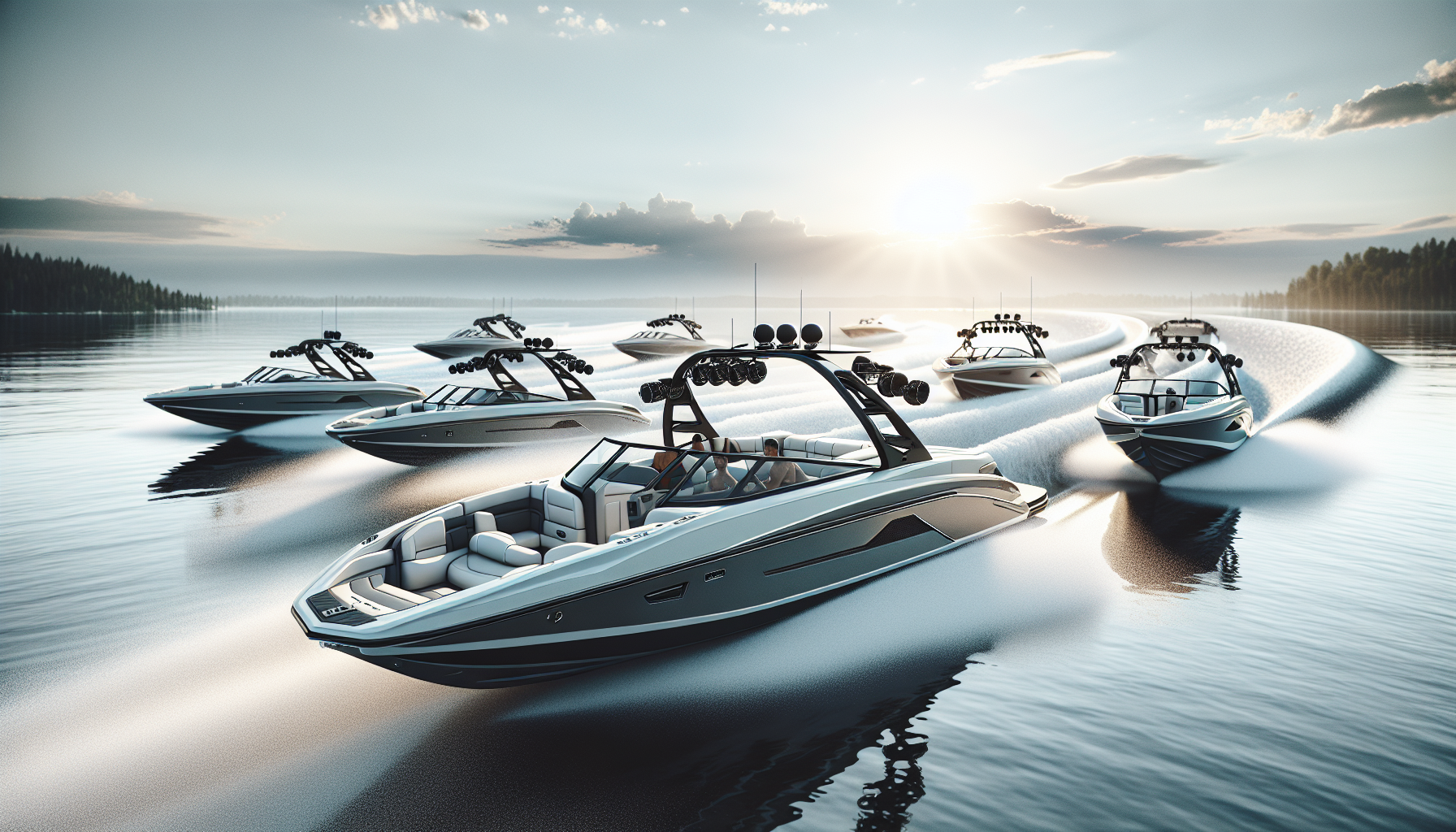
Bowriders are the classic family starter boat because they do many jobs reasonably well. Models from Bayliner, Stingray, Sea Ray, and Yamaha regularly serve as entry points into boating. A 19- to 21-foot bowrider can seat six to nine people, tow a wakeboard, and still fit into common storage solutions. For mixed-use boating on lakes and calm coastal water, they are hard to beat.
Deck boats deserve more attention than they often get. Builders like Hurricane designed them specifically to maximize passenger space without giving up speed. If a family wants pontoon-like seating but prefers a fiberglass hull and more athletic handling, a deck boat is often the answer. Center consoles and cuddy cabins suit narrower needs, but for buyers planning fishing in the morning and family cruising after lunch, they can be excellent first platforms.
How to match the boat to your family’s real use
Most buying mistakes happen because shoppers describe idealized use instead of real use. I ask clients to list ten likely outings before looking at listings. Usually the result is revealing: eight are half-day lake trips, one is towing the kids on a tube, and one is a longer cruise with friends. That pattern does not justify an offshore fishing machine or a cabin boat with expensive systems. It points toward a simple, open, trailerable family boat.
Capacity should be treated realistically. If a boat is rated for ten people, that does not mean ten adults will be comfortable all day with bags, coolers, and toys onboard. New owners should target a boat that can comfortably handle their normal crew plus two extra passengers. Storage matters just as much. A family with life jackets, inflatables, snacks, towels, and fishing gear needs genuine locker space, not just brochure claims.
Water conditions should guide hull choice. Small lakes and protected rivers reward wide, stable platforms such as pontoons and deck boats. Large reservoirs, windy lakes, and exposed bays favor deeper-V hulls that soften chop and keep spray down. If weekend trips include beach stops, swim ladders, shallow draft, and easy anchor handling become priority features. If young children are regular passengers, secure gates, high rails, non-slip flooring, and easy movement from cockpit to bow should outrank top speed.
Trailering and launch habits also shape the best beginner boat. A boat that looks perfect on paper can become a burden if it pushes the limits of the family SUV or makes every ramp launch stressful. Trailer brakes, guide-ons, and a swing tongue can matter more to first-year happiness than premium stereo packages. Boating is supposed to feel accessible. The right starter boat lowers friction before and after every trip.
Best sizes, engines, and features for first-time owners
For most families, the best starter size is between 18 and 22 feet. Under 18 feet, seating, freeboard, and storage can become tight for full-day outings. Over 22 feet, towing demands, marina costs, and handling complexity rise quickly. There are exceptions, but this size range hits the practical middle ground where a boat still feels substantial on the water while remaining manageable for a new captain.
Horsepower should match both the hull and the mission. Underpowering a family boat is a common mistake because buyers focus on upfront cost. A pontoon carrying eight people with only a minimal engine may struggle to plane efficiently or tow a tube with confidence. Likewise, a deck boat with too little power feels labored and inefficient. In many cases, choosing the midrange or slightly higher engine option improves drivability and resale value without dramatically changing maintenance. For example, a 20-foot bowrider often performs best with roughly 150 to 200 hp, while a family pontoon may be happiest with 115 to 150 hp depending on load.
Key beginner-friendly features include a full swim platform, reboarding ladder, bimini top, integrated storage, simple analog-digital gauges, hydraulic steering on higher-horsepower setups, and durable flooring such as vinyl or woven marine flooring. A quality trailer should be viewed as part of the boat, not an afterthought. So should safety gear: a proper anchor setup, throwable flotation, fire extinguisher, horn, navigation lights, and correctly sized life jackets for every passenger. If shopping used, prioritize maintenance records, compression test results for outboards, clean wiring, dry bilges, and solid upholstery seams over cosmetic upgrades.
New versus used starter boats and standout examples
New boats offer warranty coverage, current electronics, cleaner rigging, and less immediate repair risk. Used boats can deliver far more value, especially for beginners still refining their preferences. The key is to avoid old, neglected inventory that appears cheap but needs tires, trailer bearings, batteries, pumps, canvas, upholstery, and engine work before the first family outing. Marine surveys are especially valuable on larger used boats, while an engine diagnostic printout and sea trial are essential on almost anything powered.
Strong starter examples exist across budgets. On the pontoon side, brands such as Sun Tracker, Bennington, and Harris offer approachable family layouts. In bowriders, Bayliner’s VR series, Stingray’s sport boats, and Yamaha’s jet-powered runabouts often draw first-time buyers. Deck boats from Hurricane and center consoles from Mako or Boston Whaler in smaller sizes can also fit the beginner profile. What matters is not buying the most famous badge. It is buying a well-supported model with straightforward systems and local service access.
Service support is often overlooked until the first issue appears in peak season. I have seen families lose half a summer because they bought a bargain boat with no nearby dealer support and unusual parts requirements. Before purchasing, call local shops and ask which brands they service, what turnaround times look like in summer, and whether they support warranty claims. That simple step can prevent a frustrating first ownership experience.
Ownership costs, safety, and the smartest next step
The purchase price is only the beginning. Annual ownership costs usually include insurance, registration, fuel, routine service, winterization or off-season prep, trailer maintenance, storage, and small replacement items that add up quickly. A modest 20-foot family boat may remain very affordable compared with larger cruisers, but buyers should still budget realistically. Fuel burn varies by hull and engine, but heavier loads, rough water, and tow-sports use increase it fast. Covered storage protects upholstery and electronics, often saving money over time.
Safety should shape the entire buying process. The best boat for beginners is one that encourages conservative, repeatable operation. That means clear visibility from the helm, secure passenger seating, reliable starting, effective bilge pumping where applicable, and predictable low-speed manners around docks. New owners should take a boating safety course, practice docking in calm conditions, learn local navigation markers, and build a checklist for launching and retrieving. Confidence on the water is earned through routine, not speed.
As a hub for the best boats for beginners, this guide points to the practical truth: there is no single perfect starter boat, but there is a best fit for your family’s waters, budget, and weekend habits. For most new owners, an 18- to 22-foot pontoon, bowrider, or deck boat with modern outboard power is the smartest place to start. Focus on stability, serviceability, safety, and realistic comfort, then compare specific models within those categories. If you are ready to move forward, build a shortlist of three boat types, sea-trial each one, and let real on-water experience decide.
Frequently Asked Questions
What type of starter boat is best for families and weekend trips?
For most first-time buyers, the best starter boat is one that feels easy to operate, has a simple layout, and supports the kind of boating your family will actually do most often. In practical terms, that usually means looking at versatile, family-friendly designs such as bowriders, deck boats, pontoon boats, or small cuddy cabins in manageable lengths. These types tend to offer the best mix of comfortable seating, open deck space, predictable handling, and all-around usefulness for cruising, swimming, towing kids on a tube, casual fishing, and the occasional overnight stay.
A bowrider is often one of the strongest all-purpose choices because it combines sporty handling with enough seating for day trips and watersports. A deck boat offers more interior room and can be especially appealing for larger families who value space and stable boarding. Pontoon boats are another excellent option for beginners because they are generally easy to drive, comfortable at low to moderate speeds, and ideal for relaxed cruising, sandbar days, and family entertaining. If short weekend overnight trips are a real priority, a small cuddy cabin or compact cabin boat may make more sense because it gives you enclosed storage, weather protection, and a basic sleeping area without moving into the complexity and cost of a much larger cruiser.
The key is not choosing the “best” boat in the abstract, but the best boat for your experience level, towing setup, storage situation, and local waters. A starter boat should not feel intimidating every time you launch, dock, trailer, or clean it. It should feel manageable. That is why many new owners are happiest with a boat in a moderate size range that fits their driveway or marina plan, works with their vehicle’s tow rating, and does not require specialized systems knowledge just to enjoy a Saturday on the water. The right family starter boat is one that keeps boating simple enough that you actually use it often.
How big should a starter boat be for a family?
For many families, a starter boat in the roughly 18- to 24-foot range hits the sweet spot between comfort and control. Boats in this size category are usually large enough to carry several people safely, provide usable seating and storage, and handle normal weekend recreation without feeling too cramped. At the same time, they are often still small enough for a new owner to trailer, launch, dock, and maintain without the steep learning curve that comes with larger boats.
Size matters for more than passenger count. A larger boat can feel more stable and offer more comfort, but it also brings more weight, more engine power, higher fuel consumption, more cleaning, and more complexity when trailering or storing it. Many first-time buyers make the mistake of shopping only by the maximum number of seats listed on the capacity plate. In reality, comfort underway is very different from legal capacity. A boat that technically seats ten may feel much better with six or seven people, especially if you are bringing coolers, life jackets, watersports gear, and bags for a full day out.
To choose the right size, think through your real-world use. How many people will usually come with you, not just on holiday weekends but on normal trips? Will you trailer the boat regularly or keep it at a marina? Do you need space for changing clothes, shade, fishing gear, or occasional overnight accommodations? Are your local waters calm lakes and rivers, or larger bays with more chop? A smart starter size is one that gives your family room to enjoy the boat without turning every launch, retrieval, or docking attempt into a stressful event. Bigger is not always better for a new owner. Better is better.
What safety features should families prioritize in a starter boat?
Safety should be one of the first filters, not an afterthought. For family boating, especially with children or guests who are new to the water, a starter boat should have a stable feel, secure movement around the deck, reliable systems, and a layout that makes supervision easy. Look for features such as high-quality railings or grab handles, nonskid flooring, a boarding ladder that is easy to use from the water, clearly accessible life jacket storage, and seating that keeps passengers secure while underway. Deep cockpit areas and family-friendly seating arrangements can add confidence, especially for parents with younger children.
Reliable steering, predictable throttle response, and good visibility from the helm are also major safety factors. New owners do better in boats that behave consistently at idle speed, around docks, and in changing water conditions. That is one reason forgiving handling is so important in a starter boat. You want something that will help you build skills rather than punish small mistakes. A simple helm layout with easy-to-read gauges, intuitive switches, and a dependable battery setup also makes operation safer and less stressful.
Beyond the boat itself, make sure you can carry and organize the right safety gear. That includes properly fitted life jackets for every passenger, child-specific flotation where needed, throwable flotation, fire extinguishers, navigation lights, a horn or sound signal, dock lines, fenders, an anchor, a first-aid kit, and a basic tool and emergency kit. If you plan to boat in larger water, consider a VHF radio and GPS or chartplotter. The best starter boat for a family is one that supports safe routines easily: boarding, seating, visibility, communication, and emergency readiness. A boat that feels safe tends to get used more confidently, and that matters just as much as any performance spec.
Is it better to buy a new or used starter boat for family boating?
Both new and used boats can be excellent starter choices, but the right answer depends on your budget, your comfort level with inspections and maintenance, and how much risk you want to take on up front. A new boat offers the biggest advantage in simplicity. You typically get warranty coverage, current technology, known service history, and the peace of mind that comes from starting with fresh components and no hidden neglect. For a family that wants predictable ownership and minimal troubleshooting during the first seasons, buying new can be worth the premium.
That said, a used boat is often the smartest financial move for a first-time owner, especially if you buy carefully. Boats depreciate, and many well-kept used models deliver outstanding value. You may be able to afford a better layout, a more capable engine package, or extra equipment such as a trailer, covers, fishfinder, or bimini top while still spending less than you would on a new boat. The tradeoff is that condition matters enormously. A used boat can be a bargain or a headache depending on how it was stored, maintained, and operated.
If you shop used, focus on service records, engine hours, signs of water intrusion, upholstery condition, electronics function, trailer health, and overall cleanliness. A marine survey or professional inspection is often money well spent, particularly for buyers without boating experience. Also remember that simplicity is an asset. A used starter boat with one reliable outboard, clean wiring, straightforward systems, and a practical layout is usually a better beginner purchase than a larger, feature-heavy boat that looks impressive but carries more maintenance risk. In short, new is easier, used is often more economical, and the best choice is the one that lets your family enjoy boating without constant repair surprises or financial strain.
What ownership costs should first-time buyers expect beyond the purchase price?
The purchase price is only the beginning, and understanding total ownership cost is one of the most important parts of choosing the right starter boat. First-time buyers should budget for insurance, registration, taxes where applicable, fuel, routine engine service, winterization if needed in your area, cleaning supplies, safety equipment, storage, and trailer maintenance. If you keep the boat at a marina, slip fees can become one of the largest recurring expenses. If you trailer and store it at home, you may save on marina costs but still need to plan for storage space, trailer tires, bearings, brakes, and tow vehicle demands.
Maintenance costs vary widely depending on engine type, boat size, and how complex the onboard systems are. A simple outboard-powered family boat is often easier and less expensive to maintain than a larger sterndrive or cabin boat with multiple systems. Covers, batteries, pumps, electronics, and upholstery all wear over time. Even if nothing major breaks, every boat requires routine care. That is why many experienced owners advise first-time buyers to choose a boat that is slightly smaller and simpler than their maximum budget would allow. The extra room in your budget helps absorb real-world costs after the sale.
It is also wise to think about usage-based spending. Watersports days burn more fuel than slow cruising. Saltwater use can increase cleaning and corrosion-related maintenance. More passengers usually mean more gear, more mess, and more wear on seating and flooring. None of this means boating is unaffordable, but it does mean the smartest starter boat is one whose ongoing costs feel sustainable. When a boat fits your maintenance time, operating budget, towing setup, and storage plan, ownership stays enjoyable. That is the real goal for a family starter boat: not just getting on the water once, but being able to keep going back weekend after weekend.