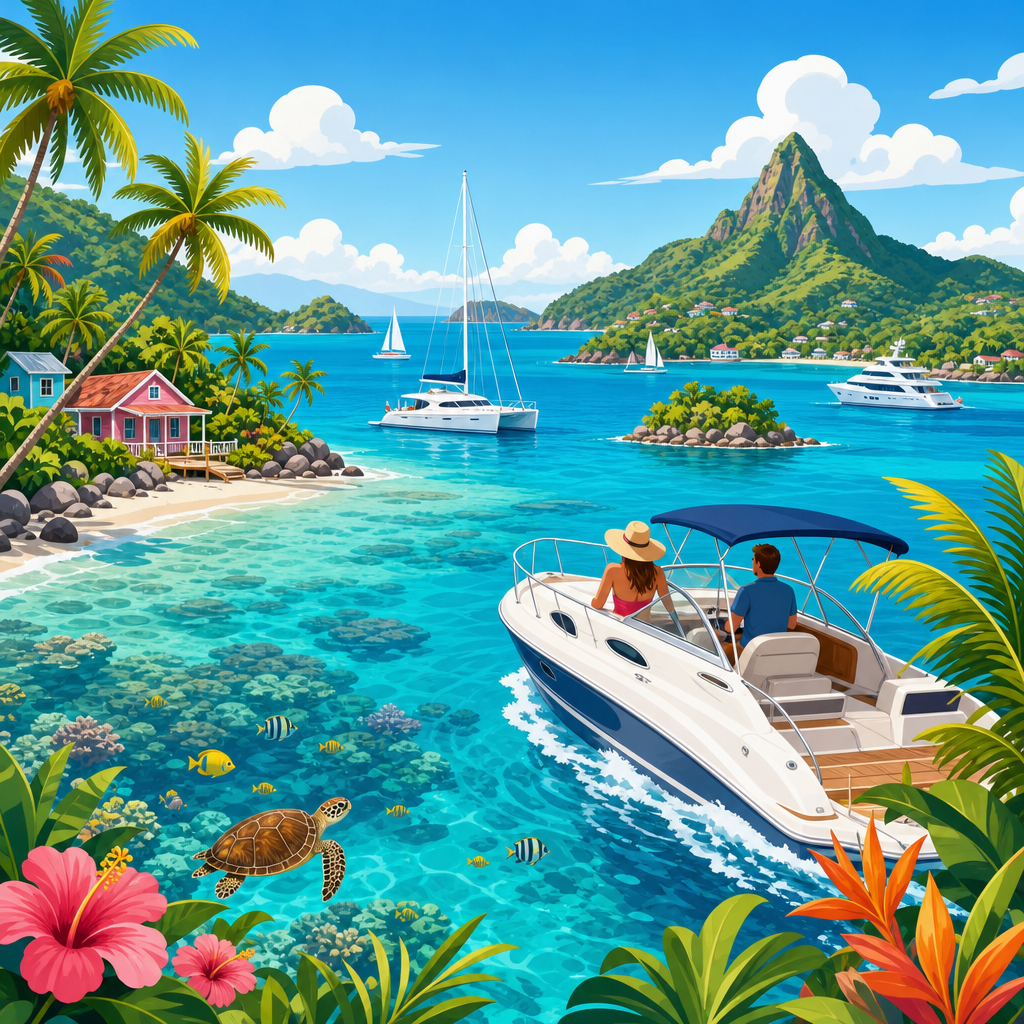
The South Pacific offers some of the world’s most rewarding cruising grounds, combining tradewind passages, protected lagoons, volcanic islands, and deeply rooted maritime cultures across a region that stretches thousands of nautical miles. For boaters planning top international boating destinations, this part of the world stands out because it supports many styles of travel: bluewater passagemaking between island groups, charter-focused island hopping, family cruising inside reef systems, and expedition-style sailing to remote anchorages. In practical terms, a boating route is the sequence of islands, passages, ports of entry, anchorages, and weather windows that shape a voyage. Choosing the best boating routes in the South Pacific means matching scenery, seamanship demands, cyclone seasons, customs rules, fuel and repair access, and crew experience.
I have planned and reviewed itineraries across French Polynesia, Fiji, Tonga, New Zealand, and the broader Pacific, and the same pattern always emerges: boaters who succeed here respect distance and seasonality as much as beauty. The region matters because it delivers rare variety within one cruising arena. You can leave a modern marina in Auckland, clear into French Polynesia after an ocean passage, spend weeks moving through Bora Bora and Raiatea, then continue west toward the wildlife-rich reefs of Fiji and the whale grounds of Tonga. Few places offer that combination of iconic landscapes and serious passagemaking.
This hub article covers the top international boating destinations within the South Pacific, focusing on the islands and route structures that deserve priority on a serious cruising plan. It explains where to go, when to go, what each route is best for, and what tradeoffs matter in the real world. If you are building a broader boating destinations and travel strategy, this page is the foundation for choosing the islands you cannot miss.
French Polynesia: The flagship South Pacific cruising route
For many sailors, French Polynesia is the definitive answer to the question, what is the best boating destination in the South Pacific? The standard route begins in the Marquesas, continues through the Tuamotus, and ends in the Society Islands. That sequence works because it mirrors both geography and cruiser infrastructure. The Marquesas, including Nuku Hiva and Hiva Oa, deliver dramatic volcanic scenery, sturdy anchorages, and a memorable landfall after a long crossing from the Americas. They are not ideal for endless beach cruising because reef lagoons are limited, but they are excellent for cultural depth, provisioning basics, and recovery after passage fatigue.
The Tuamotus shift the experience completely. Atolls such as Fakarava and Rangiroa are known for clear water, pass diving, pearl farms, and anchorages that depend on tidal timing. This is where route planning becomes technical. Entering or exiting a pass at the wrong stage of current can turn a routine transit into a dangerous maneuver, especially in strong trade winds. Boaters should use current tables, local guides, and updated cruiser reports rather than relying on old pilot books alone. In exchange, the Tuamotus offer some of the most visually striking lagoon cruising anywhere in the world.
The Society Islands form the most charter-friendly and widely recognized portion of French Polynesia. Raiatea and Tahaa provide easy inter-island hops, Bora Bora offers one of the planet’s most famous lagoons, and Huahine balances accessibility with a quieter feel. For boaters seeking a straightforward high-value route, this island group combines short passages, organized mooring systems, good provisioning, and reliable tourism services. The tradeoff is cost. Marina fees, provisions, spare parts, and dining are expensive compared with much of the western South Pacific. Yet for scenery, navigational variety, and overall cruising quality, French Polynesia remains the benchmark.
Fiji: Reef cruising, culture, and route flexibility
Fiji is one of the best boating routes in the South Pacific for crews who want maximum itinerary choice within a single country. More than 300 islands create multiple cruising circuits, but the most practical route structure links Viti Levu, the Mamanucas, the Yasawas, Vanua Levu, Taveuni, and the Lau Group, depending on permit status, weather, and time available. Fiji works especially well because it supports both charter visitors and private yachts. Port Denarau and Vuda Marina provide common gateways, while Savusavu on Vanua Levu offers one of the most useful cruiser service centers in the region.
The western islands, particularly the Mamanucas and Yasawas, are ideal for shorter trips and mixed-skill crews. Distances are manageable, anchorages are frequent, and many stops combine sandy beaches with resorts that welcome visiting boats for meals or limited shore access. For private yacht owners, the deeper reward often comes farther afield. Taveuni’s waters near the Somosomo Strait and the islands around Vanua Balavu in the Lau Group deliver quieter anchorages and stronger cultural immersion. Traditional village protocols matter in Fiji, including sevusevu, the customary presentation of yaqona when visiting many communities. Respecting these practices is not optional courtesy; it is part of cruising responsibly.
Fiji also illustrates why route selection is never just about beauty. Reef navigation demands concentration, especially under variable light. Electronic charts help, but eyeball navigation remains critical in many areas because bommies and coral heads may be imperfectly charted. During the dry season, generally May through October, conditions are at their most stable. Outside that window, cyclone risk rises sharply. Boaters who plan conservatively are rewarded with one of the South Pacific’s richest combinations of reef sailing, marine life, and welcoming local interaction.
Tonga: Whale encounters and quiet anchorages
Tonga is often overlooked by first-time South Pacific planners, yet it consistently ranks among the most satisfying international boating destinations for sailors who value uncrowded anchorages and wildlife. The principal cruising areas are Tongatapu in the south, the Ha’apai Group in the center, and Vava’u in the north. Vava’u is the best known, and for good reason. It offers protected waters, short scenic day sails, limestone cliffs, caves, and one of the world’s best seasonal opportunities to observe humpback whales. From roughly July to October, whales migrate to Tongan waters to breed and calve, making the region globally significant for marine ecotourism.
For cruising boats, the practical appeal of Vava’u is balance. Neiafu provides fuel, basic provisions, and clearance services, while the surrounding island network delivers varied anchorages within easy reach. You can spend days moving between coral gardens, beach picnics, and sheltered overnight stops without committing to hard offshore miles. Ha’apai, by contrast, feels more remote and less developed. It suits sailors comfortable with fewer services and more self-reliance. The rewards are substantial: quiet beaches, low-density cruising, and a sense that you have reached a less commercial Pacific.
Tonga does require careful timing. Strong trade winds can create uncomfortable inter-island conditions, and cyclone season remains a major consideration from November through April. Regulations around whale interactions must also be respected; approach distances and operator licensing exist to protect both animals and visitors. In my experience, crews who come to Tonga expecting nightlife and marina culture miss the point. Crews who come for natural encounters, simple anchorages, and restorative cruising often list it among their favorite stops in the entire Pacific.
New Zealand as the South Pacific gateway
New Zealand is not the tropical image most people picture when they search best boating routes in the South Pacific, but it is essential as a gateway, cyclone-season refuge, and world-class cruising destination in its own right. Auckland, Opua, and Whangarei function as major entry and refit centers for yachts moving in and out of the islands. For international boaters, New Zealand matters because it solves logistical problems that small islands often cannot: haul-outs, rigging, electronics repair, sailmaking, customs processing, chandlery stock, and specialist marine labor. If a serious maintenance period is part of your Pacific plan, New Zealand belongs in the route.
As a cruising ground, the Bay of Islands, Hauraki Gulf, Great Barrier Island, and Northland coast offer exceptional variety. The Bay of Islands is especially useful for arriving or departing yachts because it combines sheltered water with full-service shore facilities. The Hauraki Gulf adds sophisticated marina infrastructure and easy access to numerous islands and anchorages. Conditions are cooler and weather patterns more complex than in tropical trade-wind belts, but navigational support is excellent. Maritime New Zealand notices, modern charting, and strong search and rescue systems all contribute to confidence afloat.
New Zealand also links the South Pacific strategically. Many boats sail north to Tonga or Fiji for the austral winter, then return south before cyclone season. This migration pattern is one of the region’s most important planning frameworks. Treat New Zealand not as an afterthought, but as the operational base that makes longer Pacific cruising sustainable.
Other islands you cannot miss on a broader South Pacific itinerary
Several additional island groups deserve a place in a comprehensive South Pacific hub because they expand route options beyond the most famous stops. New Caledonia offers lagoon cruising on a huge scale, supported by French administration, excellent bakeries, and one of the world’s largest barrier reef systems, recognized by UNESCO. The main cruising areas around Grande Terre and the Loyalty Islands appeal to sailors who want a blend of developed services and less crowded anchorages than French Polynesia’s headline destinations. Australia’s east coast and the Coral Sea islands can also connect to South Pacific itineraries, especially for boats transiting between New Zealand and Queensland before continuing toward the Indian Ocean.
Samoa and American Samoa provide culturally rich stopovers with fewer cruising boats than Fiji or French Polynesia, though harbor choice and weather exposure require care. The Cook Islands, especially Aitutaki, are visually outstanding, but they are less straightforward for extensive yacht cruising because of limited secure access and infrastructure. Vanuatu is another standout for experienced crews. It combines active volcanoes, excellent diving, village-based tourism, and rewarding north-south passages, but it can be less polished in terms of repairs and provisioning than New Zealand or Fiji.
| Destination | Best For | Main Tradeoff | Ideal Season |
|---|---|---|---|
| French Polynesia | Iconic lagoons and varied island progression | High costs | May to October |
| Fiji | Flexible reef cruising and cultural access | Complex coral navigation | May to October |
| Tonga | Whales and quiet anchorages | Fewer services outside hubs | June to October |
| New Zealand | Refit, staging, and temperate cruising | Cooler, less tropical weather | November to April for local cruising |
| New Caledonia | Large lagoon system and French services | Weather exposure on outer routes | May to October |
If you are building a multi-country itinerary, these secondary destinations often provide the difference between a rushed highlight reel and a well-shaped cruising season. They also create useful contingency options when weather, visas, or maintenance disrupt the original plan.
How to choose the right South Pacific route
The best route is the one that fits your boat, crew, and calendar. Start with season. Cyclone risk generally increases from November through April, so most boats concentrate tropical island cruising between May and October. Next evaluate range and autonomy. A catamaran drawing under 1.5 meters can use many shallow lagoons more easily than a deeper monohull, while a boat with watermaker, solar generation, and ample spares can stay longer in outer islands. Then consider crew expectations. Snorkeling families often prefer Society Islands, the Yasawas, or Vava’u. Serious passagemakers may prioritize the Marquesas, Lau, or Ha’apai for a stronger sense of distance.
Budget matters more than many planners admit. French Polynesia and New Zealand can absorb funds quickly, while Fiji and parts of Tonga can be more manageable if you anchor often and provision strategically. Clearance procedures, biosecurity rules, and restricted areas also shape route design. New Zealand’s biosecurity enforcement is strict and professional. Fiji’s yacht entry procedures are straightforward when handled in approved ports. Remote cruising permissions in some areas require advance attention. Good route planning is therefore administrative as well as nautical.
The practical method is simple: choose one flagship destination, one service base, and one lower-density cruising area. For example, pair French Polynesia with New Zealand and Tonga, or Fiji with New Zealand and Vanuatu. That structure gives you highlights, resilience, and variety without overextending a single season.
The best boating routes in the South Pacific are not defined by one famous island, but by how well a sequence of destinations delivers beauty, safety, culture, and operational realism. French Polynesia leads for iconic scenery and classic lagoon cruising. Fiji excels in route flexibility, reef exploration, and local connection. Tonga stands out for whale encounters and peaceful anchorages. New Zealand anchors the wider region with refit capability, reliable infrastructure, and strategic seasonal value. Around them, places like New Caledonia, Vanuatu, Samoa, and the Cook Islands broaden what a South Pacific voyage can become.
For boaters researching top international boating destinations, the key lesson is clear: plan by season first, route second, and postcard appeal third. Distances are large, services are uneven, and weather windows matter, but the reward is extraordinary cruising diversity across one of the most memorable marine regions on earth. Use this hub as your starting point, shortlist the island groups that match your boat and crew, and begin mapping a South Pacific itinerary that turns ambition into a realistic passage plan.
Frequently Asked Questions
What are the best boating routes in the South Pacific for first-time cruisers?
For first-time cruisers, the best South Pacific routes are usually the ones that combine short passages, reliable anchorages, easy provisioning, and good protection from ocean swell. French Polynesia is often at the top of the list, especially routes linking Tahiti, Moorea, Raiatea, Taha’a, Huahine, and Bora Bora. These islands offer a mix of marina facilities, charter support, sheltered lagoons, and relatively straightforward navigation inside marked passes and reef systems. The Society Islands are especially attractive for sailors who want dramatic scenery without committing to long, remote offshore legs every few days.
Another excellent choice is Fiji, where boaters can explore the Mamanuca and Yasawa island groups or extend farther into the Lau Islands depending on experience level and weather windows. Fiji is appealing because it offers protected waters, vibrant village culture, reef exploration, and a broad range of cruising styles, from relaxed family sailing to more ambitious passagemaking. Vanuatu can also be rewarding for newer cruisers who already have some coastal or island experience, particularly around Efate and the nearby islands, though conditions can become more exposed depending on the season and route.
If the goal is to ease into South Pacific cruising, charter-friendly areas with established support networks are generally the smartest starting point. They allow boaters to enjoy coral lagoons, volcanic backdrops, and classic tradewind sailing while keeping logistics manageable. A first route in this region should prioritize confidence-building over distance, because once boaters become comfortable with reef awareness, local weather patterns, and inter-island procedures, the broader South Pacific opens up in a much more enjoyable way.
Which South Pacific islands are truly unmissable on a boating itinerary?
A few island groups consistently stand out as must-visit destinations because they deliver the scenery, cultural richness, and cruising variety that define the South Pacific at its best. Bora Bora is one of the most iconic stops thanks to its striking volcanic peak, luminous lagoon, and excellent opportunities for lagoon cruising, snorkeling, and anchoring in spectacular surroundings. Moorea is equally memorable, with dramatic mountain ridges, deep bays, and easier access from Tahiti, making it a favorite for both private yachts and charter crews. Raiatea and Taha’a deserve special mention as well, since they combine navigable lagoon systems with cultural history and a strong sailing tradition.
Beyond French Polynesia, Fiji is impossible to overlook. The Yasawas are famous for clear water, inviting anchorages, and island-hopping routes that feel adventurous without being overly demanding. The Lau Islands, while more remote, are often considered some of the most rewarding cruising grounds in the region for sailors seeking authenticity, village encounters, and a stronger sense of expedition. In Vanuatu, islands such as Efate, Espiritu Santo, and Tanna bring a different flavor, blending coral reefs, traditional communities, and volcanic landscapes. Tanna in particular is exceptional for boaters who want to combine coastal cruising with one of the South Pacific’s most powerful land-based experiences: visiting Mount Yasur.
Tonga also belongs on any serious shortlist, especially for sailors interested in protected anchorages and marine wildlife. The Vava’u group is widely respected for its sheltered cruising grounds and is one of the best places in the region for humpback whale encounters during the season. What makes these islands unmissable is not just their beauty, but the way each destination offers a different interpretation of South Pacific cruising—some focus on lagoons and luxury, others on remoteness, culture, reefs, or bluewater challenge. The best itineraries usually combine several of these strengths rather than chasing only the most photographed locations.
When is the best time to boat in the South Pacific, and how important is cyclone season?
Timing is one of the most important factors in planning a successful South Pacific boating route. In general, the preferred cruising season runs through the drier months, often from about May to October, when tradewinds are more stable, humidity is lower, and the risk of tropical cyclones is significantly reduced. This period is considered the prime window for many areas including Fiji, Tonga, Vanuatu, and French Polynesia, although exact conditions vary by latitude and island group. During these months, boaters can usually expect more predictable passage planning and more comfortable conditions for both offshore legs and lagoon cruising.
Cyclone season is a major consideration and should never be treated casually. In much of the southwest South Pacific, the highest-risk period generally falls between November and April. While not every island is affected equally every year, the risk is real enough that most insurance policies, charter operators, and experienced cruisers structure their plans around it. Boats often reposition out of high-risk zones, move into designated cyclone-safe areas, haul out, or avoid the region entirely during the peak months. Even outside named storm events, the wet season can bring squalls, heavy rainfall, reduced visibility, and more complicated sea states, all of which affect comfort and safety.
That said, “best time” depends on the specific route and boating style. A charter-focused vacation inside the Society Islands may be planned differently from a bluewater crossing through Fiji and Tonga. Whale season in Tonga, trade patterns in French Polynesia, and local festival calendars can all influence timing. The smartest approach is to choose your route first, then match it with historical weather patterns, local cruising advice, marina availability, and your vessel’s capabilities. In the South Pacific, seasonal planning is not a minor detail—it is one of the foundations of a safe and rewarding itinerary.
What should boaters know about navigation, reef systems, and passage planning in the South Pacific?
South Pacific cruising is incredibly rewarding, but it demands respect for navigation. One of the region’s greatest attractions—its coral reefs, lagoon entrances, and shallow turquoise anchorages—is also one of its biggest operational challenges. Reef passes can have strong currents, standing waves, and awkward swell interactions, especially near tide changes or in onshore wind conditions. Many approaches that look calm in photographs can be difficult or unsafe at the wrong time. Good passage planning means studying charts, cruising guides, satellite imagery when available, tide information, and recent local reports before entering any reef-bound anchorage or lagoon system.
Daylight navigation is essential in many parts of the South Pacific. Even with modern chartplotters, chart accuracy can vary, and isolated bommies or coral heads may not be perfectly represented. Entering passes and navigating lagoons in high sun, with the light behind you when possible, makes hazard detection dramatically easier. Boaters should also be realistic about pace. Distances across the South Pacific can be immense, and weather windows matter. A route that looks simple on a map may involve hundreds of nautical miles between support points, so fuel management, spare parts, watchkeeping readiness, communications, and emergency contingencies all deserve serious attention.
For offshore passages between island groups, tradewinds often shape route selection, but local effects around high islands and reef chains can alter both wind and sea state. Acceleration zones, katabatic gusts near steep terrain, and confused seas around headlands are common enough to influence arrival planning. The best navigators in the South Pacific combine broad ocean strategy with hyper-local caution. They know when to wait, when to arrive early, when to stand off until the light improves, and when a beautiful anchorage simply is not worth a marginal entrance. That mindset turns a difficult region into one of the world’s most satisfying cruising grounds.
How do you plan a South Pacific boating trip that balances adventure, comfort, and local culture?
The most successful South Pacific itineraries are built around balance rather than maximum distance. It is easy to overload a route with famous names and long passages, but the real strength of the region lies in combining offshore movement with time to actually experience each island. A well-designed trip might include a few signature passages, several protected lagoon or anchorage days, and enough flexibility to stay longer when weather, diving, fishing, or local events make a stop especially worthwhile. This is particularly important for families, mixed-experience crews, and anyone deciding between charter-style island hopping and more expedition-oriented cruising.
Comfort starts with realistic logistics. Provisioning can be excellent in major hubs like Papeete, Tahiti, or Port Denarau in Fiji, but far-flung islands may have only limited supplies. That means route planning should account for food, water, fuel, medical needs, and maintenance capability before departure. It is also wise to understand entry procedures, cruising permits, biosecurity rules, marine protected areas, and village protocols, because these vary across the region and can affect where you stop and how long you stay. A comfortable trip in the South Pacific is rarely about luxury alone; it is about reducing avoidable stress so the adventure feels immersive rather than rushed.
Local culture should be treated as a central part of the voyage, not a side activity. Some of the most memorable moments in the South Pacific come from visiting villages respectfully, learning customary practices, attending local markets, listening to regional history, and engaging with communities that maintain deep maritime traditions. In places like Fiji and Tonga, formal or informal etiquette can shape how visiting boaters are welcomed, and taking time to understand those expectations goes a long way. When boaters plan with cultural awareness, weather patience, and route discipline, they get a fuller South Pacific