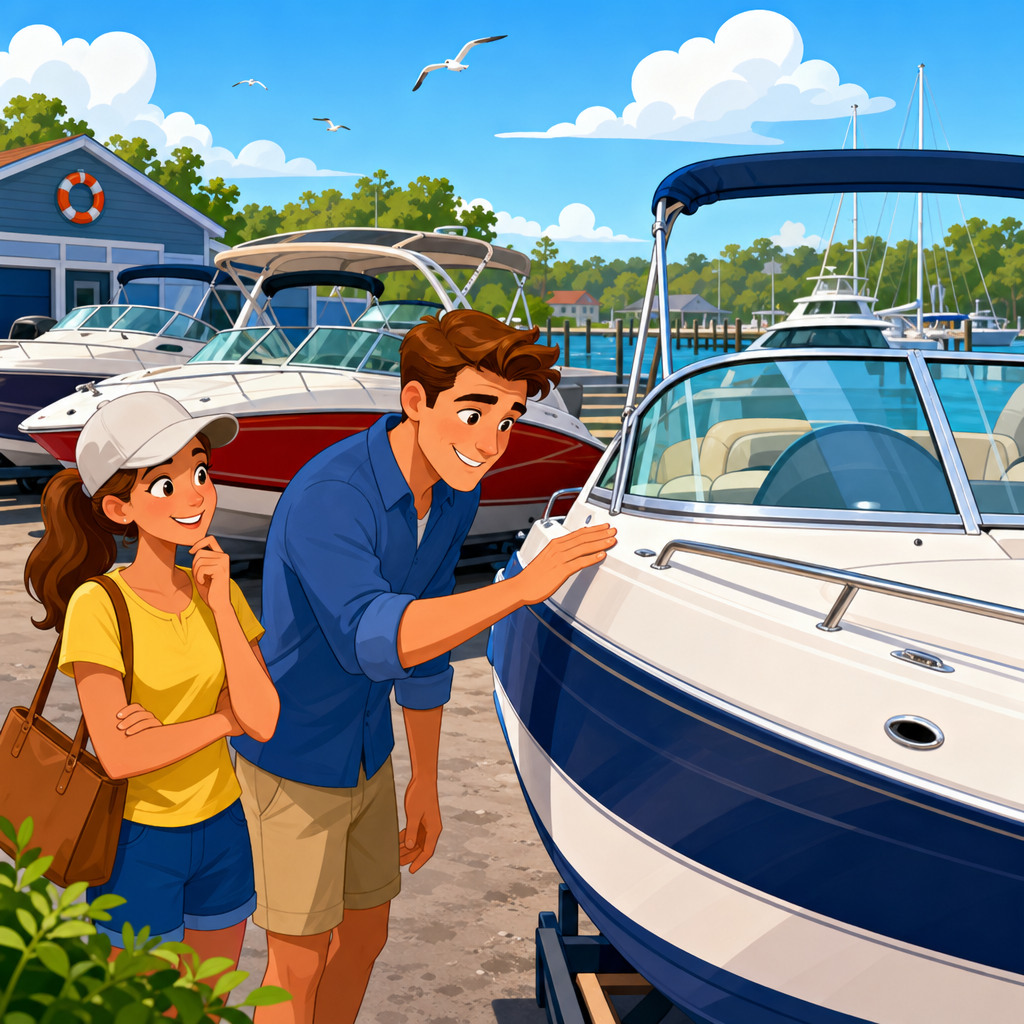
Choosing the best boats for kids starts with a simple truth: the right family boat must make children feel secure, keep adults in control, and create enough comfort and entertainment that a day on the water stays fun instead of stressful. In the family boating market, “best” does not mean fastest, biggest, or most expensive. It means a boat design that matches a child’s age, swimming ability, attention span, and the kind of water your family actually uses, whether that is a calm inland lake, a protected bay, or a slow river.
When parents search for the best boats for families, they are usually asking several questions at once. What type of boat is safest for young children? Which layouts make boarding easier? How much seating, shade, and storage do we need for snacks, life jackets, and towels? Is a pontoon better than a bowrider? Can a small fishing boat work for family use? Those are practical questions, and after years of reviewing family-friendly layouts, test riding boats with mixed-age groups, and watching how kids behave on deck, the pattern is clear: successful family boating depends more on stability, layout, and safety systems than on headline horsepower.
It also helps to define a few core terms. Freeboard is the height of the boat’s sides above the waterline; higher freeboard generally improves security for kids because it creates deeper seating areas and taller interior sides. Beam is the width of the boat; a wider beam often improves stability and interior room. Deadrise describes the angle of the hull bottom; moderate deadrise can soften chop, while flatter bottoms often feel more stable at rest. Capacity plate limits, grab handles, non-slip decking, reboarding ladders, and enclosed propeller setups all matter because children move unpredictably and need physical support points everywhere.
This guide works as a hub for the broader “Best Boats for Families” topic by covering the main boat categories, the safety features that matter most, and the tradeoffs parents should understand before buying. If you are comparing pontoons, deck boats, bowriders, center consoles, small sailboats, or kid-friendly fishing boats, this overview will help you narrow the field and identify which detailed reviews you should read next. The goal is not to push one perfect model. It is to help you choose a family boat that combines safety and fun in a way that works in real life.
What Makes a Boat Good for Kids and Families
The best boats for kids share a few design traits regardless of category. First, they provide predictable stability at rest and while passengers shift position. Young children rarely sit still, so a boat that feels steady when someone moves from one seat to another reduces anxiety for everyone on board. Second, they offer secure seating with backrests rather than open perches or narrow gunwale pads. Third, they simplify movement with walkthroughs, gates, molded steps, and ladders that let children board without climbing over slippery upholstery or hardware.
In real family use, comfort features are not luxuries; they are part of safety. Shade from a Bimini top or hardtop prevents overheating and sun fatigue. A marine toilet or changing space can extend the day and reduce rushed decisions. Dry storage keeps extra clothes available after splashes or rain. Bluetooth audio, tow points, swim platforms, and snack tables sound recreational, but they also help keep children entertained and contained, which lowers the chance of wandering and horseplay at the wrong moment.
Engine placement matters too. Outboard boats free interior space and simplify maintenance access, but exposed propeller areas demand strict supervision at the stern. Sterndrive bowriders can deliver a clean family layout, though propeller awareness remains essential. Pontoon boats with enclosed decks and gated entries often feel safer for toddlers because movement paths are obvious. Jet boats deserve consideration because they eliminate an exposed propeller, a major reason many first-time boating parents put them on the shortlist.
Family buyers should also think past the test ride. Boats used with children need easy cleanup, forgiving upholstery, durable flooring, and systems that are simple to operate under pressure. Complicated touchscreen controls, tiny swim ladders, or limited shade may not show up in a spec sheet as deal breakers, but they quickly become pain points with kids aboard.
Best Boat Types for Families With Children
Pontoon boats remain the strongest all-around answer for many families. Their broad platform, perimeter fencing, and generous seating create an environment that feels more like a floating patio than a performance machine. For toddlers and elementary-age kids, that secure footprint is valuable. Modern pontoons also tow tubes, cruise comfortably, and offer family-friendly features such as changing rooms, integrated coolers, and wide boarding gates. On smaller lakes and sheltered water, a 20- to 24-foot pontoon is often the easiest recommendation.
Deck boats are another smart choice because they maximize passenger space in a relatively compact hull. They usually provide open seating forward and aft, easy water access, and enough performance for watersports. Families with older kids often like deck boats because they blend social seating with speed and versatility. The tradeoff is that some deck boats ride harder than deeper-V hulls in chop, so local water conditions matter.
Bowriders are among the most popular family runabouts for good reason. They tow skiers, handle day cruising well, and usually offer wraparound cockpit seating that keeps everyone engaged. Models from brands such as Sea Ray, Bayliner, Four Winns, and Chaparral often target family buyers directly. Still, parents with very young children should compare bow depth carefully; some bowriders have shallow forward seating that feels exposed compared with pontoons or deeper deck boats.
Center consoles can work for active families, especially those combining fishing, sandbar visits, and coastal cruising. A large center console with bow cushions, foldaway seating, a head compartment, and high freeboard can be excellent for older children. However, many fishing-focused layouts leave less protected lounging space, and constant 360-degree deck access means parents must supervise younger kids closely. For mixed recreation, dual consoles often feel more family-friendly than center consoles.
Jet boats deserve a special mention. Yamaha and Scarab models are common examples. Their lack of an exposed propeller is a major safety advantage around swimmers, and many have automotive-style seating that families find intuitive. They can be loud, and shallow-water debris can affect operation, but for parents prioritizing swim safety and tow sports, they are legitimate contenders.
| Boat Type | Best For | Key Strength | Main Tradeoff |
|---|---|---|---|
| Pontoon | Young kids, relaxed cruising, lake days | High stability, secure perimeter, lots of seating | Less agile in rougher open water |
| Deck Boat | Families wanting space and watersports | Open layout with strong versatility | Ride quality varies in chop |
| Bowrider | General family boating and towing | Balanced performance and comfort | Some bows feel shallow for toddlers |
| Dual Console | Fishing plus family cruising | Protected cockpit and flexible layout | Usually costs more than simple runabouts |
| Jet Boat | Swim-heavy families and tow sports | No exposed propeller | Noise and debris sensitivity |
Safety Features Parents Should Prioritize
If you ask what is the safest boat for kids, the answer is not one hull category alone; it is the boat with the best combination of containment, visibility, reboarding access, and emergency readiness. Start with high sides, self-draining or easy-clean flooring, and non-slip surfaces. Then look for secure gates, latches that children cannot open casually, and seat bases deep enough that kids sit down into the boat rather than on top of it.
Life jacket policy comes next. The U.S. Coast Guard requires approved wearable personal flotation devices on recreational boats, and children under certain ages must wear them under both federal and state rules, depending on jurisdiction. In practice, families should go further: children should wear properly fitted U.S. Coast Guard-approved life jackets anytime the boat is underway, while docking, and whenever they are near the edge. Type and size matter. Infant and child jackets need crotch straps, head support where appropriate, and a fit that does not ride up over the chin when lifted at the shoulders.
Reboarding is another overlooked issue. A wide swim platform with a telescoping ladder that reaches deep enough below the water makes a real difference for tired or scared children. So does an accessible handhold at the ladder top. I have seen many otherwise strong family boats undercut by tiny ladders that work for athletic adults but frustrate kids. The best family boats make getting back aboard simple and repeatable.
Parents should also inspect kill-switch systems, navigation lights, bilge pumps, fire extinguishers, carbon monoxide awareness labels, and communication equipment. If you boat on larger water, a VHF radio is more reliable than depending on a phone alone. GPS chartplotters with trackback features can add confidence, but they do not replace basic route planning and weather judgment.
Matching the Boat to Age, Water, and Activities
A family with a three-year-old and a seven-year-old has different needs than a family with teenagers who wakeboard and swim all afternoon. For babies and toddlers, stable platforms, enclosed layouts, shade, and easy diaper or clothing changes matter most. Pontoons and roomy dual consoles tend to shine here. For grade-school children, tubing, swim platforms, and snack-friendly seating become bigger priorities. For teenagers, towing performance, stereo quality, charging ports, and enough personal space begin to influence whether they actually want to come along.
Your home water should guide the decision just as much as your children’s ages. Calm freshwater lakes are ideal for pontoons, deck boats, and smaller bowriders. If your family runs in tidal bays, coastal inlets, or larger windy reservoirs, deeper-V hulls and higher freeboard become more important. On shallow rivers, jet boats and certain outboard boats may make more sense than sterndrives. Buyers who ignore local conditions often end up with a boat that looks right at the dock but feels wrong in everyday use.
Activities matter because they change layout priorities. Families focused on cruising and swimming need loungers, ladders, and shade. Fishing families need rod storage that does not create tripping hazards, plus seating that converts cleanly between use cases. Watersports families need proper tow ratings, mirror visibility, and storage for ropes, vests, and boards. A good family hub boat is not the one with the most features. It is the one that supports your top two activities without making the third inconvenient.
Buying New or Used Without Regret
For many households, the best boats for families are used boats with proven layouts and lower entry costs. Buying used can move you into a better category, larger size, or stronger brand than buying new at the same budget. A well-kept three- to seven-year-old pontoon or bowrider often represents excellent value if maintenance records are solid. Focus on hull condition, engine hours, compression or service reports, trailer health, upholstery wear, flooring, and electronic function. On pontoons, inspect logs for damage and check deck integrity carefully. On fiberglass boats, look for stress cracks, soft spots, and signs of water intrusion.
Marine surveys are worth the money on higher-value used boats, especially when systems are complex. Reputable dealers can reduce risk, but private-party purchases can be good if you verify ownership, run a sea trial, and confirm that the boat performs correctly from cold start through operating temperature. Family buyers should also price the full ownership package: insurance, storage, fuel, life jackets in multiple sizes, registration, winterization, and routine service. Those costs shape long-term satisfaction more than many first-time buyers expect.
New boats offer warranty coverage, current safety features, and modern layouts, but depreciation is real. The smartest approach is to list your non-negotiables, test the leading categories, and buy the simplest boat that comfortably handles your family size and normal water conditions.
How This Family Boat Hub Helps You Choose
The best boats for kids combine secure design, age-appropriate fun, and straightforward operation. For most families, the leading choices are pontoons, deck boats, bowriders, dual consoles, and jet boats, with the right answer determined by water conditions, child ages, and primary activities. Prioritize high freeboard, non-slip surfaces, easy boarding, reliable shade, proper life jacket use, and a layout that lets adults supervise every zone quickly.
As a hub for the broader “Best Boats for Families” topic, this guide gives you the framework to compare boat categories before you dive into model-specific reviews. From here, the smart next step is to narrow your search by family size, budget, and boating style, then compare detailed reviews of the top pontoon boats, best bowriders for families, family-friendly deck boats, and safe starter boats for kids. Choose a boat that makes safety easy and fun natural, and your family will use it more often and with more confidence.
Frequently Asked Questions
What type of boat is generally best for families with young kids?
For most families with young children, the best boat is one that prioritizes stability, easy movement, predictable handling, and simple supervision over speed or high-performance features. Pontoon boats are often one of the strongest choices because they provide a wide, open layout, secure seating, railings around the perimeter, and a stable ride on calm inland lakes and protected waters. That combination helps younger kids feel less intimidated and gives parents more control over where children sit, move, and play. Deck boats can also work well for families because they offer generous seating and easy boarding, but parents should pay close attention to layout and whether there are clear, safe zones for children to stay seated while the boat is moving.
Small fishing boats, runabouts, and ski boats may be enjoyable in the right situation, but they are not always ideal as a first family boat for toddlers or early elementary-age children. They can have less secure seating, fewer barriers, and a more motion-focused design that may be better suited to watersports than all-day comfort. The right choice ultimately depends on your child’s age, confidence in the water, and how your family will use the boat most often. If your typical outing involves short cruises, snacks, swimming in quiet coves, and relaxed time together, a stable family-oriented platform usually beats a sportier boat every time.
What safety features should parents look for when choosing a boat for kids?
The most important safety features are the ones that help adults maintain control and help children stay secure without constant struggle. Start with high, supportive seating that keeps kids from sliding around when the boat turns or encounters chop. Enclosed or partially enclosed layouts are especially helpful for younger children because they reduce the number of open edges and make supervision easier. Secure railings, non-slip flooring, reliable boarding ladders, easy-to-grab handholds, and uncluttered walkways also matter because they reduce slips, trips, and unsafe movement around the boat.
Beyond layout, parents should also look for practical family safety details such as accessible life jacket storage, a quality swim platform with clear separation from the engine area, a dependable ladder for reboarding, and enough shade to prevent overheating. Boats with smoother, more predictable handling are often safer for children than models that encourage aggressive driving or fast acceleration. Good visibility from the helm is another major advantage because it allows the operator to monitor both the water ahead and the family on board. Finally, no built-in feature replaces basic boating discipline: every child should wear a properly fitted life jacket, adults should establish rules about staying seated underway, and the boat should never be overloaded beyond its rated passenger and weight limits.
How do I match the right boat to my child’s age and swimming ability?
This is one of the most important parts of choosing the best boat for kids. A boat that feels fun and safe for a confident 12-year-old may feel overwhelming or poorly suited for a 3-year-old who tires easily and has limited understanding of water safety. For toddlers and preschool-age children, the best boats are usually those with secure seating, shade, stable handling, minimal climbing hazards, and a layout that keeps them physically close to adults. At this stage, children need containment, routine, and comfort more than excitement. Calm-water family cruising boats are typically a better fit than sport-oriented designs.
As children get older and become stronger swimmers, families may be able to choose boats that support a wider range of activities, such as tubing, swimming, fishing, or longer day trips. Even then, swimming ability should not be treated as a substitute for boating safety. Strong swimmers can still panic in cold water, become tired, or fall unexpectedly while the boat is moving. Attention span also matters. Some children love fishing or sightseeing for hours, while others become restless quickly and do better on boats with space to move, lounge, snack, and take breaks from the sun. The best family boat is one that fits not just your child’s age on paper, but their actual confidence level, energy level, and ability to follow safety rules on the water.
Is a bigger boat always better for families with children?
No, bigger is not automatically better. A larger boat can provide more seating, more shade, more storage, and a smoother ride in some conditions, but size alone does not make a boat more family-friendly. In fact, for some parents, a boat that is too large can create new challenges, including more difficult docking, higher costs, more maintenance, and a layout that is harder to supervise effectively. What matters more is how usable the space is for your family. A well-designed mid-size pontoon or deck boat can feel much safer and more comfortable for children than a larger boat with multiple levels, narrow walkways, or too many open access points.
Families should think in terms of manageable space rather than maximum size. You want enough room for everyone to sit comfortably, store gear properly, and move without crowding, but not so much complexity that operation becomes stressful. Consider where you boat most often as well. On a calm inland lake, a practical, stable boat with a thoughtful family layout may be far more enjoyable than a larger vessel designed for different water conditions. The best choice is the one that lets the adults operate confidently, keeps kids comfortable, and supports the type of boating your family will actually do on a regular basis.
What makes a boating day more fun and less stressful for kids and parents?
The best family boat helps, but a successful day on the water is really the result of matching the boat, the plan, and the expectations to children’s real needs. Comfort is a major part of that. Kids do better when the boat has shade, comfortable seating, easy access to drinks and snacks, and enough open space to avoid feeling cramped. A simple, stable platform also allows parents to focus on the experience instead of constantly managing safety issues. Features like a swim ladder, an easy boarding area, onboard storage for towels and toys, and a clean, dry place to rest can make a dramatic difference in how long children stay happy and engaged.
It also helps to keep trips realistic. Shorter outings are often more successful than long, ambitious ones, especially for younger kids. Choose calm conditions, bring familiar food, pack extra layers and sun protection, and build in opportunities to stop, swim, or simply relax. Children usually enjoy boating most when they feel included but not overwhelmed. Let them help with simple age-appropriate tasks, explain the rules clearly, and maintain a routine so the day feels predictable. When the boat is easy to board, easy to supervise, and suited to your family’s normal waters and activities, boating becomes what it should be: safe, memorable, and genuinely fun for everyone on board.